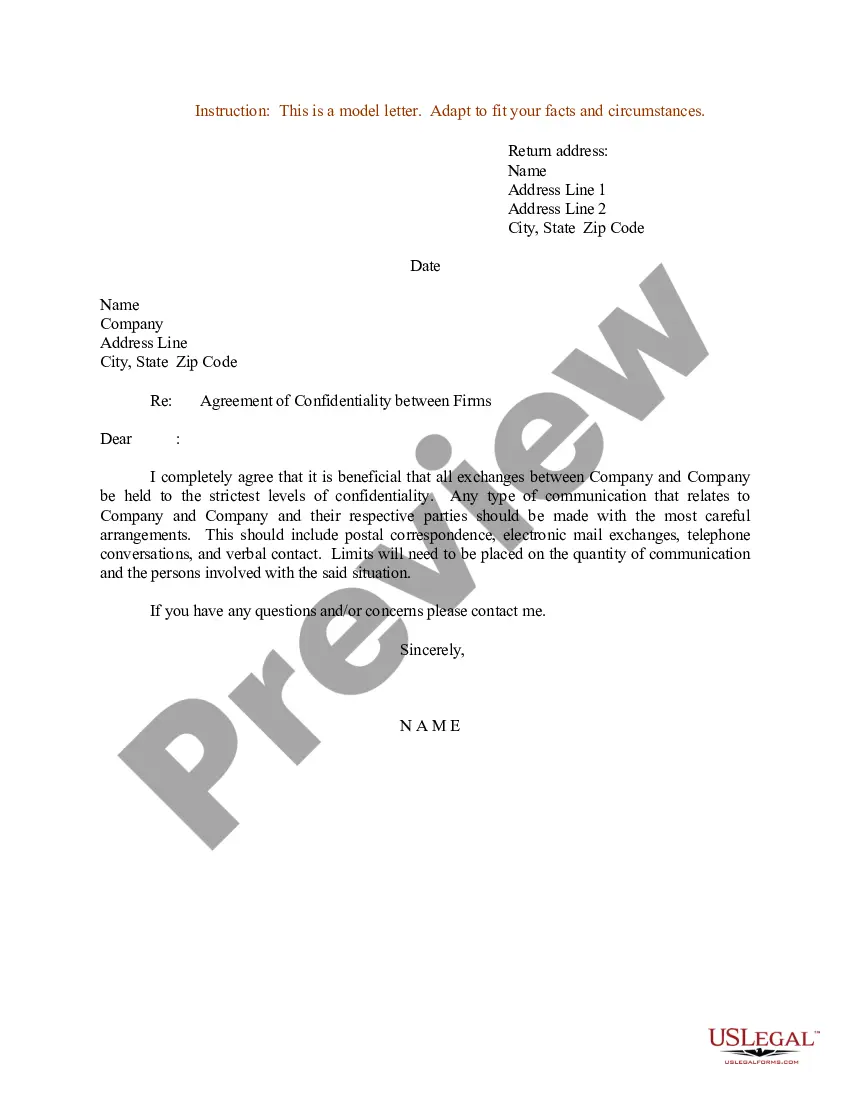
Florida Residential Rebuilding Construction Contract
What is this form?
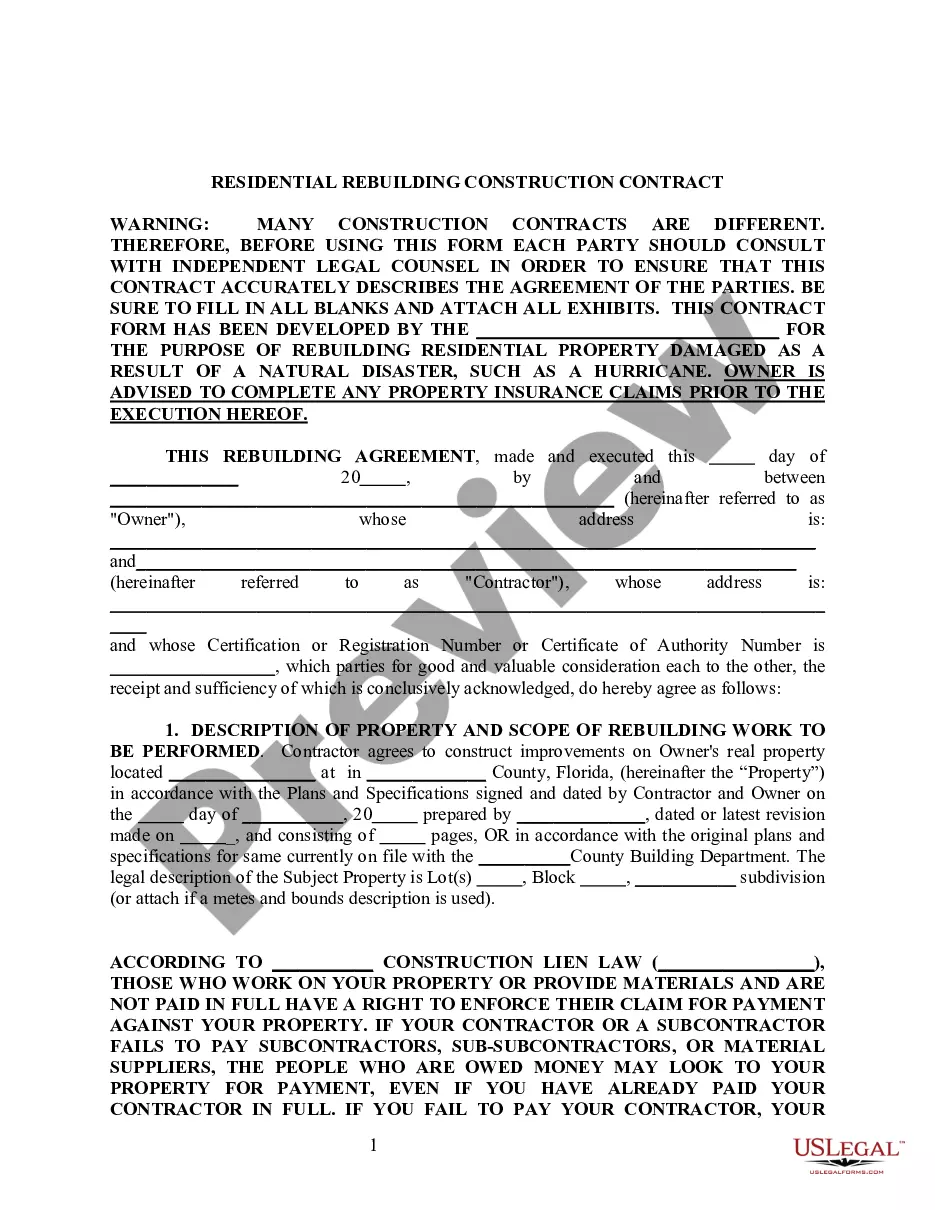
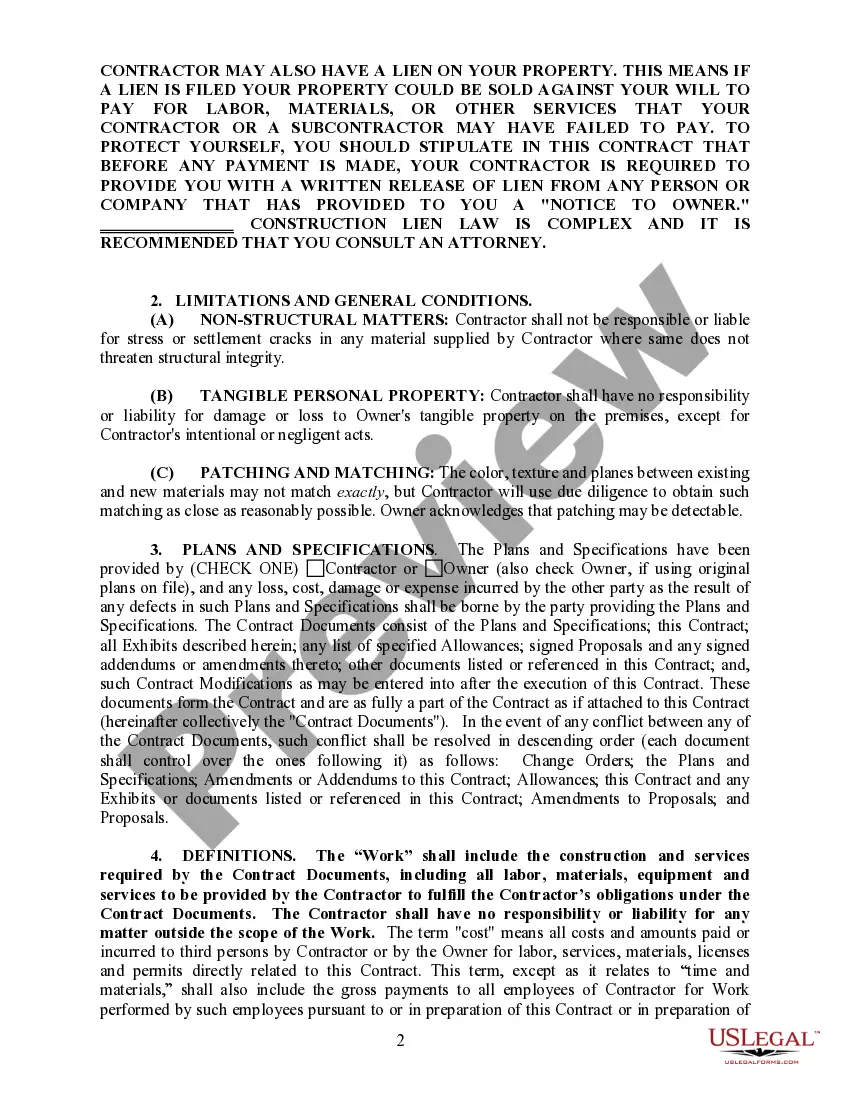
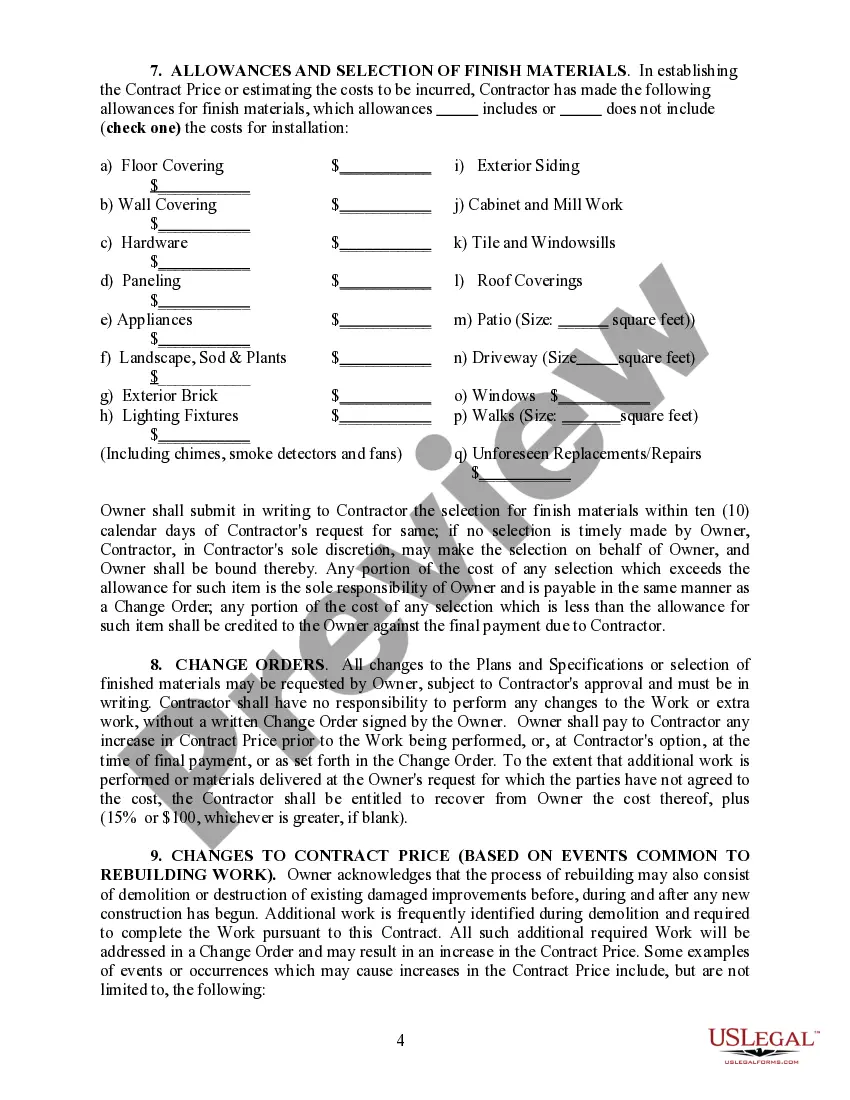
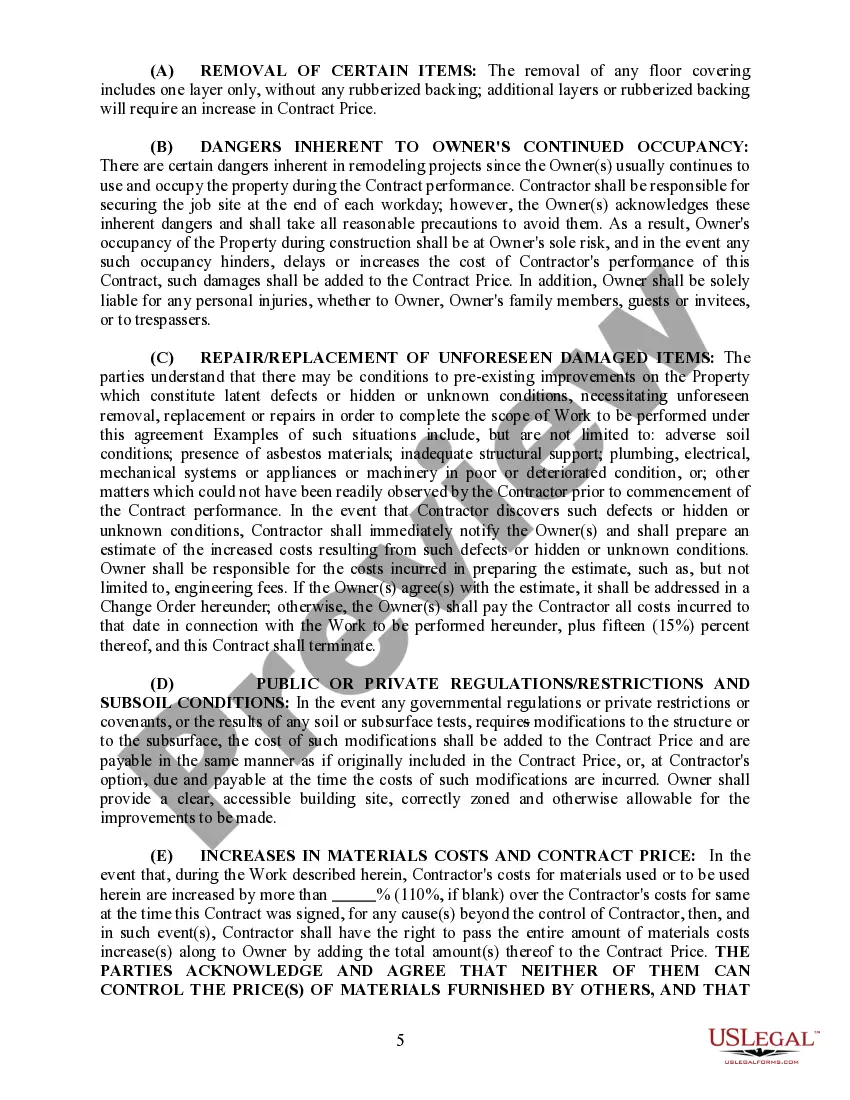
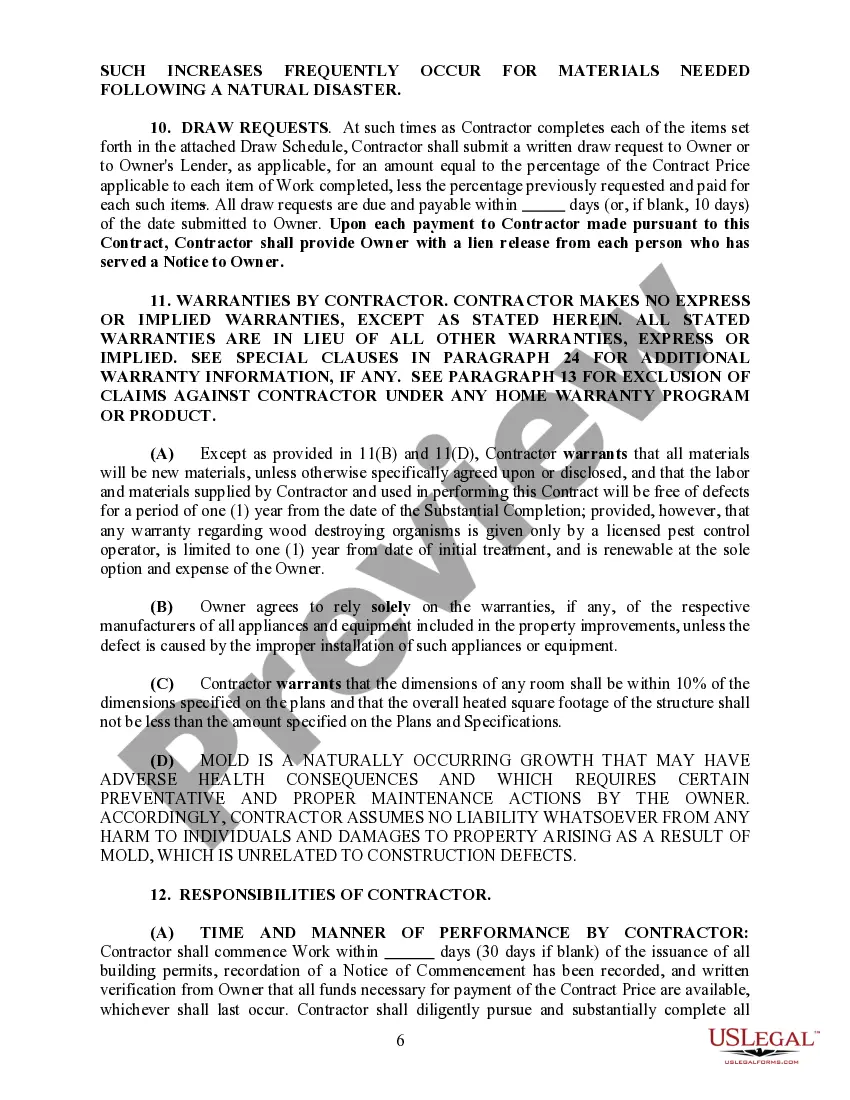
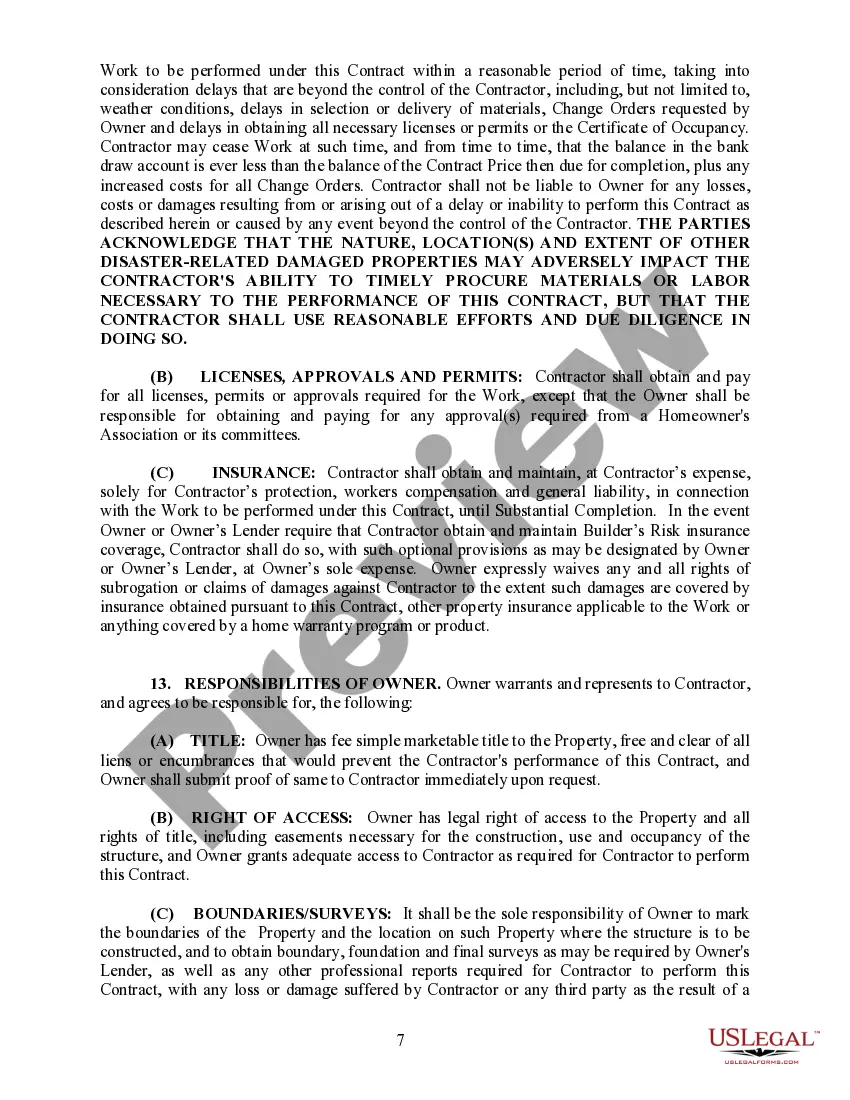
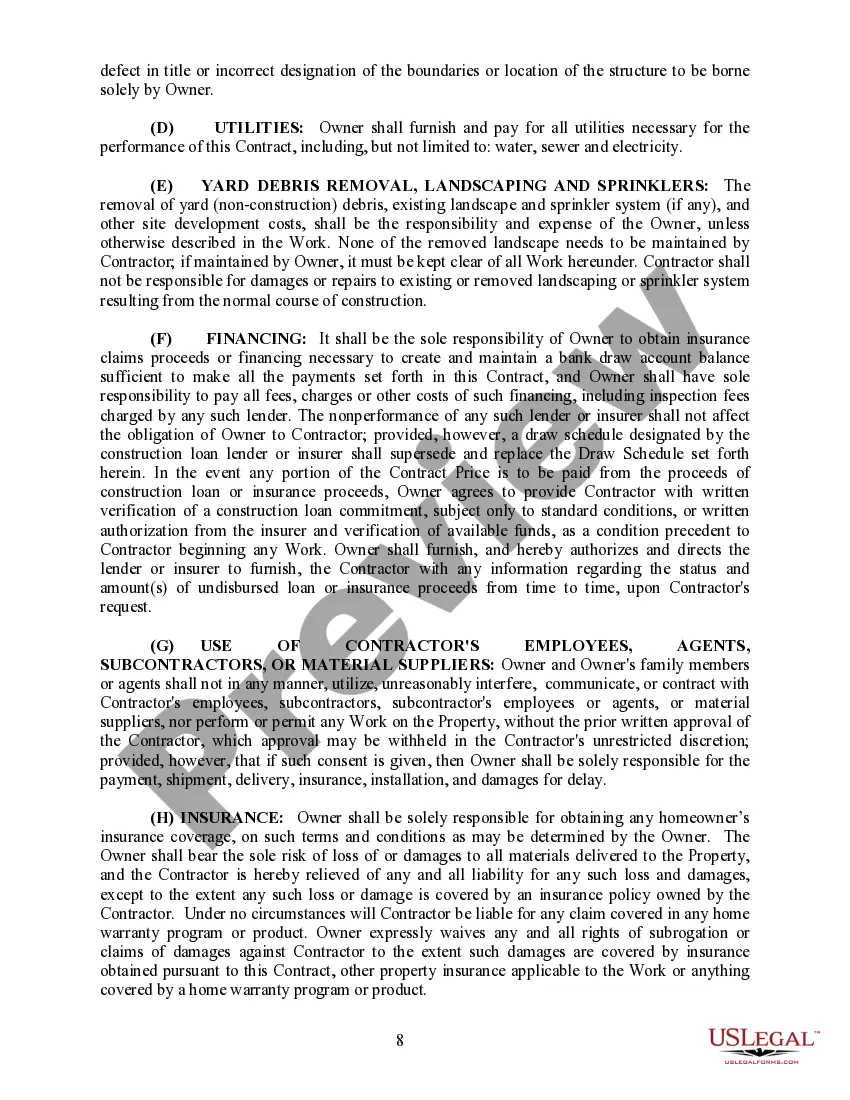
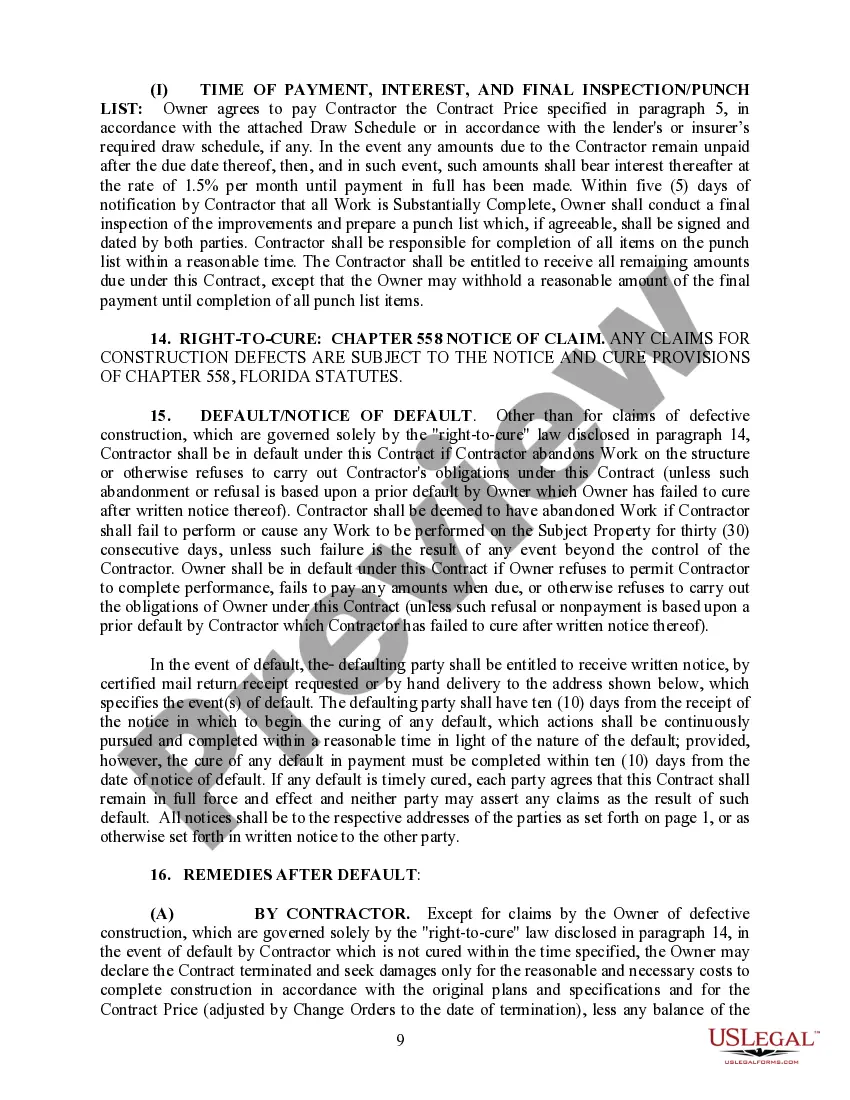
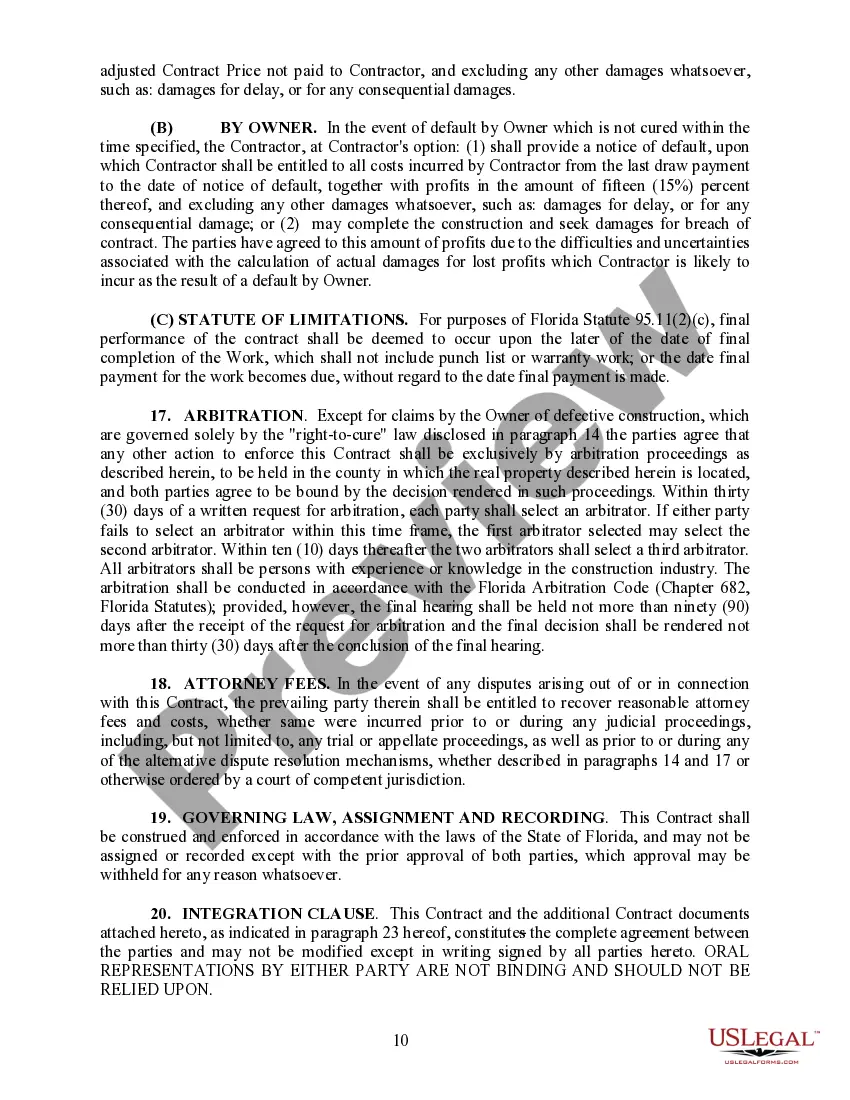
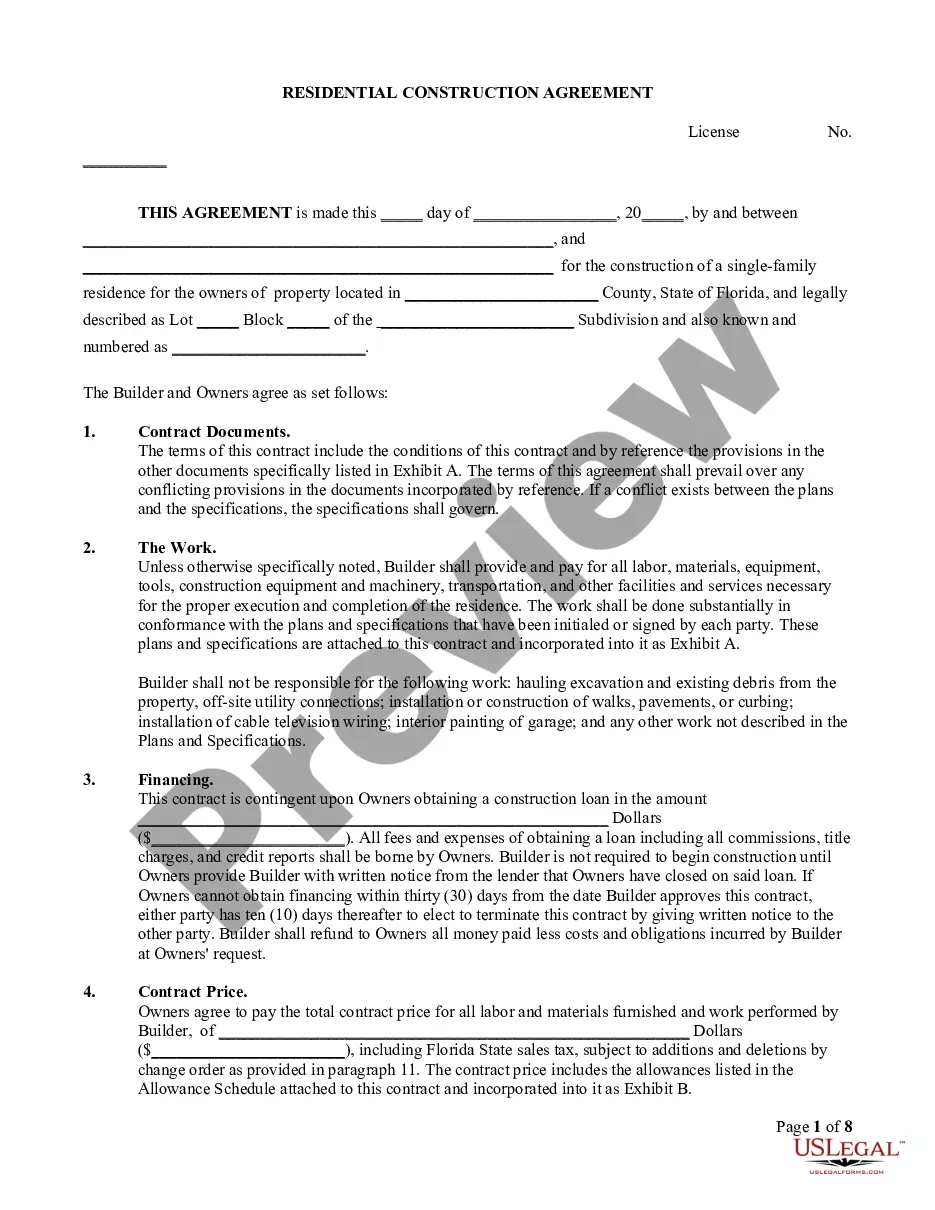
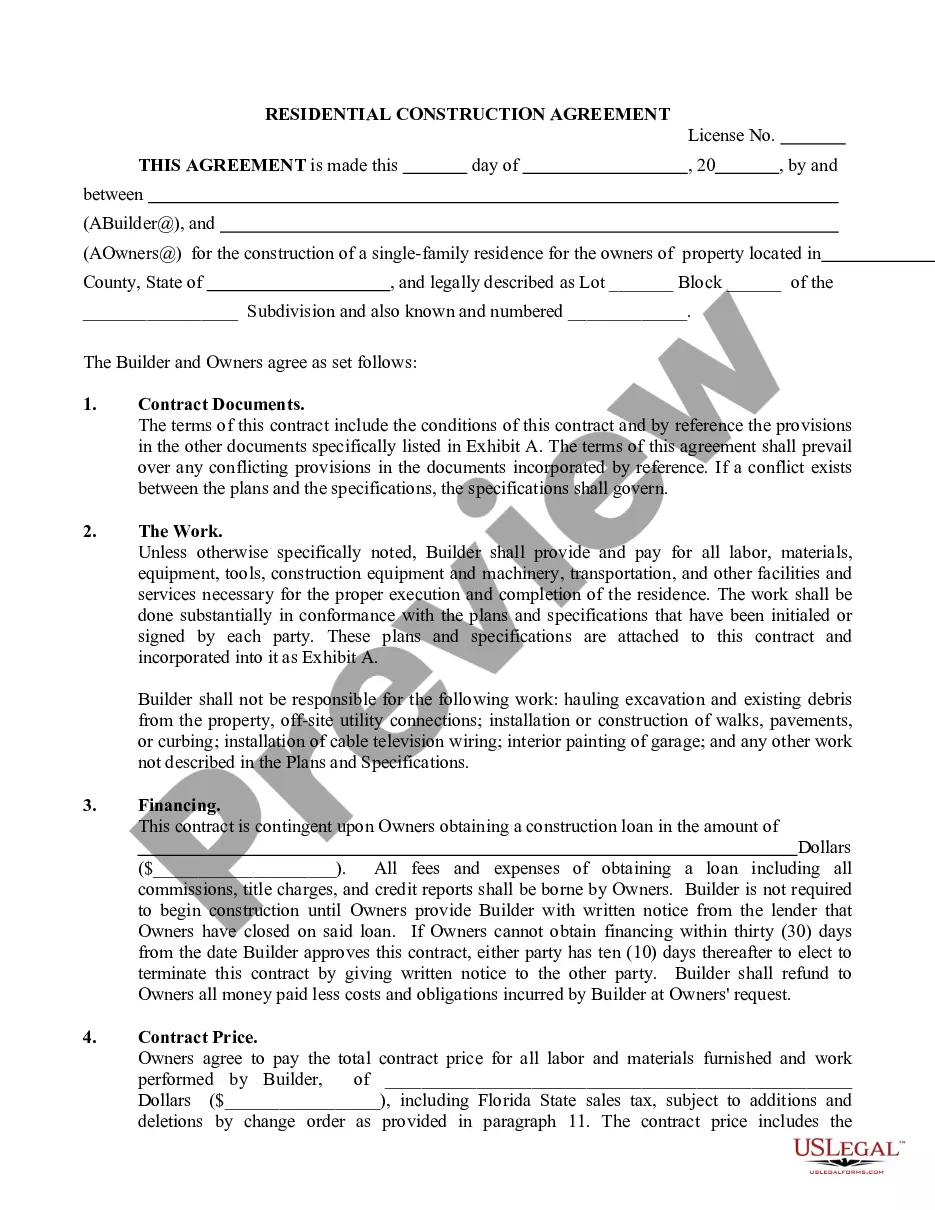
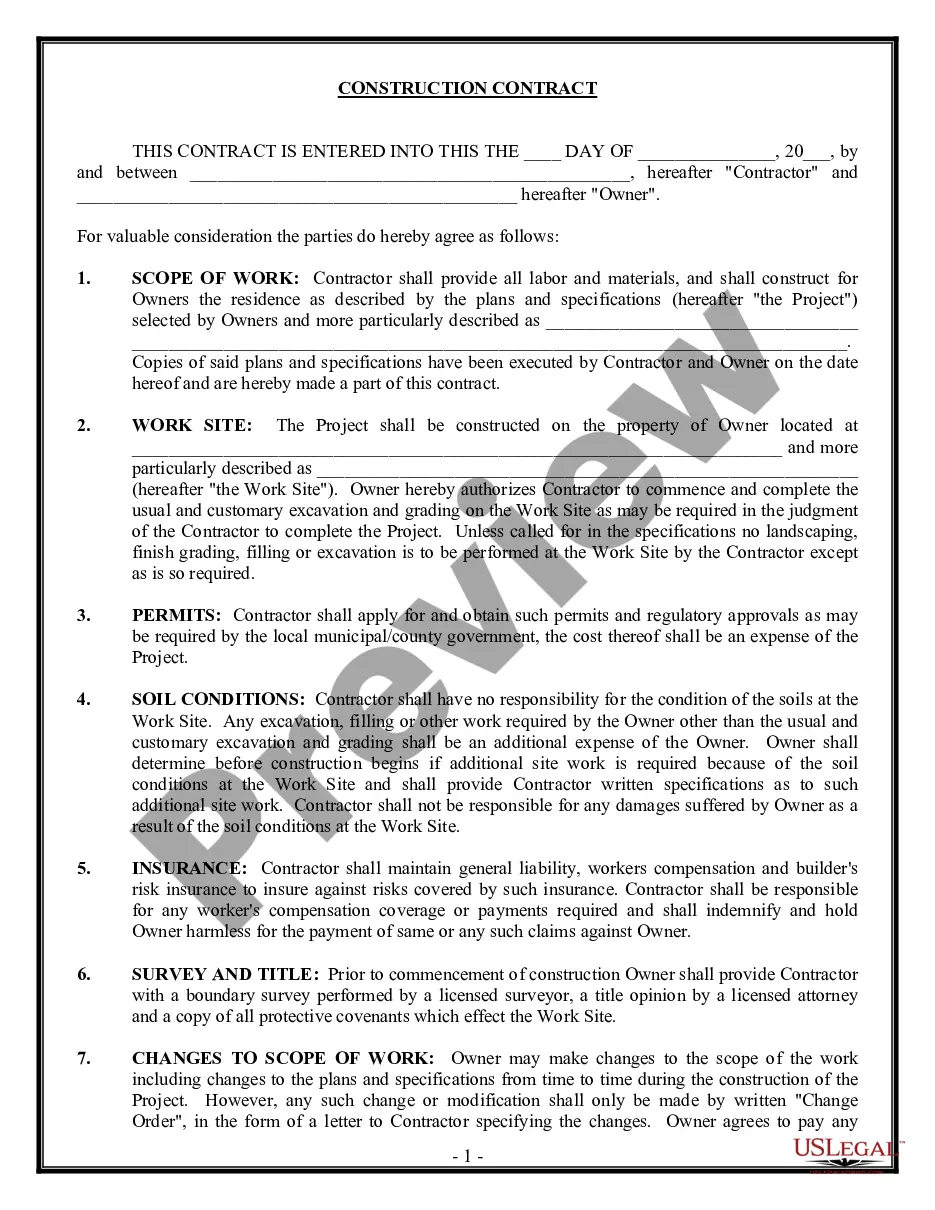
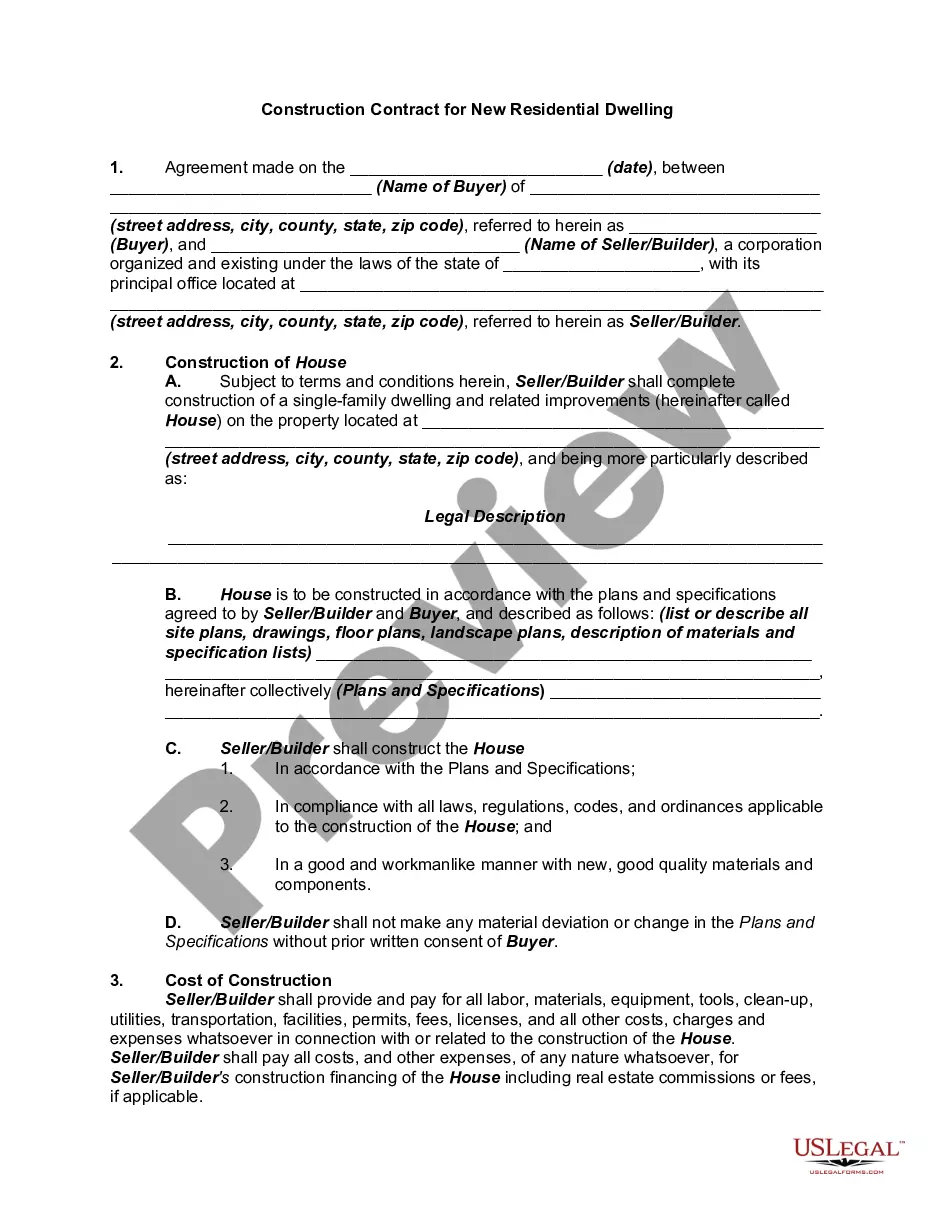
The Residential Rebuilding Construction Contract is a legal document designed for use between a contractor and a residential property owner. This contract outlines the obligations and rights of both parties when rebuilding a home that has been damaged or destroyed due to natural disasters, such as hurricanes. It serves as a foundational agreement ensuring that all aspects of the rebuilding process are clearly defined and legally enforceable, distinguishing it from general construction contracts which may not focus specifically on disaster recovery.
Key parts of this document
- Description of the property and detailed scope of rebuilding work to be performed.
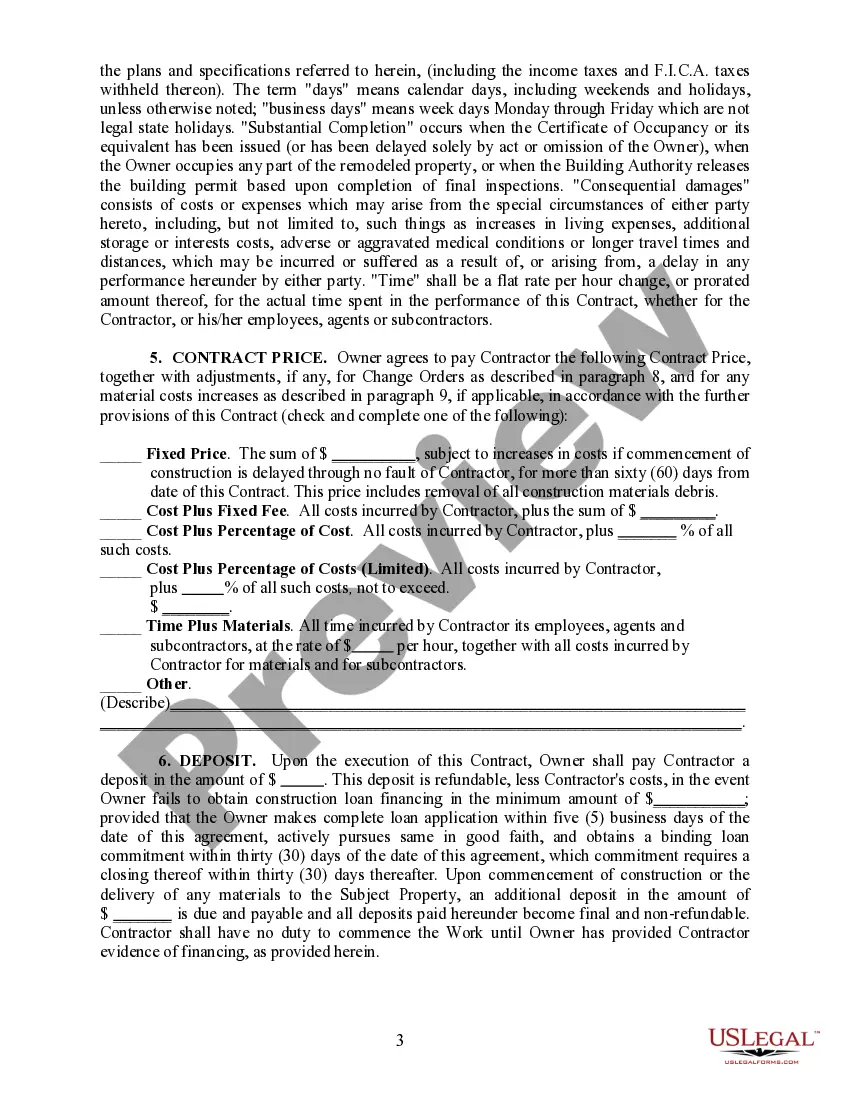
- Contract price and payment structure, including options for fixed pricing and additional costs due to changes or unforeseen issues.
- Warranties provided by the contractor related to workmanship and materials.
- Responsibilities of the contractor and owner, including obligations for permits and site access.
- Provisions for handling unexpected discoveries during the rebuilding process, such as hidden damages.


When to use this form
This form should be used when a residential property owner wishes to engage a contractor for rebuilding their home following significant damage or destruction caused by a natural disaster. It is particularly relevant for situations where insurance claims are involved, and clear documentation is needed to outline the scope of work, financial obligations, and timelines. Homeowners facing rebuilding challenges after a hurricane or similar event will find this contract essential for ensuring a smooth reconstruction process.
Who needs this form
- Homeowners whose residences have been damaged or destroyed by natural disasters.
- Contractors hired to rebuild residential properties in these situations.
- Insurance representatives involved in processing claims related to property damage and rebuilding efforts.
How to complete this form
- Identify the parties involved: Enter the names and addresses of the homeowner and contractor at the beginning of the form.
- Specify the property: Fill in the details regarding the property affected, including its legal description and relevant county.
- Outline the scope of work: Clearly define the scope of the rebuilding work to be performed and attach any relevant plans or specifications.
- Fill in the contract price: Choose and complete one of the pricing options, detailing fixed or variable costs, and any deposits required.
- Review and sign: Ensure all parties sign the agreement, dating the contract accordingly, and provide any necessary witness signatures.
Does this form need to be notarized?
This form does not typically require notarization unless specified by local law. However, having it notarized can provide an additional layer of authenticity and legal weight to the agreement.
Get your form ready online
Our built-in tools help you complete, sign, share, and store your documents in one place.
Make edits, fill in missing information, and update formatting in US Legal Forms—just like you would in MS Word.
Download a copy, print it, send it by email, or mail it via USPS—whatever works best for your next step.
Sign and collect signatures with our SignNow integration. Send to multiple recipients, set reminders, and more. Go Premium to unlock E-Sign.
If this form requires notarization, complete it online through a secure video call—no need to meet a notary in person or wait for an appointment.
We protect your documents and personal data by following strict security and privacy standards.

Make edits, fill in missing information, and update formatting in US Legal Forms—just like you would in MS Word.

Download a copy, print it, send it by email, or mail it via USPS—whatever works best for your next step.

Sign and collect signatures with our SignNow integration. Send to multiple recipients, set reminders, and more. Go Premium to unlock E-Sign.

If this form requires notarization, complete it online through a secure video call—no need to meet a notary in person or wait for an appointment.

We protect your documents and personal data by following strict security and privacy standards.
Common mistakes
- Failing to include detailed descriptions of the work to be performed, leading to disputes later.
- Not specifying timelines for work completion, which can result in confusion about deadlines.
- Overlooking to have the document reviewed by an attorney before signing, missing important legal nuances.
Why complete this form online
- Easy access to customizable templates created by licensed attorneys, ensuring legal compliance.
- Time-saving digital format allows for quick completion and downloading.
- Transparency in the rebuilding process, with clear terms laid out for both parties to follow.
Legal use & context
- This contract is designed to be legally binding once signed by both parties, provided all relevant legal statutes are complied with.
- Proper use of the contract helps to protect both the contractor and the homeowner from disputes regarding the terms of the rebuild.
- Failure to adhere to the contract terms may result in legal consequences or claims of breach of contract.
Main things to remember
- The Residential Rebuilding Construction Contract is essential for homeowners and contractors involved in rebuilding after a disaster.
- Clear documentation of responsibilities, scope of work, and payment structures is vital for a successful rebuild.
- Consulting legal counsel before finalizing the contract can mitigate risks and ensure all legal aspects are considered.
Looking for another form?





Form popularity
FAQ
The exact deposit amount contractors ask for upfront varies and is especially dependent on the size of the project. For relatively small jobs, like a $16,000 bathroom remodel, contractors may ask for a 50% deposit. For large jobs, like a $100,000 full-home renovation, a 10%?20% deposit is more typical.
Never pay the full amount of a repair up front and hesitate before providing large deposits. Florida law requires a contractor to apply for a permit within 30 days and start work within 90 days if he collects more than 10 percent of the contract up front.
Most general contractors are looking at about a 35% margin, so they need a markup of 54%, or 1.54. Subs can often get a profit margin of 50%, so they need a markup of 100% or 2x, as shown in the table on the right. For some contractors, they have 35% gross profit and 25% goes to overhead and 10% is left in the company.
This can be a criminal offense, as Florida statue 489.126 states that if a contractor takes more than 10% down, the permit must be pulled within 30 days and the job must be started within 90 days. If the job does not require any materials, there is no need for a deposit.
For example, in Florida, the following types of contracts that might involve construction projects must be in writing: Credit agreements (i.e. construction loan financing); Contracts that cannot be performed within one year (such as major construction projects);
State of Florida Prompt Pay Policy (The State of Florida is required to pay all properly completed and correctly addressed invoices within 40 days of receipt of invoice for goods or services received.)
Generally, all construction contracts in Florida must contain are required to disclose the contractor or subcontractor's registration number issued by the Florida DPBR; if required. Furthermore, all construction contracts should also include a construction defect notice and opportunity to cure provisions.
On Thursday, April 13, 2023, Florida Governor Ron DeSantis signed Senate Bill 360 into law. This legislation alters the time period for bringing forward construction defect lawsuits, as well as modifies the current private right of action against a contractor for violation of the Florida Building Code.