Oklahoma Warranty Deed for Separate or Joint Property to Joint Tenancy
Understanding this form
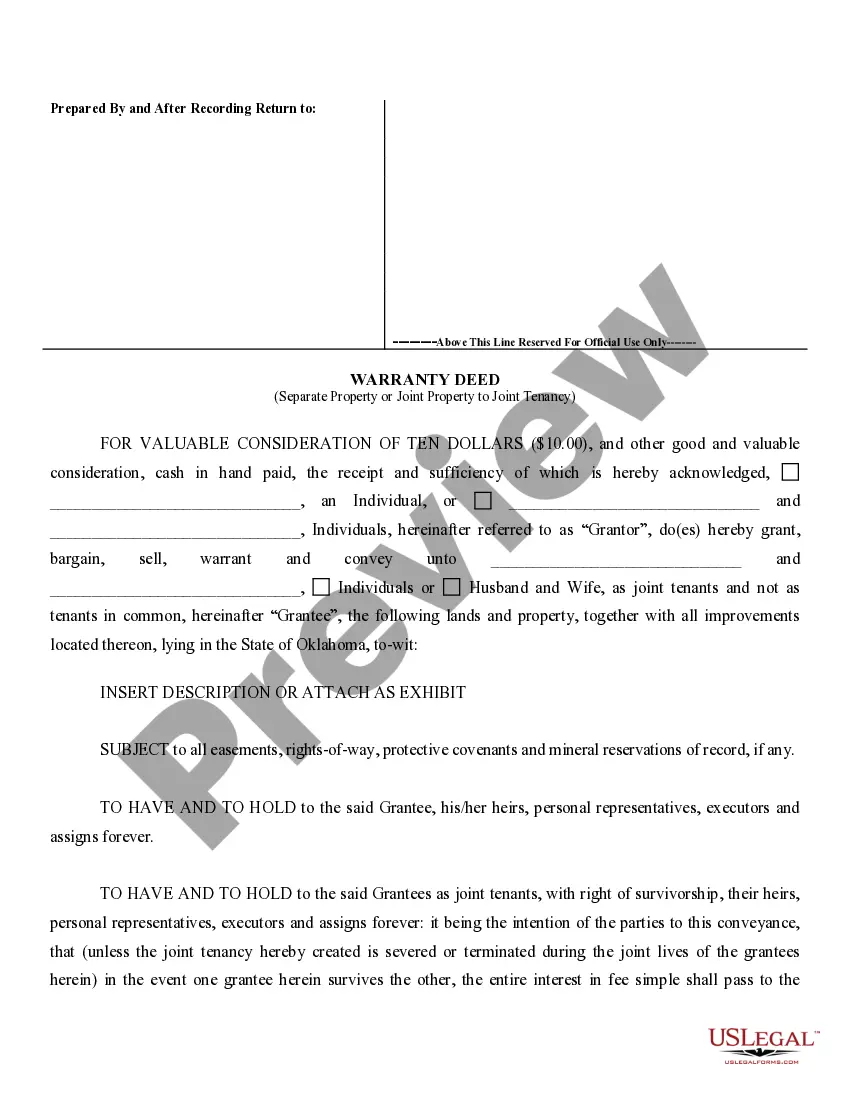
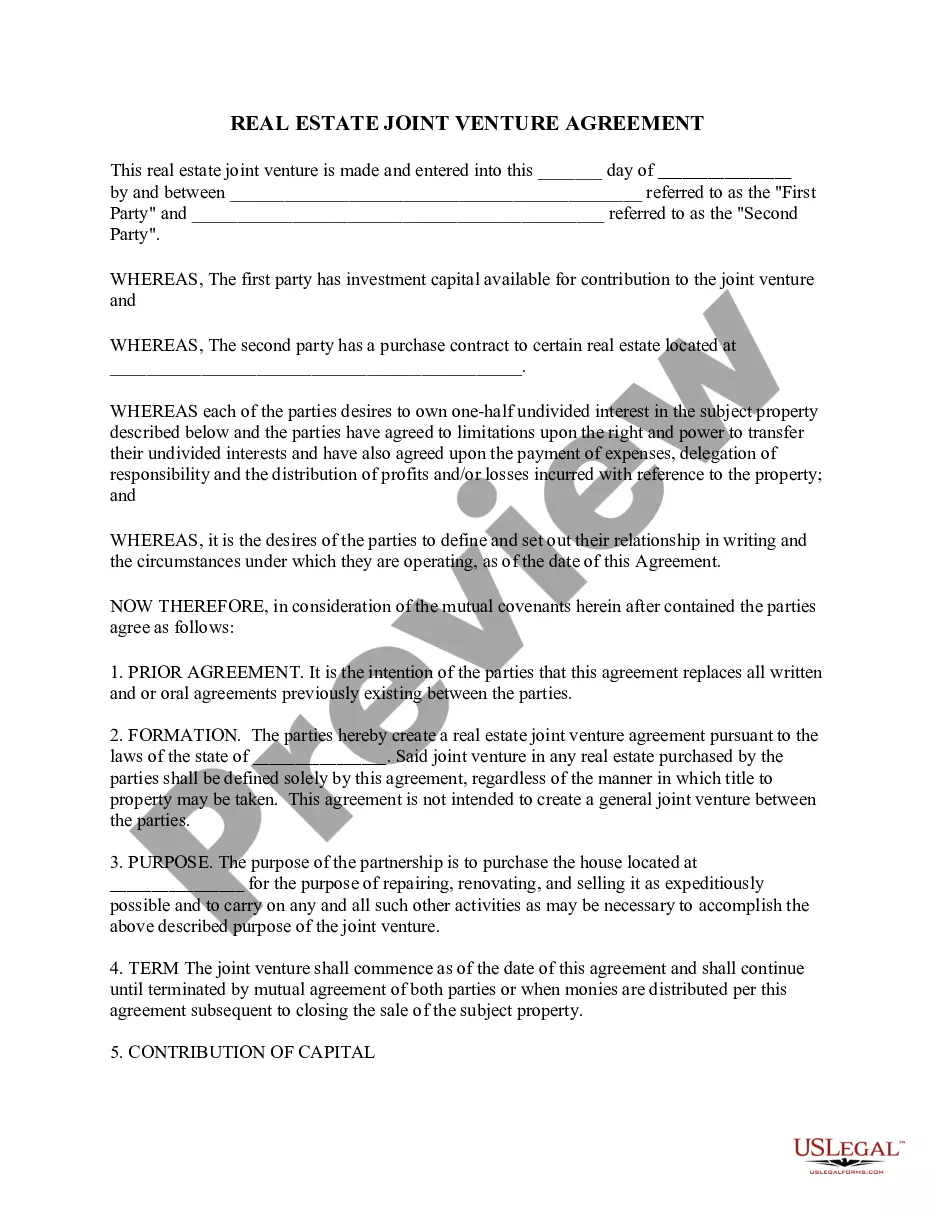
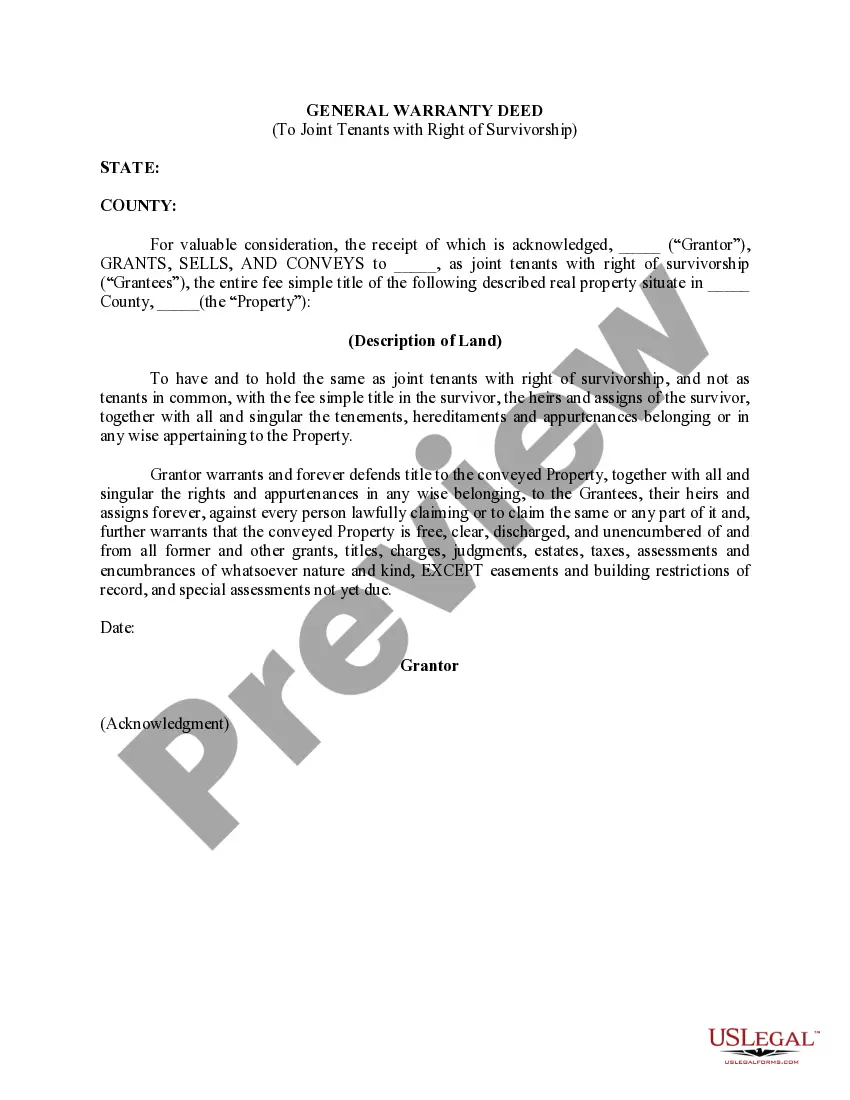
The Warranty Deed for Separate or Joint Property to Joint Tenancy is a legal document used to transfer ownership of property held in separate or joint tenancy into joint tenancy. This type of deed creates a joint ownership arrangement that allows property to pass directly to the surviving owner upon death, avoiding probate. It is distinct from other deeds, such as a Quit Claim Deed, which only transfers whatever interest the grantor has without warranties regarding the title.
Main sections of this form
- Identification of the Grantor(s) and Grantee(s).
- Statement of consideration, indicating the value exchanged for the property.
- Legal description of the property being conveyed.
- Statement confirming the intention to create a joint tenancy with right of survivorship.
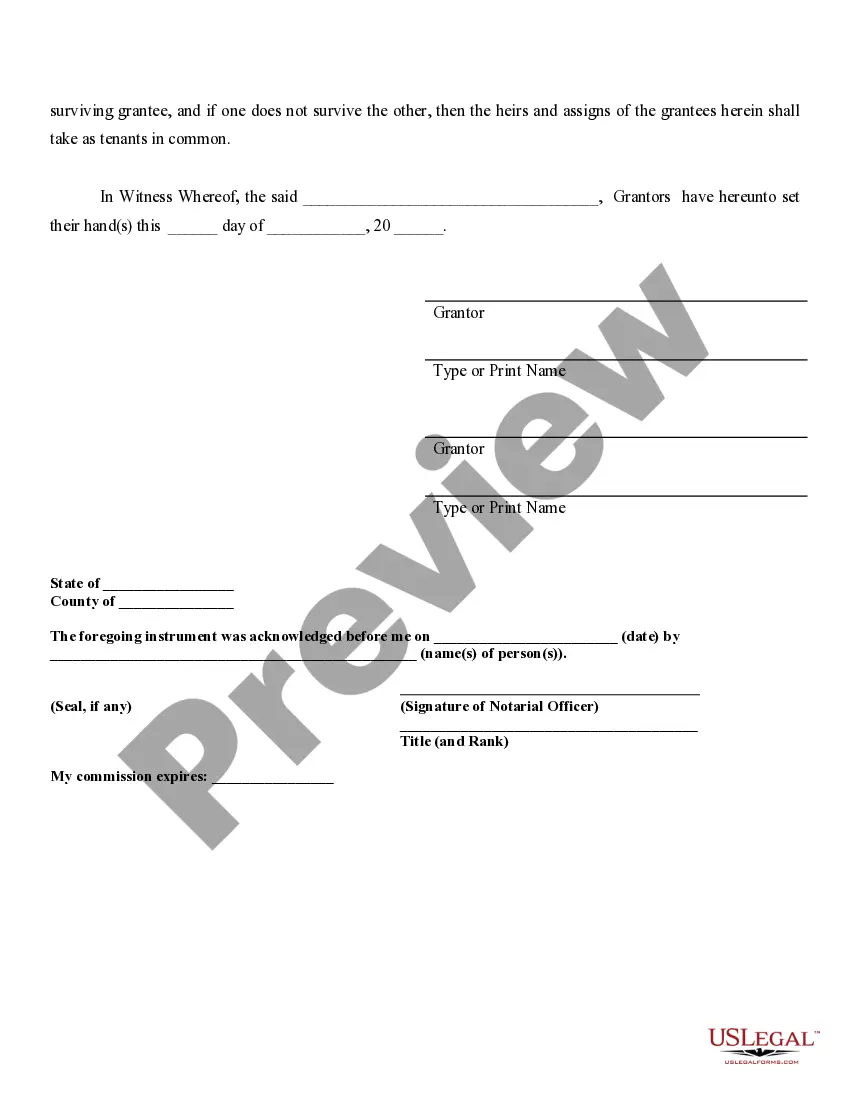
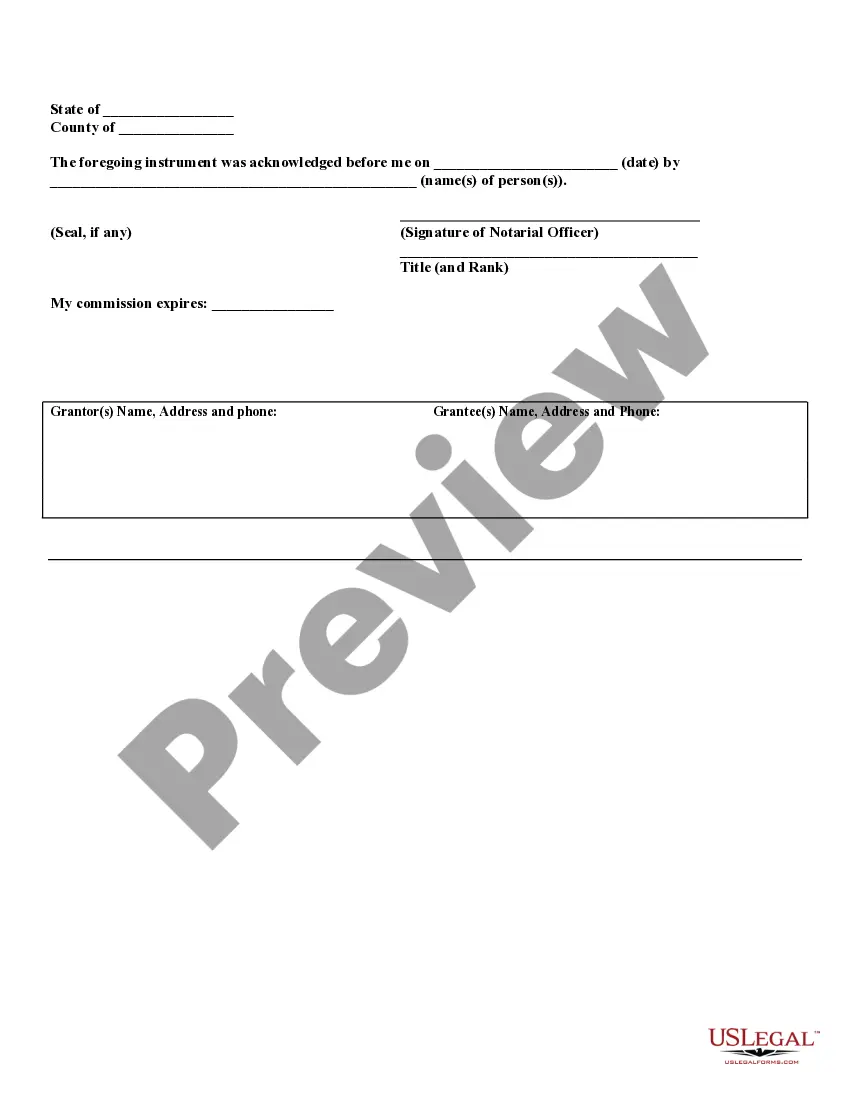
- Space for notarization to validate the deed.


When to use this document
This form is beneficial when individuals wish to convert their property from separate or joint ownership into a joint tenancy arrangement. This might be applicable for married couples who want to ensure that their shared assets pass directly to the surviving spouse, or for friends or family members who want to co-own property with survivorship rights. It is typically used in estate planning and property transactions.
Who this form is for
- Individuals seeking to establish a joint tenancy arrangement for property ownership.
- Married couples looking to secure rights of survivorship in real estate.
- Co-owners of property who desire clear title transfer upon death.
- People involved in estate planning for their property and assets.
How to prepare this document
- Identify the Grantor(s) and Grantee(s) by entering their full names.
- State the consideration amount, typically shown as "Ten Dollars ($10.00) and other good and valuable consideration."
- Provide a detailed legal description of the property being conveyed.
- Specify the intention to create a joint tenancy, noting rights of survivorship.
- Sign the form in front of a notary public and ensure all required signatures are obtained.
Is notarization required?
Notarization is required for this form to take effect. Our online notarization service, powered by Notarize, lets you verify and sign documents remotely through an encrypted video session, available 24/7.
Get your form ready online
Our built-in tools help you complete, sign, share, and store your documents in one place.
Make edits, fill in missing information, and update formatting in US Legal Forms—just like you would in MS Word.
Download a copy, print it, send it by email, or mail it via USPS—whatever works best for your next step.
Sign and collect signatures with our SignNow integration. Send to multiple recipients, set reminders, and more. Go Premium to unlock E-Sign.
If this form requires notarization, complete it online through a secure video call—no need to meet a notary in person or wait for an appointment.
We protect your documents and personal data by following strict security and privacy standards.

Make edits, fill in missing information, and update formatting in US Legal Forms—just like you would in MS Word.

Download a copy, print it, send it by email, or mail it via USPS—whatever works best for your next step.

Sign and collect signatures with our SignNow integration. Send to multiple recipients, set reminders, and more. Go Premium to unlock E-Sign.

If this form requires notarization, complete it online through a secure video call—no need to meet a notary in person or wait for an appointment.

We protect your documents and personal data by following strict security and privacy standards.
Common mistakes to avoid
- Failure to provide a complete legal description of the property.
- Not having the form properly notarized, which is crucial for validity.
- Leaving fields blank where information is required, such as names or dates.
- Not specifying the correct intention regarding joint tenancy.
Benefits of using this form online
- Convenient access to properly formatted forms that comply with state requirements.
- Ability to fill out the document digitally, reducing the chance of errors compared to handwritten entries.
- Instant downloads allow for immediate use, saving time in the deed preparation process.
- Reliable and secure document preparation, ensuring legal validity.
Key takeaways
- The Warranty Deed allows for seamless transfer of property while ensuring rights of survivorship.
- Always ensure the form is completed and signed in front of a notary public.
- Use this form to simplify estate planning and property management between co-owners.
- Double-check the legal description of the property to avoid complications.
Looking for another form?

Form popularity
FAQ
What Is the Difference Between a Warranty Deed & a Survivorship Deed?A warranty deed is the most comprehensive and provides the most guarantees. Survivorship isn't so much a deed as a title. It's a way to co-own property where, upon the death of one owner, ownership automatically passes to the survivor.
A joint tenant can indeed sever the right of survivorship WITHOUT the consent of the other joint tenants.In order to sever the right of survivorship, a tenant must only record a new deed showing that his or her interest in the title is now held in a Tenancy-in-Common or as Community Property.
In Oklahoma, title to real property can be transferred from one party to another by executing a special warranty deed. A special warranty deed conveys an interest in real property to the named grantee with limited warranties of title.Generally, real property is owned in either sole ownership or in co-ownership.
For example, joint tenants must all take title simultaneously from the same deed while tenants in common can come into ownership at different times. Another difference is that joint tenants all own equal shares of the property, proportionate to the number of joint tenants involved.
Survivorship rights take precedence over any contrary terms in a person's will because property subject to rights of survivorship is not legally part of their estate at death and so cannot be distributed through a will.
In title law, when we talk about tenants, we're talking about people who own property.When joint tenants have right of survivorship, it means that the property shares of one co-tenant are transferred directly to the surviving co-tenant (or co-tenants) upon their death.
What Is the Difference Between a Warranty Deed & a Survivorship Deed?A warranty deed is the most comprehensive and provides the most guarantees. Survivorship isn't so much a deed as a title. It's a way to co-own property where, upon the death of one owner, ownership automatically passes to the survivor.
If you look at the registered title to your own jointly owned property and the text isn't shown on it, you own it as joint tenants. If it is there, you own it as tenants-in-common.
With a Survivorship Deed in place, when one of the parties in a joint tenancy dies, the other party (or parties) takes over the deceased party's interest in the property instead of it passing to the deceased's heirs or beneficiaries.