Minnesota Warning of Default on Commercial Lease
What this document covers
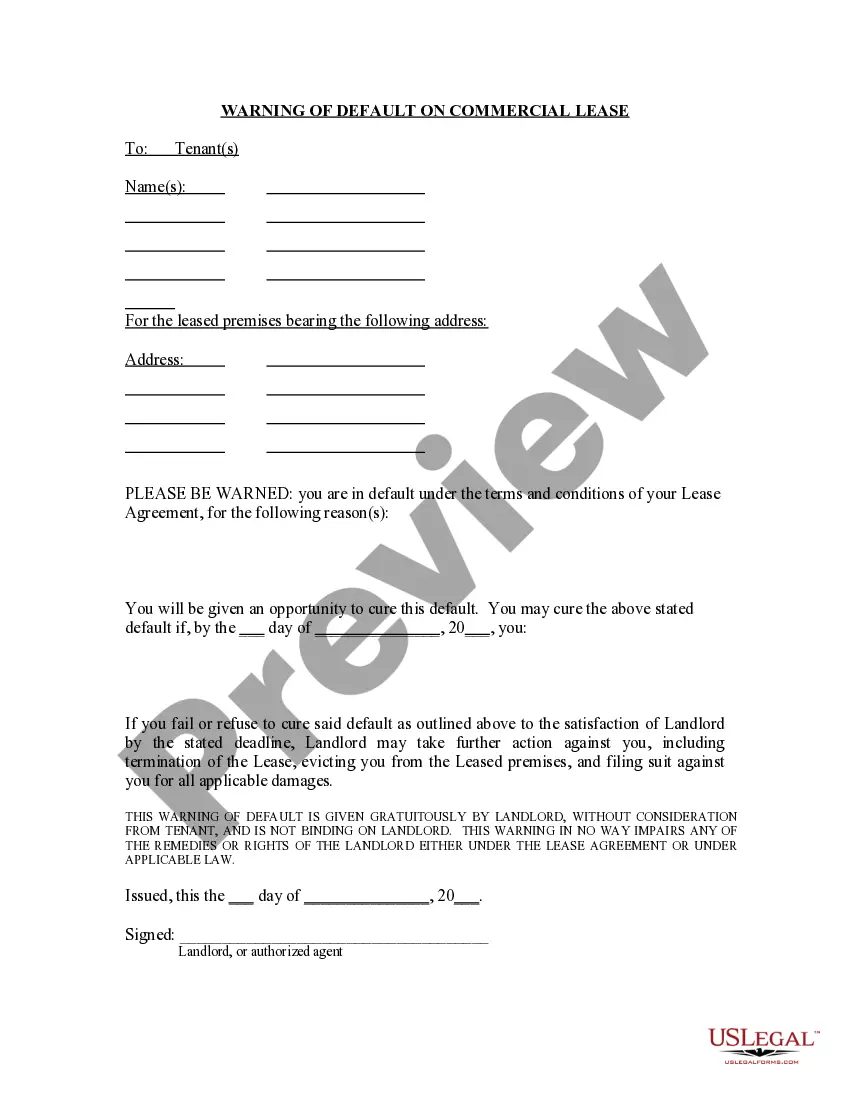
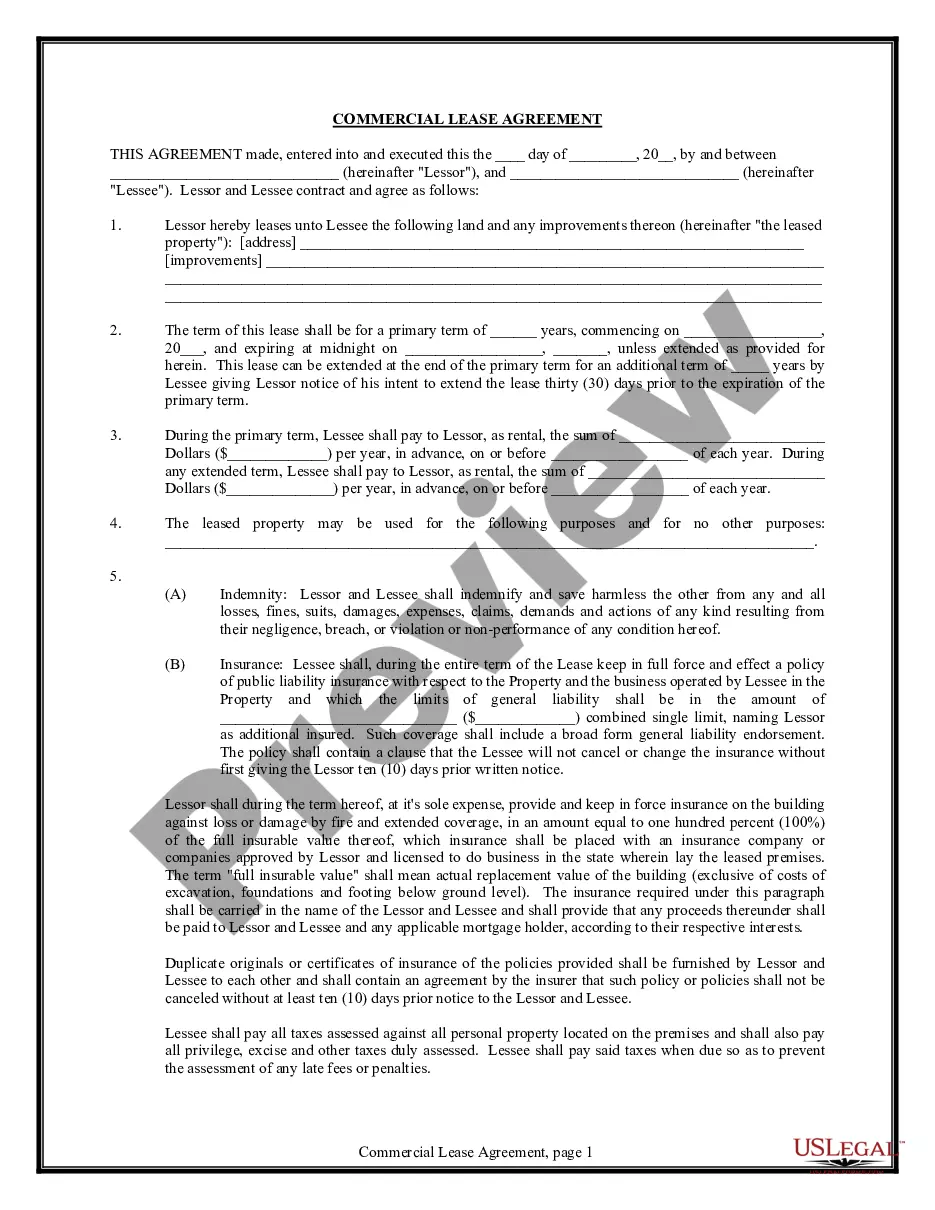
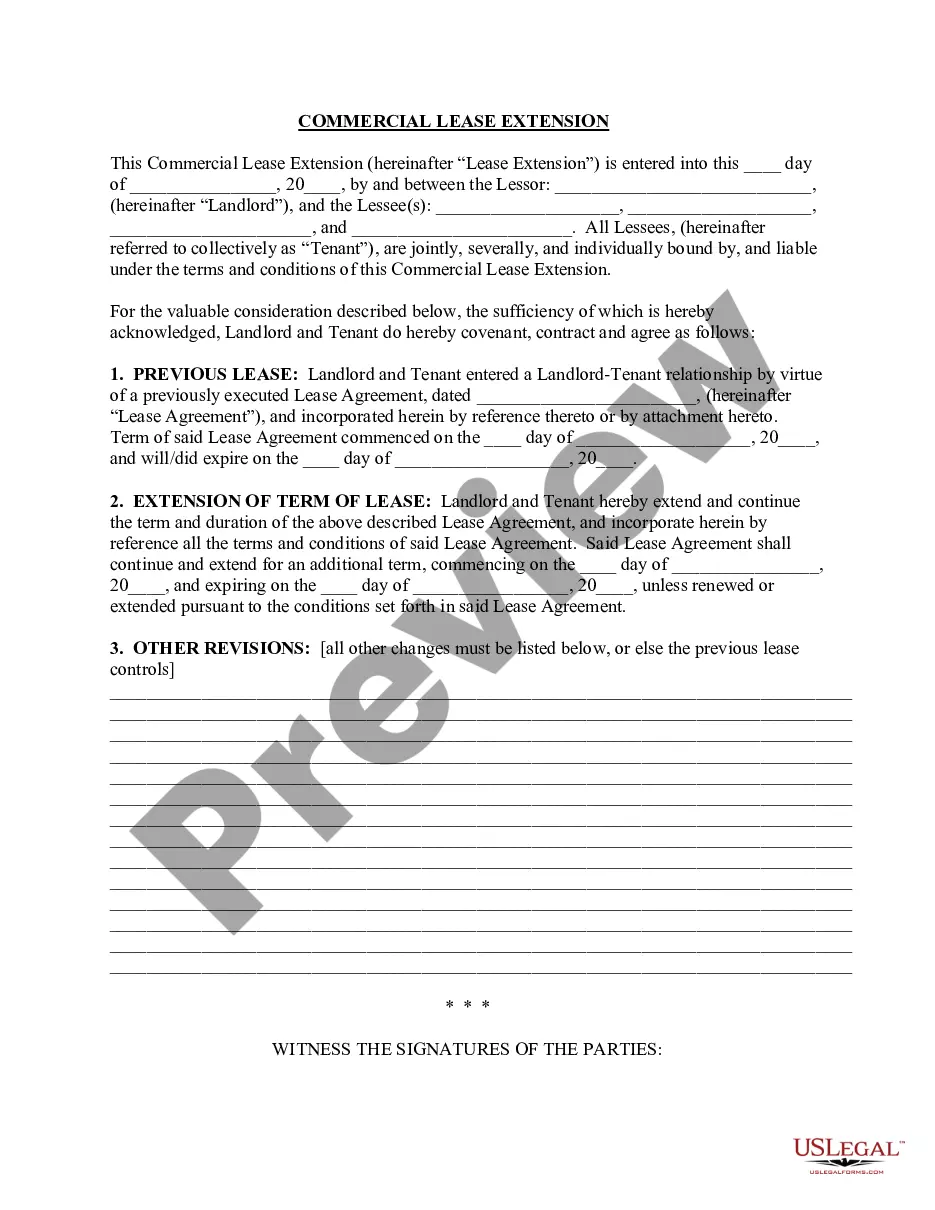
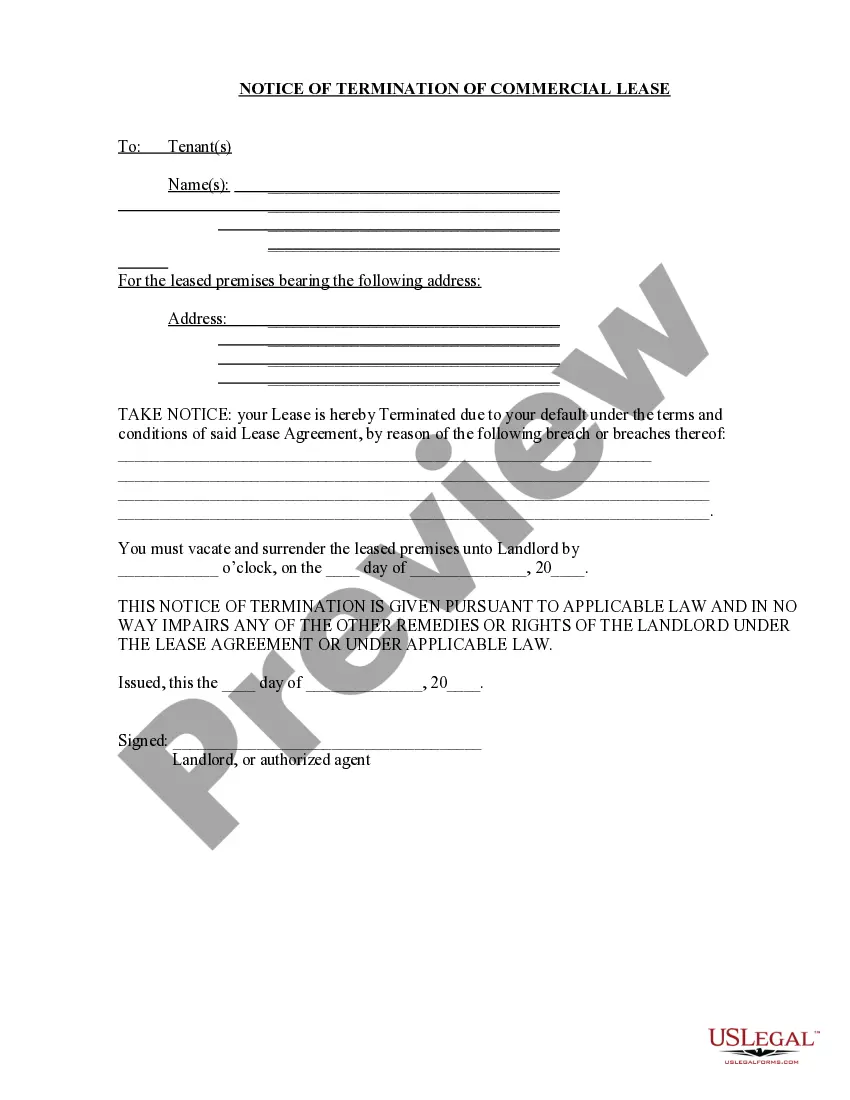
The Warning of Default on Commercial Lease is a formal notice from a landlord to a tenant. Its primary purpose is to address concerns regarding the tenant's failure to meet specific obligations under the lease agreement, particularly around payment of rent. This warning serves as a precursor to potential eviction proceedings, notifying the tenant of their non-compliance and offering an opportunity to rectify the situation before further legal action is taken.
Key parts of this document
- Date of issuance: Indicates when the warning is provided.
- Landlord's signature: Confirms the authenticity of the warning from the landlord or their authorized agent.
- Non-binding nature: Clarifies that this warning is given freely and does not impair the landlord's rights under the lease or applicable law.
When this form is needed
This form should be used whenever a landlord needs to formally notify a tenant that they are in default under the lease agreement. Common scenarios include failure to pay rent on time, neglecting maintenance responsibilities, or violating other lease terms. Providing this warning allows the tenant a chance to remedy the situation before the landlord takes further action, such as eviction or claiming the security deposit.
Who this form is for
- Landlords looking to notify their tenants of default on a commercial lease.
- Property managers acting on behalf of landlords to enforce lease terms.
- Legal professionals advising landlords on lease enforcement procedures.
How to complete this form
- Enter the date of issuance at the top of the document.
- Fill in the day and month in the designated fields.
- Sign the form to certify that you are the landlord or an authorized agent.
- Provide the tenant with a copy of the warning for their records.
Notarization requirements for this form
This form does not typically require notarization to be legally valid. However, some jurisdictions or document types may still require it. US Legal Forms provides secure online notarization powered by Notarize, available 24/7 for added convenience.
Get your form ready online
Our built-in tools help you complete, sign, share, and store your documents in one place.
Make edits, fill in missing information, and update formatting in US Legal Forms—just like you would in MS Word.
Download a copy, print it, send it by email, or mail it via USPS—whatever works best for your next step.
Sign and collect signatures with our SignNow integration. Send to multiple recipients, set reminders, and more. Go Premium to unlock E-Sign.
If this form requires notarization, complete it online through a secure video call—no need to meet a notary in person or wait for an appointment.
We protect your documents and personal data by following strict security and privacy standards.

Make edits, fill in missing information, and update formatting in US Legal Forms—just like you would in MS Word.

Download a copy, print it, send it by email, or mail it via USPS—whatever works best for your next step.

Sign and collect signatures with our SignNow integration. Send to multiple recipients, set reminders, and more. Go Premium to unlock E-Sign.

If this form requires notarization, complete it online through a secure video call—no need to meet a notary in person or wait for an appointment.

We protect your documents and personal data by following strict security and privacy standards.
Mistakes to watch out for
- Failing to include the date of issuance.
- Not signing the form, making it unenforceable.
- Neglecting to provide adequate notice based on state-specific requirements.
Benefits of completing this form online
- Convenient access to forms at any time, facilitating timely communication with tenants.
- Editability allows for customization to fit specific lease agreements and situations.
- Reliable templates drafted by licensed attorneys ensure legal compliance.
Looking for another form?

Form popularity
FAQ
Surrender the Lease. One option for getting out of your commercial lease early is to approach your landlord and request to surrender the lease. Early Termination Clause. Some lease agreements will contain an early termination clause (commonly called a break clause). Assignment of Lease. Subletting the Premises. Licensing.
Minnesota law does provide for some leeway in terminating a lease under extreme circumstances. Read over your lease. It may include a "breaklease" clause that lets you break your lease by paying your landlord a fee.
If the commercial tenant is a shell corporation and/or does not have any assets of value, the commercial tenant may choose to walk away from its commercial lease obligations.Often the landlord will require guarantees in order to prevent a commercial tenant from walking away from its lease obligations.
For example, the lease may provide that in case of default, the landlord can recover late fees and interest. If the lease is a net lease, it may provide for the landlord to recover such things as property taxes, insurance, utilities, maintenance and repairs.
In general, an eviction from start to finish takes fewer than 30 days in Minnesota, but some cases do take longer.
Look for a clause: Re-read your lease and look for either a bailout clause or a co-tenancy clause. Ask: If you are in a good space in a popular area, your landlord will be more inclined to an early termination of the lease than if you are in a bad space in a hard-to-rent location.
Unless your lease says otherwise simply breaking it is not an option. This is known as "unilateral breach" and typical penalties can include: Paying the rent - One way or another, if you walk away from your lease and no one else rents the apartment then you will owe the landlord this money.
A break-early fee is a lump sum payment. The amount of the break-early fee will vary greatly depending upon the commercial tenant's specific circumstances. In exchange for the break-early fee, the landlord will agree to release the commercial tenant from all of its obligations under the commercial lease.