Mississippi Joint Divorce - Uncontested - Irreconcilable Differences - No Children
About this form
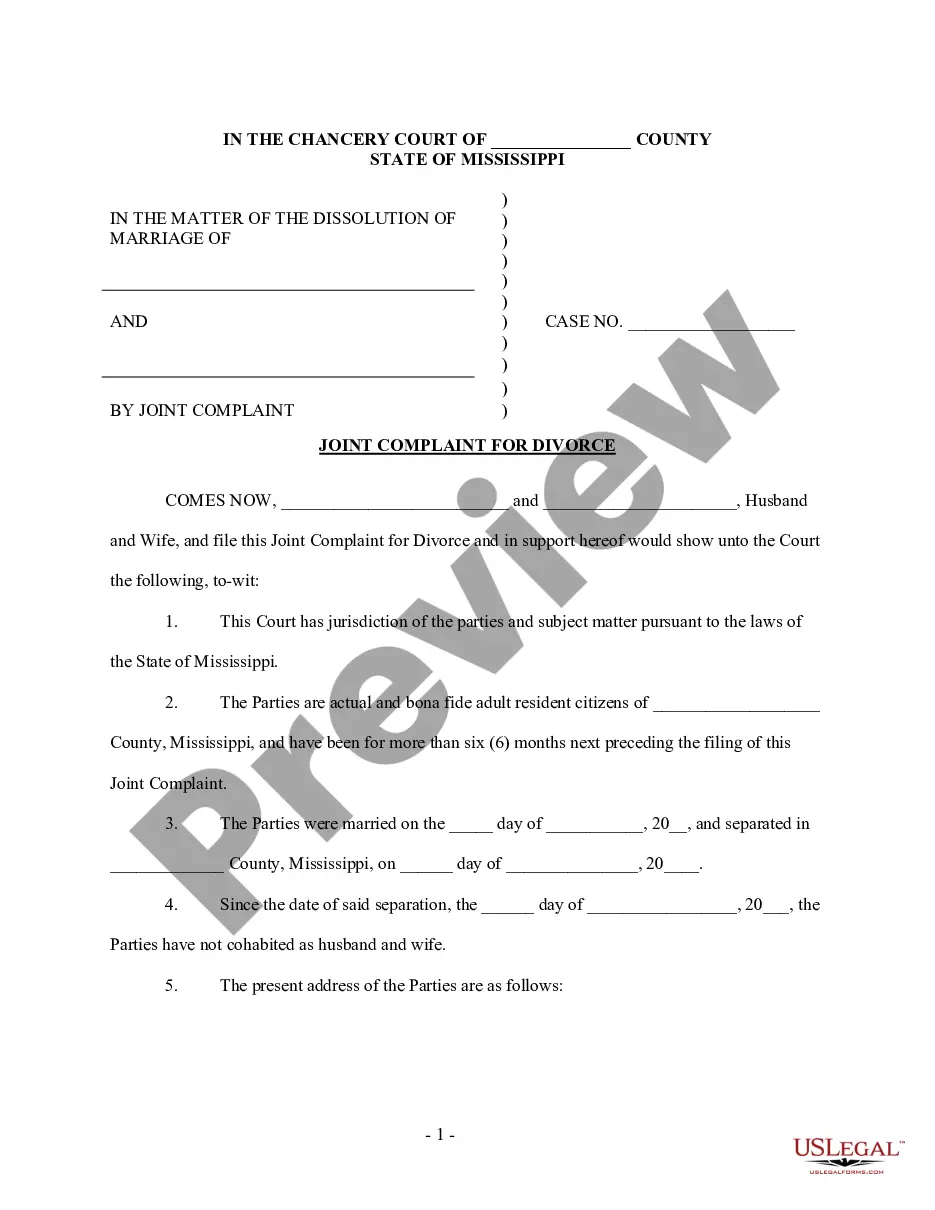
The Joint Divorce form for Uncontested Divorce based on Irreconcilable Differences is a legal document package specifically designed for couples in Mississippi who wish to dissolve their marriage amicably without involving children or significant property disputes. This package includes essential forms that collectively signify a completed divorce process, making it distinct from other divorce forms that may involve children or contested terms.
Key components of this form
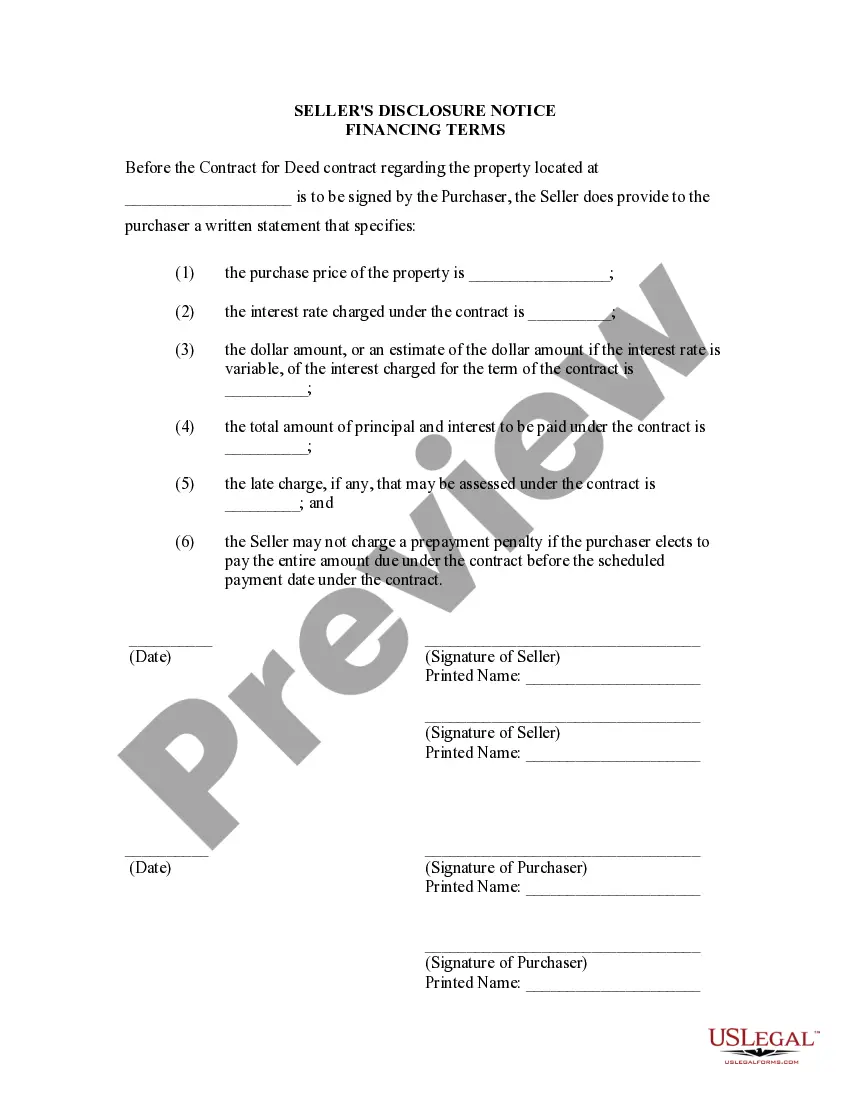
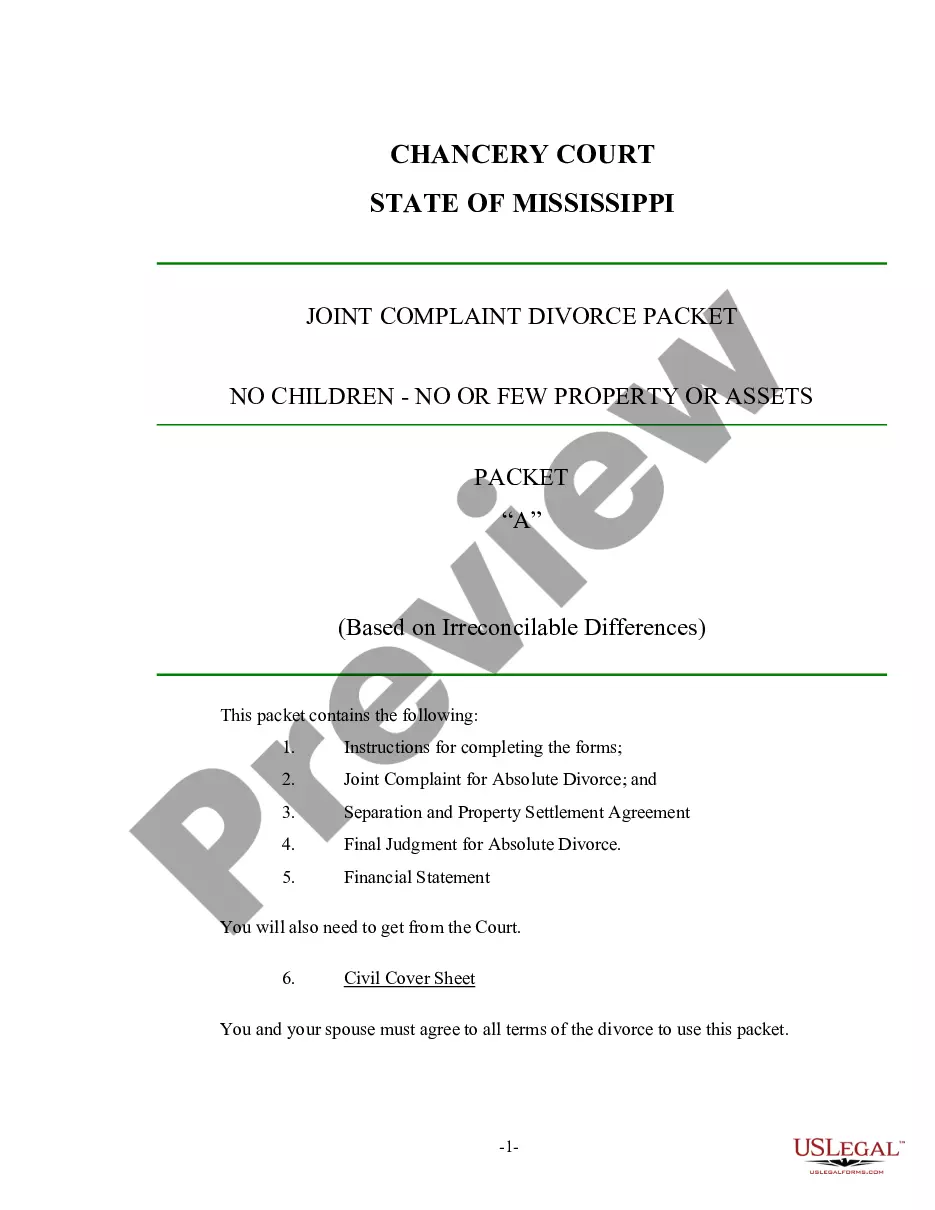
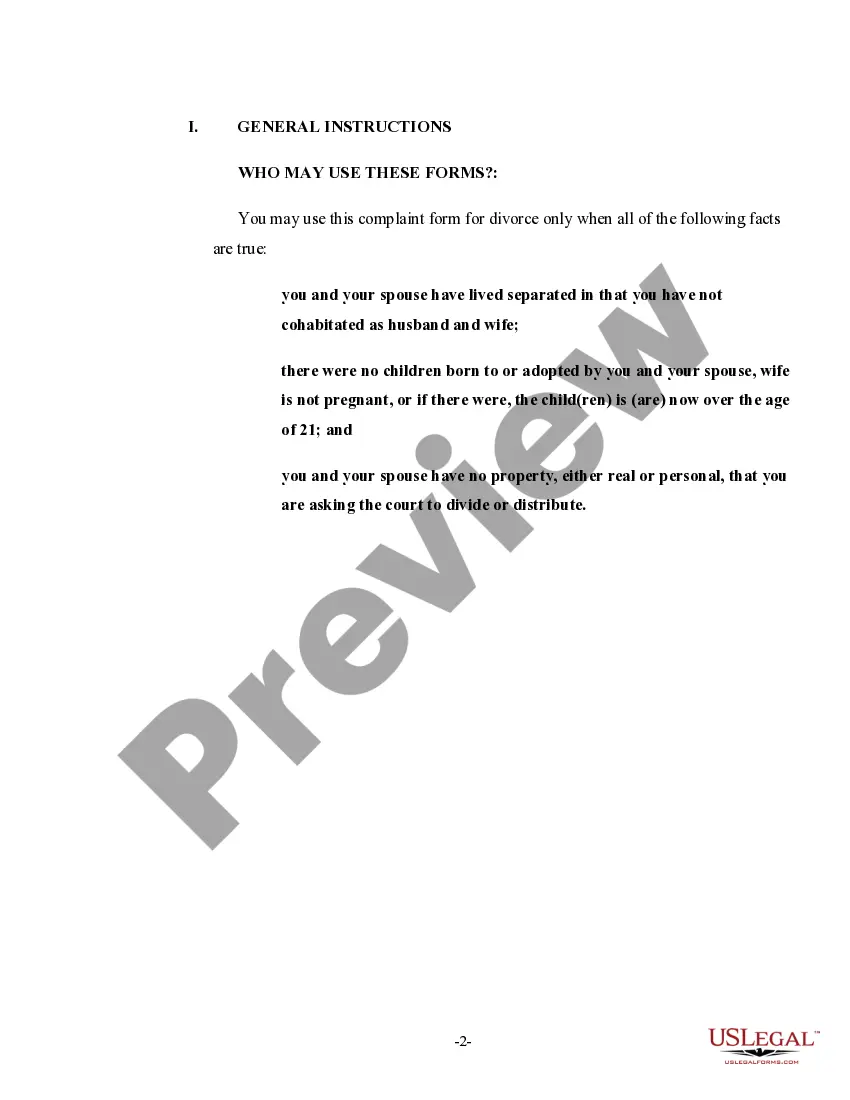
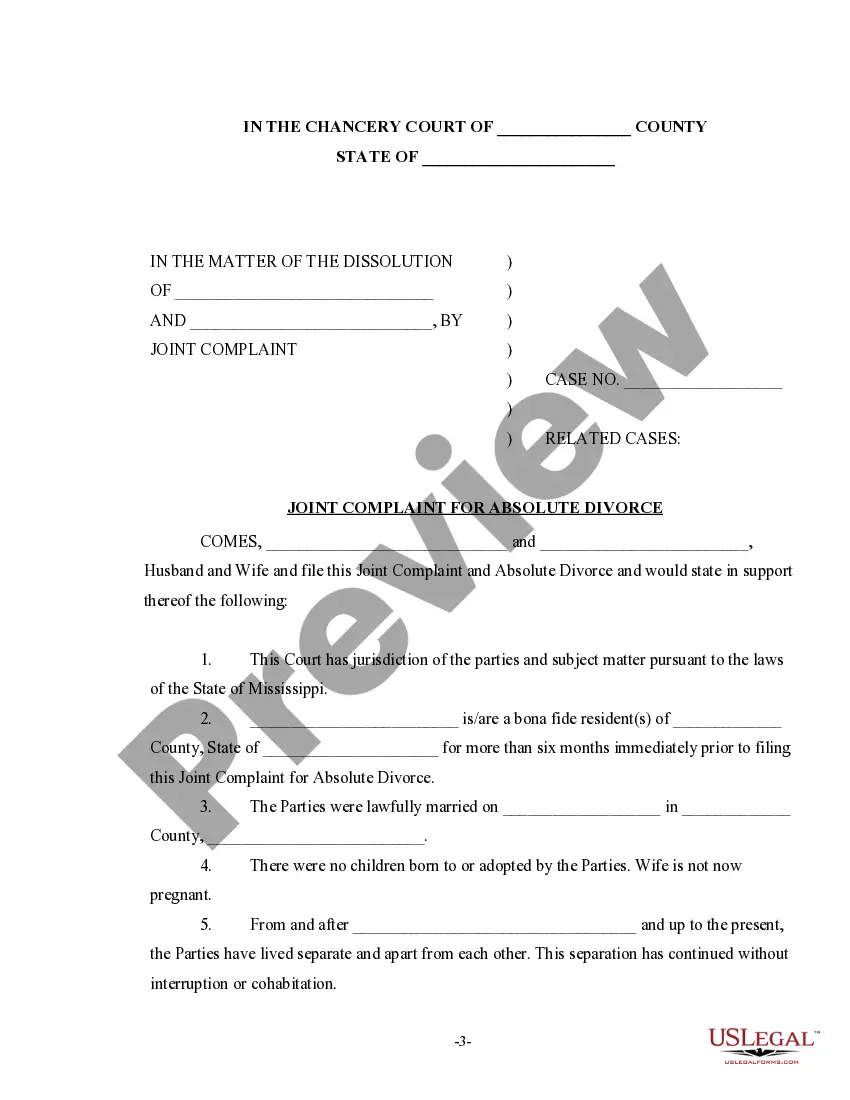
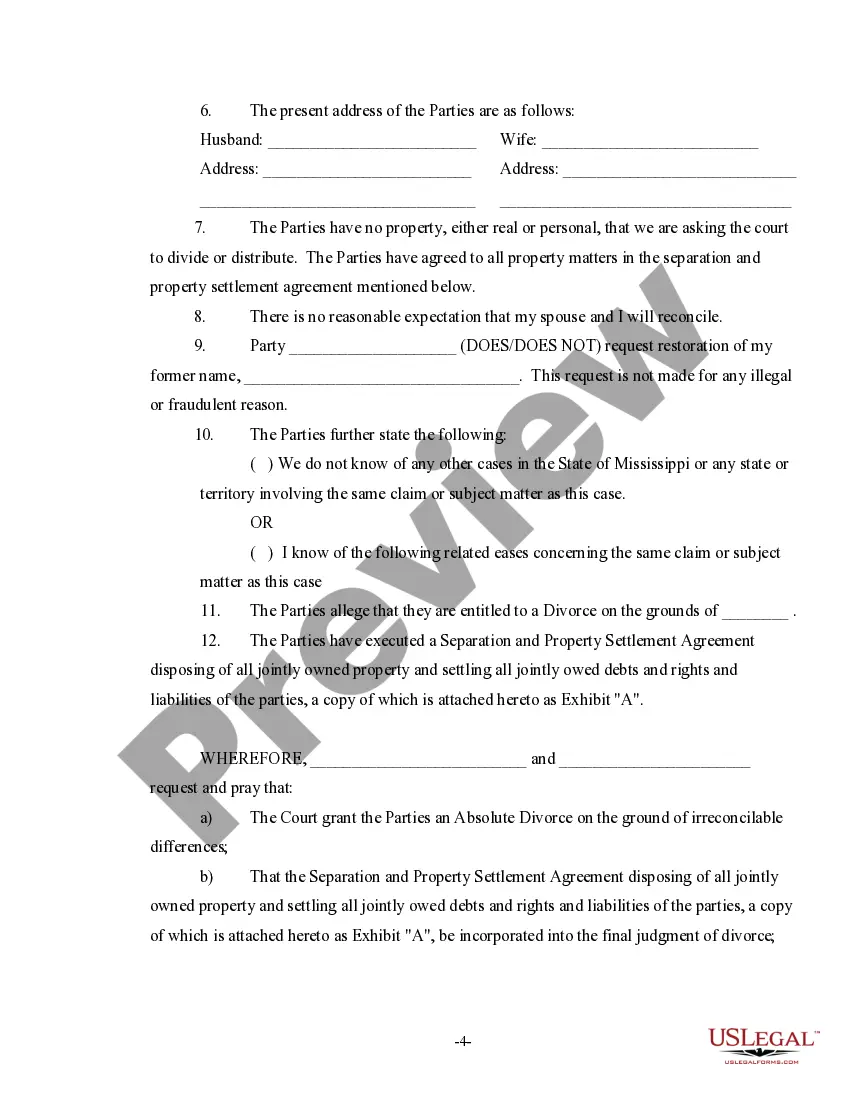
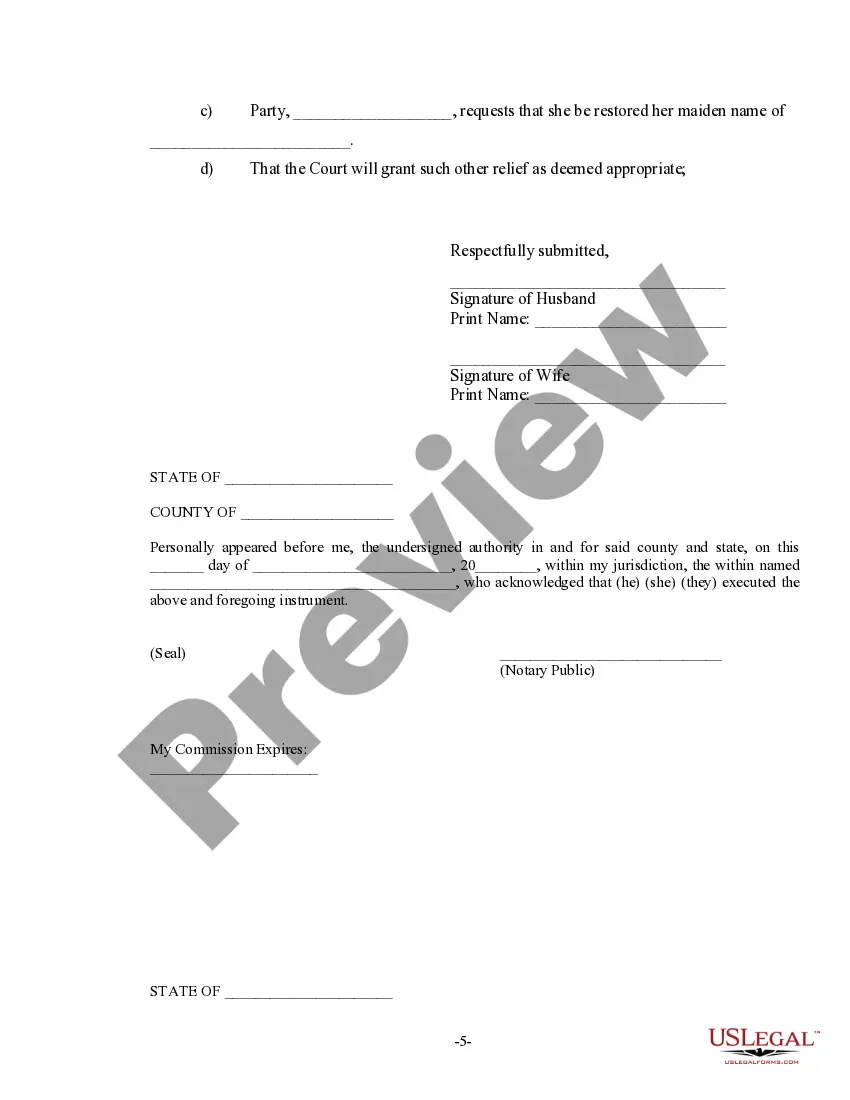
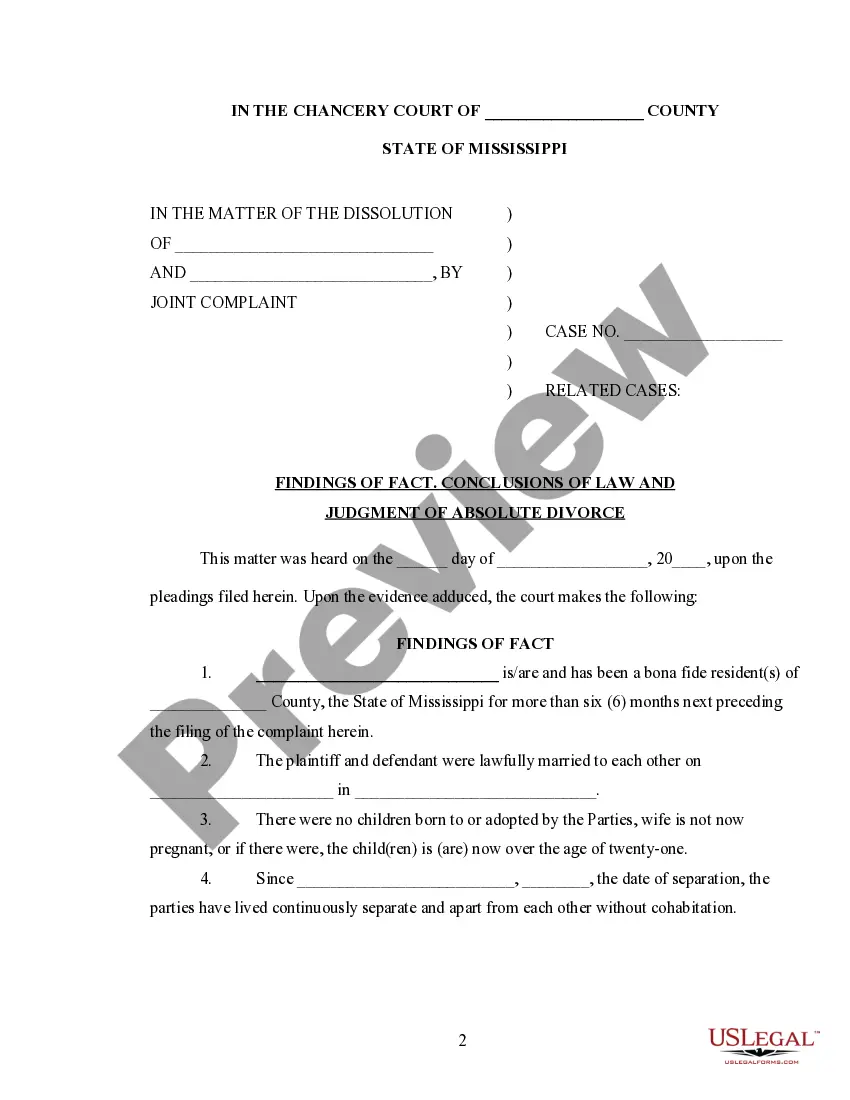
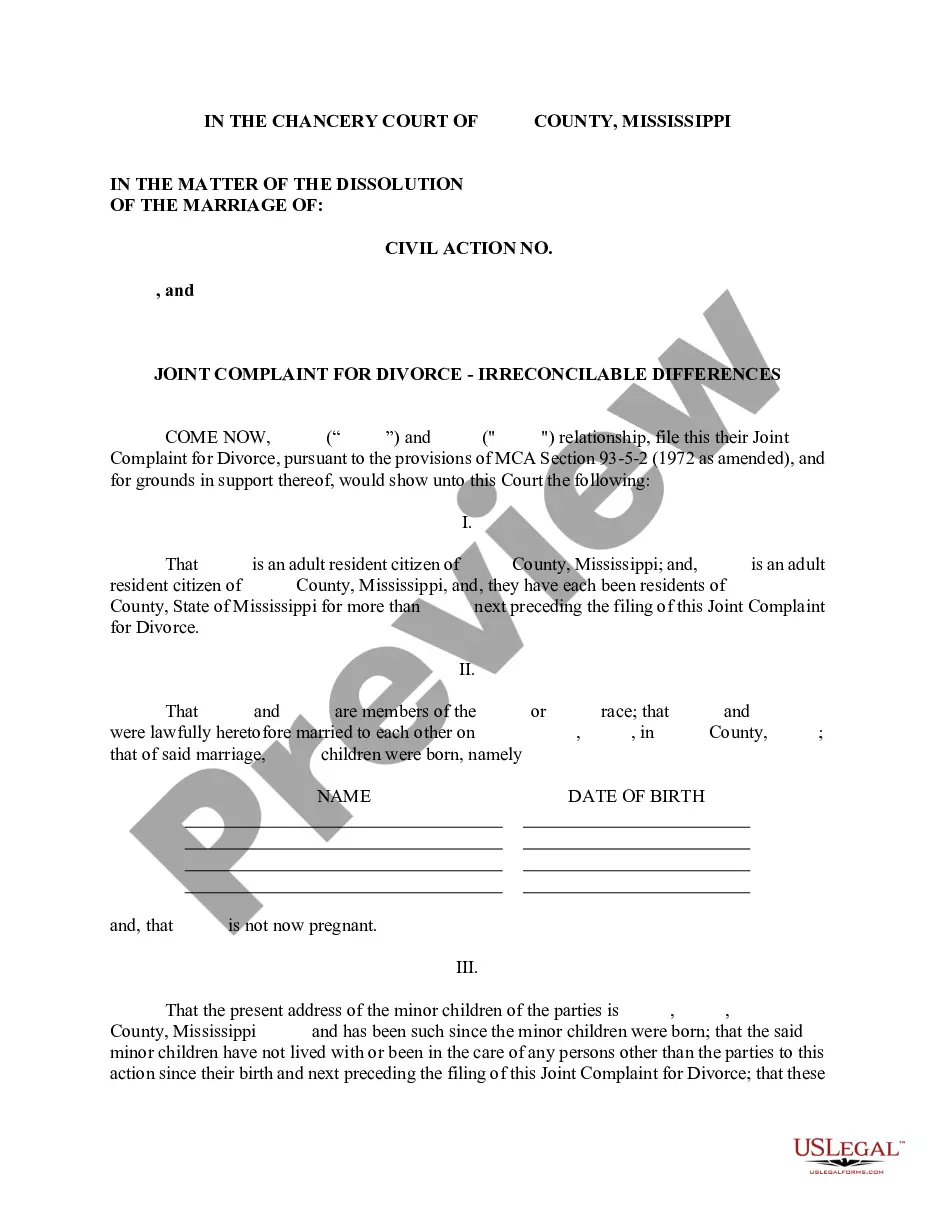
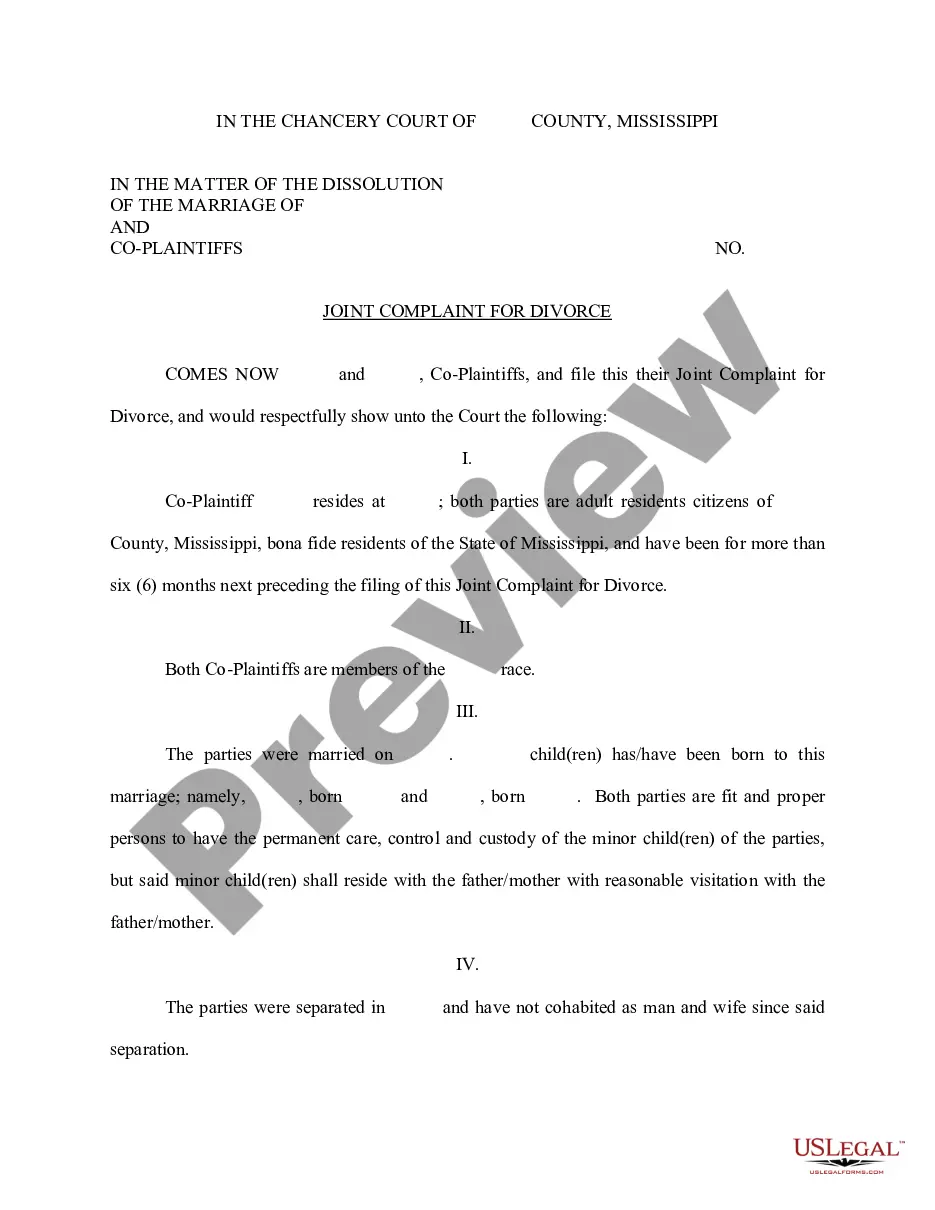
- Joint Complaint for Divorce: Initiates the divorce process, confirming the agreement of both parties on the grounds for divorce.
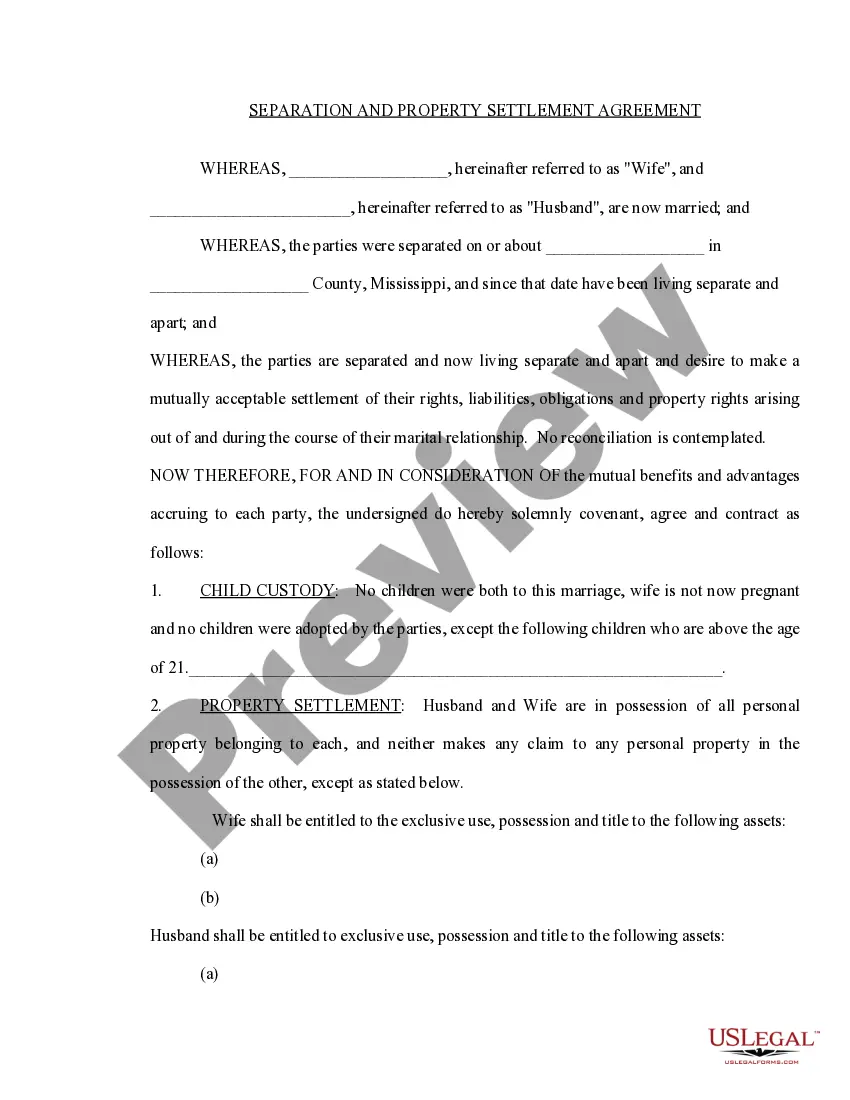
- Separation and Property Settlement Agreement: Outlines how any property or debts are managed and ensures mutual consent.
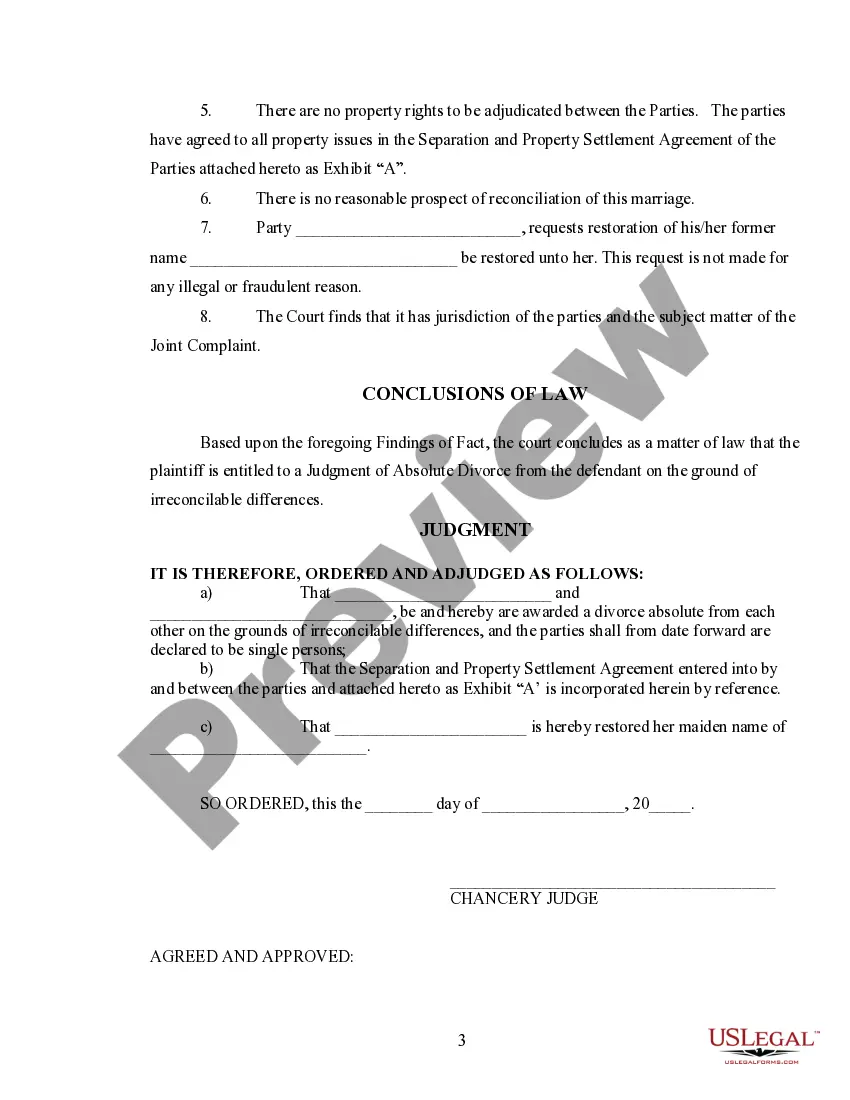
- Judgment of Divorce: The final decree issued by the court, formally ending the marriage.
- Financial Statement: Provides important financial information related to both parties' incomes and expenses as required by the court.


Common use cases
This form is appropriate for couples seeking a divorce without children involved and who have minimal or no shared assets. It can be used when both parties agree on the dissolution of their marriage terms and wish to avoid a contested legal battle, making the process simpler and less emotional.
Who should use this form
- Couples residing in Mississippi who have been married for any length of time.
- Individuals with no children from the marriage and no property disputes.
- Couples who can agree on all terms of the divorce, including property settlements.
How to prepare this document
- Identify the parties: Enter the names and addresses of both spouses in the Joint Complaint for Divorce.
- Complete the Separation and Property Settlement Agreement: Detail any agreements made regarding debt and property division.
- Prepare your Financial Statement: Gather and input your income and expenses to reflect your financial situation accurately.
- File the forms: Submit the aforementioned documents to the Chancery Court Clerk in your county, along with any required fees.
- Attend the court hearing: Be prepared to present your case to the judge if required, answer any questions, and finalize the divorce.
Is notarization required?
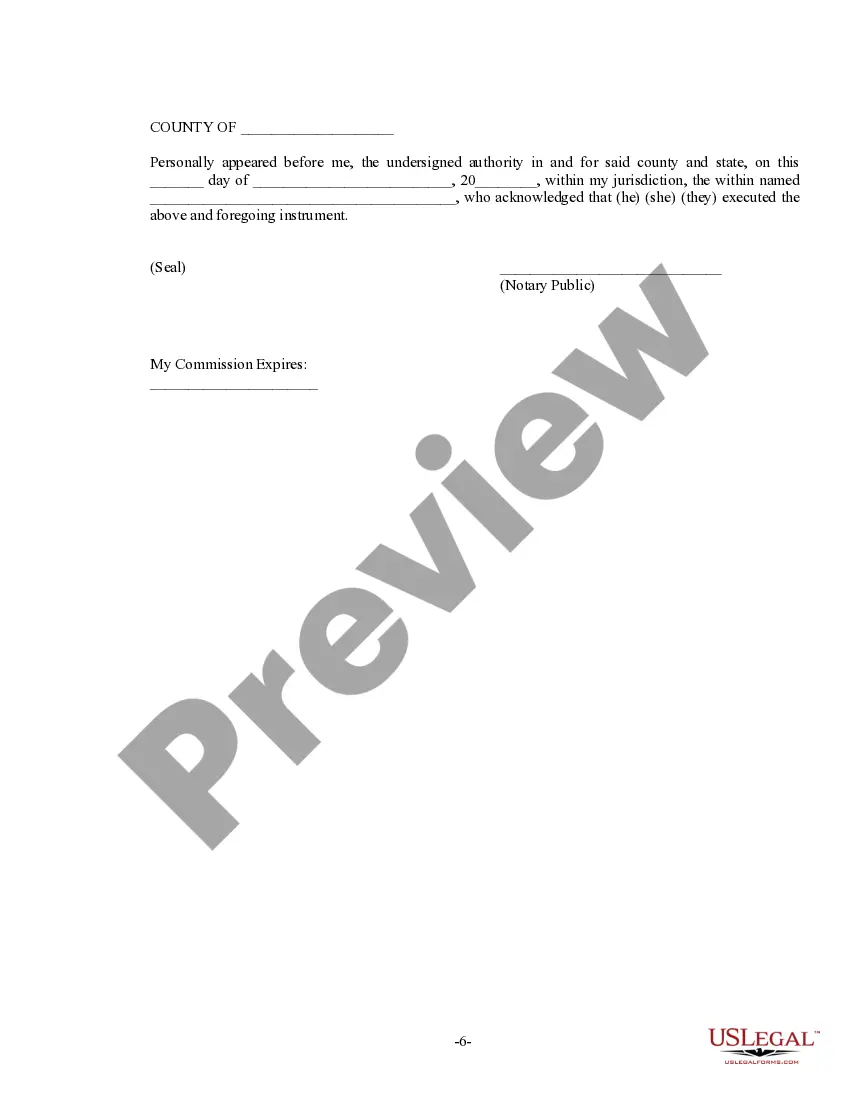
Yes, this form must be notarized to be legally valid. This requirement ensures that both parties have willingly signed the documents. US Legal Forms provides integrated online notarization services, providing secure video calls that allow you to complete the notarization process 24/7 without the need for travel.
Get your form ready online
Our built-in tools help you complete, sign, share, and store your documents in one place.
Make edits, fill in missing information, and update formatting in US Legal Forms—just like you would in MS Word.
Download a copy, print it, send it by email, or mail it via USPS—whatever works best for your next step.
Sign and collect signatures with our SignNow integration. Send to multiple recipients, set reminders, and more. Go Premium to unlock E-Sign.
If this form requires notarization, complete it online through a secure video call—no need to meet a notary in person or wait for an appointment.
We protect your documents and personal data by following strict security and privacy standards.

Make edits, fill in missing information, and update formatting in US Legal Forms—just like you would in MS Word.

Download a copy, print it, send it by email, or mail it via USPS—whatever works best for your next step.

Sign and collect signatures with our SignNow integration. Send to multiple recipients, set reminders, and more. Go Premium to unlock E-Sign.

If this form requires notarization, complete it online through a secure video call—no need to meet a notary in person or wait for an appointment.

We protect your documents and personal data by following strict security and privacy standards.
Common mistakes
- Failing to complete all forms correctly or omitting required information, which can delay the process.
- Not properly notarizing the forms if required, which may undermine their validity.
- Underestimating the importance of mutually agreeing on all terms before finalizing the paperwork.
Why complete this form online
- Instant access: Download and complete the forms at your convenience.
- Guidance: Enjoy clear instructions that simplify the process of filing.
- Cost-effective: Save on attorney fees by using these self-help resources.
- Confidential: Maintain privacy by handling your paperwork securely at home.
Legal use & context
- The Joint Divorce form is legally binding in the state of Mississippi when properly executed and filed with the court.
- This form is specifically tailored for uncontested divorces based on irreconcilable differences without children involved.
- Completing and filing this form correctly helps to avoid complications in the divorce process.
Summary of main points
- This form is for couples in Mississippi seeking an uncontested divorce without children or extensive property issues.
- Both parties must agree on all terms, including financial matters, before using the form.
- Complete and file the necessary documents with the court and ensure notarization to finalize the divorce legally.
Looking for another form?
Form popularity
FAQ
Once the papers have been filed with the court, the question, "How long does an uncontested divorce take?" is completely out of the parties' hands. The amount of time it will take to finalize the divorce by having a judge approve and sign the judgment can take anywhere from six weeks to 12 months.
Disagreements on finances and debt problems. Loss of trust in the relationship. Work that causes protracted long-distance separation. Lack of sexual intimacy. Personality conflicts. Communication difficulties. Failure to help in the household. Differing political opinions.
In California, a dissolution of marriage can be granted if the court finds that "irreconcilable differences" have caused an irrevocable breakdown of the marriage. In effect, this simply means that a married person who wants to end the marriage can do so, even if the other spouse wants to stay together.
A Mississippi Divorce Can Take a Few Months to Several Years Even uncontested divorces based on irreconcilable differences take at least 60 days.
To file for divorce in Mississippi, you must be a resident of the state for at least six months. An irreconcilable differences divorce requires a 60-day waiting period, assuming the spouses resolve all issues within that time and the court has approved the property settlement agreement.
Proving Irreconcilable Differences Additionally, the couple must prove that their marriage is unable to be reconciled now, or at any point in the future. Lastly, the couple must show that the irreconcilable differences have lasted for at least six months.
A mandatory 60-day waiting period follows any suit for an uncontested divorce. After this period is over, the couple is allowed to enter proceedings to finalize the divorce. During the 60 days, either party may contest the divorce, necessitating that the couple follows the procedure for a contested divorce.
The Matrimonial Causes Act 1959 provided 14 grounds for the grant of a decree of dissolution of marriage ('divorce'), including adultery, desertion, cruelty, habitual drunkenness, imprisonment and insanity. To succeed on one of these grounds, a spouse had to prove marital fault.