Mississippi Joint Complaint for Divorce
What this document covers
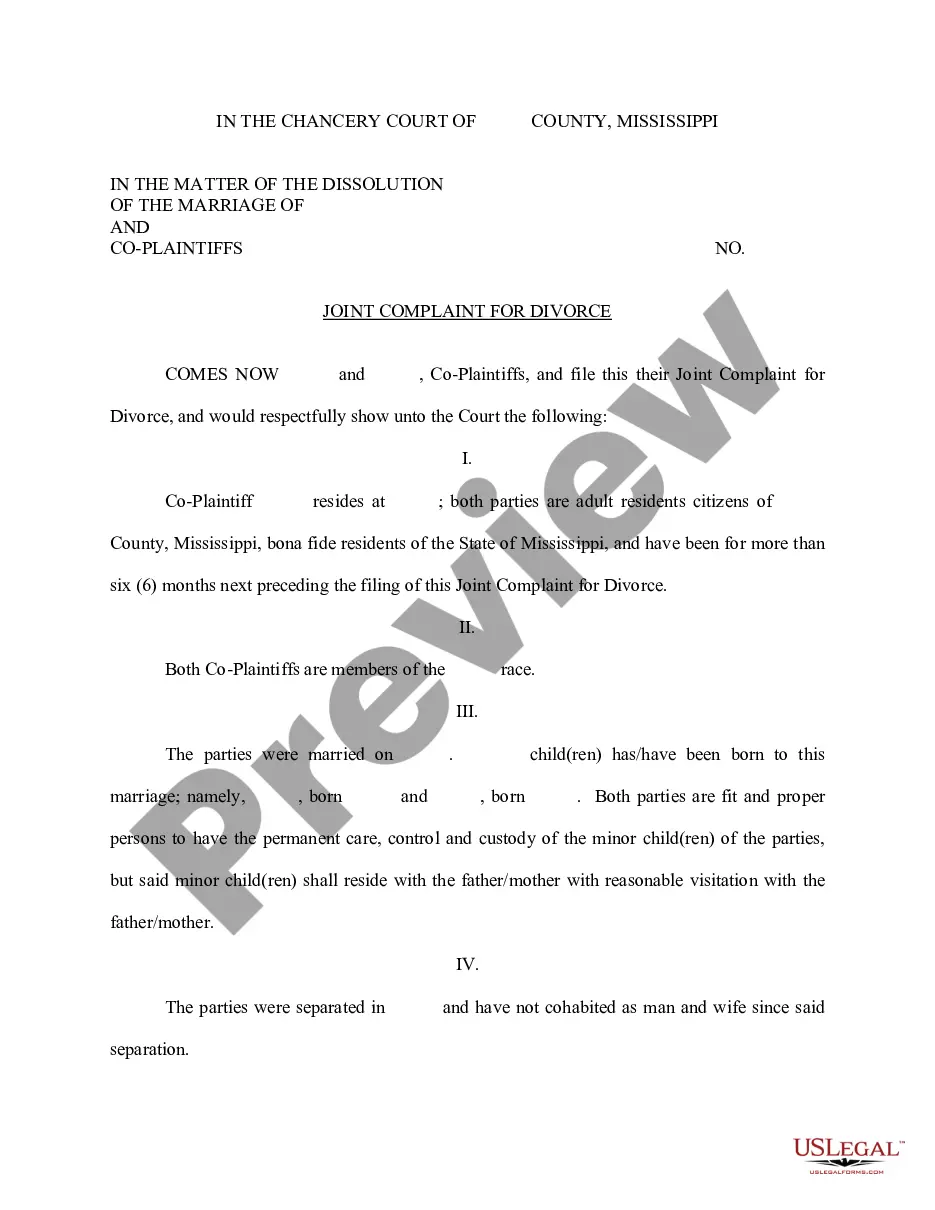
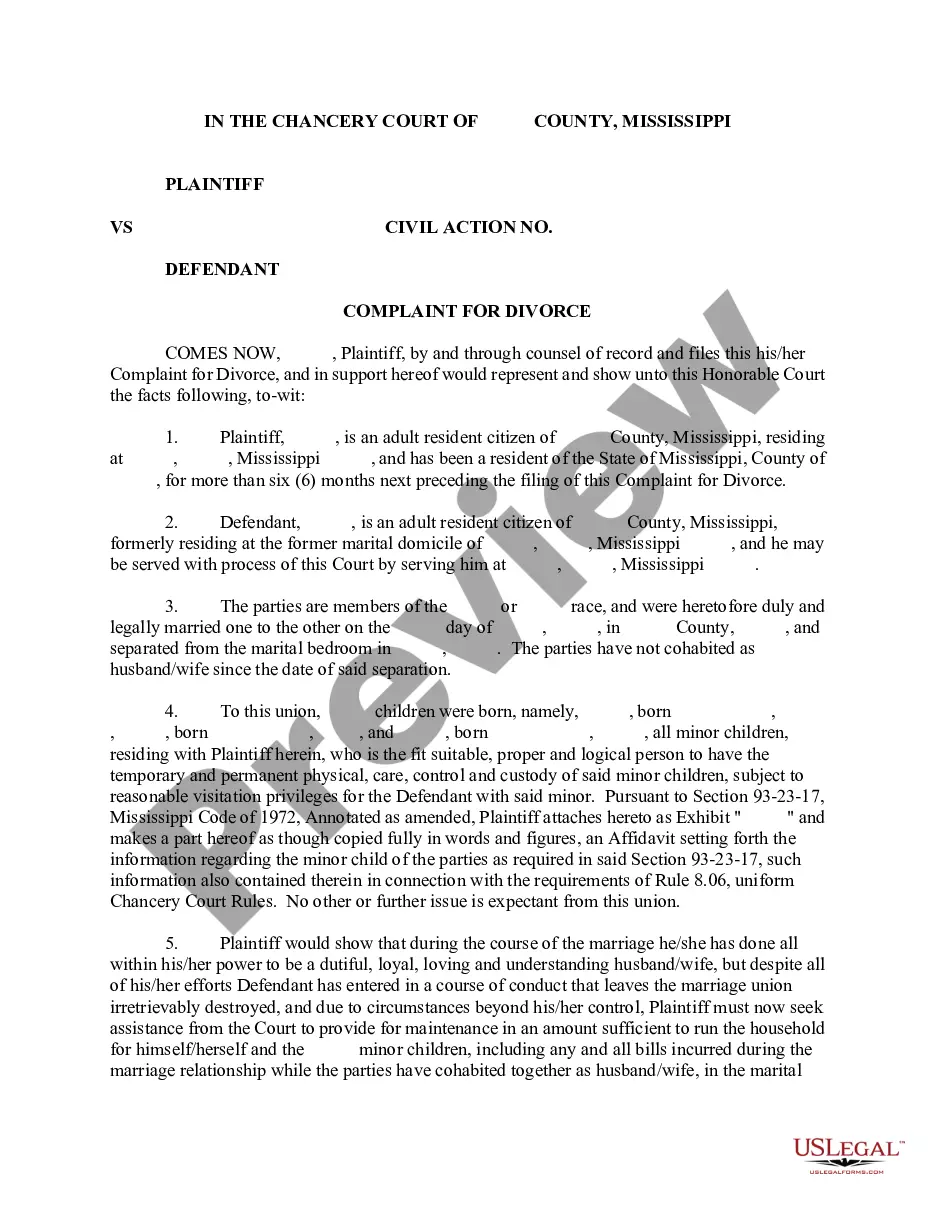
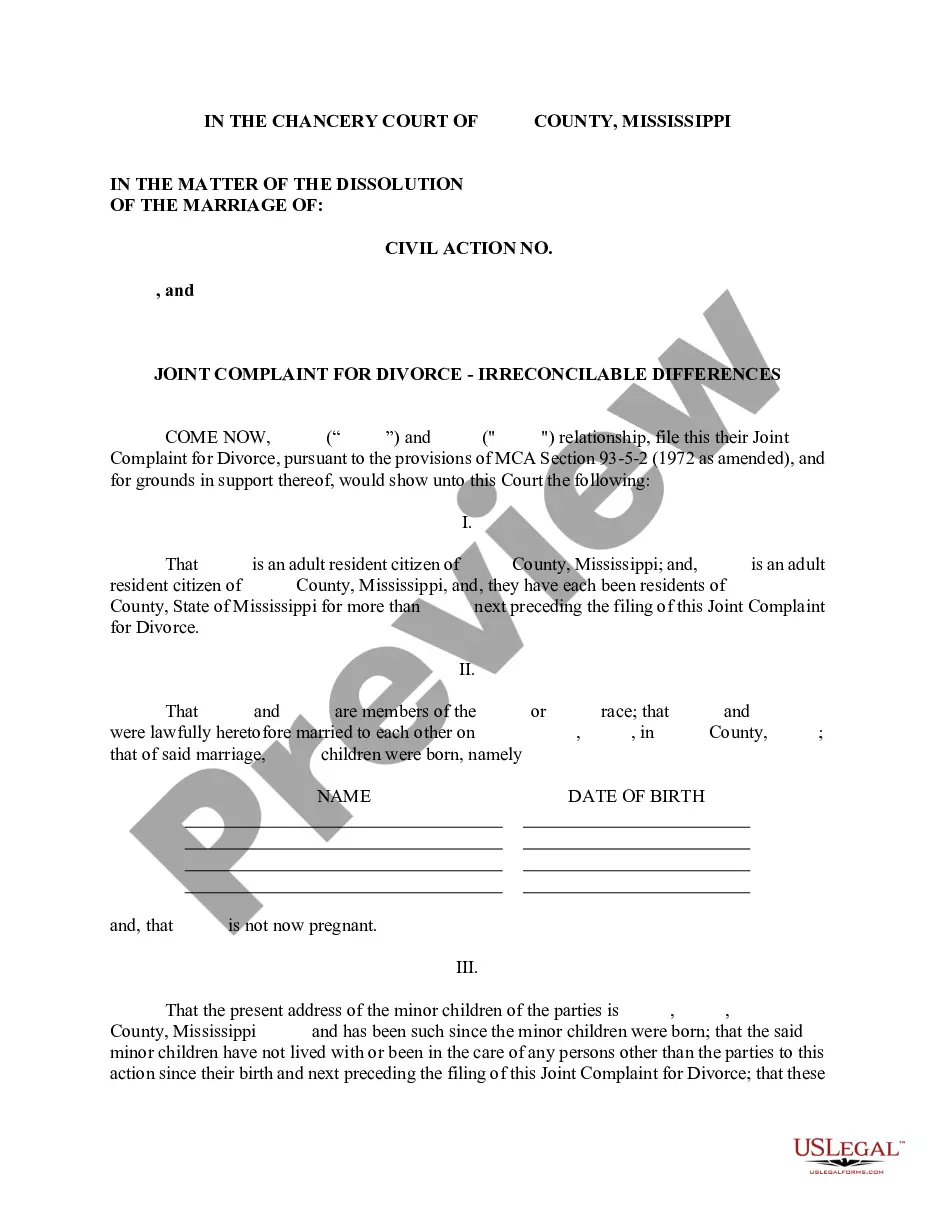
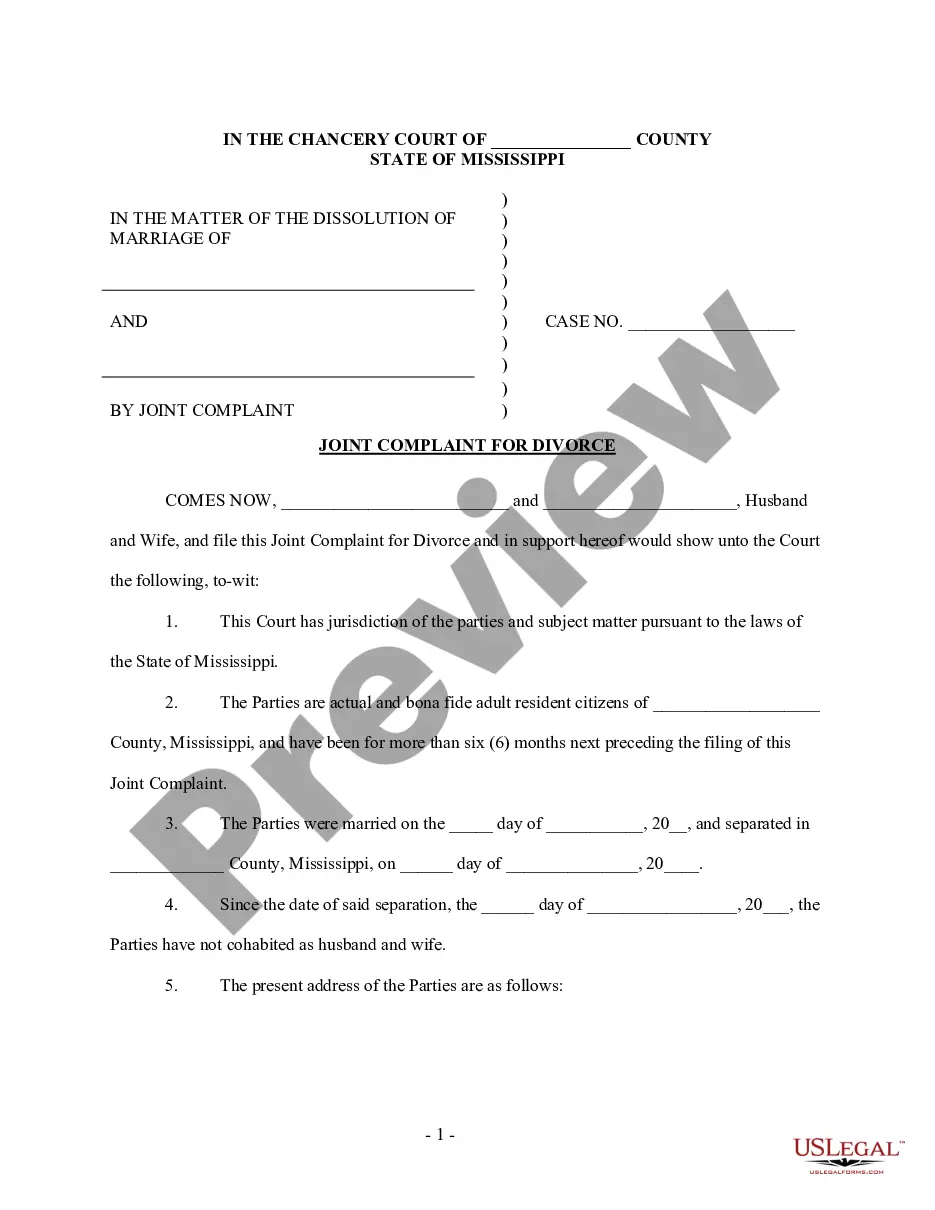
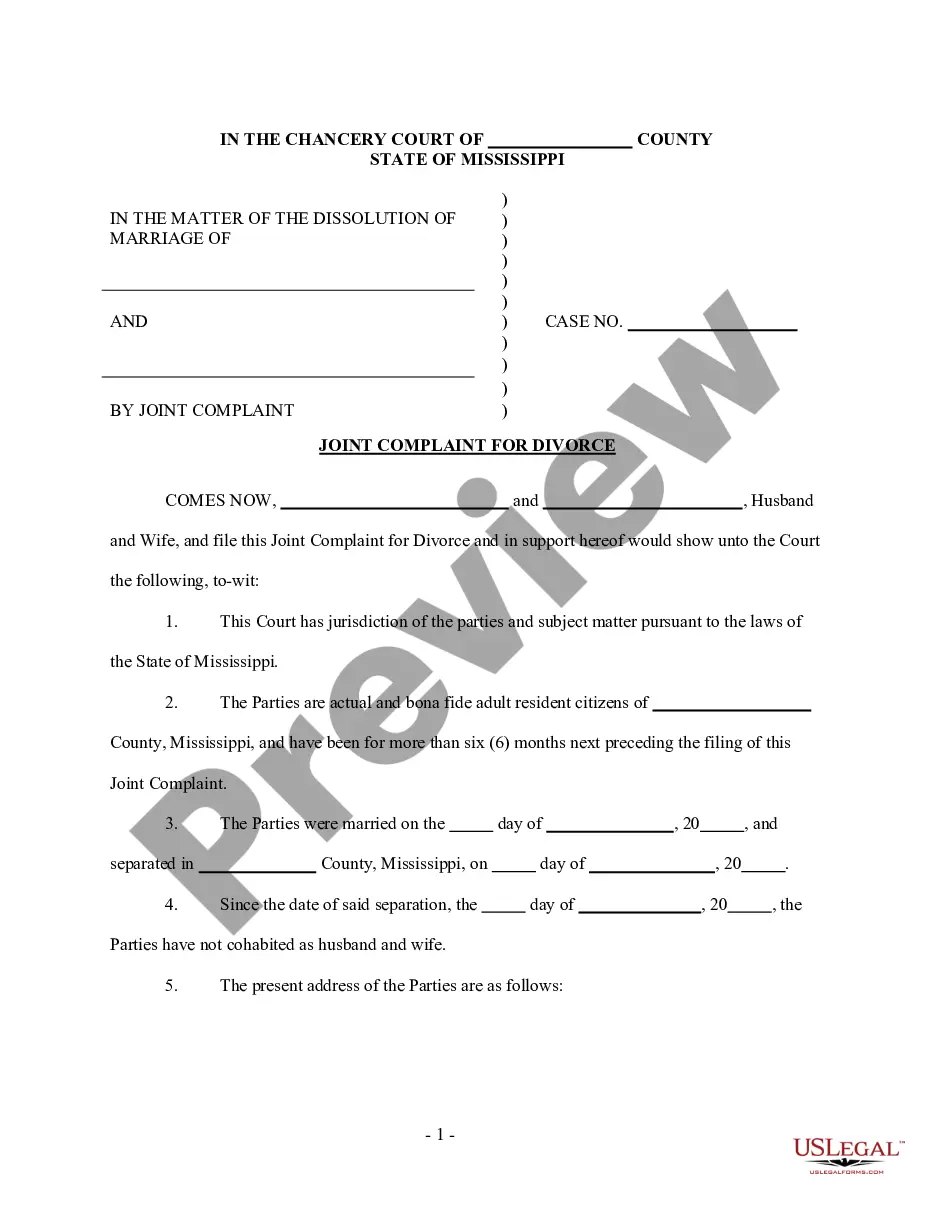
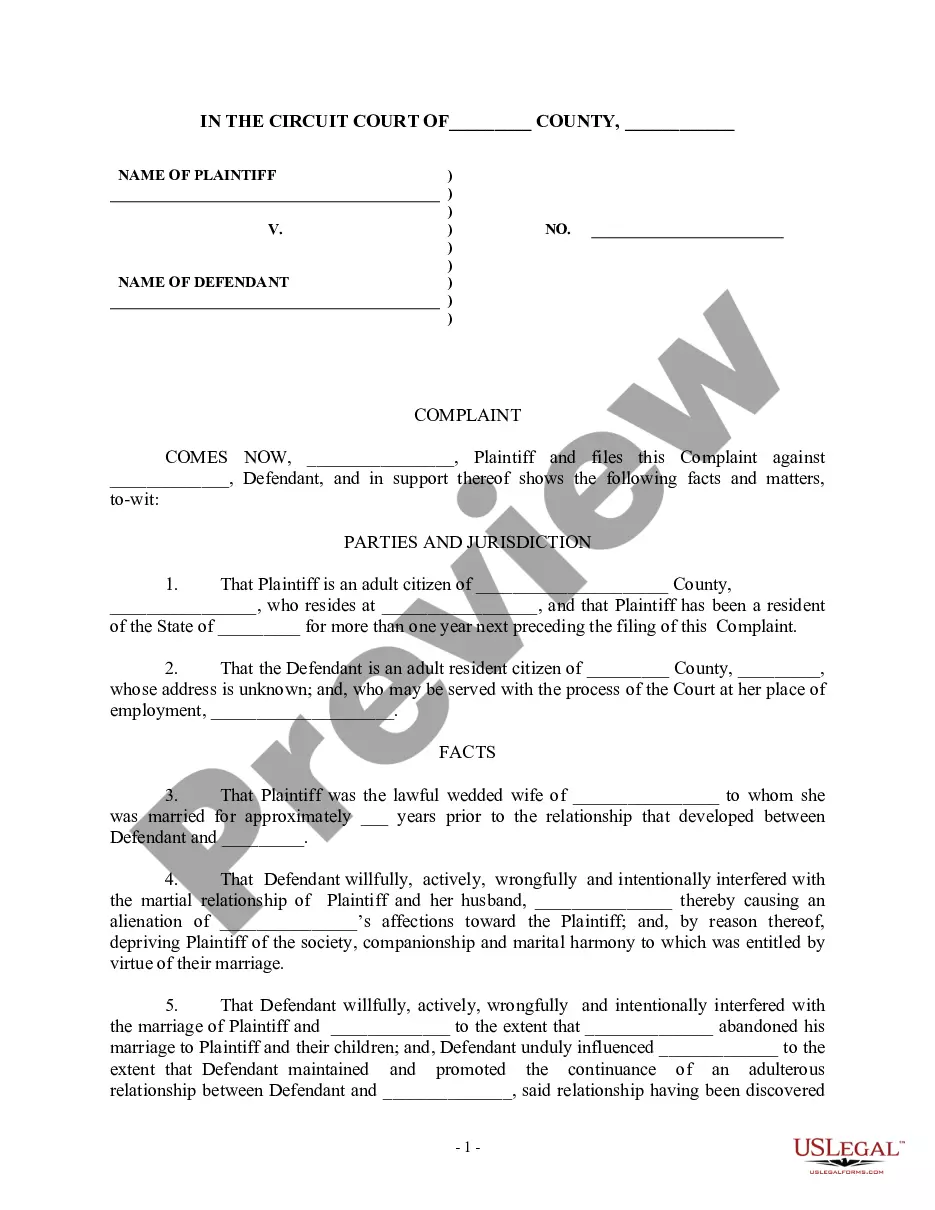
The Joint Complaint for Divorce is a legal document submitted by both spouses as co-plaintiffs when they agree on all aspects of their divorce. This form allows couples to file for divorce jointly, streamlining the process when no disputes exist, unlike traditional divorce complaints where one party may file against another.
Key parts of this document
- Identification of the co-plaintiffs (husband and wife)
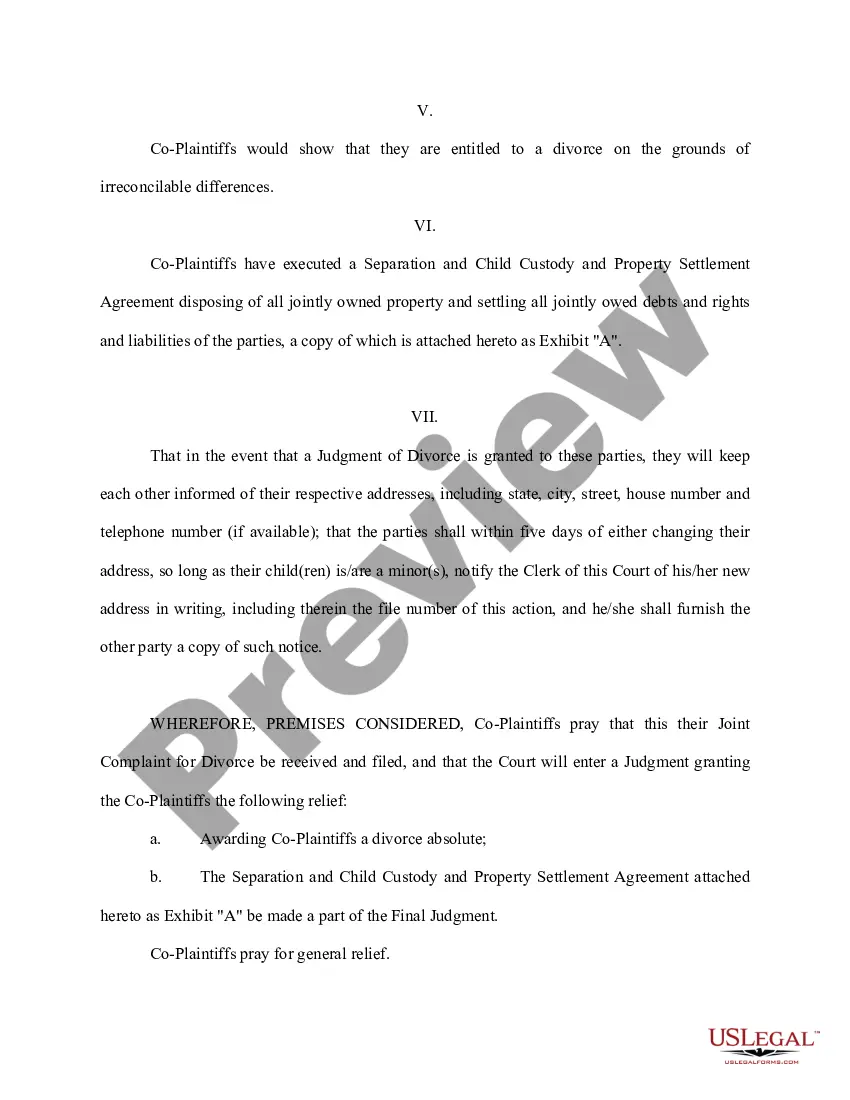
- Clauses outlining agreement on key issues, such as custody and property settlement
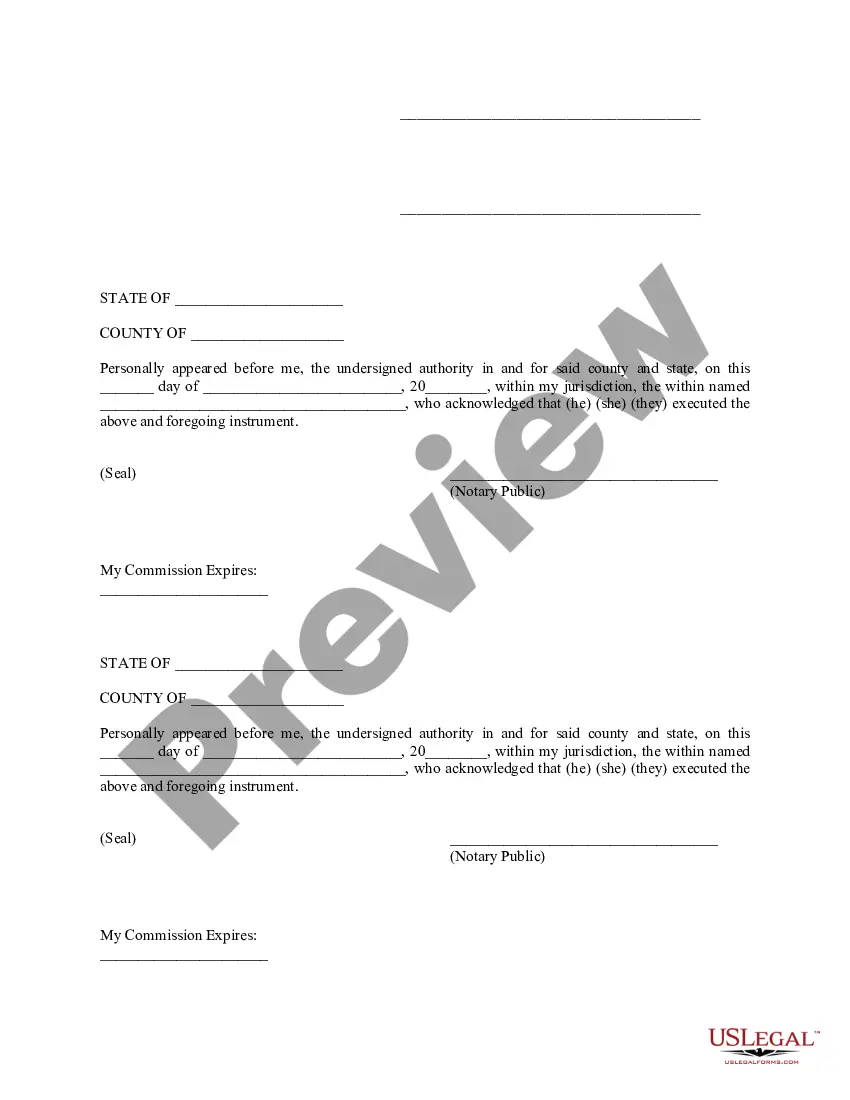
- Requirement for both parties to sign in front of a notary public
- Notification procedures for changes of address, especially for minor children
- Request for the court to grant a divorce and incorporate any attached settlement agreements
When to use this form
This form is suitable for couples who wish to end their marriage amicably and have reached mutual agreements on matters like child custody, property division, and spousal support. It should be filed when both parties are ready to proceed with the divorce without contention.
Who needs this form
- Married couples seeking a divorce without disputes
- Spouses willing to cooperate and reach mutual agreements
- Couples with minor children who can agree on custody arrangements
- Any couple wanting a streamlined divorce process
Completing this form step by step
- Identify both parties as co-plaintiffs, including full names and addresses.
- Clearly outline any agreements regarding child custody and property division.
- Both parties must sign the document in the presence of a notary public.
- Provide current contact information and agree to notify each other of any address changes.
- Submit the completed form to the Clerk of the Court for filing.
Does this document require notarization?
Notarization is not commonly needed for this form. However, certain documents or local rules may make it necessary. Our notarization service, powered by Notarize, allows you to finalize it securely online anytime, day or night.
Get your form ready online
Our built-in tools help you complete, sign, share, and store your documents in one place.
Make edits, fill in missing information, and update formatting in US Legal Forms—just like you would in MS Word.
Download a copy, print it, send it by email, or mail it via USPS—whatever works best for your next step.
Sign and collect signatures with our SignNow integration. Send to multiple recipients, set reminders, and more. Go Premium to unlock E-Sign.
If this form requires notarization, complete it online through a secure video call—no need to meet a notary in person or wait for an appointment.
We protect your documents and personal data by following strict security and privacy standards.

Make edits, fill in missing information, and update formatting in US Legal Forms—just like you would in MS Word.

Download a copy, print it, send it by email, or mail it via USPS—whatever works best for your next step.

Sign and collect signatures with our SignNow integration. Send to multiple recipients, set reminders, and more. Go Premium to unlock E-Sign.

If this form requires notarization, complete it online through a secure video call—no need to meet a notary in person or wait for an appointment.

We protect your documents and personal data by following strict security and privacy standards.
Avoid these common issues
- Failing to have both parties sign before a notary public.
- Not including all required information about minor children, if applicable.
- Forgetting to attach the Separation and Child Custody and Property Settlement Agreement.
- Not following local filing procedures once the form is completed.
Advantages of online completion
- Instant access to legal templates designed by licensed attorneys.
- Easy to download and customize according to specific needs.
- Convenience of completing forms at your own pace, from any location.
- Security and confidentiality of personal information during the process.
Looking for another form?

Form popularity
FAQ
When a spouse refuses to sign divorce papers, the spouse seeking a divorce will need to obtain what is called a contested divorce. To file a contested divorce, the party who wishes to obtain the divorce must file a petition in the family court in their jurisdiction.
State and local rules may vary, but generally, if your spouse failed to respond to your divorce petition within 30 days, you may file a request to enter a default along with a proposed judgment. It may also be allowed when a spouse can't be located for service. The court will set a hearing date and ask that you appear.
A Mississippi Divorce Can Take a Few Months to Several Years Even uncontested divorces based on irreconcilable differences take at least 60 days.
If your spouse won't engage in your divorce, then your only option for ending your marriage will have to be to go to court. Mediation will be a waste of time because your spouse won't participate.Once you get a lawyer onboard, you are going to have to file for divorce and have your husband served with divorce papers.
The cost of filing the forms for divorce is around $52. There may be additional costs for serving (delivering) copies of the divorce complaint to your spouse ($25 usually covers the formal delivery of divorce papers).
Mississippi doesn't have a form for do-it-yourself (DIY) divorce papers, but the court clerk's office in your county may have a form or information about what to include. You can also prepare DIY divorce papers online.
The Summons and Complaint gives your spouse notice of the action and allows them an opportunity to be heard if they desire. Even if your spouse does not respond or even show up in court, you can still obtain a divorce as long as you go to court and bring a witness who will corroborate what you have to say.
The most simple procedure is an uncontested divorce using the no-fault grounds. You and your spouse will either need to have a written agreement on property division, alimony, and child custody and support (if applicable); or sign a consent to allow the court to decide these matters.
An contested divorce is where the spouses cannot agree and must go through the entire divorce process to get a judge to make the final decision.You spouse can either agree to the terms of the divorce proposed by your divorce lawyer, or the case will go all the way to trial for a judge to make the final decision.