California Corporation Grant Deed
What this document covers
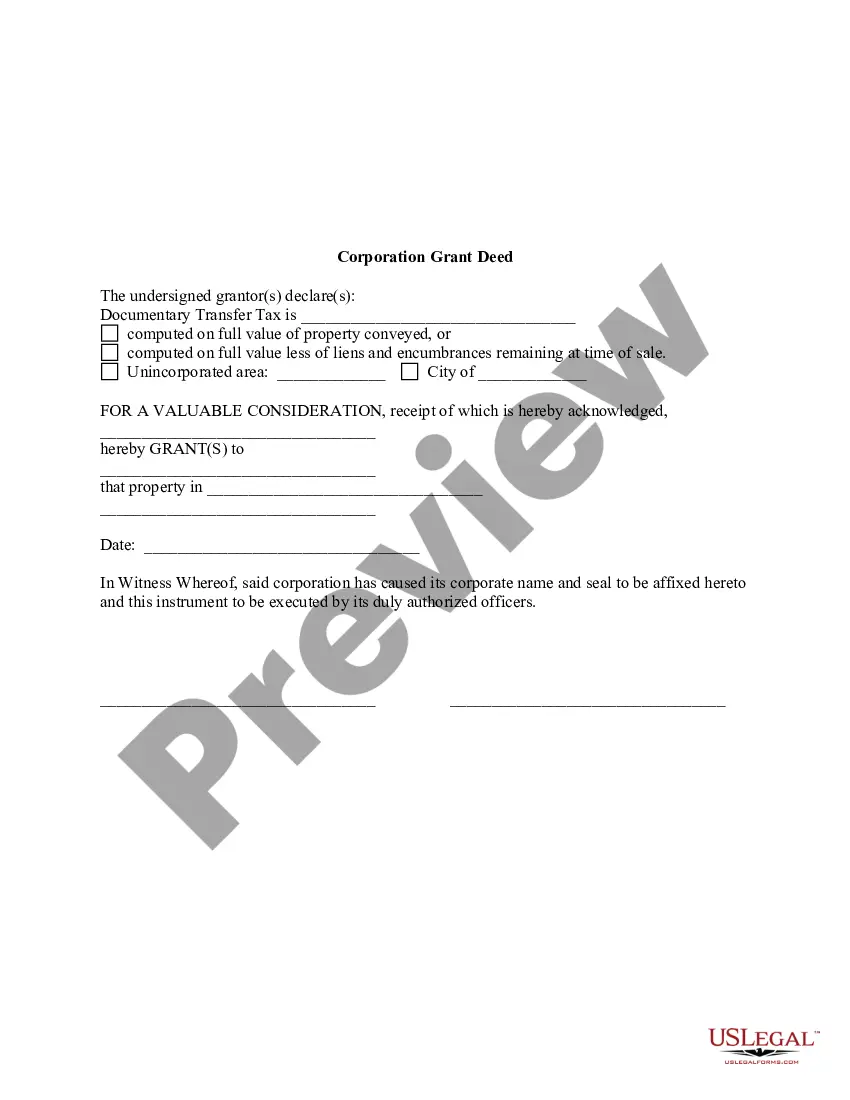
A Corporation Grant Deed is a legal document that facilitates the transfer of real estate ownership from one corporation to another party. This form is essential for organizations looking to sell, convey, or donate property, ensuring that the new ownership is clearly documented. Unlike other property transfer forms, this deed is specifically tailored for corporate entities and includes provisions that reflect corporate authority to transfer real estate assets.
Key components of this form
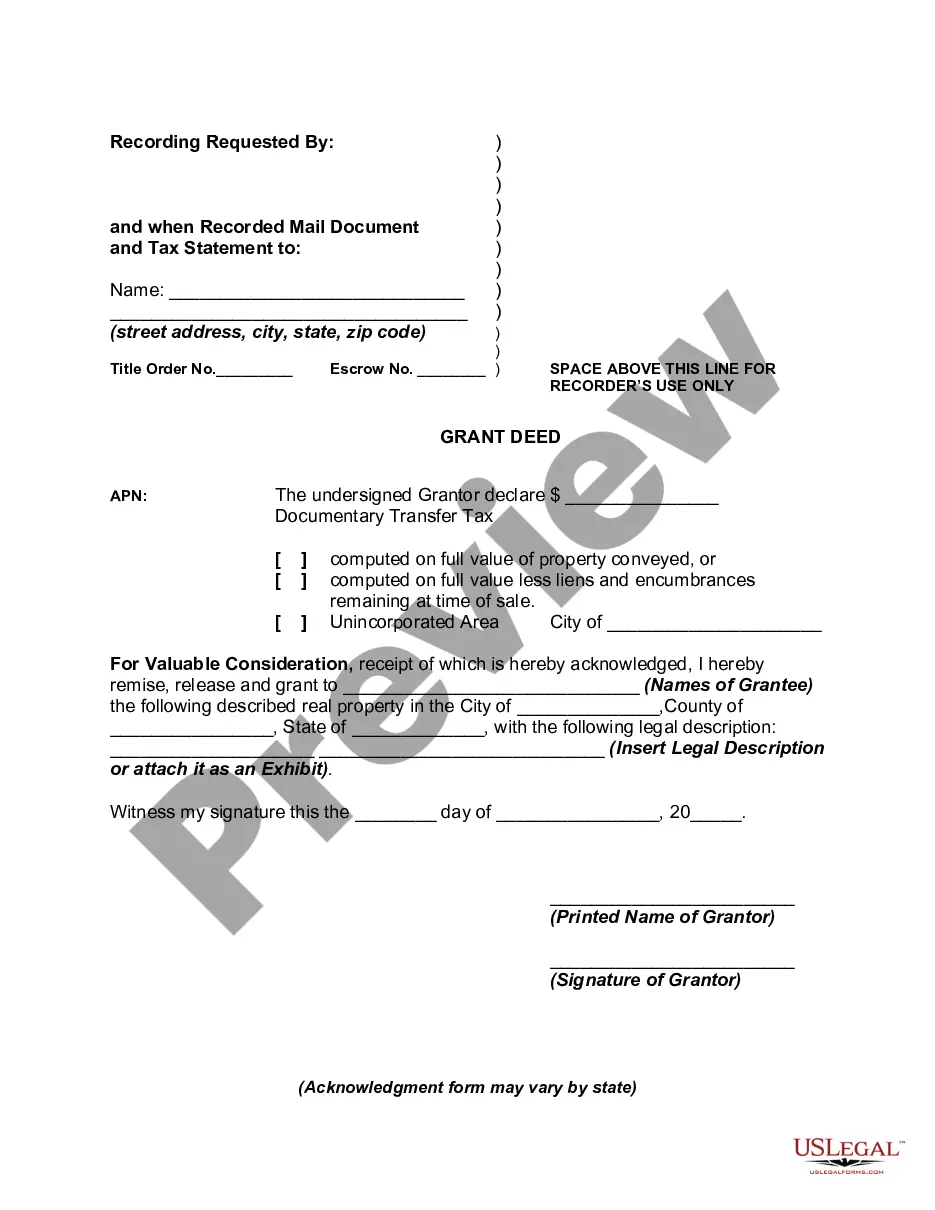
- Grantor declaration, confirming the transfer of property ownership.
- Details regarding the documentary transfer tax, including calculation methods.
- Identification of the property being transferred, including location and description.
- Space for the signatures of authorized corporate officers and the corporate seal.
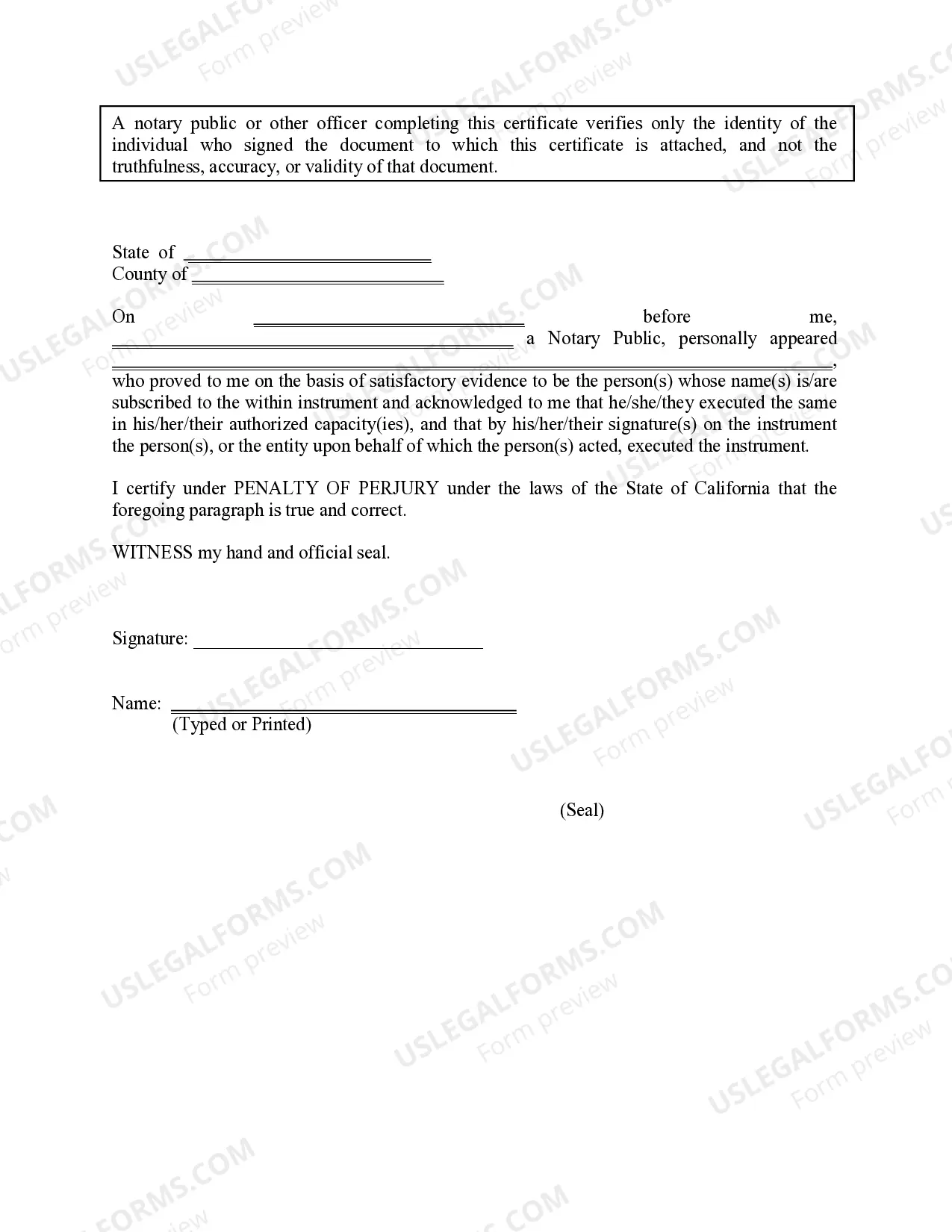
- Notarization section to validate the document if required.
Situations where this form applies
Use the Corporation Grant Deed when a corporation needs to transfer property ownership to another individual or organization. This can occur during the sale of real estate, the dissolution of a corporation, or a donation of property. Completing this deed enables legal recognition of ownership changes and is essential for maintaining accurate property records.
Who needs this form
- Corporations engaged in real estate transactions.
- Anyone authorized to execute a property transfer on behalf of a corporation.
- Real estate professionals and legal advisors assisting corporations with property transfers.
Instructions for completing this form
- Identify the grantor by entering the corporation's name and address.
- Specify the recipient of the property and provide their details.
- Include a description of the property being transferred, including the exact location.
- Select the appropriate calculation method for the documentary transfer tax.
- Have the authorized officers of the corporation sign the document and affix the corporate seal.
- If required, complete the notarization section by having a Notary Public verify identities.
Notarization requirements for this form
Yes, this form must be notarized to be legally valid. Notarization helps verify the identities of those signing the document, ensuring that the transaction is acknowledged and accepted legally. US Legal Forms offers integrated online notarization services that are available 24/7 through secure video calls, making the process efficient and reliable.
Get your form ready online
Our built-in tools help you complete, sign, share, and store your documents in one place.
Make edits, fill in missing information, and update formatting in US Legal Forms—just like you would in MS Word.
Download a copy, print it, send it by email, or mail it via USPS—whatever works best for your next step.
Sign and collect signatures with our SignNow integration. Send to multiple recipients, set reminders, and more. Go Premium to unlock E-Sign.
If this form requires notarization, complete it online through a secure video call—no need to meet a notary in person or wait for an appointment.
We protect your documents and personal data by following strict security and privacy standards.

Make edits, fill in missing information, and update formatting in US Legal Forms—just like you would in MS Word.

Download a copy, print it, send it by email, or mail it via USPS—whatever works best for your next step.

Sign and collect signatures with our SignNow integration. Send to multiple recipients, set reminders, and more. Go Premium to unlock E-Sign.

If this form requires notarization, complete it online through a secure video call—no need to meet a notary in person or wait for an appointment.

We protect your documents and personal data by following strict security and privacy standards.
Avoid these common issues
- Failing to provide a complete property description.
- Incorrectly calculating the documentary transfer tax.
- Missing signatures from all necessary corporate officers.
- Notarization omitted when required by state law.
Benefits of completing this form online
- Easy access to professionally drafted legal templates.
- Customizable to meet specific corporate needs and local requirements.
- Convenience of downloading and completing documents at your own pace.
- Affordability compared to hiring legal counsel for simple transactions.
Looking for another form?
Form popularity
FAQ
Before an instrument can be recorded its execution shall be acknowledged by the person executing it.? (CA Government Code§ 27287.) To put it simply, the law requires that grant deeds are notarized and the County Recorder will not accept the grant deed without a notary acknowledgment.
A grant deed is a form of deed common in California, which contains implied warranties to the effect that the grantor has not previously conveyed or encumbered the property.
Possession or the rights thereto must be given when the deed is delivered. The grant deed is used when a person who is on the current deed transfers ownership or adds a new owner. The grantor (donor or seller) promises that all rights to the property are being transferred?there are no hidden owners or easements.
A California grant deed form is a type of deed that conveys property from the prior owner to the new owner with a limited warranty of title. A property owner who signs a grant deed guarantees that he or she has done nothing that would cause title issues but makes no promises about earlier owners' actions.
A grant deed is a transaction between two people or entities without securing the property as collateral. A deed of trust is used by mortgage companies when a homeowner takes out a loan against the property.
The main difference between a grant deed vs. warranty deed is the level of protection offered. A warranty deed offers a higher level of protection than a grant deed. With a grant deed, the grantor is guaranteeing that they haven't sold the property to anyone else, and that it is clear of any liens or restrictions.
A grant deed is a form of deed common in California, which contains implied warranties to the effect that the grantor has not previously conveyed or encumbered the property.
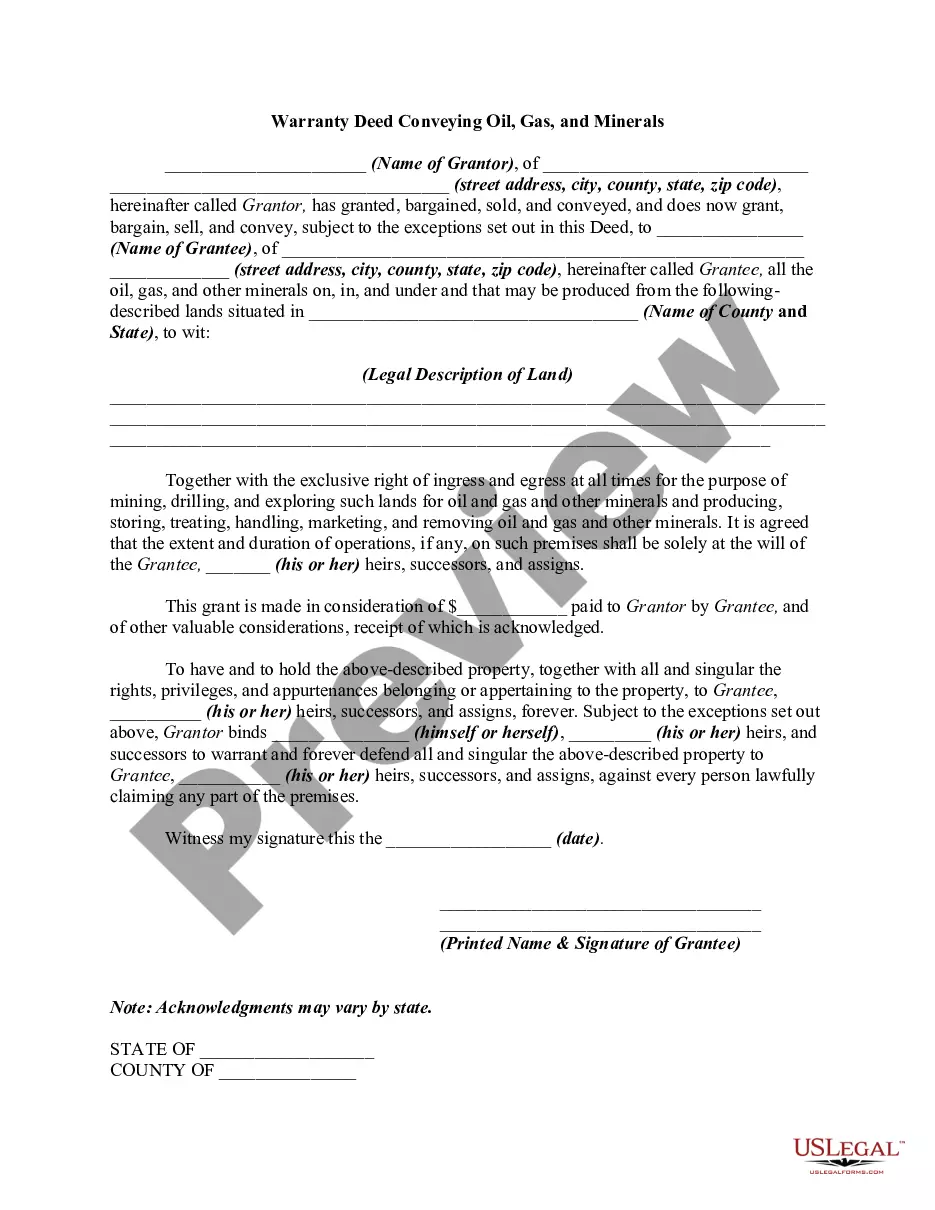
Common Uses of California Warranty Deed Forms Warranty deeds are rarely used for modern-day California real estate transfers. Grant deeds are much more popular and are typically used for real estate sales.