Computer Software License Agreement and Data Base Update Agreement
Understanding this form
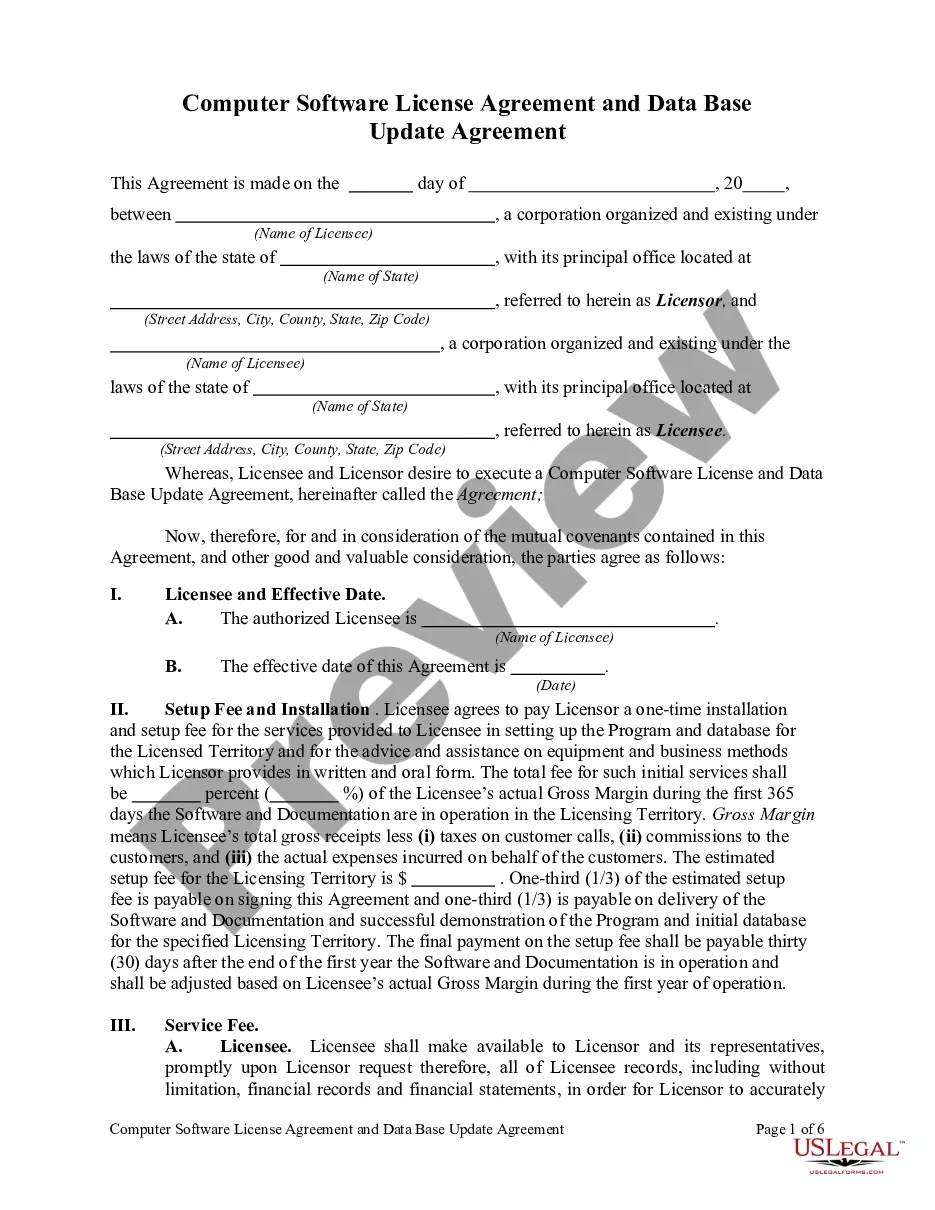
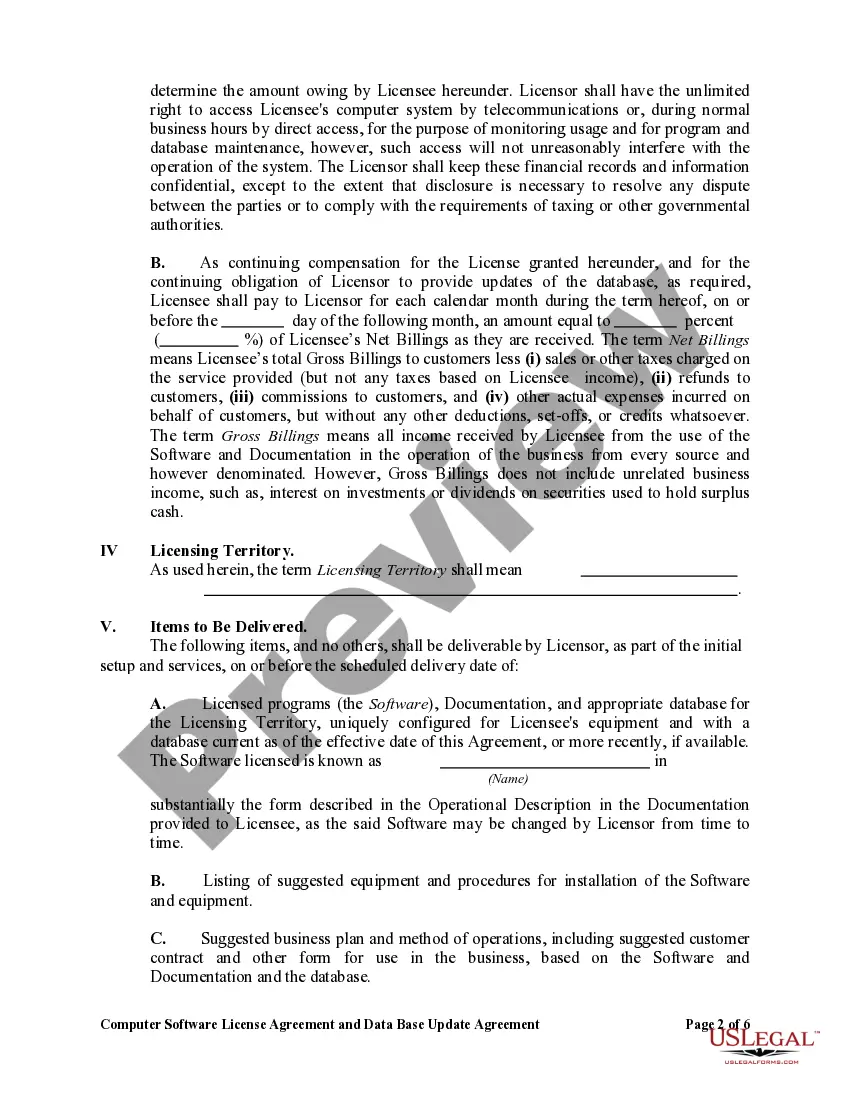
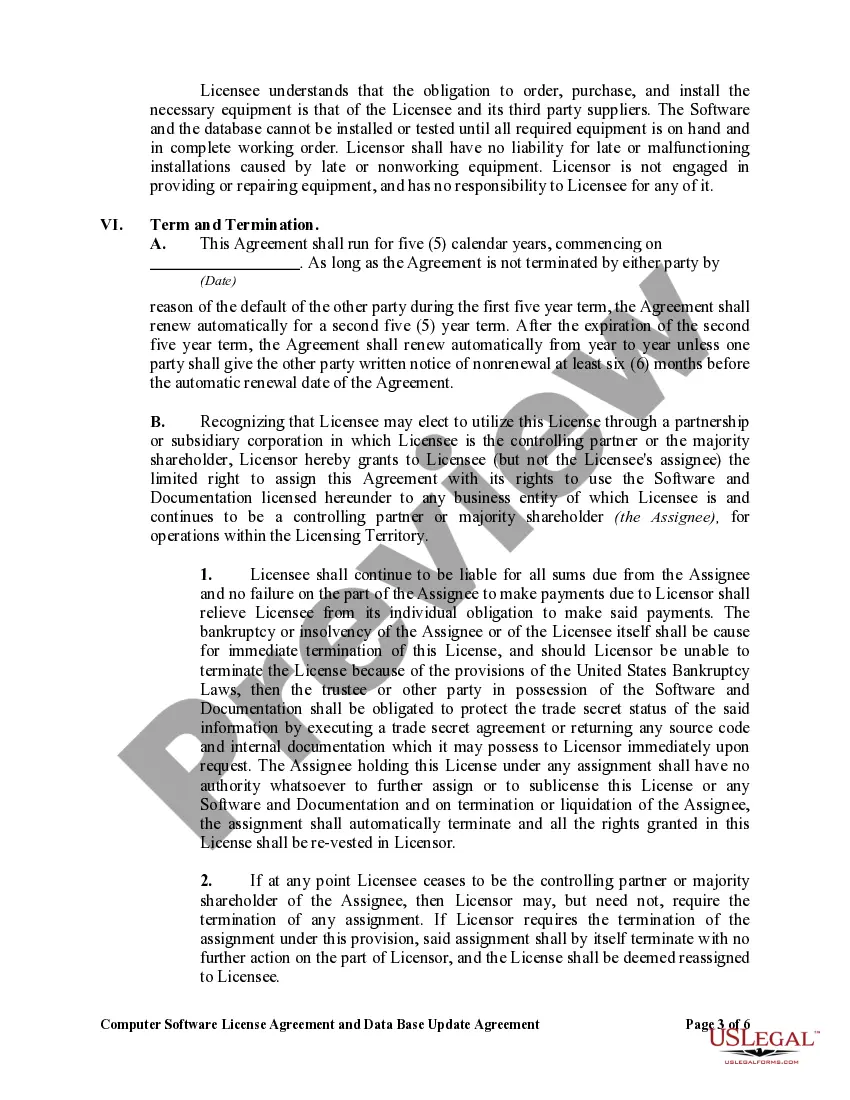
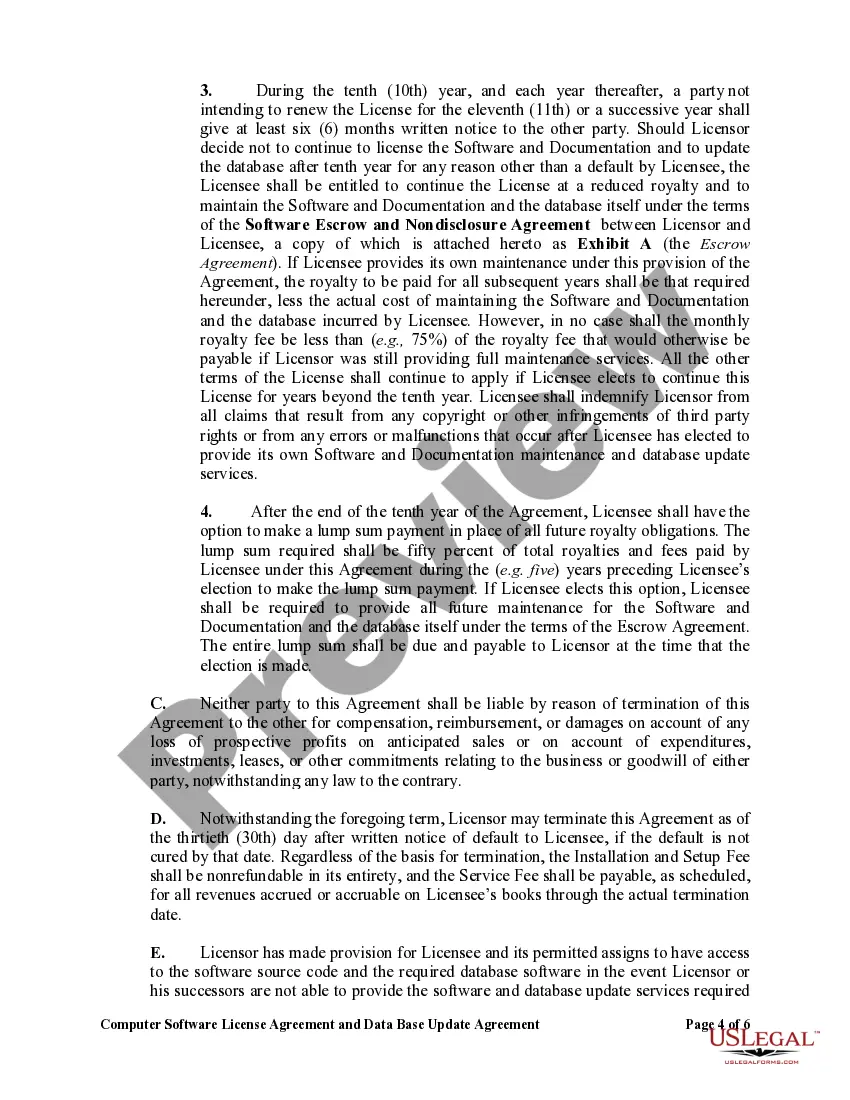
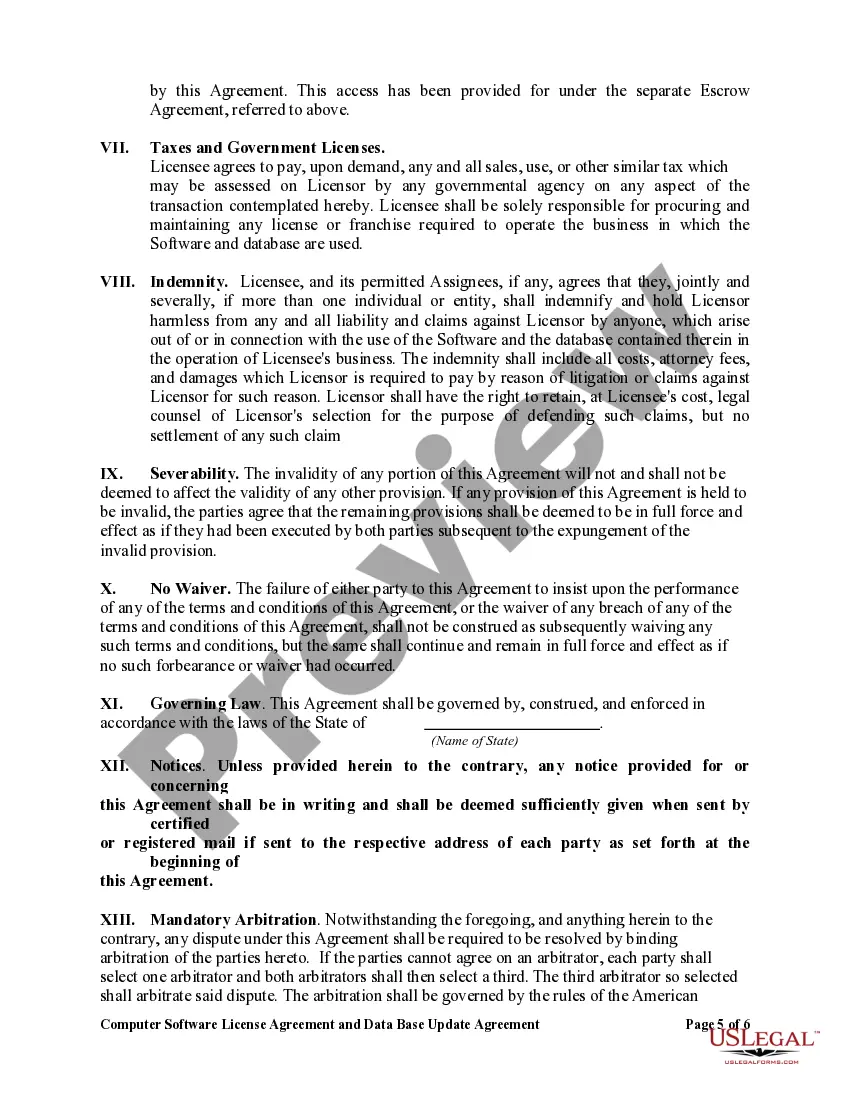
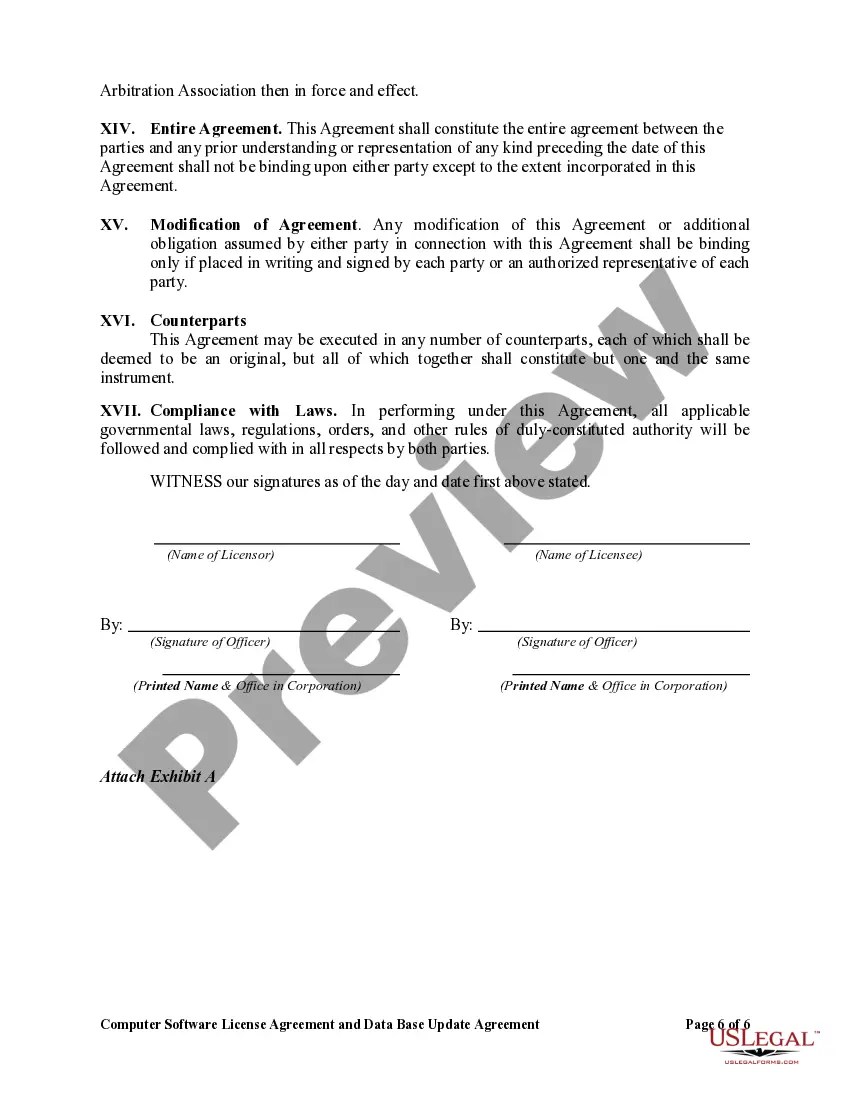
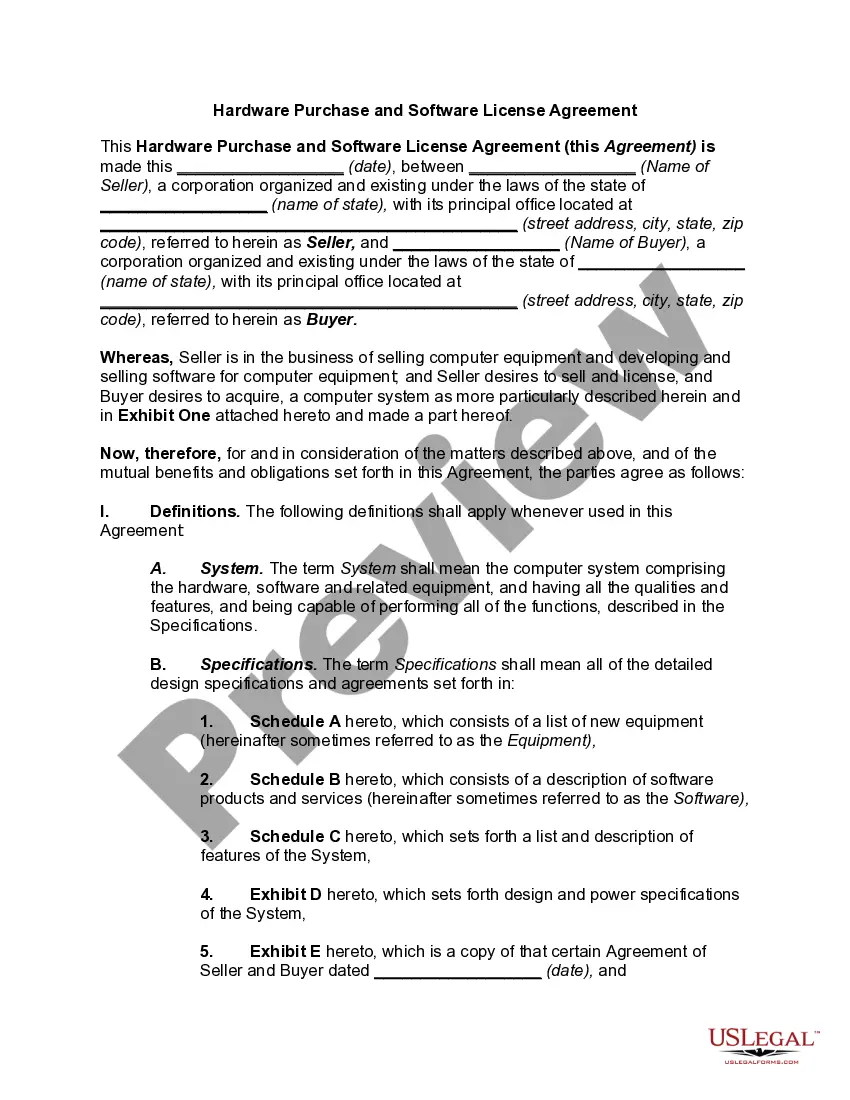
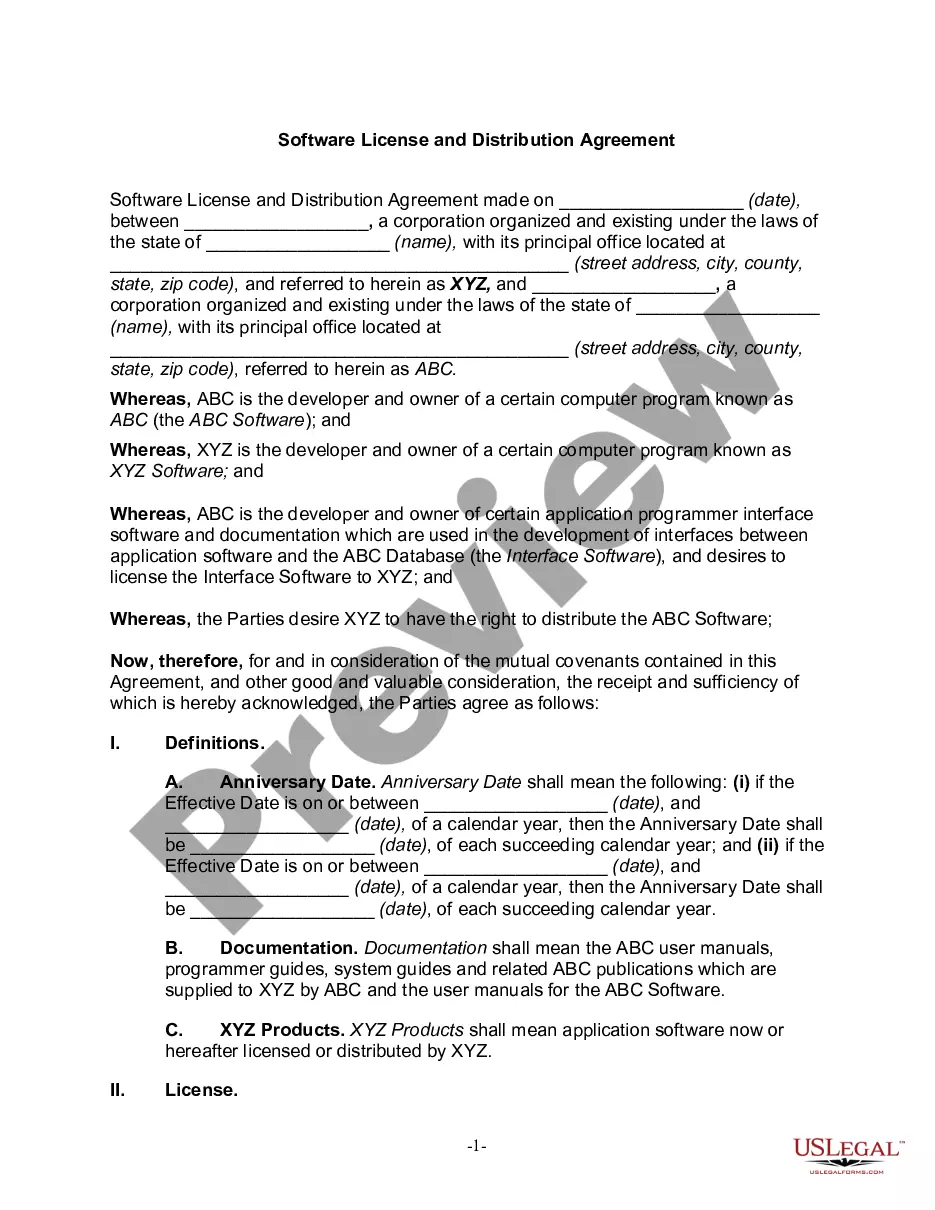
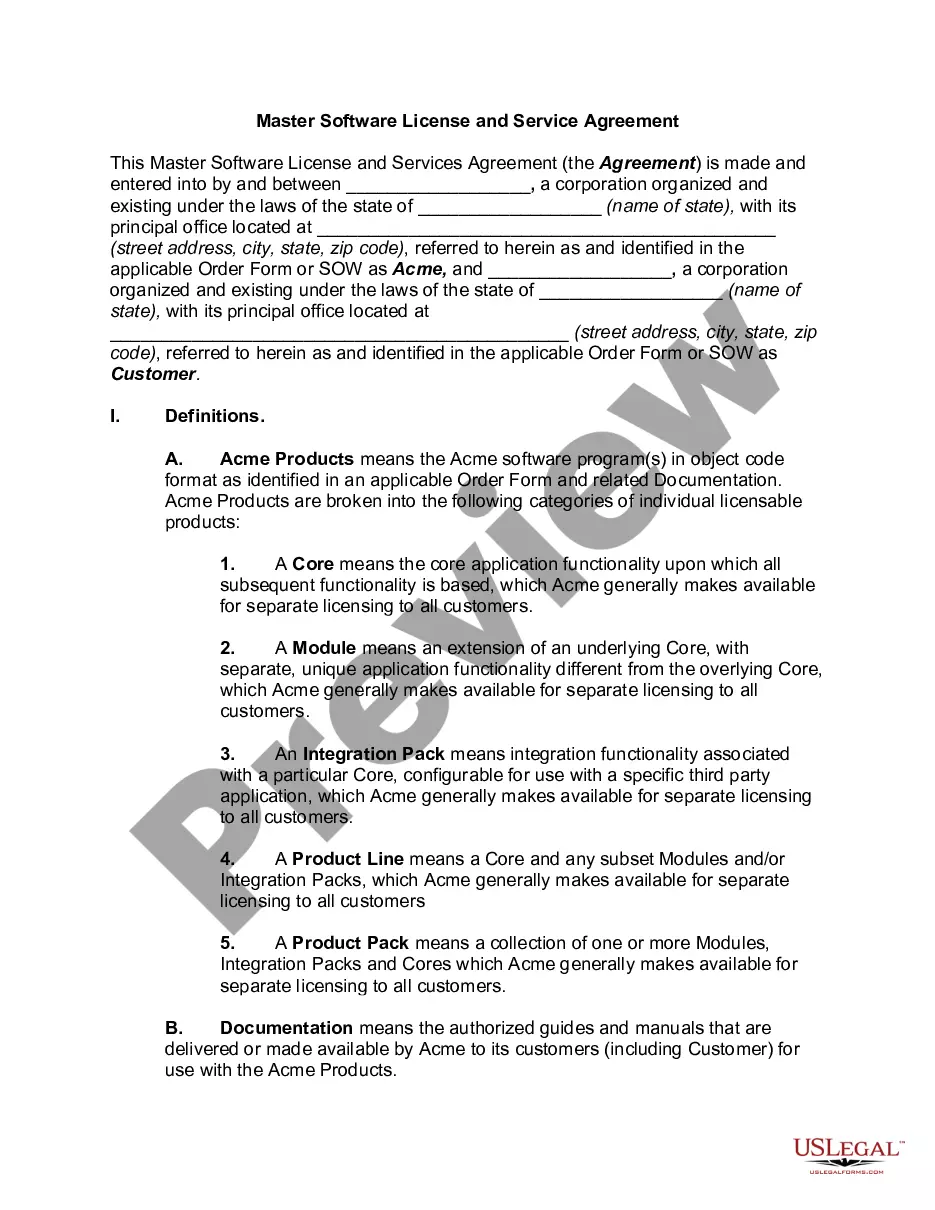
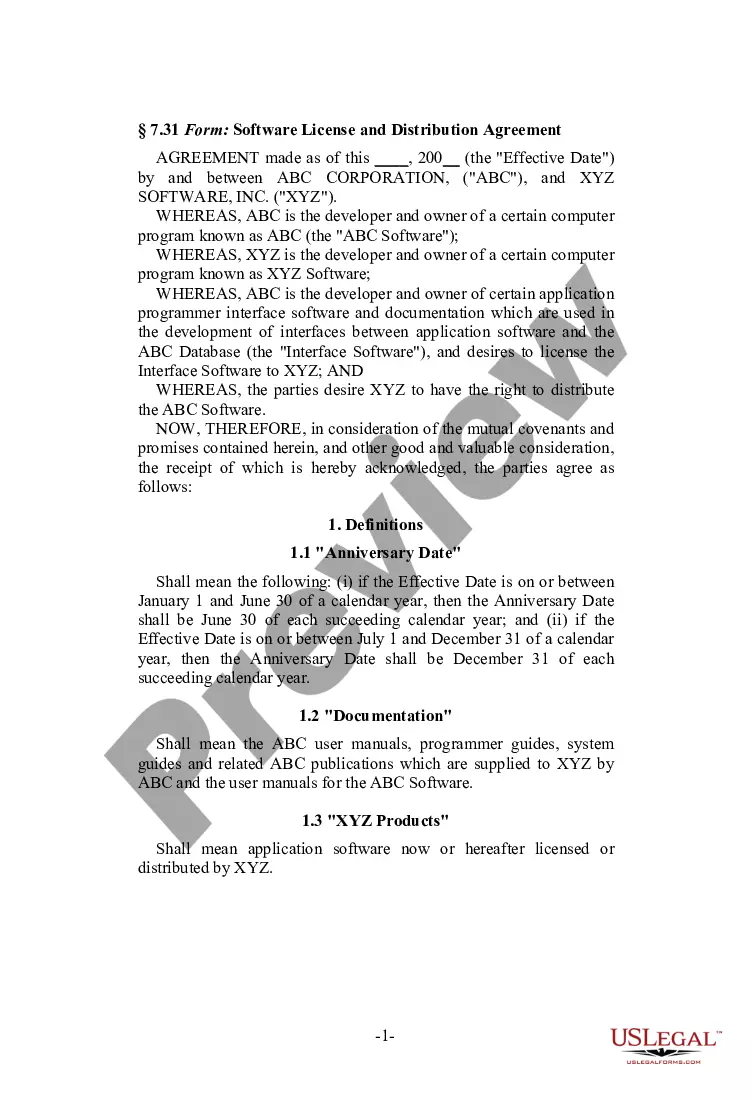
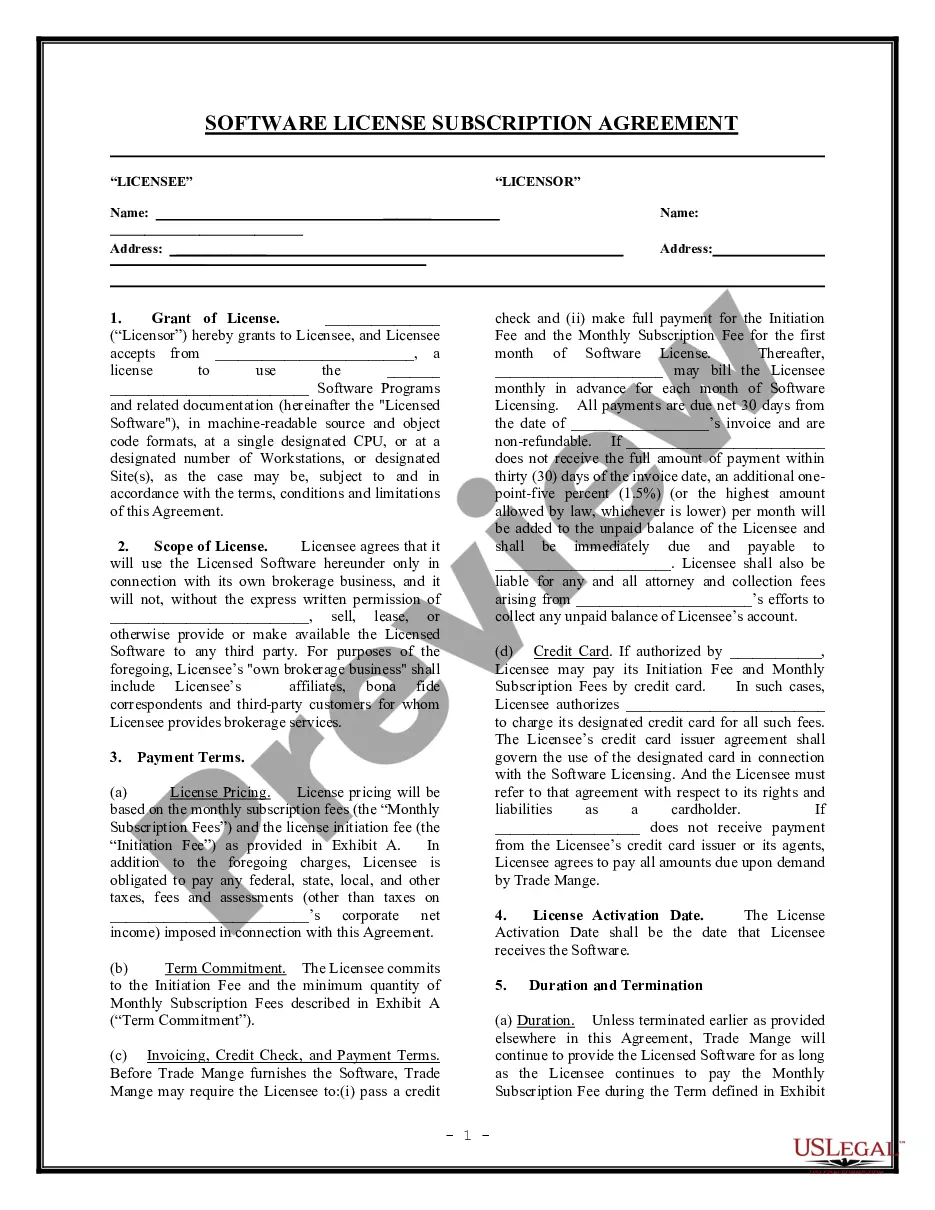
The Computer Software License Agreement and Database Update Agreement is a legal document that outlines the terms under which one party (the licensee) can use software provided by another party (the licensor). This agreement details the specific rights granted, limitations of use, and obligations of both parties regarding the software and accompanying documentation. This form is essential for protecting intellectual property rights and clarifying the use of proprietary software, setting it apart from simpler user agreements that may offer fewer details on the parties' responsibilities and rights.
Key components of this form
- Licensed Territory: Specifies the geographical area where the software can be used.
- Service Fees: Details the financial obligations of the licensee, including payments for maintenance and support services.
- Term and Termination: Outlines the duration of the agreement and conditions under which it can be terminated.
- Access Rights: Grants the licensor access to the licensee's systems for monitoring and maintenance purposes.
- Taxes and Government Licenses: Specifies the licensee's responsibility for associated taxes and required permits.
- Mandatory Arbitration: Establishes that any disputes arising from the agreement must be resolved through binding arbitration.
Situations where this form applies
This form is used when a business or individual wishes to license software for their use, particularly when dealing with proprietary software that includes specific usage rights and obligations. It's beneficial when establishing the legal groundwork for software deployment, ensuring that both parties understand their rights, responsibilities, and the terms of use. Use this agreement if you plan to collaborate with software developers or companies that require structured software deployment and maintenance.
Who this form is for
- Businesses wanting to license software for commercial use.
- Individual contractors or freelancers using proprietary software for projects.
- Software developers seeking to provide their software under clear legal terms.
- Any individual or organization that needs to formalize the terms of software usage and updates.
Completing this form step by step
- Identify the parties: Enter the full names and addresses of both the licensor and licensee.
- Specify the licensed territory: Clearly define the geographical area where the software may be used.
- Detail the payment terms: Include initial setup fees and ongoing service fee structures.
- Set the agreement term: Indicate the duration of the license and conditions for renewal.
- Include signatures: Ensure all parties sign and date the agreement to validate its enforceability.
Notarization guidance
Notarization is generally not required for this form. However, certain states or situations might demand it. You can complete notarization online through US Legal Forms, powered by Notarize, using a verified video call available anytime.
Get your form ready online
Our built-in tools help you complete, sign, share, and store your documents in one place.
Make edits, fill in missing information, and update formatting in US Legal Forms—just like you would in MS Word.
Download a copy, print it, send it by email, or mail it via USPS—whatever works best for your next step.
Sign and collect signatures with our SignNow integration. Send to multiple recipients, set reminders, and more. Go Premium to unlock E-Sign.
If this form requires notarization, complete it online through a secure video call—no need to meet a notary in person or wait for an appointment.
We protect your documents and personal data by following strict security and privacy standards.

Make edits, fill in missing information, and update formatting in US Legal Forms—just like you would in MS Word.

Download a copy, print it, send it by email, or mail it via USPS—whatever works best for your next step.

Sign and collect signatures with our SignNow integration. Send to multiple recipients, set reminders, and more. Go Premium to unlock E-Sign.

If this form requires notarization, complete it online through a secure video call—no need to meet a notary in person or wait for an appointment.

We protect your documents and personal data by following strict security and privacy standards.
Avoid these common issues
- Failing to specify the licensed territory, which can lead to misuse disputes.
- Not detailing payment terms, causing confusion over financial obligations.
- Omitting signatures or dates, rendering the agreement unenforceable.
- Overlooking the inclusion of necessary appendices, such as maintenance agreements.
Why use this form online
- Convenience of downloading the form at any time, eliminating delays.
- Editability allows customization to meet specific business needs.
- Reliability of attorney-drafted templates ensures legal soundness.
Legal use & context
- Ensures compliance with copyright and intellectual property laws.
- Governs the relationship between the Licensor and Licensee, outlining rights and responsibilities.
- Protects both parties by detailing the terms of service, maintenance, and usage limits.
What to keep in mind
- This form establishes legal use rights for software and associated database updates.
- It includes important clauses related to fees, monitoring, and confidentiality.
- Users must fill in specific details accurately to avoid potential disputes.
Glossary of terms used in this form
- Licensor: The party granting the license to use the software.
- Licensee: The party receiving the rights to use the software as per the agreement.
- Licensed Territory: The geographical area where the software may be used.
- Maintenance: Services related to the upkeep and updating of the software.
Looking for another form?




Form popularity
FAQ
License: Scope. Deliverables. Source Code. Services Furnished. Disclosure/Access. New IP/Developments. Open Source. Acceptance/Warranties.
An example of a licensing agreement is a contract between the copyright holders of software and another company, allowing the latter to use the computer software for their daily business operations.
Download a template for a licensing agreement. Choose your role as the licensor or licensee. Define the license(s) in the agreement. Decide whether the license is exclusive or not. Settle the matter of fees and payment schedule. Add a renewal date and rules.
Setting up Your Licensing Agreement. Granting the License. Limiting Your Liability. Adding Boilerplate Clauses. Finalizing the Licensing Agreement.
What is a Licensing Agreement? A licensing agreement is a contract between two parties (the licensor and licensee) in which the licensor grants the licensee the right to use the brand name, trademark, patented technology, or ability to produce and sell goods owned by the licensor.
Don't assume you can't negotiate. Understand the pricing and use schemes. Get promises in writing. Get measurable promises. Carefully look at the indemnification provisions. Consider the intellectual property investment you intend to make. Look for a range of meaningful remedies. Think about renewal from day one.
A software license agreement typically has broad-form confidentiality provisions that also provide that certain items fall into the bucket of one or the other party (e.g., the software for a licensor, certain data for a licensee, etc.).