Aeseptic Techniques
What this document covers
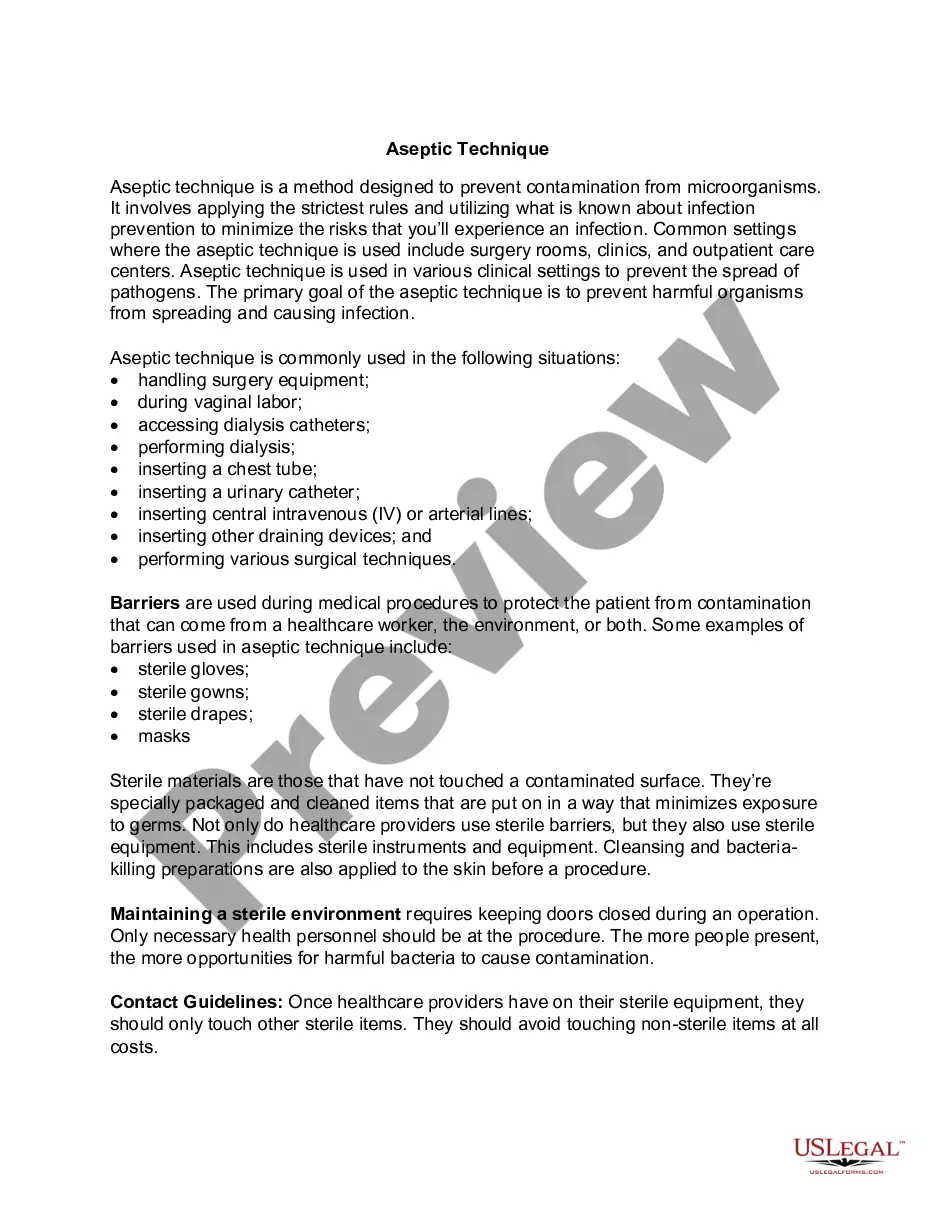
Aseptic Technique is a comprehensive method employed to prevent contamination from microorganisms. This form serves to outline the protocols necessary for maintaining a sterile environment during medical procedures. Unlike other forms that may focus solely on individual medical practices, this technique emphasizes infection prevention across various clinical settings, such as surgery rooms and outpatient care centers, ensuring patient safety and effective care delivery.
Main sections of this form
- Description of aseptic technique and its primary goals.
- Scenarios in which aseptic techniques are commonly applied, including surgeries and catheter insertions.
- Protocols for using barriers, such as sterile gloves and gowns, during medical procedures.
- Guidelines for maintaining a sterile environment, including limiting personnel in the operating area.
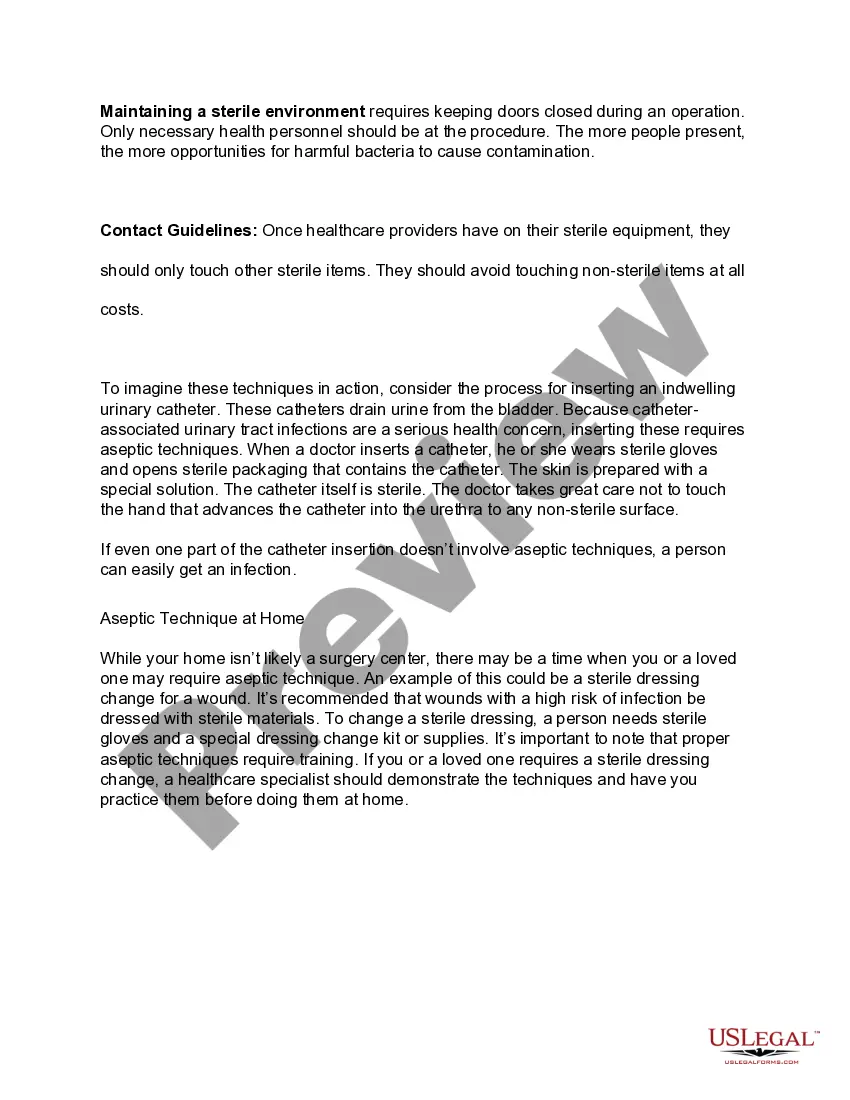
- Detailed instructions for at-home situations requiring aseptic techniques, such as wound care.
Common use cases
This form should be referenced whenever aseptic techniques are necessary to prevent infections during medical procedures. Common scenarios include surgeries, catheter insertions, and any other situations where maintaining a sterile environment is critical to patient health. It is also applicable for individuals managing at-home health needs, such as changing sterile dressings for wounds at risk of infection.
Who needs this form
- Healthcare professionals responsible for conducting medical procedures.
- Students or trainees learning proper aseptic techniques in medical practice.
- Home caregivers managing sterile dressings or other medical tasks for patients.
- Individuals undergoing at-home medical treatments that require aseptic practices.
Steps to complete this form
- Understand the principles of aseptic technique and the potential risks of infection.
- Identify all sterile materials and equipment needed for the procedure.
- Prepare the area, ensuring it is clean and that unnecessary personnel are excluded.
- Follow detailed steps to maintain sterility during the procedure, including proper hand hygiene and the use of barriers.
- Post-procedure, ensure any used sterile materials are disposed of correctly to maintain health safety.
Is notarization required?
Notarization is generally not required for this form. However, certain states or situations might demand it. You can complete notarization online through US Legal Forms, powered by Notarize, using a verified video call available anytime.
Get your form ready online
Our built-in tools help you complete, sign, share, and store your documents in one place.
Make edits, fill in missing information, and update formatting in US Legal Forms—just like you would in MS Word.
Download a copy, print it, send it by email, or mail it via USPS—whatever works best for your next step.
Sign and collect signatures with our SignNow integration. Send to multiple recipients, set reminders, and more. Go Premium to unlock E-Sign.
If this form requires notarization, complete it online through a secure video call—no need to meet a notary in person or wait for an appointment.
We protect your documents and personal data by following strict security and privacy standards.

Make edits, fill in missing information, and update formatting in US Legal Forms—just like you would in MS Word.

Download a copy, print it, send it by email, or mail it via USPS—whatever works best for your next step.

Sign and collect signatures with our SignNow integration. Send to multiple recipients, set reminders, and more. Go Premium to unlock E-Sign.

If this form requires notarization, complete it online through a secure video call—no need to meet a notary in person or wait for an appointment.

We protect your documents and personal data by following strict security and privacy standards.
Avoid these common issues
- Failing to establish a sterile field before a procedure.
- Touching non-sterile items or surfaces after donning sterile gloves.
- Having excessive personnel present during critical procedures, increasing contamination risks.
- Not properly cleaning or preparing the skin prior to procedures requiring aseptic techniques.
Why use this form online
- Immediate access to comprehensive guidelines for aseptic techniques.
- Ability to download and reference the form at any time.
- Convenience of having a trained attorney's materials designed specifically for legal compliance.
- Flexibility in modifying the form to meet specific healthcare needs.
Legal use & context
- This form provides guidelines crucial for maintaining a sterile environment during medical procedures.
- Adhering to these protocols can enhance enforceability in healthcare settings by demonstrating compliance with best practices.
- Failure to follow aseptic techniques can lead to legal implications related to patient infections.
What to keep in mind
- Aseptic Technique is essential for preventing infections in medical procedures.
- Understanding and applying the correct protocols is vital for both healthcare professionals and caregivers.
- Ensure a sterile environment and proper techniques are maintained to safeguard patient health.
Looking for another form?

Form popularity
FAQ
Examples of aseptic technique are cleaning and disin- fecting lab surfaces prior to use, limiting the duration that cultures or media are uncapped and exposed to the air, keeping petri dishes closed whenever possible, effectively steriliz- ing inoculating loops and other equipment that comes into contact with cultures
12 PRINCIPLES OF ASEPTIC TECH Flashcards.
These principles include the following: (1) use only sterile items within a sterile field; (2) sterile (scrubbed) personnel are gowned and gloved; (3) sterile personnel operate within a sterile field (sterile personnel touch only sterile items or areas, unsterile personnel touch only unsterile items or areas); (4)
Creating a microorganism-free environment (sterile field) Use of sterilized instruments and dressings. Maintaining sterility of sterile field and instruments by preventing microbial contaminationby contact with non-sterile objects; such as:
Aseptic techniques refer to any method used to sterilize and maintain the sterility of an object or location, such as an operating theatre or laboratory, though it may also wound care to prevent infection.
Handling surgery equipment. helping with a baby's birth by vaginal delivery. handling dialysis catheters. performing dialysis. inserting a chest tube. inserting a urinary catheter. inserting central intravenous (IV) or arterial lines. inserting other draining devices.
Face to face or back to back. Turn back to a non-sterile person or when passing. Face a sterile area when passing the area. Ask a non-sterile person to step aside rather than trying to crowd past him. Step back away from the sterile field to sneeze or cough.
Aseptic and sterile go hand in hand.Aseptic means something has been made contamination-free, that it will not reproduce or create any kind of harmful living microorganisms (bacteria, viruses and others). Sterile describes a product that is entirely free of all germs.
Aseptic technique is a key component of Standard 3 of the National Safety and Quality Health Service (NSQHS) Standards which are intended to prevent or minimise the risk of introducing harmful infectious agents into sterile areas of the body when undertaking clinical procedures.