Custody Agreement
Understanding this form
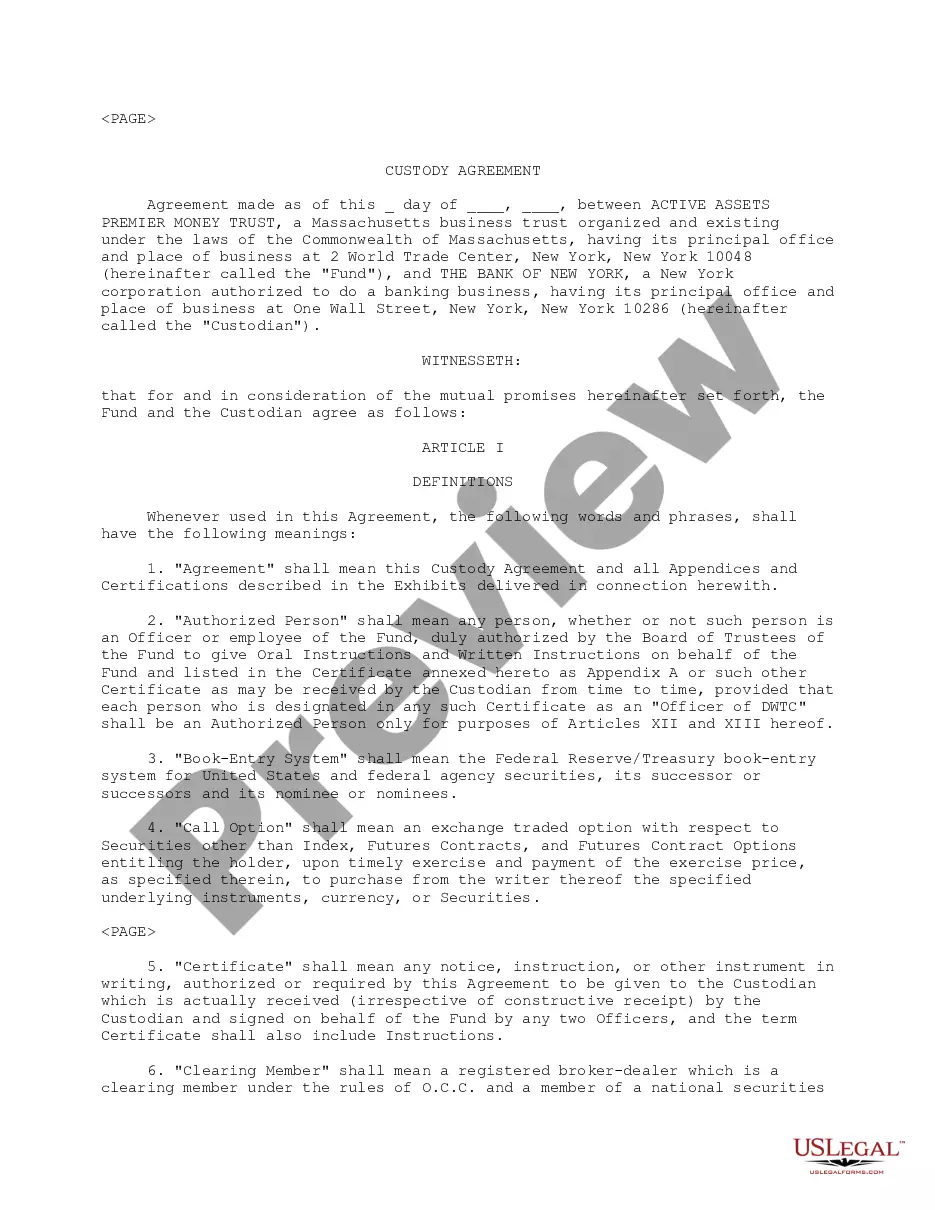
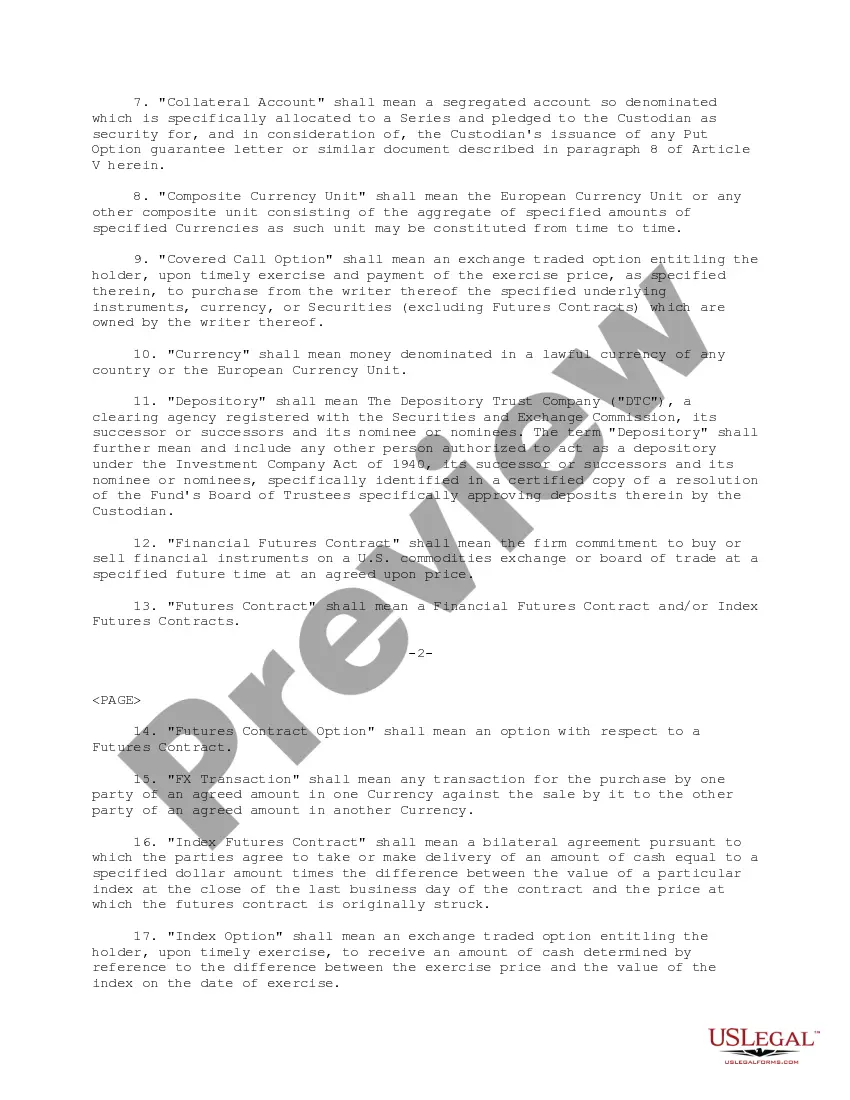
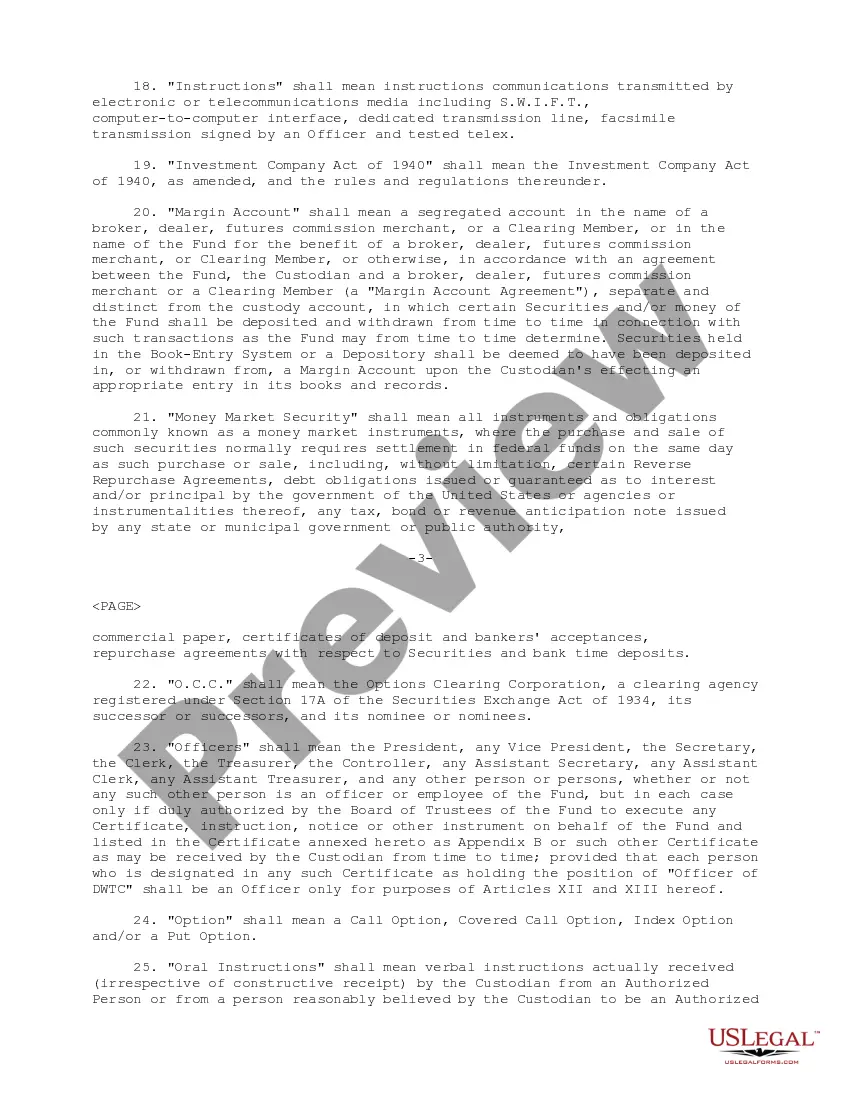
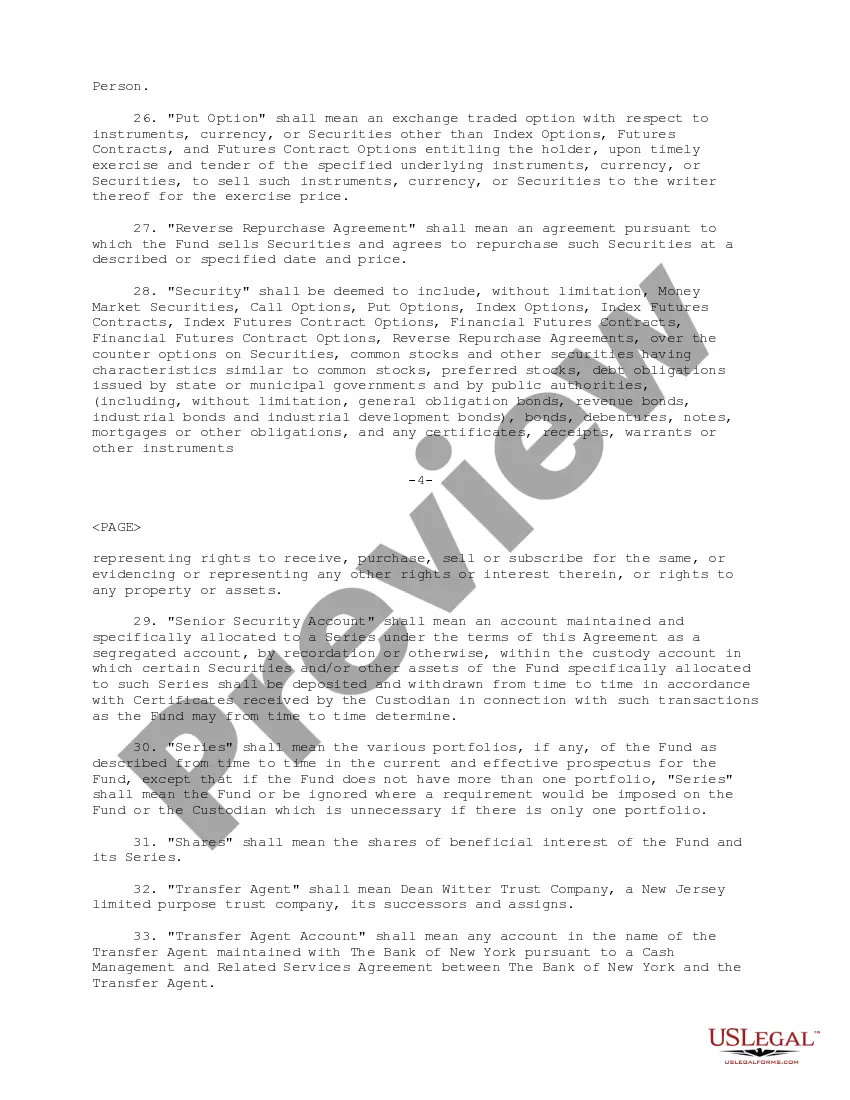
The Custody Agreement establishes a legal framework between Active Assets Premier Money Trust and The Bank of New York for the safekeeping of the Fund's securities and cash. This agreement outlines the responsibilities of the custodian, including managing and safeguarding assets, as well as executing transactions as per the Fund's instructions. It differs from similar forms by specifically detailing the terms related to the custody and handling of financial instruments, making it essential for investment companies.
Key components of this form
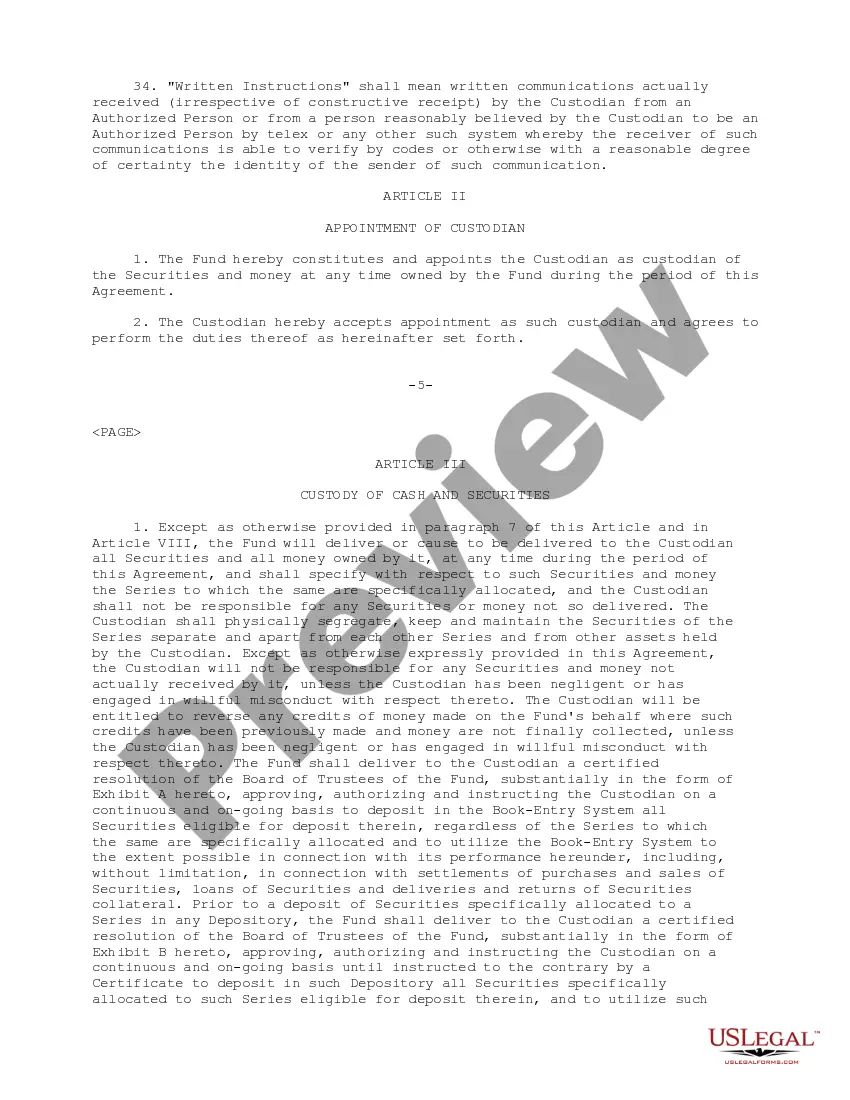
- Definitions: Clarifies key terminology used within the agreement.
- Appointment of Custodian: Establishes The Bank of New York as the custodian of the Fund's assets.
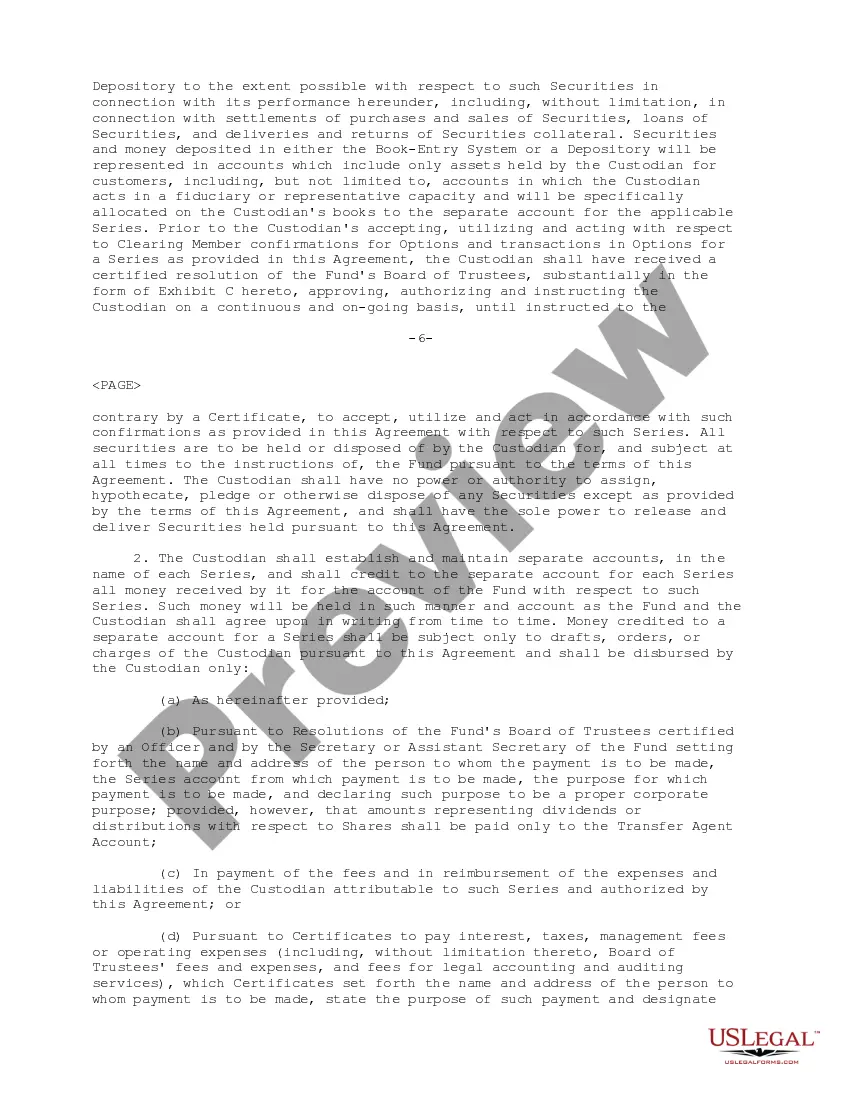
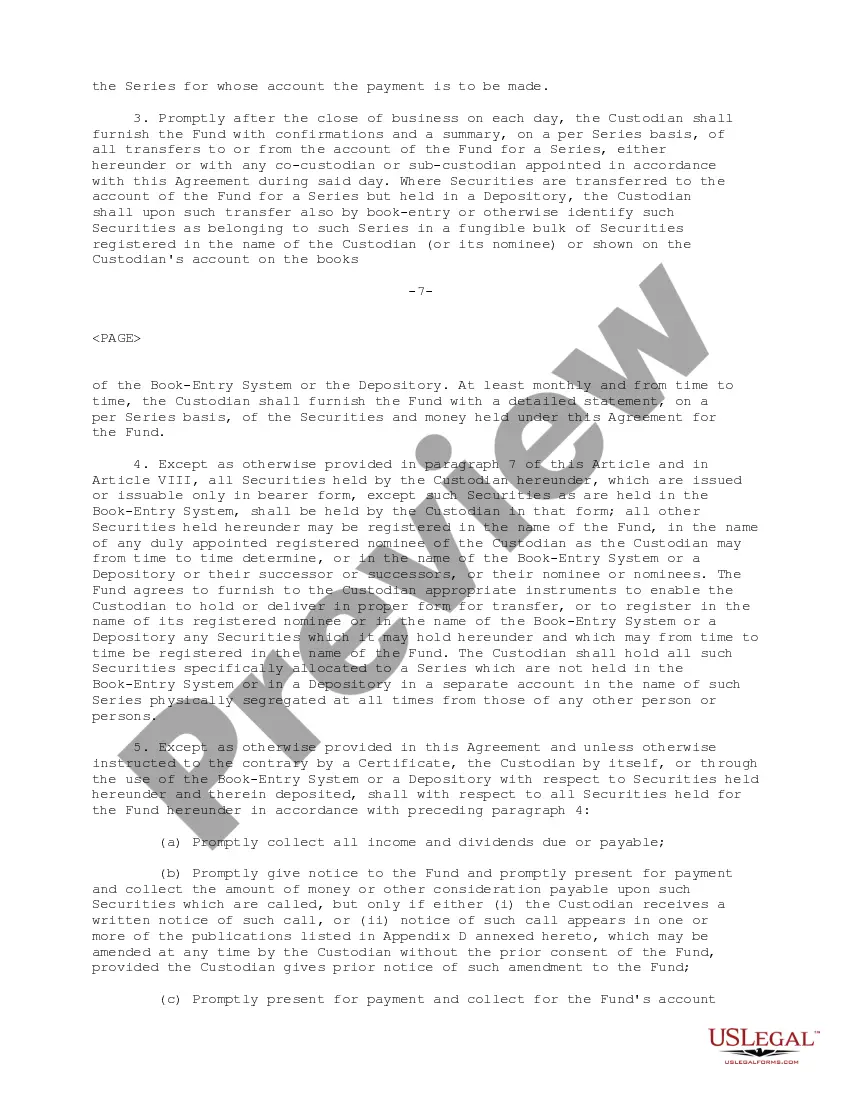
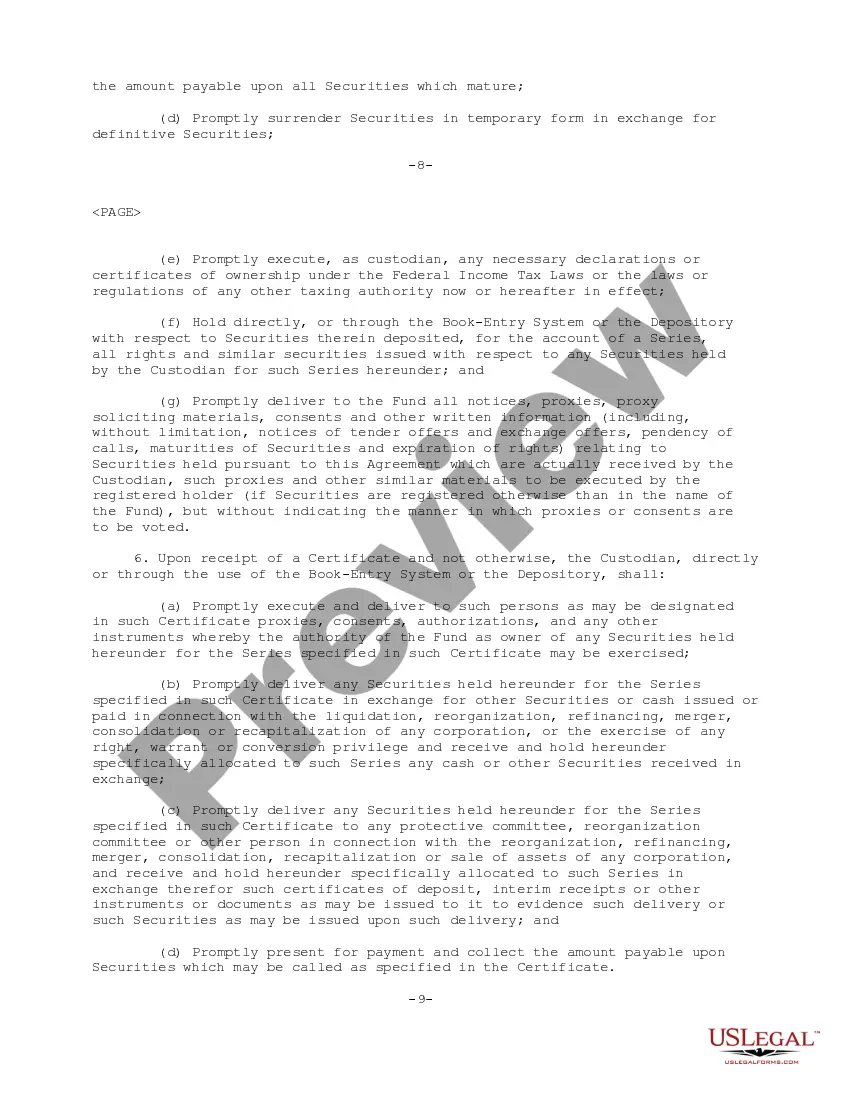
- Custody of Cash and Securities: Details the procedures for delivering and managing the Fund's securities and cash.
- Instructions: Outlines the basis on which the custodian will act upon the Fund's instructions, including Oral and Written Instructions.
- Payment of Dividends or Distributions: Specifies how and when dividends or distributions will be paid from the Fund to its shareholders.

When this form is needed
This form is needed when an investment company, like Active Assets Premier Money Trust, requires a formal arrangement with a custodian to manage and safeguard its securities and cash. It is essential when entering into custodial relationships, particularly for compliance with regulations governing the management of investment funds.
Who this form is for
- Investment funds looking to establish a custodial relationship.
- Trustees or administrators of financial institutions involved in asset management.
- Corporate officers responsible for overseeing investment and custodial agreements.
- Legal advisors facilitating agreements between funds and custodians.
How to complete this form
- Identify the parties involved by entering the names of the Fund and the custodian.
- Clearly state the effective date of the Agreement.
- Include the definitions section by summarizing key terms used in the Agreement.
- Outline the custodial responsibilities and procedures for handling securities and funds.
- Designate individuals authorized to provide instructions and verify their signatures.
Does this document require notarization?
Notarization is not commonly needed for this form. However, certain documents or local rules may make it necessary. Our notarization service, powered by Notarize, allows you to finalize it securely online anytime, day or night.
Get your form ready online
Our built-in tools help you complete, sign, share, and store your documents in one place.
Make edits, fill in missing information, and update formatting in US Legal Forms—just like you would in MS Word.
Download a copy, print it, send it by email, or mail it via USPS—whatever works best for your next step.
Sign and collect signatures with our SignNow integration. Send to multiple recipients, set reminders, and more. Go Premium to unlock E-Sign.
If this form requires notarization, complete it online through a secure video call—no need to meet a notary in person or wait for an appointment.
We protect your documents and personal data by following strict security and privacy standards.

Make edits, fill in missing information, and update formatting in US Legal Forms—just like you would in MS Word.

Download a copy, print it, send it by email, or mail it via USPS—whatever works best for your next step.

Sign and collect signatures with our SignNow integration. Send to multiple recipients, set reminders, and more. Go Premium to unlock E-Sign.

If this form requires notarization, complete it online through a secure video call—no need to meet a notary in person or wait for an appointment.

We protect your documents and personal data by following strict security and privacy standards.
Typical mistakes to avoid
- Failing to clearly define roles and responsibilities between the Fund and the custodian.
- Not specifying the effective date, which could lead to confusion regarding when the agreement is applicable.
- Neglecting to update authorized signature lists when personnel changes occur.
- Overlooking local state laws that may affect custodial agreements or requirements.
Why complete this form online
- Convenient access to download and fill out the form at any time.
- Editability allows you to customize the form to fit your specific needs quickly.
- Reliability through easily accessible legal templates drafted by attorneys.
Looking for another form?





Form popularity
FAQ
The most common arrangement is one in which one parent has sole physical custody, both parents have legal custody, and the noncustodial parent is granted visitation time.
Even though wills are considered more complicated contracts, they can still be handwritten to be considered legally enforceable.It is important to note that even if a written requirement is required under the Statute of Frauds, a handwritten agreement will still work to make the document legally binding.
Joint Custody Arrangements If the parents cannot agree on a schedule, the court will impose an arrangement. A common pattern is for children to split weeks between each parent's house or apartment. Other joint physical custody arrangements include: alternating months, years, or six-month periods, or.
Ongoing drug or alcohol abuse. Child abuse or neglect. Domestic violence. Mental health issues. Jail time. Relocation.
The 2-2-3 schedule has your child spend 2 days with one parent, 2 days with the other parent and 3 days with the first parent. Then the next week it switches. The alternating every 2 days schedule has the child switching between the parents every 2 days.
Split custody is rare, as it is thought that it is in the best to keep siblings together for mutual comfort, stability and support. Reasons for split custody can be child preferences for different parents or siblings that do not get along with each other.
Statistics show that women are awarded child custody in nearly 90 percent of all cases. And while a bias against men in child custody cases has been around for decades, let's explain why this is happening from a legal perspective.
Share in major life decisions If you have equal shared legal custody of your children, you have the right to participate in decisions about things like education, religion and medical care.