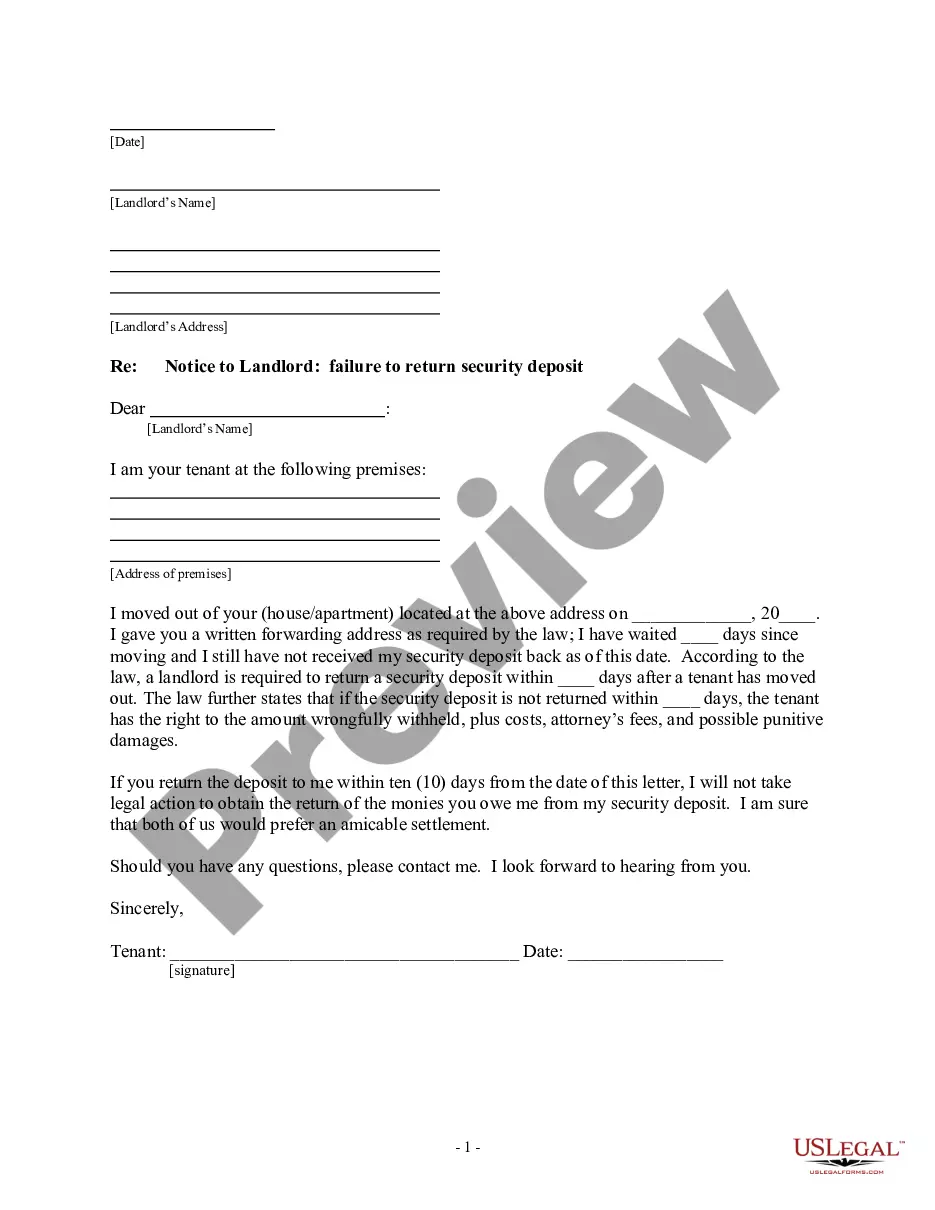
Minnesota Letter from Tenant to Landlord containing Notice of failure to return security deposit and demand for return
What this document covers
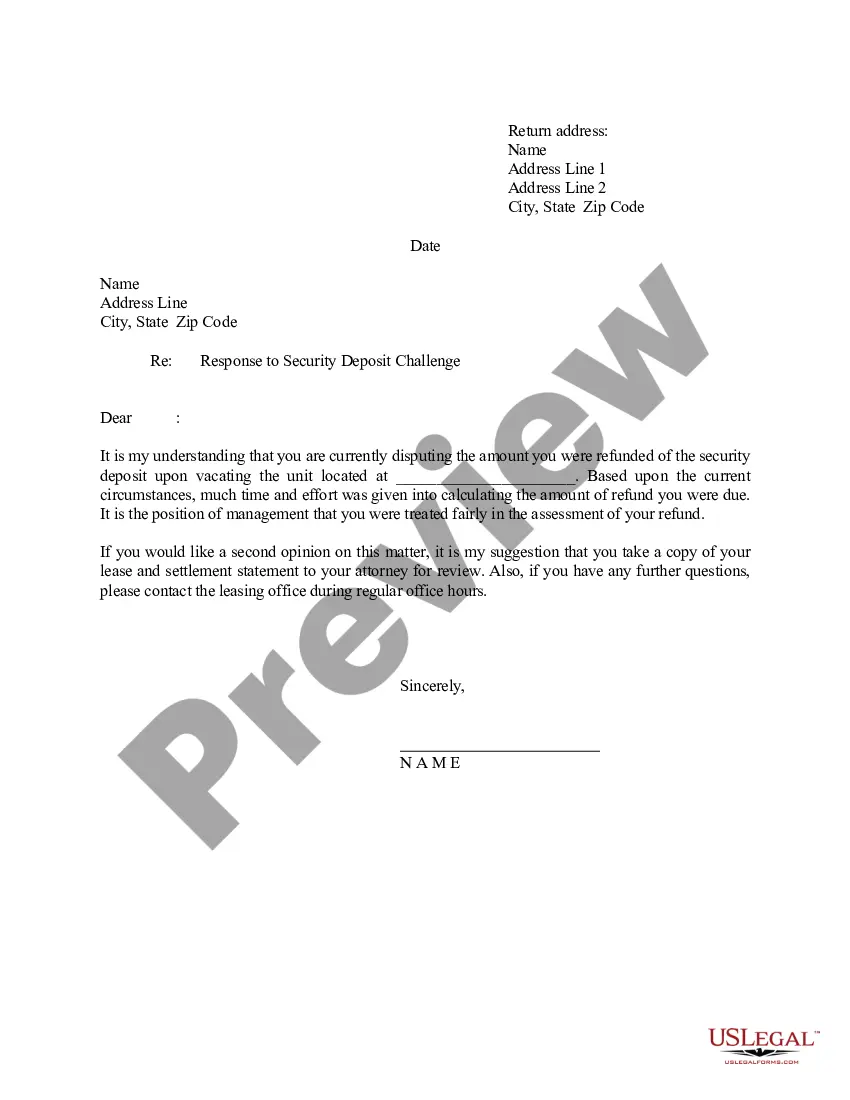
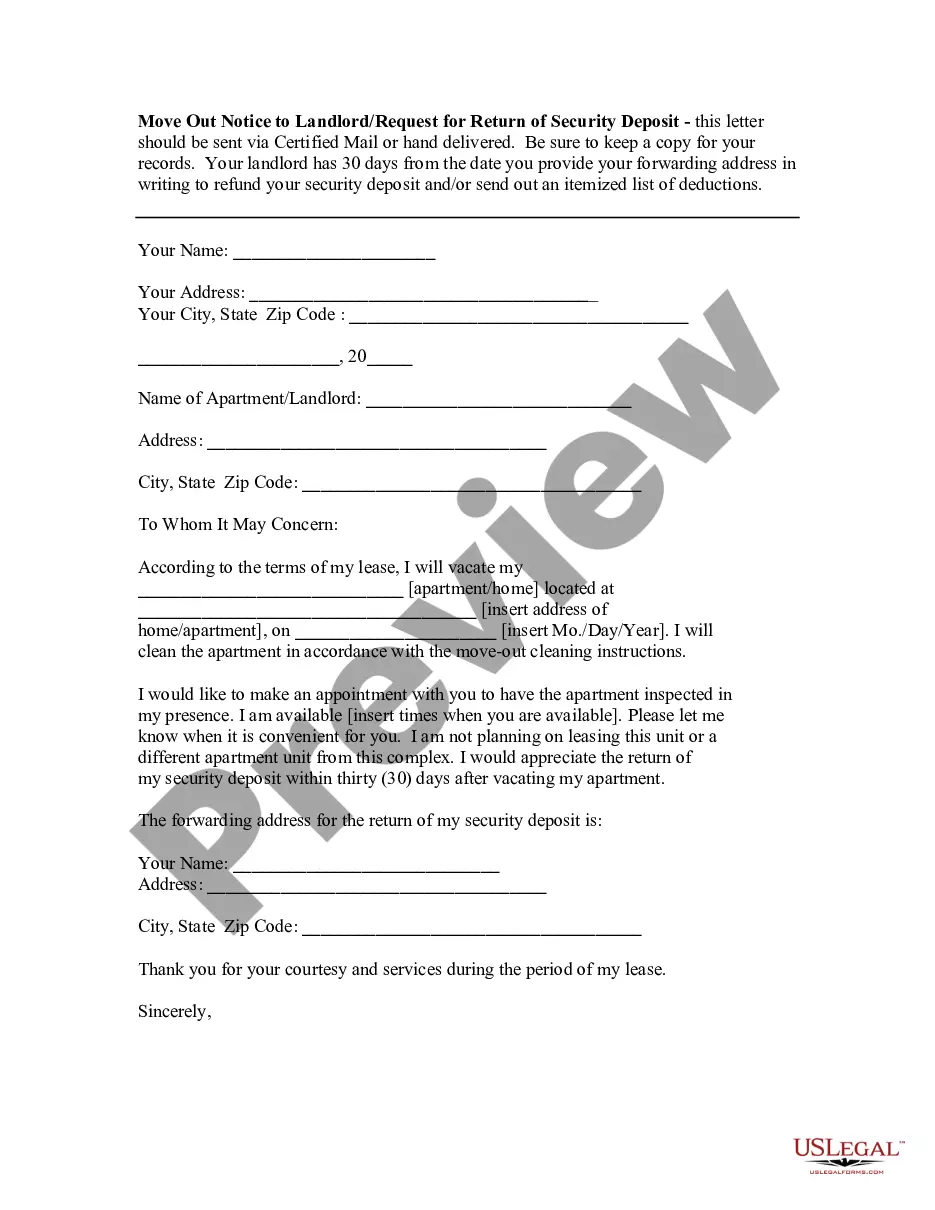
This Letter from Tenant to Landlord containing Notice of failure to return security deposit and demand for return is a formal communication from a tenant to their landlord. It addresses the issue of a security deposit that has not been returned within the legally required timeframe after vacating the rental property. Unlike other types of correspondence, this letter serves a specific legal purpose by notifying the landlord of their obligation and the potential consequences of failing to comply.
Form components explained
- Identification of the tenant and landlord.
- Statement of the demand for the return of the security deposit.
- A specified timeline for compliance (ten days from the date of the letter).
- Consequences of non-compliance, emphasizing potential legal actions.
- Signature field for the tenant and date of completion.


When to use this document
This letter should be used when a tenant has vacated a rental property and has not received their security deposit back from the landlord within the time frame allowed by state law. It is an essential step to formally request the return of the deposit before considering further legal action.
Who this form is for
- Tenants who have moved out of a rental property.
- Individuals unsure of how to formally request the return of their security deposit.
- Renters who have not received their deposit back within the stipulated period set by state law.
Instructions for completing this form
- Identify the parties involved: yourself as the tenant and the landlord.
- Clearly state the amount of the security deposit owed.
- Specify the deadline for the return of the deposit (ten days from the date of the letter).
- Include a statement about the potential for legal action if the deposit is not returned.
- Sign and date the letter to validate your demand.
Is notarization required?
This form does not typically require notarization to be legally valid. However, some jurisdictions or document types may still require it. US Legal Forms provides secure online notarization powered by Notarize, available 24/7 for added convenience.
Get your form ready online
Our built-in tools help you complete, sign, share, and store your documents in one place.
Make edits, fill in missing information, and update formatting in US Legal Forms—just like you would in MS Word.
Download a copy, print it, send it by email, or mail it via USPS—whatever works best for your next step.
Sign and collect signatures with our SignNow integration. Send to multiple recipients, set reminders, and more. Go Premium to unlock E-Sign.
If this form requires notarization, complete it online through a secure video call—no need to meet a notary in person or wait for an appointment.
We protect your documents and personal data by following strict security and privacy standards.

Make edits, fill in missing information, and update formatting in US Legal Forms—just like you would in MS Word.

Download a copy, print it, send it by email, or mail it via USPS—whatever works best for your next step.

Sign and collect signatures with our SignNow integration. Send to multiple recipients, set reminders, and more. Go Premium to unlock E-Sign.

If this form requires notarization, complete it online through a secure video call—no need to meet a notary in person or wait for an appointment.

We protect your documents and personal data by following strict security and privacy standards.
Common mistakes
- Failing to send the letter within the required timeframe after vacating the property.
- Not clearly stating the amount of the security deposit.
- Omitting the deadline for compliance, which can weaken the demand.
- Not including a return address for the landlord to send the deposit.
Why complete this form online
- Convenience of downloading the form from anywhere at any time.
- Editability allows you to customize the form to your specific situation quickly.
- Access to lawyer-drafted content ensures legal accuracy and relevancy.
Looking for another form?

Form popularity
FAQ
If your landlord does not return the security deposit within 30 days, they may be in violation of Minnesota law. You can take legal action, which may include filing a complaint with the Minnesota Attorney General or pursuing small claims court. To initiate this process, consider drafting a Minnesota Letter from Tenant to Landlord containing Notice of failure to return security deposit and demand for return to formally document your request.
In Minnesota, landlords are obligated to return a damage deposit within 21 days of the tenant's departure. This timeframe applies unless the landlord has a valid reason to withhold some or all of the deposit, in which case an itemized list of deductions is required. If your landlord fails to comply, a Minnesota Letter from Tenant to Landlord containing Notice of failure to return security deposit and demand for return can be an effective step forward.
Minnesota law requires landlords to return security deposits within 21 days after the tenant moves out. If deductions are made, landlords must provide an itemized list of those deductions. Understanding the law can help you navigate the process, and utilizing a Minnesota Letter from Tenant to Landlord containing Notice of failure to return security deposit and demand for return can strengthen your case.
When writing a letter regarding the non-return of your security deposit, be clear and concise. Start by stating your name, address, and the rental property details. Then, express your demand for the return of your deposit and mention relevant Minnesota laws. A Minnesota Letter from Tenant to Landlord containing Notice of failure to return security deposit and demand for return can guide you in crafting this letter effectively.
In Minnesota, landlords typically have 21 days to return the security deposit after the tenant vacates the property. If the landlord withholds any portion of the deposit, they must provide an itemized list of deductions. To ensure your rights are protected, consider using a Minnesota Letter from Tenant to Landlord containing Notice of failure to return security deposit and demand for return.
If your landlord fails to return your security deposit, you can report them to the Minnesota Attorney General's Office. They can provide guidance on your rights and the necessary steps to take. Additionally, you may consider sending a Minnesota Letter from Tenant to Landlord containing Notice of failure to return security deposit and demand for return, as this can serve as formal documentation of your request.
If the owner does not return your security deposit, first review your lease agreement for relevant terms. Then, send a Minnesota Letter from Tenant to Landlord containing Notice of failure to return security deposit and demand for return to formally request your deposit. If necessary, seek legal advice or utilize platforms like USLegalForms to ensure your rights are protected.
If your landlord does not return your security deposit within 21 days, it is essential to act swiftly. You can send a Minnesota Letter from Tenant to Landlord containing Notice of failure to return security deposit and demand for return, which serves as a formal demand for your funds. If the issue persists, you may consider legal action to recover your deposit.
To avoid losing your security deposit, ensure you keep the rental property clean and undamaged. Be mindful of any lease terms regarding repairs or alterations. Remember, if your landlord withholds the deposit unfairly, you can send a Minnesota Letter from Tenant to Landlord containing Notice of failure to return security deposit and demand for return to assert your rights.
When writing a letter to a tenant regarding a retained security deposit, ensure you clearly outline the reasons for withholding the deposit. Reference any damages or unpaid rent, and include the legal framework governing security deposits in Minnesota. By providing a detailed explanation, you help maintain transparency and trust with your tenant.