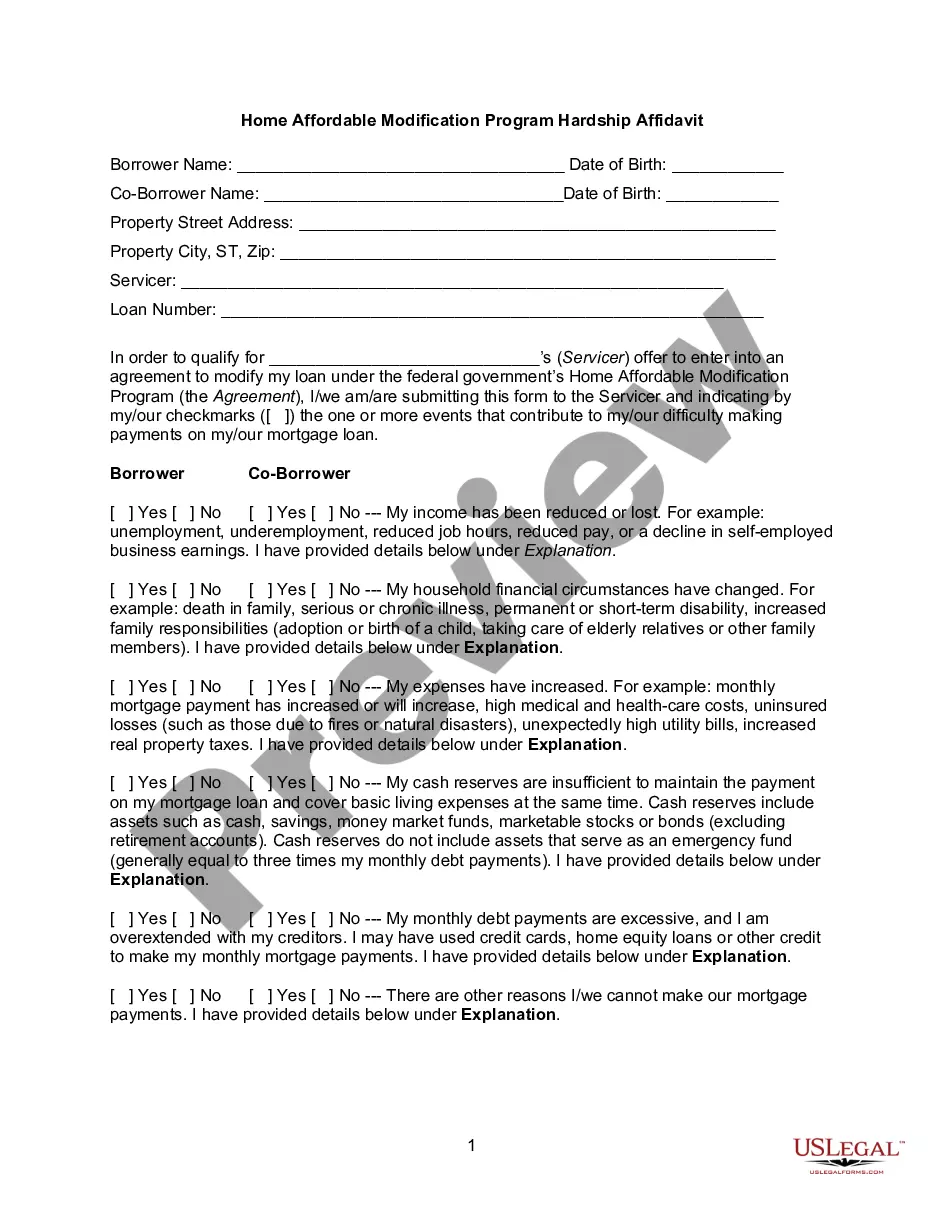
Home Affordable Modification Program Hardship Affidavit
What is this form?
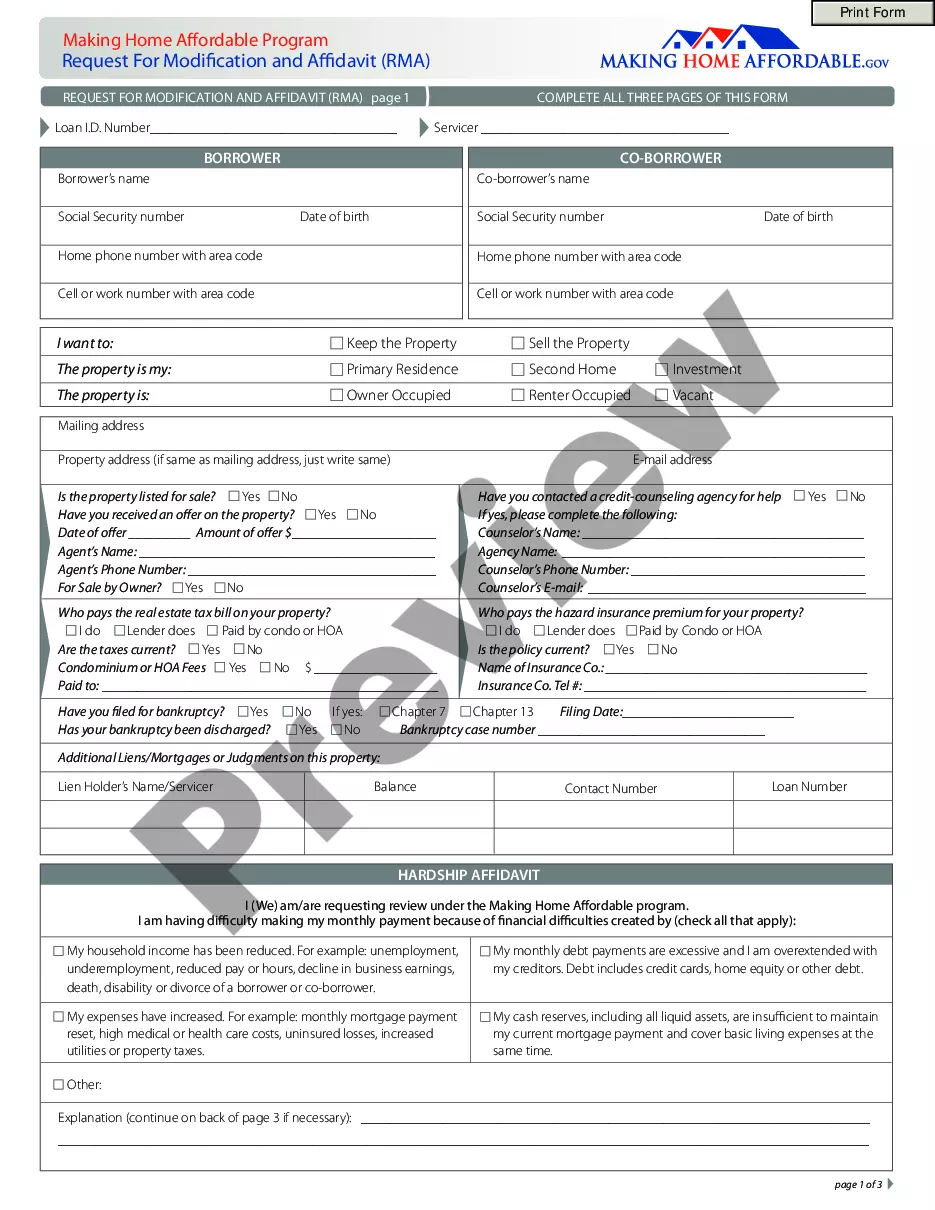
The Home Affordable Modification Program Hardship Affidavit is a legal document used by homeowners seeking to modify their mortgage under the Home Affordable Modification Program (HAMP). This form is crucial in establishing a borrowerâs financial hardship to qualify for assistance in modifying loan terms, making it essential for individuals struggling to maintain their mortgage payments. Unlike other affidavits, this specific form focuses on the financial circumstances that have led to the inability to make mortgage payments, ensuring that borrowers can present their case effectively and possibly avert foreclosure.
Key parts of this document
- Borrower and Co-Borrower Information: Names and dates of birth.
- Property Details: Street address, city, state, and zip code.
- Servicer Information: Loan number and the name of the loan servicer.
- Hardship Events: A checklist indicating specific hardship situations impacting the ability to pay the mortgage.
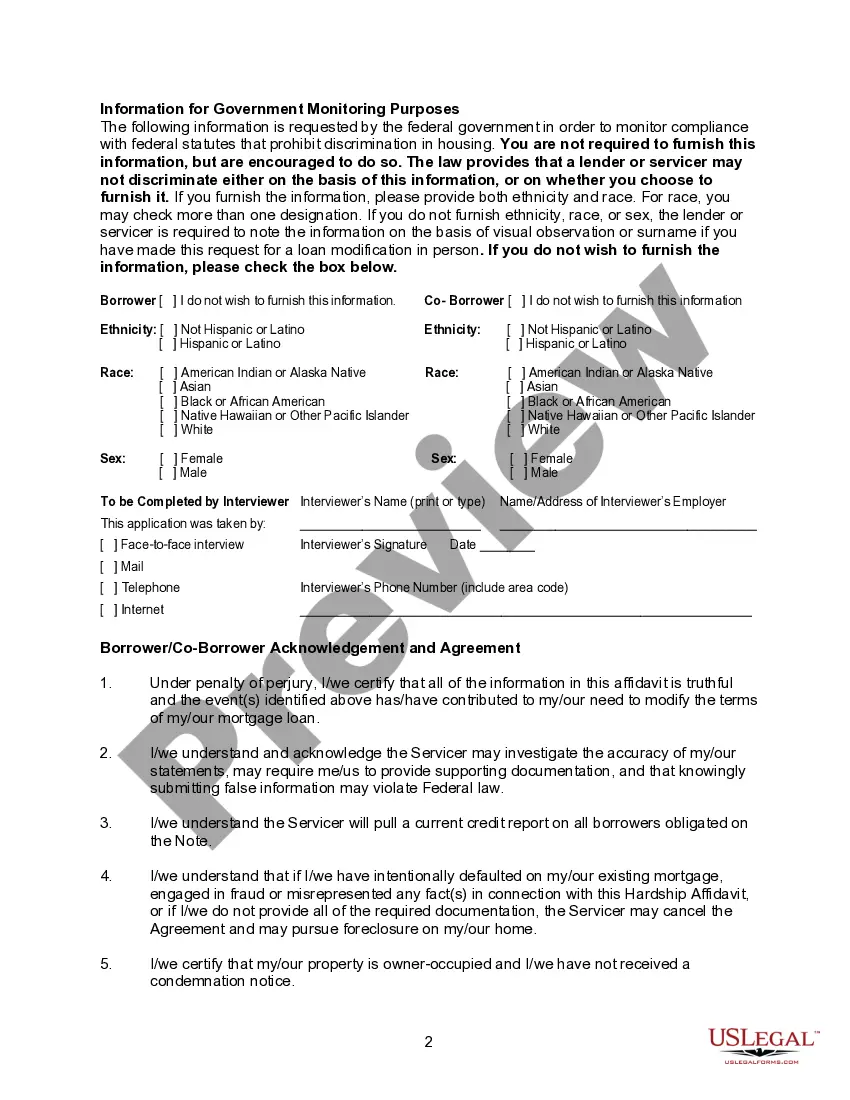
- Government Monitoring Information: Optional personal information regarding ethnicity and race for compliance with federal regulations.
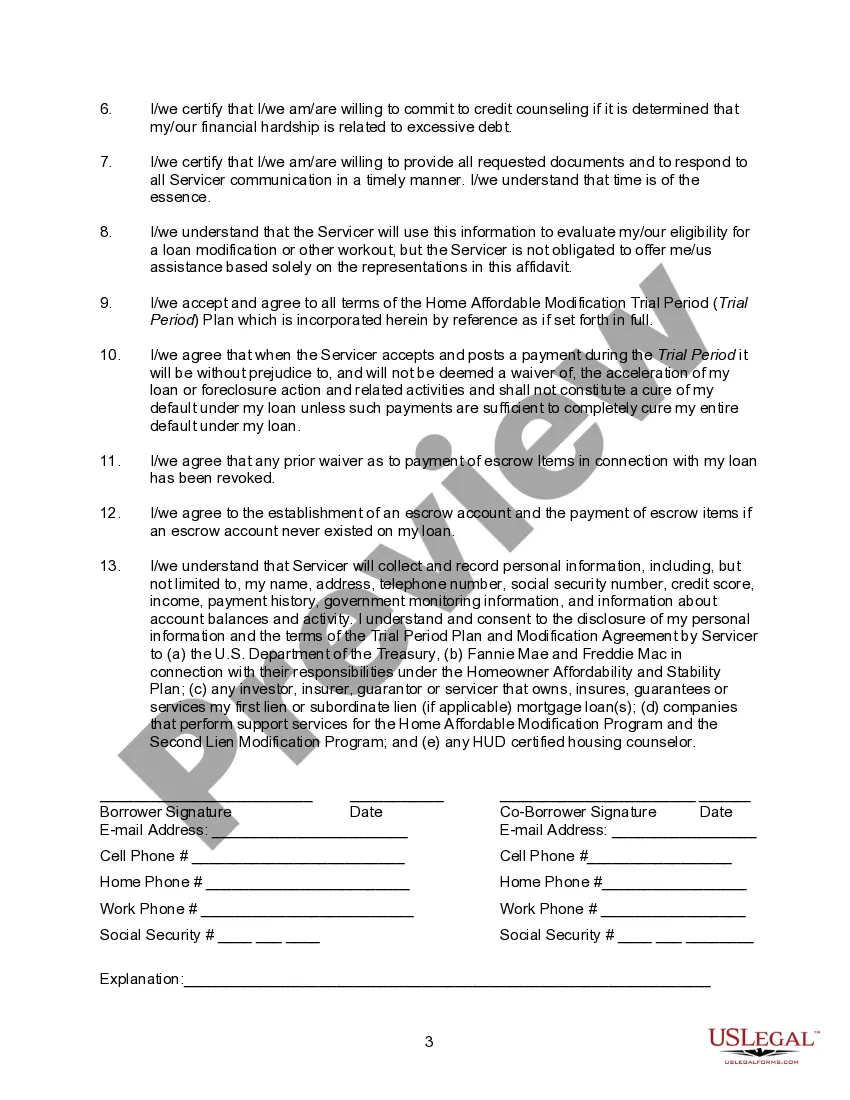
- Acknowledgment and Agreement: A section where the borrower and co-borrower certify the accuracy of the information provided.

When to use this document
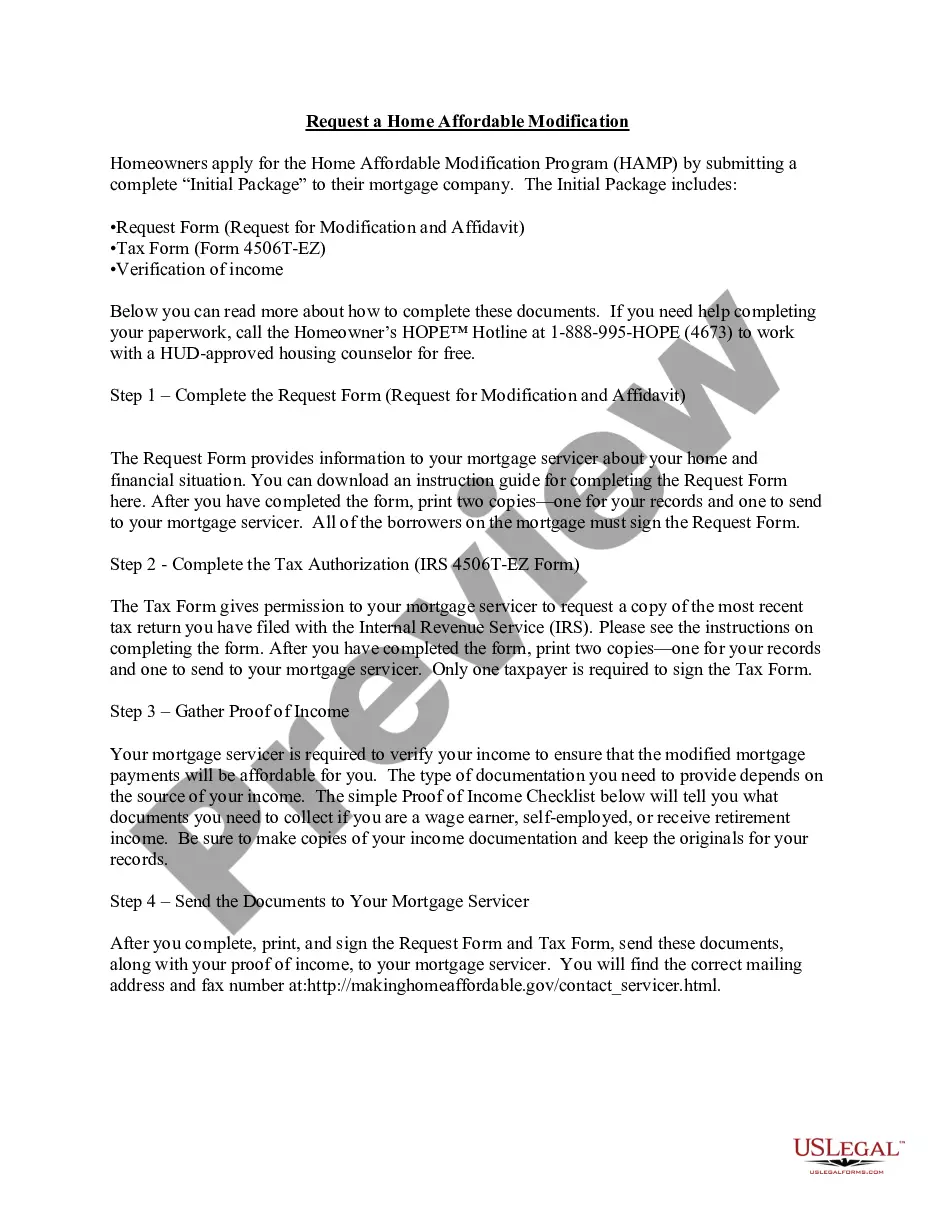
This form is typically used when a borrower is experiencing financial difficulties that may prevent them from making their mortgage payments. It is necessary when applying for a modification of the loan under the HAMP program, particularly if the borrower is 31 days or more delinquent or facing imminent default. Common scenarios include job loss, reduced income, medical expenses, or other significant changes in financial circumstances.
Who can use this document
This form is intended for:
- Homeowners with a primary residence who are unable to sustain their mortgage payments.
- Borrowers whose mortgages are owned or guaranteed by Freddie Mac or government entities like FHA or VA.
- Individuals who are in foreclosure, bankruptcy, or other financial distress.
- Co-borrowers who share the mortgage obligation and face similar financial hardships.
How to prepare this document
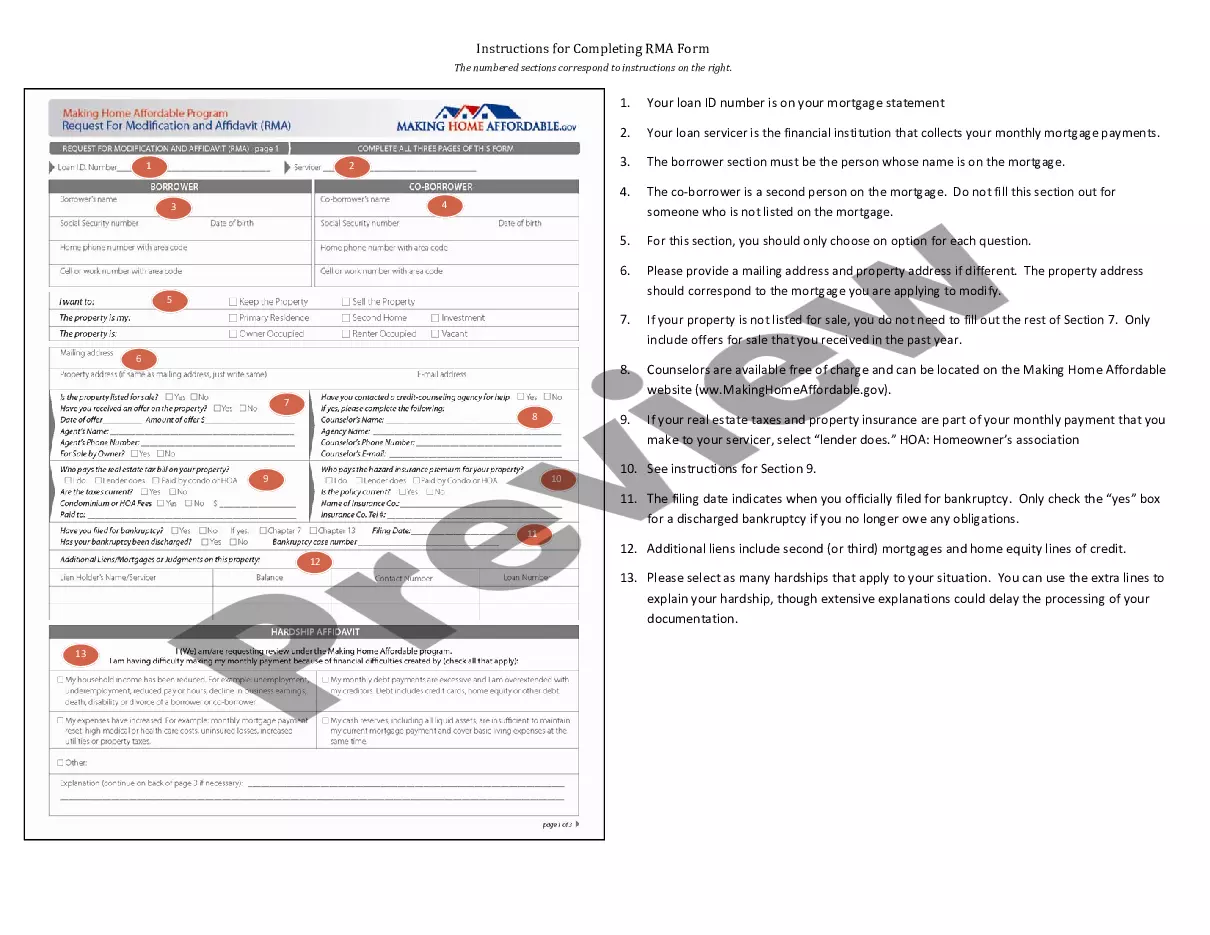
- Provide full names and dates of birth for both the borrower and co-borrower.
- Fill in the property address details including street, city, state, and zip code.
- Enter the name of the loan servicer and the loan number associated with the mortgage.
- Indicate any relevant hardship events by checking the appropriate boxes and providing explanations where necessary.
- Complete the government monitoring information if comfortable doing so, and acknowledge all terms listed in the agreement section.
- Ensure all parties sign and date the form to certify the accuracy of the information provided.
Does this document require notarization?
This form usually doesn’t need to be notarized. However, local laws or specific transactions may require it. Our online notarization service, powered by Notarize, lets you complete it remotely through a secure video session, available 24/7.
Get your form ready online
Our built-in tools help you complete, sign, share, and store your documents in one place.
Make edits, fill in missing information, and update formatting in US Legal Forms—just like you would in MS Word.
Download a copy, print it, send it by email, or mail it via USPS—whatever works best for your next step.
Sign and collect signatures with our SignNow integration. Send to multiple recipients, set reminders, and more. Go Premium to unlock E-Sign.
If this form requires notarization, complete it online through a secure video call—no need to meet a notary in person or wait for an appointment.
We protect your documents and personal data by following strict security and privacy standards.

Make edits, fill in missing information, and update formatting in US Legal Forms—just like you would in MS Word.

Download a copy, print it, send it by email, or mail it via USPS—whatever works best for your next step.

Sign and collect signatures with our SignNow integration. Send to multiple recipients, set reminders, and more. Go Premium to unlock E-Sign.

If this form requires notarization, complete it online through a secure video call—no need to meet a notary in person or wait for an appointment.

We protect your documents and personal data by following strict security and privacy standards.
Common mistakes to avoid
- Failing to provide accurate or complete information about hardship circumstances.
- Not signing and dating the affidavit, which may invalidate the form.
- Forgetting to include the co-borrower's information when applicable.
- Neglecting to attach necessary supporting documents when prompted.
Benefits of completing this form online
- Convenience: Downloadable format allows users to complete forms at their own pace.
- Editability: Users can save and modify their responses before finalizing the document.
- Reliability: Forms drafted by licensed attorneys ensure adherence to legal standards.
Legal use & context
- This affidavit is legally binding and should be filled out truthfully to avoid potential legal repercussions.
- Providing false information can lead to penalties, including loss of eligibility for loan modification.
- The information collected in this form is subject to federal monitoring regulations that protect against discrimination.
Looking for another form?



Form popularity
FAQ
Hardship Examples. There are a variety of situations that may qualify as a hardship. Keep it original. Be honest. Keep it concise. Don't cast blame or shirk responsibility. Don't use jargon or fancy words. Keep your objectives in mind. Provide the creditor an action plan.
Make the letter concise. Do not write pages explaining your hardship. State your response to the hardship. You need to describe the steps you have taken in response to the difficulty. Clearly state what you want. You can include enclosures. The conclusion.
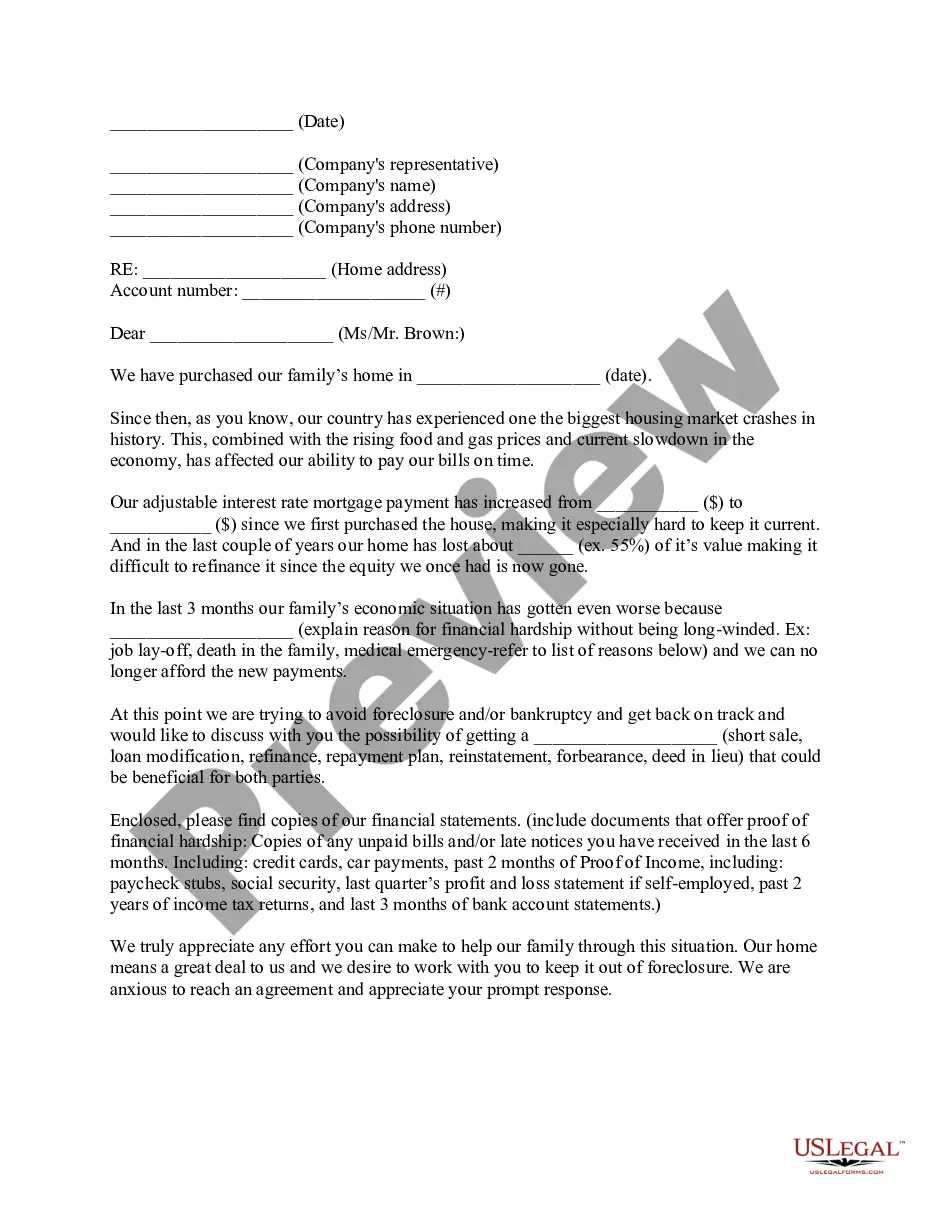
A hardship affidavit can help distressed homeowners keep their homes or otherwise avoid a looming foreclosure.Hardship affidavits, sometimes known as hardship letters, should be completed with precision, as lenders may request supporting documents to verify your hardship.
Proof of income (pay stubs, offer letter, etc.) proof of other income (e.g., alimony, child support, disability benefits) an expense sheet laying out all your expenses. tax returns (two years worth of returns) profit and loss statement. current bank statements.
Your name, address, phone number and account number. The type of debt resolution you're seeking. Your financial situation that has caused you to fall behind in your payments. A detailed budget and your plan for making payments (if you want to keep your home)
Suspend past due amounts. Bring your account current. Adjust your interest rate. Lower your minimum payments. Modify your loan. Agree to a short sale of a home. Consider a settlement option.
The most common examples of hardship include: Illness or injury. Change of employment status. Loss of income.
Financial hardship typically refers to a situation in which a person cannot keep up with debt payments and bills or if the amount you need to pay each month is more than the amount you earn, due to a circumstance beyond your control.
Name, address, phone number, date, loan number. Short introduction asking for permission to sell your home in a short sale. Hardship details and neighborhood comparables. Assertion that the only other alternative is foreclosure.