Maine Bill of Sale with Warranty for Corporate Seller
About this form
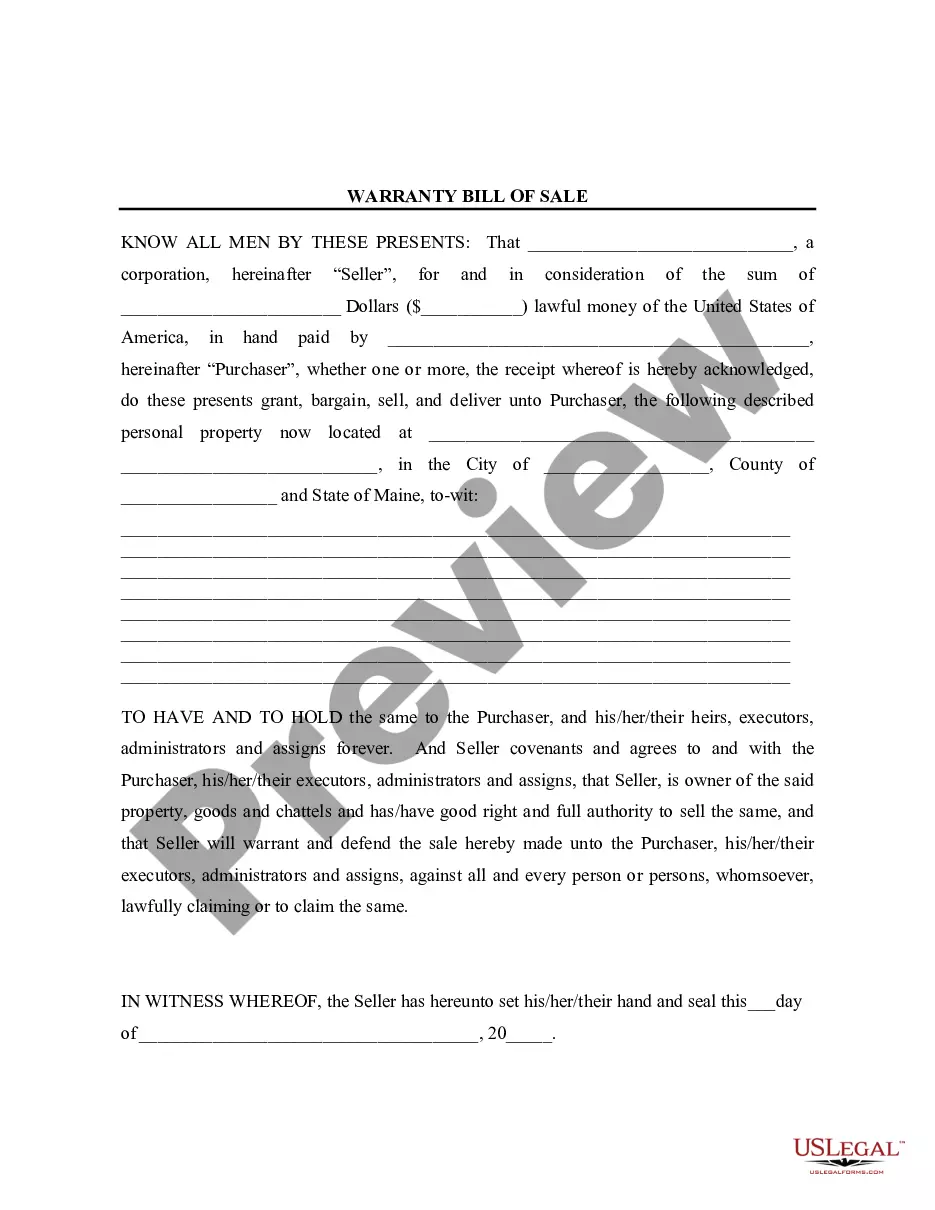
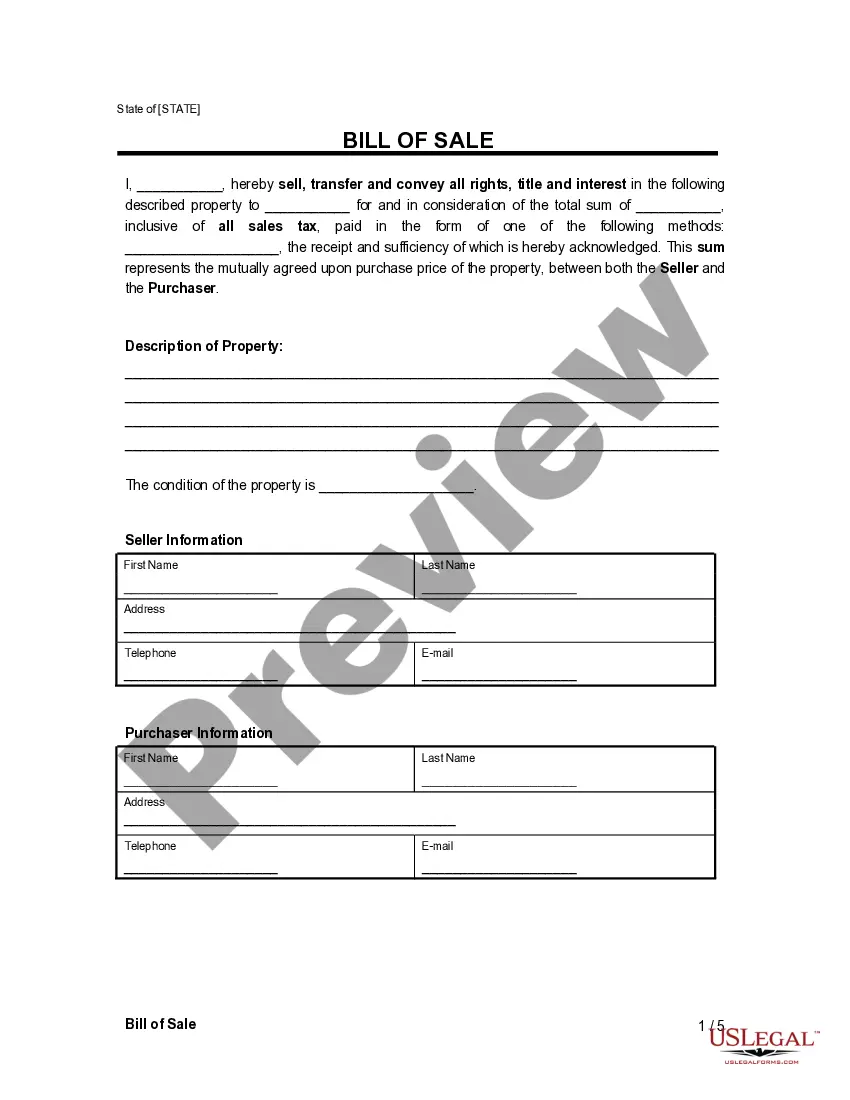
The Bill of Sale with Warranty for Corporate Seller is a legal document that facilitates the sale of personal property from a corporation to a purchaser. It differs from a quitclaim conveyance by providing a warranty, assuring the purchaser that the seller has the legal right to sell the property and that it is free of claims. This form is designed to comply with state statutory laws and includes necessary acknowledgments to validate the transaction.
What’s included in this form
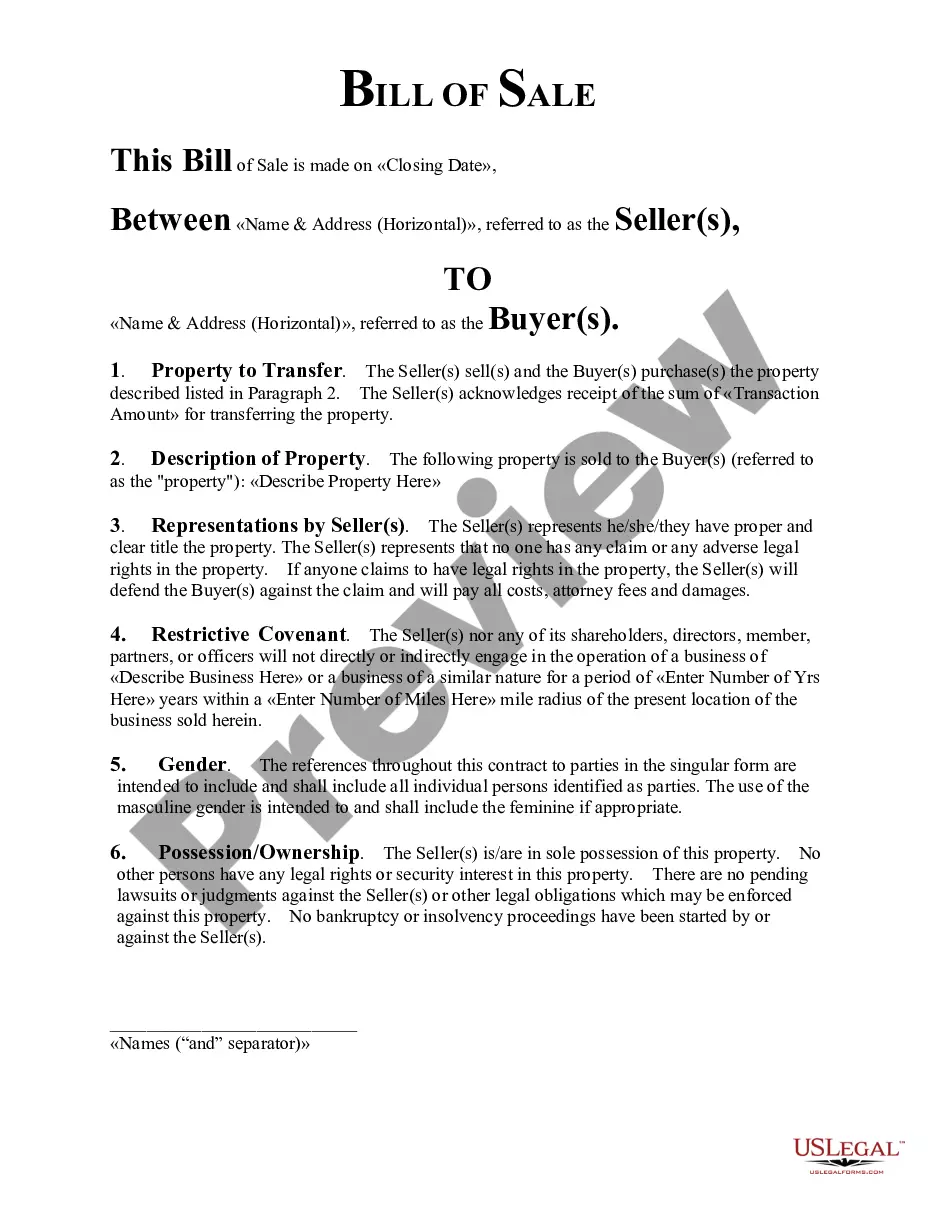
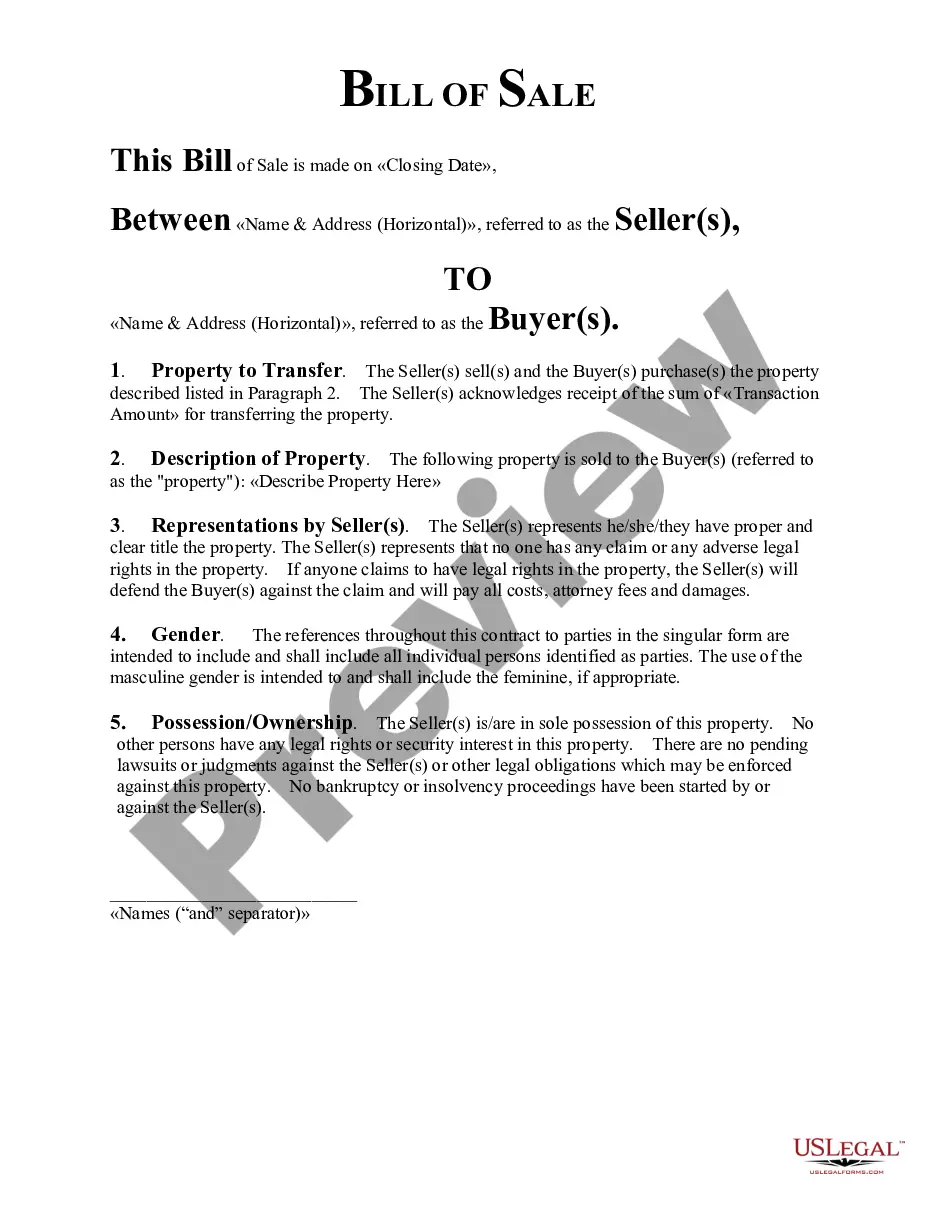
- Identification of the seller and purchaser, including corporation name and address.
- Description of the personal property being sold.
- Purchase price and payment details.
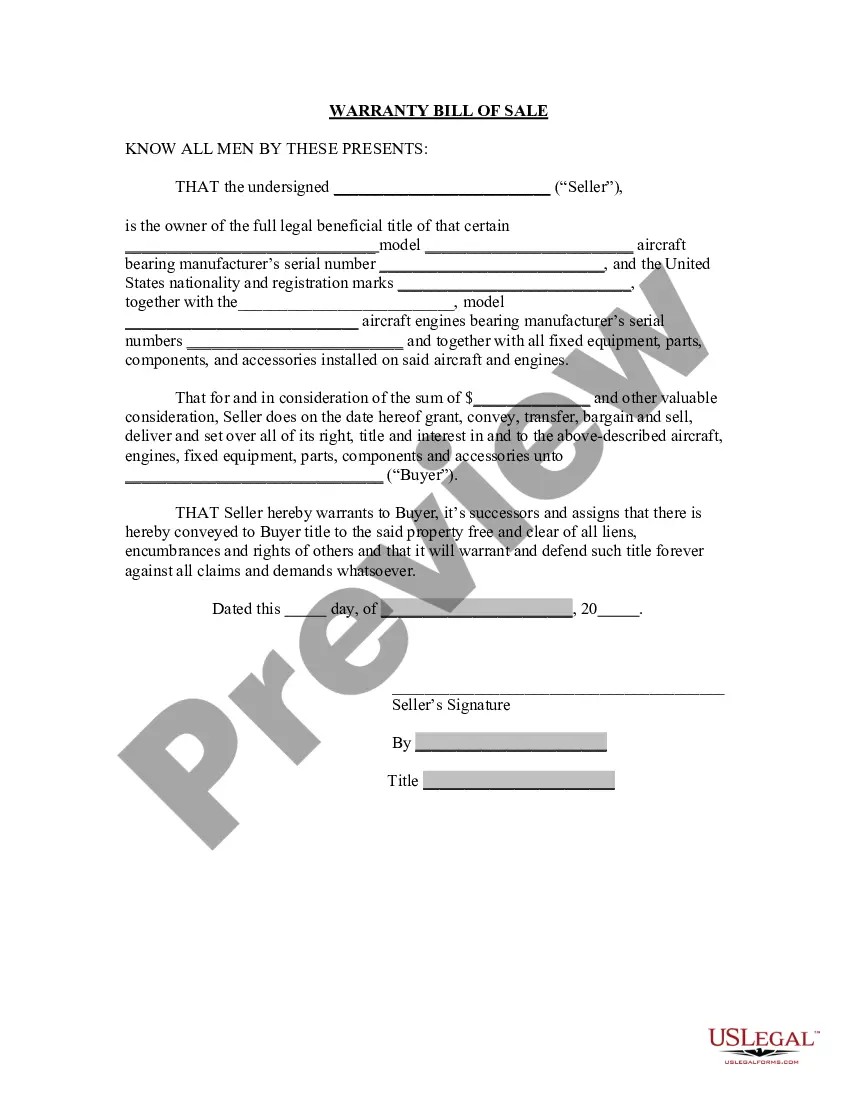
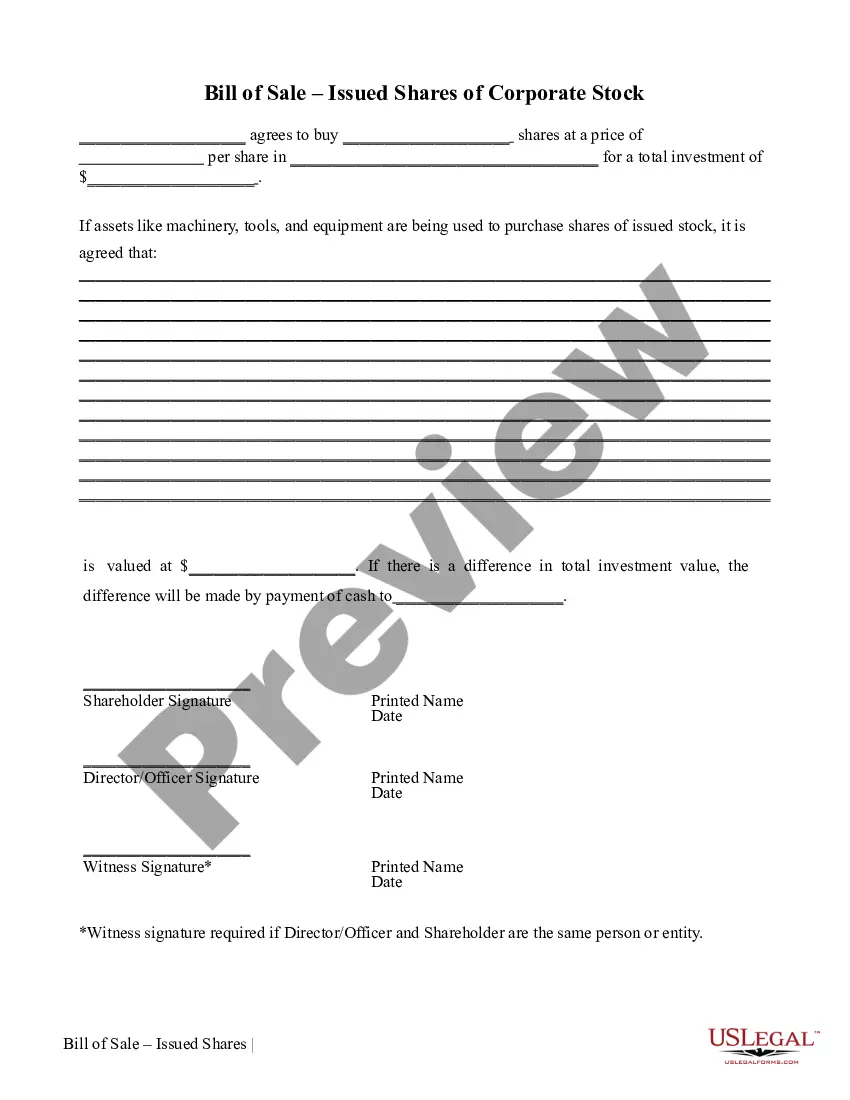
- Warranties provided by the seller regarding title and claims against the property.
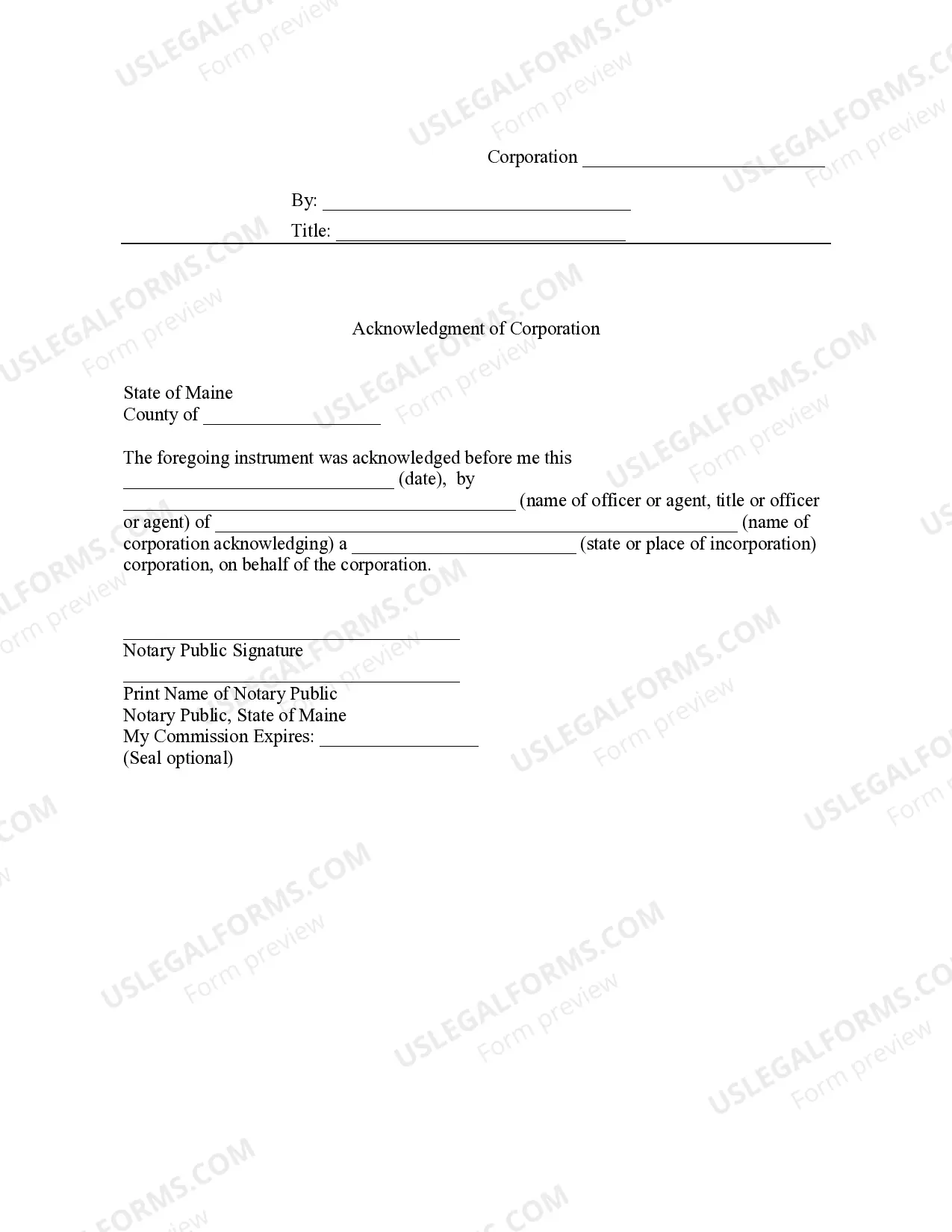
- Signatures of authorized representatives of the corporation and notary acknowledgment.
When to use this form
This form should be used when a corporation is selling personal property and wishes to provide a warranty to the purchaser. It is applicable in transactions involving tangible goods, such as equipment, vehicles, or other assets that require formal transfer. It ensures both parties have a clear record of the sale and the seller's commitments regarding the property.
Who should use this form
- Corporations engaged in the sale of personal property.
- Business owners seeking to transfer ownership of assets to another party.
- Purchasers who want assurance of the legal rights and ownership from the seller.
How to prepare this document
- Identify the parties involved by entering the seller's corporate name and the purchaser's name.
- Specify the description and location of the personal property being sold.
- Enter the total purchase price in both numerals and words.
- Have an authorized representative of the seller sign the document, indicating their title.
- Obtain notarization from a notary public to authenticate the signatures and ensure legal validity.
Does this form need to be notarized?
Notarization is required for this form to take effect. Our online notarization service, powered by Notarize, lets you verify and sign documents remotely through an encrypted video session, available 24/7.
Get your form ready online
Our built-in tools help you complete, sign, share, and store your documents in one place.
Make edits, fill in missing information, and update formatting in US Legal Forms—just like you would in MS Word.
Download a copy, print it, send it by email, or mail it via USPS—whatever works best for your next step.
Sign and collect signatures with our SignNow integration. Send to multiple recipients, set reminders, and more. Go Premium to unlock E-Sign.
If this form requires notarization, complete it online through a secure video call—no need to meet a notary in person or wait for an appointment.
We protect your documents and personal data by following strict security and privacy standards.

Make edits, fill in missing information, and update formatting in US Legal Forms—just like you would in MS Word.

Download a copy, print it, send it by email, or mail it via USPS—whatever works best for your next step.

Sign and collect signatures with our SignNow integration. Send to multiple recipients, set reminders, and more. Go Premium to unlock E-Sign.

If this form requires notarization, complete it online through a secure video call—no need to meet a notary in person or wait for an appointment.

We protect your documents and personal data by following strict security and privacy standards.
Mistakes to watch out for
- Failing to provide a complete description of the personal property.
- Not including the purchase price in both numerals and words.
- Neglecting to have the form notarized if required by state law.
- Using the form without confirming compliance with local regulations.
Advantages of online completion
- Convenient access to a customizable legal form that can be completed at your own pace.
- Editable templates allow you to tailor the document according to your specific transaction.
- Reliable legal language drafted by attorneys, ensuring enforceability.
Quick recap
- The Bill of Sale with Warranty protects the purchaser by ensuring ownership rights.
- A notary public's acknowledgment is essential for validity.
- Use this form for business transactions involving corporate sellers.
Looking for another form?
Form popularity
FAQ
A bill of sale has been defined as a legal document made by the seller to a purchaser, reporting that on a specific date at a specific locality and for a particular sum of money or other value received, the seller sold to the purchaser a specific item of personal property, or parcel of real property of which he had
Name and address of the seller. Name and address of the buyer. Vehicle description, including Vehicle Identification Number (VIN), make, model, year. Amount of sale.
In simple terms, a bill of sale agreement is nothing more than a contract for the purchase of a vehicle between a buyer and a seller.In most cases, the contract is legally binding between buyer and seller as long as the bill of sale follows guidelines required in the state where the sale or transfer takes place.
The date of the sale. A description of the car, including its: Year, make and model. The selling price of the car. If the car is a gift or partial gift, you should still create a bill of sale. Warranty information. The full names, addresses and signatures of the buyer and seller.
A warranty bill of sale offers protections for the buyer that a simple receipt does not. This kind of bill of sale clearly details what is being sold and gives a guarantee to the buyer about the seller's ownership rights. The bill of sale promises that the buyer holds full and clear title to the item sold.
A bill of sale does not serve as proof of ownership. Only a title has that legal authority. Bills of sale serve as proof of title transfer, which buyers and sellers need for personal financial and tax records.
A bill of sale is a legal document that records the transfer of ownership of an asset to a second party in exchange for money.The bill of sale, as a rule, is drafted by the seller and includes the details of the transaction. It protects both the buyer and the seller, should disagreements arise in the future.
The date of the sale. A description of the car, including its: Year, make and model. The selling price of the car. If the car is a gift or partial gift, you should still create a bill of sale. Warranty information. The full names, addresses and signatures of the buyer and seller.
Both the buyer and seller should receive copies of the bill of sale form. It's important for the buyer to keep the bill of sale with the title of the vehicle for registration and licensing purposes, if necessary. However, all parties should keep them for their own personal records.