Maryland Special or Limited Power of Attorney for Real Estate Sales Transaction By Seller
Understanding this form
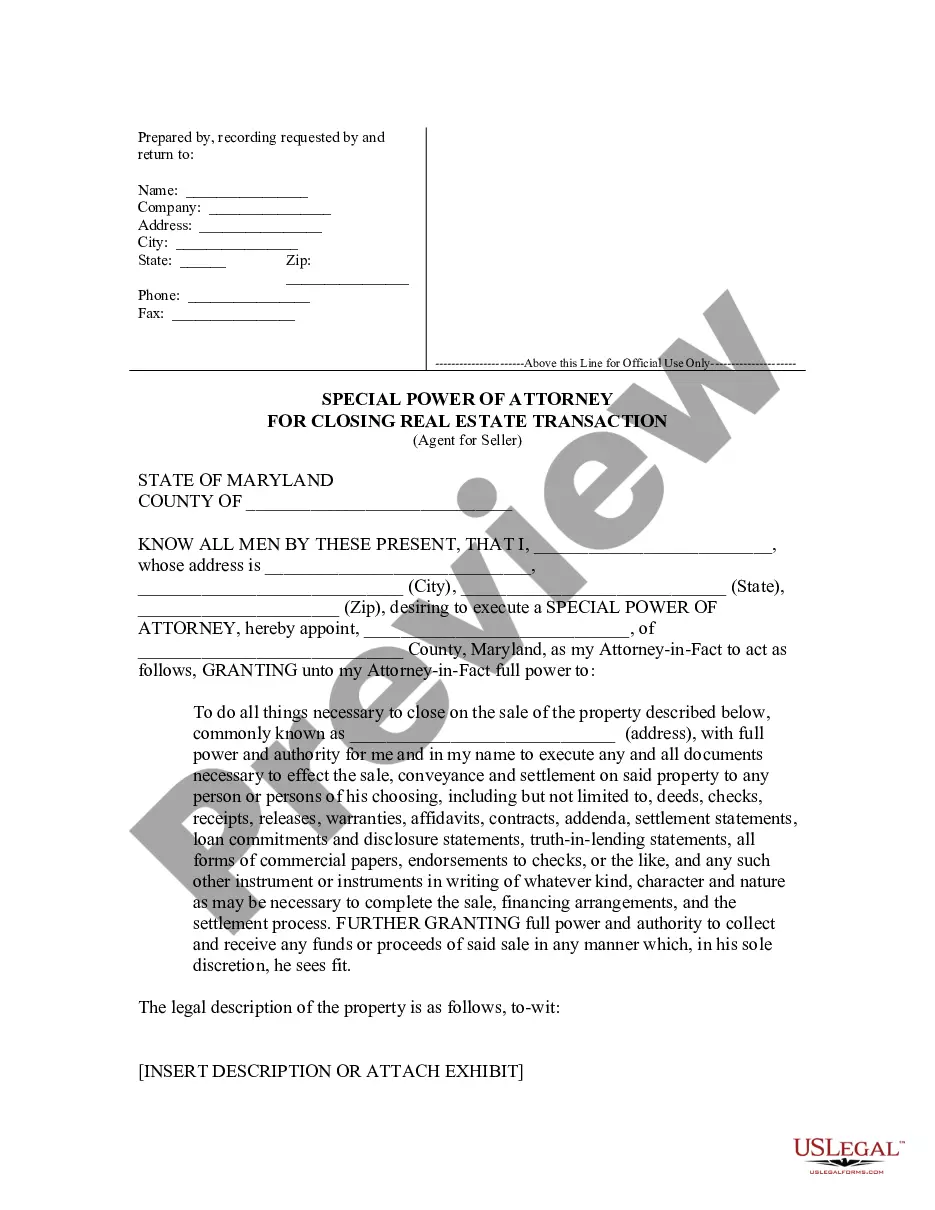
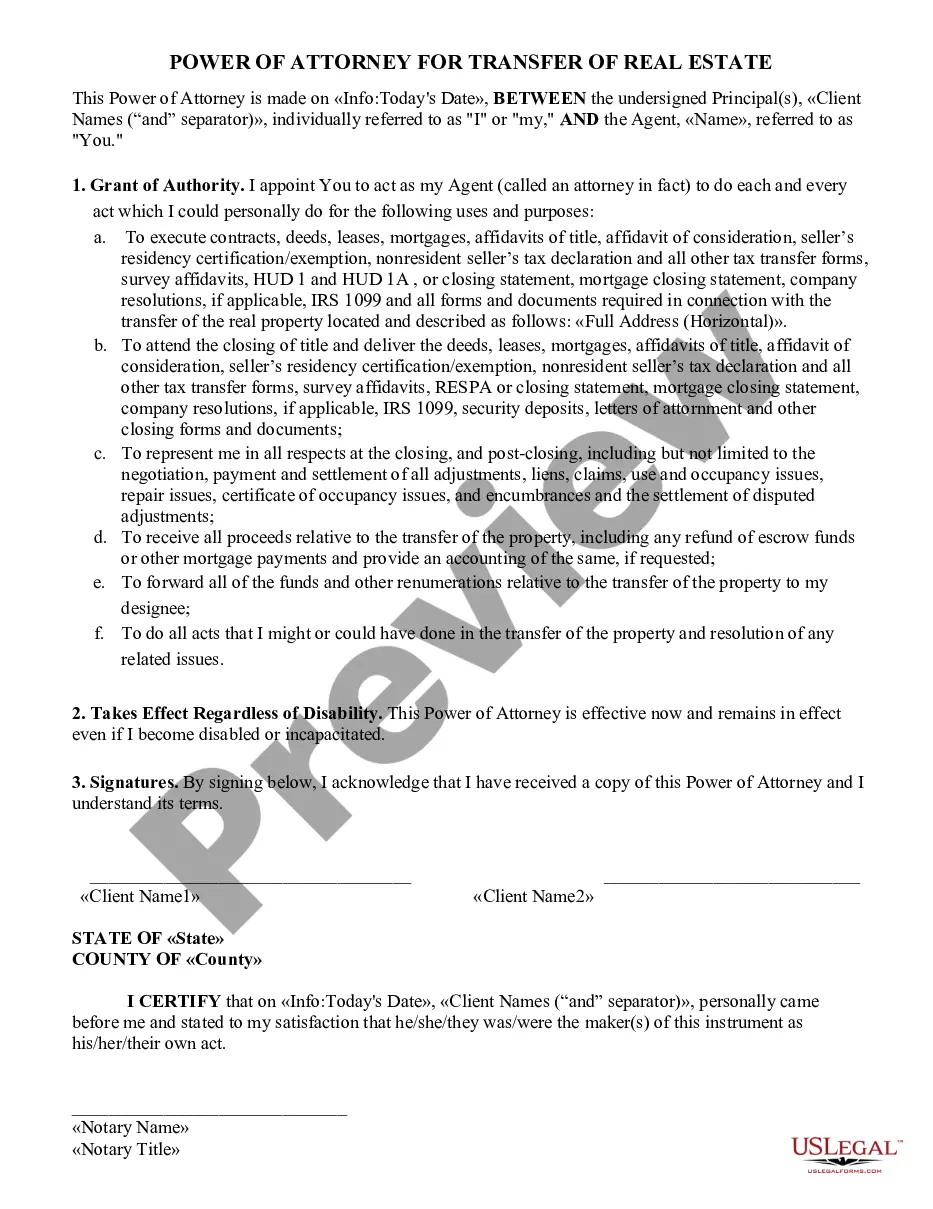
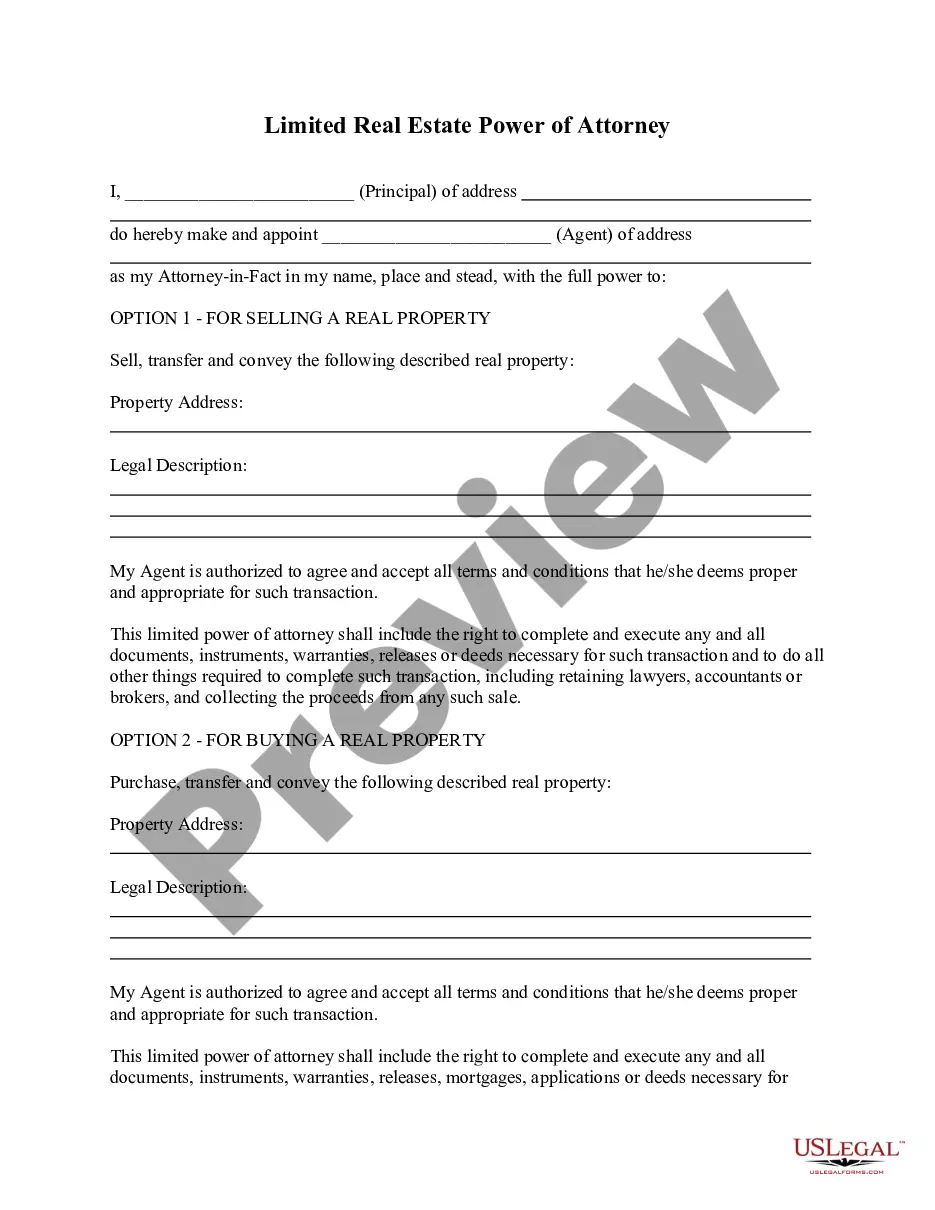
The Special or Limited Power of Attorney for Real Estate Sales Transaction By Seller is a legal document that allows a seller to designate an attorney-in-fact. This representative is authorized to act on behalf of the seller for the purpose of executing necessary documents to complete a real estate sale. Unlike a general power of attorney, which grants broad powers, this special power is specifically tailored for real estate transactions, ensuring the seller's interests are represented effectively in the sale process.
What’s included in this form
- Principal Information: The seller's name and address.
- Attorney-in-Fact Details: The name and address of the designated representative who will act on behalf of the seller.
- Property Description: A clear identification of the property being sold, including its address.
- Powers Granted: Specifies the powers given to the attorney-in-fact, including the ability to sign documents and receive funds.
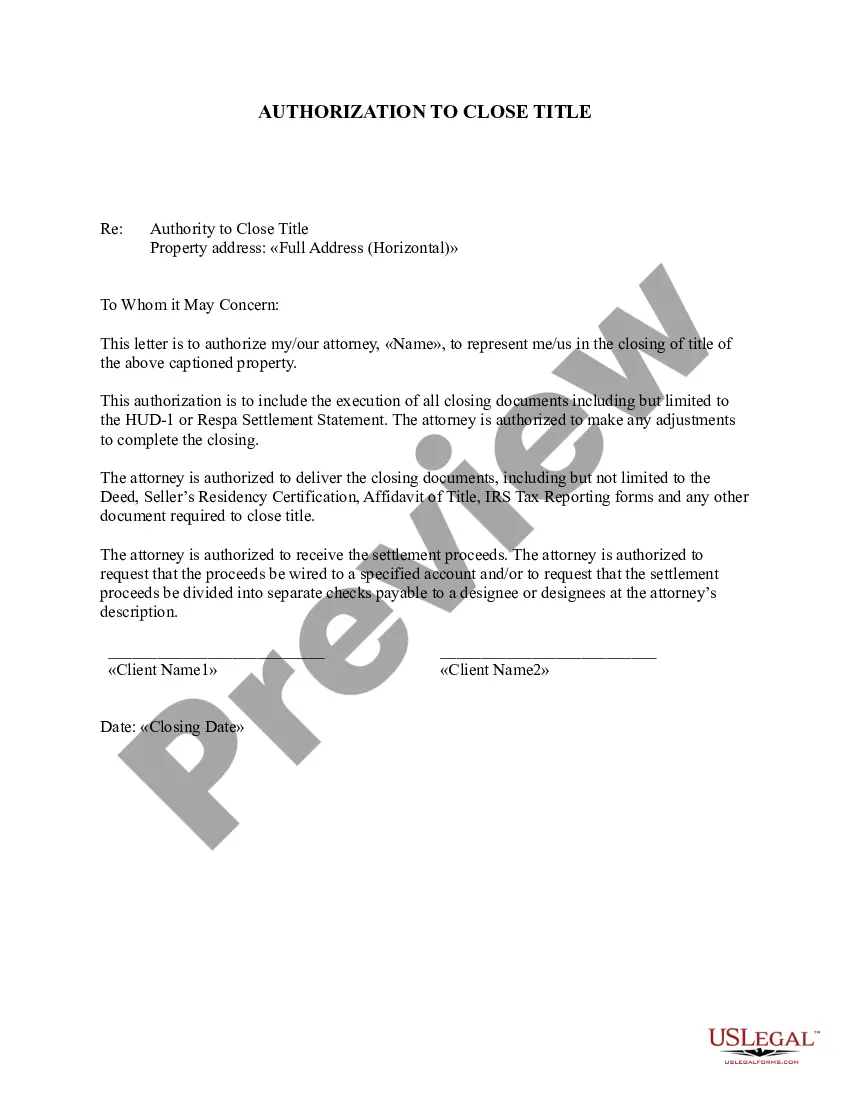
- Notarization: A section that requires the document to be notarized for legal validity.
- Witness Attestation: Space for witnesses to sign, confirming the execution of the power of attorney.


When this form is needed
This form should be used when a seller needs to authorize another person to handle the sale of their property, especially if the seller is unable to be present during the transaction. Common situations include out-of-state sellers, those with health issues, or anyone who wants to delegate the task of managing the sale process to a trusted individual.
Who should use this form
This form is suitable for:
- Property owners selling real estate.
- Individuals unable to attend the closing process in person.
- Those who wish to designate a trusted individual to handle real estate transactions on their behalf.
- Sellers who want to ensure that their interests are protected during the sale.
Steps to complete this form
- Identify the principal by entering your full name and address at the top of the document.
- Designate your attorney-in-fact by filling in their name and address in the appropriate section.
- Clearly describe the property you are selling, including the address.
- Review the powers you are granting to your attorney-in-fact, ensuring they align with your wishes.
- Sign and date the document in the presence of a notary public and witnesses, if required.
Notarization guidance
To make this form legally binding, it must be notarized. Our online notarization service, powered by Notarize, lets you verify and sign documents remotely through an encrypted video session.
Get your form ready online
Our built-in tools help you complete, sign, share, and store your documents in one place.
Make edits, fill in missing information, and update formatting in US Legal Forms—just like you would in MS Word.
Download a copy, print it, send it by email, or mail it via USPS—whatever works best for your next step.
Sign and collect signatures with our SignNow integration. Send to multiple recipients, set reminders, and more. Go Premium to unlock E-Sign.
If this form requires notarization, complete it online through a secure video call—no need to meet a notary in person or wait for an appointment.
We protect your documents and personal data by following strict security and privacy standards.

Make edits, fill in missing information, and update formatting in US Legal Forms—just like you would in MS Word.

Download a copy, print it, send it by email, or mail it via USPS—whatever works best for your next step.

Sign and collect signatures with our SignNow integration. Send to multiple recipients, set reminders, and more. Go Premium to unlock E-Sign.

If this form requires notarization, complete it online through a secure video call—no need to meet a notary in person or wait for an appointment.

We protect your documents and personal data by following strict security and privacy standards.
Typical mistakes to avoid
- Failing to specify the exact property, leading to confusion during the sale.
- Not having the document notarized, which may invalidate the power of attorney.
- Leaving out witness signatures when required, which could hinder legal enforcement.
- Using incorrect or outdated forms not compliant with Maryland's laws.
Benefits of using this form online
- Convenient access from anywhere to complete and download the form.
- Editable templates allowing for customization to meet your specific needs.
- Reliability and assurance that the forms are drafted by licensed attorneys.
Looking for another form?
Form popularity
FAQ
Signed by the principal (or some other person, in the presence of the principal, and at the express direction of the principal); AND. Acknowledged by the principal before a notary public; AND. Signed by two or more adult witnesses who sign the power of attorney in the presence of the principal and each other.
General Power of Attorney. Durable Power of Attorney. Special or Limited Power of Attorney. Springing Durable Power of Attorney.
The non-durable power of attorney is used only for a set period of time and usually for a particular transaction in which you grant your agent authority to act on your behalf. Once the transaction is completed, or should the principal become incapacitated during this time, the non-durable power of attorney ceases.
Draft a list of special powers. Decide what powers are springing. Pick an agent and a successor agent. Note the expiration date. Compile the information into one document. Execute the power of attorney letter.
Choose the limited power of attorney made for your state. Input personal information about both the principal and the agent or attorney-in-fact. Explain the powers of the agent. Include the date the limited power of attorney expires or will be revoked.
Choose the limited power of attorney made for your state. Input personal information about both the principal and the agent or attorney-in-fact. Explain the powers of the agent. Include the date the limited power of attorney expires or will be revoked.
What's the difference between durable and general power of attorney? A general power of attorney ends the moment you become incapacitated.A durable power of attorney stays effective until the principle dies or until they act to revoke the power they've granted to their agent.
Step 1: Bring Your Power of Attorney Agreement and ID. Step 2: Determine the Preferred Signature Format. Step 3: Sign as the Principal. Step 4: Sign Your Own Name. Step 5: Express Your Authority as Attorney-in-Fact. Step 6: File the Documentation Somewhere Safe.
The durable power of attorney is almost always required. This instrument gives another person specific powers to sign for an individual in a real estate transaction where the exact name and description of the property is stated in the document.