Massachusetts Company Employment Policies and Procedures Package
About this form package
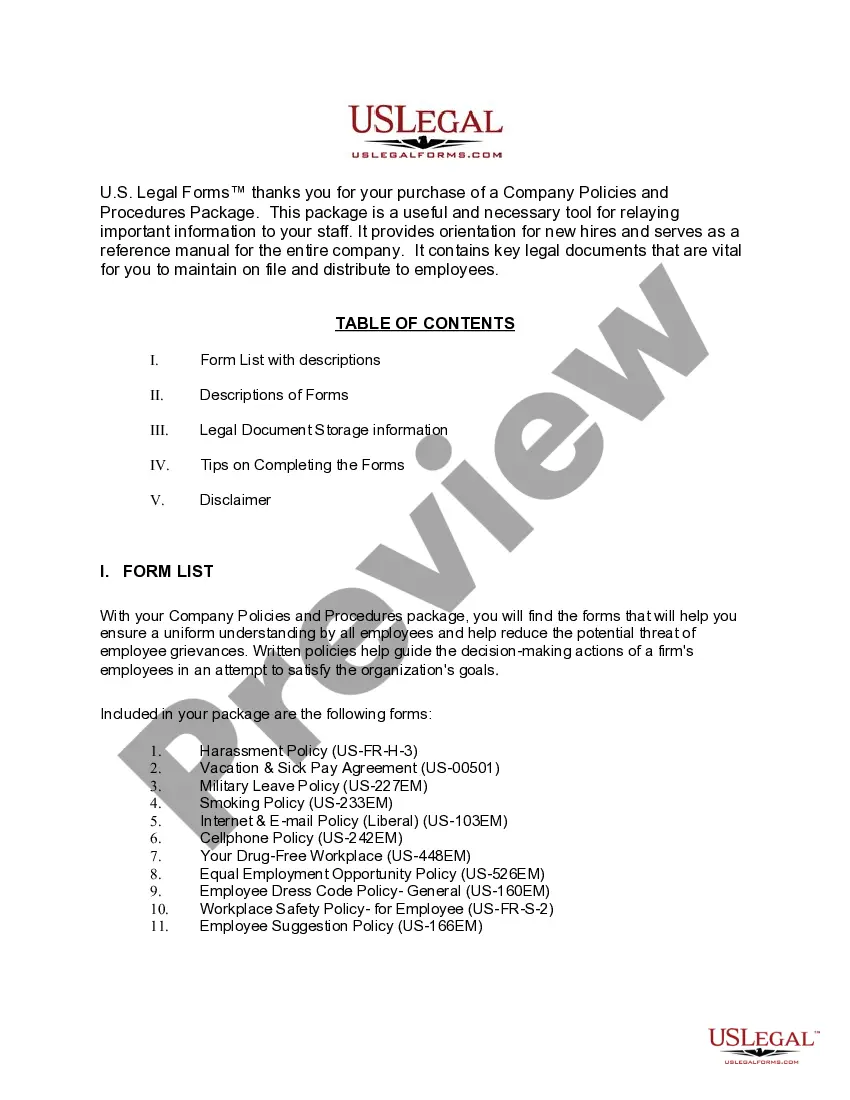
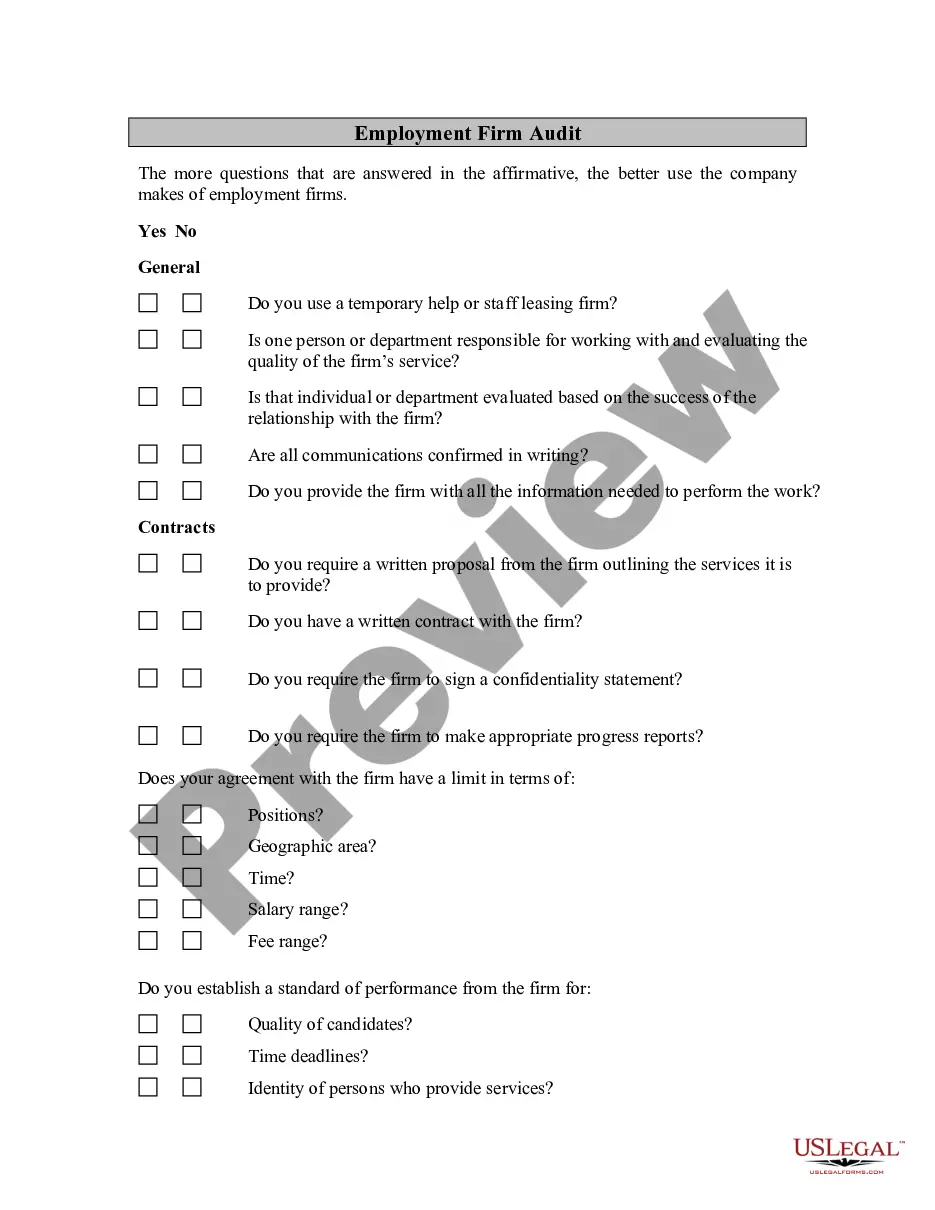
The Massachusetts Company Employment Policies and Procedures Package is a comprehensive collection of essential documents designed to help businesses create consistent and clear employee policies. This package aids in establishing a uniform understanding among employees regarding workplace expectations and guidelines, minimizing the potential for disputes or grievances. Unlike general templates, these forms are specifically tailored for Massachusetts businesses and have been drafted by licensed attorneys to ensure compliance and effectiveness.
Forms included in this package
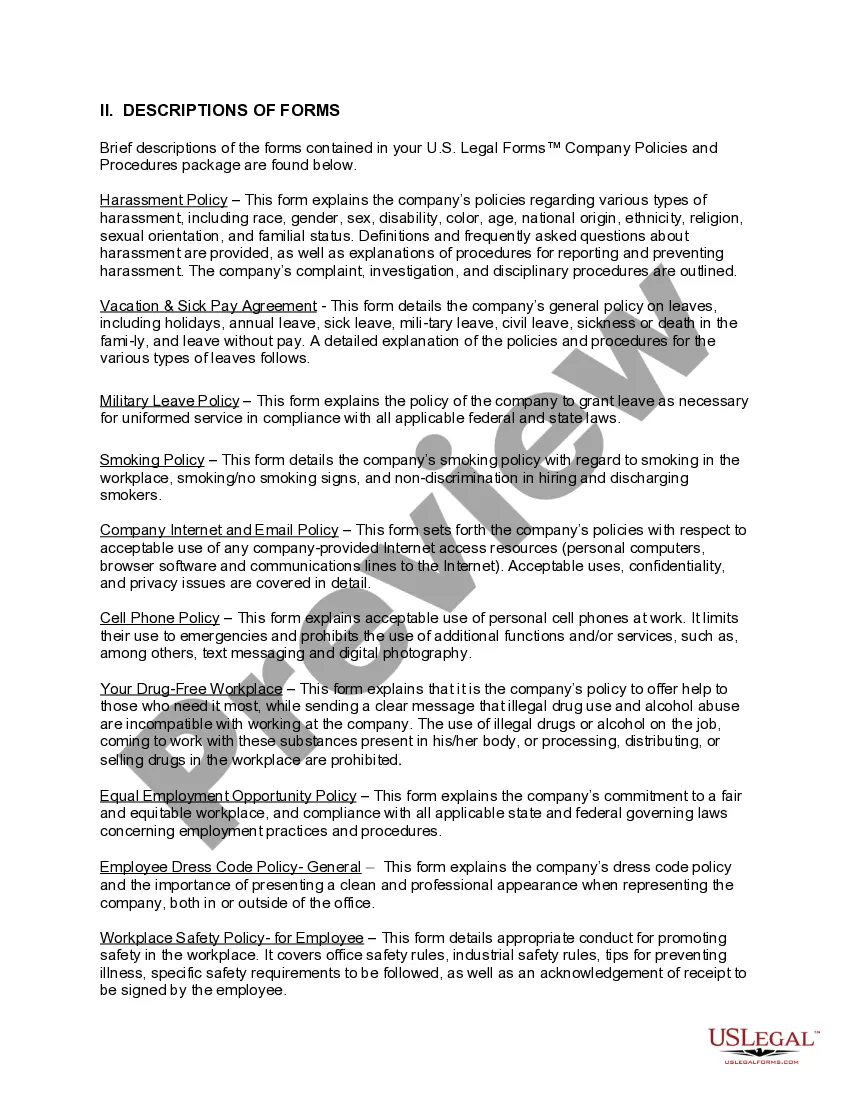
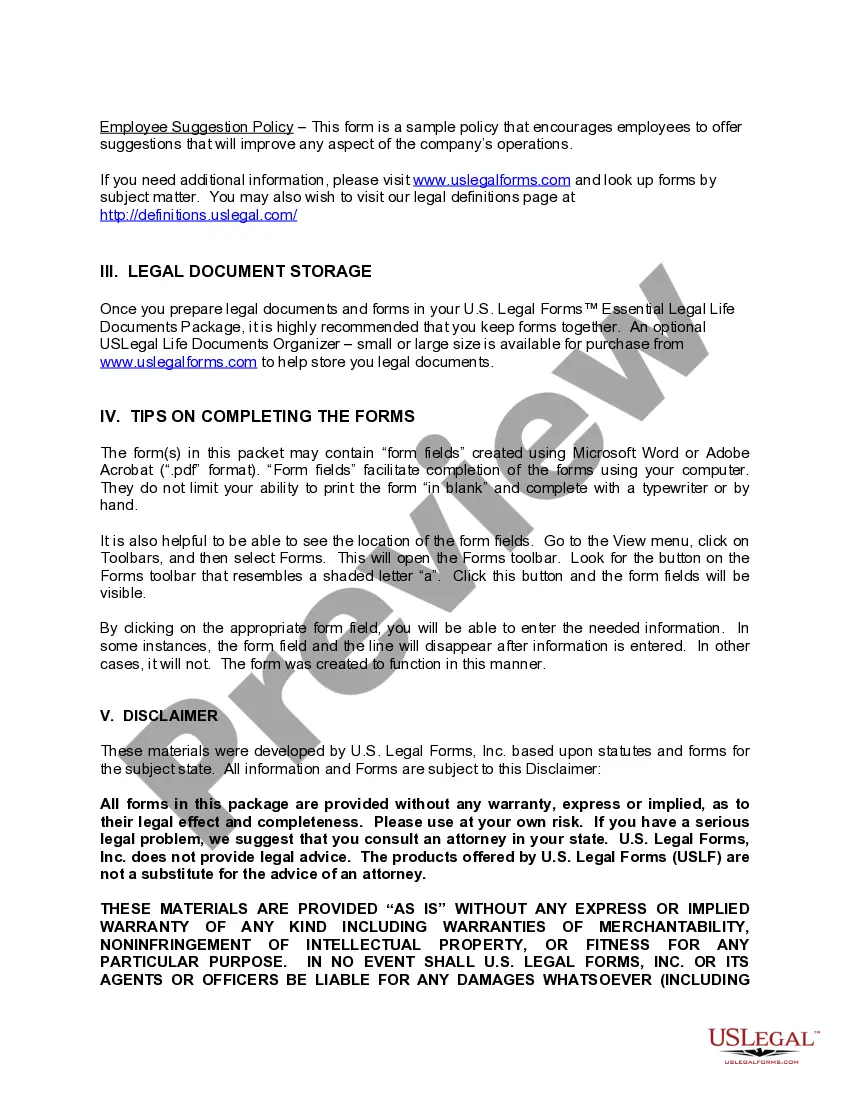
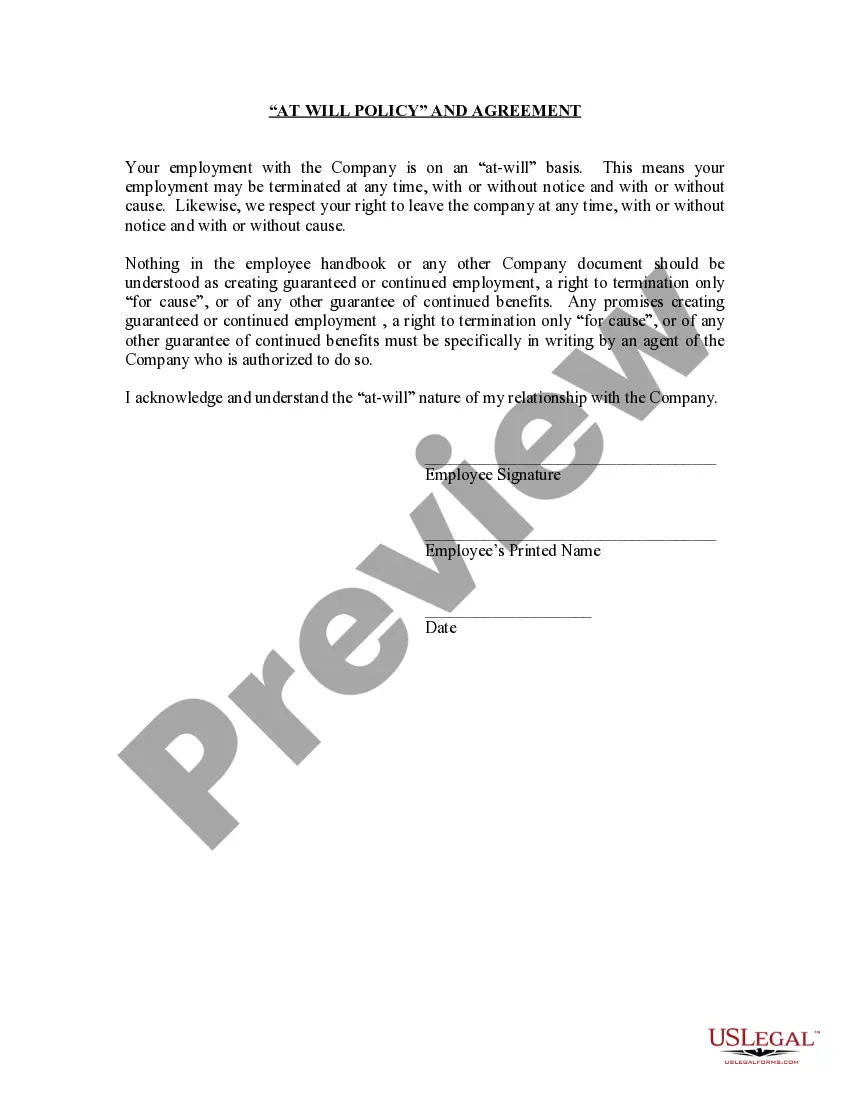
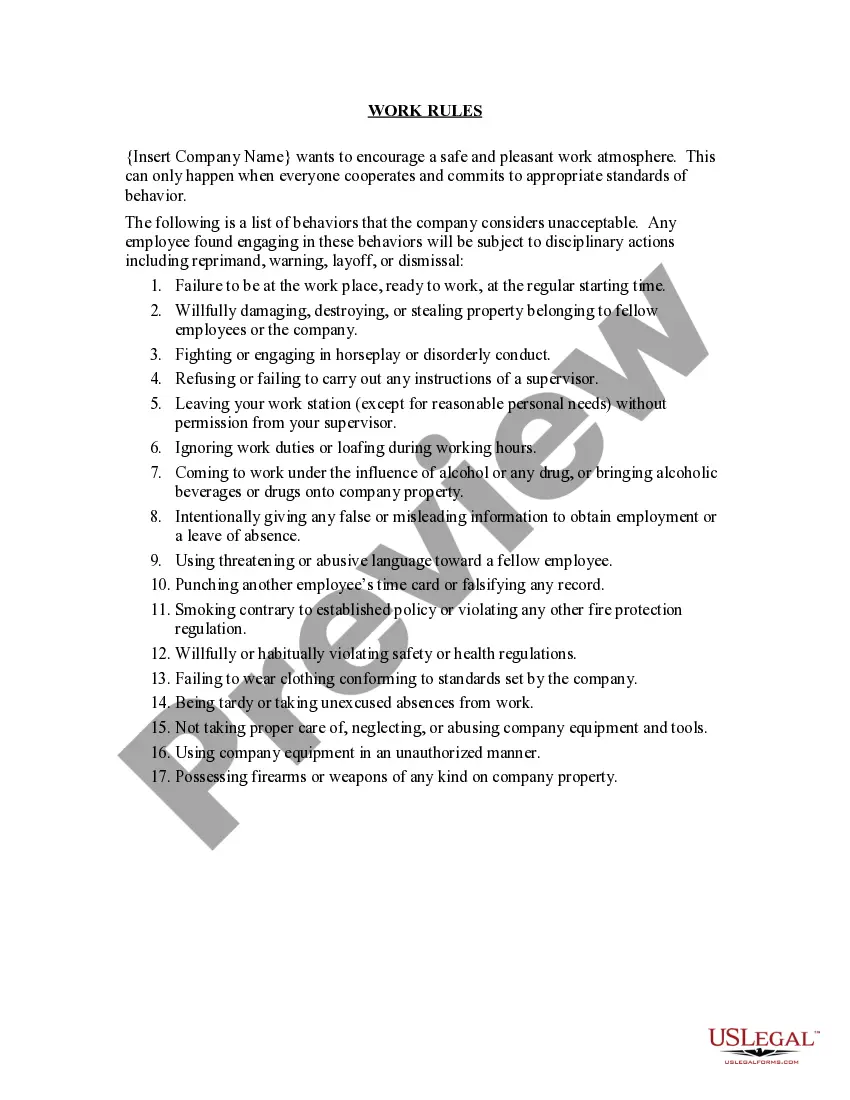
- Employee Agreement - Vacation and Sick Pay
- Company Internet and Email Policy - Liberal
- Employee Dress Code Policy - General
- Employee Suggestion Policy
- Military Leave Policy
- Smoking Policy
- Employee Cell Phone Usage Policy
- Your Drug-Free Workplace
- Equal Employment Opportunity Policy Statement
- Employee - Company Harassment Policy - Workplace
- Workplace Safety Policy - For Employee
When to use this form package
This form package is ideal for businesses in Massachusetts that need to develop or update their employee policies. You should consider using this package when:
- Hiring new employees and needing to provide them with orientation materials.
- Establishing or revising policies related to workplace behavior, safety, and employee rights.
- Addressing an increase in employee grievances or complaints.
- Complying with state regulations regarding workplace policies and employee rights.
Who can use this document
- Business owners and managers in Massachusetts.
- Human resources professionals responsible for employee policy management.
- New companies looking to establish foundational workplace policies.
- Existing businesses that need to formalize or update their employment procedures.
Steps to complete these forms
- Review the included forms to ensure they meet your company's needs.
- Identify key policies that need to be implemented or revised.
- Enter specific details relevant to your company in each form, such as names, dates, and policy particulars.
- Distribute completed documents to relevant stakeholders for review and feedback.
- Finalize and distribute the forms to all employees as part of your company policy manual.
Notarization details for included forms
Forms in this package typically do not require notarization unless required by local law. However, it is advisable to check any additional state-specific requirements that may apply to your situation.
Get your form ready online
Our built-in tools help you complete, sign, share, and store your documents in one place.
Make edits, fill in missing information, and update formatting in US Legal Forms—just like you would in MS Word.
Download a copy, print it, send it by email, or mail it via USPS—whatever works best for your next step.
Sign and collect signatures with our SignNow integration. Send to multiple recipients, set reminders, and more. Go Premium to unlock E-Sign.
If this form requires notarization, complete it online through a secure video call—no need to meet a notary in person or wait for an appointment.
We protect your documents and personal data by following strict security and privacy standards.

Make edits, fill in missing information, and update formatting in US Legal Forms—just like you would in MS Word.

Download a copy, print it, send it by email, or mail it via USPS—whatever works best for your next step.

Sign and collect signatures with our SignNow integration. Send to multiple recipients, set reminders, and more. Go Premium to unlock E-Sign.

If this form requires notarization, complete it online through a secure video call—no need to meet a notary in person or wait for an appointment.

We protect your documents and personal data by following strict security and privacy standards.
Typical mistakes to avoid
- Failing to customize forms for your specific business needs.
- Not reviewing the policies regularly for compliance with changing laws.
- Overlooking employee feedback during the policy review process.
- Neglecting to train staff on new policies after implementation.
Why complete this package online
- Convenience: Download forms instantly and access them anytime, anywhere.
- Editability: Modify forms to better fit your companyâs specific requirements.
- Reliability: The forms are crafted by licensed attorneys to ensure legal validity.
Legal use & context
- All forms in this package have been developed to align with Massachusetts employment laws.
- Properly completed and implemented, these policies can help protect your business against legal claims.
- While these documents provide a strong foundation, legal advice may still be necessary for complex situations.
Key takeaways
- This package provides essential employment policies tailored for Massachusetts companies.
- Creating clear workplace guidelines can help reduce grievances and improve employee relations.
- Using professionally drafted forms ensures legal compliance and relevance to state laws.
Looking for another form?

Form popularity
FAQ
Policy includes statements of rules or standards. Policies do not change frequently. Policies may not include procedures or supplemental information.
Company History. While not required, a brief section discussing the company's history and its mission can help set the tone for an employee handbook. Paid Time-Off Policy. Employee Behavior. Pay and Promotions. Benefits.
Code of conduct. Attendance/vacation/time off policy. Equal opportunity and non-discrimination policies. Workplace safety. Alcohol, drug-free workplace, smoking, cannabis policies. Whistleblower policy. Anti-harassment policy. Privacy policy.
Step 1: Determine the Purpose and Intention of the Policy. Step 2: Assemble All Prior Writings and Practices on the Same or Similar Topics. Step 3: Obtain Information and Input from Relevant Stakeholders. Step 4: Conduct Research to Determine Status of the Law and Identify Trends.
Company policies are rules that govern a company's code of conduct. They apply to both employees and employers, and they may govern conduct both within and outside the workplace. Company policies are usually written policies included in your business's employee handbook.
Prioritize a policy list. Keep in mind that you can't tackle every policy at once. Conduct thorough research. Take a look at your existing procedures to zone in on how things are currently done. Write an initial draft. After defining what you need to cover, you can begin your first draft. Validate the procedures.
Equal opportunity policy. Workplace health and safety. Employee code of conduct policy. Attendance, vacation and time-off policies. Employee disciplinary action policy. Employee complaint policies.
Use the handbook as a communication tool. Employees can be full of legal agreements and notices, which important as they are, can be daunting. Safety and security. Get a legal review. Outline your expectations/Code of conduct. Hours, benefits, and compensation. Don't be redundant. Make it readable. Leave room for change.
Choose a suitable title for the policy. Understand the motive behind writing a policy. Use very simple and clear language. Your policy and procedure should reflect the company's image. The HR policies needs to have a very clear outline. Make the HR policies kind of user friendly.