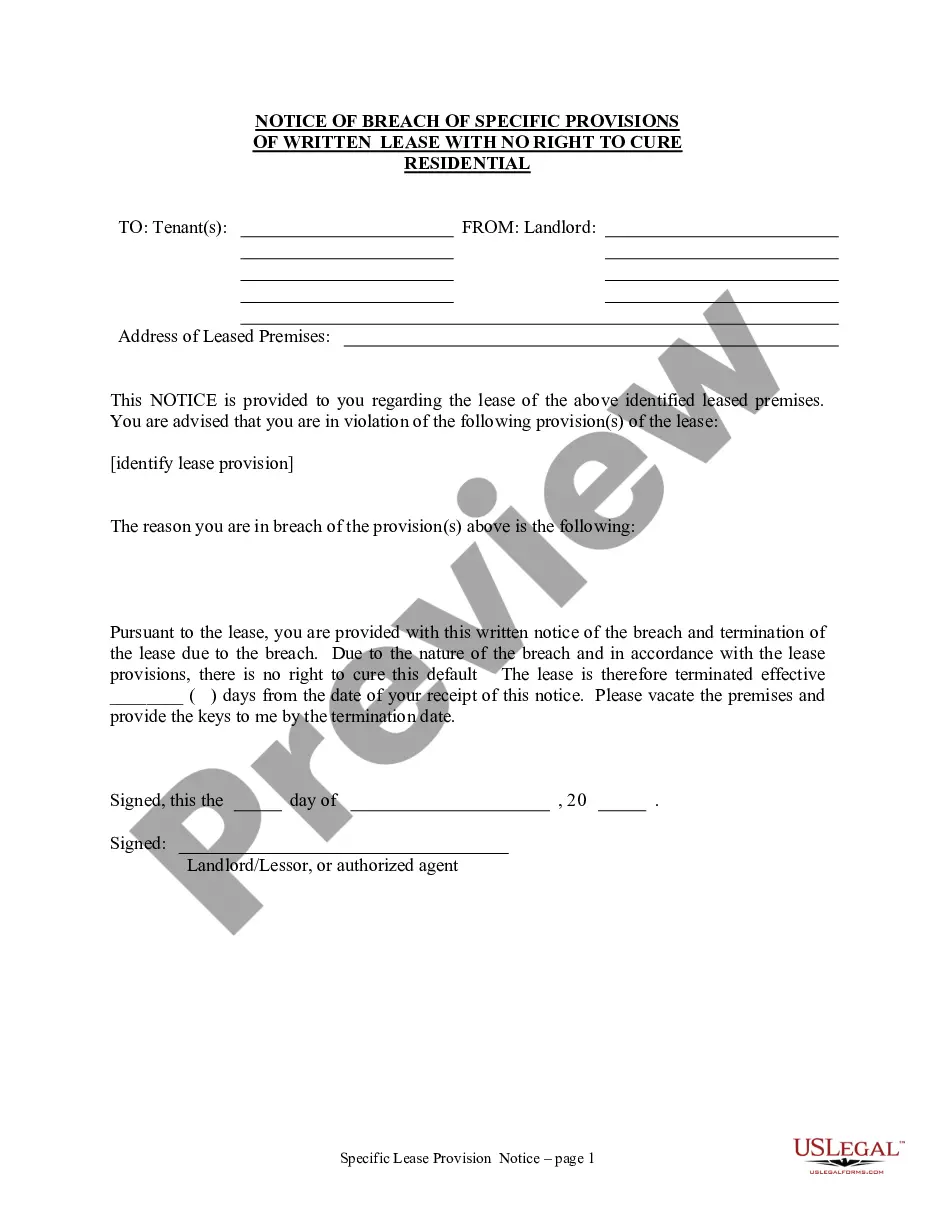
Kansas Last Will and Testament for Single Person with No Children

Overview of this form
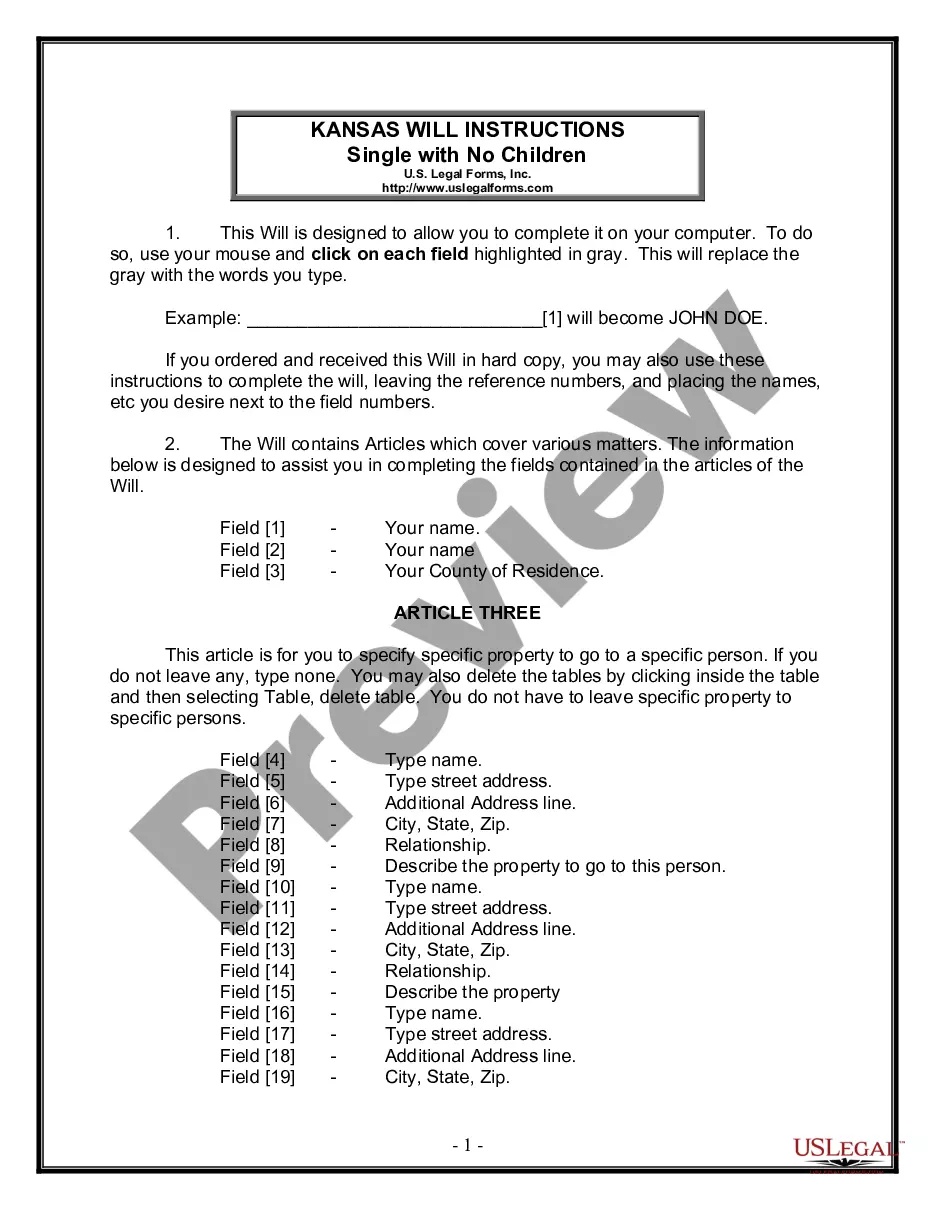
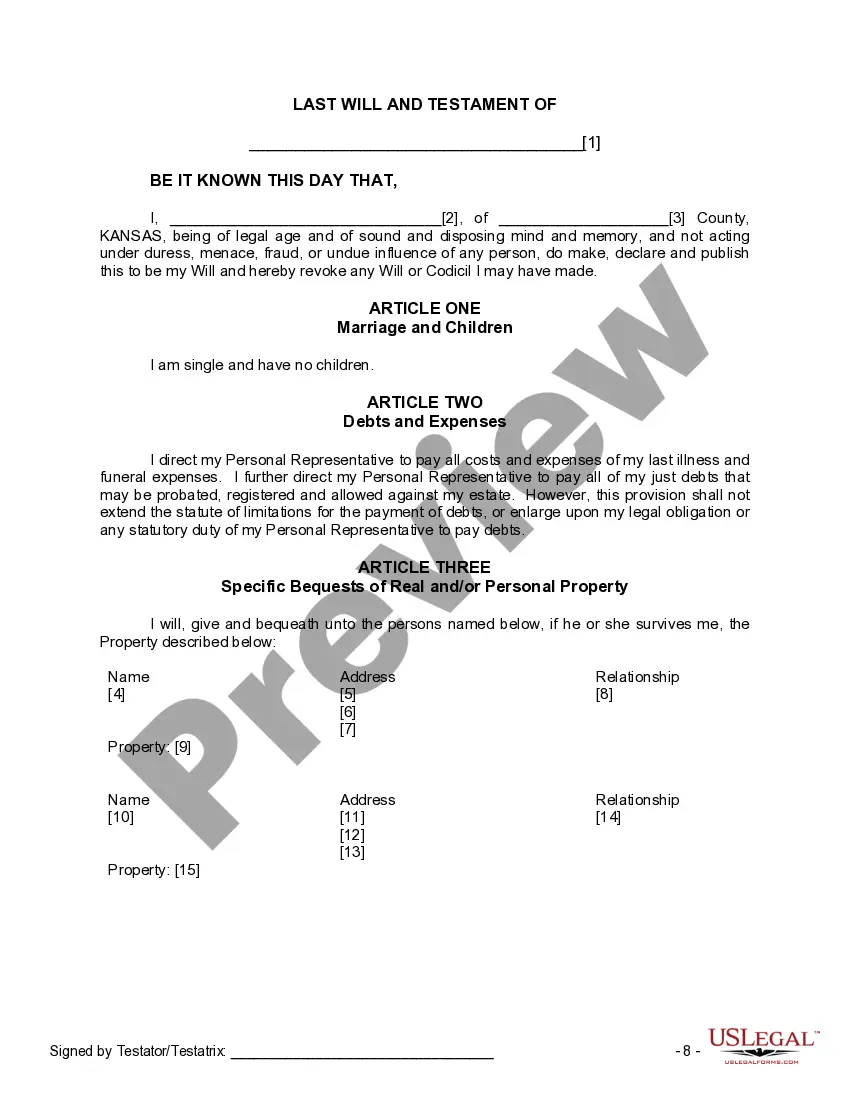
This Last Will and Testament for a Single Person with No Children is a legal document that outlines the distribution of your assets after your death. It specifically caters to individuals who are single and do not have children, allowing you to appoint a personal representative to manage your estate, designate beneficiaries who will inherit your property, and include other wishes such as funeral arrangements. This will distinguishes itself from other wills by focusing on your unique circumstances and simplifying the estate planning process for those without dependents.
Form components explained
- Personal information: Your name and county of residence.
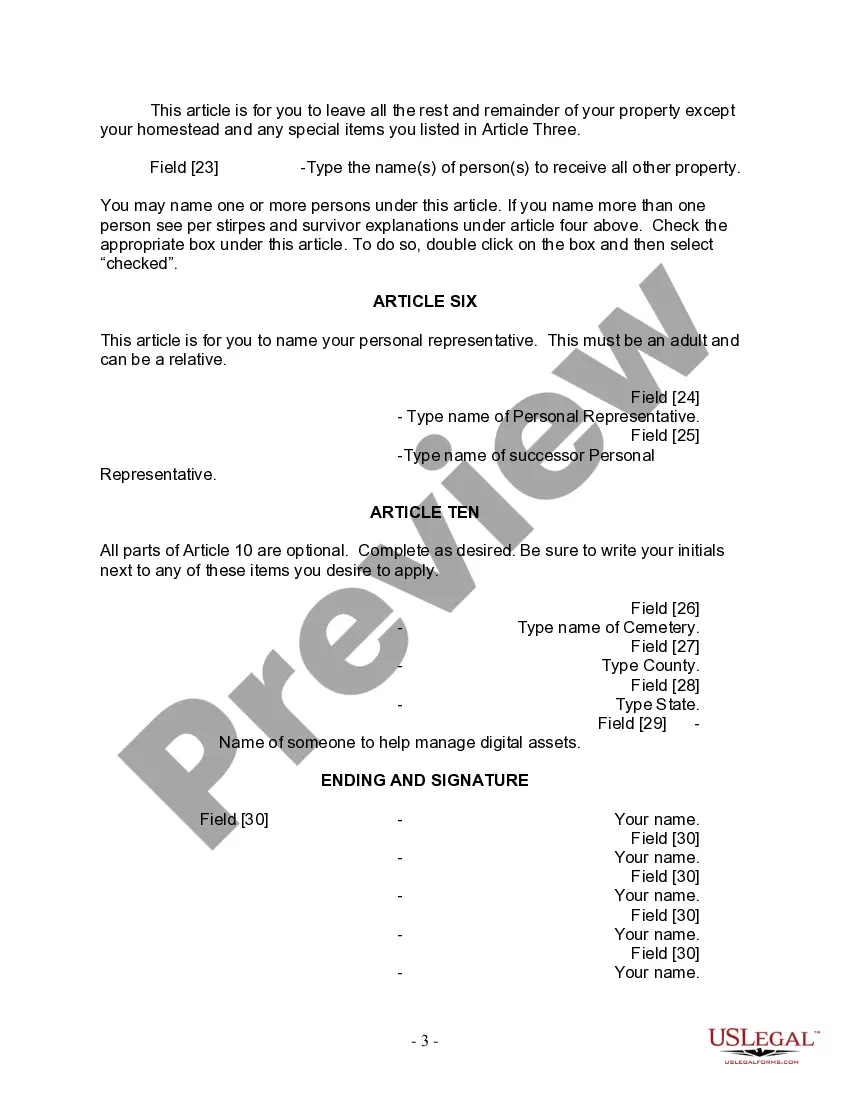
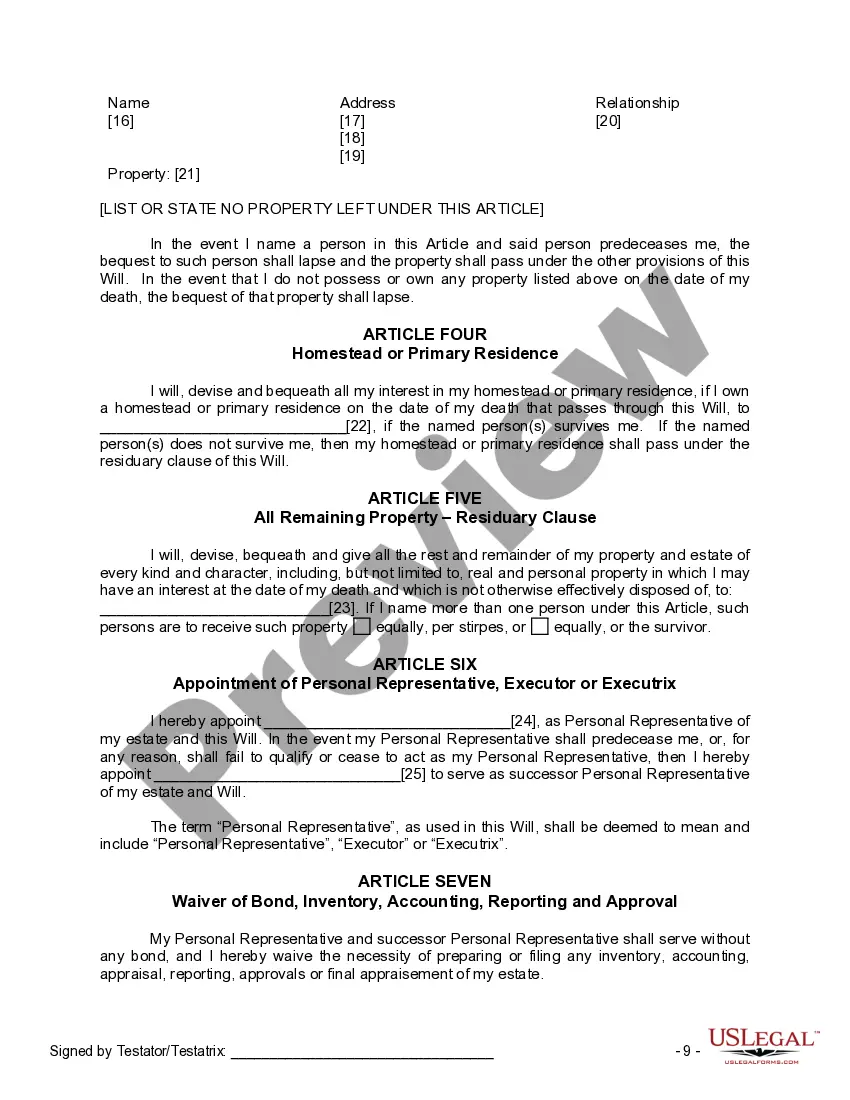
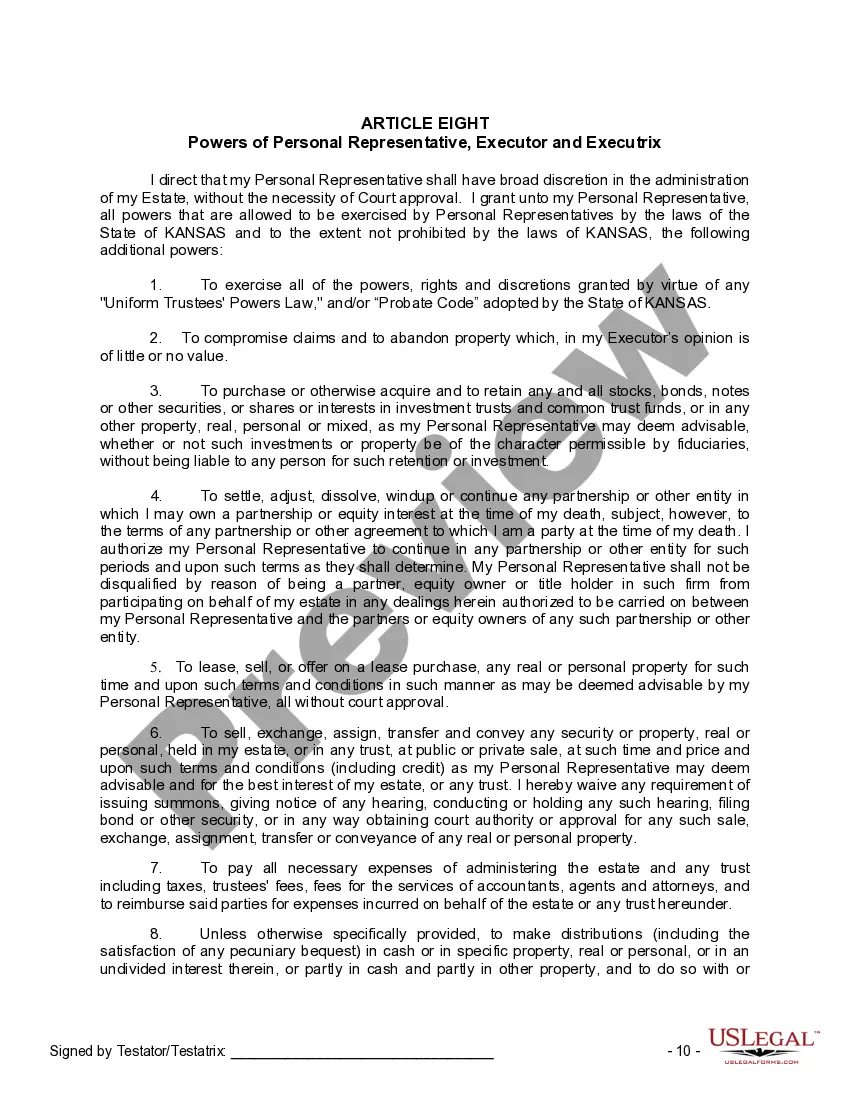
- Appointment of a personal representative: Designates the person responsible for executing your will.
- Specific bequests: Allows you to specify assets for particular individuals.
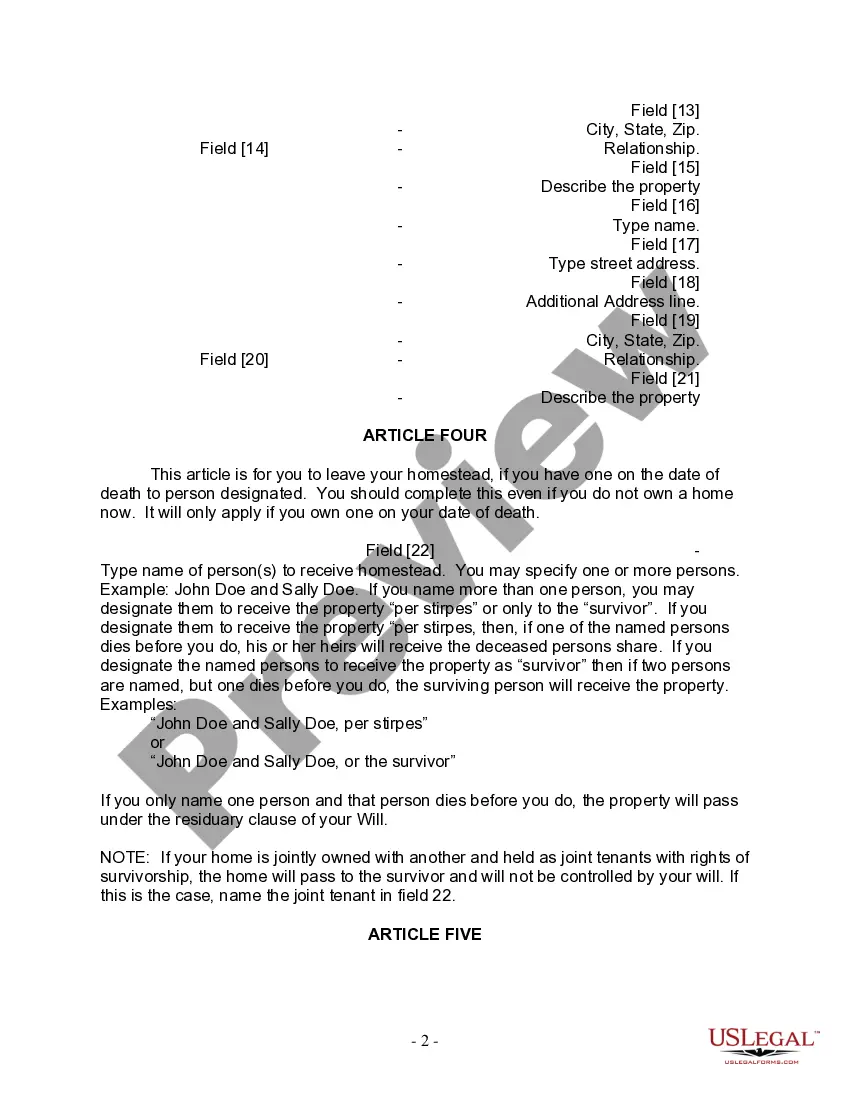
- Homestead provision: Specifies who will inherit your primary residence if applicable.
- Residuary clause: Distributes remaining assets not specifically addressed.
- Witness and signature requirements: Details for signing the will in front of witnesses.







When to use this form
This form is ideal for individuals who are single and do not have children but want to ensure that their wishes regarding asset distribution and final arrangements are legally documented. It is particularly useful when you want to designate trusted individuals to receive specific gifts or handle your estate, avoiding potential disputes or complications after your death.
Who can use this document
- Individuals who are single and have no children.
- Anyone wishing to create a legally binding will to specify their wishes after death.
- People wanting to appoint an executor for their estate without legal complications.
Steps to complete this form
- Enter your full name and county of residence at the beginning of the form.
- Designate a personal representative who will manage your estate.
- Specify any specific bequests by entering the names and addresses of beneficiaries and the corresponding property.
- Complete the homestead provision if you own a primary residence.
- Sign the will in front of two witnesses, ensuring they are not beneficiaries or related to you.
- If using a self-proving affidavit, arrange for a notary public to also witness the signing.
Notarization requirements for this form
This form must be notarized to be legally valid. US Legal Forms provides secure online notarization powered by Notarize, allowing you to complete the process through a verified video call.
Get your form ready online
Our built-in tools help you complete, sign, share, and store your documents in one place.
Make edits, fill in missing information, and update formatting in US Legal Forms—just like you would in MS Word.
Download a copy, print it, send it by email, or mail it via USPS—whatever works best for your next step.
Sign and collect signatures with our SignNow integration. Send to multiple recipients, set reminders, and more. Go Premium to unlock E-Sign.
If this form requires notarization, complete it online through a secure video call—no need to meet a notary in person or wait for an appointment.
We protect your documents and personal data by following strict security and privacy standards.

Make edits, fill in missing information, and update formatting in US Legal Forms—just like you would in MS Word.

Download a copy, print it, send it by email, or mail it via USPS—whatever works best for your next step.

Sign and collect signatures with our SignNow integration. Send to multiple recipients, set reminders, and more. Go Premium to unlock E-Sign.

If this form requires notarization, complete it online through a secure video call—no need to meet a notary in person or wait for an appointment.

We protect your documents and personal data by following strict security and privacy standards.
Typical mistakes to avoid
- Failing to have the will signed in the presence of the required witnesses.
- Not specifying a personal representative or failing to choose a reliable individual.
- Leaving out key assets or failing to update the will when your circumstances change.
Benefits of completing this form online
- Convenience: Fill out your will from the comfort of your home.
- Editability: Easily make changes as your situation evolves.
- Reliability: Forms are drafted by licensed attorneys to comply with state laws.
Legal use & context
- This Last Will and Testament is designed to be enforceable in Kansas.
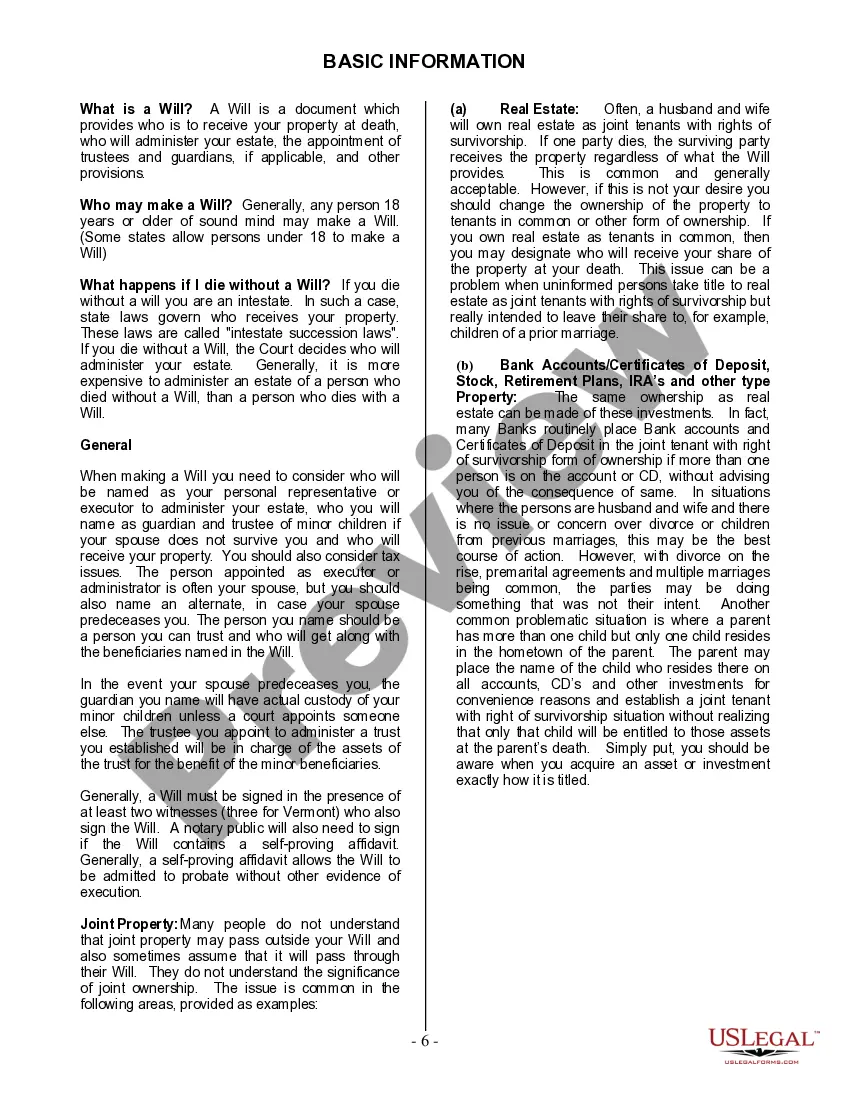
- Use this document to avoid intestate succession, which occurs when someone dies without a will, leading to state-determined distribution of assets.
- Ensure that all provisions are completed per Kansas laws to uphold the validity of the will.
Key takeaways
- Creating this will ensures your assets are distributed according to your wishes.
- It is essential to have witnesses sign the document to meet legal requirements.
- Including a self-proving affidavit can streamline the probate process.
Looking for another form?
Form popularity
FAQ
If there is no surviving spouse and no descendants, then the intestacy law usually dictates that the property is to be distributed to the closest living relative, based upon the Table of Consanguinity.When a person dies intestate and without heirs, then the property could escheat to the state.
If the natural parents die intestatewithout a willthe court appoints a guardian.Alternatively, a third party, such as a family friend, can petition the court to be appointed guardian. If the child has no surviving family members, they could become a ward of the state and enter the foster care system.
Bank accounts. Brokerage or investment accounts. Retirement accounts and pension plans. A life insurance policy.
Property in a living trust. One of the ways to avoid probate is to set up a living trust. Retirement plan proceeds, including money from a pension, IRA, or 401(k) Stocks and bonds held in beneficiary. Proceeds from a payable-on-death bank account.
Most single people should have a will. A will can help you determine who will get your property (including your home, business, pets, and digital assets), name guardians for your children, and name an executor. A will also puts your wishes in writing so there's no confusion about your intentions.