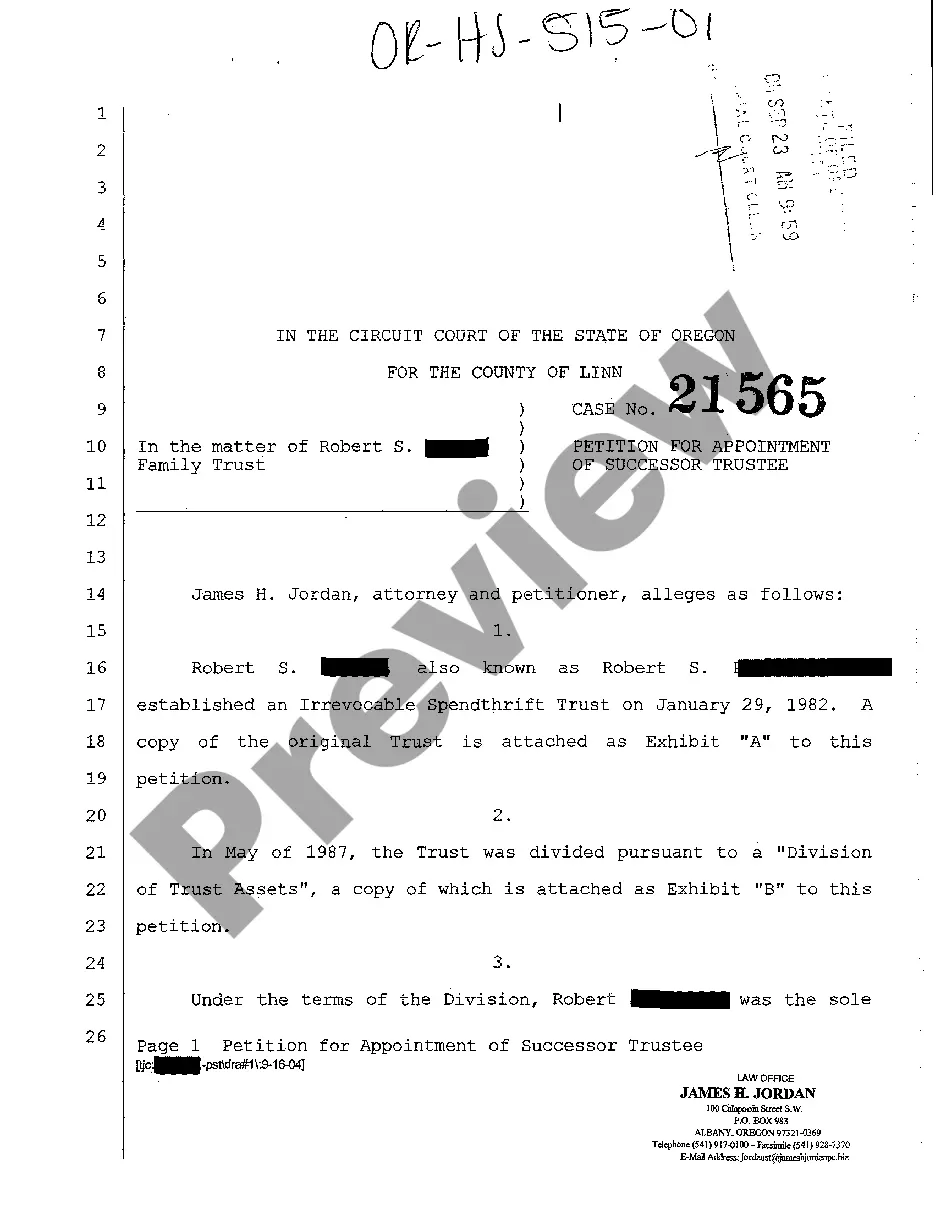
Maine Amendment to Postnuptial Property Agreement
What this document covers
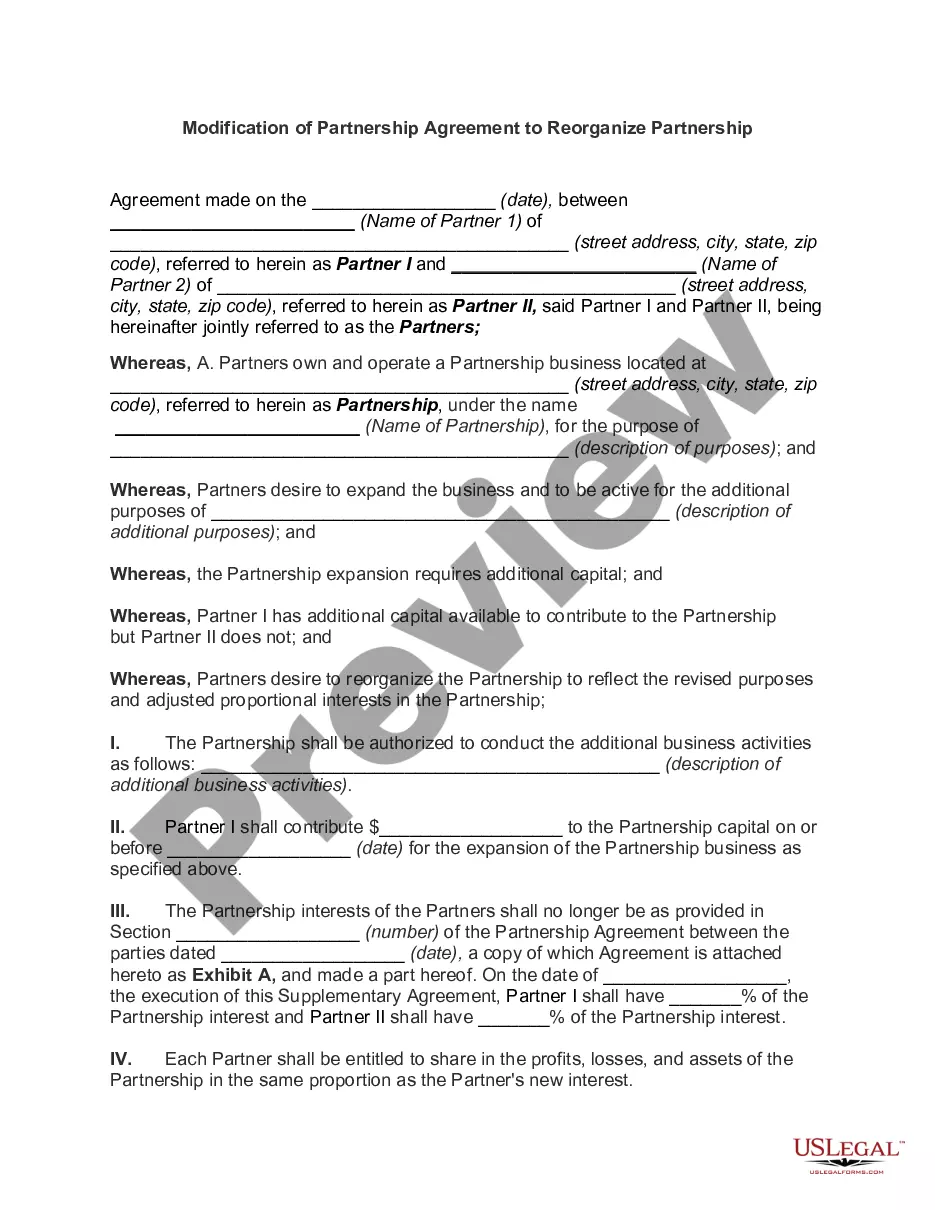
The Amendment to Postnuptial Property Agreement is a legal document used by parties to modify or add to an existing postnuptial agreement. This specific amendment allows couples to update their arrangements regarding property and financial rights after marriage, ensuring that both parties are in agreement and protected under the law. It is crucial to understand how this form differs from other marital agreements, such as prenuptial agreements, which are established before marriage.
Key parts of this document
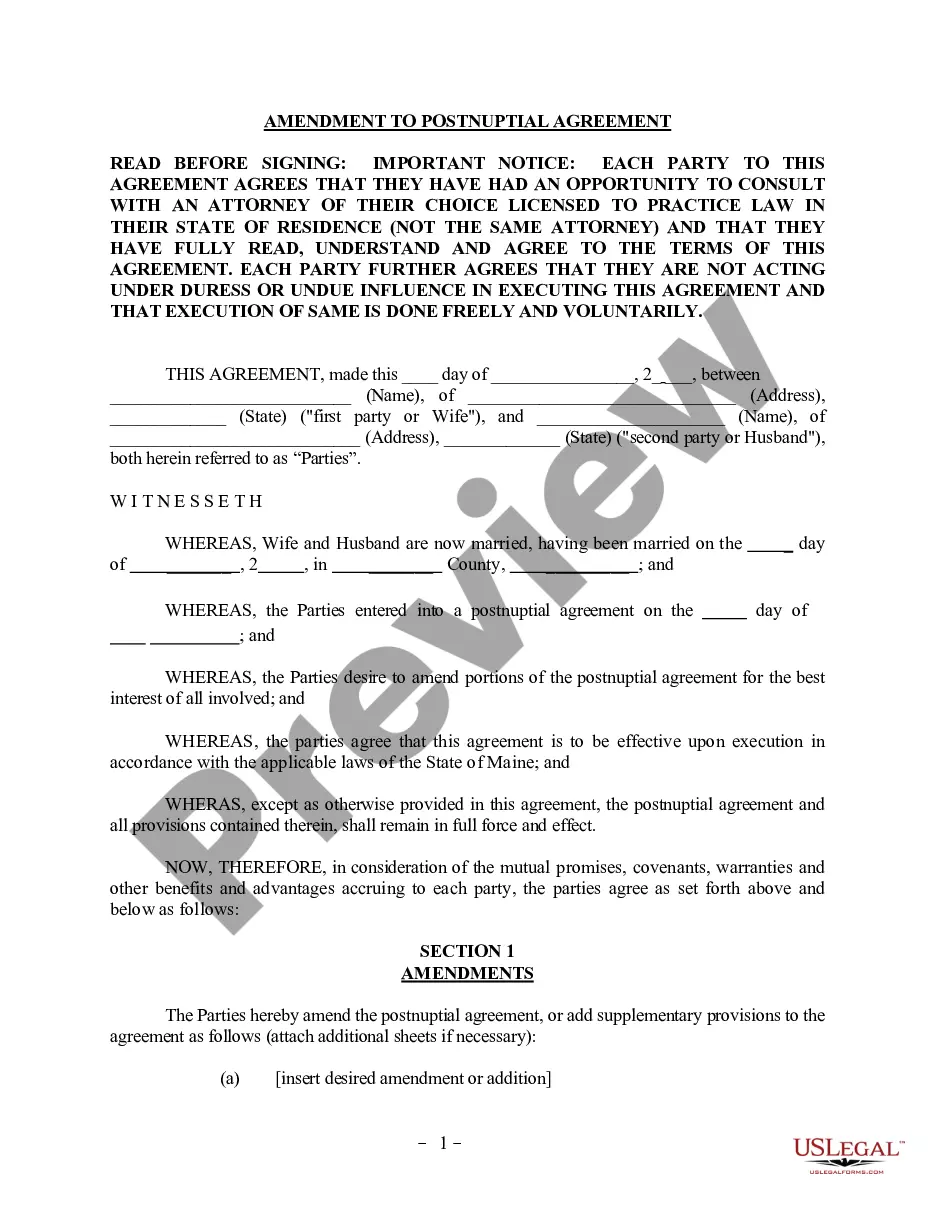
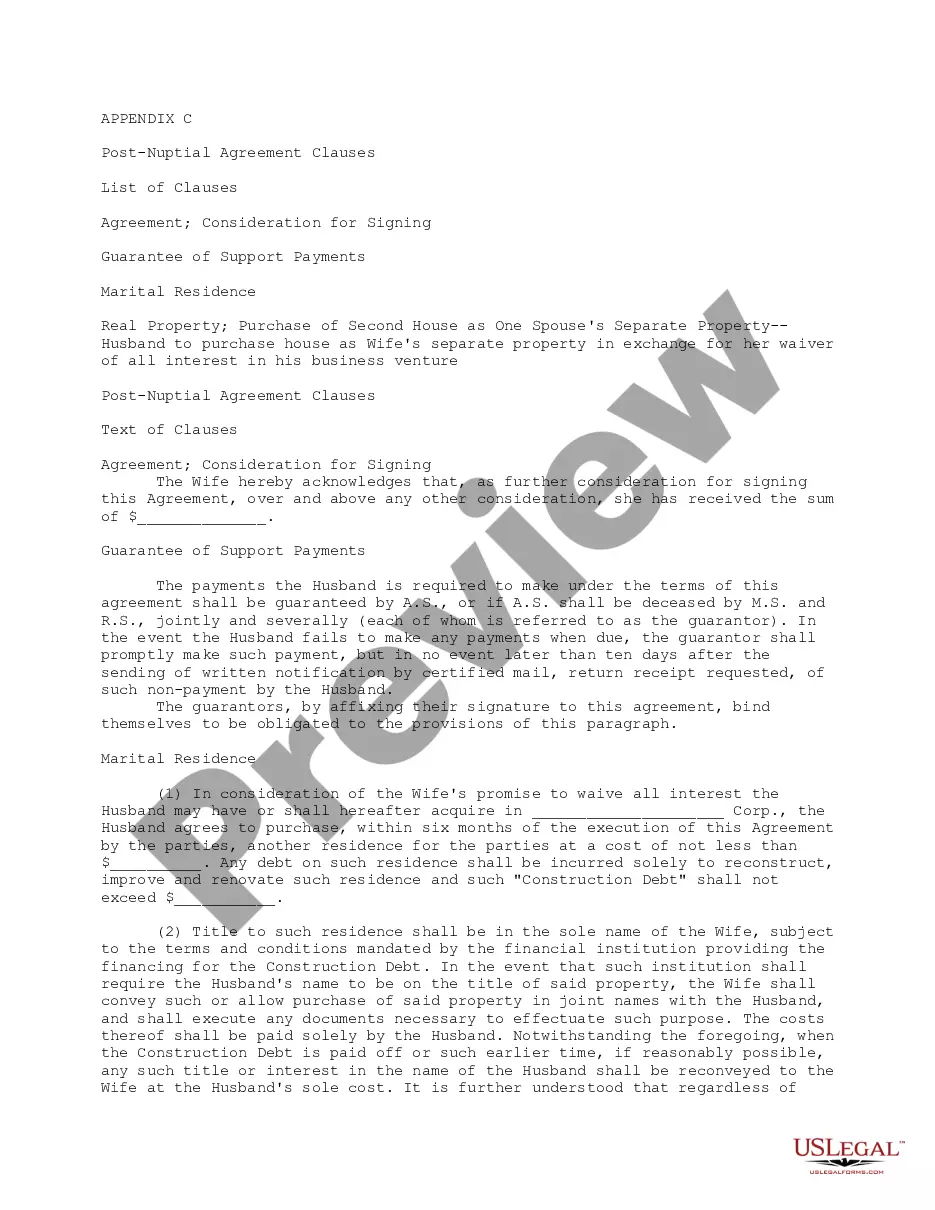
- Amendment Section: This section specifies the desired amendments or additions to the original postnuptial agreement.
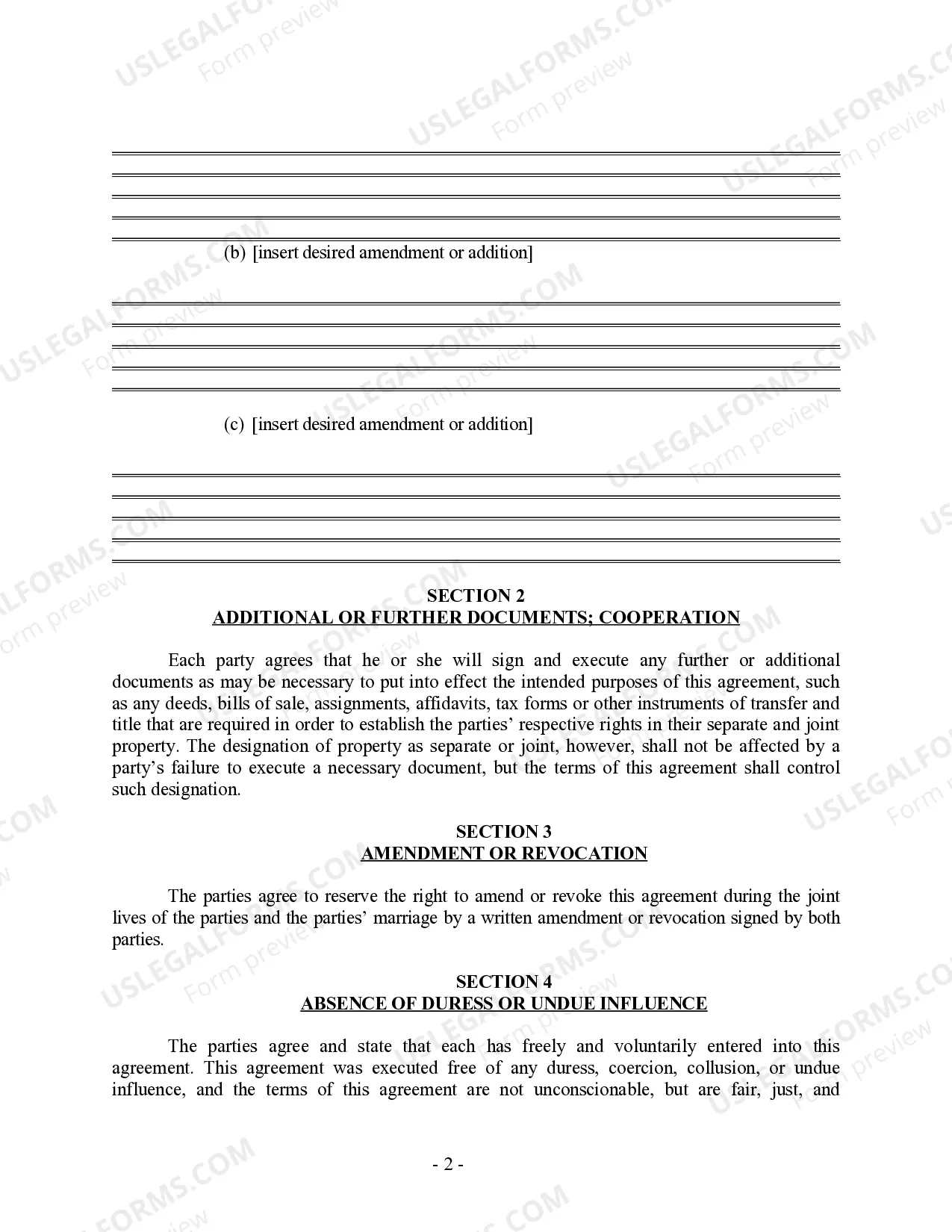
- Cooperation Clause: Parties agree to execute any additional documents necessary for establishing property rights.
- Amendment or Revocation Rights: This clause allows either party to amend or revoke the agreement during the marriage.
- Absence of Duress Statement: Parties confirm they entered into the agreement freely and without coercion.
- Severability Clause: Ensures that if one part of the agreement is found invalid, the rest remains in effect.
- Controlling Law: Specifies that the agreement is governed by the laws of the State of Maine.
When to use this document
This form is applicable in scenarios where a couple wishes to change financial agreements established in a postnuptial agreement. Situations may include changes in financial status, the acquisition of new assets, or adjustments needed due to personal circumstances such as a new job or the birth of a child. It is essential for couples who want their postnuptial agreement and property arrangements to reflect their current situation.
Who can use this document
- Married couples who have an existing postnuptial agreement.
- Couples wishing to modify terms related to the division of property.
- Individuals seeking to ensure their postnuptial arrangements are continually relevant.
How to prepare this document
- Identify the parties involved and ensure both are named correctly.
- Specify the desired amendments or additions in the designated section.
- Both parties should review the amendment and consult with separate attorneys if necessary.
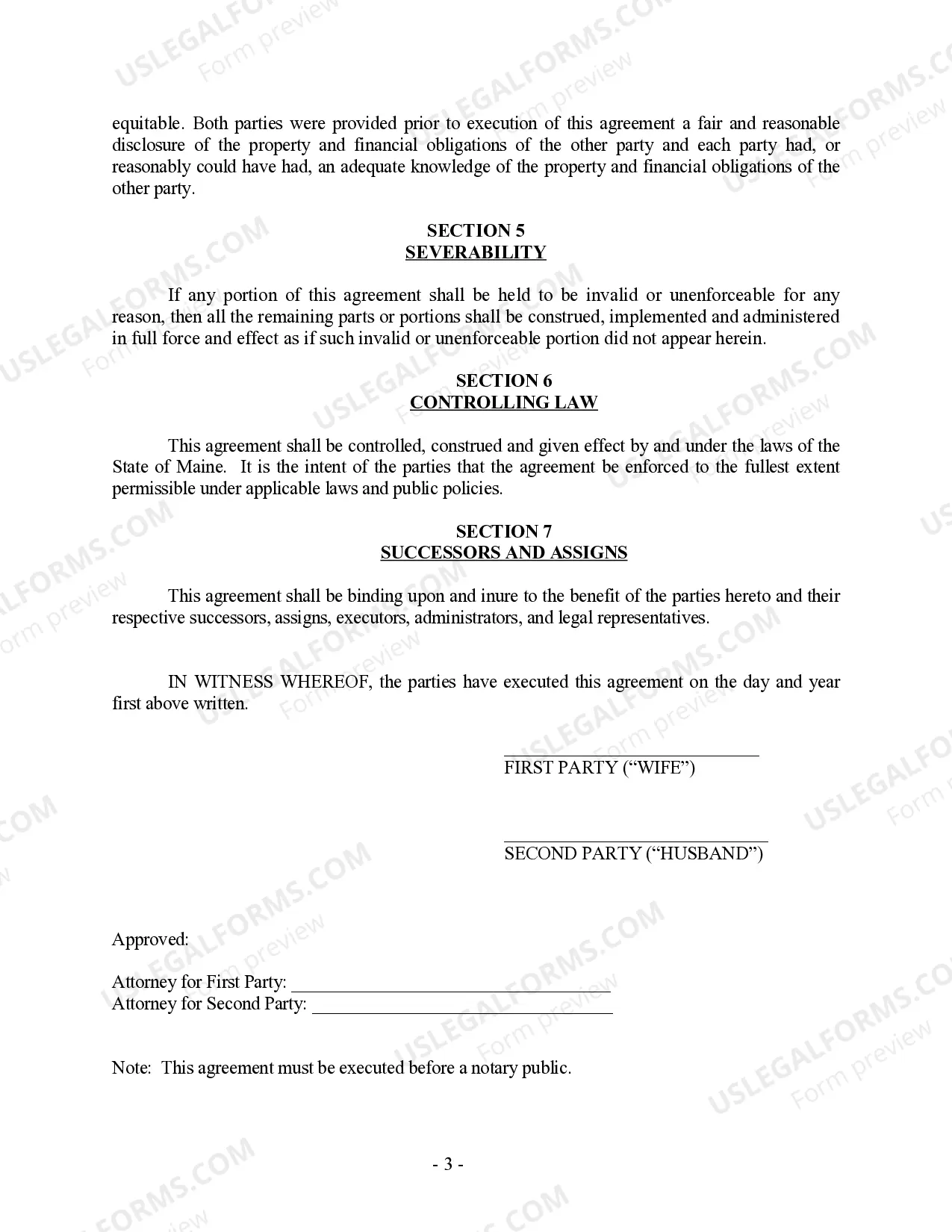
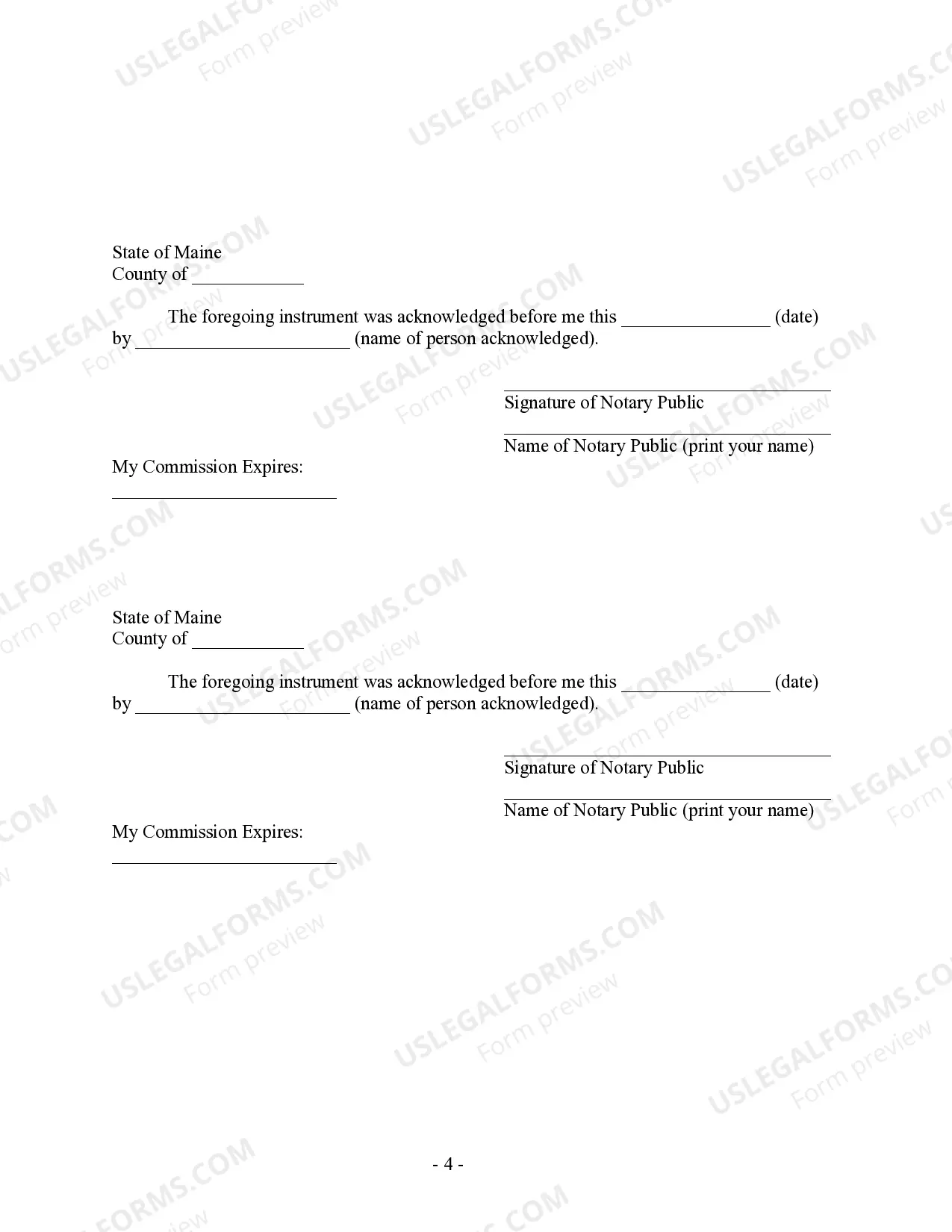
- Sign the document in the presence of a notary public to ensure its legality.
- Store copies of the signed amendment with your original postnuptial agreement for future reference.
Notarization requirements for this form
To make this form legally binding, it must be notarized. Our online notarization service, powered by Notarize, lets you verify and sign documents remotely through an encrypted video session.
Get your form ready online
Our built-in tools help you complete, sign, share, and store your documents in one place.
Make edits, fill in missing information, and update formatting in US Legal Forms—just like you would in MS Word.
Download a copy, print it, send it by email, or mail it via USPS—whatever works best for your next step.
Sign and collect signatures with our SignNow integration. Send to multiple recipients, set reminders, and more. Go Premium to unlock E-Sign.
If this form requires notarization, complete it online through a secure video call—no need to meet a notary in person or wait for an appointment.
We protect your documents and personal data by following strict security and privacy standards.

Make edits, fill in missing information, and update formatting in US Legal Forms—just like you would in MS Word.

Download a copy, print it, send it by email, or mail it via USPS—whatever works best for your next step.

Sign and collect signatures with our SignNow integration. Send to multiple recipients, set reminders, and more. Go Premium to unlock E-Sign.

If this form requires notarization, complete it online through a secure video call—no need to meet a notary in person or wait for an appointment.

We protect your documents and personal data by following strict security and privacy standards.
Avoid these common issues
- Failing to have the form notarized, which could invalidate the agreement.
- Not properly identifying both parties or dating the agreement.
- Leaving sections blank where information is required.
- Assuming changes are effective without formal execution of the amendment.
Why complete this form online
- Convenient access to legal forms without the need for in-person meetings.
- Editable templates that allow for easy updates to your agreement.
- Security and privacy when managing sensitive financial arrangements.
Summary of main points
- The Amendment to Postnuptial Property Agreement is essential for altering terms of an existing agreement.
- Notarization is a critical step for legal validity.
- Both parties must sign in the presence of a notary and should consult independent legal advice.
Looking for another form?


Form popularity
FAQ
There are various reasons for a post-up contract, but one common reason is to ensure financial security in the case of a divorce. A postnup agreement usually has to do with financial assets, but it can contain anythingfrom how often in-laws can visit or how the couple will share household chores.
As long as both parties are in agreement to the terms of the post nuptial contract, and have the ability to put those terms into a legal document, most states don't make it a legal requirement to have an attorney.
Per , since postnuptial agreements generally handle the same issues that prenuptial agreements address, the same circumstances that can cause a court to void part or all of a prenuptial agreement also apply to a postnuptial. Like a prenuptial, a postnuptial agreement should be in written form.
They're not always enforceable, but can avoid costly divorce cases. Postnups are designed to settle some of the same issues as a prenup, such as who gets which property and how much alimony a spouse will receive after a split, but in this case the contracts are signed after the wedding.
Postnuptial agreements are generally enforceable if the parties of the document adhere to all state laws regarding inheritance, child custody, visitation and monetary support if a divorce does occur.If any state laws are in violation within the postnuptial, the judge may throw out the entire document.
Postnuptial agreements must be in writing. Voluntary Both parties to a postnuptial agreement must have signed the agreement voluntarily and intentionally.Generally speaking, to make a postnuptial agreement valid, both parties' signatures need to be notarized.
Post-nuptial agreements are made after the parties are already married. Separation agreements are a form of a post-nuptial agreements but have the added element that the husband and wife may become legally separated after the execution of the document.
Attorneys will charge on average $1,000 for a simple postnuptial document and the costs can rise to around $3,000. Postnuptial agreements that are complicated in nature and require ongoing and prolonged negotiations and especially when substantial provisions and assets are involved, costs can start at around $10,000.