Idaho Letter from Tenant to Landlord with Demand that landlord provide proper outdoor garbage receptacles
What is this form?
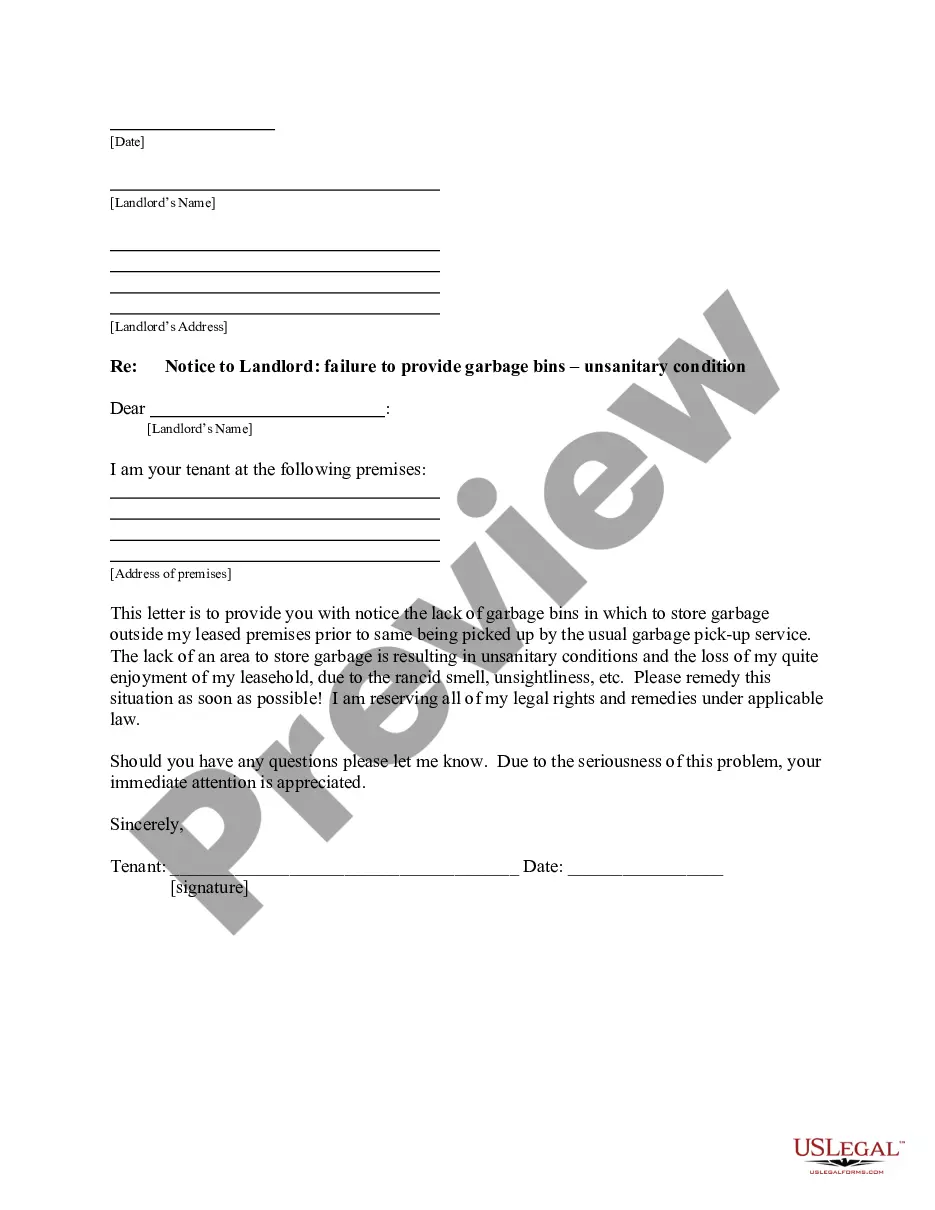
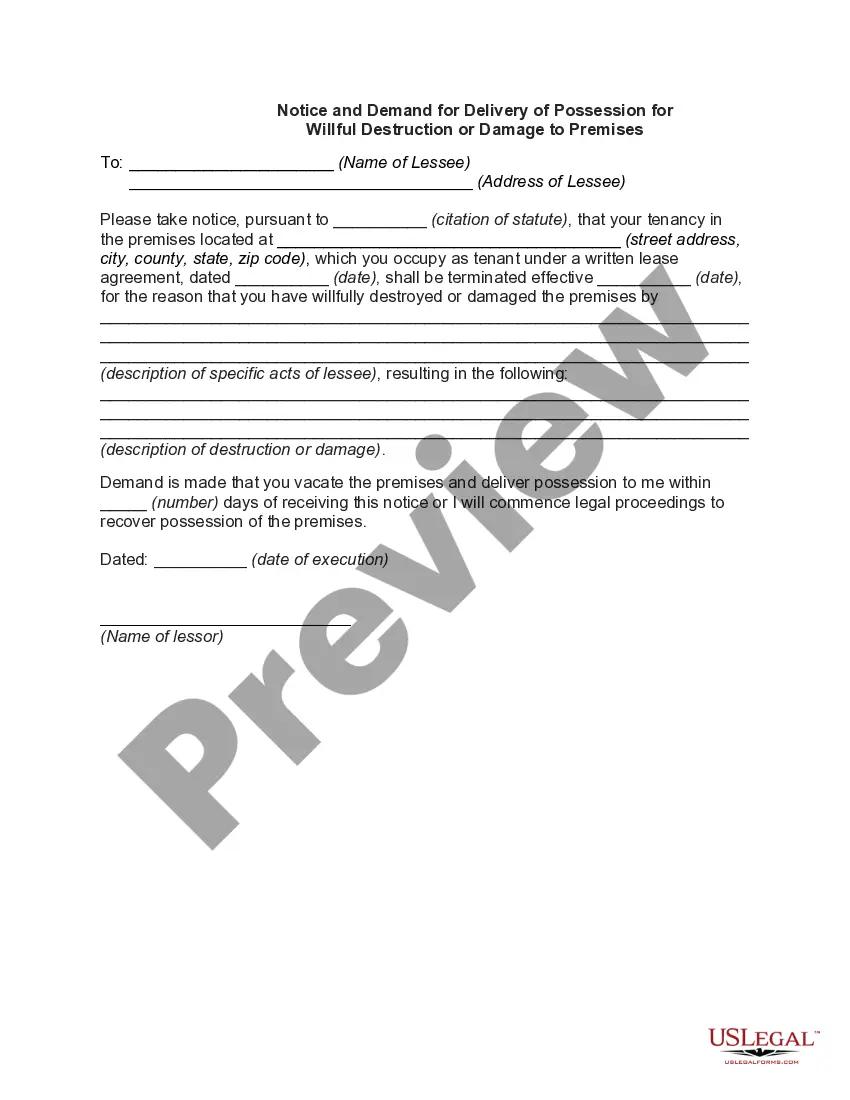
This form is a letter from the tenant to the landlord, specifically addressing the issue of inadequate outdoor garbage receptacles. It serves to inform the landlord of unsanitary conditions resulting from their failure to provide appropriate garbage bins. This letter demands that the landlord take immediate action to resolve the issue, emphasizing the breach of the lease agreement.
What’s included in this form
- Tenant's name and contact information
- Landlord's name and contact information
- Description of the unsanitary conditions
- Demand for immediate provision of outdoor garbage receptacles
- Signature of the tenant and date of the letter
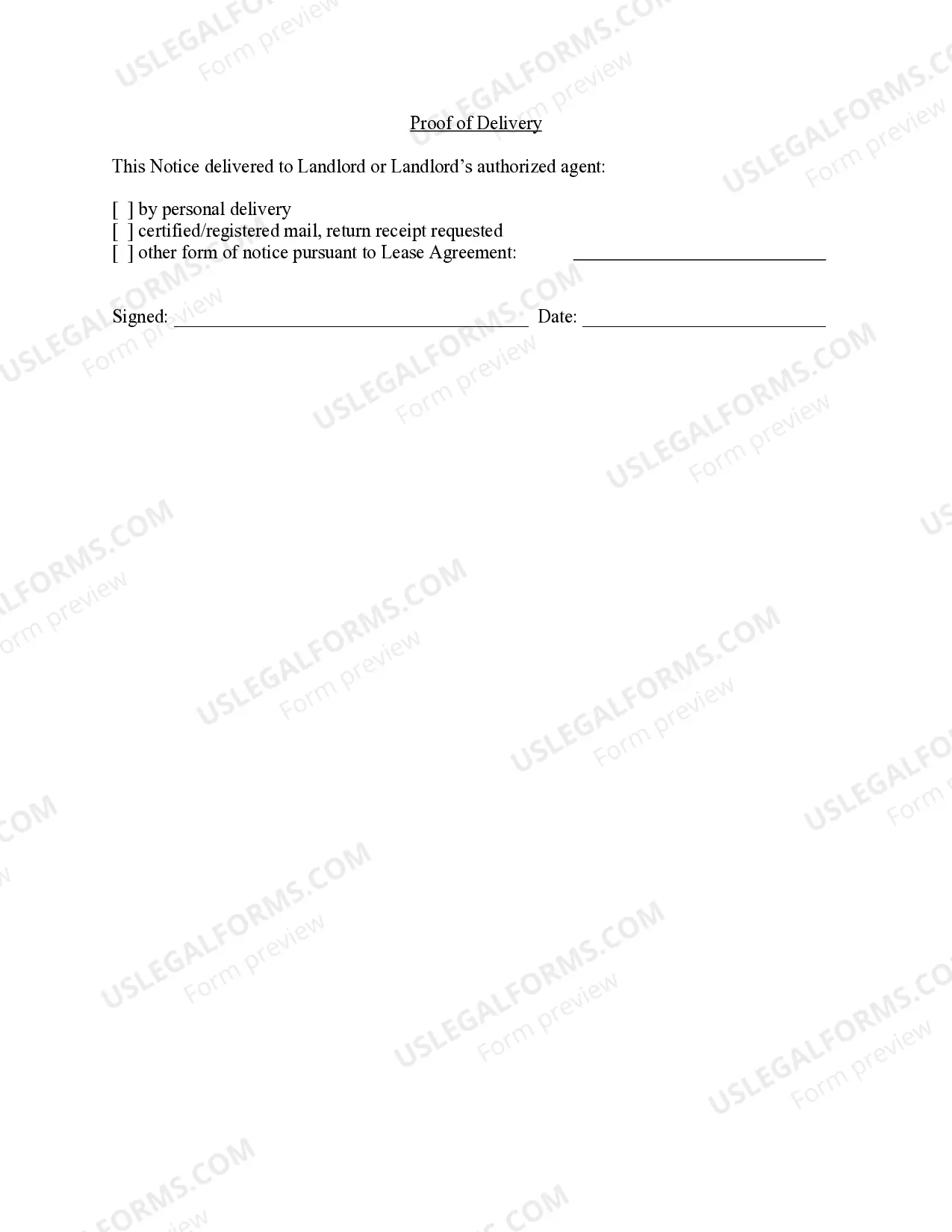
- Proof of delivery section

When to use this form
This form should be used when a tenant notices that their landlord has failed to provide necessary outdoor garbage receptacles, leading to unsanitary conditions. It is essential in formally notifying the landlord of this issue and requesting prompt action to resolve it, thus ensuring compliance with health and safety standards outlined in the lease agreement.
Intended users of this form
- Tenants living in rental properties experiencing garbage disposal issues
- Individuals who have noticed unsanitary conditions due to lack of garbage bins
- Renters seeking to formally document their complaints regarding lease violations
How to complete this form
- Fill in your name and contact information as the tenant.
- Enter the landlord's name and contact information.
- Clearly describe the unsanitary conditions caused by the lack of garbage receptacles.
- State your demand for the landlord to provide proper outdoor garbage receptacles without delay.
- Sign and date the letter.
- Choose a method of delivery for the notice and complete the proof of delivery section.
Notarization guidance
This form does not typically require notarization unless specified by local law. However, it is advisable to send it via certified mail or deliver it in person to ensure proper documentation of the delivery.
Get your form ready online
Our built-in tools help you complete, sign, share, and store your documents in one place.
Make edits, fill in missing information, and update formatting in US Legal Forms—just like you would in MS Word.
Download a copy, print it, send it by email, or mail it via USPS—whatever works best for your next step.
Sign and collect signatures with our SignNow integration. Send to multiple recipients, set reminders, and more. Go Premium to unlock E-Sign.
If this form requires notarization, complete it online through a secure video call—no need to meet a notary in person or wait for an appointment.
We protect your documents and personal data by following strict security and privacy standards.

Make edits, fill in missing information, and update formatting in US Legal Forms—just like you would in MS Word.

Download a copy, print it, send it by email, or mail it via USPS—whatever works best for your next step.

Sign and collect signatures with our SignNow integration. Send to multiple recipients, set reminders, and more. Go Premium to unlock E-Sign.

If this form requires notarization, complete it online through a secure video call—no need to meet a notary in person or wait for an appointment.

We protect your documents and personal data by following strict security and privacy standards.
Common mistakes
- Failing to include accurate contact information for both the tenant and landlord.
- Not providing a clear description of the unsanitary conditions.
- Neglecting to sign or date the letter.
- Using insufficient or unclear language in the demand for action.
Benefits of completing this form online
- Easy access to customizable templates without the need for legal expertise.
- Convenience of completing the form at your own pace.
- Reliable and professionally drafted content to ensure legal compliance.
Legal use & context
- This letter serves as a formal record of the tenant's complaint, which may be useful in future legal disputes.
- The demand for resolution stipulates the landlord's obligation to maintain sanitary conditions.
- Failure to respond to this request may affect the landlord's legal standing in rental disputes.
What to keep in mind
- The form is essential for documenting unsanitary conditions due to lack of garbage receptacles.
- It emphasizes the tenant's rights to a safe and healthy living environment.
- Properly completing and delivering this notice can expedite necessary landlord actions.
Looking for another form?


Form popularity
FAQ
The Idaho law enacted in 1977 clearly specifies the rights of landlords and tenants. Some of the tenant rights include: Right to remain on the property until they're properly evicted by a court order. Right to have repairs made within a reasonable amount of time after a request is made.
Uninhabitable conditions can include dangerous ones, such as holes in the floor, unsafe or exposed wiring, or non-working air conditioning in dangerously hot summer months. Gross infestations of roaches, fleas or other pests are also uninhabitable conditions.
Uninhabitable conditions can include dangerous ones, such as holes in the floor, unsafe or exposed wiring, or non-working air conditioning in dangerously hot summer months. Gross infestations of roaches, fleas or other pests are also uninhabitable conditions.
When a home is condemned, the owner (and tenants, if any) are notified in writing that the building must be vacated. A sign is attached to the building stating that the dwelling is not fit for human habitation, and that it cannot be occupied.The owner of the building may be ordered to repair or demolish the building.
Contact us at (888) 700-9995.
Health Issues When the environment in a unit becomes hazardous to one's health, the rental is considered to be uninhabitable.Other health risks such as mold and asbestos can make a unit uninhabitable, by causing respiratory problems and serious illnesses.
A landlord cannot evict a tenant without an adequately obtained eviction notice and sufficient time. A landlord cannot retaliate against a tenant for a complaint. A landlord cannot forego completing necessary repairs or force a tenant to do their own repairs.A landlord cannot remove a tenant's personal belongings.
In California, habitability includes the following specific warranties: A dwelling also may be considered uninhabitable (unlivable) if it substantially lacks any of the following: Effective waterproofing and weather protection of roof and exterior walls, including unbroken windows and doors.