Georgia Warning of Default on Commercial Lease
What is this form?
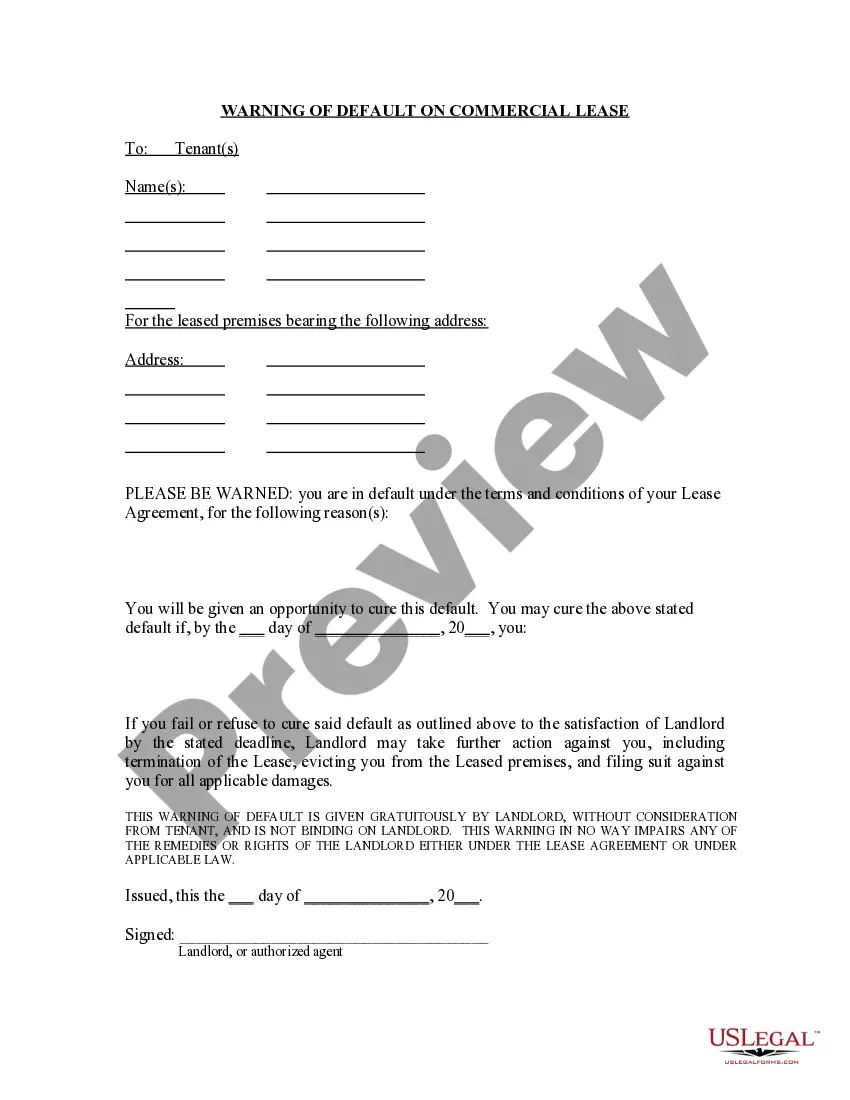
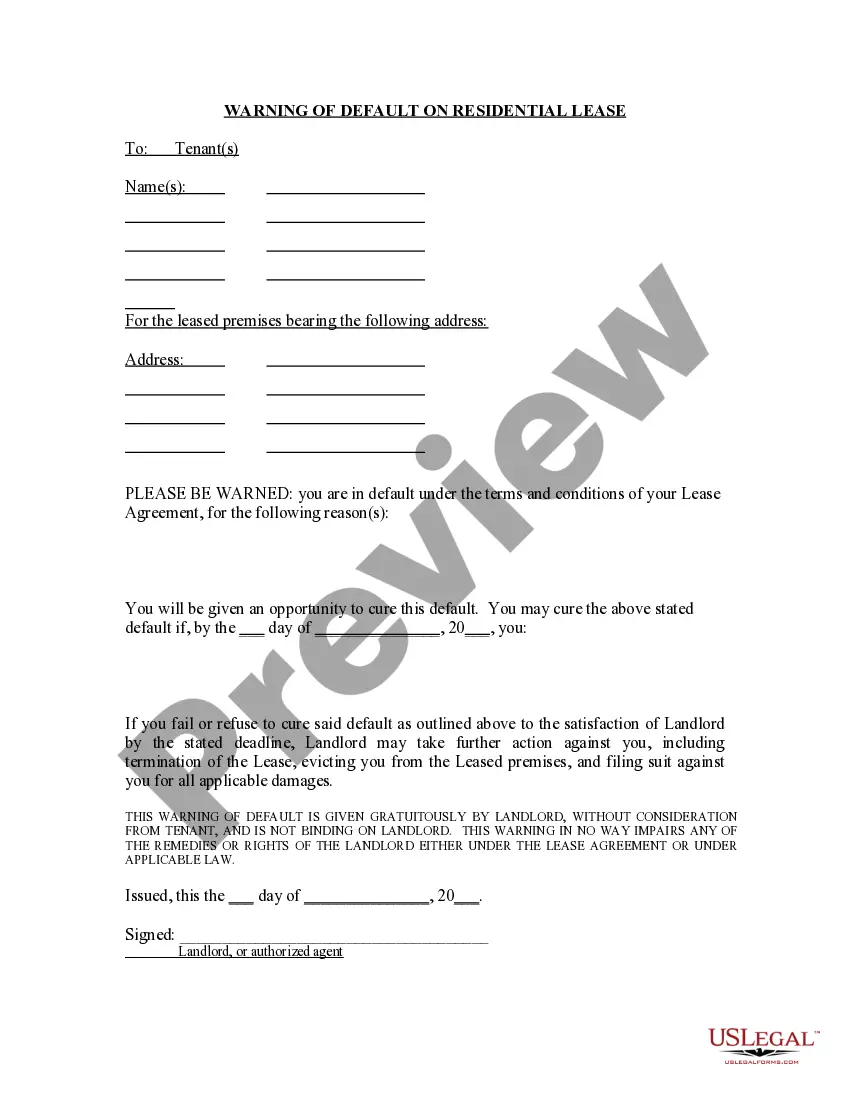
The Warning of Default on Commercial Lease is a formal notice from a landlord to a tenant, expressing concerns about a potential default under the lease agreement. This form serves to alert the tenant that if specific conditions, typically related to timely rent payment, are not resolved, the landlord may consider the tenant in default. It is important to differentiate this warning from an eviction notice, as it is intended to give the tenant a chance to rectify their situation before more serious actions are taken.
Key parts of this document
- Date of issuance of the warning.
- Declaration that the warning is given gratuitously and is not binding on the landlord.
- Signature line for the landlord or authorized agent.
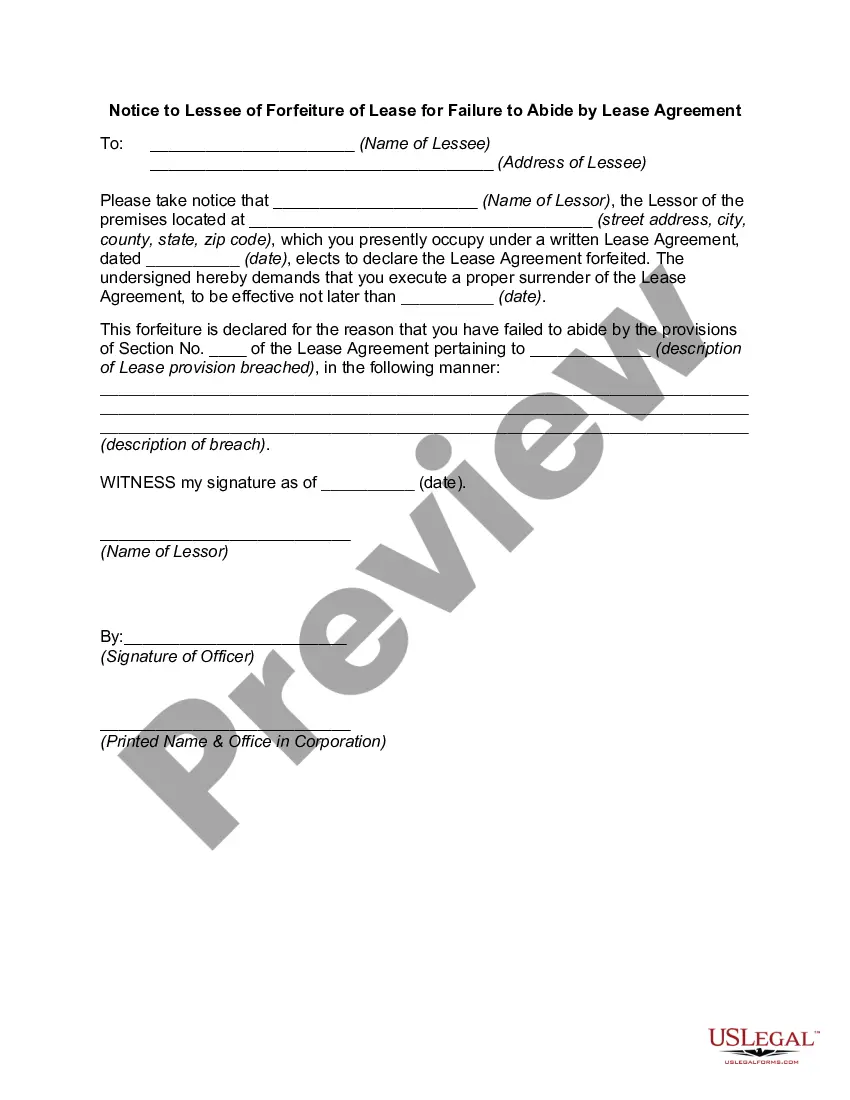
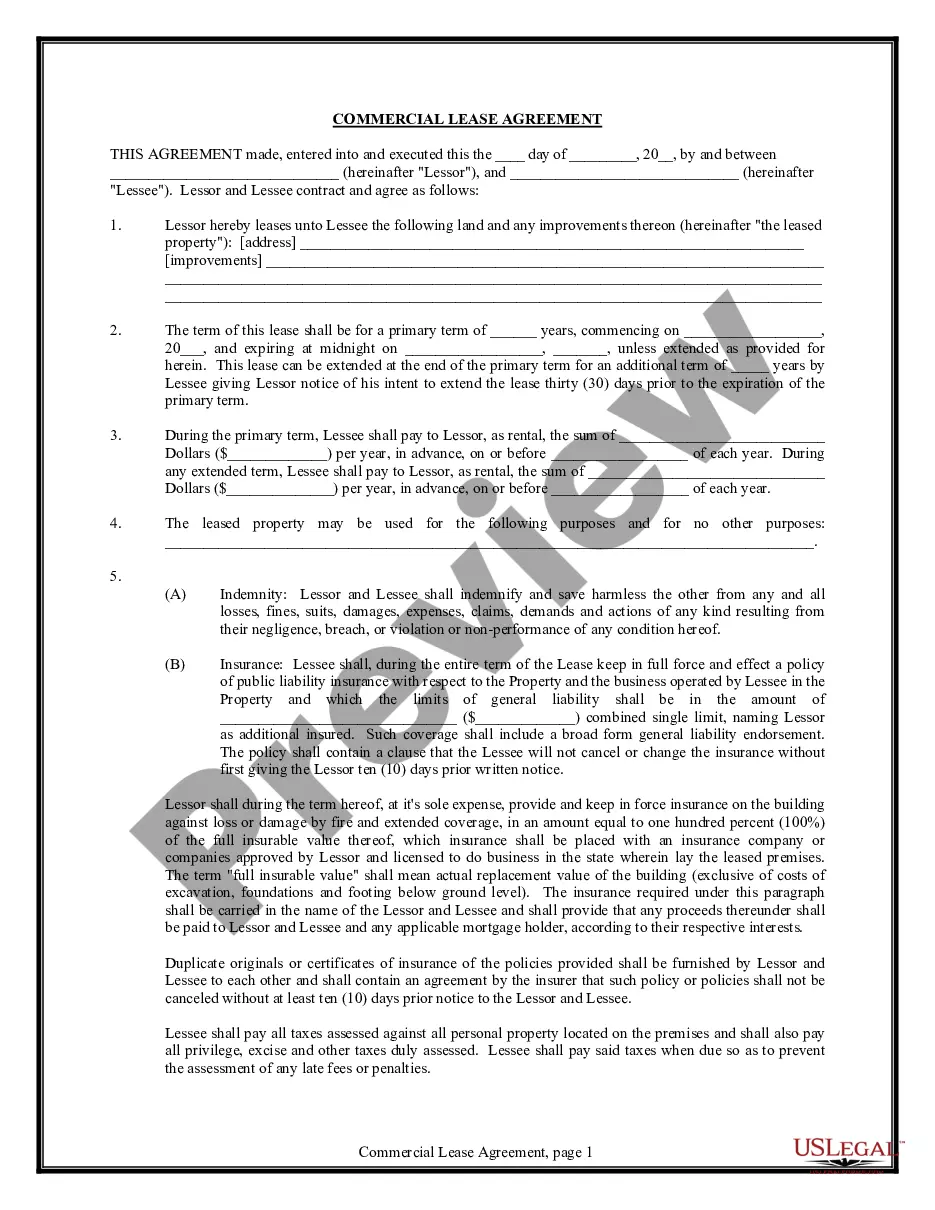
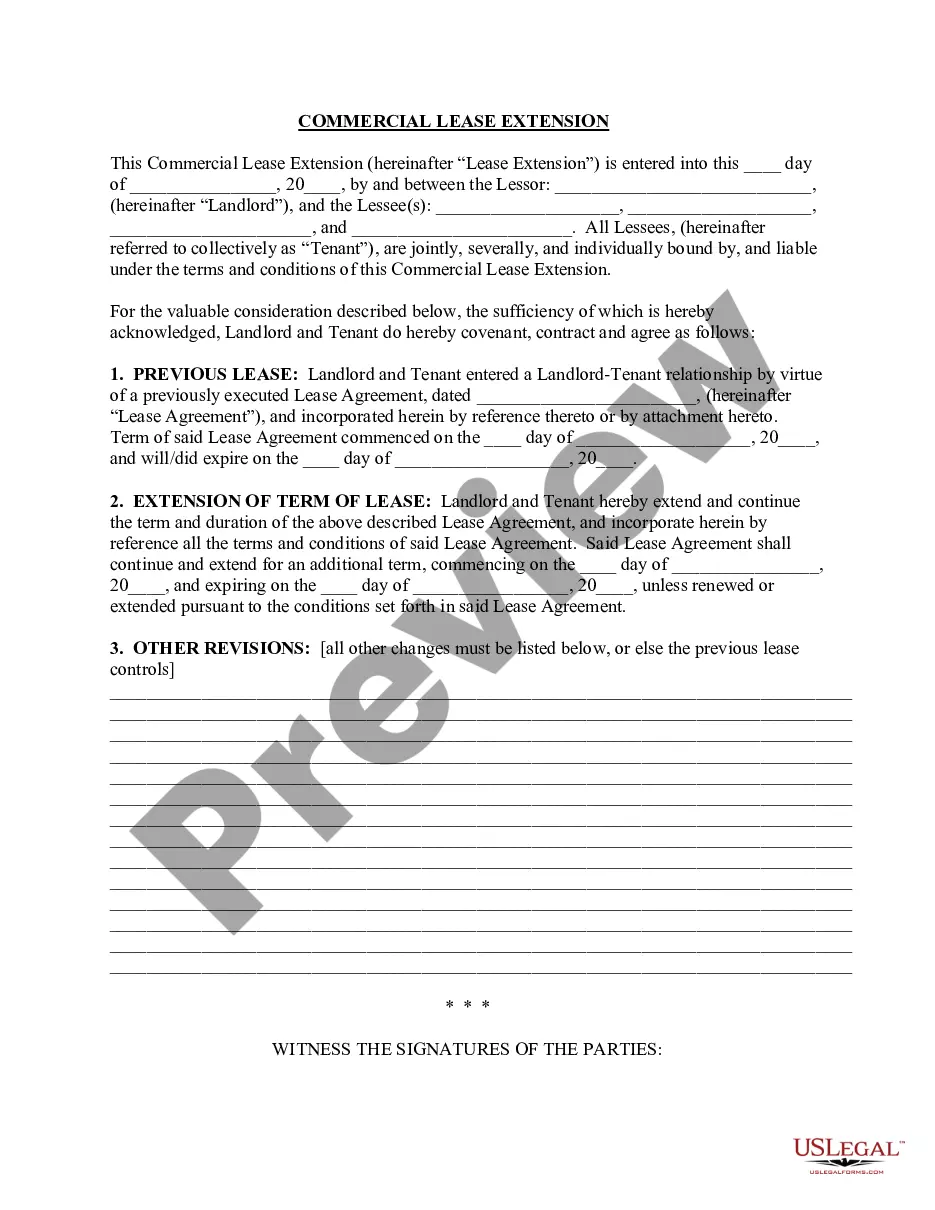
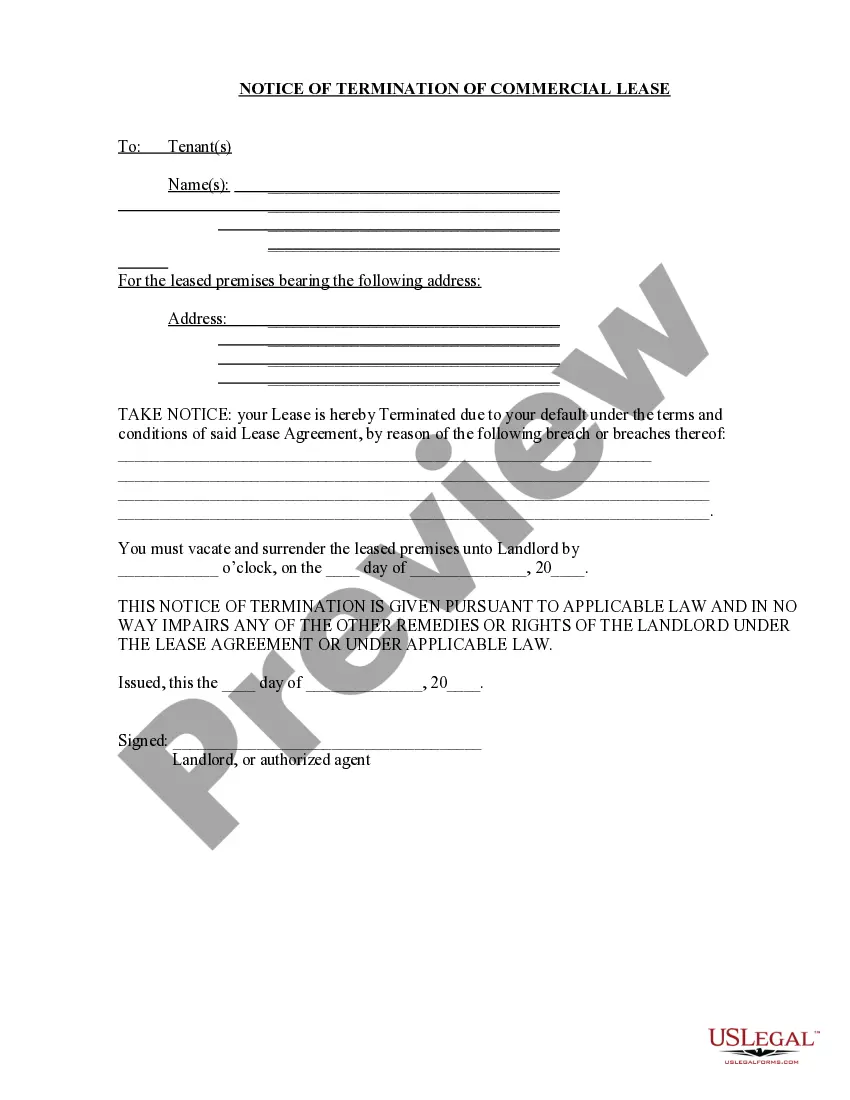
Common use cases
This form is used when a landlord wants to notify a commercial tenant about a potential default under their lease agreement, specifically related to failing to meet financial obligations, such as late rent payments. It is typically employed before taking any legal action or applying security deposit funds to cover any defaults.
Intended users of this form
- Commercial landlords needing to inform tenants of lease violations.
- Landlords who wish to maintain a formal record of communication regarding defaults.
- Authorized agents acting on behalf of landlords in commercial leasing agreements.
Completing this form step by step
- Identify the date the warning is being issued.
- Fill in the day and month in the designated spaces.
- Sign the form as the landlord or the authorized agent.
Does this document require notarization?
This form does not typically require notarization unless specified by local law.
Get your form ready online
Our built-in tools help you complete, sign, share, and store your documents in one place.
Make edits, fill in missing information, and update formatting in US Legal Forms—just like you would in MS Word.
Download a copy, print it, send it by email, or mail it via USPS—whatever works best for your next step.
Sign and collect signatures with our SignNow integration. Send to multiple recipients, set reminders, and more. Go Premium to unlock E-Sign.
If this form requires notarization, complete it online through a secure video call—no need to meet a notary in person or wait for an appointment.
We protect your documents and personal data by following strict security and privacy standards.

Make edits, fill in missing information, and update formatting in US Legal Forms—just like you would in MS Word.

Download a copy, print it, send it by email, or mail it via USPS—whatever works best for your next step.

Sign and collect signatures with our SignNow integration. Send to multiple recipients, set reminders, and more. Go Premium to unlock E-Sign.

If this form requires notarization, complete it online through a secure video call—no need to meet a notary in person or wait for an appointment.

We protect your documents and personal data by following strict security and privacy standards.
Typical mistakes to avoid
- Failing to provide the correct date of issuance.
- Not signing the form, resulting in it being considered invalid.
- Neglecting to communicate with the tenant before issuing the warning.
Benefits of completing this form online
- Convenience of immediate access and download from any location.
- Editability for customization to fit your specific situation.
- Reliability of professionally drafted legal language to ensure compliance.
Legal use & context
- The form serves as a preliminary notice before escalation to eviction proceedings.
- It helps establish documentation of attempts to resolve lease issues before pursuing legal remedies.
- Complying with the warning notice requirements may be necessary for eviction actions to be legally enforceable.
What to keep in mind
- This form is crucial for landlords to manage defaults in lease agreements.
- Timely issuance of this warning can help resolve disputes before escalating to evictions.
- Ensure complete and accurate information to avoid legal complications.
Looking for another form?
Form popularity
FAQ
The default clause in a commercial lease outlines the conditions under which a tenant is considered in default and the subsequent remedies available to the landlord. This clause often specifies the requirement for a Georgia Warning of Default on Commercial Lease, indicating the breach and the necessary steps for remedy. Understanding this clause is essential for tenants to comply with their lease obligations and avoid potential disputes. Proactive management of lease terms can help ensure a smoother relationship between landlords and tenants.
A notice of default on a commercial lease is a formal document issued by the landlord to inform the tenant of a breach of lease terms. In Georgia, issuing a Georgia Warning of Default on Commercial Lease allows the landlord to outline specific defaults and the required actions to remedy them. This notice acts as a crucial step before potential eviction and serves as an opportunity for tenants to correct the violations. It’s vital for tenants to respond swiftly to such notices to protect their interests.
Landlords have several remedies available when a tenant defaults on a commercial lease. These may include issuing a Georgia Warning of Default on Commercial Lease, which informs the tenant of their obligations and the need for correction. Additionally, landlords might seek to terminate the lease, reclaim the premises, or pursue financial compensation. Understanding these remedies is essential for both landlords and tenants to navigate lease challenges effectively.
When a business defaults on a lease, the repercussions can include termination of the lease and potential legal action from the landlord. Typically, landlords will send a Georgia Warning of Default on Commercial Lease to alert the business of their non-compliance. This warning highlights the specific lease violations and gives the business an opportunity to address them. Addressing lease defaults promptly can help prevent escalation and preserve the business’s lease rights.
Defaulting on a commercial lease typically triggers serious consequences for the tenant, including possible eviction and financial liabilities. The landlord may issue a Georgia Warning of Default on Commercial Lease, outlining the issues that led to the default. This notice serves to inform tenants of their obligations and provides a window for resolution before further actions are taken. Understanding this process is crucial for tenants seeking to avoid dire outcomes.
In Georgia, landlords cannot lock out commercial tenants without following proper legal procedures. This often requires providing a Georgia Warning of Default on Commercial Lease, allowing tenants a chance to rectify the default. If you consider lockout as a response, be sure to consult an attorney to navigate these legal requirements. This ensures that you protect your rights and follow lawful processes.
Default in a lease agreement refers to a tenant's failure to meet the requirements set within the lease terms. This situation can include not paying rent on time or violating any agreed-upon provisions. When a Georgia Warning of Default on Commercial Lease is issued, it highlights these defaults and outlines the necessary steps for the tenant to remedy the situation. Knowing the implications of default helps both parties to safeguard their interests and ensures compliance with lease agreements.
A notice of default to a commercial tenant serves as an official communication that the tenant has not fulfilled their lease obligations. This Georgia Warning of Default on Commercial Lease informs the tenant about their specific violations, such as late rent payments or non-compliance with lease terms. By providing this notice, landlords aim to resolve issues and avoid further legal action. Understanding this notice is essential for both landlords and tenants to maintain a smooth rental relationship.
Yes, a landlord in Georgia can lock out a commercial tenant if they default on the lease terms. However, this usually follows a formal process, including issuing a Georgia Warning of Default on Commercial Lease. Tenants must be given an opportunity to remedy the situation before such drastic measures are taken. Always seek legal guidance to understand your rights and the proper procedures.
In the context of a lease, 'default' generally refers to a failure to meet the obligations outlined in the lease agreement. This can include not paying rent or violating other specific terms. If you receive a Georgia Warning of Default on Commercial Lease, it indicates that you have breached these terms and need to act quickly to avoid further legal consequences. Understanding your lease terms is crucial in preventing defaults.