Wisconsin Organizing your Personal Assets Package
Overview of this form package
The Wisconsin Organizing your Personal Assets Package is a comprehensive set of legal forms designed to help you organize your personal and financial affairs effectively. This package is tailored to meet Wisconsin's specific requirements and includes essential forms for budgeting, tracking expenses, and planning for emergencies. It stands apart from similar packages by offering a well-rounded approach to asset management, ensuring you have everything you need to achieve your financial goals and prepare for unforeseen circumstances.
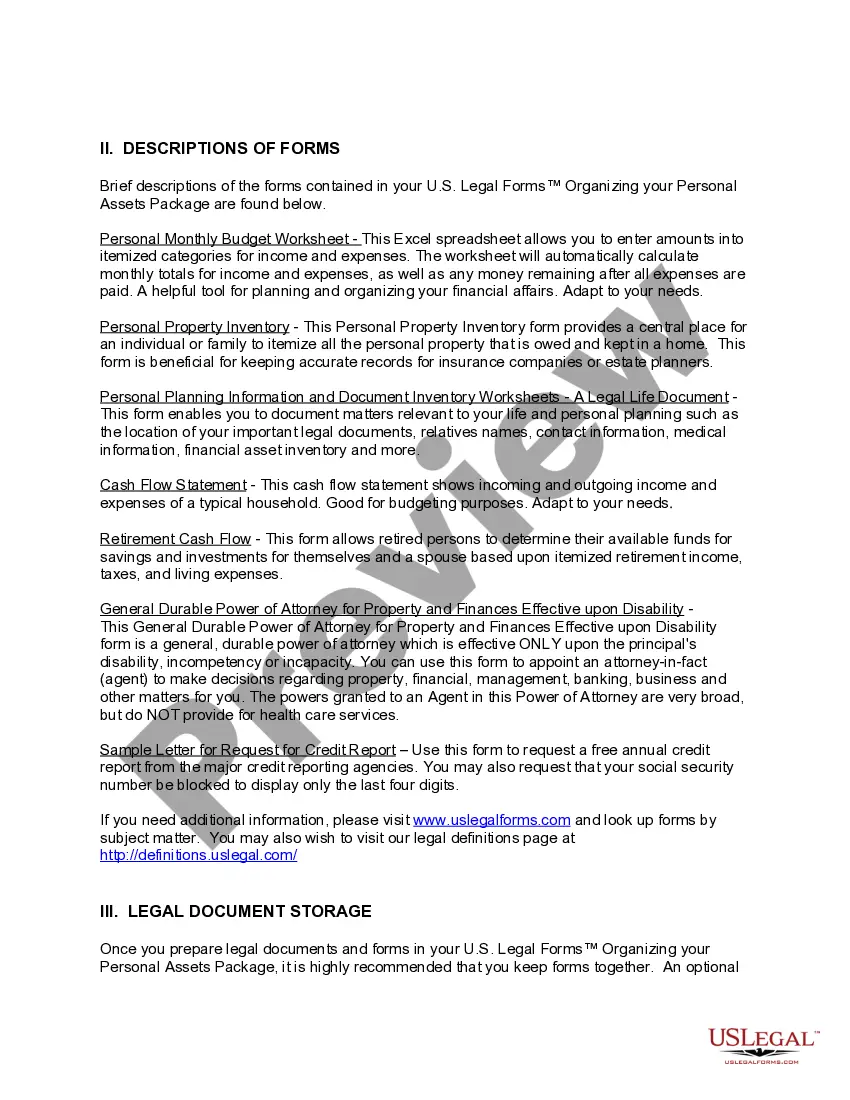
Forms provided in this package
- General Durable Power of Attorney for Property and Finances or Financial Effective upon Disability
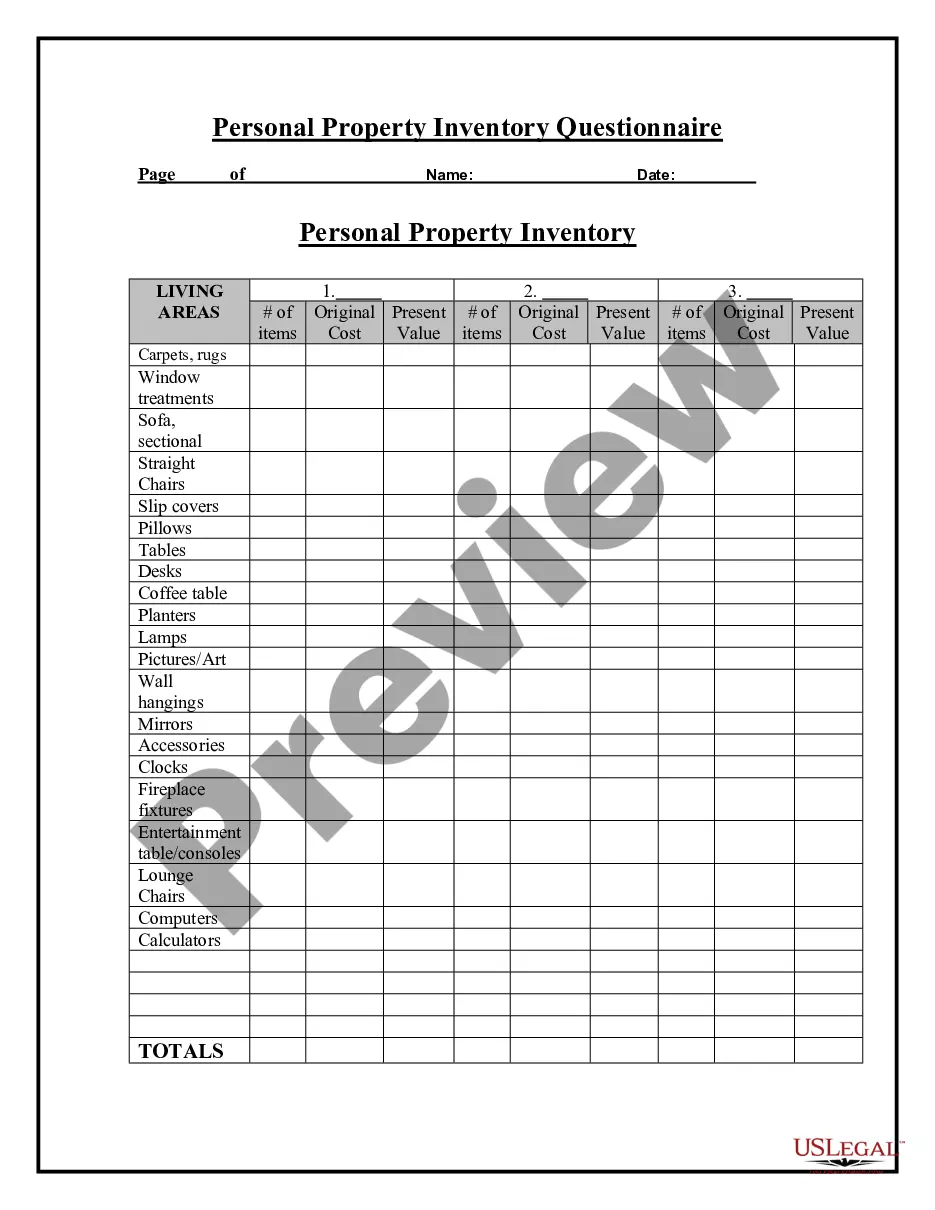
- Personal Property Inventory
- Sample Letter for Request for Free Credit Report Allowed by Federal Law
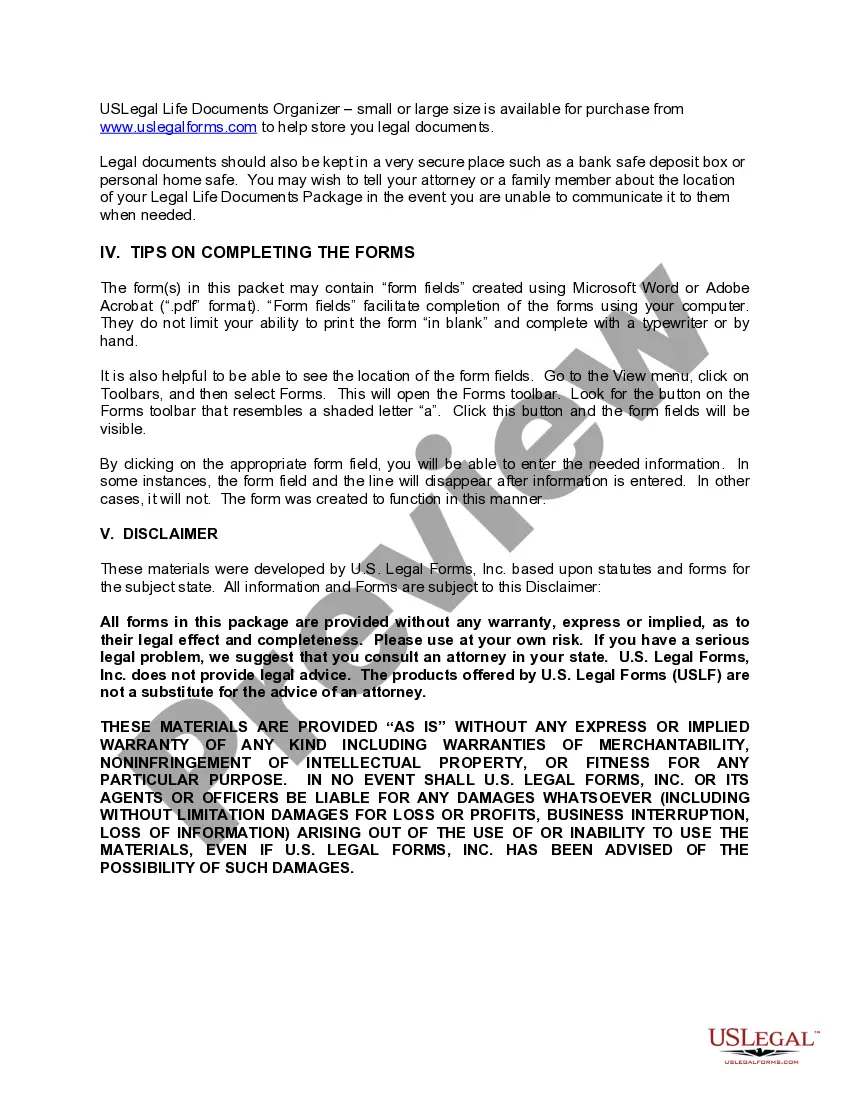
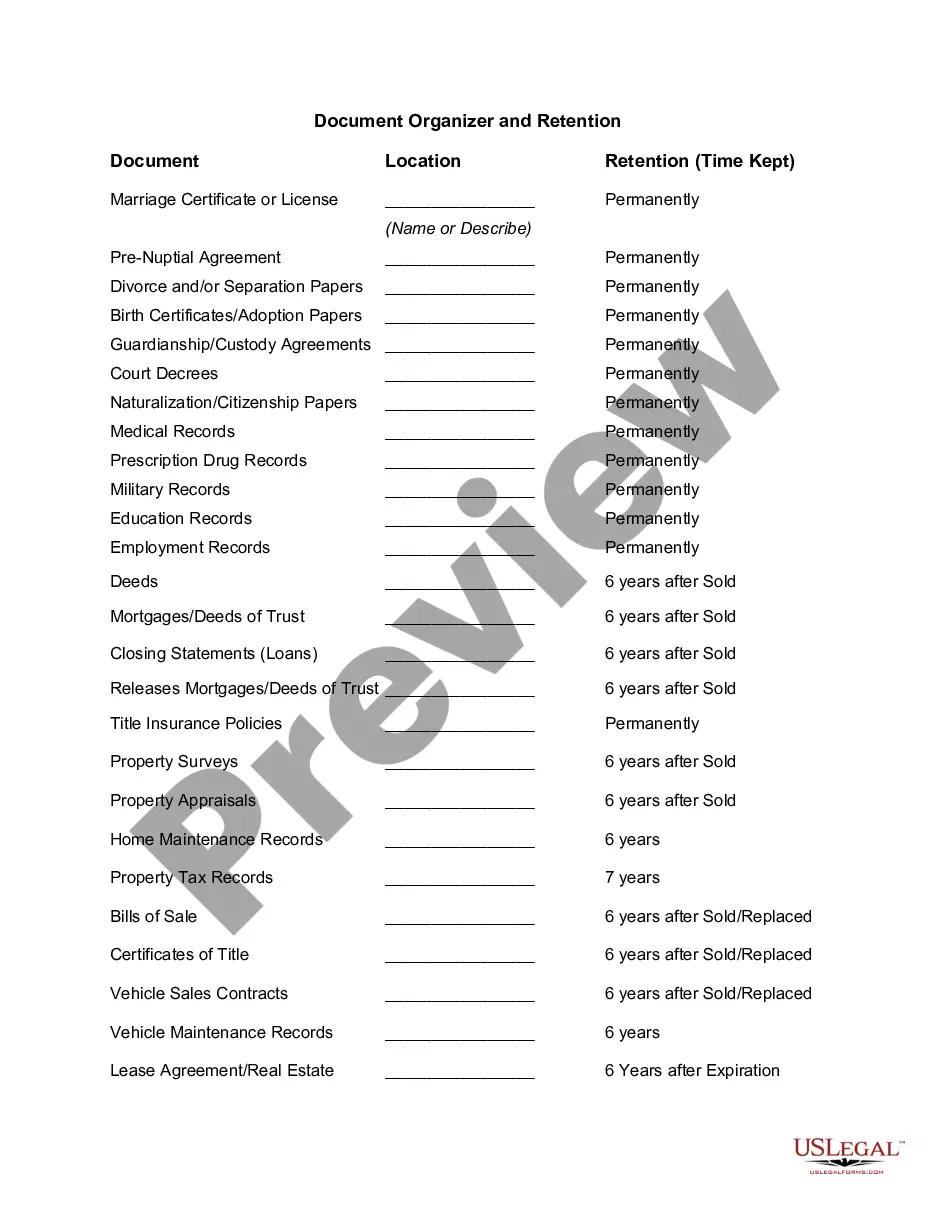
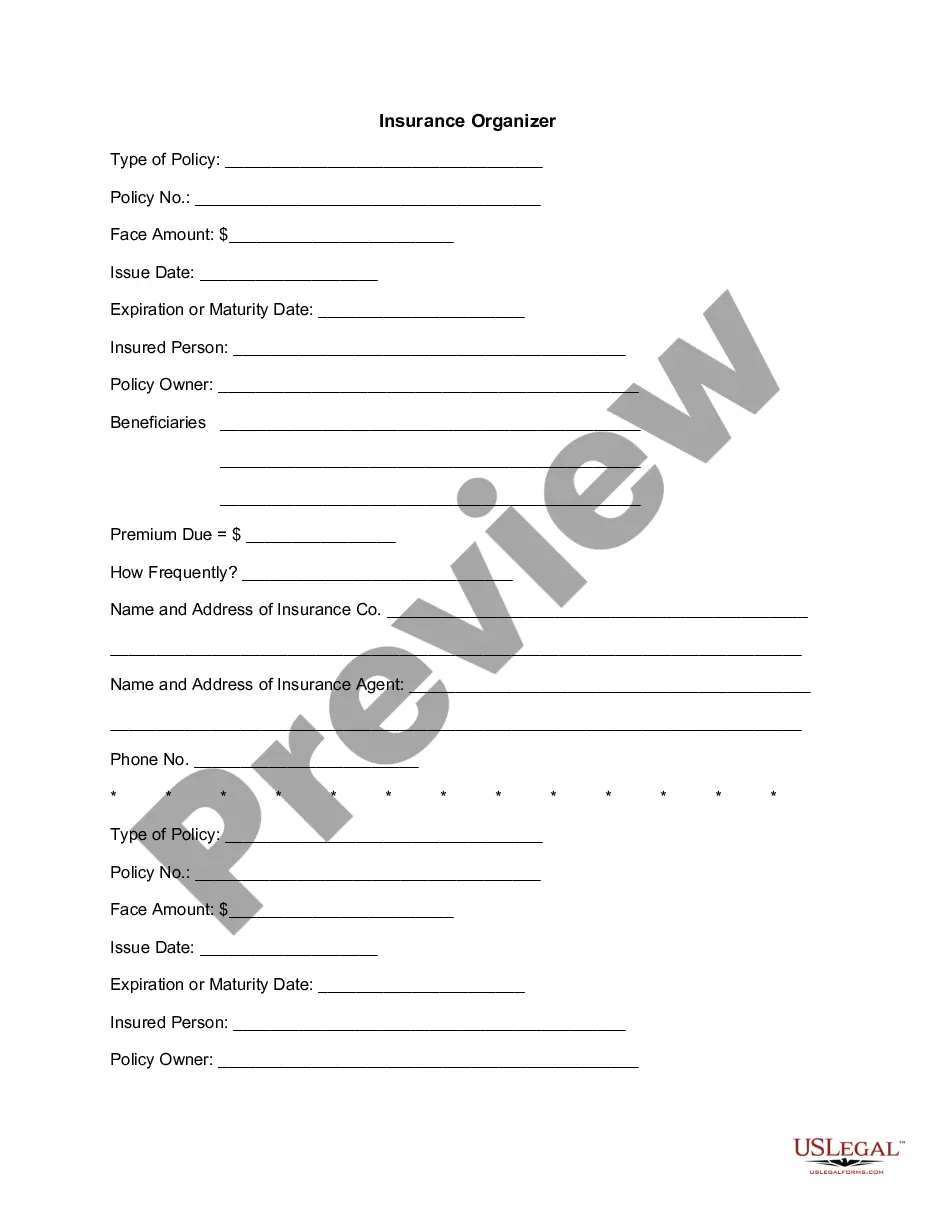
- Personal Planning Information and Document Inventory Worksheets - A Legal Life Document
- Cash Flow Statement
- Retirement Cash Flow
- Personal Monthly Budget Worksheet
Common use cases
This form package is particularly useful in the following scenarios:
- You want to create a detailed budget to manage your monthly expenses.
- You need to analyze your cash flow for better financial planning.
- You are preparing your estate planning documents and want to ensure everything is organized.
- You want to have a comprehensive inventory of your personal property for insurance or estate purposes.
- You need to authorize someone to manage your financial affairs in case of incapacity.
Intended users of this form package
- Individuals looking to manage their personal and financial affairs effectively.
- Families who want to keep track of their assets and liabilities.
- Estate planners or professionals helping clients organize their belongings.
- Retired persons needing to manage retirement funds and investments.
Steps to complete these forms
- Review the included forms to familiarize yourself with their purpose and requirements.
- Gather necessary documents and information to complete each form accurately.
- Enter your personal details into each form, adhering to the specified guidelines.
- Have a trusted person review the forms for accuracy and completeness.
- Store the completed forms securely in an accessible location.
Notarization guidance for this package
Certain documents in this package must be notarized for legal effectiveness. Our online notarization service, powered by Notarize, lets you verify and sign documents remotely through an encrypted video session, available anytime.
Get your form ready online
Our built-in tools help you complete, sign, share, and store your documents in one place.
Make edits, fill in missing information, and update formatting in US Legal Forms—just like you would in MS Word.
Download a copy, print it, send it by email, or mail it via USPS—whatever works best for your next step.
Sign and collect signatures with our SignNow integration. Send to multiple recipients, set reminders, and more. Go Premium to unlock E-Sign.
If this form requires notarization, complete it online through a secure video call—no need to meet a notary in person or wait for an appointment.
We protect your documents and personal data by following strict security and privacy standards.

Make edits, fill in missing information, and update formatting in US Legal Forms—just like you would in MS Word.

Download a copy, print it, send it by email, or mail it via USPS—whatever works best for your next step.

Sign and collect signatures with our SignNow integration. Send to multiple recipients, set reminders, and more. Go Premium to unlock E-Sign.

If this form requires notarization, complete it online through a secure video call—no need to meet a notary in person or wait for an appointment.

We protect your documents and personal data by following strict security and privacy standards.
Common mistakes
- Failing to keep the forms updated with current financial information.
- Not documenting critical information such as contact details for family members or advisors.
- Omitting to sign or date the forms where required, especially for the power of attorney.
Advantages of online completion
- Convenience of downloading forms instantly without needing to visit a lawyer.
- Editability allows you to customize forms to fit your personal financial situation.
- Reliable, attorney-drafted forms that ensure legal compliance and relevancy.
Legal use & context
- Completing these forms helps establish organized records for personal assets, which can be critical during estate planning.
- These forms are enforceable in Wisconsin and can be used in legal contexts regarding personal financial affairs.
Main things to remember
- The Wisconsin Organizing Your Personal Assets Package offers critical tools for personal financial organization.
- This package includes a variety of forms that cater specifically to state rules and needs.
- Following the completion steps ensures your forms are accurate and effective for your financial planning.
Looking for another form?
Form popularity
FAQ
Assets. Mostly assets are classified based on 3 broad categories, namely Current assets or short-term assets. Fixed assets or long-term assets. Tangible assets. Intangible assets. Operating assets. Non-operating assets. Liability.
Cash and cash equivalents, certificates of deposit, checking, and savings accounts, money market accounts, physical cash, Treasury bills. Property or land and any structure that is permanently attached to it.
Personal assets are things of present or future value owned by an individual or household. Common examples of personal assets include: Cash and cash equivalents, certificates of deposit, checking, and savings accounts, money market accounts, physical cash, Treasury bills.
Great smile. Ability to get along with many different personalities. Positive attitude. Sense of humor. Great communicator. Excellent public speaker.
Examples of assets are - Cash. Investments. Inventory. Office equipment. Machinery.
Choose your recording system. You can keep your list digitally or on paper. List physical and financial assets. Include personal information. Include detail descriptions of assets. Attach evidence of ownership. Double check your insurer requirements. Tips for safeguarding your list. Update your list.
Tangible Assets. Tangible assets are any assets that have a physical presence. Intangible Assets. Intangible assets are assets that have no physical presence. Financial Asset. A financial asset is an asset that has a value that's based on a contract. Fixed Assets. Current Assets.
Your greatest asset is Mindset , Self Control, balanced life , Preservance,Health, skill , knowledge and ability to do hard work, dedication and conviction. These 7 things define you and your success.