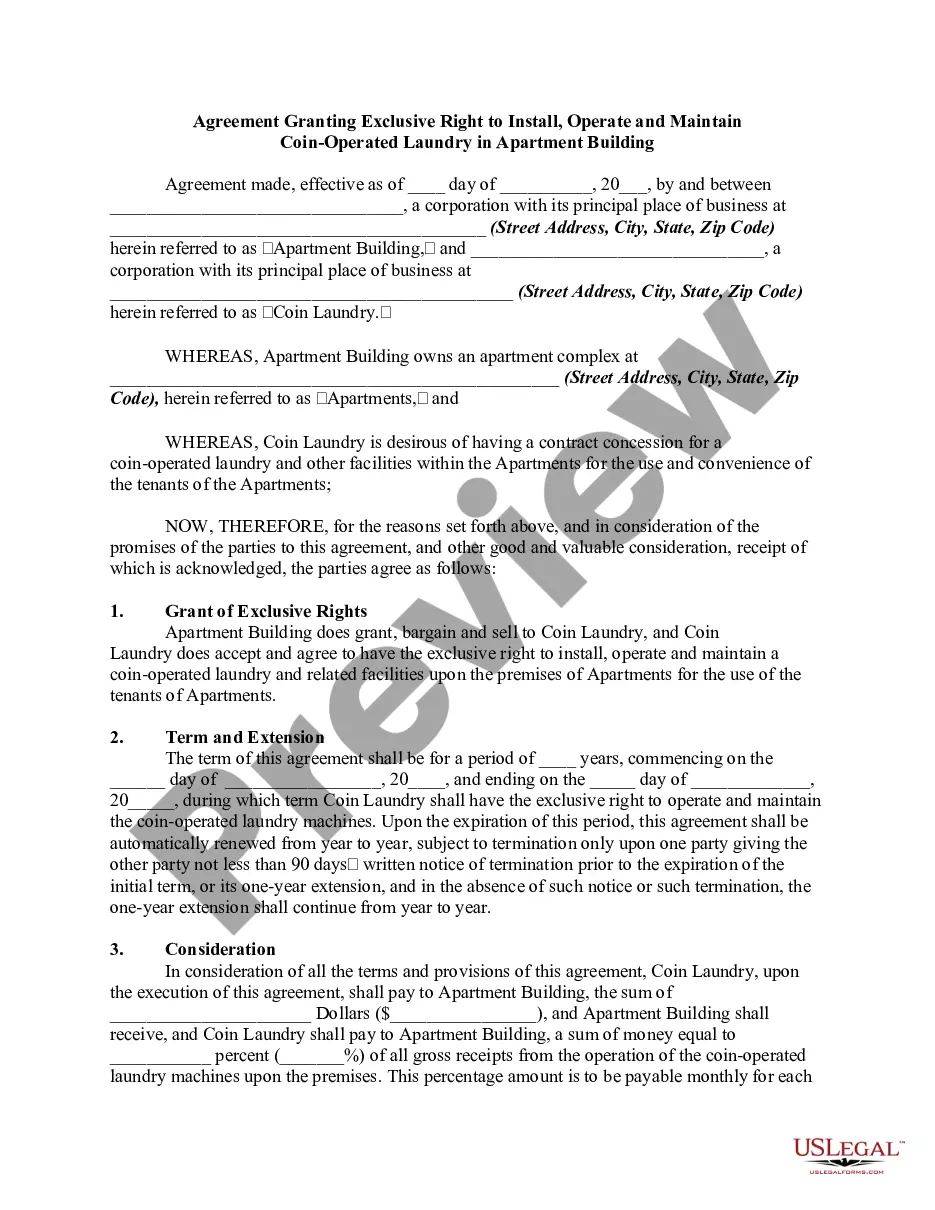
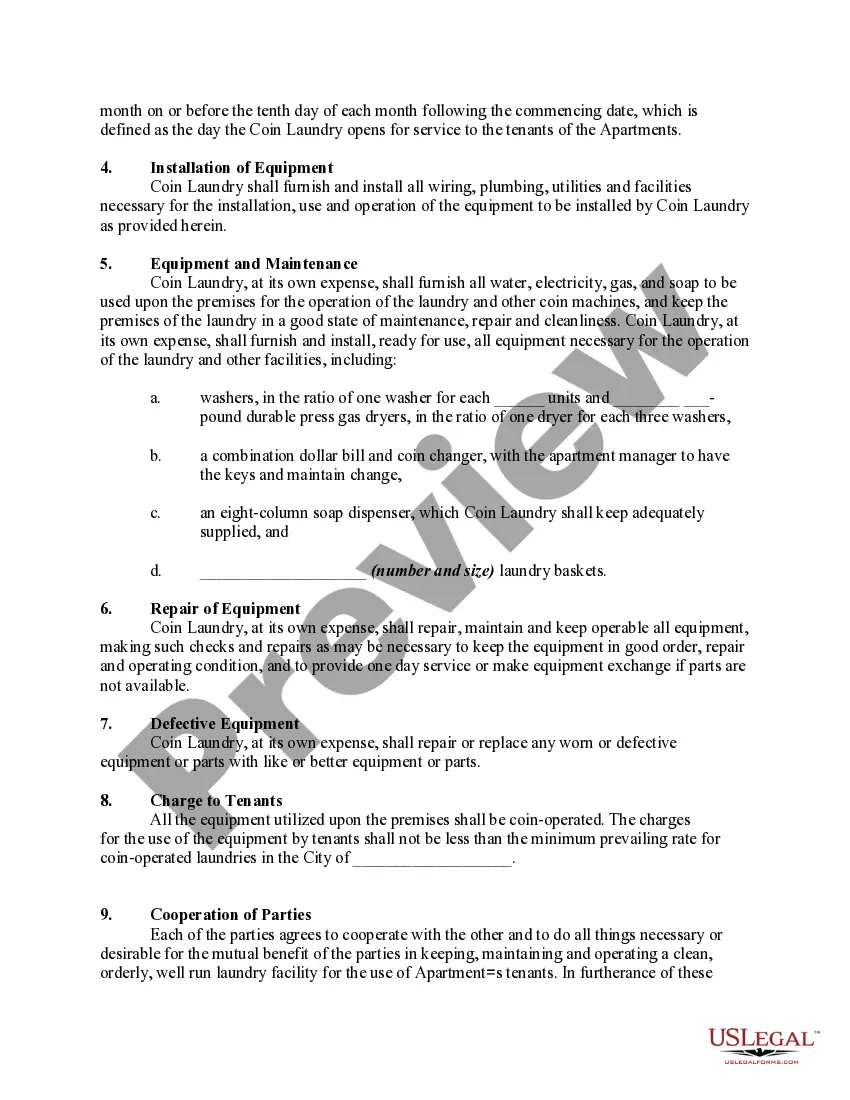
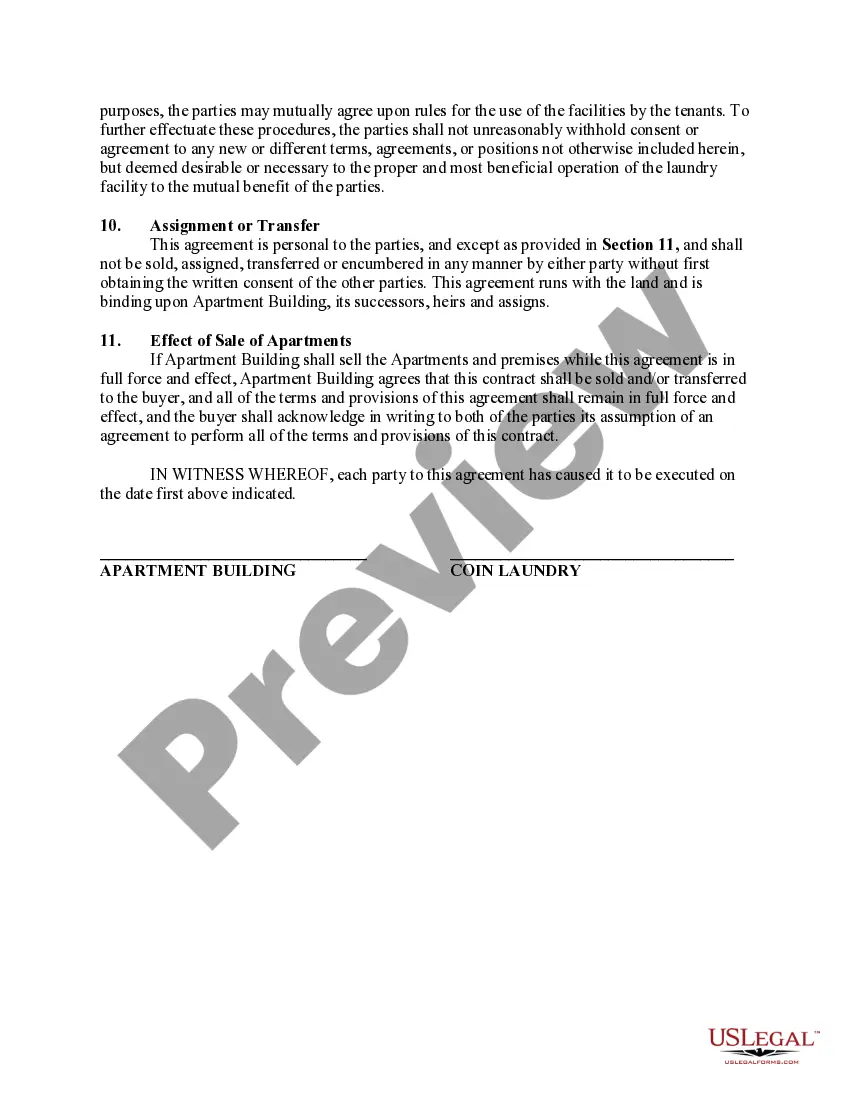
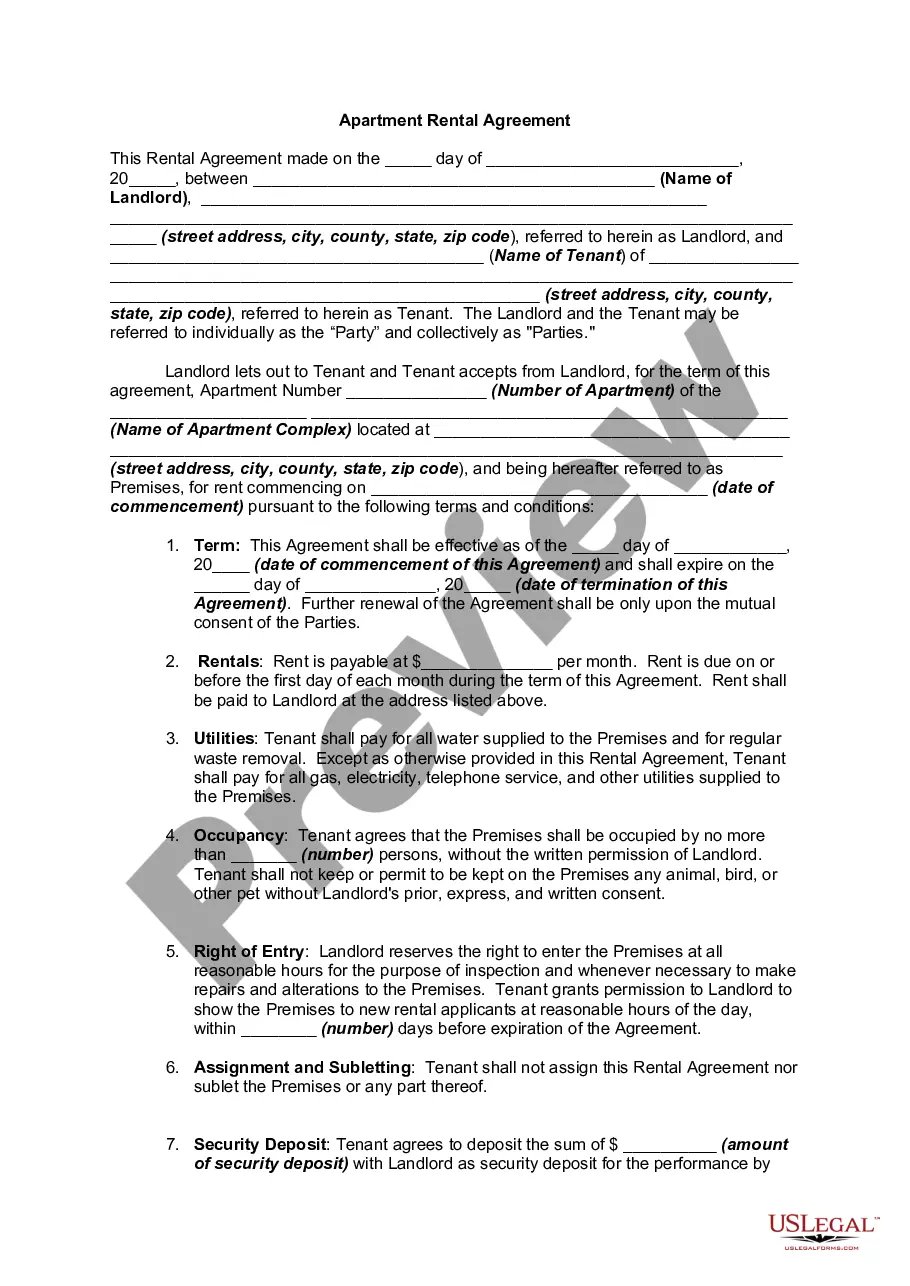
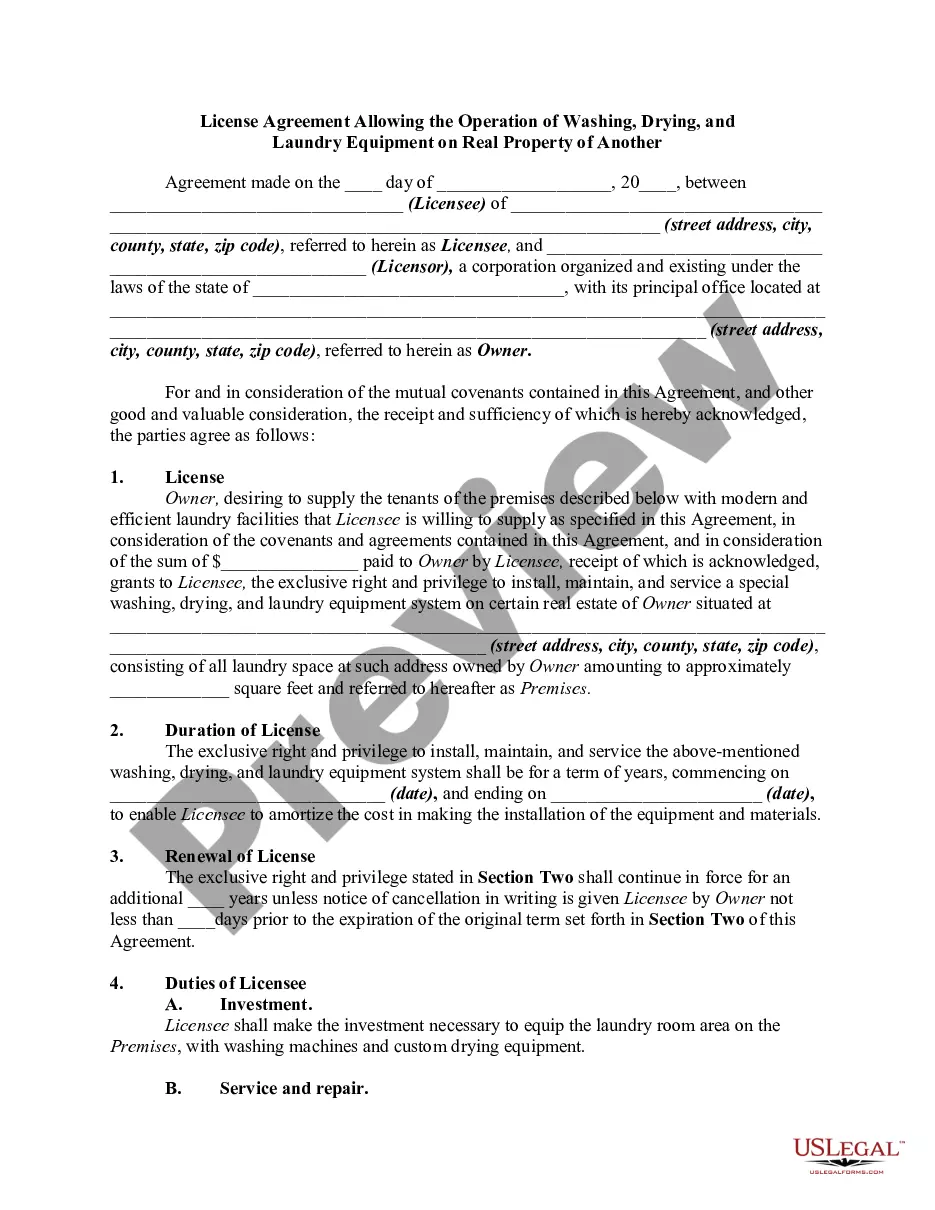
The following form is an Agreement granting the right to install, operate and maintain a
Coin-Operated Laundry in an Apartment Building.
Vermont Agreement Granting Exclusive Right to Install, Operate and Maintain Coin-Operated Laundry in Apartment Building
Category:
State:
Multi-State
Control #:
US-00474BG
Format:
Word;
Rich Text
Instant download
Description
Free preview
Get your form ready online
Our built-in tools help you complete, sign, share, and store your documents in one place.
Built-in online Word editor
Make edits, fill in missing information, and update formatting in US Legal Forms—just like you would in MS Word.
Export easily
Download a copy, print it, send it by email, or mail it via USPS—whatever works best for your next step.
E-sign your document
Sign and collect signatures with our SignNow integration. Send to multiple recipients, set reminders, and more. Go Premium to unlock E-Sign.
Notarize online 24/7
If this form requires notarization, complete it online through a secure video call—no need to meet a notary in person or wait for an appointment.
Store your document securely
We protect your documents and personal data by following strict security and privacy standards.

Make edits, fill in missing information, and update formatting in US Legal Forms—just like you would in MS Word.

Download a copy, print it, send it by email, or mail it via USPS—whatever works best for your next step.

Sign and collect signatures with our SignNow integration. Send to multiple recipients, set reminders, and more. Go Premium to unlock E-Sign.

If this form requires notarization, complete it online through a secure video call—no need to meet a notary in person or wait for an appointment.

We protect your documents and personal data by following strict security and privacy standards.
Looking for another form?



How to fill out Agreement Granting Exclusive Right To Install, Operate And Maintain Coin-Operated Laundry In Apartment Building?
Selecting the appropriate legal document template can be challenging. Obviously, numerous templates are accessible online, but how do you locate the legal document you require.
Utilize the US Legal Forms website. The service offers thousands of templates, including the Vermont Agreement Granting Exclusive Right to Install, Operate, and Maintain Coin-Operated Laundry in Apartment Building, which you can use for business and personal purposes.
All of the forms are verified by experts and comply with federal and state regulations.
Once you are confident that the form is suitable, select the Purchase now button to acquire the form. Choose the pricing plan you prefer and enter the required information. Create your account and complete your order using your PayPal account or credit card. Choose the file format and download the legal document template to your device. Complete, modify, print, and sign the obtained Vermont Agreement Granting Exclusive Right to Install, Operate, and Maintain Coin-Operated Laundry in Apartment Building. US Legal Forms is the largest collection of legal templates where you can find various document formats. Take advantage of the service to download properly crafted documents that adhere to state regulations.
- If you are already registered, sign in to your account and click on the Download button to locate the Vermont Agreement Granting Exclusive Right to Install, Operate, and Maintain Coin-Operated Laundry in Apartment Building.
- Use your account to search for the legal forms you may have purchased previously.
- Visit the My documents tab in your account and download another copy of the document you need.
- If you are a new user of US Legal Forms, here are some simple steps you can follow.
- First, ensure you have selected the correct template for your city/area. You can browse the form using the Preview button and review the form details to make sure it's right for you.
- If the template does not meet your requirements, use the Search field to find the correct form.
Form popularity
FAQ
Landlords in Vermont have specific obligations, including providing a habitable living space and maintaining essential services. They must ensure that the property complies with health and safety codes, and landlords should address necessary repairs in a timely manner. Additionally, if a landlord offers amenities such as a Vermont Agreement Granting Exclusive Right to Install, Operate and Maintain Coin-Operated Laundry in Apartment Building, they must ensure these are functional and accessible to tenants.
In Vermont, landlords can request first month's rent, last month's rent, and a security deposit, but there are limits on the amounts collected. The total deposit should not exceed the equivalent of one month's rent. Ensure you document all financial arrangements in your lease, especially if you're considering adding a Vermont Agreement Granting Exclusive Right to Install, Operate and Maintain Coin-Operated Laundry in Apartment Building to enhance the rental value.
Yes, you can rent a room in your house in Vermont. However, you must comply with local zoning laws and regulations regarding rental properties. It's also a good idea to create a clear rental agreement that outlines the terms of the stay, especially if you're interested in adding features like a Vermont Agreement Granting Exclusive Right to Install, Operate and Maintain Coin-Operated Laundry in Apartment Building for your tenants' convenience.
In Vermont, landlords can request both first and last month's rent from tenants. This requirement often helps protect landlords by ensuring they receive payment for both the initial and final months of occupancy. However, it is essential to document this properly in the lease agreement. When implementing a Vermont Agreement Granting Exclusive Right to Install, Operate and Maintain Coin-Operated Laundry in Apartment Building, discussing payment terms early on can prevent misunderstandings.
In Vermont, a well must typically be at least 50 feet away from a septic system, ensuring that groundwater remains uncontaminated. This distance is crucial for maintaining safe drinking water, especially if you are operating a business under the Vermont Agreement Granting Exclusive Right to Install, Operate and Maintain Coin-Operated Laundry in Apartment Building. Always verify with local authorities to ensure compliance with any additional specific regulations or guidelines. Proper planning contributes to responsible management of both water and waste systems.
In Vermont, landlords can legally require first and last month's rent along with a security deposit, but this must be outlined in the lease agreement. It is essential to clearly communicate these financial requirements to prospective tenants. If you are creating a rental space tied to the Vermont Agreement Granting Exclusive Right to Install, Operate and Maintain Coin-Operated Laundry in Apartment Building, ensure that these terms align with state regulations. Clarity in agreements fosters better tenant relationships.
Yes, you can install your own septic system in Vermont, but you must first obtain a permit from your local health department. Proper installation requires adherence to state regulations and guidelines, ensuring the system functions efficiently. If you are operating under a Vermont Agreement Granting Exclusive Right to Install, Operate and Maintain Coin-Operated Laundry in Apartment Building, consulting with professionals regarding your septic system will help maintain compliance. Always prioritize health and safety in your projects.
In Vermont, a water supply well should be at least 75 feet from a septic tank to minimize risks of contamination. This distance allows for natural filtering and protects the quality of groundwater. For businesses, such as those utilizing the Vermont Agreement Granting Exclusive Right to Install, Operate and Maintain Coin-Operated Laundry in Apartment Building, understanding these guidelines is key to sustainable operations. Always consult with environmental health professionals to confirm specific local requirements.
The minimum distance recommended between a well and a septic field in Vermont is typically 100 feet. This distance reduces the chances of groundwater contamination, promoting safer drinking water for residents. If you are establishing a business like one operating under the Vermont Agreement Granting Exclusive Right to Install, Operate and Maintain Coin-Operated Laundry in Apartment Building, it is crucial to adhere to local health regulations. Proper planning can prevent potential issues and ensure operational compliance.
In Vermont, wells should be placed at least 50 feet from septic systems to ensure safe water quality. The Vermont Agreement Granting Exclusive Right to Install, Operate and Maintain Coin-Operated Laundry in Apartment Building may require specific distances to be maintained as part of local regulations. It is best to check with local authorities to confirm any additional requirements for your particular situation. Maintaining this distance helps prevent contamination from septic leaks and preserves the functionality of both systems.