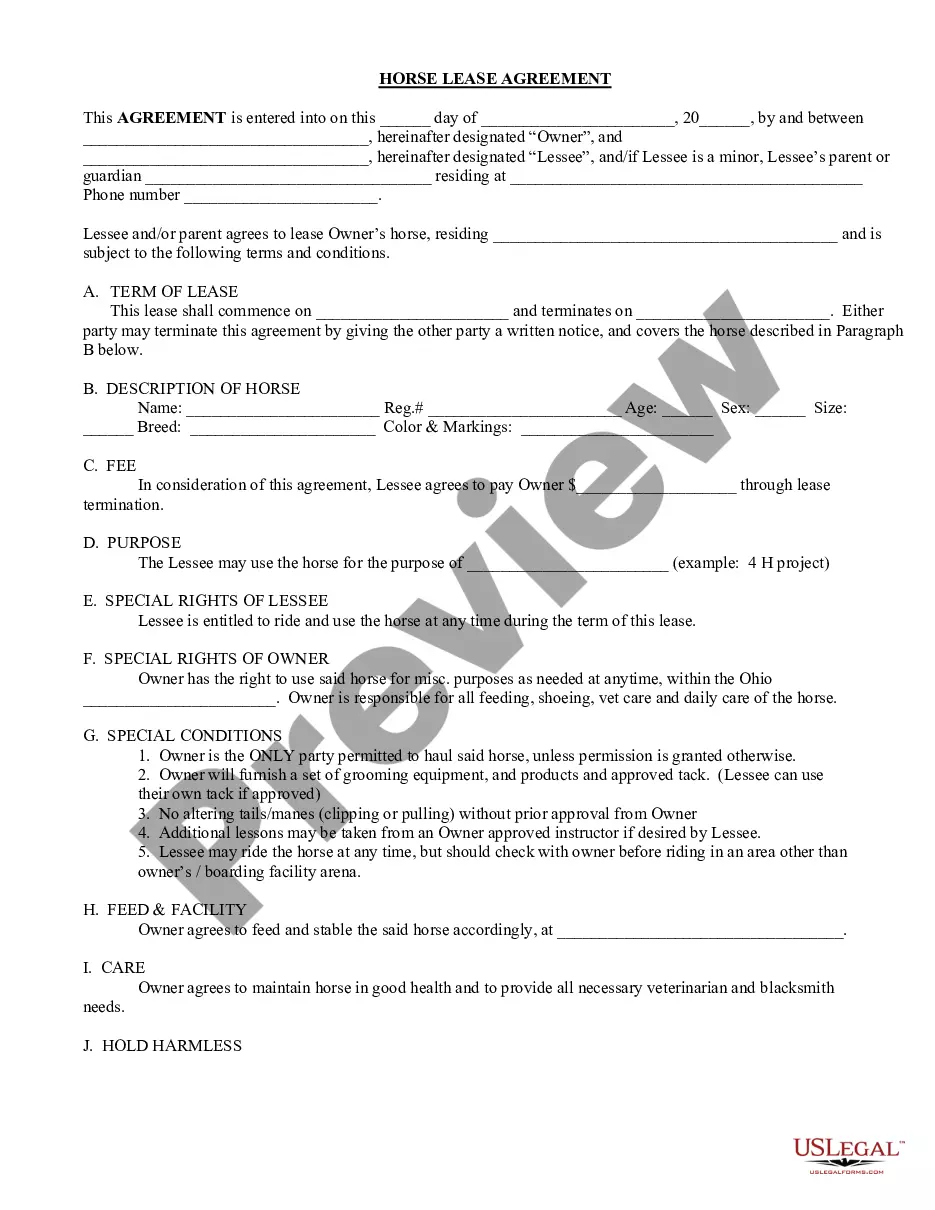
Toy Designer License Agreement Annotated
Overview of this form
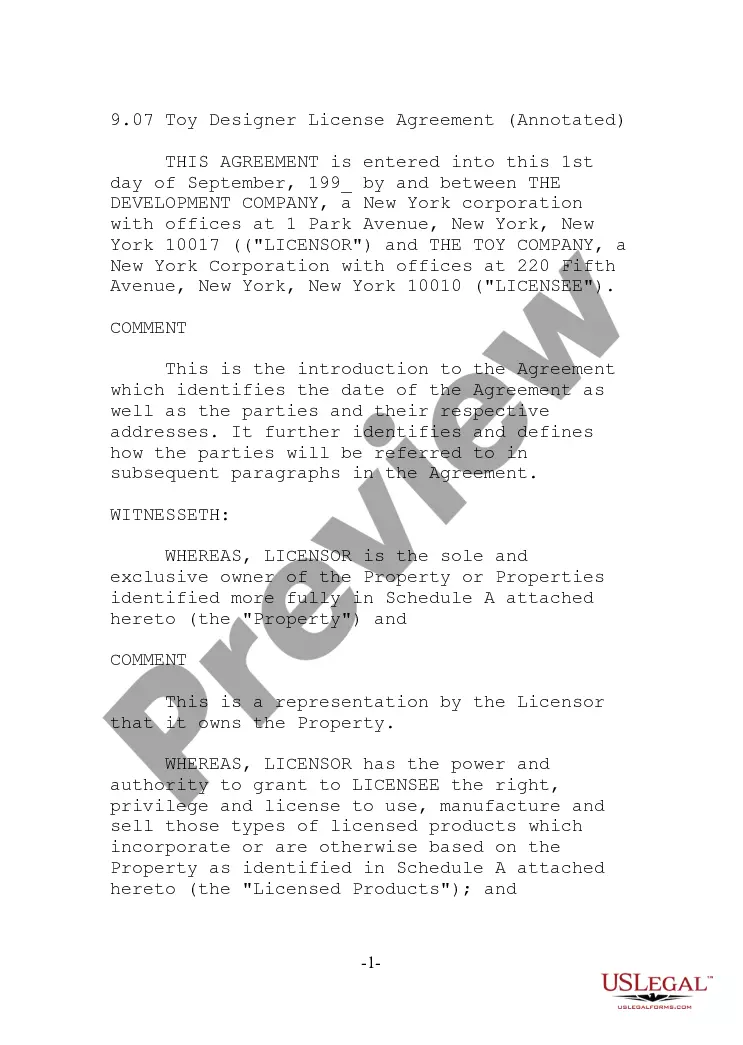
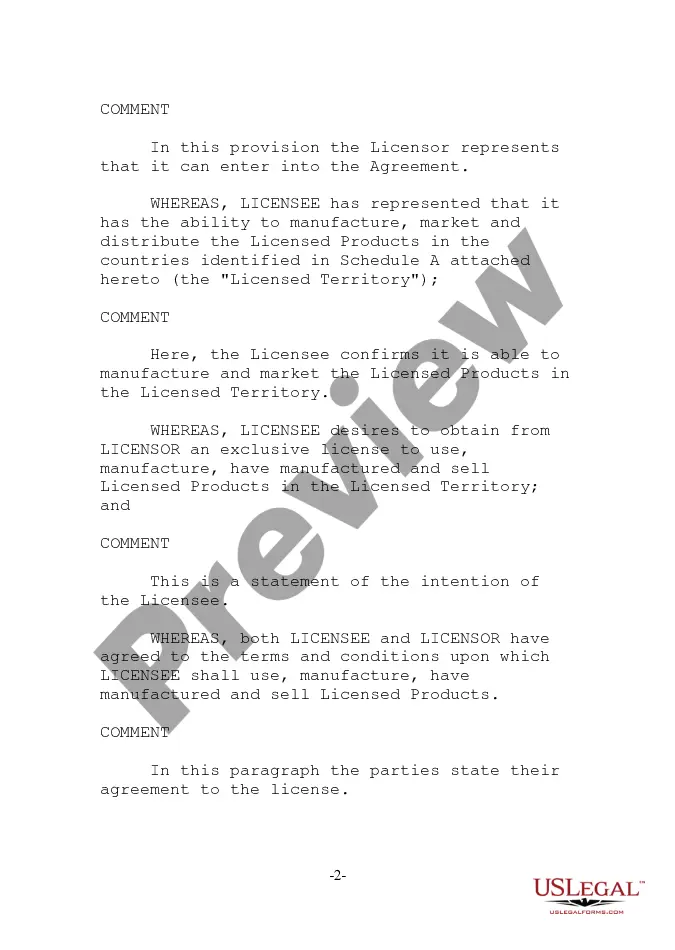
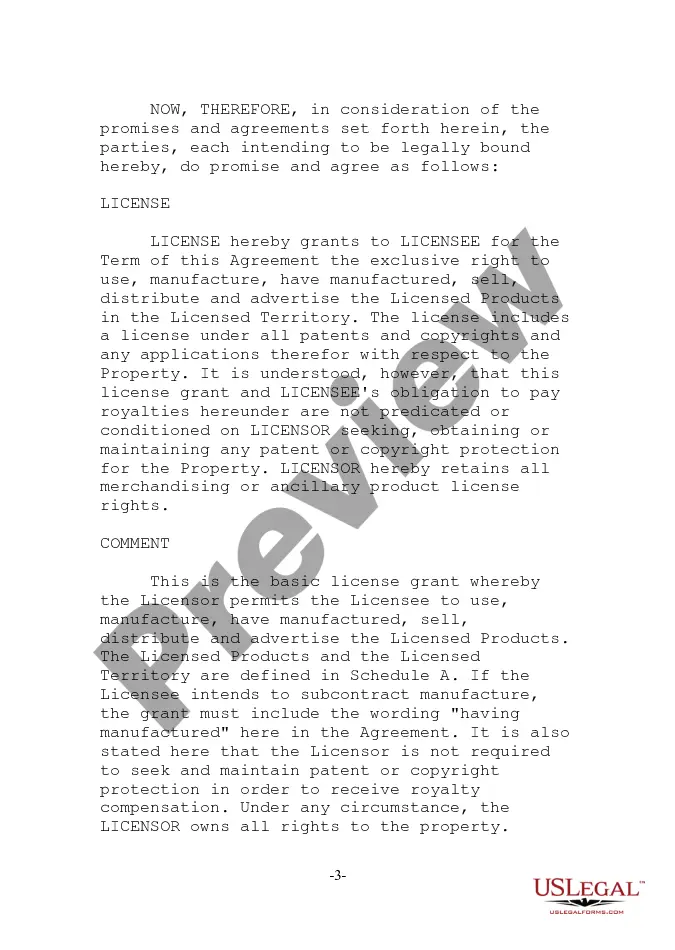
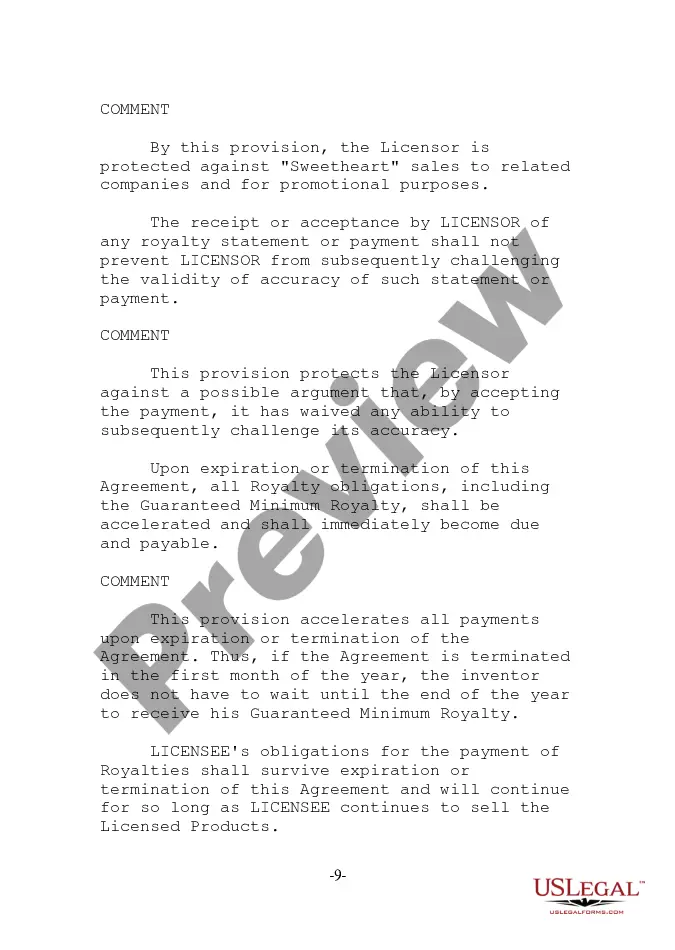
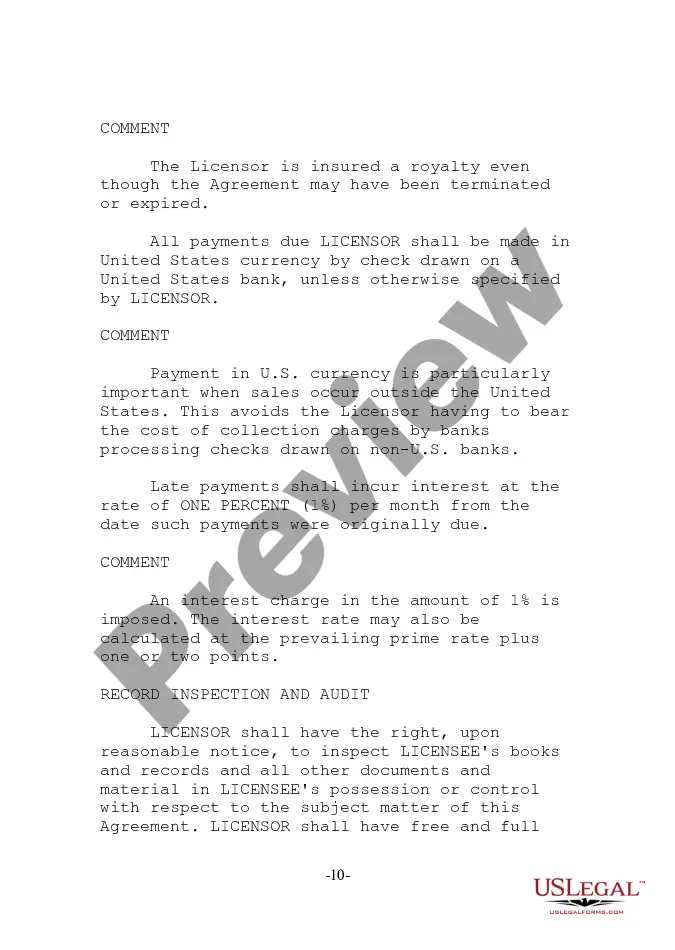
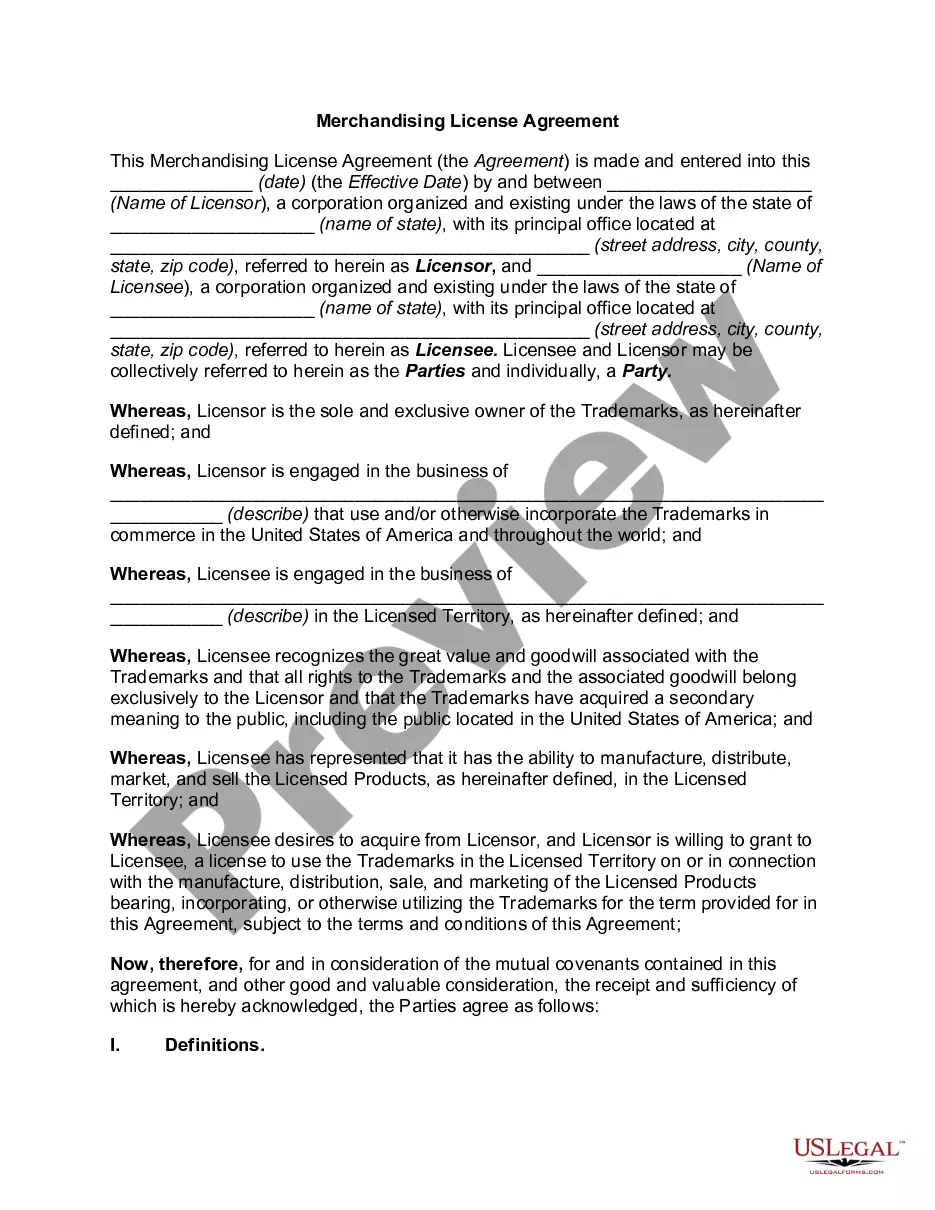
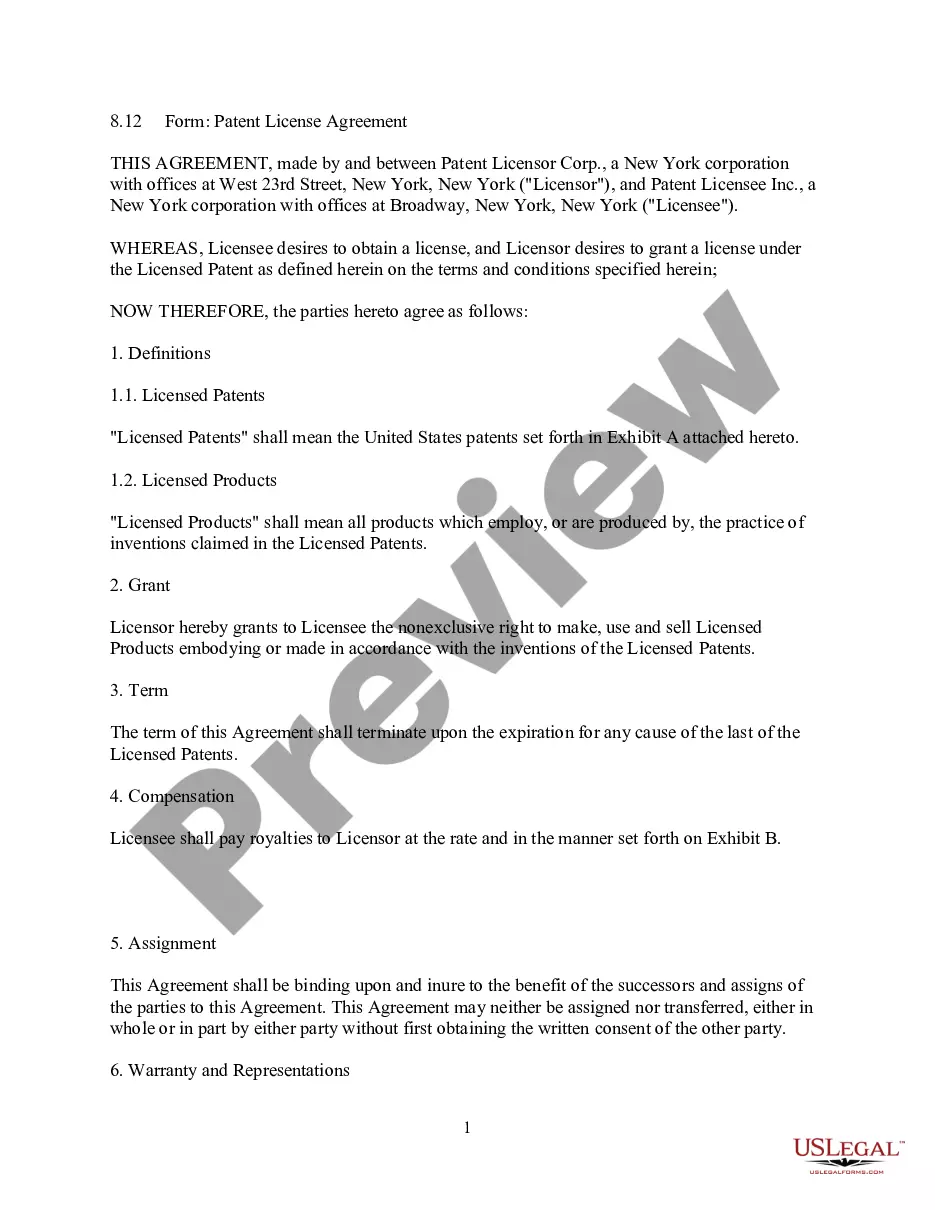
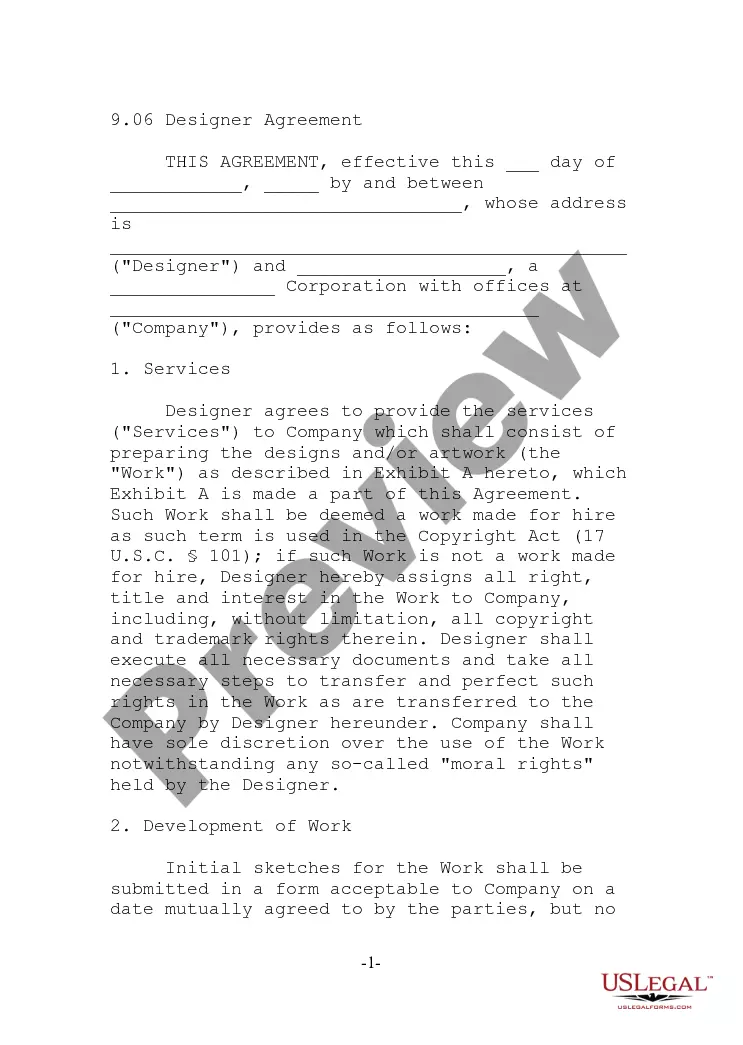
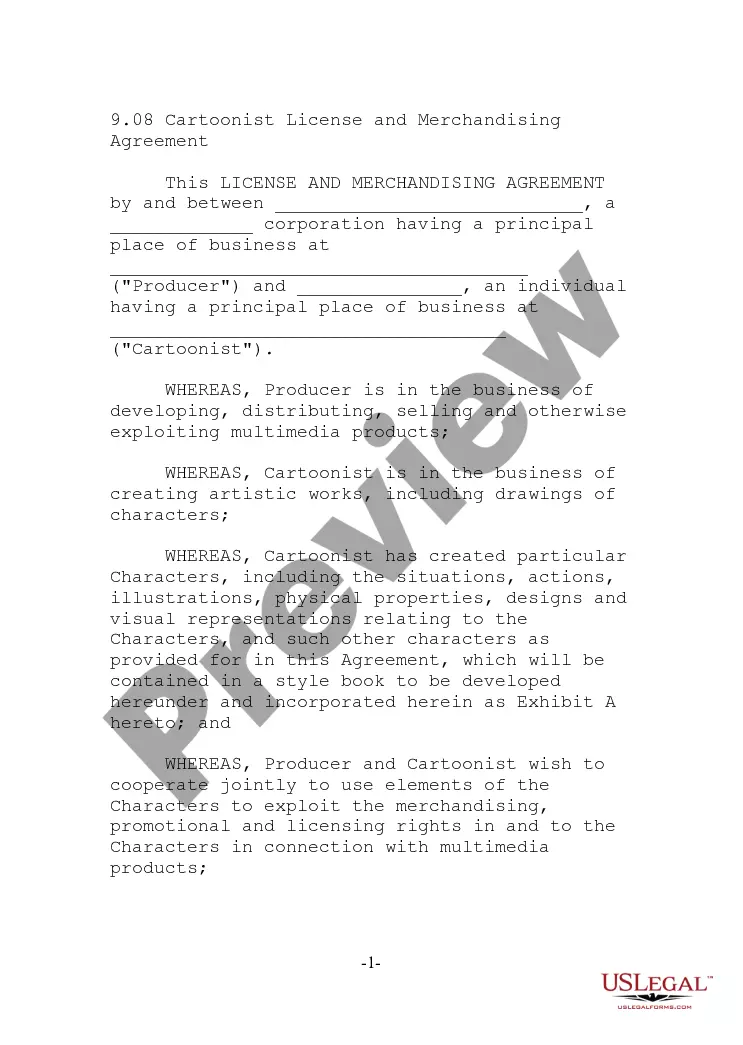
The Toy Designer License Agreement Annotated is a legal document that grants a toy company the rights to use, manufacture, and sell specific licensed products based on a property owned by another party, referred to as the Licensor. This agreement is comprehensive, clearly delineating the responsibilities, rights, and obligations of both parties involved. Unlike simpler licenses, this annotated version provides detailed explanations to assist users in fully understanding each clause and its implications.
Key parts of this document
- Identification of parties: Clearly states the Licensor and Licensee involved in the agreement.
- License grant: Specifies the rights granted to the Licensee regarding the use, manufacture, and sale of licensed products.
- Royalty payments: Details the structure and timing of royalty payments based on sales of licensed products.
- Quality control: Establishes requirements for the quality of products and the responsibilities of the Licensee.
- Termination rights: Outlines the conditions under which either party can terminate the agreement.
- Indemnification provisions: Addresses liability issues and responsibilities related to product safety and intellectual property rights.


Common use cases
This agreement should be used when a designer or company wants to license a specific toy property from another entity. It is essential when planning to manufacture or distribute toys that incorporate copyrighted designs or concepts, ensuring that all commercial activities are legally compliant and that the designer's rights are protected.
Who this form is for
- Licensors: Companies or individuals that own intellectual property and wish to license it to others.
- Licensees: Companies that desire to manufacture and sell products based on an existing intellectual property.
- Toy designers and developers: Individuals or entities involved in creating new toy products looking for a legal framework to protect their creative rights.
- Legal professionals: Attorneys assisting clients in navigating licensing agreements within the toy industry.
How to prepare this document
- Identify the parties involved: Enter the names and addresses of both the Licensor and Licensee at the beginning of the agreement.
- Define the licensed property: Clearly describe the property being licensed, referencing any attachments or schedules as needed.
- Specify the terms of the license: Indicate the rights granted to the Licensee, including manufacturing and sales capabilities.
- Outline the payment structure: Include details about royalty rates and any advances or minimum royalties required.
- Establish quality control measures: Document any standards that need to be met by the Licensee in producing the licensed products.
- Include termination clauses: Specify the conditions under which the agreement may be terminated by either party.
Notarization guidance
Notarization is not commonly needed for this form. However, certain documents or local rules may make it necessary. Our notarization service, powered by Notarize, allows you to finalize it securely online anytime, day or night.
Get your form ready online
Our built-in tools help you complete, sign, share, and store your documents in one place.
Make edits, fill in missing information, and update formatting in US Legal Forms—just like you would in MS Word.
Download a copy, print it, send it by email, or mail it via USPS—whatever works best for your next step.
Sign and collect signatures with our SignNow integration. Send to multiple recipients, set reminders, and more. Go Premium to unlock E-Sign.
If this form requires notarization, complete it online through a secure video call—no need to meet a notary in person or wait for an appointment.
We protect your documents and personal data by following strict security and privacy standards.

Make edits, fill in missing information, and update formatting in US Legal Forms—just like you would in MS Word.

Download a copy, print it, send it by email, or mail it via USPS—whatever works best for your next step.

Sign and collect signatures with our SignNow integration. Send to multiple recipients, set reminders, and more. Go Premium to unlock E-Sign.

If this form requires notarization, complete it online through a secure video call—no need to meet a notary in person or wait for an appointment.

We protect your documents and personal data by following strict security and privacy standards.
Common mistakes
- Failing to define the licensed property adequately, which can lead to misunderstandings later.
- Not clearly specifying royalty rates or payment schedules, resulting in disputes over compensation.
- Overlooking quality control requirements, which may affect product approval and licensing continuation.
- Neglecting to include comprehensive termination clauses, potentially complicating exits from the agreement.
Advantages of online completion
- Convenience: Easily download and fill out the form at any time from anywhere.
- Editability: Modify the agreement to fit specific needs without legal complexities.
- Access to legal expertise: Assurance that the form is drafted by licensed attorneys with the necessary legal knowledge.
Legal use & context
- This agreement is enforceable as a binding contract once signed by both parties.
- It is essential to adhere to the specific terms outlined to avoid breaches and ensure compliance.
- Understanding local laws related to licensing can provide additional benefits and protections.
Key takeaways
- The Toy Designer License Agreement Annotated protects both the Licensor and Licensee in the toy industry.
- Properly completing the form ensures clarity in rights, responsibilities, and financial obligations.
- Using this form can safeguard creative work and provide a clear legal framework for toy development and sales.
Looking for another form?
Form popularity
FAQ
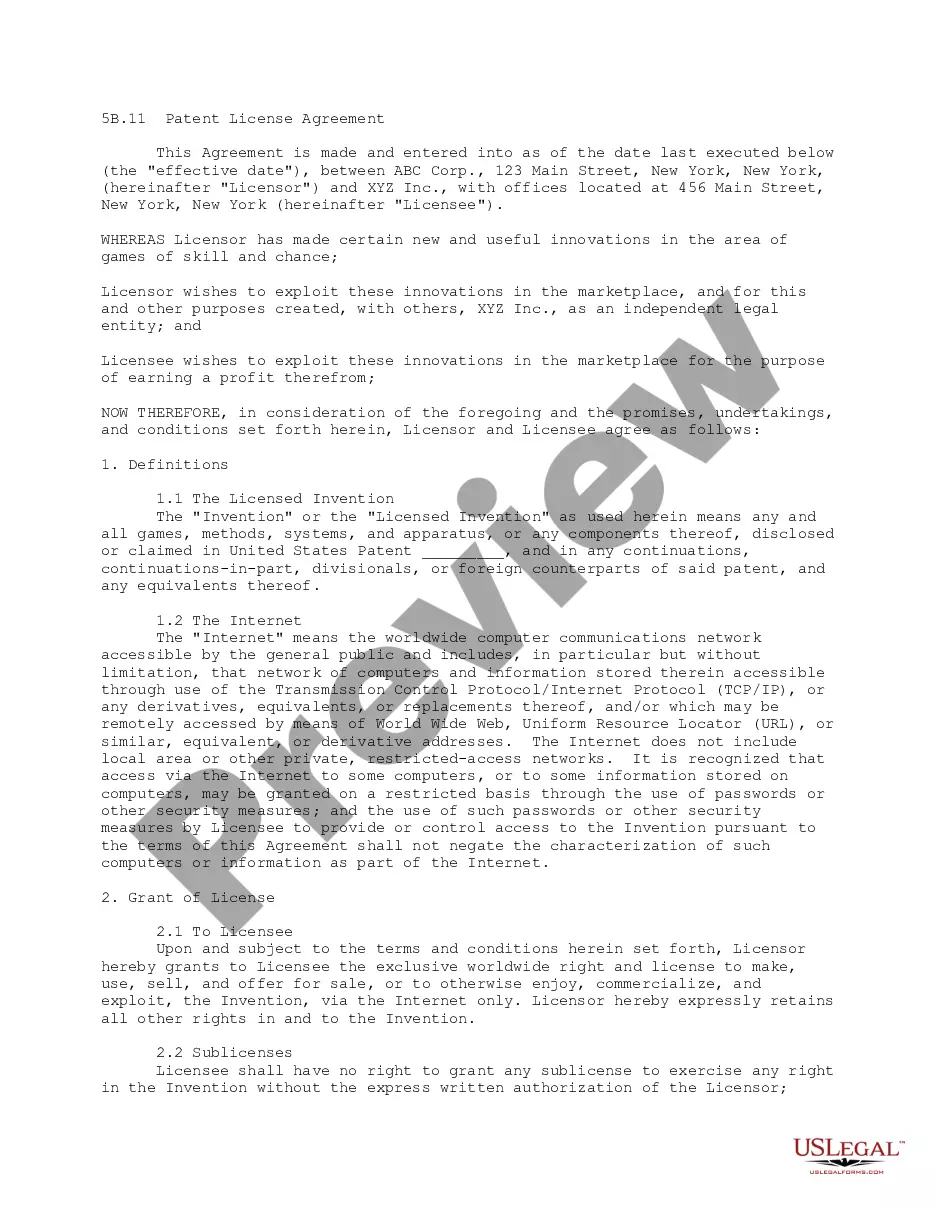
An example of a licensing agreement is a contract between the copyright holders of software and another company, allowing the latter to use the computer software for their daily business operations.
How much of a flat fee should you ask for? Like all deals, the range is wide. I know of some artists who charge as little as $100 per image for a flat fee license. In the greeting card industry, an artist might be paid a flat fee of $275 $500 for a card design.
Call up a company, speak with the receptionist. You don't even have to give your real name if it makes you nervous. Ask them how to pitch new art to them or if they manufacture their own products. Call up an artist and ask them who they are licensing with or how they liked working with a manufacturer you're unsure of.
It is a process of creating and managing contracts between the owner of a brand and a company or individual who wants to use the brand in association with a product, for an agreed period of time, within an agreed territory.An arrangement to license a brand requires a licensing agreement.
Art licensing is a way of making money wherein, as licensing expert Tara Reed puts it, you rent your artwork to companies to put on their products. An artist who chooses to license their art may not sell any originals at all, but simply license the images for use on commercial products.
What is a Licensing Agreement? A licensing agreement is a contract between two parties (the licensor and licensee) in which the licensor grants the licensee the right to use the brand name, trademark, patented technology, or ability to produce and sell goods owned by the licensor.
Exclusive or non-exclusive. In an exclusive license, the intellectual property holder is licensing the work only to one person, for that particular use/territory. Territory. Use. Attribution. Derivative works. Confidentiality. Time frame. Termination.
Do the research. Read books, websites and blogs such as MariaBrophy.com, Theabundantartist.com and ArtsyShark.com on how artists can license their art. Know your market. Make the pitch. Create a plan. Mock-up a catalog. Follow up. Use social media. License the work yourself.
How much you make in royalties or flat fees. The range of annual income for artists who pursue art licensing varies greatly some artists who make $1,000 per year, and some who make mid to high six figures.