Market Analysis Cost vs. Benefit
Understanding this form
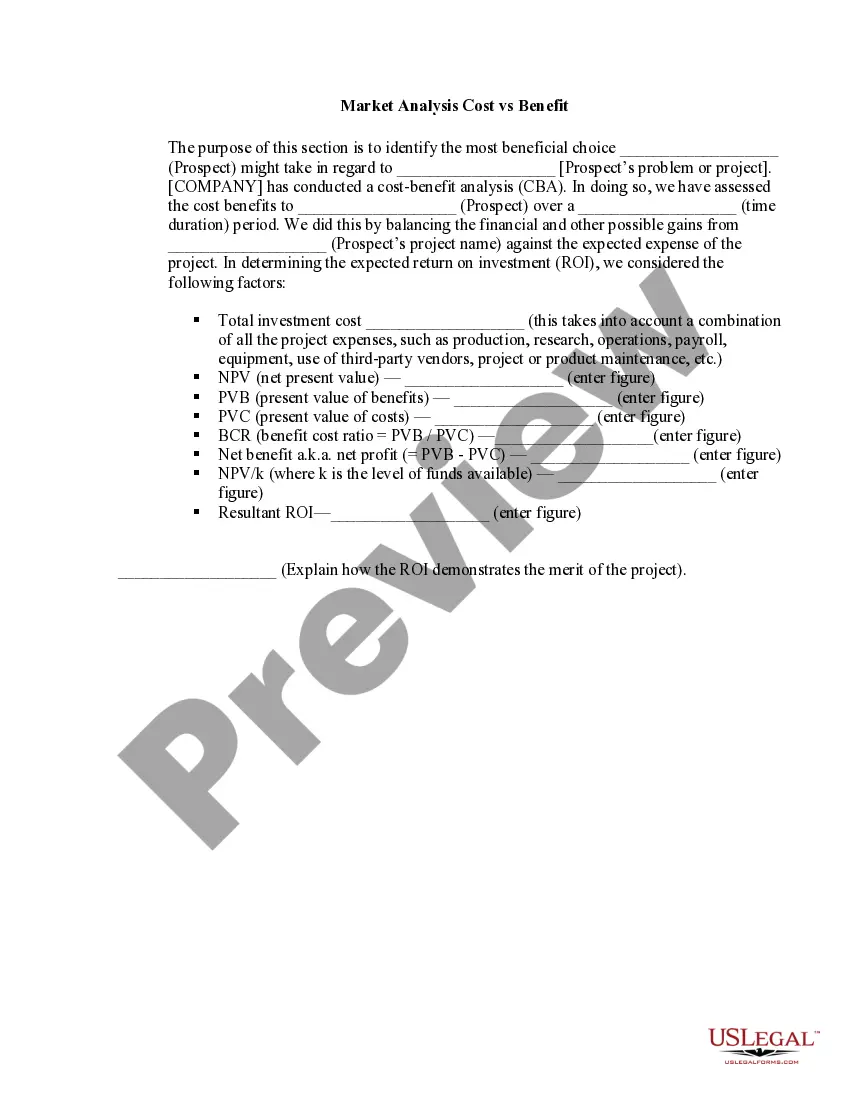
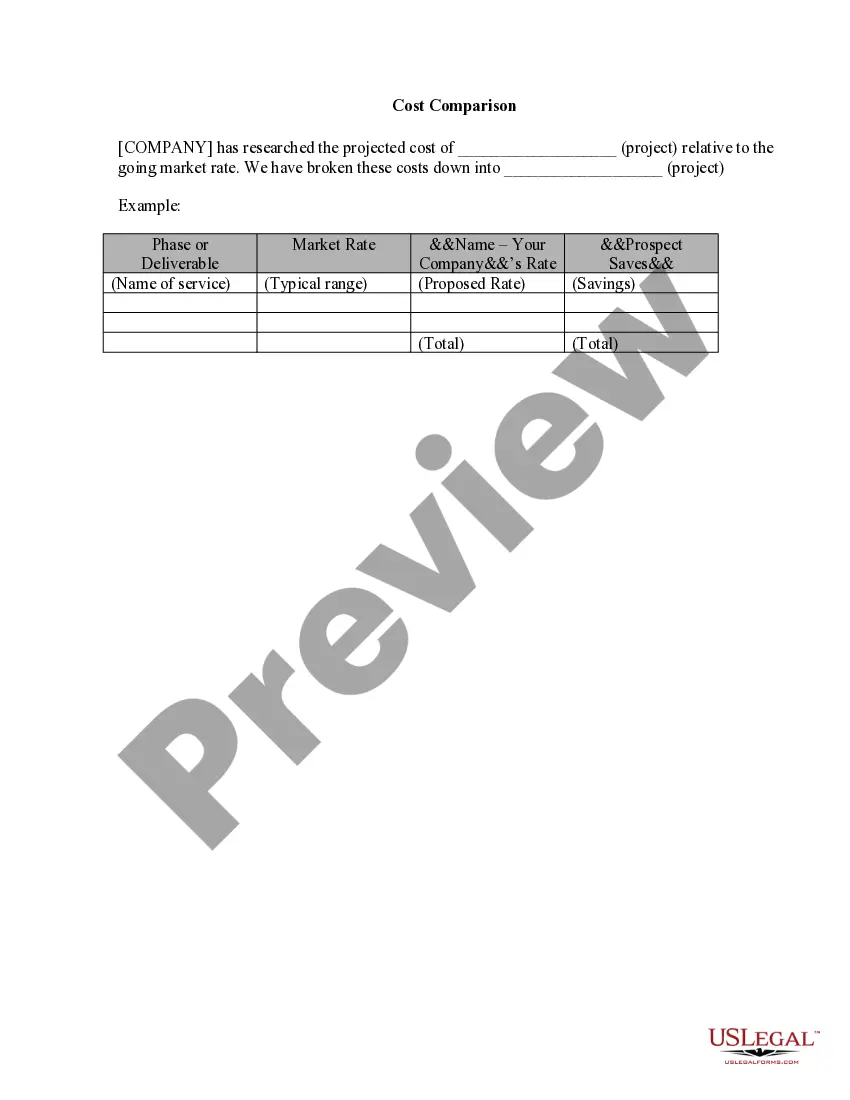
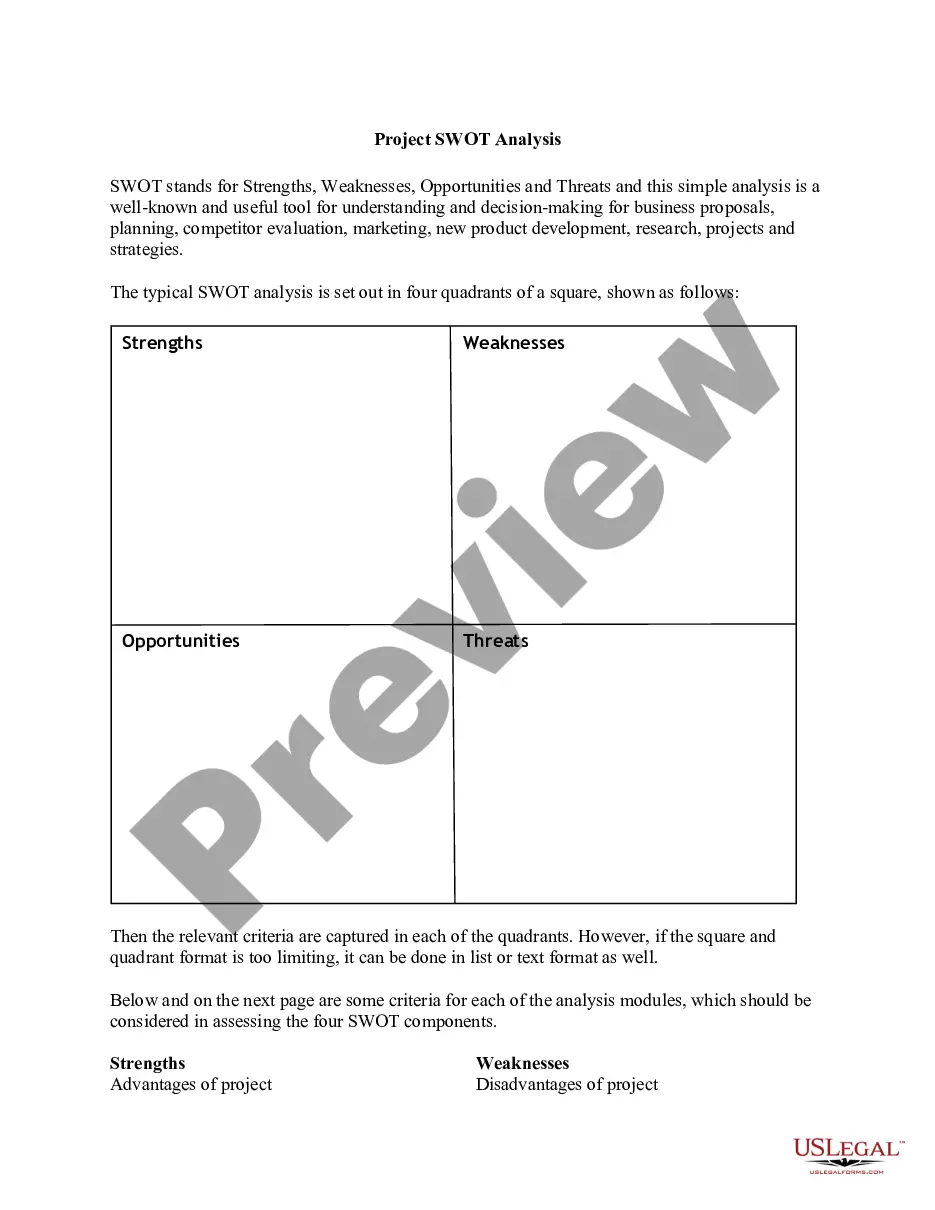
The Market Analysis Cost vs. Benefit form is designed to help businesses conduct a thorough cost-benefit analysis (CBA) related to a specific project or problem. This form allows users to evaluate potential financial gains against the expenses associated with a project, ultimately assessing the return on investment (ROI). It differs from similar forms by focusing specifically on the economic evaluation of projects, making it essential for strategic decision-making in businesses.
Form components explained
- Identification of the prospect (the entity or individual involved in the project).
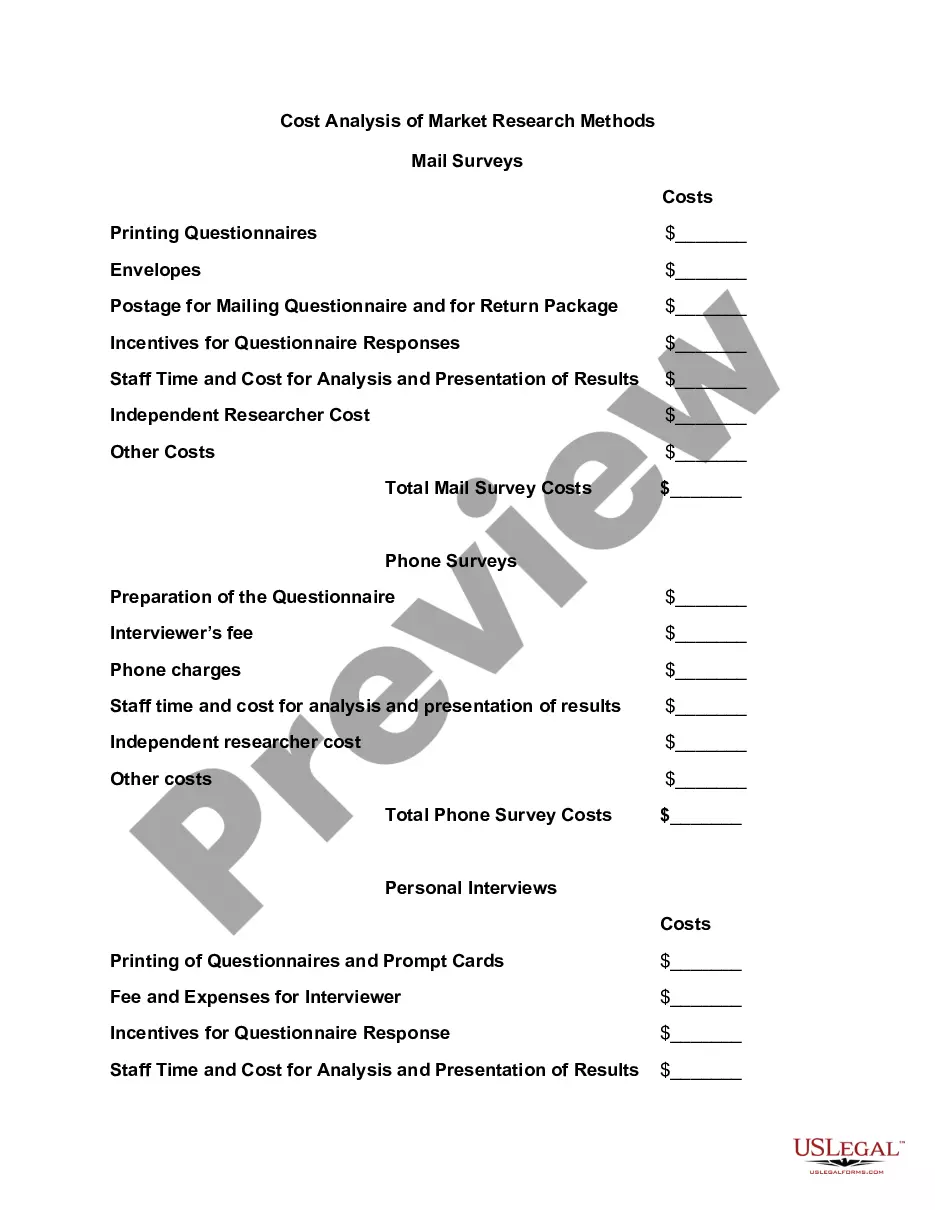
- Detailed analysis of the project including total investment costs.
- Calculations for net present value (NPV), present value of benefits (PVB), and present value of costs (PVC).
- Calculation of the benefit-cost ratio (BCR) to evaluate project feasibility.
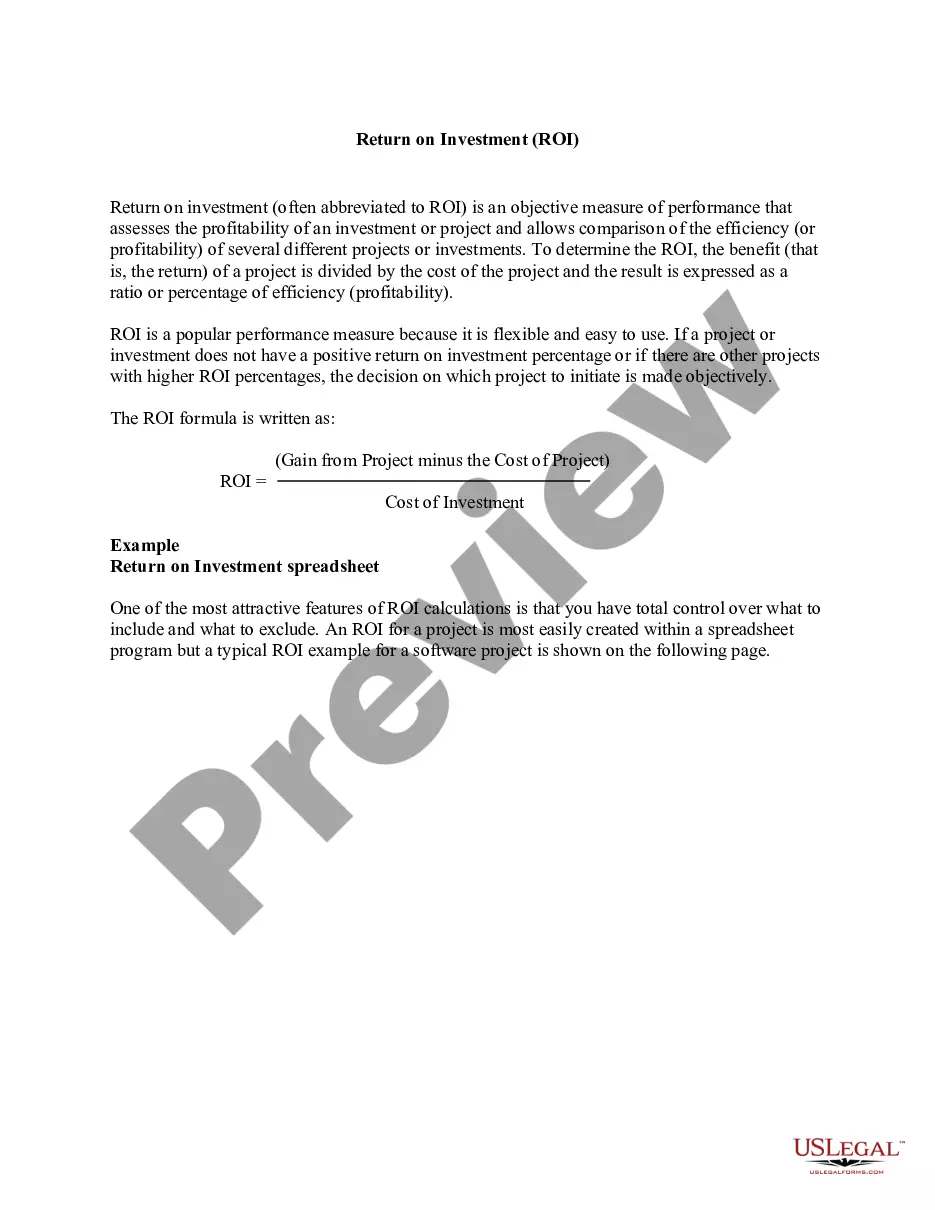
- Establishment of expected return on investment (ROI), demonstrating the merit of the project.
Situations where this form applies
This form is essential when a business needs to assess the financial viability of a new project or investment. Use it when considering large expenditures, conducting market research, or when a projectâs benefits and costs must be articulated clearly to stakeholders. It is particularly helpful during budgeting processes or when seeking approval for funding from investors or boards.
Who should use this form
- Business owners or entrepreneurs looking to evaluate potential investments.
- Financial analysts conducting market research.
- Project managers preparing feasibility studies for new initiatives.
- Consultants advising clients on project viability and financial impacts.
How to complete this form
- Identify the prospect and the project name clearly.
- List all expenses related to the project to determine the total investment cost.
- Calculate net present value (NPV), present value of benefits (PVB), and present value of costs (PVC).
- Determine the benefit-cost ratio (BCR) by dividing PVB by PVC.
- Calculate the expected return on investment (ROI) to highlight project benefits.
Is notarization required?
This form does not typically require notarization unless specified by local law. It is advisable to check with local regulations to ensure compliance.
Get your form ready online
Our built-in tools help you complete, sign, share, and store your documents in one place.
Make edits, fill in missing information, and update formatting in US Legal Forms—just like you would in MS Word.
Download a copy, print it, send it by email, or mail it via USPS—whatever works best for your next step.
Sign and collect signatures with our SignNow integration. Send to multiple recipients, set reminders, and more. Go Premium to unlock E-Sign.
If this form requires notarization, complete it online through a secure video call—no need to meet a notary in person or wait for an appointment.
We protect your documents and personal data by following strict security and privacy standards.

Make edits, fill in missing information, and update formatting in US Legal Forms—just like you would in MS Word.

Download a copy, print it, send it by email, or mail it via USPS—whatever works best for your next step.

Sign and collect signatures with our SignNow integration. Send to multiple recipients, set reminders, and more. Go Premium to unlock E-Sign.

If this form requires notarization, complete it online through a secure video call—no need to meet a notary in person or wait for an appointment.

We protect your documents and personal data by following strict security and privacy standards.
Avoid these common issues
- Failing to include all relevant costs in the total investment calculation.
- Neglecting to account for intangibles, such as time or labor costs.
- Using inaccurate or outdated data in the calculation of NPV, PVB, and PVC.
- Overlooking the significance of the benefit-cost ratio in decision-making.
Benefits of using this form online
- Convenient access to customizable templates tailored to your projects.
- Easy editing capabilities to accommodate unique project parameters.
- Reliable framework crafted by licensed attorneys to ensure compliance and effectiveness.
Legal use & context
- This form is designed to provide a systematic approach to evaluating project costs and benefits.
- Proper documentation increases accountability in financial decision-making.
- While this form is generally accepted, users should consult with legal professionals to confirm its use in specific situations.
Key takeaways
- The Market Analysis Cost vs. Benefit form aids in determining the financial viability of projects.
- Key financial metrics help simplify complex decision-making processes.
- The form is highly useful for business owners, financial analysts, and project managers alike.
- It is applicable in multiple states but users should still validate any local requirements.
Looking for another form?



Form popularity
FAQ
For example, if our campaign spends $6,000, and we acquire 8.5 new customers for every $100 spent on marketing, we can expect approximately 85 new customers each month (assuming we spend $1,000/month).
The cost-benefit analysis assigns monetary values to both the benefits and the costs of programs (or policies or projects), whereas the cost-effectiveness analysis assigns monetary values only to the costs, which usually proves easier than assigning monetary values to the benefits.
benefit analysis is a systematic process that businesses use to analyze which decisions to make and which to forgo. The costbenefit analyst sums the potential rewards expected from a situation or action and then subtracts the total costs associated with taking that action.
How to do a cost-benefit analysis Step 1: Understand the cost of maintaining the status quo.Step 2: Identify costs.Step 3: Identify benefits.Step 4: Assign a monetary value to the costs and benefits.Step 5: Create a timeline for expected costs and revenue.Step 6: Compare costs and benefits.
Steps of a Cost-Benefit Analysis Establish a Framework for Your Analysis.Identify Your Costs and Benefits.Assign a Dollar Amount or Value to Each Cost and Benefit.Tally the Total Value of Benefits and Costs and Compare.
How to do a cost-benefit analysis Step 1: Understand the cost of maintaining the status quo.Step 2: Identify costs.Step 3: Identify benefits.Step 4: Assign a monetary value to the costs and benefits.Step 5: Create a timeline for expected costs and revenue.Step 6: Compare costs and benefits.
All choices in life involve benefits and costs. A benefit is what is gained from a decision. A cost is what is given up or lost after a decision is made. The benefits and costs can be amounts of money or they can be things like how you will feel about a decision.
benefit analysis is a systematic process that businesses use to analyze which decisions to make and which to forgo. The costbenefit analyst sums the potential rewards expected from a situation or action and then subtracts the total costs associated with taking that action.