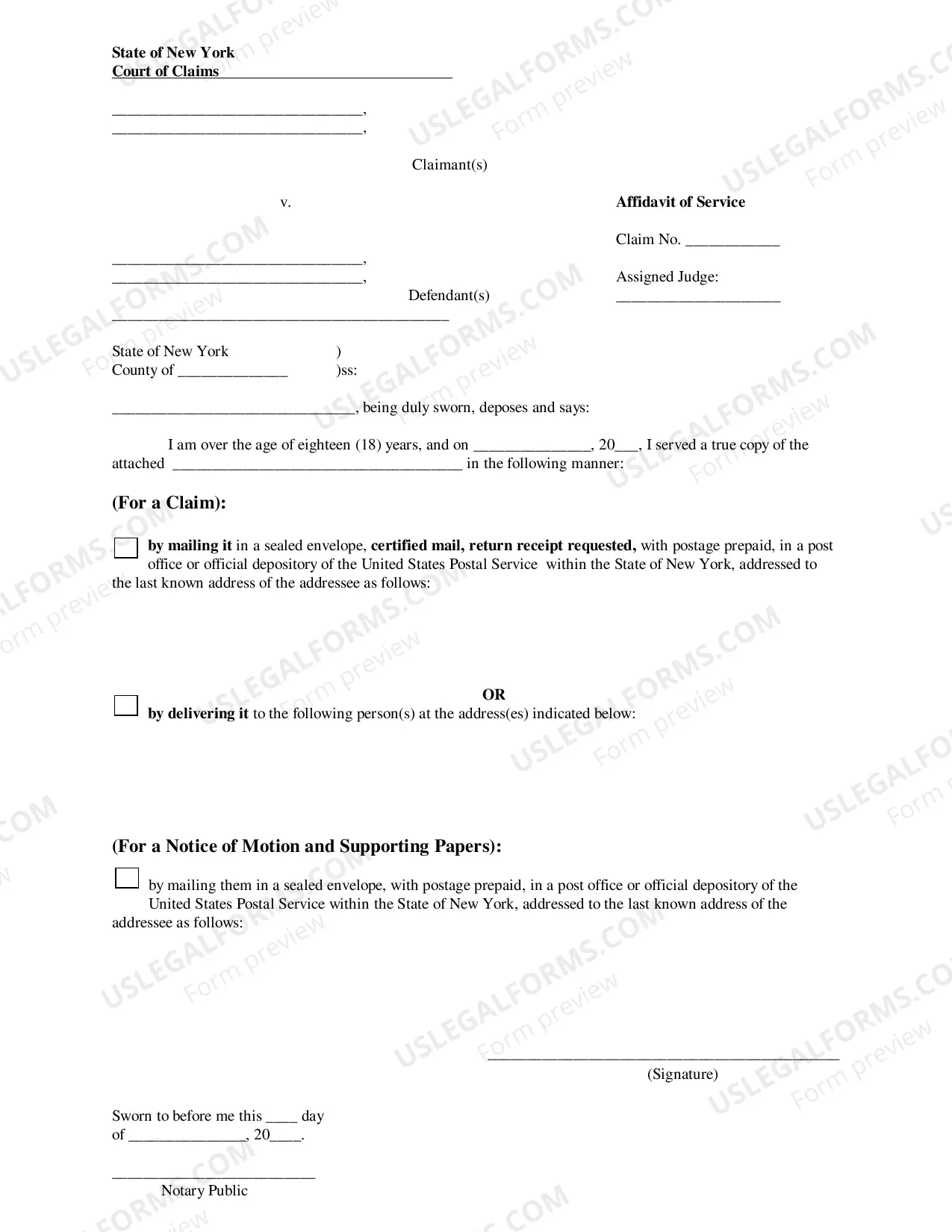
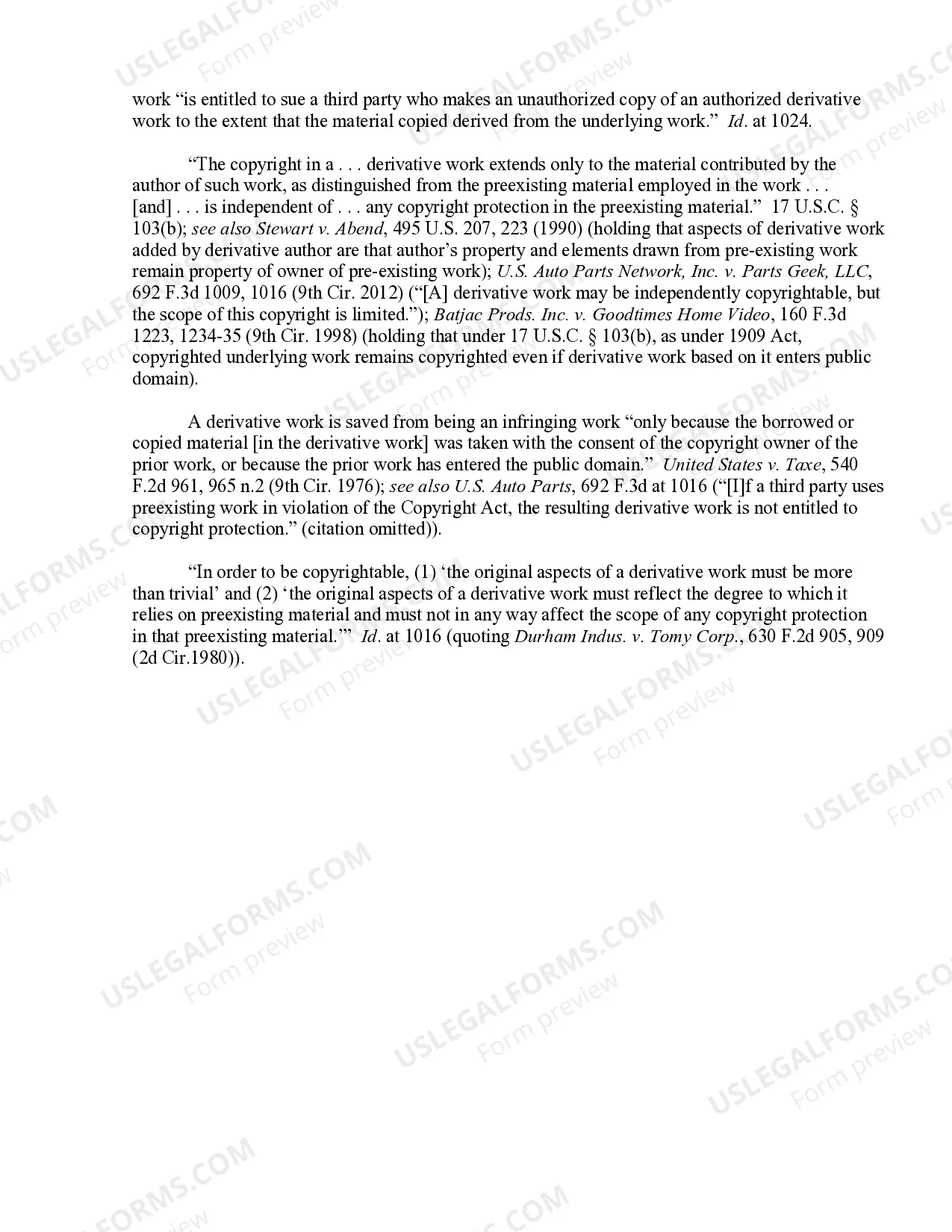
17.15 Copyright Interests-Derivative Work
Is notarization required?
In most cases, this form does not require notarization. However, some jurisdictions or signing circumstances might. US Legal Forms offers online notarization powered by Notarize, accessible 24/7 for a quick, remote process.
Get your form ready online
Our built-in tools help you complete, sign, share, and store your documents in one place.
Make edits, fill in missing information, and update formatting in US Legal Forms—just like you would in MS Word.
Download a copy, print it, send it by email, or mail it via USPS—whatever works best for your next step.
Sign and collect signatures with our SignNow integration. Send to multiple recipients, set reminders, and more. Go Premium to unlock E-Sign.
If this form requires notarization, complete it online through a secure video call—no need to meet a notary in person or wait for an appointment.
We protect your documents and personal data by following strict security and privacy standards.

Make edits, fill in missing information, and update formatting in US Legal Forms—just like you would in MS Word.

Download a copy, print it, send it by email, or mail it via USPS—whatever works best for your next step.

Sign and collect signatures with our SignNow integration. Send to multiple recipients, set reminders, and more. Go Premium to unlock E-Sign.

If this form requires notarization, complete it online through a secure video call—no need to meet a notary in person or wait for an appointment.

We protect your documents and personal data by following strict security and privacy standards.
Looking for another form?

Form popularity
FAQ
The defense that the derivative work is transformative falls under the general category of ?fair use? of copyrighted works. There are other methods in which a derivative work might be considered ?fair use.? These include creation for the purposes of scholarship, education, parody, news reporting and more.
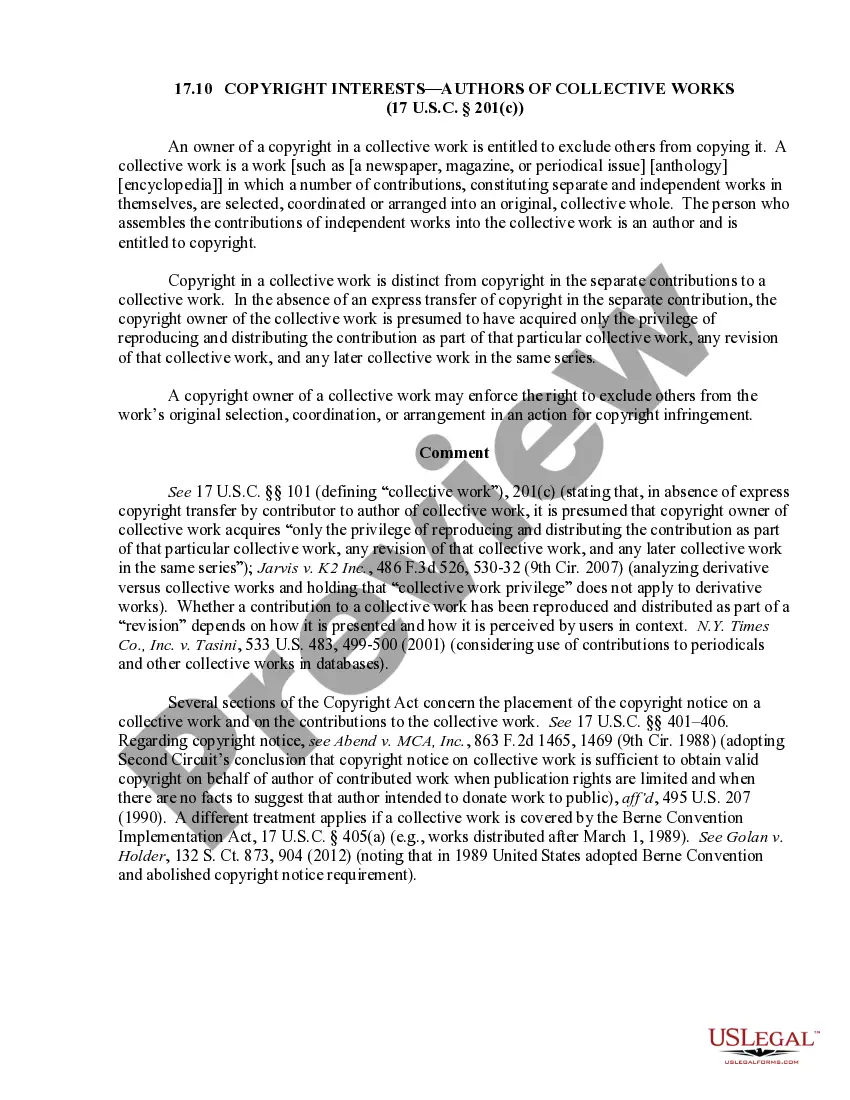
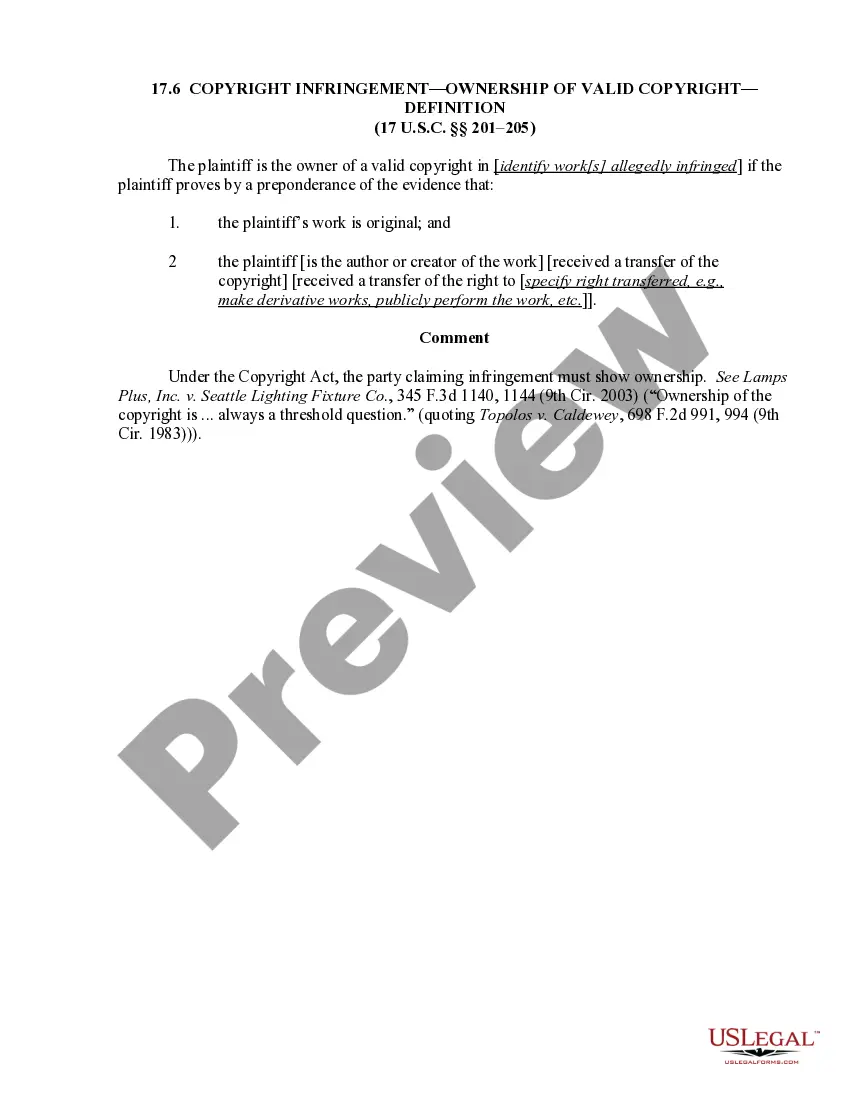
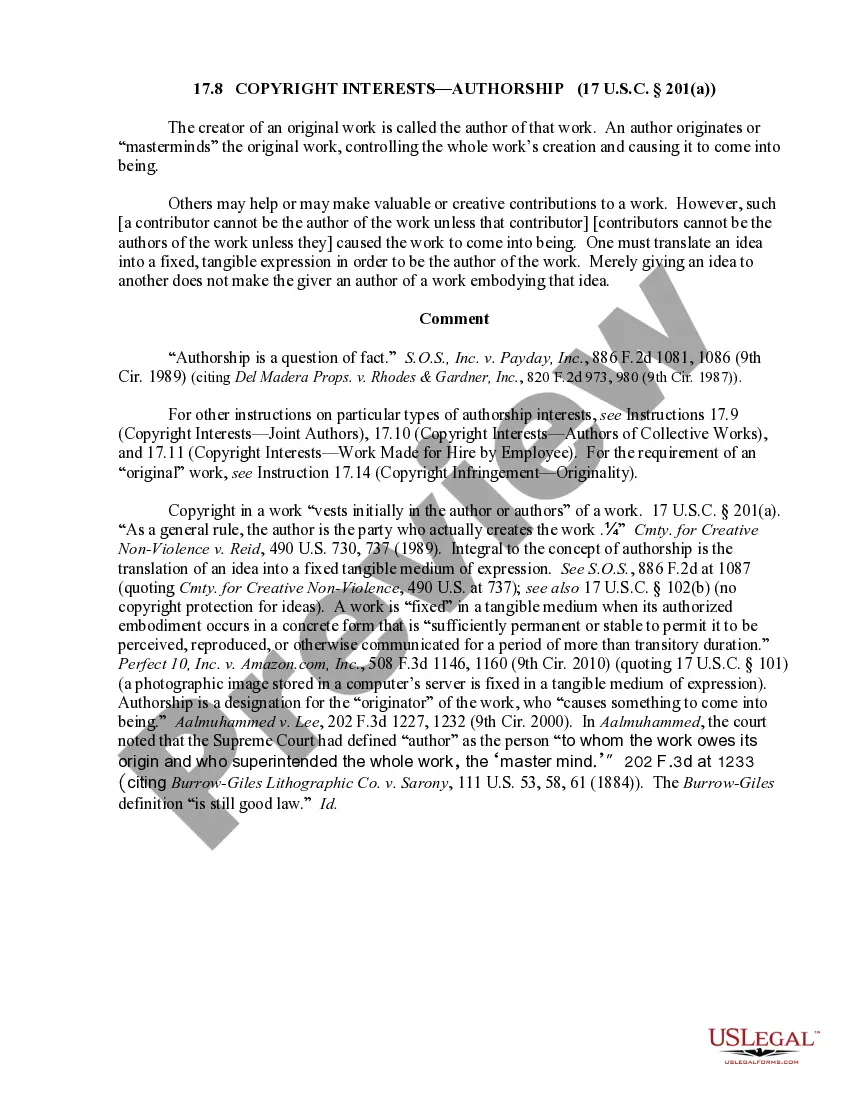
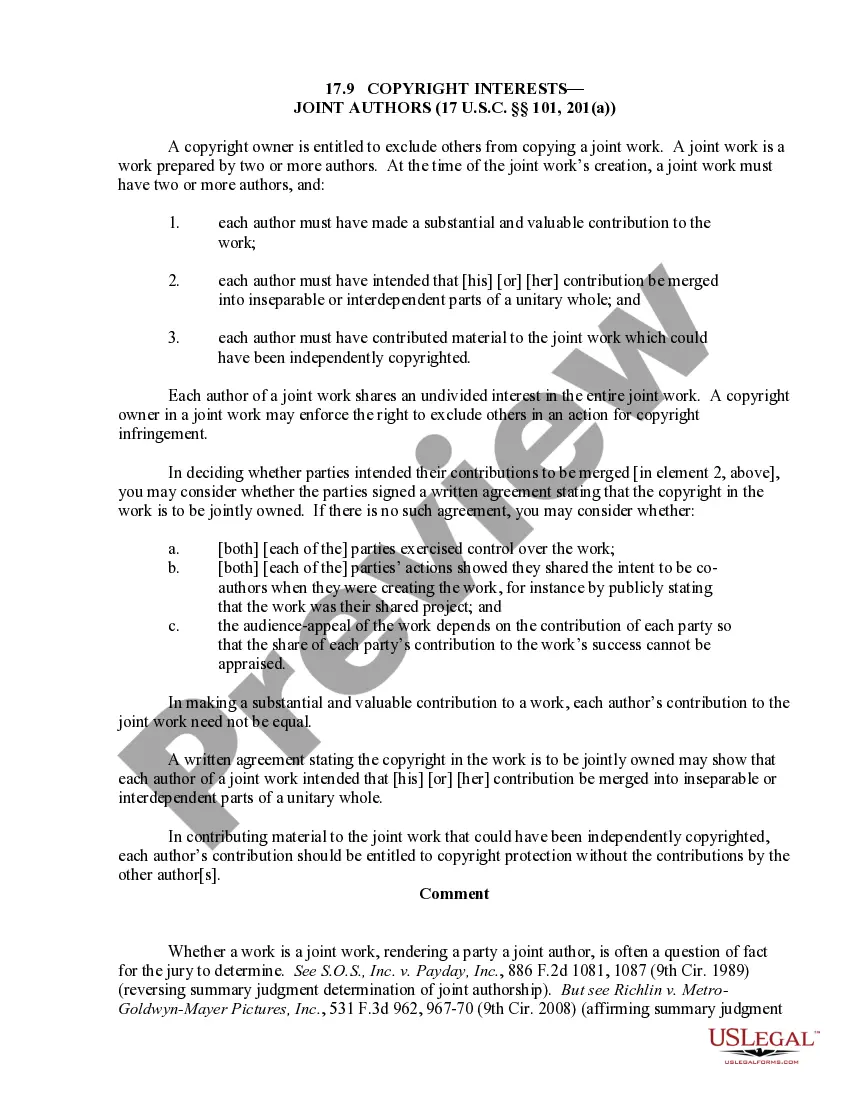
A derivative work is a work based on or derived from one or more already exist- ing works. Common derivative works include translations, musical arrange- ments, motion picture versions of literary material or plays, art reproductions, abridgments, and condensations of preexisting works.
Merely borrowing the ideas expressed by the prior work (creating a work ?inspired by? it) would not create a derivative work. Ideas are not copyrightable. A work is not derivative unless it has been substantially copied from a prior work's expression.
A "derivative work" is a work based upon one or more preexisting works, such as a translation, musical arrangement, dramatization, fictionalization, motion picture version, sound recording, art reproduction, abridgment, condensation, or any other form in which a work may be recast, transformed, or adapted.
A derivative work is a work based on or derived from one or more already exist- ing works. Common derivative works include translations, musical arrange- ments, motion picture versions of literary material or plays, art reproductions, abridgments, and condensations of preexisting works.
Derivative Work (basic definition) A derivative work takes an existing work and adapts it in some way in order to create a new work.
A "derivative work" is a work based upon one or more preexisting works, such as a translation, musical arrangement, dramatization, fictionalization, motion picture version, sound recording, art reproduction, abridgment, condensation, or any other form in which a work may be recast, transformed, or adapted.
There are many examples of derivative works, among them: a new edition of a textbook, which includes revisions and additions. a drawing based upon a photograph. a new musical score, based closely on a previous musical score, or.