Merchandising License Agreement
About this form
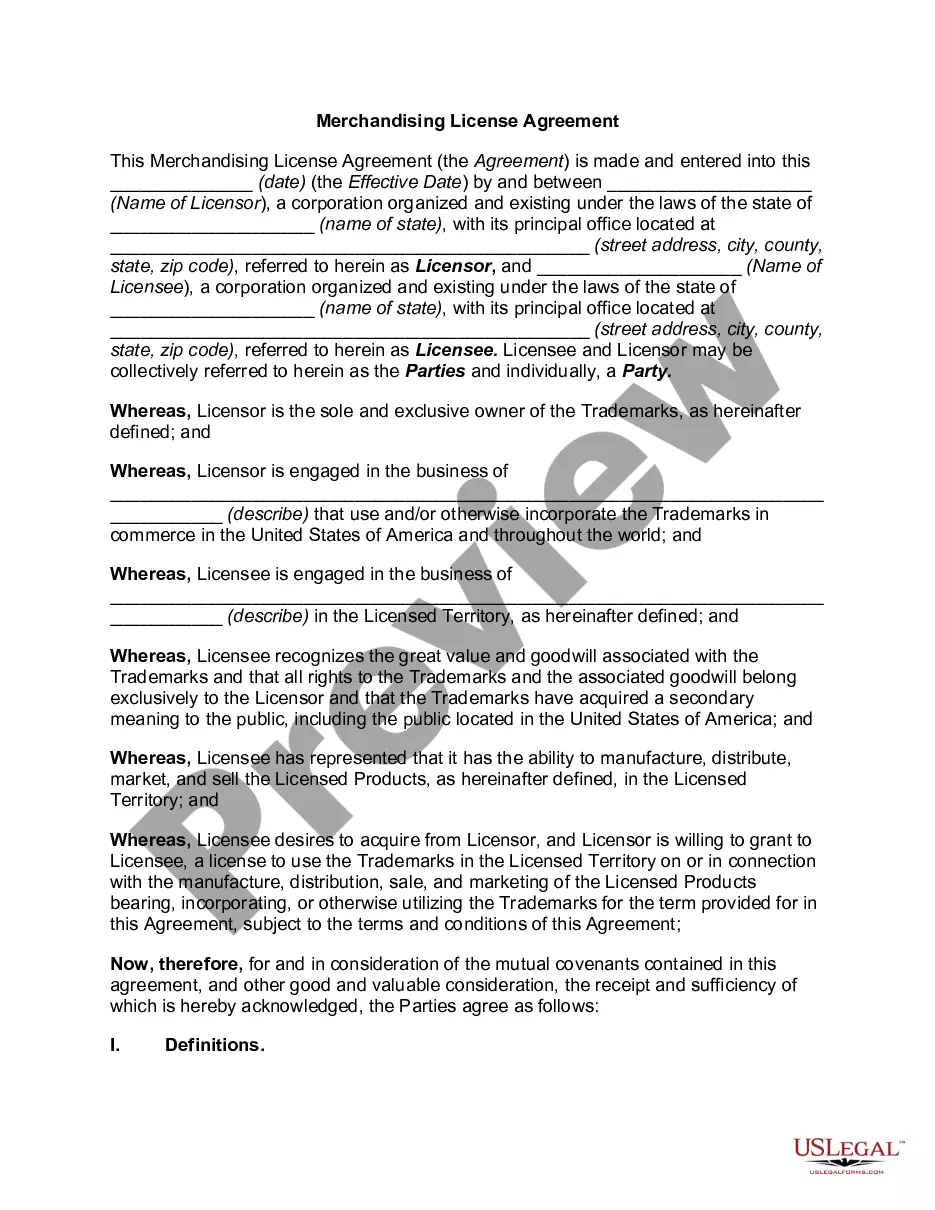
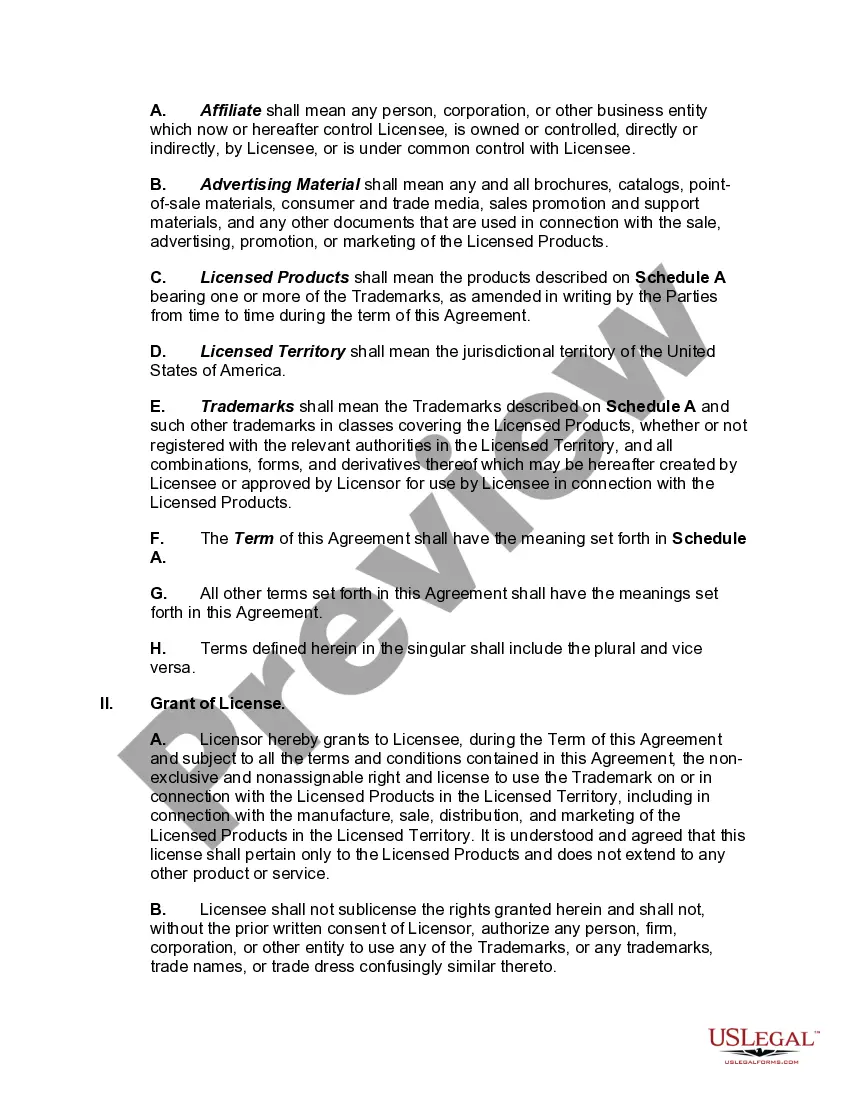
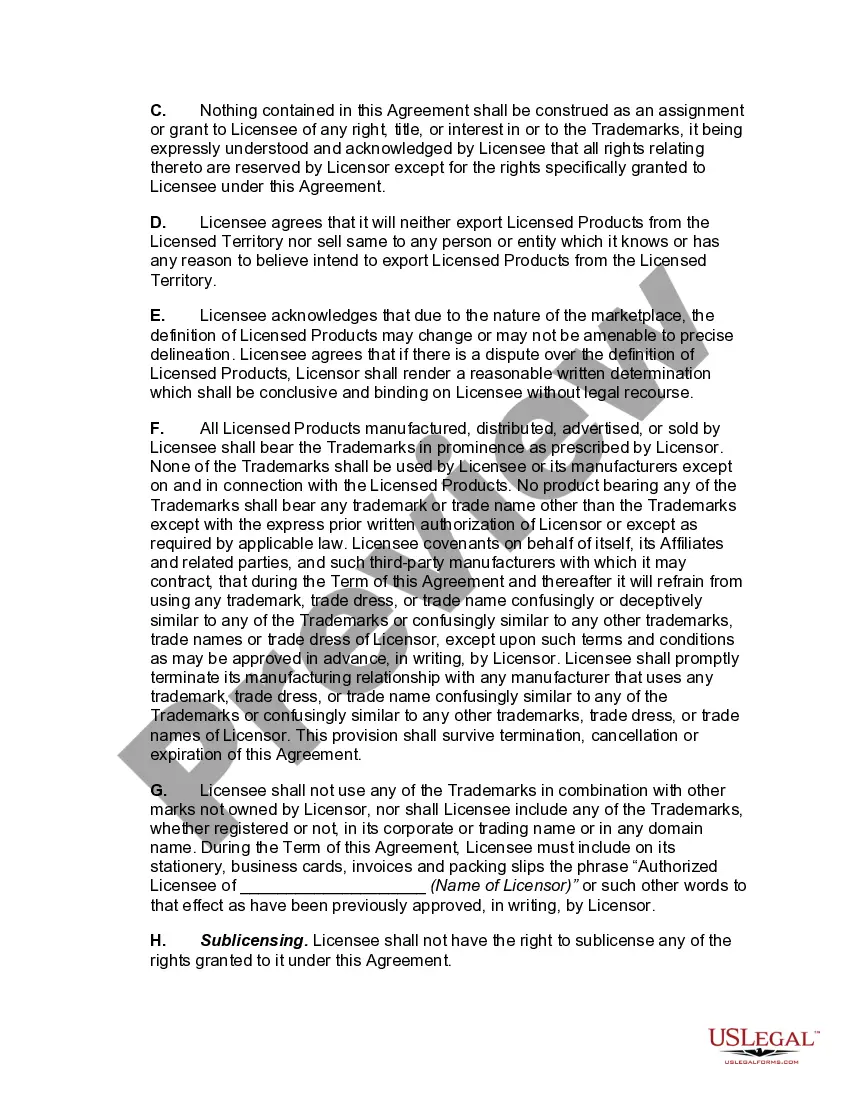
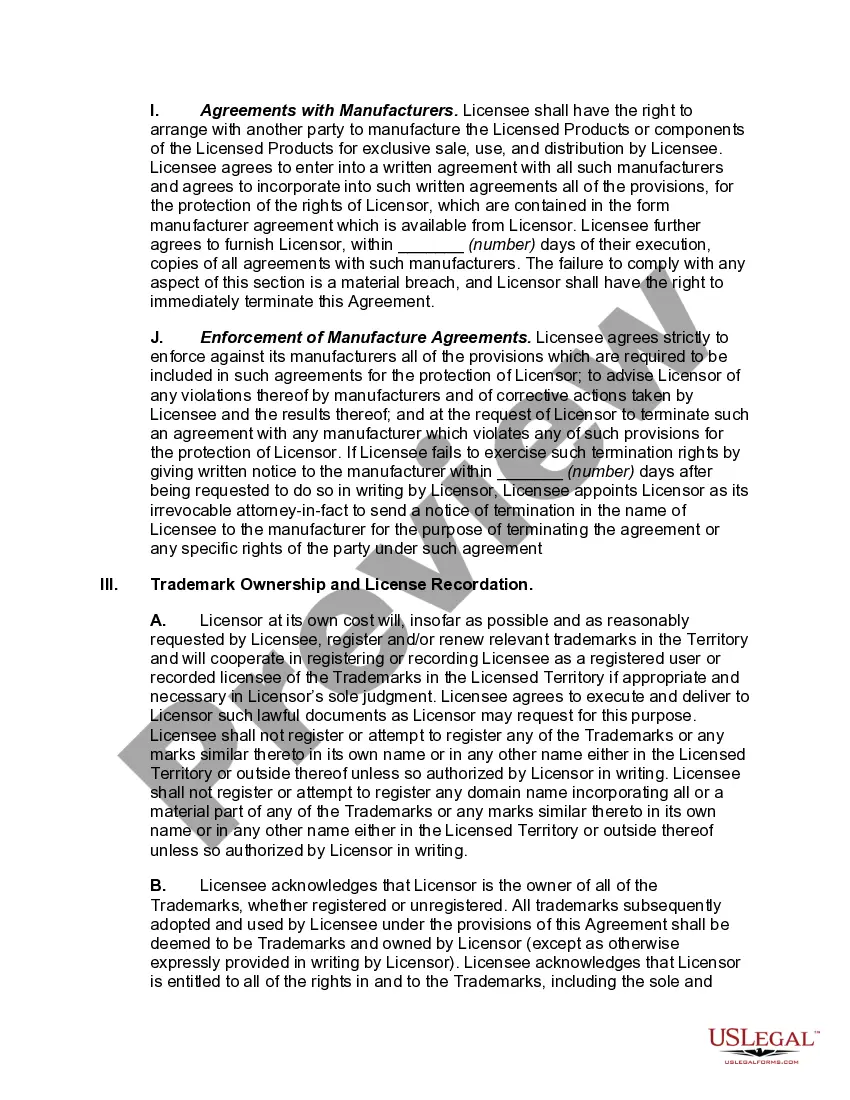
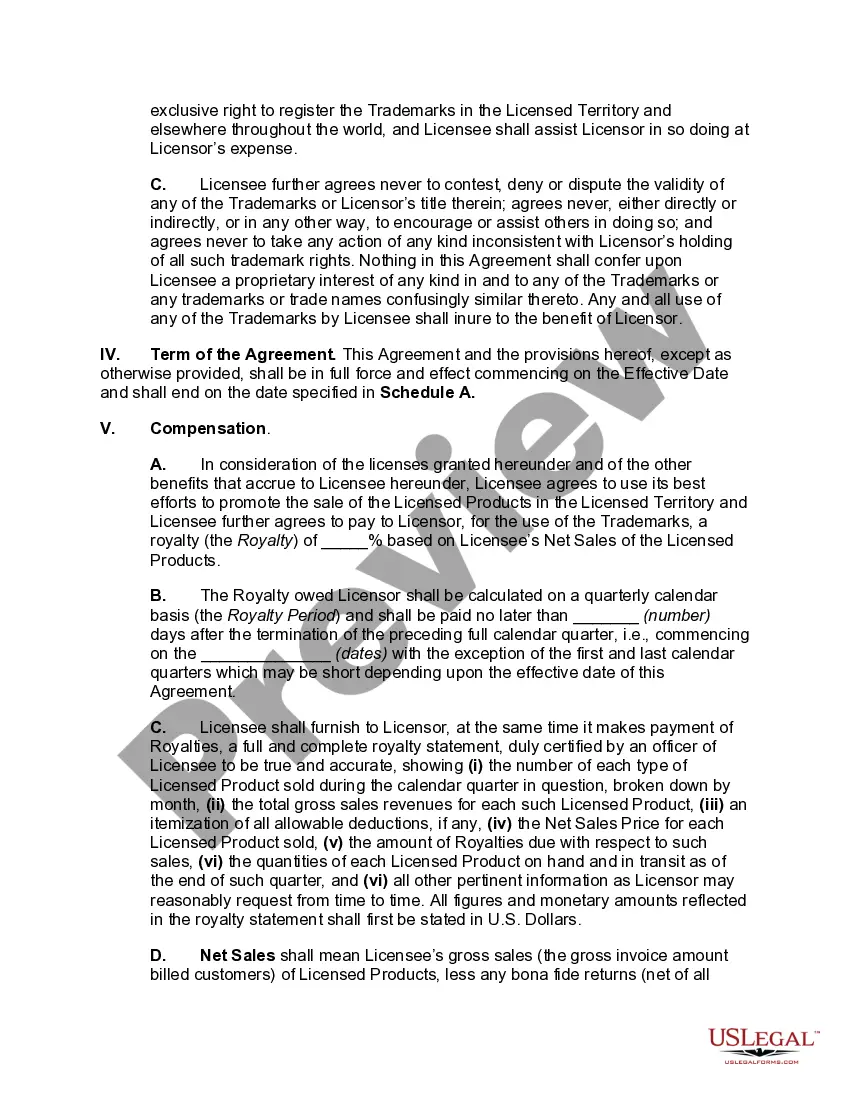
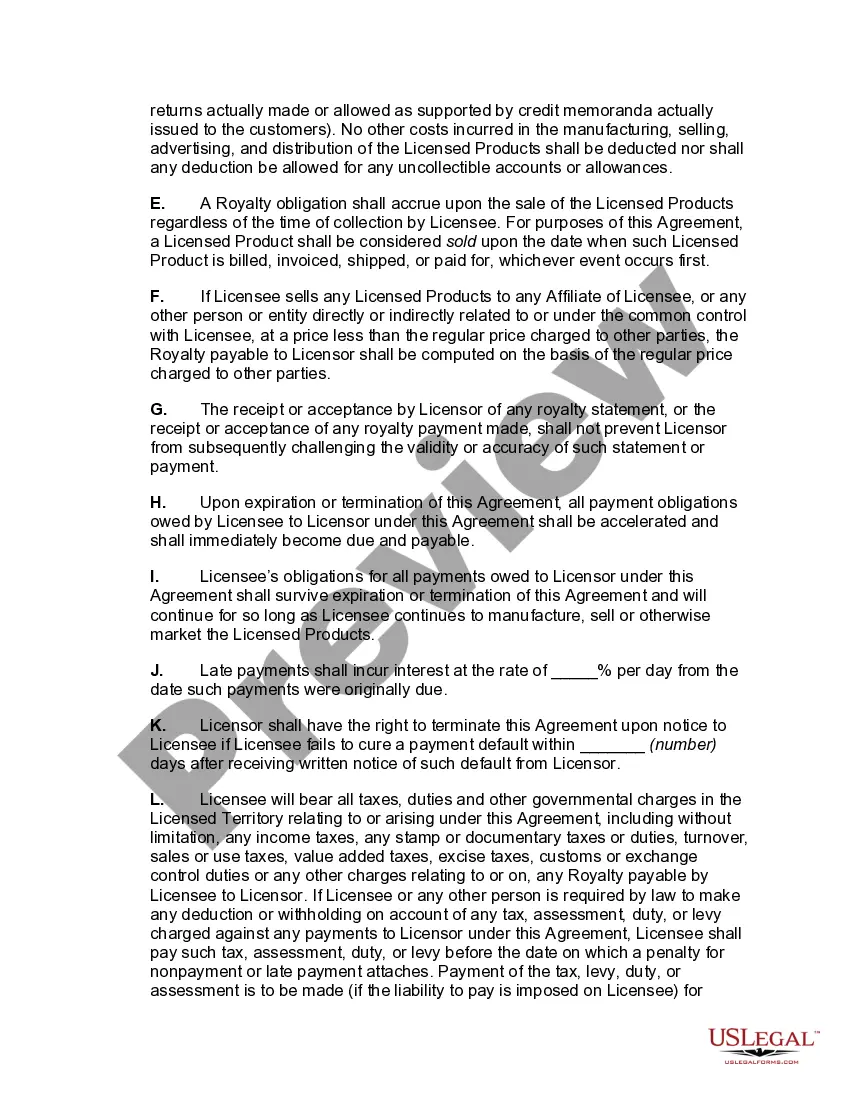
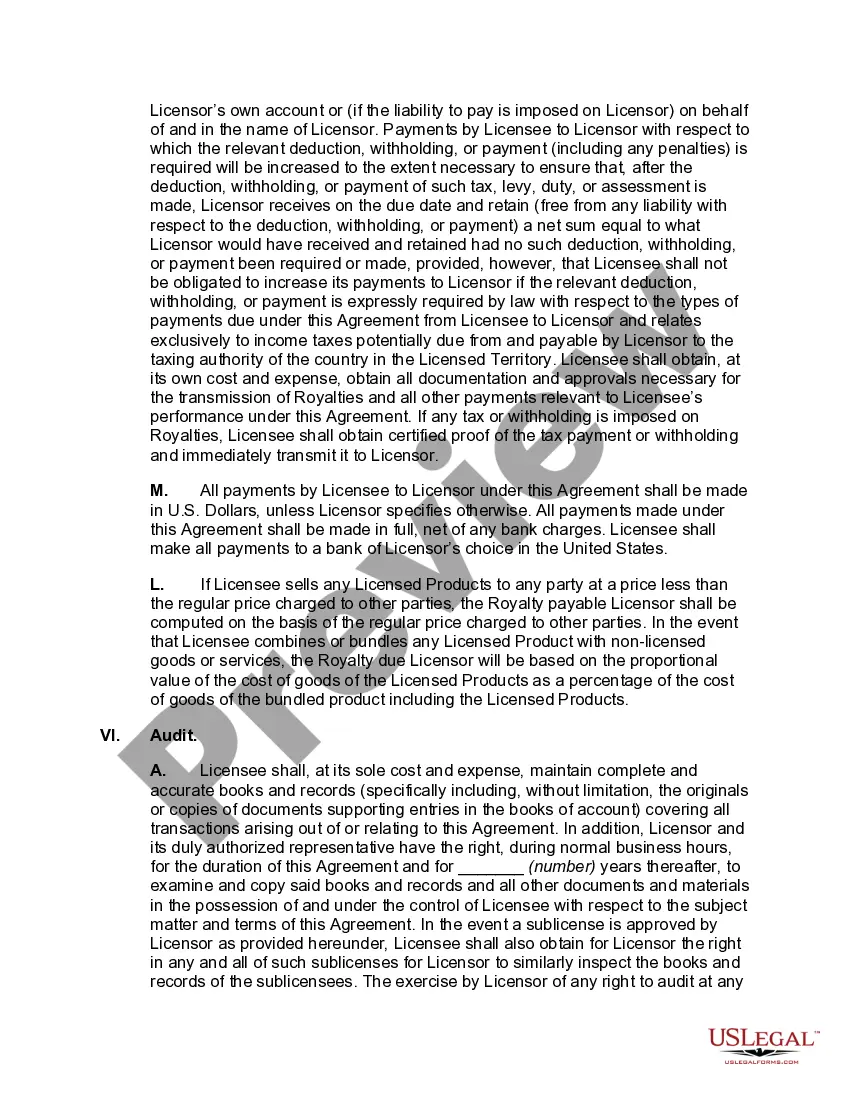
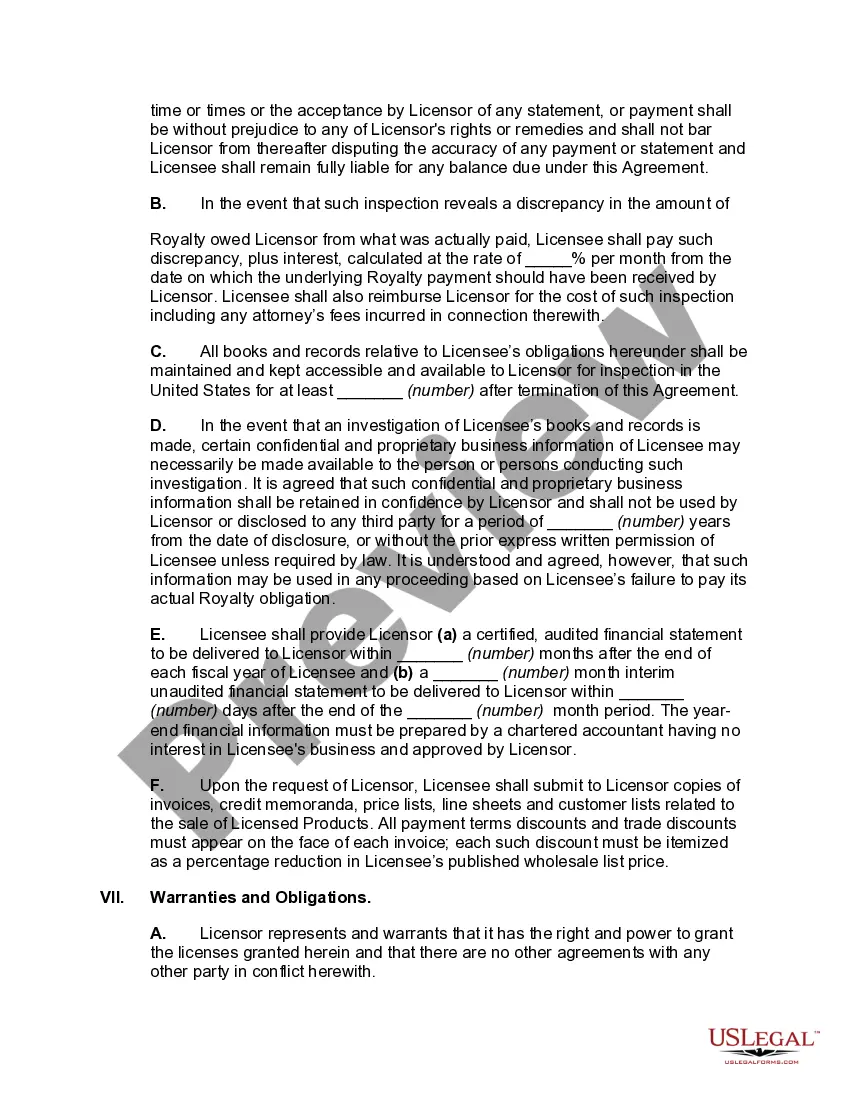
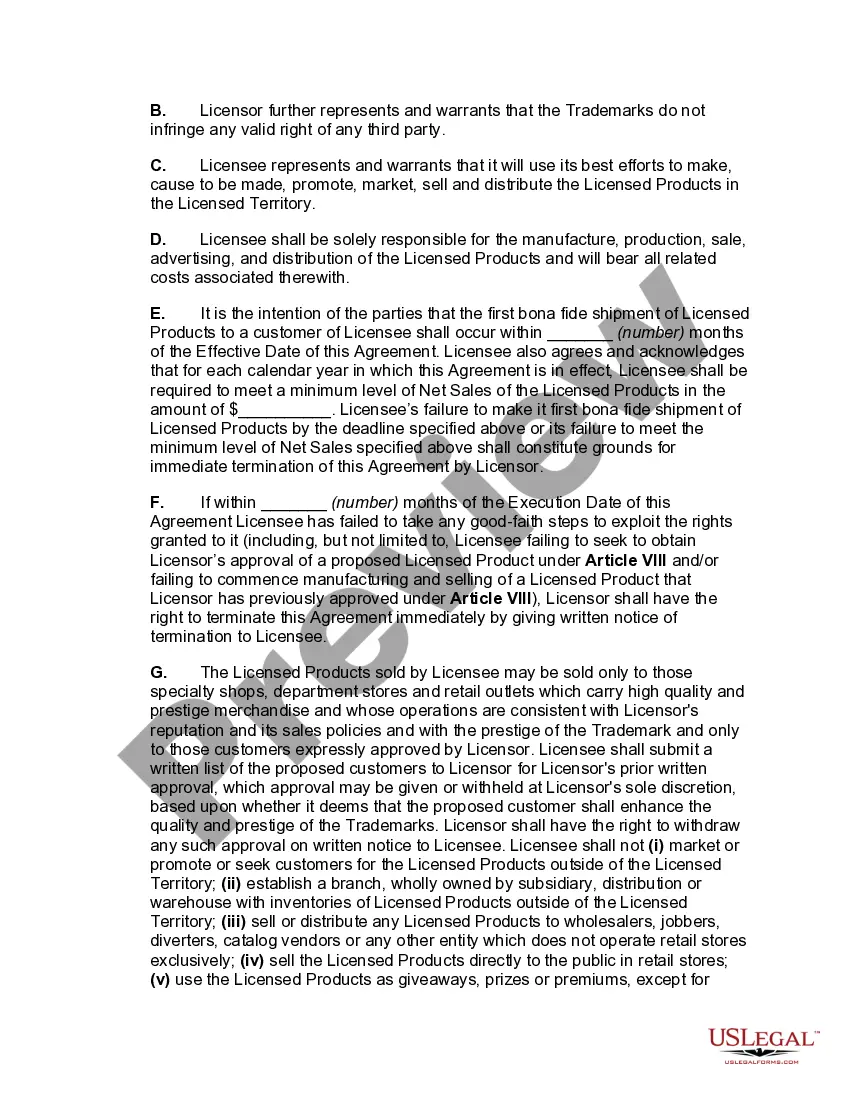
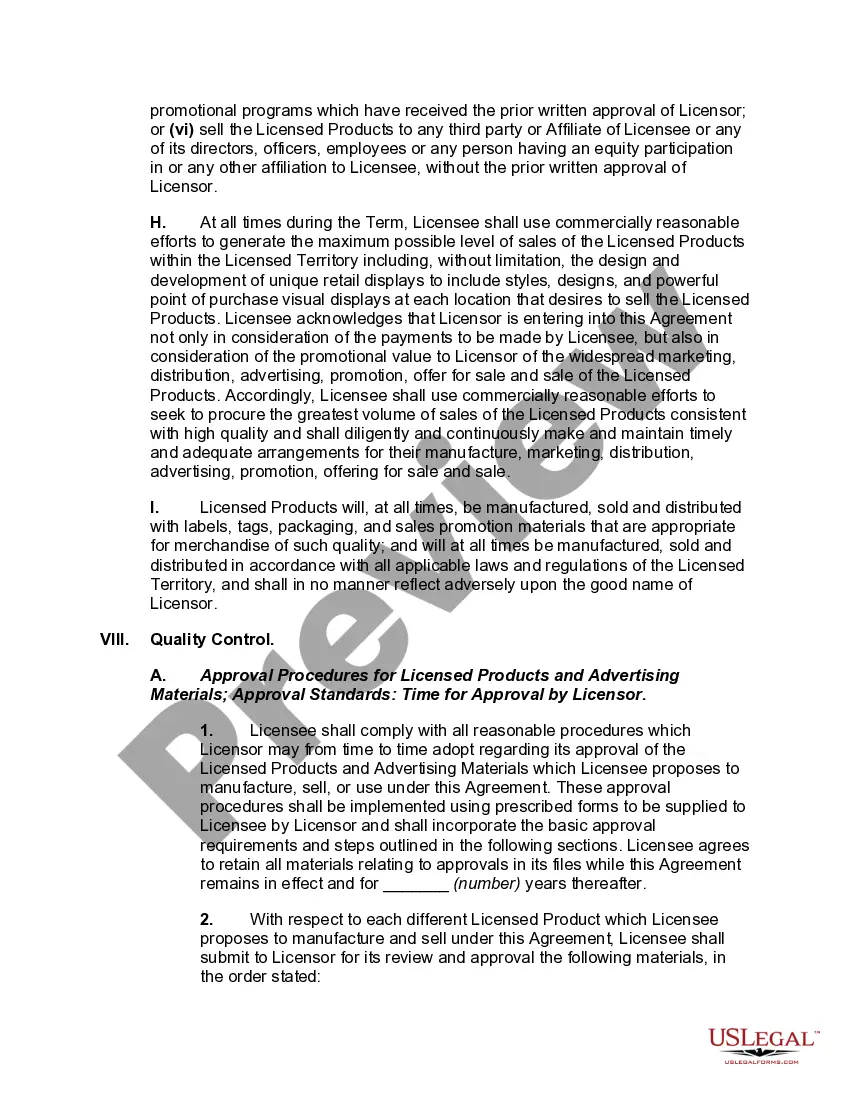
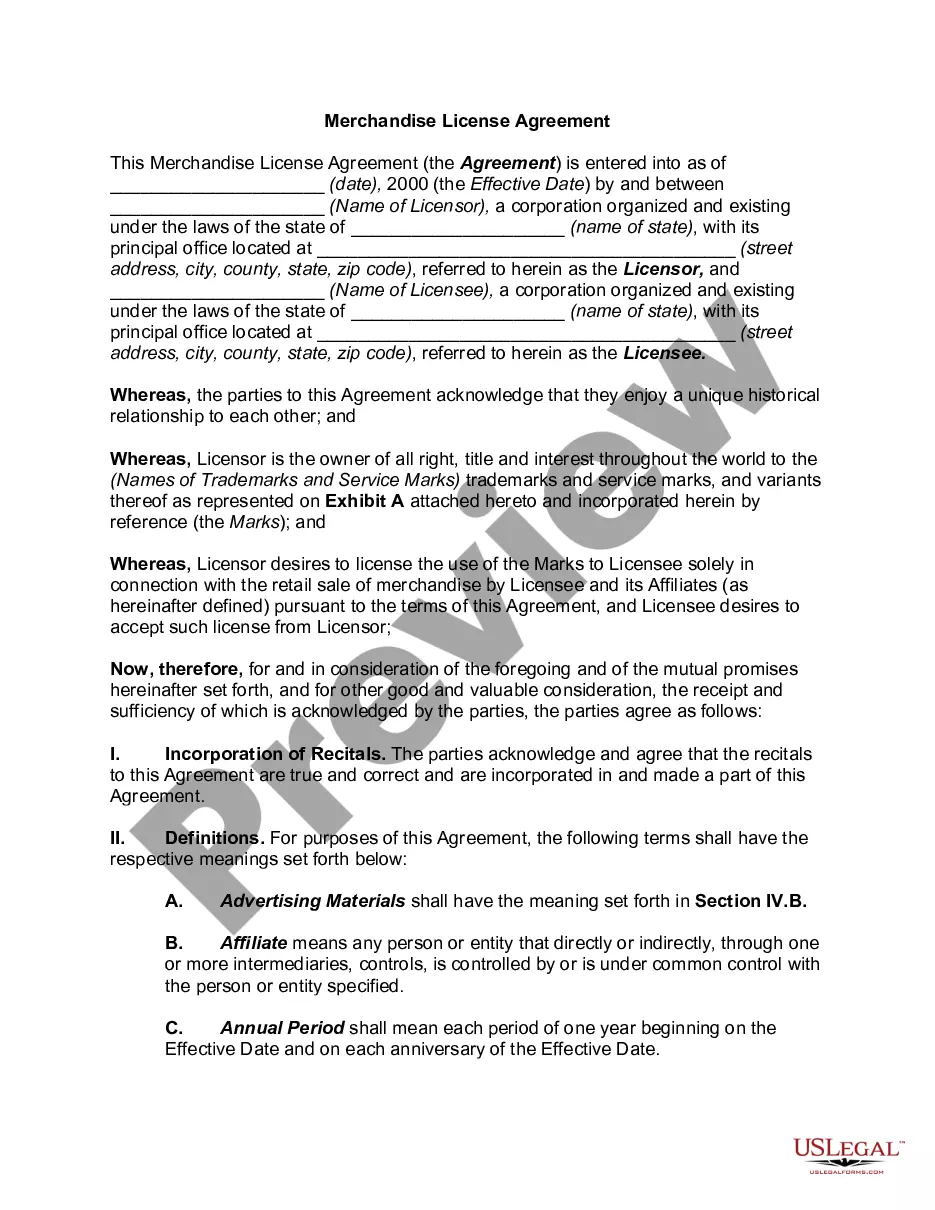
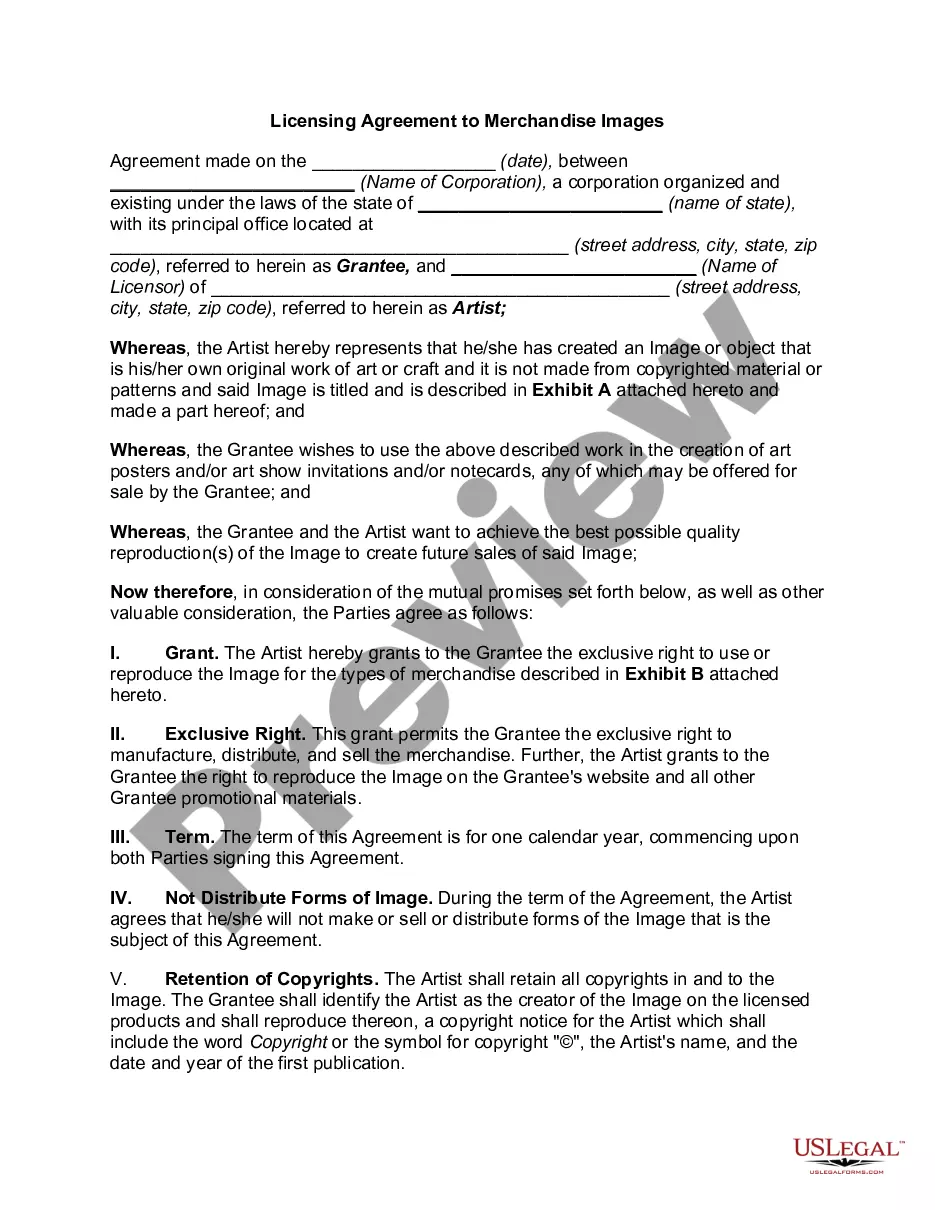
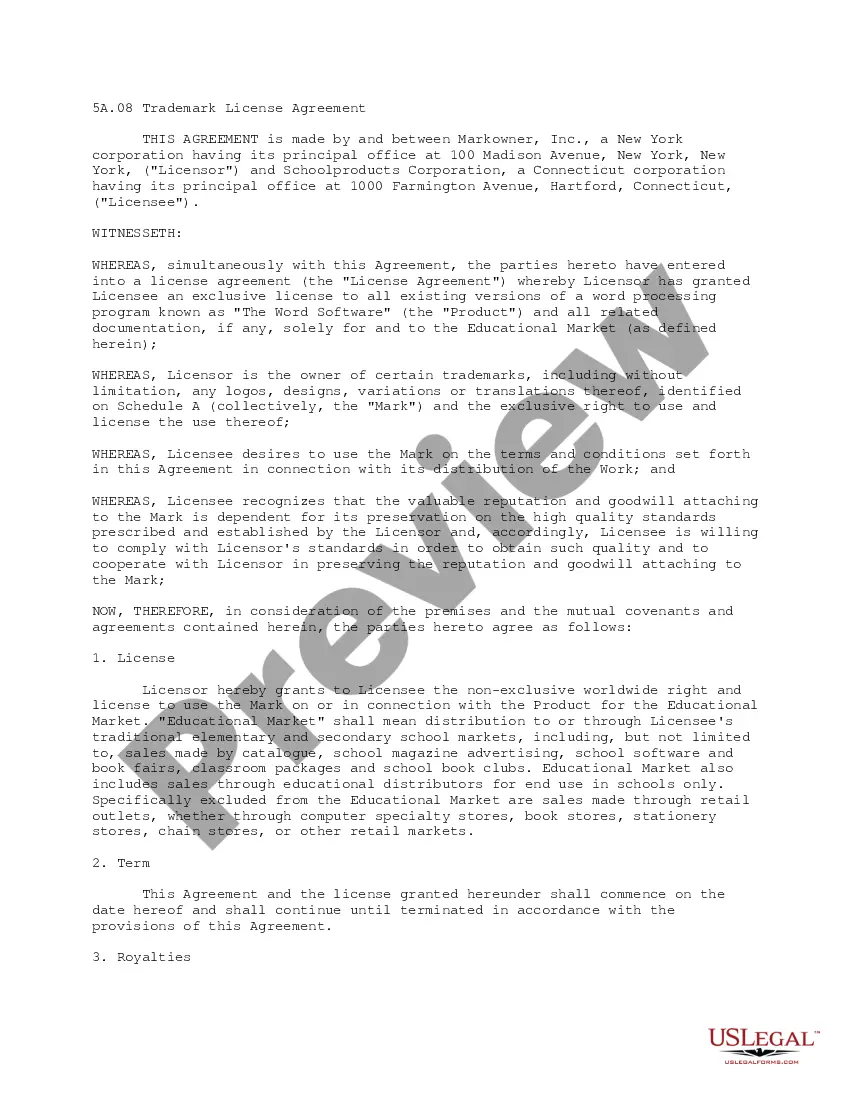
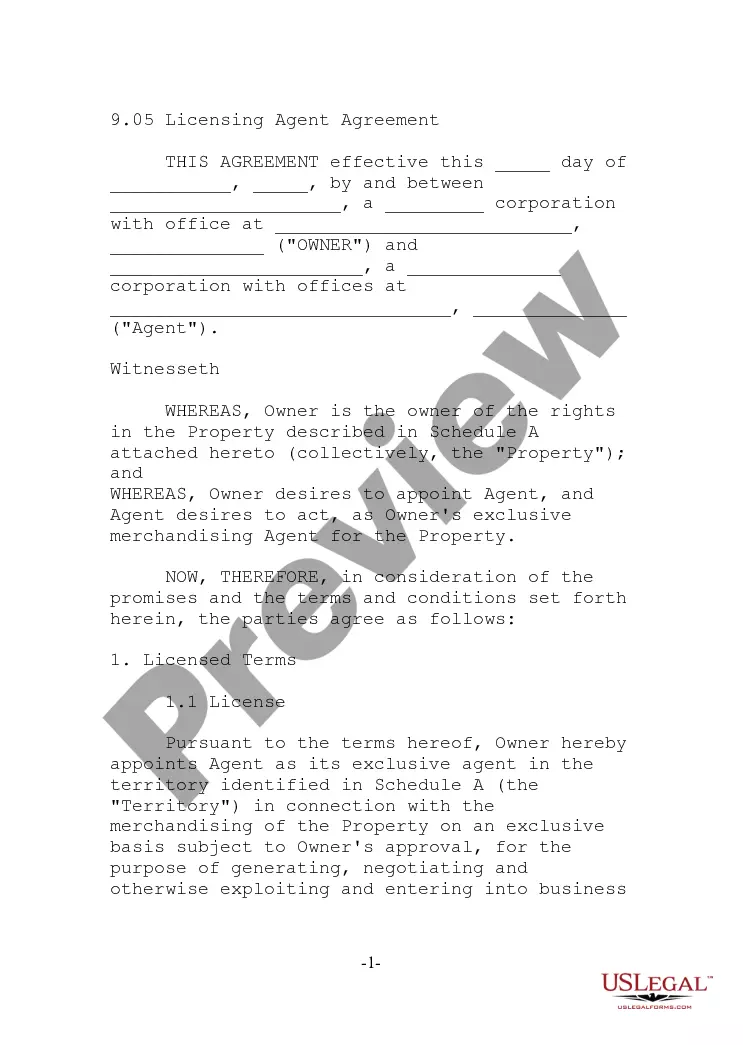
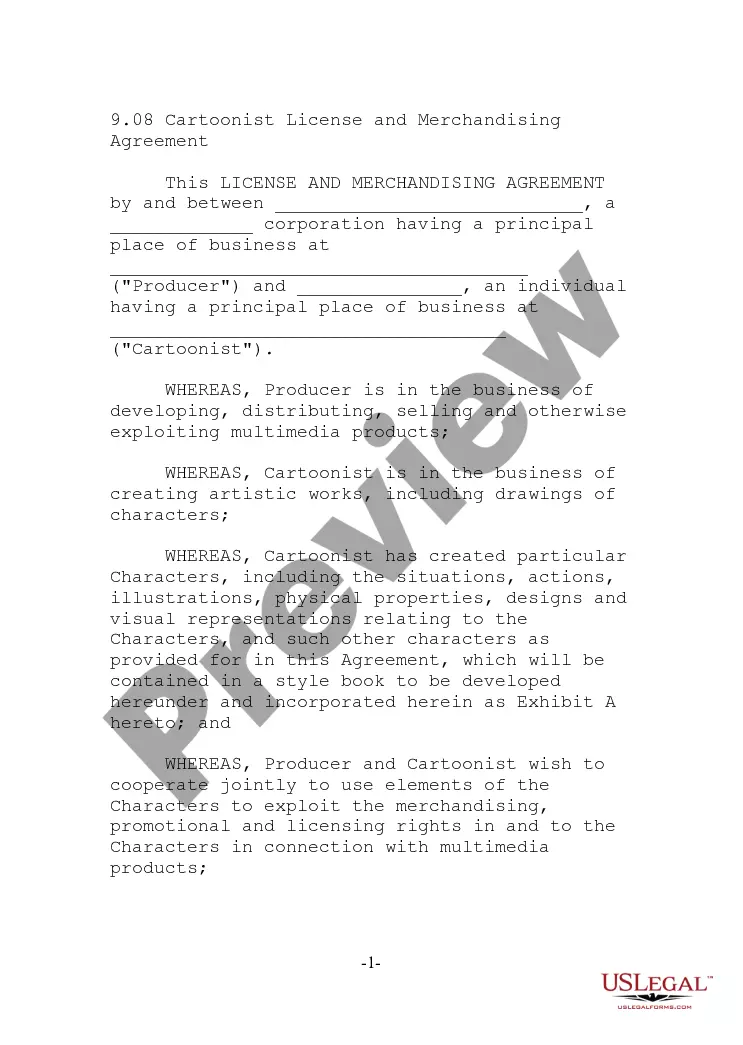
The Merchandising License Agreement is a legal document outlining the terms under which an owner of intellectual property (the licensor) grants permission to another party (the licensee) to use their trademarks, service marks, or copyrights for distributing, marketing, and selling specific products. This agreement establishes the rights and obligations of both parties, including compensation, product specifications, duration of the license, and quality control standards. Its purpose is to protect the interests of both the licensor and the licensee while ensuring that the licensed products uphold the integrity and reputation of the trademark.
Form components explained
- Definitions and interpretations of key terms such as "Licensed Products" and "Trademarks."
- Grant of license outlining how the licensee may use the trademarks.
- Details on royalty payments, including percentage rates and payment schedules.
- Quality control provisions to ensure product standards.
- Conditions for termination by either party if obligations are not met.

Situations where this form applies
This Merchandising License Agreement should be used when a business or individual wishes to license the use of their trademark or intellectual property to another party for the manufacturing, distribution, and marketing of products. It is particularly relevant in scenarios involving brand collaborations, merchandise sales, and any situation where intellectual property needs to be protected while allowing a third party to utilize it for business purposes.
Who this form is for
- Business owners seeking to protect their trademarks and ensure proper use by licensees.
- Individuals or companies wishing to enter into a licensing agreement for branded merchandise.
- Entrepreneurs looking to monetize their intellectual property through a structured agreement.
- Legal professionals assisting clients in drafting or reviewing merchandising licenses.
Completing this form step by step
- Identify the parties involved by entering the names and addresses of both the licensor and licensee.
- Define the trademarks and products covered under the agreement in the designated sections.
- Specify the duration of the agreement and any options for renewal.
- Detail the compensation terms, including the royalty percentage based on sales.
- Ensure all parties sign and date the agreement, confirming their acceptance of the terms.
Notarization guidance
This form does not typically require notarization unless specified by local law. However, it is advisable to check with legal counsel regarding specific requirements in your jurisdiction.
Get your form ready online
Our built-in tools help you complete, sign, share, and store your documents in one place.
Make edits, fill in missing information, and update formatting in US Legal Forms—just like you would in MS Word.
Download a copy, print it, send it by email, or mail it via USPS—whatever works best for your next step.
Sign and collect signatures with our SignNow integration. Send to multiple recipients, set reminders, and more. Go Premium to unlock E-Sign.
If this form requires notarization, complete it online through a secure video call—no need to meet a notary in person or wait for an appointment.
We protect your documents and personal data by following strict security and privacy standards.

Make edits, fill in missing information, and update formatting in US Legal Forms—just like you would in MS Word.

Download a copy, print it, send it by email, or mail it via USPS—whatever works best for your next step.

Sign and collect signatures with our SignNow integration. Send to multiple recipients, set reminders, and more. Go Premium to unlock E-Sign.

If this form requires notarization, complete it online through a secure video call—no need to meet a notary in person or wait for an appointment.

We protect your documents and personal data by following strict security and privacy standards.
Typical mistakes to avoid
- Not clearly defining the scope of the licensed trademarks and products.
- Failing to specify payment terms and royalties accurately.
- Neglecting quality control standards and approval processes.
- Omitting essential details on termination conditions.
Advantages of online completion
- Immediate access to a professionally drafted agreement tailored for merchandising transactions.
- Convenience of modifying the template to meet specific needs without legal fees.
- Security and reliability of having a legally sound document ready for use.
Looking for another form?
Form popularity
FAQ
A brand partnership agreement defines the rights, restrictions, and obligations of all parties involved in the joint venture.Licensing provisions that define how each partner's respective brands, logos, copyrights, and trademarks can be used in the branded partnership.
It is a process of creating and managing contracts between the owner of a brand and a company or individual who wants to use the brand in association with a product, for an agreed period of time, within an agreed territory.An arrangement to license a brand requires a licensing agreement.
A license agreement is a business contract between two parties. The licensor (the seller of the license) owns the asset being licensed and the licensee (the buyer) pays for the right to use the license. The licensee pays the owner in exchange for the right to sell the product or use the technology.
An example of a licensing agreement is a contract between the copyright holders of software and another company, allowing the latter to use the computer software for their daily business operations.
With a Merchandising Agreement, you can lay out both parties' roles and responsibilities, including who maintains the rights to the item that you are licensing. You can define the geographical areas where the product will be sold, length of the term, and financial details such as royalties or payments per unit sold.
A licensing agreement is a legal contract between two parties, known as the licensor and the licensee. In a typical licensing agreement, the licensor grants the licensee the right to produce and sell goods, apply a brand name or trademark, or use patented technology owned by the licensor.
A common example is food retail brands with large followings in their own market.Licensing the brand to a local company with market expertise allows the brand to be monetized with limited risk, as with Top Shop.
A product (or merchandise) license allows licensees to leverage popular IP to create branded products, usually for a specific period of time. Once the rights have been secured, the licensee manufactures product using the licensed IP, and in return pays the licensor a royalty for its use.