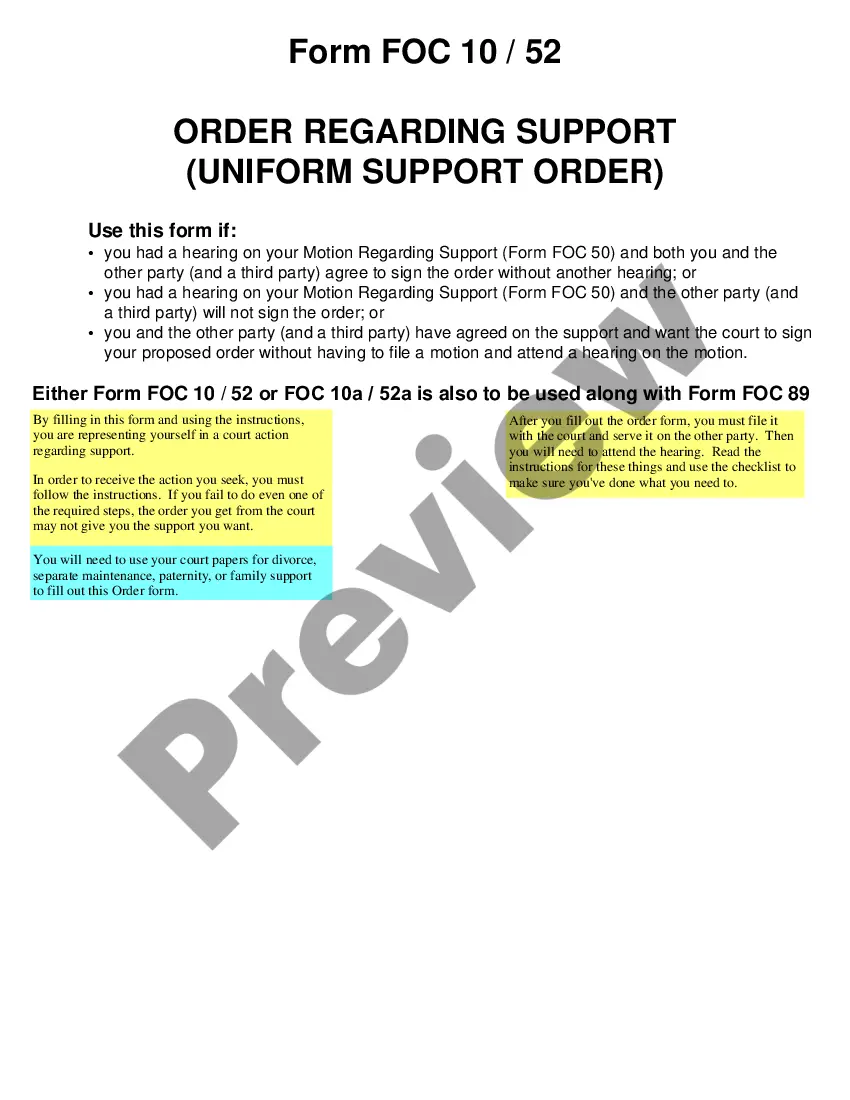
Trade Secret Policy
What this document covers
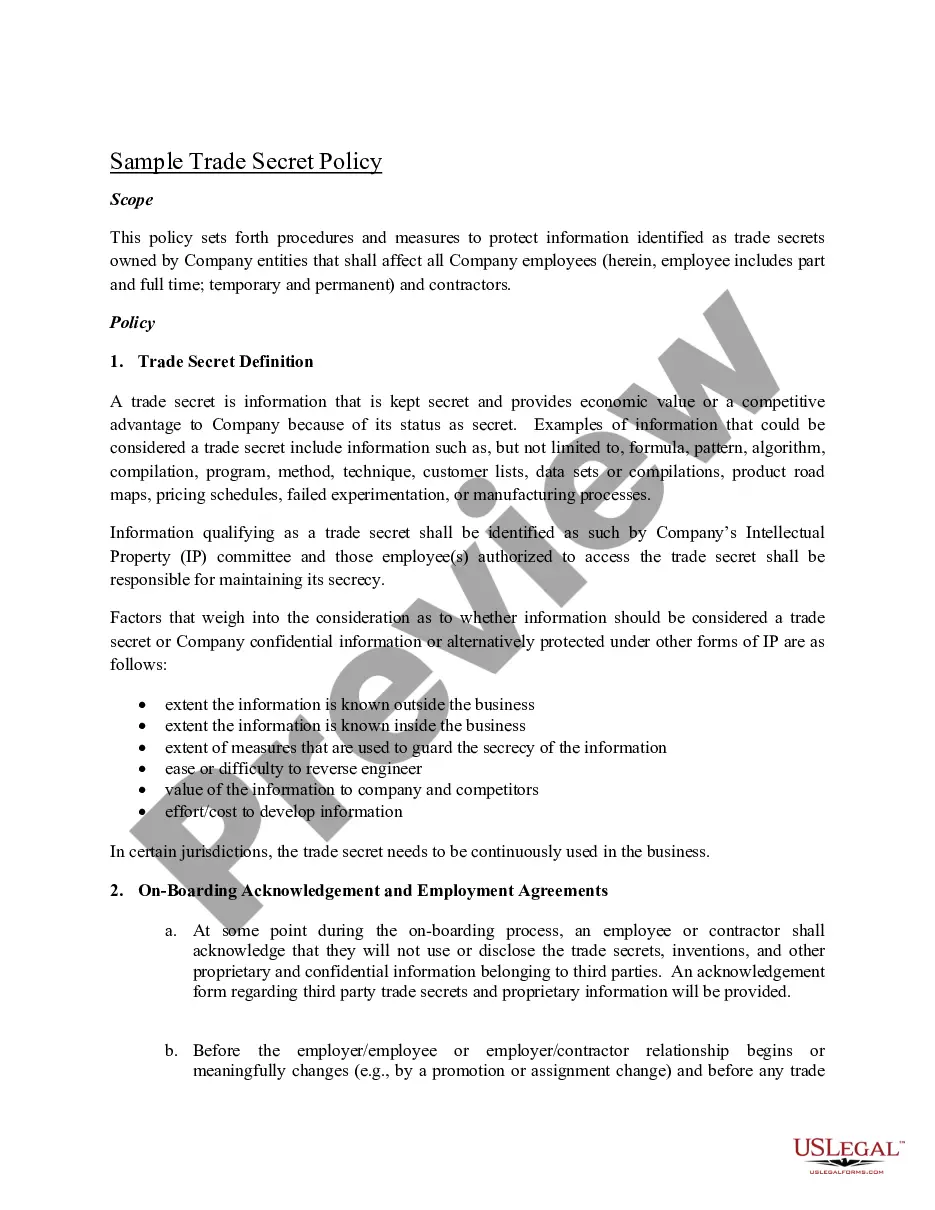
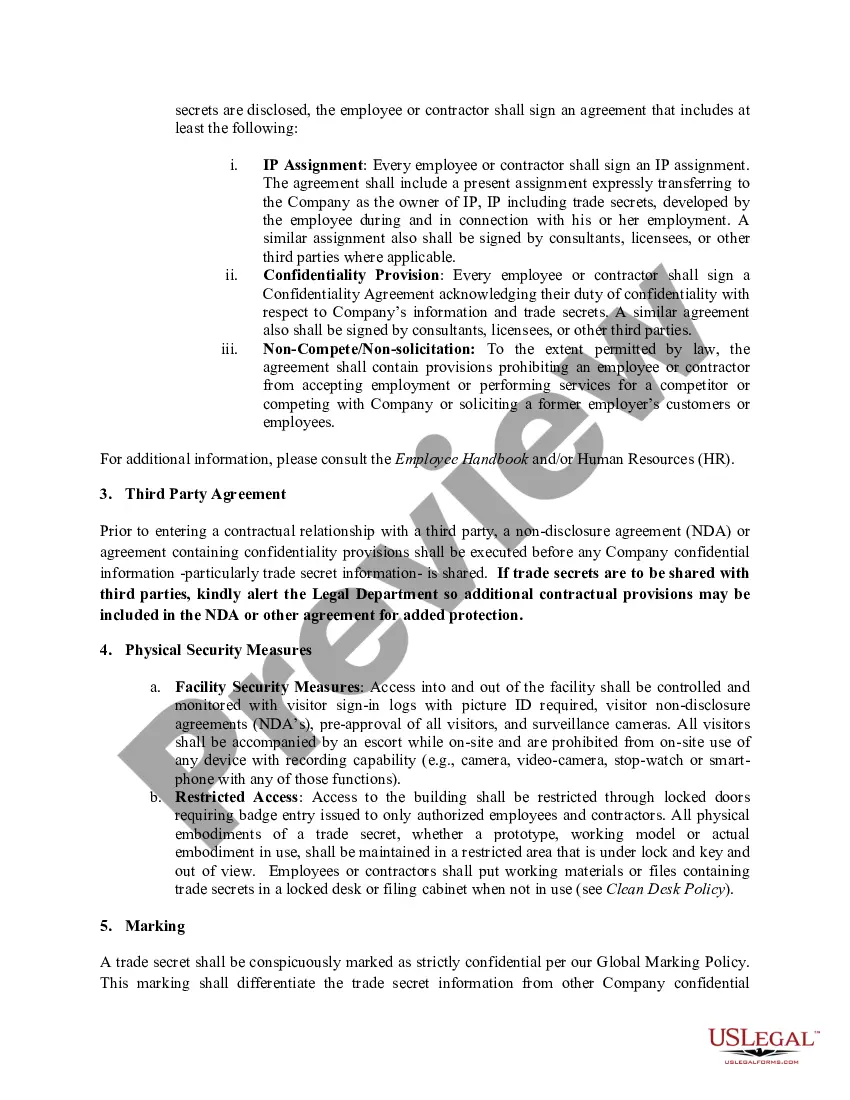
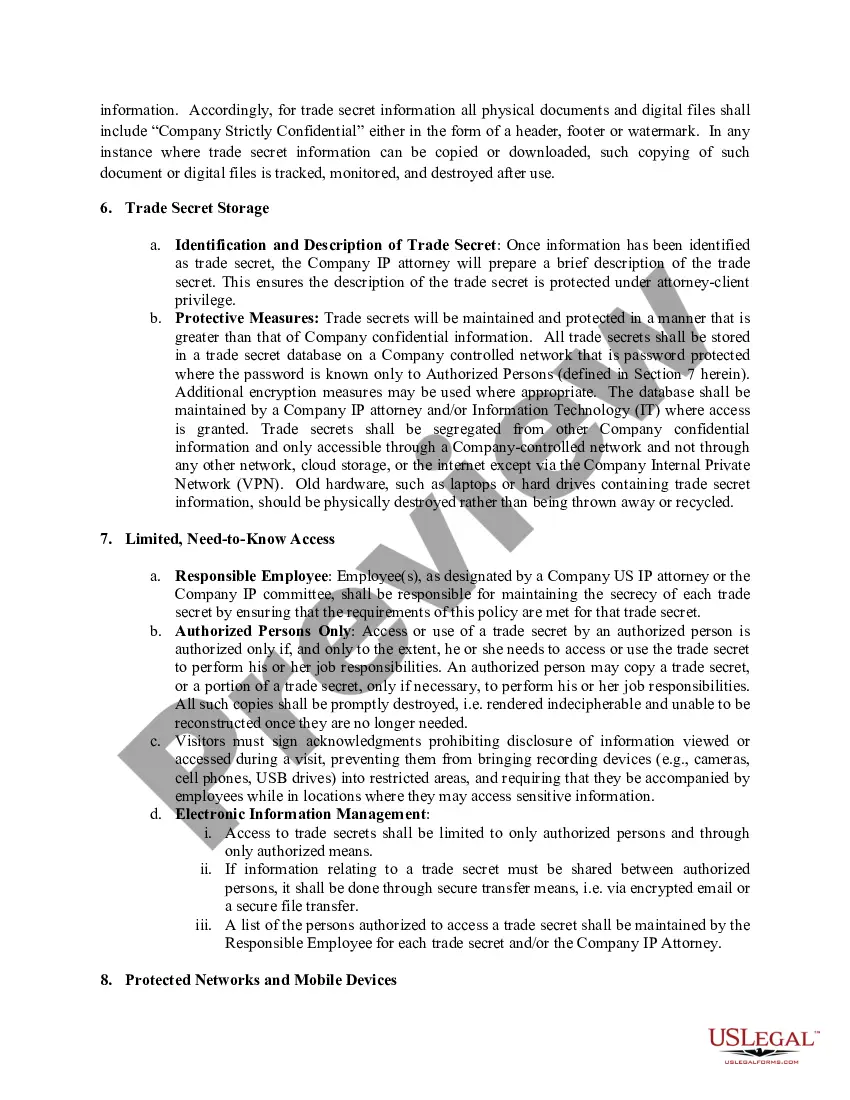
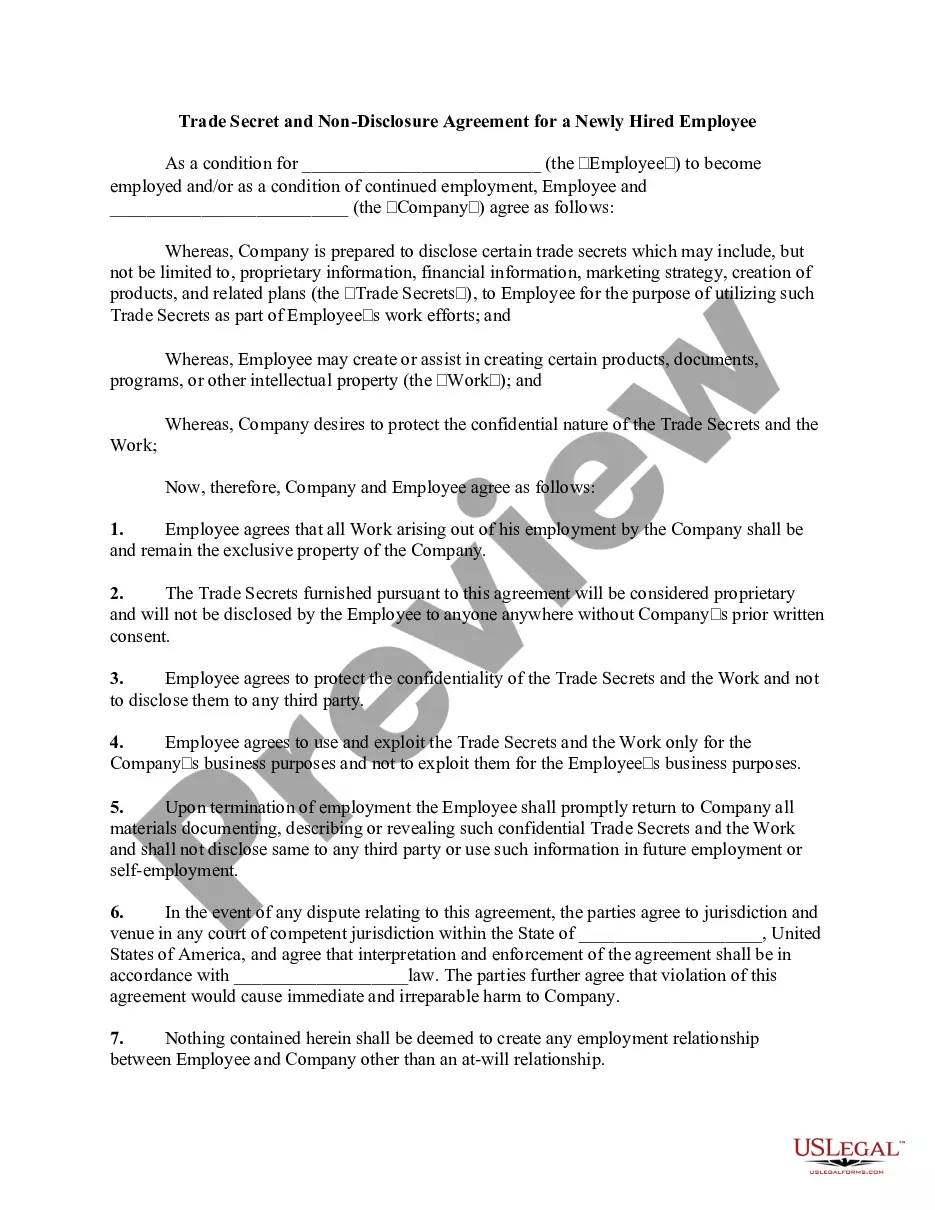
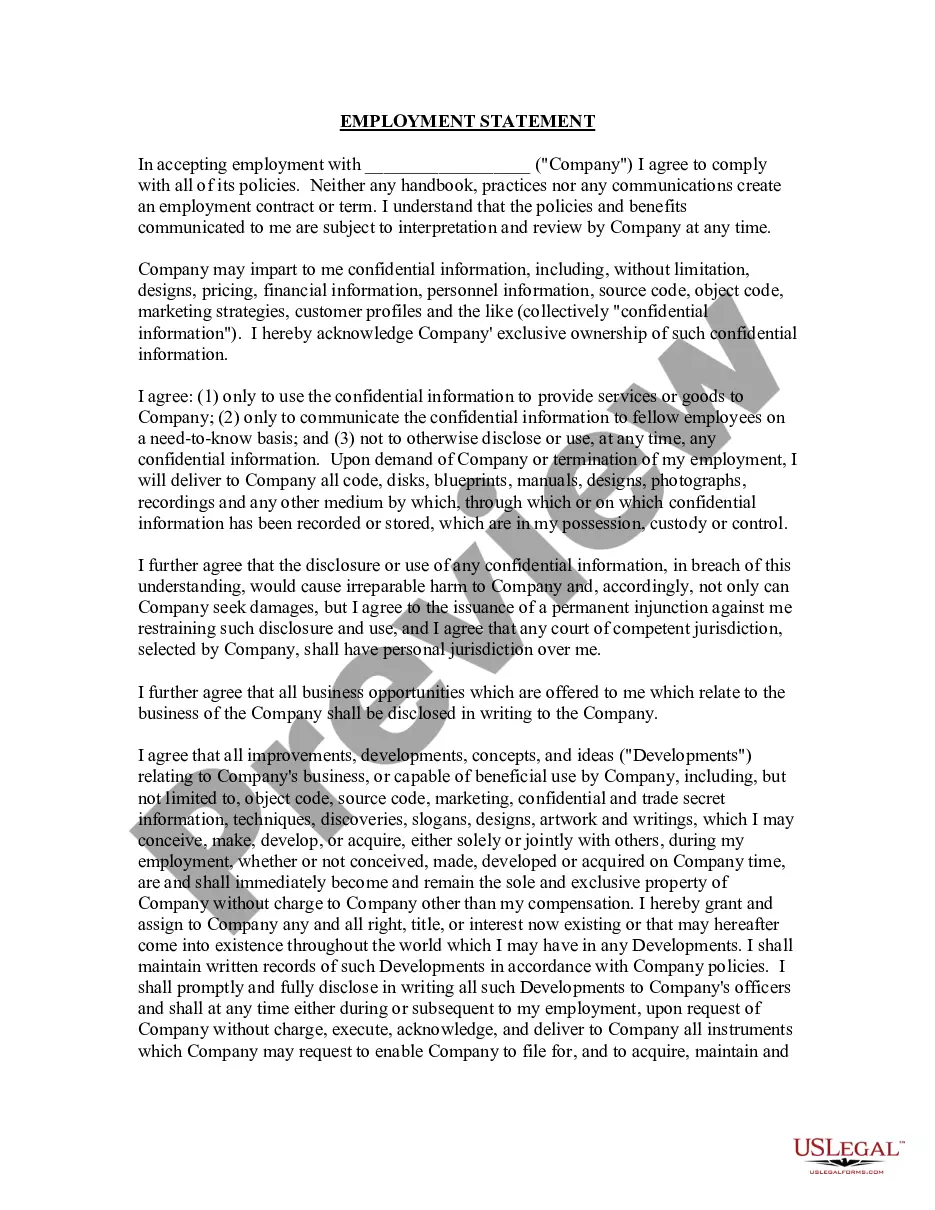
The Trade Secret Policy is a legal document designed to establish procedures for protecting trade secrets within an organization. This form outlines the definitions of trade secrets, responsibilities for safeguarding them, and protocols for managing confidential information. It is essential for businesses that rely on proprietary information to maintain a competitive edge. Unlike standard confidentiality agreements, this policy provides a comprehensive framework applicable to all employees and contractors regarding handling and sharing sensitive information.
Key components of this form
- Definition of trade secrets and criteria for classification
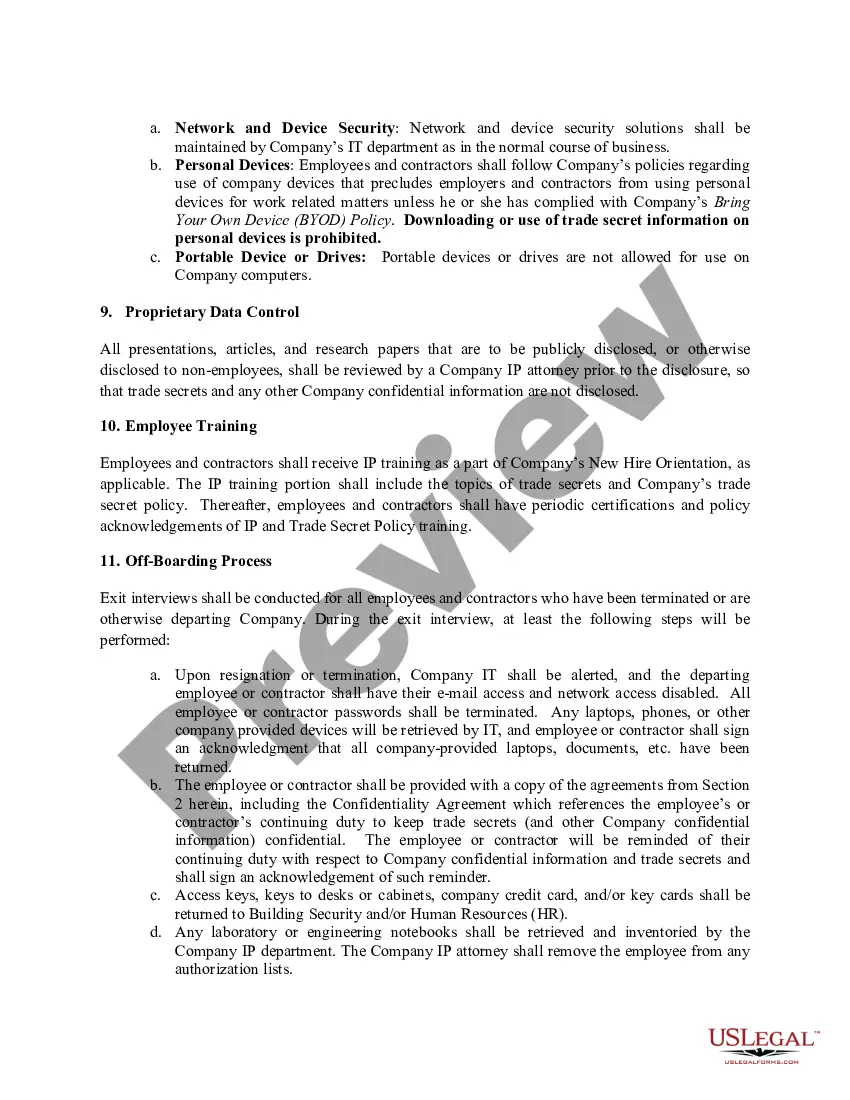
- On-boarding and acknowledgment agreements for employees and contractors
- Physical security measures for protecting confidential information
- Procedures for handling confidential information with third parties
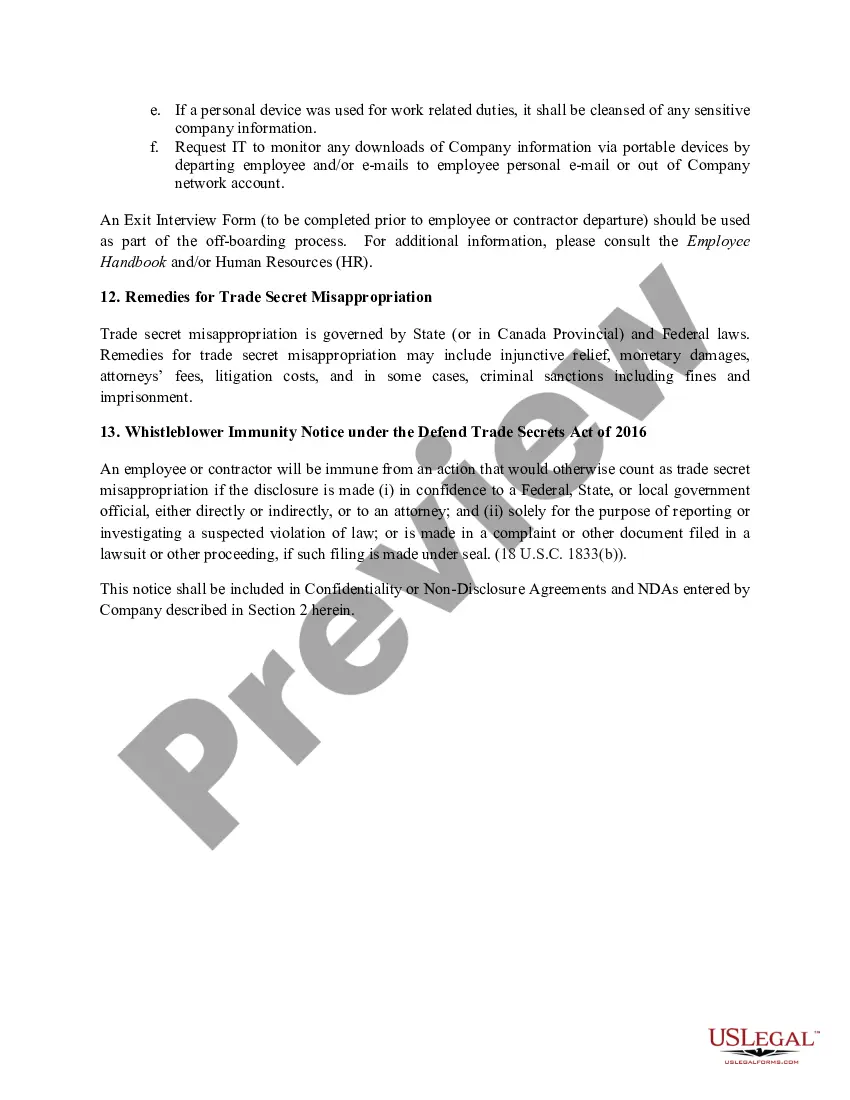
- Employee training and off-boarding processes to ensure compliance
- Legal remedies for trade secret misappropriation

Situations where this form applies
Implement this Trade Secret Policy in situations where your organization has proprietary information that needs protection, such as product formulas, customer lists, or manufacturing methods. It is crucial when hiring new employees or contractors who will have access to sensitive information, during onboarding procedures, or when engaging third parties who may also need to access this confidential data. This form is also necessary during business transitions, such as mergers or acquisitions, where proprietary information is shared.
Who this form is for
- Business owners and executives responsible for protecting intellectual property
- Human resources personnel involved in employee onboarding processes
- Legal teams needing to ensure confidentiality agreements are in place
- Managers overseeing projects involving proprietary information
Steps to complete this form
- Identify and define the types of information your organization considers trade secrets.
- Establish and document on-boarding procedures for employees and contractors related to the acknowledgment of trade secrets.
- Implement physical and electronic security measures to protect trade secrets.
- Prepare training sessions for employees about handling and safeguarding trade secrets.
- Set up a protocol for reviewing and updating the policy as legal standards evolve.
Notarization guidance
This form does not typically require notarization unless specified by local law. It is advisable to have a record of acknowledgment signatures to ensure enforcement of the policy.
Get your form ready online
Our built-in tools help you complete, sign, share, and store your documents in one place.
Make edits, fill in missing information, and update formatting in US Legal Forms—just like you would in MS Word.
Download a copy, print it, send it by email, or mail it via USPS—whatever works best for your next step.
Sign and collect signatures with our SignNow integration. Send to multiple recipients, set reminders, and more. Go Premium to unlock E-Sign.
If this form requires notarization, complete it online through a secure video call—no need to meet a notary in person or wait for an appointment.
We protect your documents and personal data by following strict security and privacy standards.

Make edits, fill in missing information, and update formatting in US Legal Forms—just like you would in MS Word.

Download a copy, print it, send it by email, or mail it via USPS—whatever works best for your next step.

Sign and collect signatures with our SignNow integration. Send to multiple recipients, set reminders, and more. Go Premium to unlock E-Sign.

If this form requires notarization, complete it online through a secure video call—no need to meet a notary in person or wait for an appointment.

We protect your documents and personal data by following strict security and privacy standards.
Typical mistakes to avoid
- Failing to clearly define what constitutes a trade secret within the organization.
- Not providing adequate training for employees on the importance of protecting trade secrets.
- Neglecting to update the policy as new trade secrets emerge or existing products evolve.
- Inadequately managing access to proprietary information within the organization.
Benefits of completing this form online
- Convenience of downloading and customizing the policy to fit your organization's needs.
- Easy access to legally vetted content drafted by licensed attorneys.
- Time-saving features, allowing for quick implementation of policy changes when needed.
- Reliability of having a comprehensive document to guide your business practices related to trade secrets.
Looking for another form?

Form popularity
FAQ
Examples of information that could be considered a trade secret include information such as, but not limited to, formula, pattern, algorithm, compilation, program, method, technique, customer lists, data sets or compilations, product road maps, pricing schedules, failed experimentation, or manufacturing processes.
Trade secrets encompass both technical information, such as information concerning manufacturing processes, pharmaceutical test data, designs and drawings of computer programs, and commercial information, such as distribution methods, list of suppliers and clients, and advertising strategies.
What Are Some Notable Examples of Trade Secrets? Google's Search Algorithm.Coca-Cola's Coke Syrup Formula.KFC's Original Recipe.McDonald's Big Mac Special Sauce.WD-40's Multi-use Product Formula.Patents.Trademarks.Copyright.
What Are Some Notable Examples of Trade Secrets? Google's Search Algorithm.Coca-Cola's Coke Syrup Formula.KFC's Original Recipe.McDonald's Big Mac Special Sauce.WD-40's Multi-use Product Formula.Patents.Trademarks.Copyright.
In general, trade secret protection confers owners the right to prevent the information lawfully within their control from being disclosed, acquired or used by others without their consent in a manner contrary to honest commercial practice.
Information that can be kept as a trade secret includes formulas, patterns, compilations, programs, devices, methods, techniques, or processes. Some examples of trade secrets include customer lists and manufacturing processes. The economic value of the information can be actual or potential.
Duration? ? EEA makes theft or misappropriation of trade secrets a federal crime. Conviction under the Economic Espionage Act can result in a fine of up to $250,000 for an individual (up to $5 million for corporations), imprisonment up to ten years, or both.
Some types of information that may qualify for trade secret protection include: Computer programs and scripts. Formulas for cleaning and beauty products. Manufacturing methods. Food recipes. Methods for processing raw materials. New plant hybrids. Customer lists. Business plans.