Vermont Living Trust for Individual Who is Single, Divorced or Widow or Widower with No Children

What this document covers
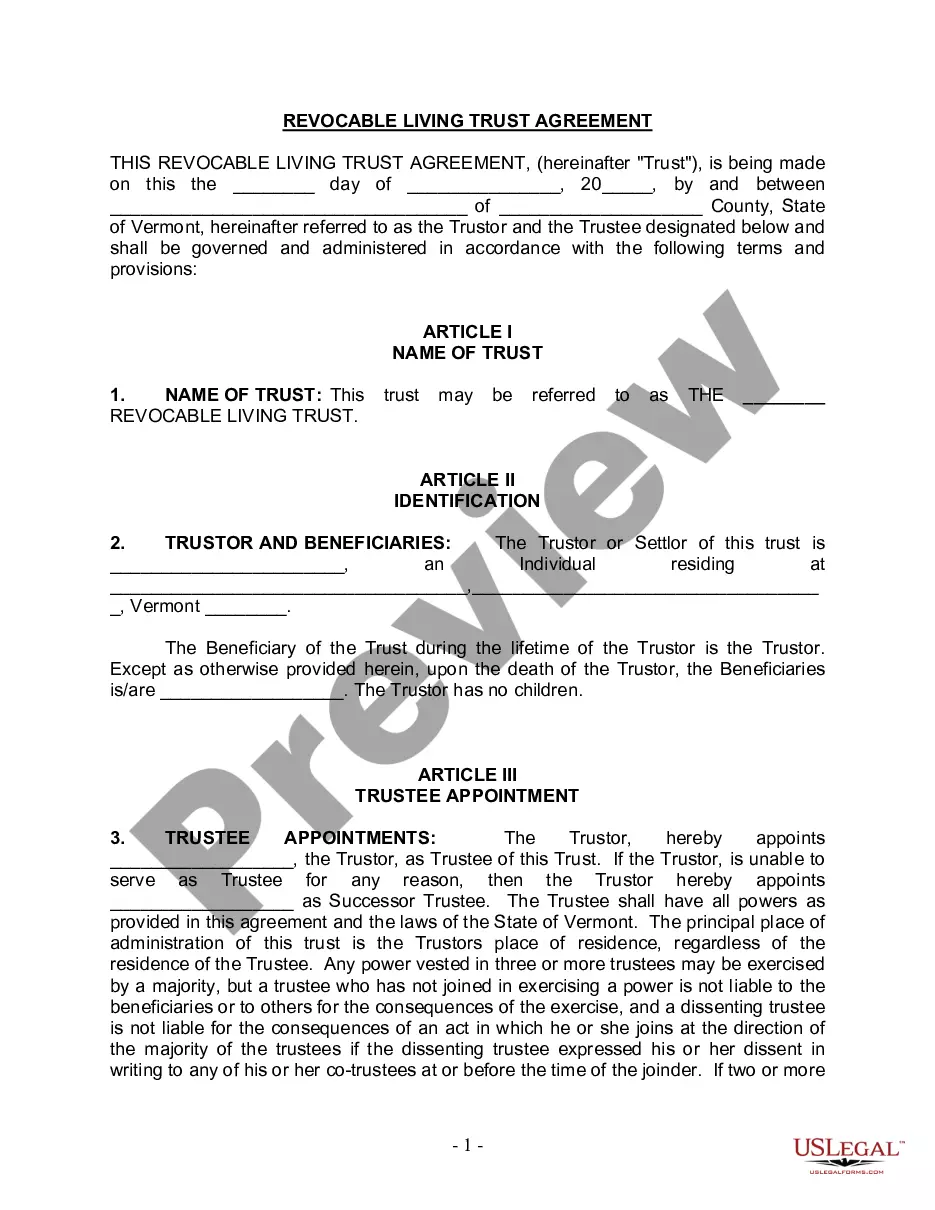
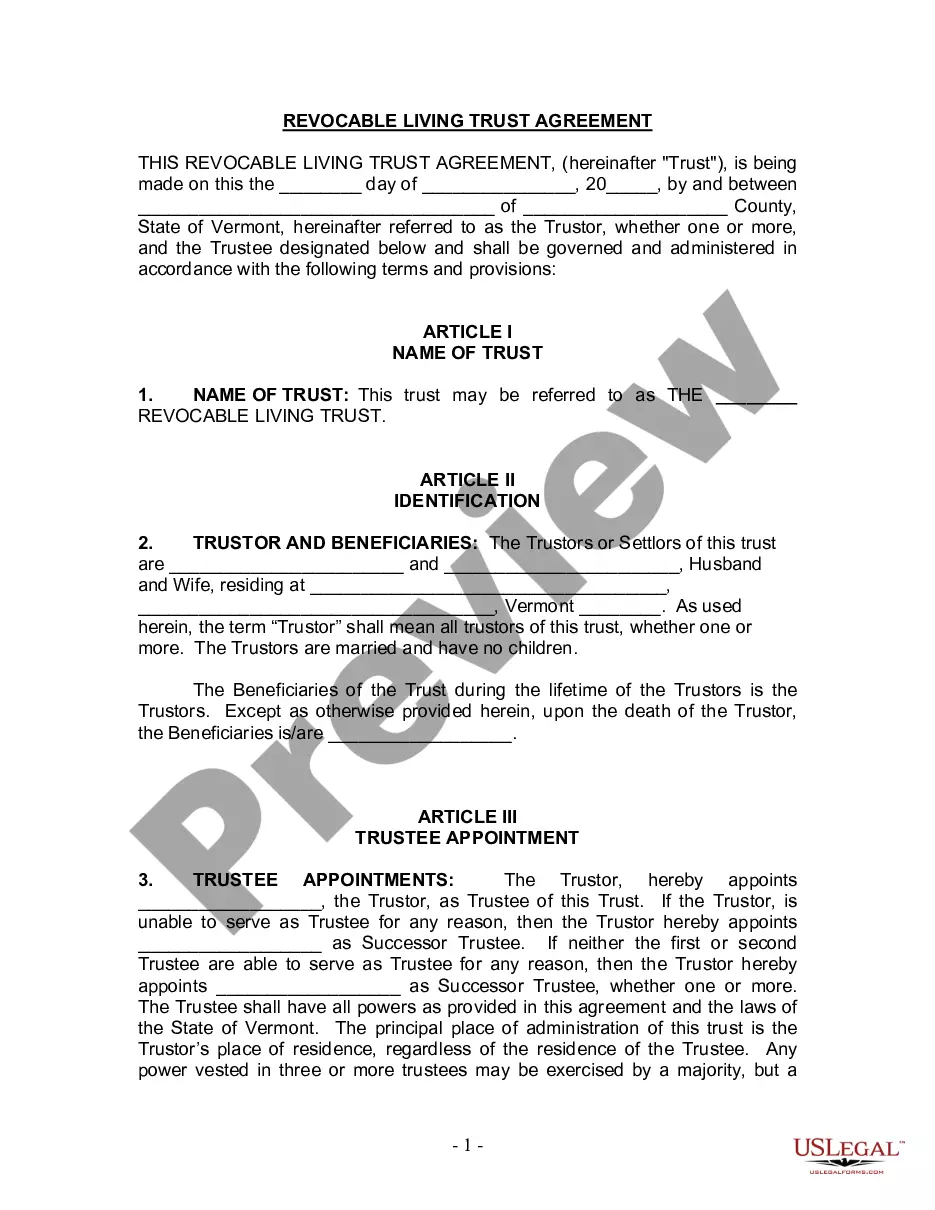
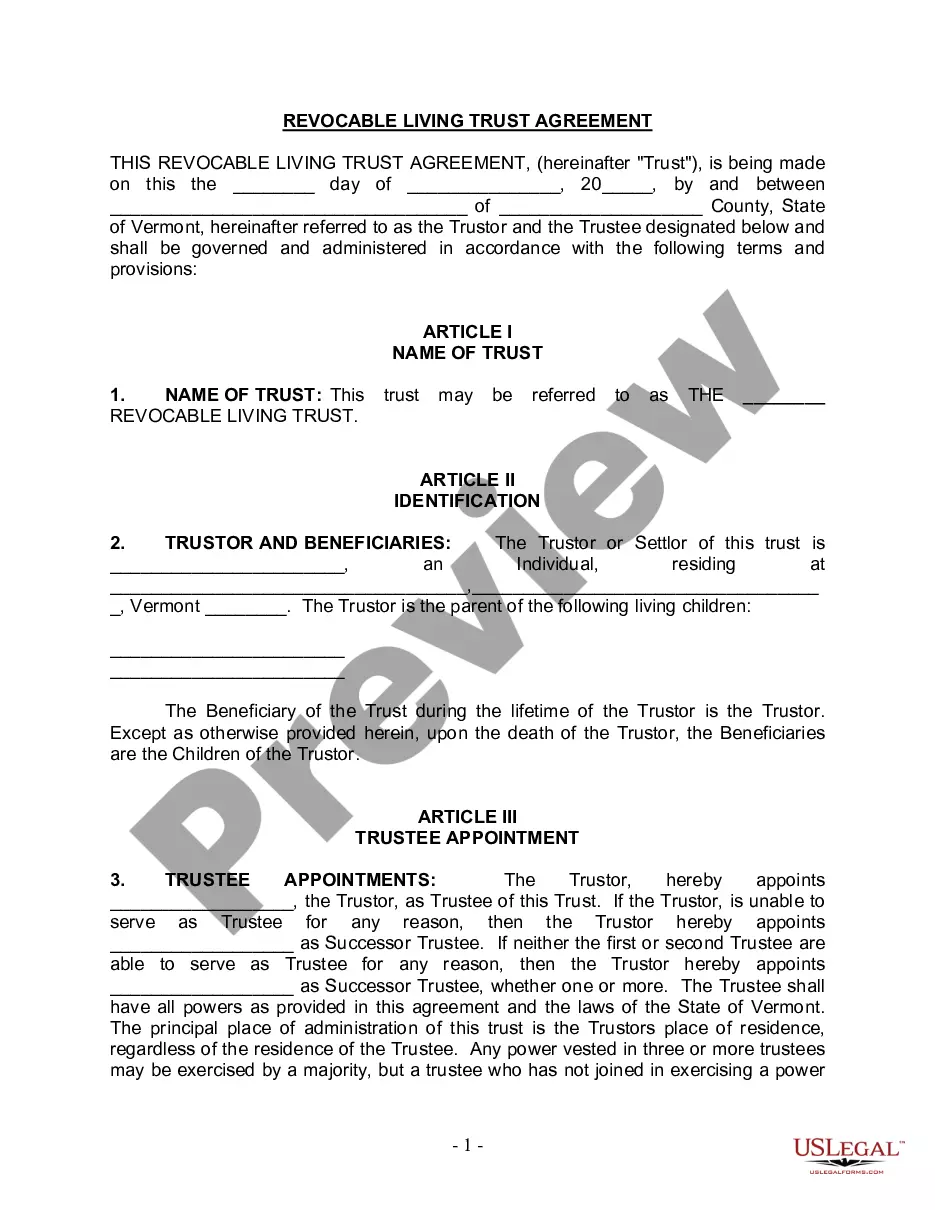
This Living Trust for Individual Who is Single, Divorced or Widow (or Widower) with No Children is a legal document intended for estate planning. It allows an individual without children to place their assets in a trust during their lifetime. This form differs from other living trusts by catering specifically to individuals who are single, divorced, or widowed and do not have children. By creating this trust, the individual can manage their assets while they are alive and ensure a smooth transfer of property after passing, thereby avoiding probate proceedings.
Key parts of this document
- Name of the trust and identification of the trustor.
- Appointment of trustee and successor trustee provisions.
- Details regarding the assets included in the trust.
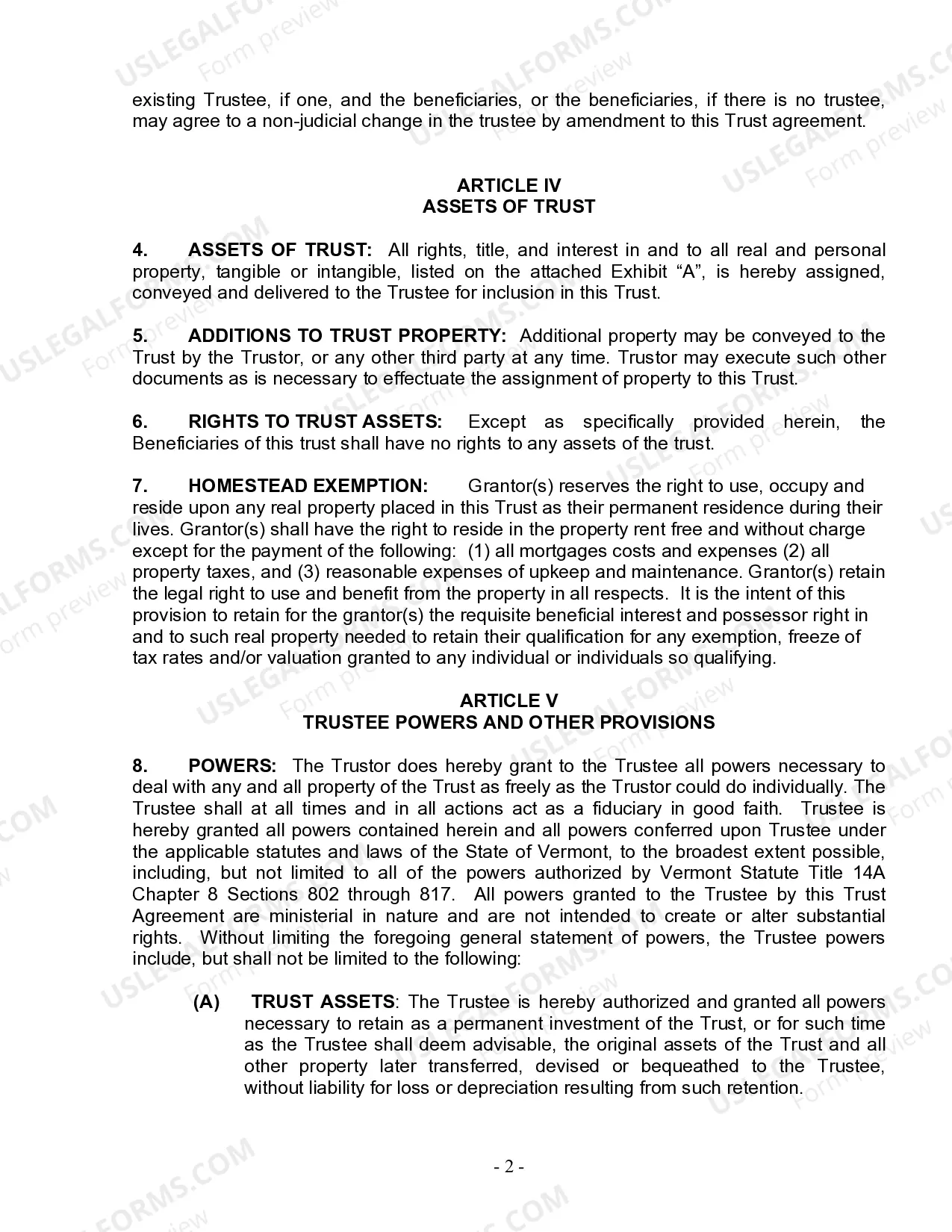
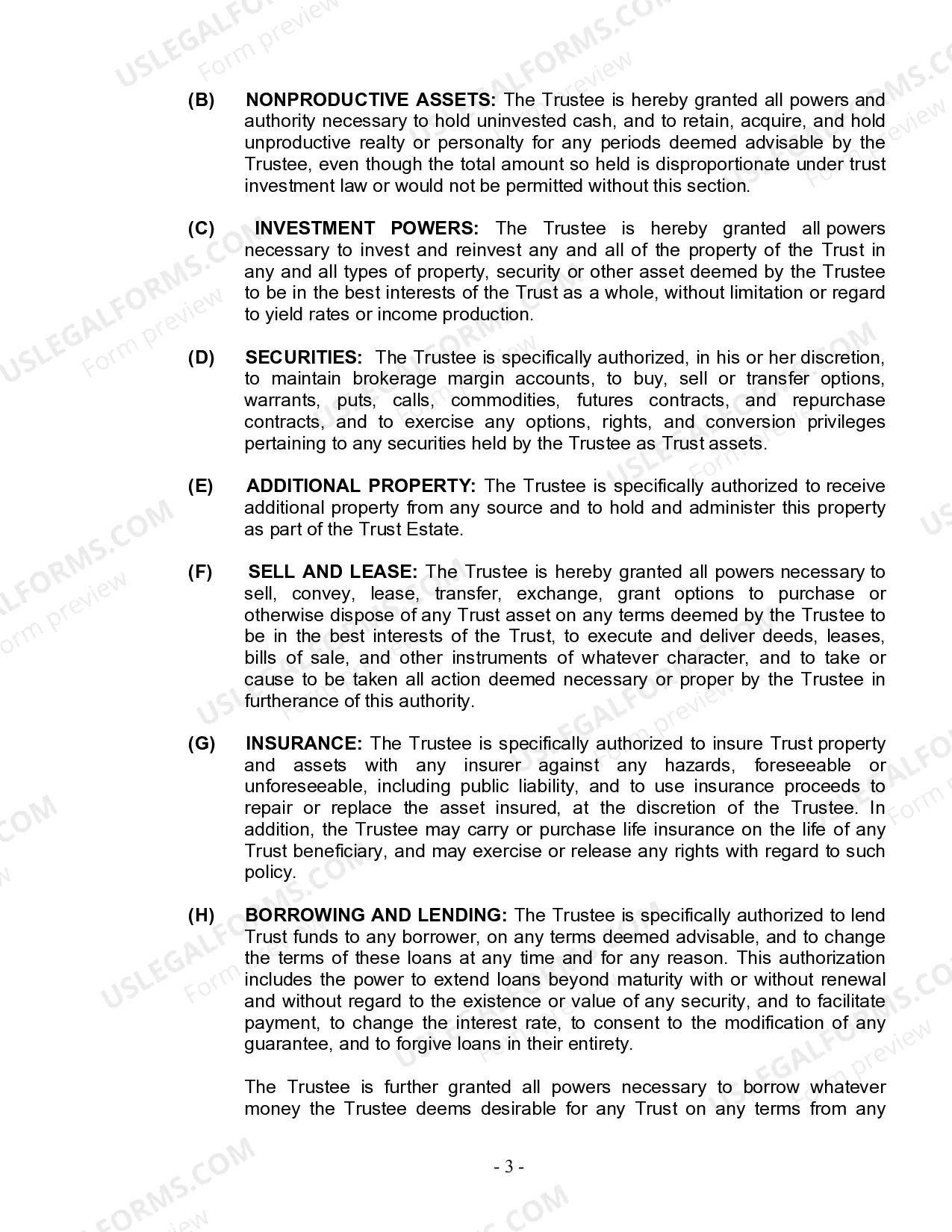
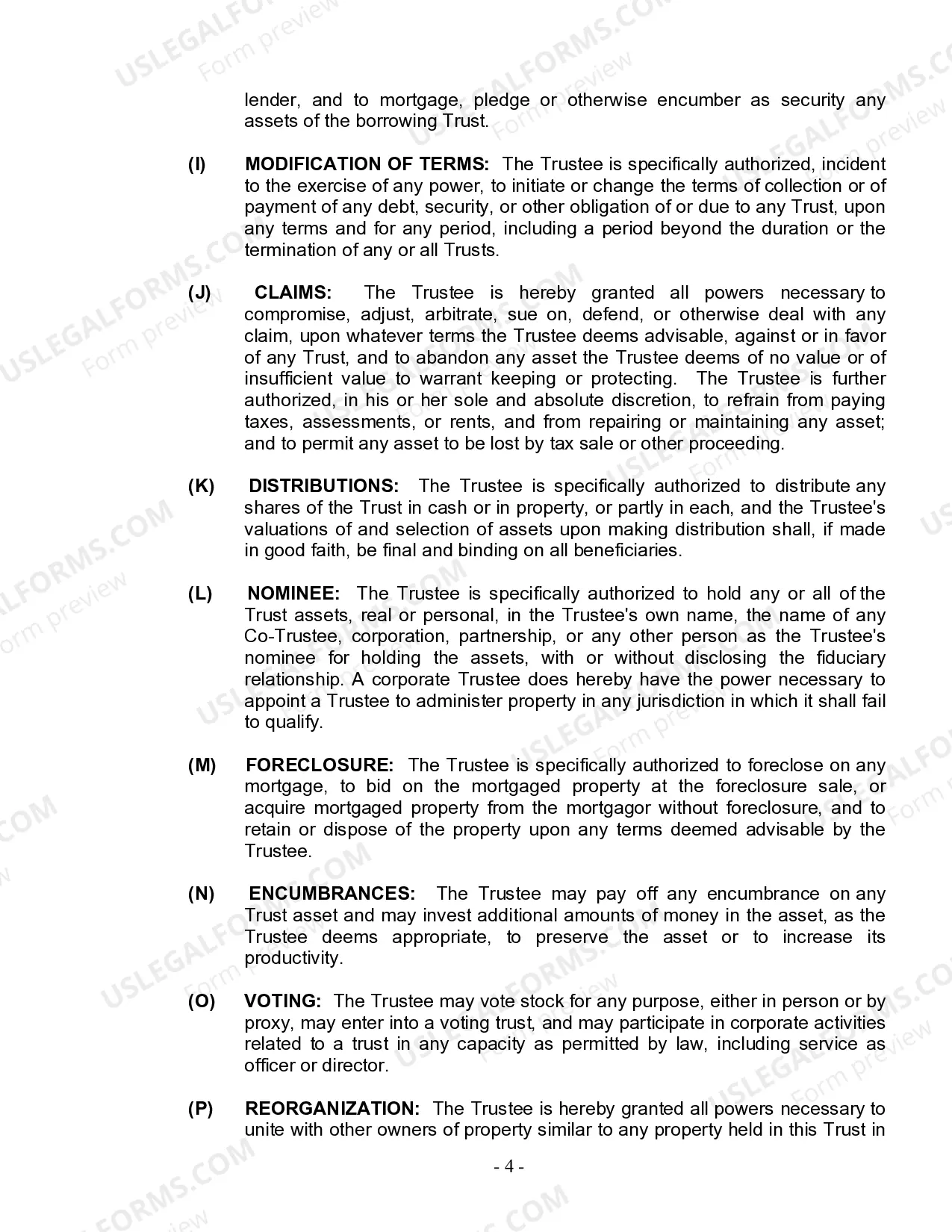
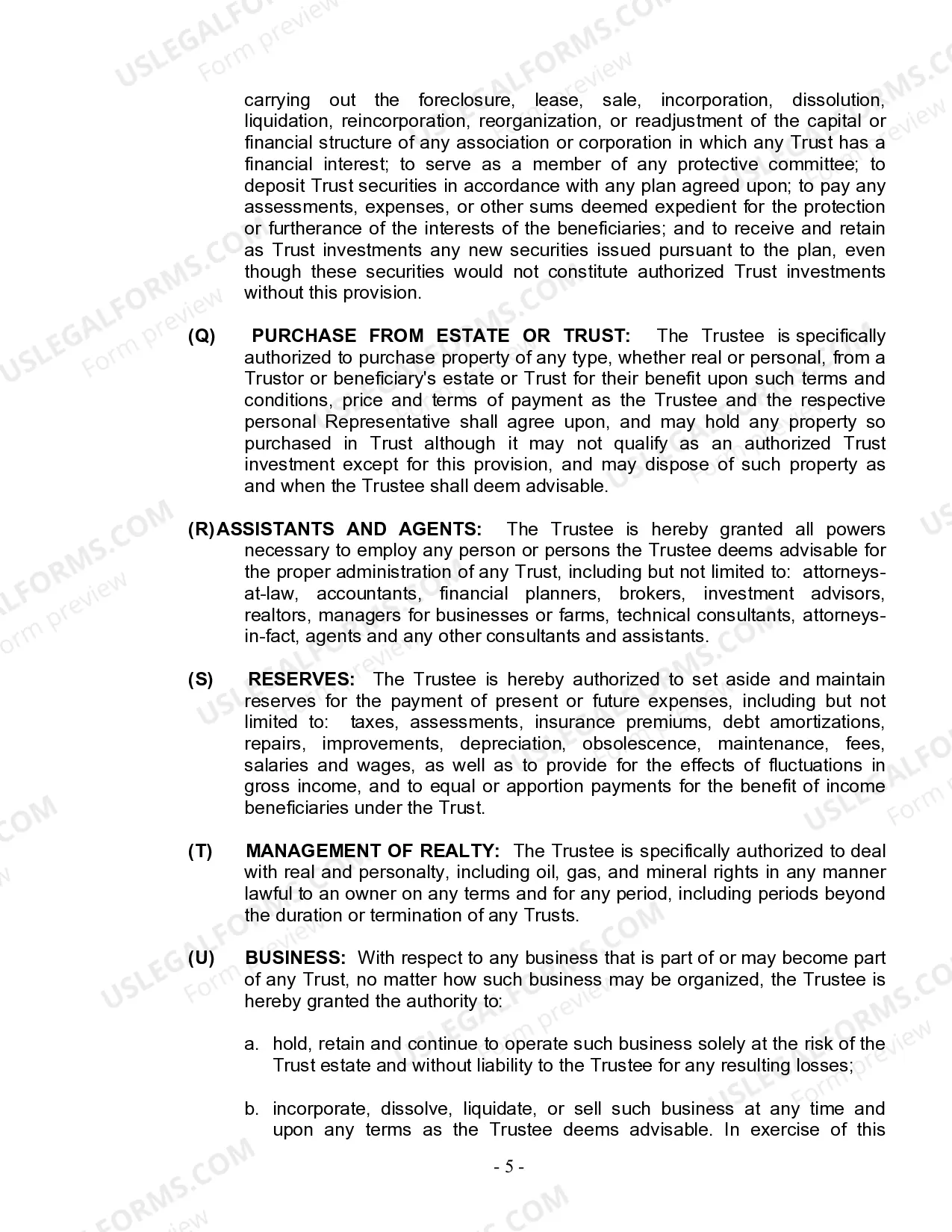
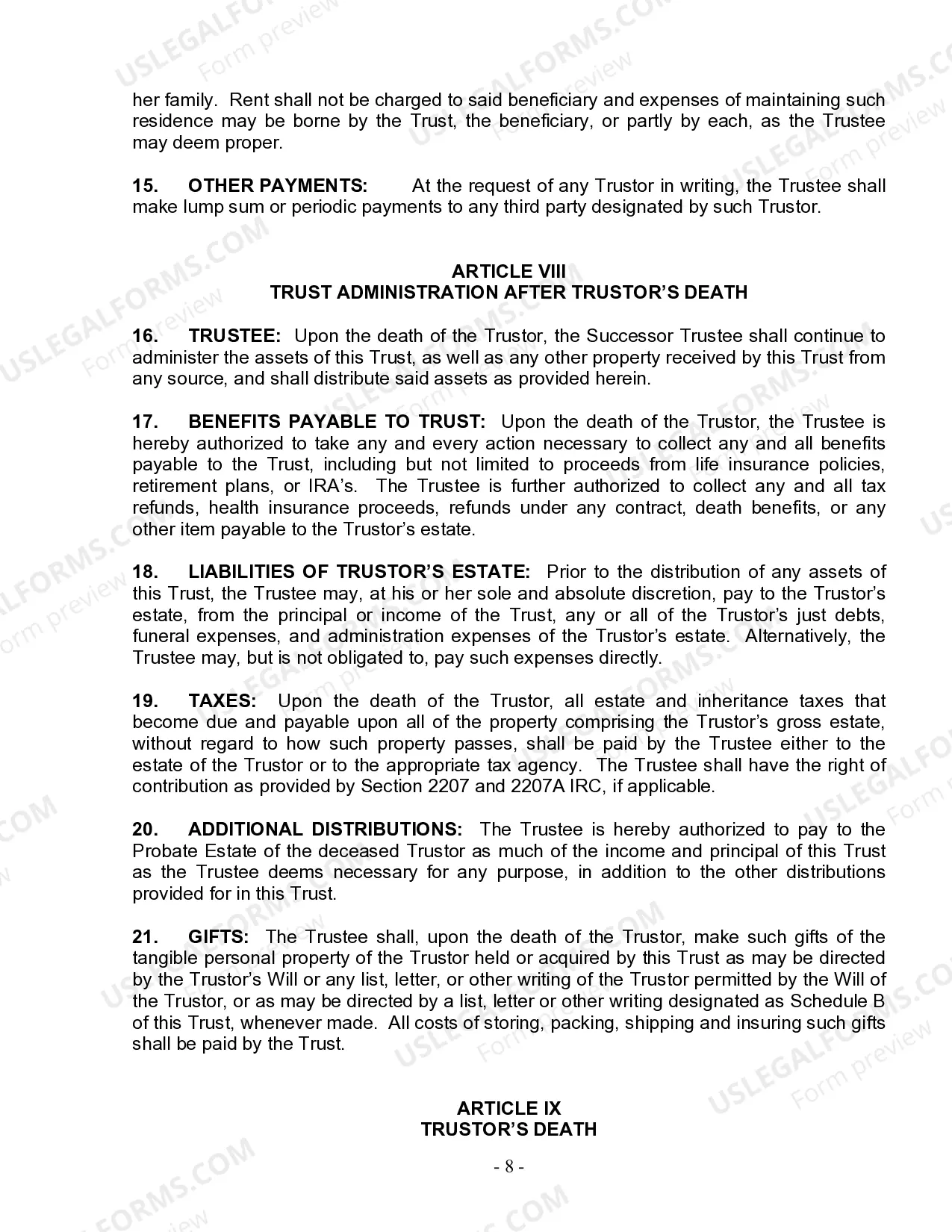
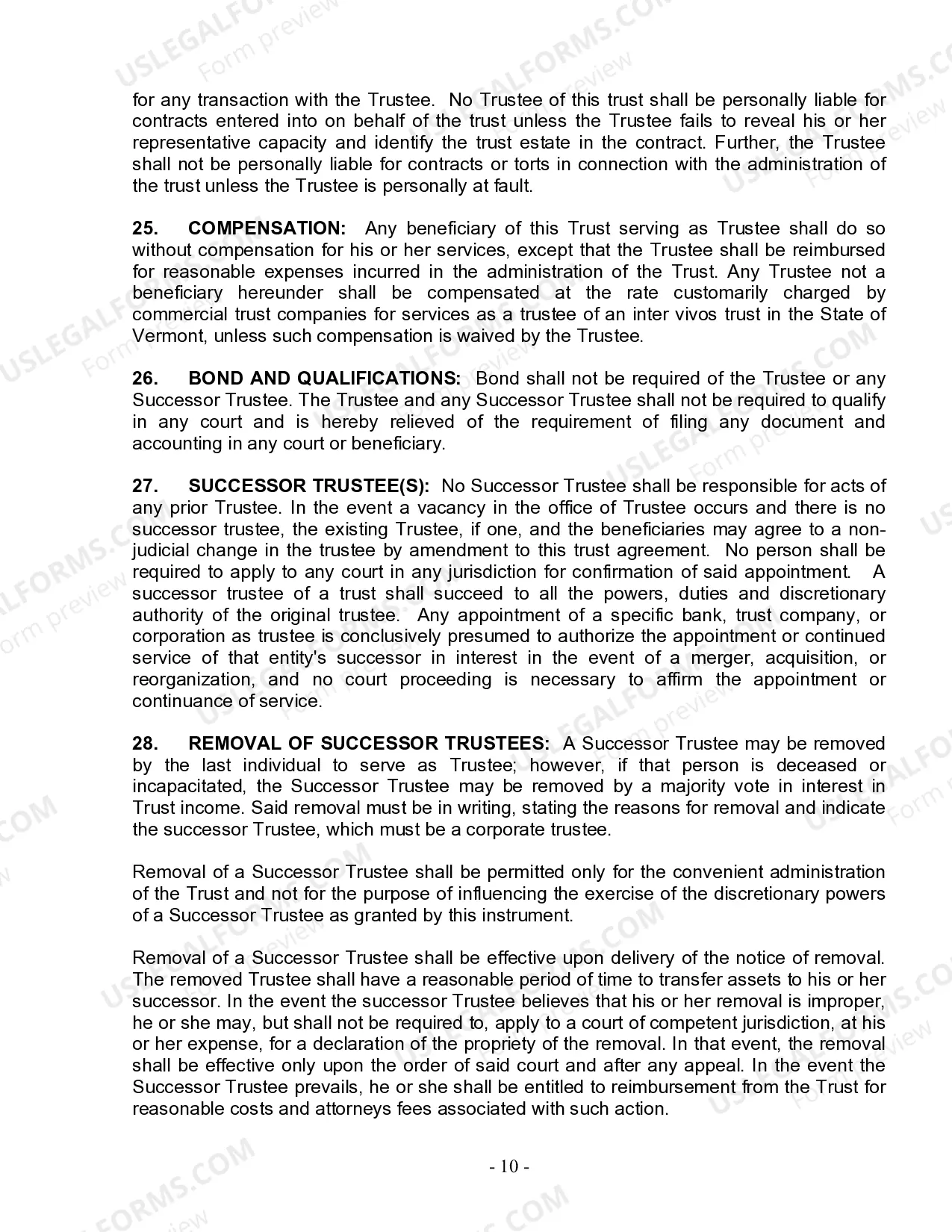
- Powers granted to the trustee for management of trust assets.
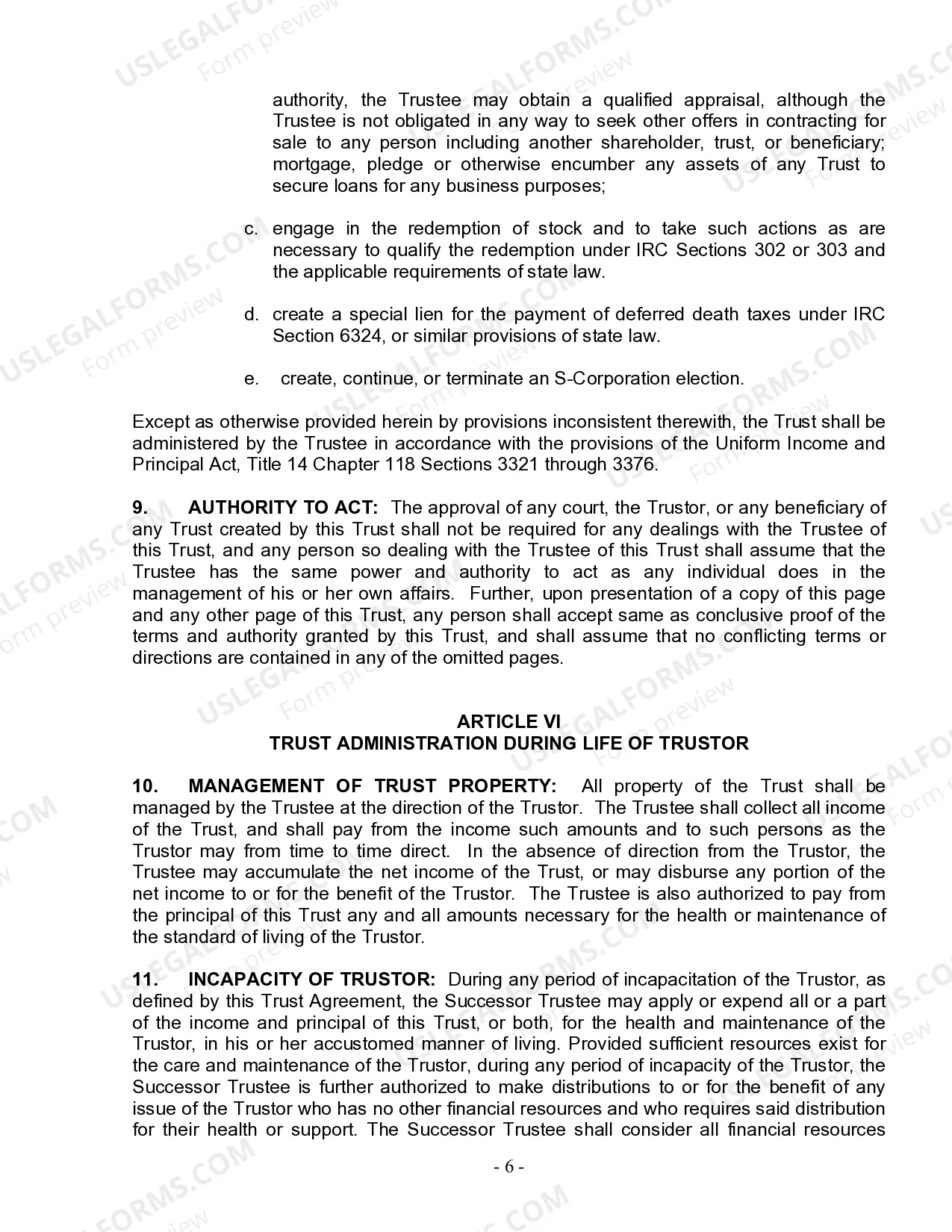
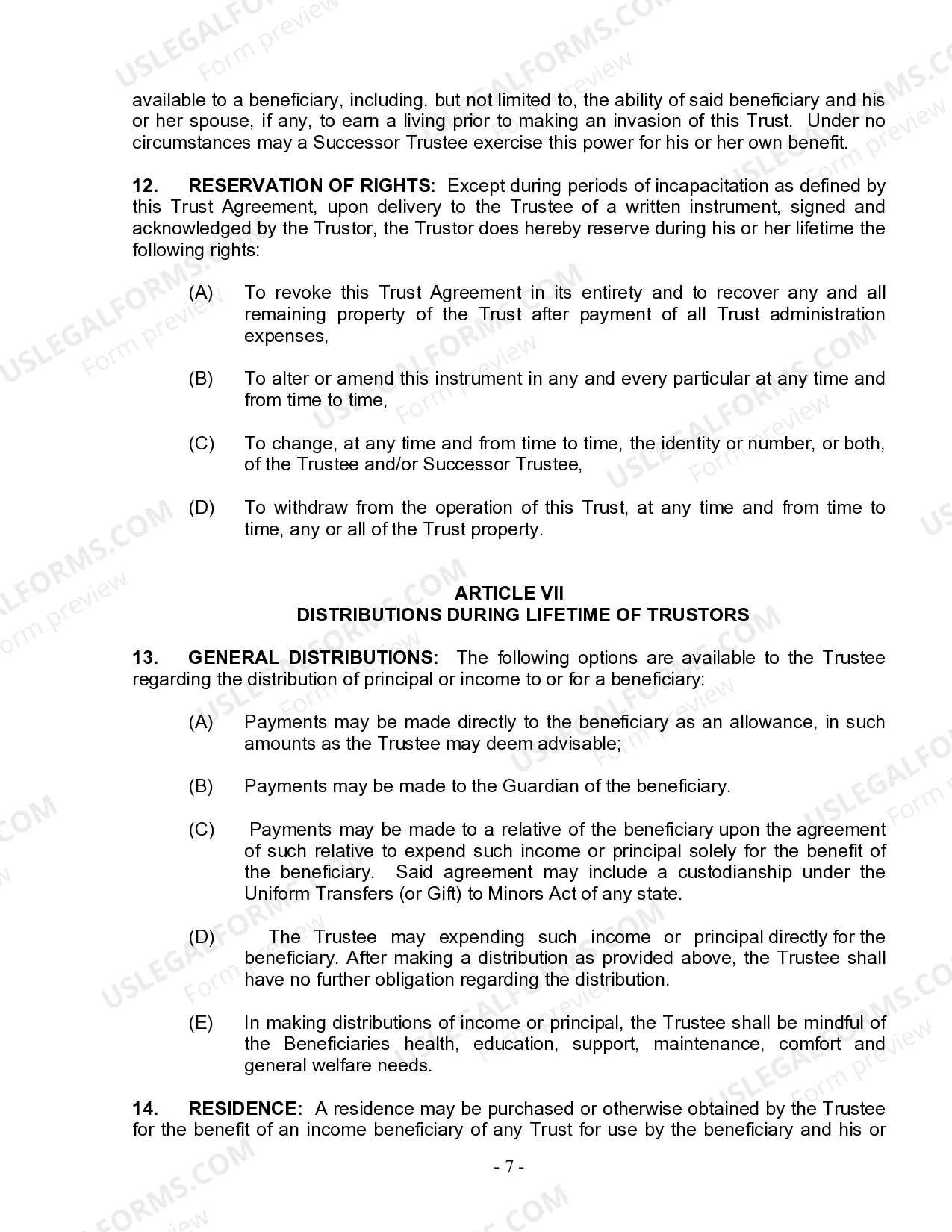
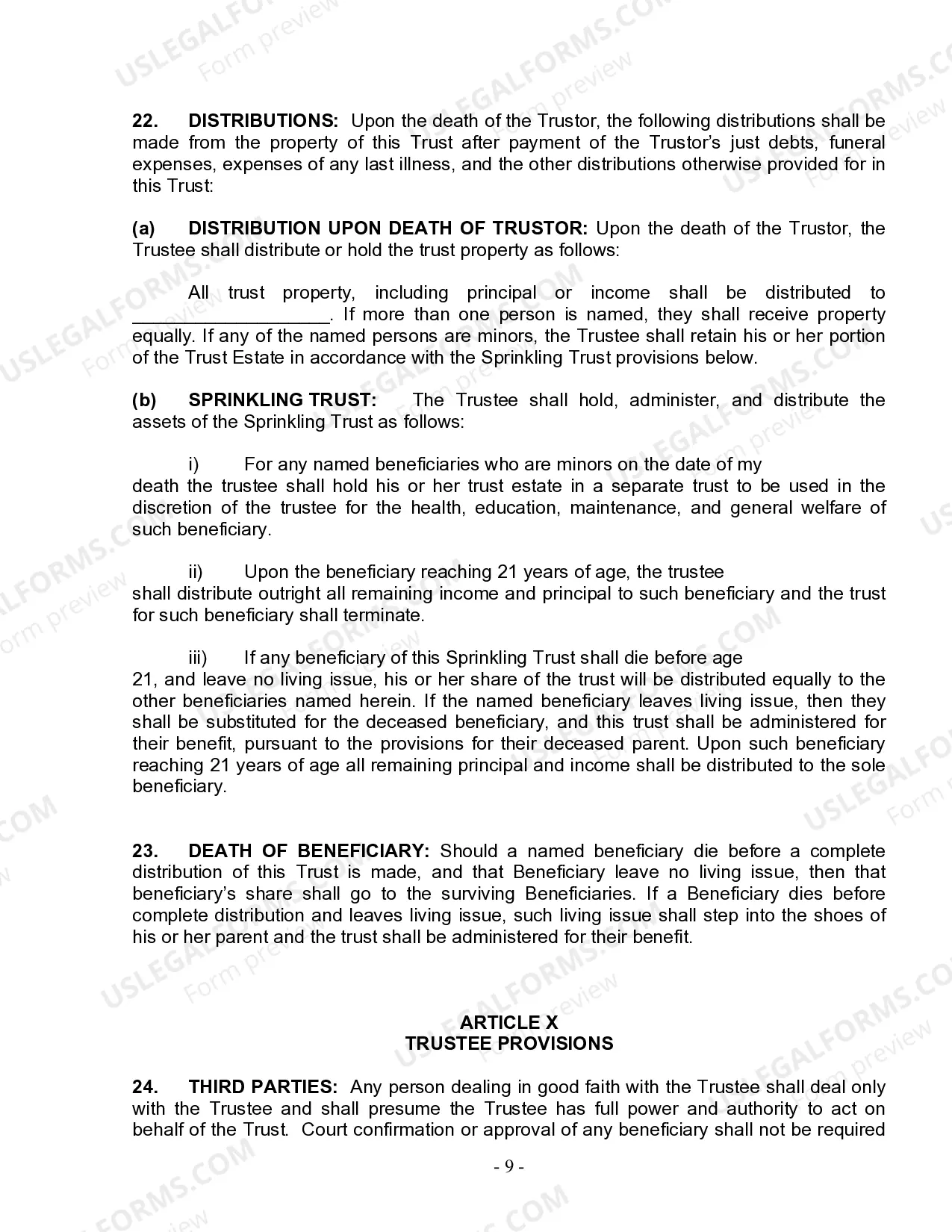
- Distribution instructions after the death of the trustor.
- Specifications on Trustee compensation and liability.



Situations where this form applies
This form is necessary when an individual who is single, divorced, or widowed without children wants to manage their assets through a living trust. It is particularly useful for individuals looking to avoid probate and for those wishing to control how their assets are distributed after their death. It is also beneficial for those who want to maintain privacy regarding their estate matters.
Who should use this form
- Individuals who are single, divorced, or widowed without children.
- Those looking to streamline their estate planning process.
- Anyone wishing to avoid the probate process for their assets.
- Individuals wanting to retain control over their assets during their lifetime.
Instructions for completing this form
- Identify the parties: Enter the name and address of the trustor and any appointed trustee.
- Name the trust: Specify the name of the trust and complete any necessary sections on trust assets.
- Outline trustee powers: Fill in the sections detailing the powers and responsibilities of the trustee.
- Assign beneficiaries: Clearly identify who will inherit the trust assets after the trustor's death.
- Sign and date: Ensure that both the trustor and trustee sign the document in the presence of a notary if required.
Notarization requirements for this form
To make this form legally binding, it must be notarized. Our online notarization service, powered by Notarize, lets you verify and sign documents remotely through an encrypted video session.
Get your form ready online
Our built-in tools help you complete, sign, share, and store your documents in one place.
Make edits, fill in missing information, and update formatting in US Legal Forms—just like you would in MS Word.
Download a copy, print it, send it by email, or mail it via USPS—whatever works best for your next step.
Sign and collect signatures with our SignNow integration. Send to multiple recipients, set reminders, and more. Go Premium to unlock E-Sign.
If this form requires notarization, complete it online through a secure video call—no need to meet a notary in person or wait for an appointment.
We protect your documents and personal data by following strict security and privacy standards.

Make edits, fill in missing information, and update formatting in US Legal Forms—just like you would in MS Word.

Download a copy, print it, send it by email, or mail it via USPS—whatever works best for your next step.

Sign and collect signatures with our SignNow integration. Send to multiple recipients, set reminders, and more. Go Premium to unlock E-Sign.

If this form requires notarization, complete it online through a secure video call—no need to meet a notary in person or wait for an appointment.

We protect your documents and personal data by following strict security and privacy standards.
Avoid these common issues
- Failing to specify the assets included in the trust.
- Not clearly identifying the trustee or successor trustee.
- Leaving out the beneficiaries or providing vague instructions regarding distributions.
- Not signing the document in accordance with state requirements.
Benefits of using this form online
- Immediate access to a customizable living trust template.
- Convenience of filling out the form at your own pace.
- Reliability ensured through professionally drafted language and provisions.
- Allows for easy updates and modifications to reflect changing circumstances.
Legal use & context
- A properly executed living trust prevents assets from going through probate.
- The trust must be managed by the appointed trustee according to the terms set forth.
- All assets included in the trust must be clearly documented to ensure accurate management and distribution.
What to keep in mind
- This living trust is specifically for individuals without children.
- It provides a way to manage assets during your lifetime and guide asset distribution after death.
- Proper notarization is required for legality.
Looking for another form?
Form popularity
FAQ
Dying Without a Will in VermontIf you die without a valid will, you'll lose control over what happens to your assets after your death.If there isn't a will, the probate court must appoint someone to serve as the executor or personal representative. Usually the surviving spouse or adult child is chosen for this role.
When one spouse dies, the joint trust will continue to operate for the benefit of the surviving spouse as a Survivor's Trust. Any specific gifts of tangible property from the first spouse to beneficiaries (other than the surviving spouse) will be given to those people.
Testamentary Trust: A trust created by will and, therefore, not effective until the grantor's death. Estate: Similar to a trust, but used to wind up the affairs of a deceased person to distribute property to the beneficiaries in an efficient and accurate fashion and comes into existence at decedent's death.
Children - if there is no surviving married or civil partner If there is no surviving partner, the children of a person who has died without leaving a will inherit the whole estate. This applies however much the estate is worth. If there are two or more children, the estate will be divided equally between them.
Generally, no. Most living or revocable trusts become irrevocable upon the death of the trust's maker or makers. This means that the trust cannot be altered in any way once the successor trustee takes over management of it.
When they pass away, the assets are distributed to beneficiaries, or the individuals they have chosen to receive their assets. A settlor can change or terminate a revocable trust during their lifetime. Generally, once they die, it becomes irrevocable and is no longer modifiable.
Like a will, a living trust can be altered whenever you wish.After one spouse dies, the surviving spouse is free to amend the terms of the trust document that deal with his or her property, but can't change the parts that determine what happens to the deceased spouse's trust property.
This should include the titles and deeds to real property, bank account information, investment accounts, stock certificates, life insurance policies, and other assets you will be using to fund the trust. Having this information available will make it easier to prepare your trust distribution provisions.
What happens in this type of trust is that the trust is a joint revocable trust when both spouses are alive. When one of the spouses dies, the trust will then split into two trusts automatically. Each trust will have half the assets of the trust along with the separate property of the spouse.