Copyright - Validity - Originality
Overview of this form
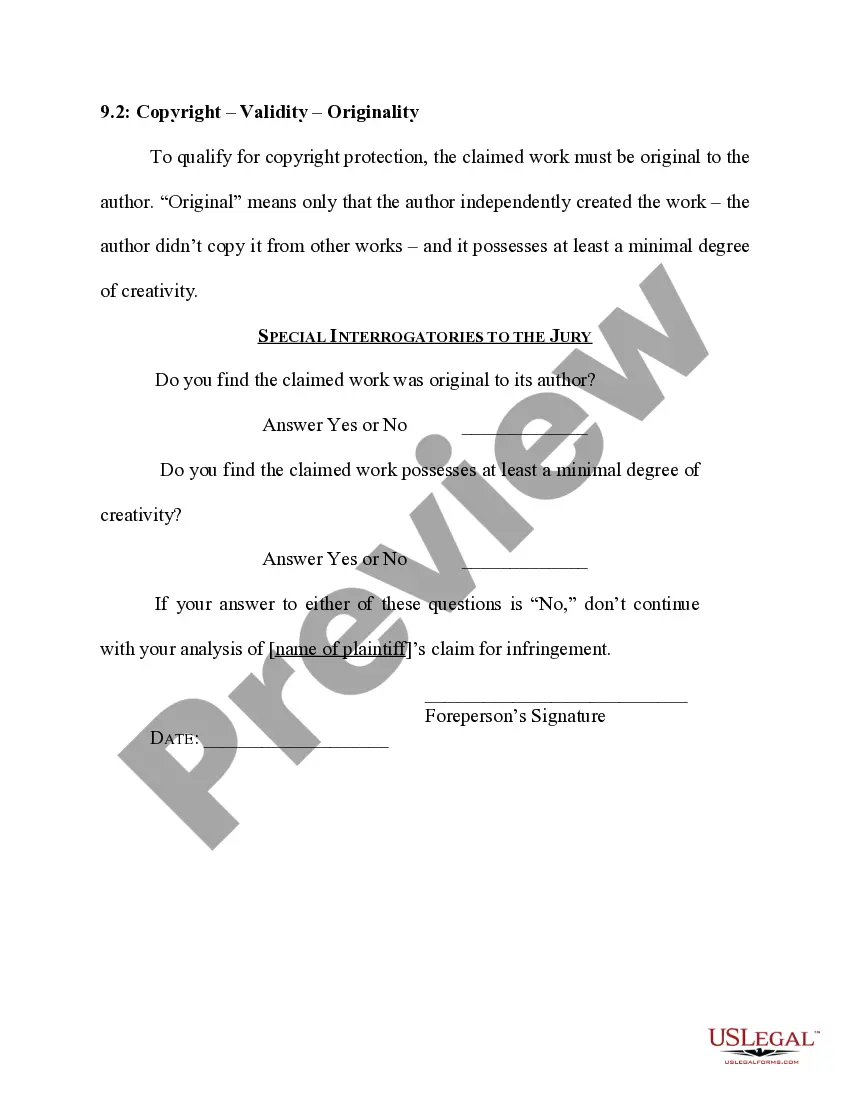
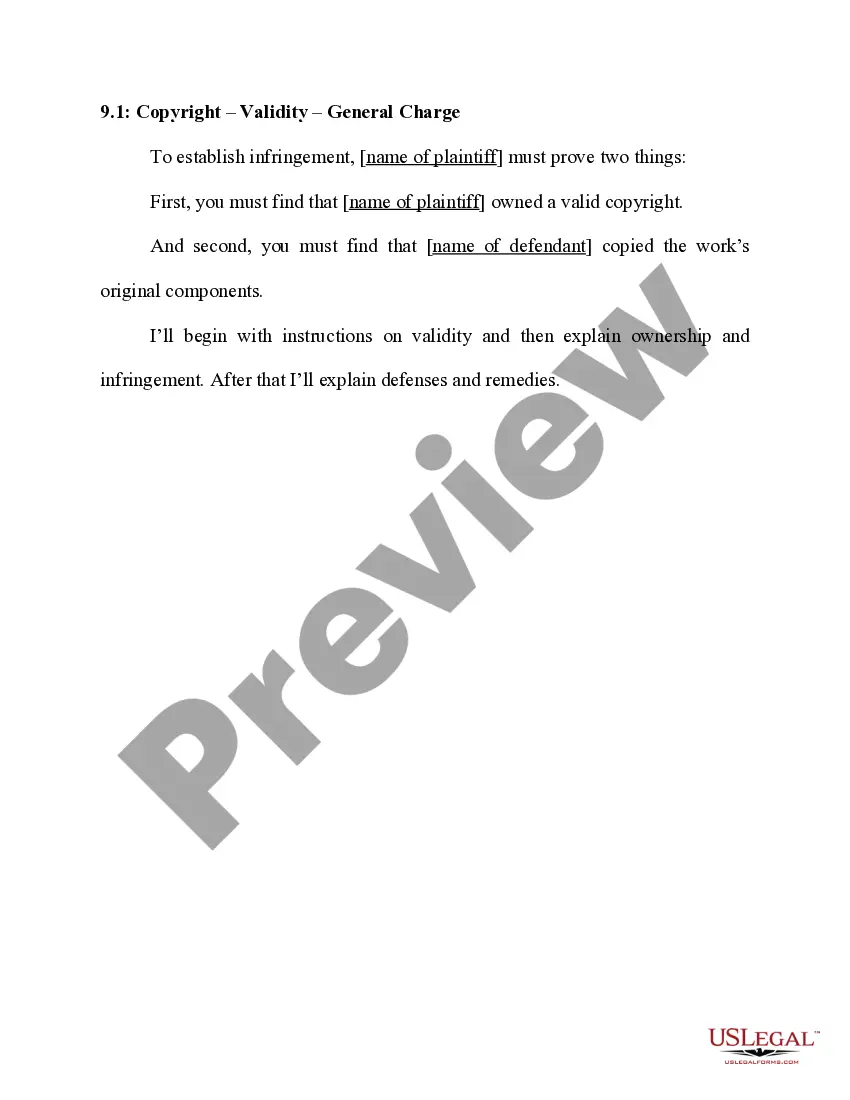
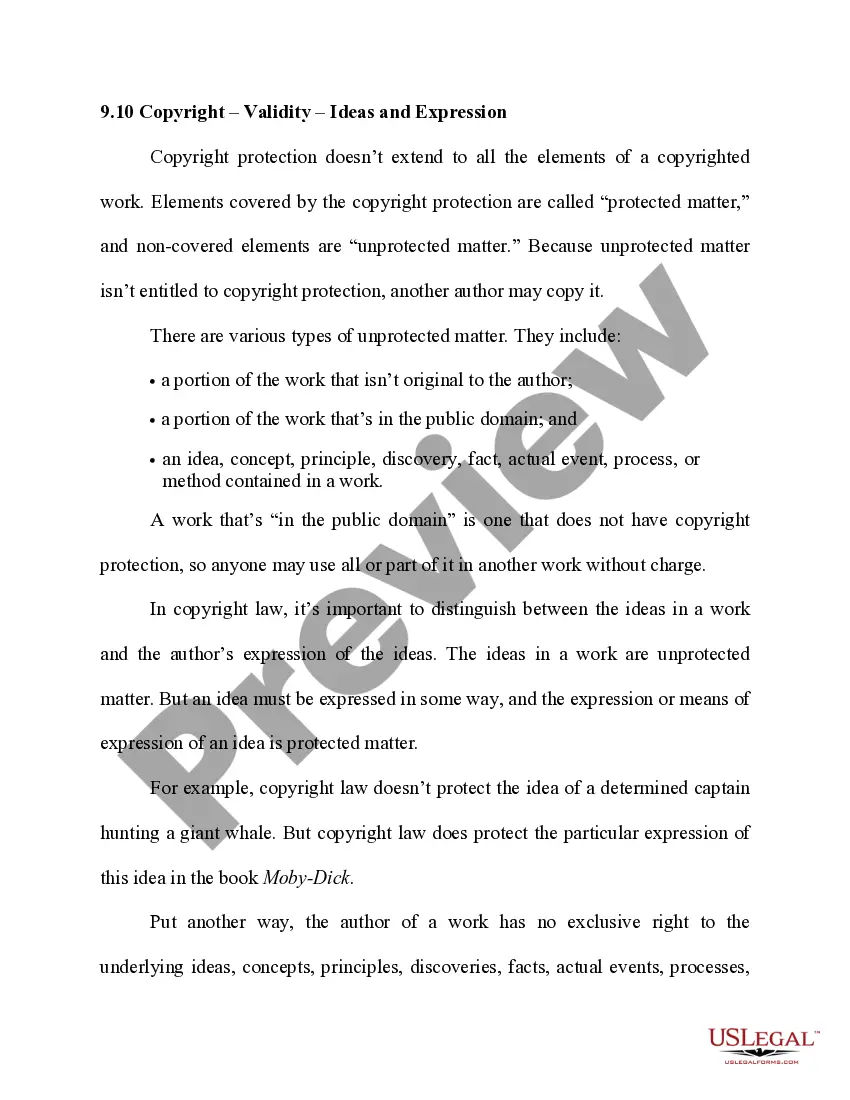
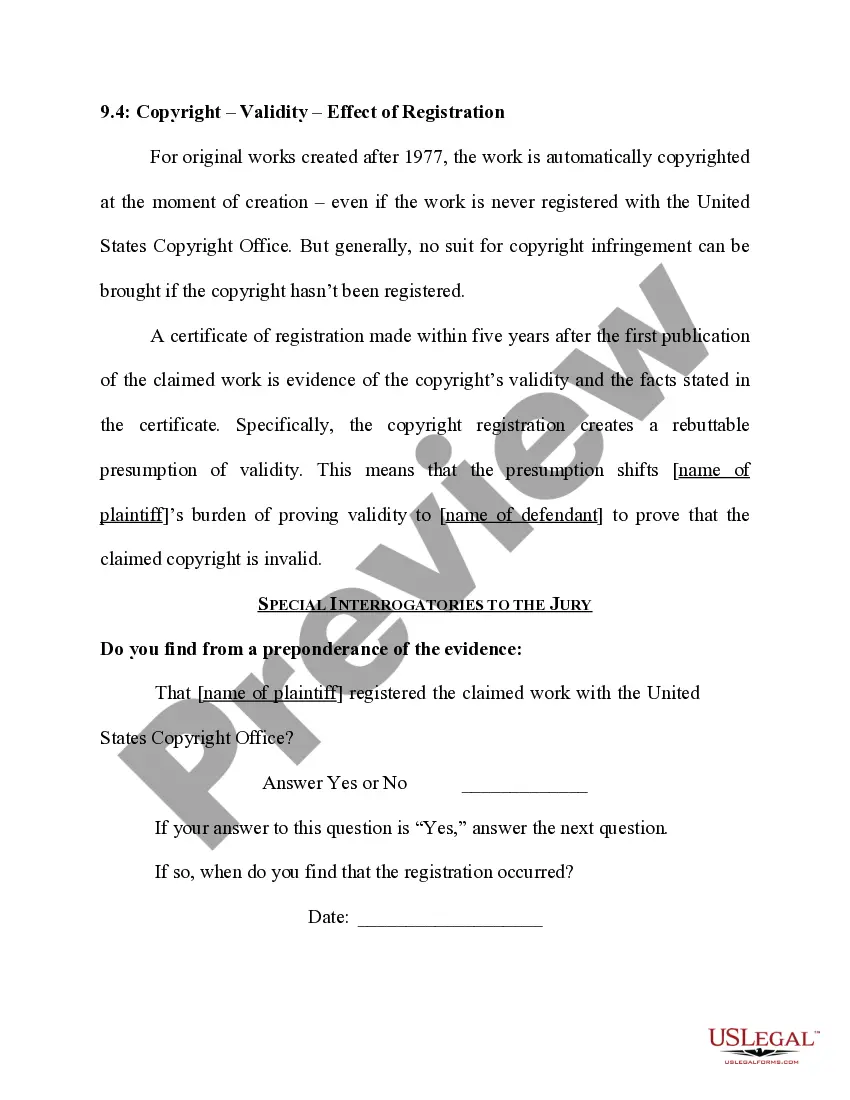
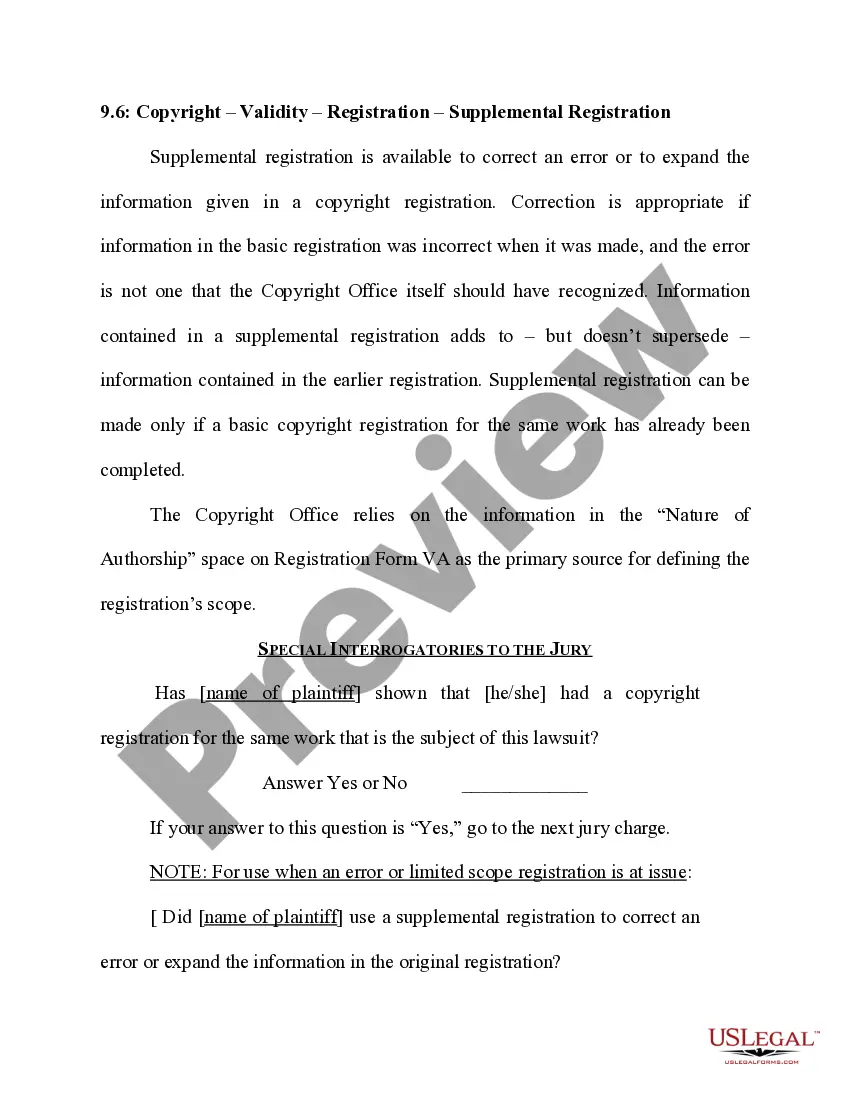
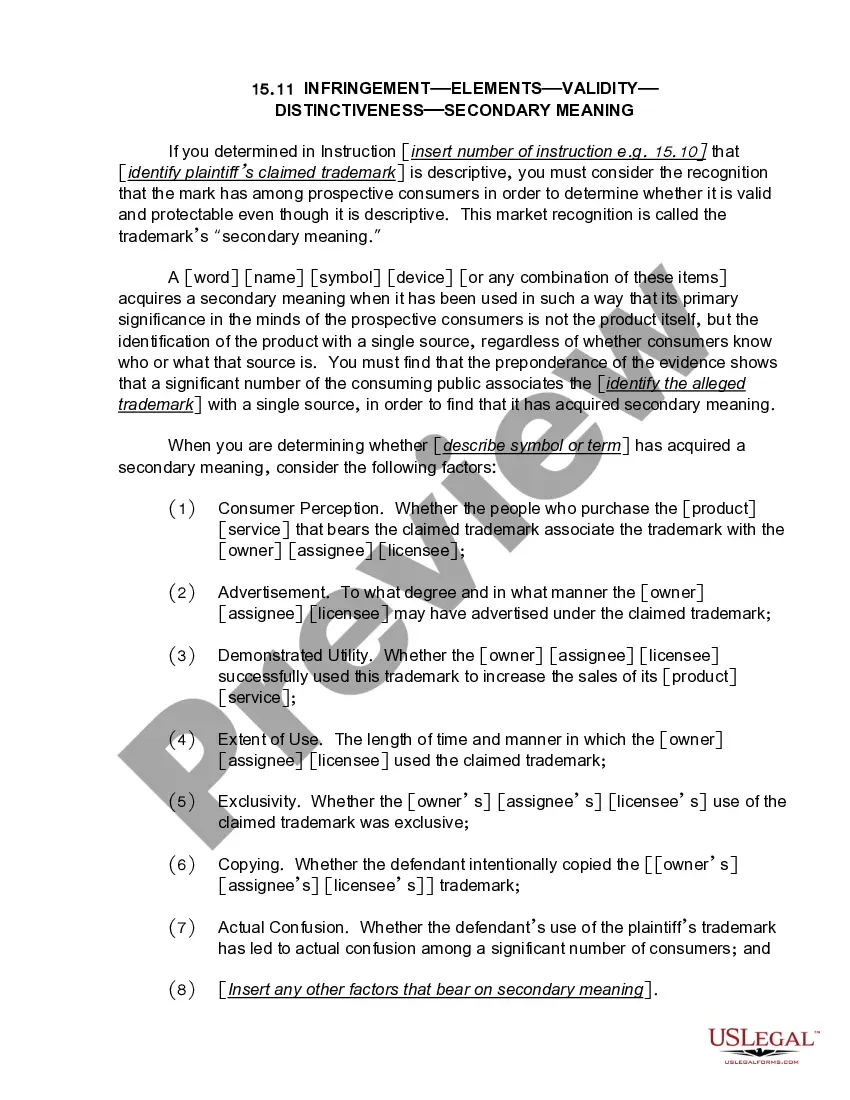
The Copyright - Validity - Originality form is used to determine whether a claimed work qualifies for copyright protection under federal law. This form focuses on two key questions: whether the work is original to its author and whether it possesses a minimal degree of creativity. Understanding these criteria is crucial for establishing copyright infringement claims and is distinct from other legal forms related to copyright or intellectual property.
Key parts of this document
- Question 1: Asks if the claimed work was original to its author.
- Question 2: Inquires if the claimed work possesses a minimal degree of creativity.
- Response section: Forms require a simple "Yes" or "No" answer for each question.
- Foreperson's signature and date lines for finalizing the jury's findings.
When to use this form
This form is essential when addressing copyright infringement cases where originality and creativity are disputed. It may be employed during jury trials to guide jurors in making determinations about the validity of copyright claims before proceeding with further legal analysis.
Who can use this document
- Legal professionals involved in copyright litigation.
- Jury forepersons tasked with evaluating copyright claims.
- Parties involved in disputes over the originality of creative works.
Instructions for completing this form
- Read the questions carefully.
- Determine the originality of the claimed work based on the evidence presented.
- Assess whether the work meets the minimal creativity threshold.
- Provide clear "Yes" or "No" responses to each question.
- Have the foreperson sign and date the form after completing the questions.
Is notarization required?
Notarization is generally not required for this form. However, certain states or situations might demand it. You can complete notarization online through US Legal Forms, powered by Notarize, using a verified video call available anytime.
Get your form ready online
Our built-in tools help you complete, sign, share, and store your documents in one place.
Make edits, fill in missing information, and update formatting in US Legal Forms—just like you would in MS Word.
Download a copy, print it, send it by email, or mail it via USPS—whatever works best for your next step.
Sign and collect signatures with our SignNow integration. Send to multiple recipients, set reminders, and more. Go Premium to unlock E-Sign.
If this form requires notarization, complete it online through a secure video call—no need to meet a notary in person or wait for an appointment.
We protect your documents and personal data by following strict security and privacy standards.

Make edits, fill in missing information, and update formatting in US Legal Forms—just like you would in MS Word.

Download a copy, print it, send it by email, or mail it via USPS—whatever works best for your next step.

Sign and collect signatures with our SignNow integration. Send to multiple recipients, set reminders, and more. Go Premium to unlock E-Sign.

If this form requires notarization, complete it online through a secure video call—no need to meet a notary in person or wait for an appointment.

We protect your documents and personal data by following strict security and privacy standards.
Avoid these common issues
- Failing to carefully evaluate both questions before answering.
- Providing ambiguous responses that do not clearly indicate "Yes" or "No."
- Neglecting to sign and date the form after completion.
Benefits of completing this form online
- Convenient access to downloadable legal forms at any time.
- Edit and update forms easily to reflect the specifics of each case.
- Reliable templates drafted by licensed attorneys ensuring legal validity.
Legal use & context
- This form is used in federal copyright litigation under the jurisdiction of the 11th Circuit.
- Answers to the form play a crucial role in the determination of originality and creativity, which are key factors in copyright claims.
- The findings based on this form can influence subsequent legal proceedings and decisions.
Looking for another form?
Form popularity
FAQ
Copyright is originality and fixation Works are original when they are independently created by a human author and have a minimal degree of creativity. Independent creation simply means that you create it yourself, without copying.
The three basic elements of copyright: originality, creativity, and fixation.
The three basic elements of copyright: originality, creativity, and fixation.
Three Exceptions There are three major exceptions to this rule: (1) the face-to-face instruction exception, (2) the online instruction exception (also known as the TEACH Act), and (3) the fair use exception. These exceptions are defenses against a claim of copyright infringement.
Originality. In order to qualify for copyright protection in the United States, a work must satisfy the originality requirement, which has two parts. The work must have ?at least a modicum? of creativity, and it must be the independent creation of its author.
Under the fair use doctrine of the U.S. copyright statute, it is permissible to use limited portions of a work including quotes, for purposes such as commentary, criticism, news reporting, and scholarly reports.
Copyright, a form of intellectual property law, protects original works of authorship including literary, dramatic, musical, and artistic works, such as poetry, novels, movies, songs, computer software, and architecture.
The general meaning of ?Originality? is something newly developed or recently discovered which didn't happen previously. The aspect of Originality in the Copyright Act, 1957 prevents the new creation, artistic work, or inventions from forgeries, reproducing similar creations, or other unoriginal works.