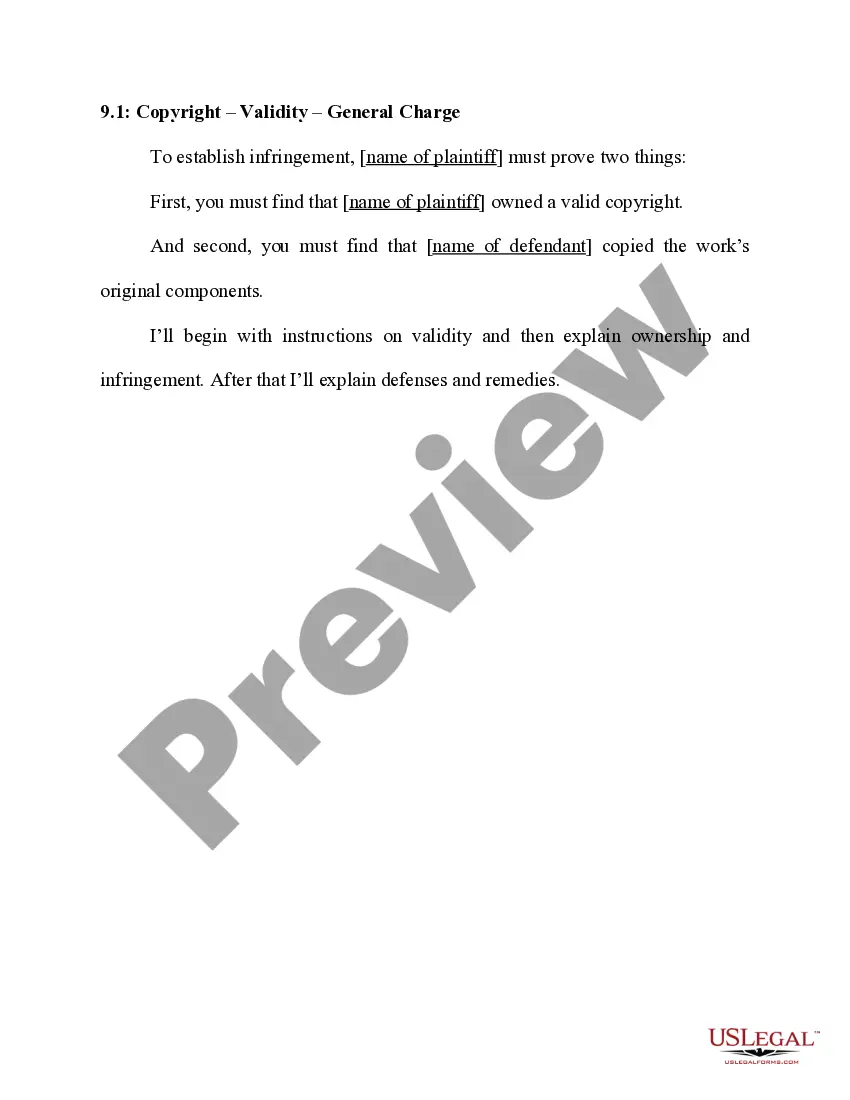
Copyright - Validity - General Charge
About this form
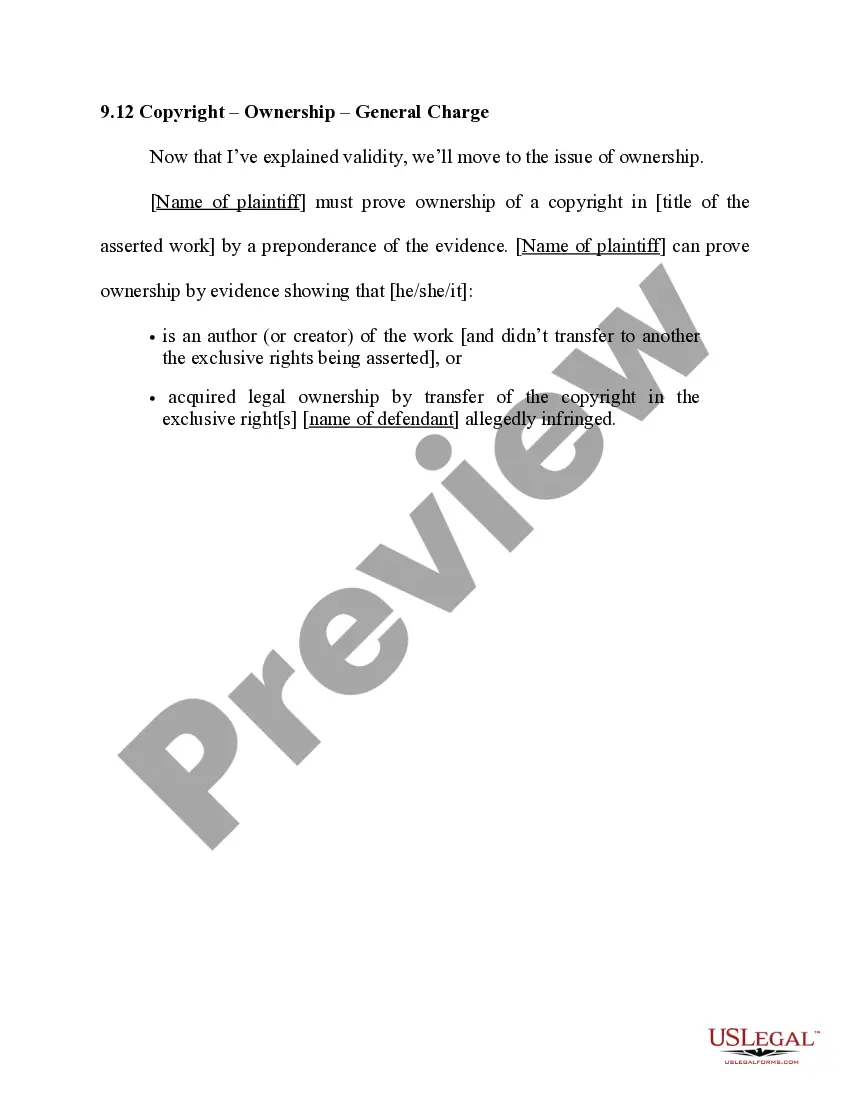
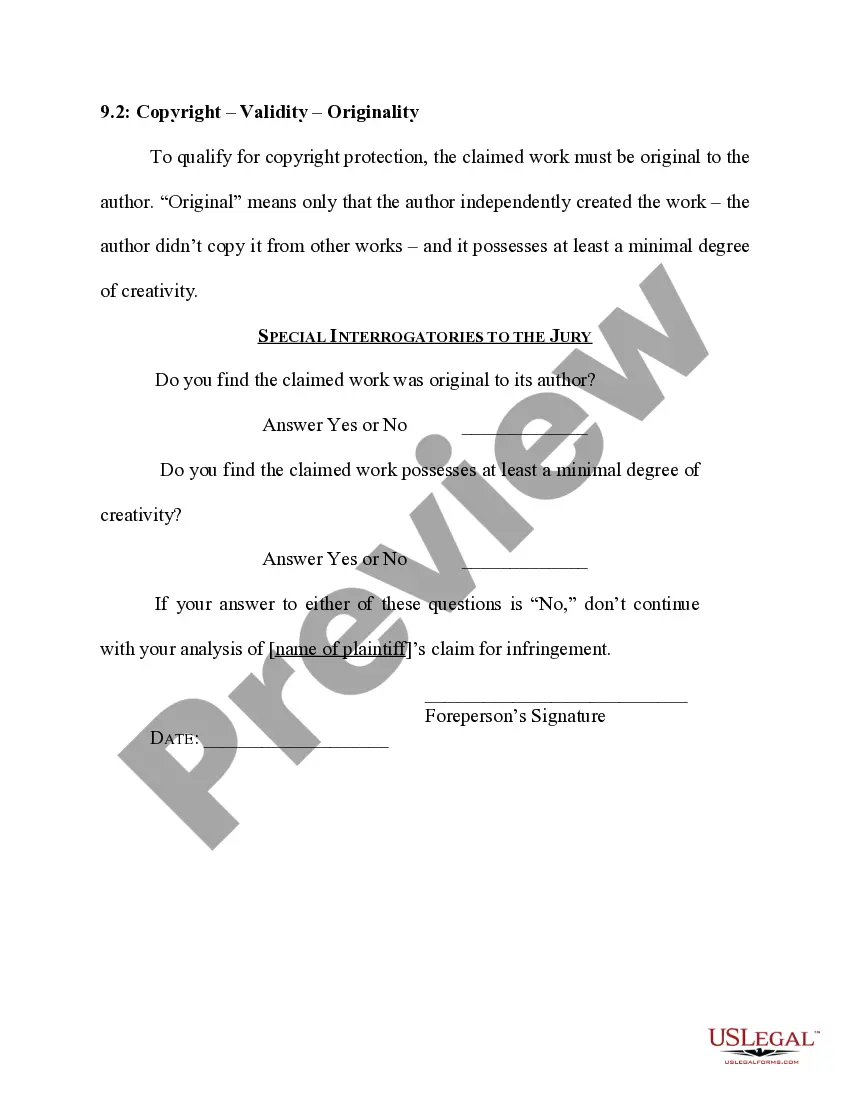
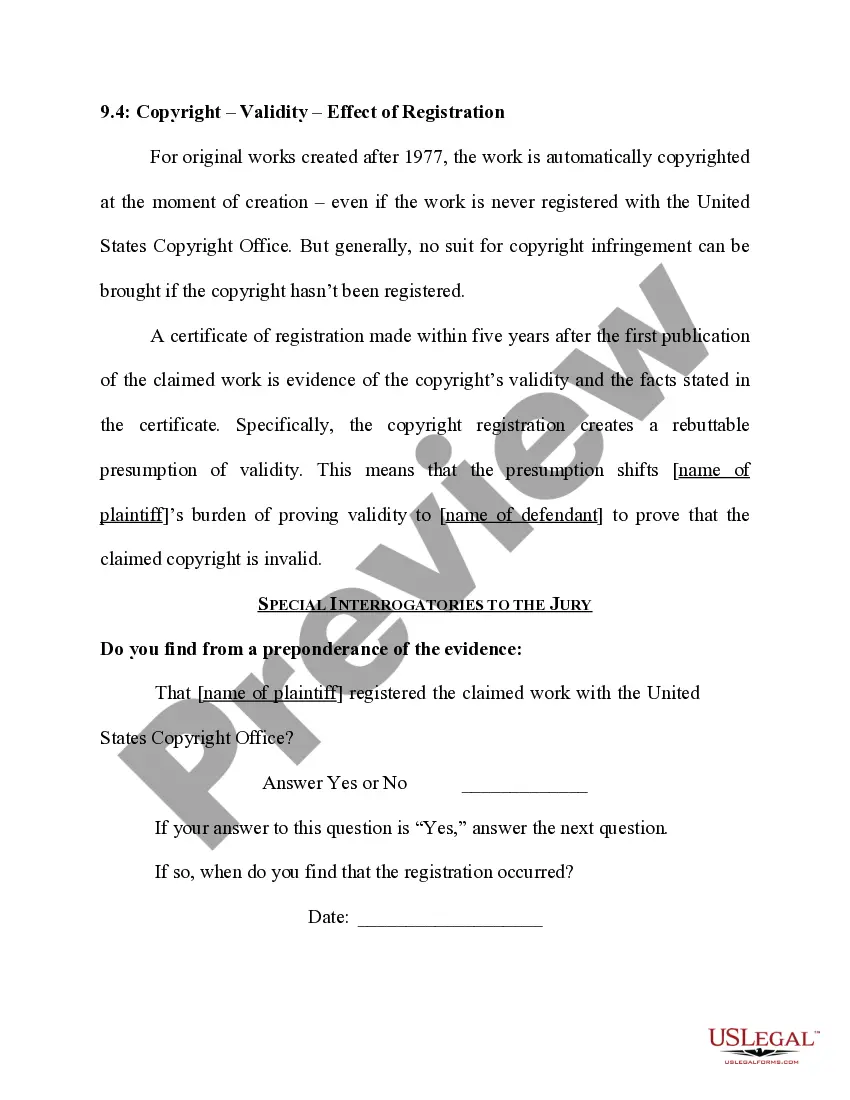
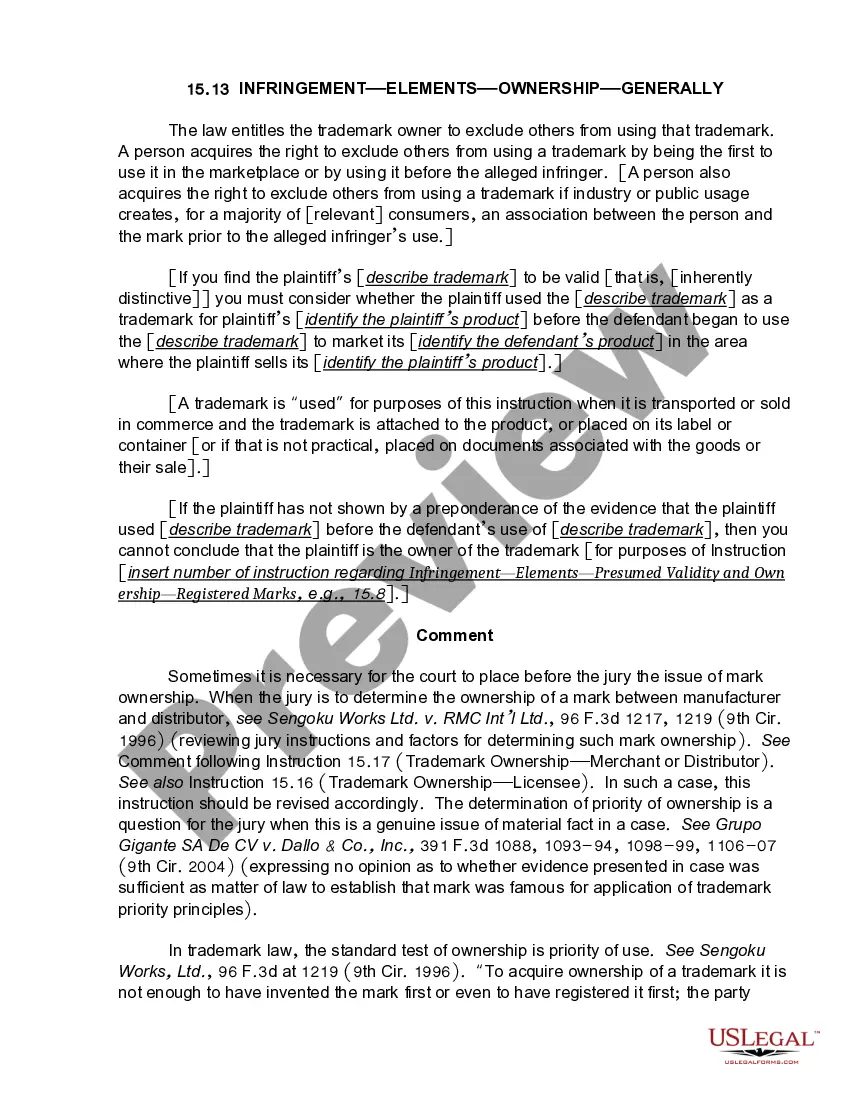
The Copyright - Validity - General Charge form is designed to provide instructions for establishing copyright infringement in legal cases. It assists jurors in understanding the essential criteria of copyright validity, ownership, and infringement. This form differs from other copyright-related forms by focusing specifically on the legal standards needed to prove infringement in court and guiding the jury through the evaluation process.
Form components explained
- Instructions on establishing the validity of copyright ownership.
- Criteria for determining if the defendant copied original components of the work.
- Guidelines on potential defenses against infringement claims.
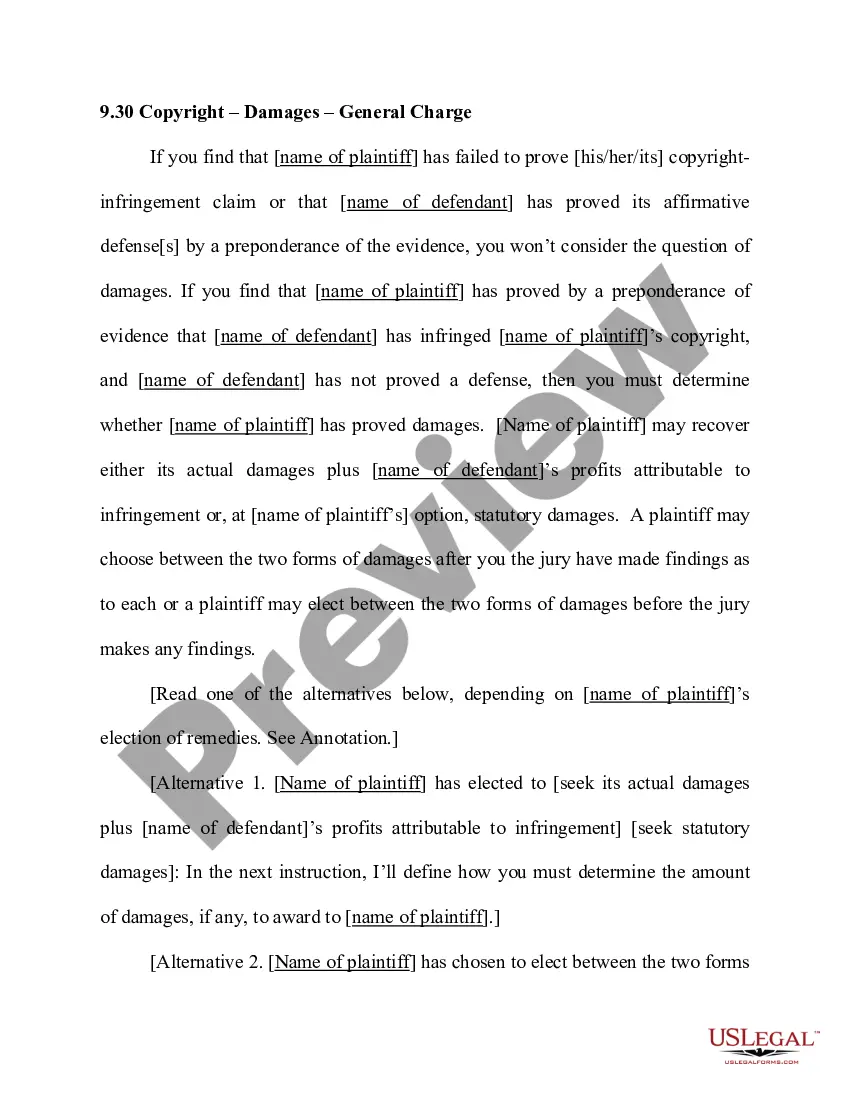
- Explanations of the remedies available for copyright infringement.
Common use cases
This form is necessary when a copyright infringement case is being tried in court. It is used to guide jurors in their deliberations regarding whether a copyright owner's rights have been violated and the basis for establishing the defendant's culpability.
Who this form is for
- Jurors involved in copyright infringement cases.
- Judges presiding over cases concerning copyright validity and infringement.
- Attorneys presenting cases related to copyright disputes.
Steps to complete this form
- Identify the parties involved in the case (plaintiff and defendant).
- Establish the original components of the copyrighted work.
- Provide evidence of copyright ownership by the plaintiff.
- Evaluate and present any defenses submitted by the defendant.
- Determine appropriate remedies based on the jury's findings.
Notarization requirements for this form
This form usually doesn’t need to be notarized. However, local laws or specific transactions may require it. Our online notarization service, powered by Notarize, lets you complete it remotely through a secure video session, available 24/7.
Get your form ready online
Our built-in tools help you complete, sign, share, and store your documents in one place.
Make edits, fill in missing information, and update formatting in US Legal Forms—just like you would in MS Word.
Download a copy, print it, send it by email, or mail it via USPS—whatever works best for your next step.
Sign and collect signatures with our SignNow integration. Send to multiple recipients, set reminders, and more. Go Premium to unlock E-Sign.
If this form requires notarization, complete it online through a secure video call—no need to meet a notary in person or wait for an appointment.
We protect your documents and personal data by following strict security and privacy standards.

Make edits, fill in missing information, and update formatting in US Legal Forms—just like you would in MS Word.

Download a copy, print it, send it by email, or mail it via USPS—whatever works best for your next step.

Sign and collect signatures with our SignNow integration. Send to multiple recipients, set reminders, and more. Go Premium to unlock E-Sign.

If this form requires notarization, complete it online through a secure video call—no need to meet a notary in person or wait for an appointment.

We protect your documents and personal data by following strict security and privacy standards.
Common mistakes to avoid
- Failing to clearly establish the validity of the copyright.
- Not differentiating between ownership and copying of the work.
- Overlooking defenses that may mitigate liability.
Why complete this form online
- Convenience of immediate access and ease of download.
- Editable templates to tailor to specific case needs.
- Reliability based on legal standards set by licensed attorneys.
Legal use & context
- The form is based on established copyright law standards from the 11th Circuit Federal Court of Appeals.
- It is meant to guide jurors in applying legal principles effectively to make informed decisions.
Key takeaways
- The form provides essential guidelines for assessing copyright validity and infringement.
- It serves as a critical reference for juries determining infringement cases.
- Understanding the criteria outlined in this form is vital for proper legal proceedings in copyright disputes.
Looking for another form?
Form popularity
FAQ
Fees Registration of a claim in an original work of authorshipElectronic filing$250Paper filing$250Registration of a renewal claim (Form RE):Claim without addendum$12523 more rows
Filing cost of a trademark application online The USPTO prefers that applicants file electronically through the Trademark Electronic Application System (TEAS). The fees for electronically filed trademark applications generally range from $250 to $350 for each class of goods or services.
How do I register my copyright? To register a work, submit a completed application form, and a nonreturnable copy or copies of the work to be registered. See Circular 1, Copyright Basics, section ?Registration Procedures., and Circular 4, Copyright Office Fees?.
As a general rule, for works created after January 1, 1978, copyright protection lasts for the life of the author plus an additional 70 years.
The fee to register your copyright will depend on what you're registering and whether you're registering online or by mail. For example, at the time of the writing of this article, the following fees were applicable for registration of copyright for a single work of authorship: Online registration: $45.
U.S. copyright law provides copyright owners with the following exclusive rights: Reproduce the work in copies or phonorecords. Prepare derivative works based upon the work. Distribute copies or phonorecords of the work to the public by sale or other transfer of ownership or by rental, lease, or lending.
You can register a copyright at any time, but filing promptly may pay off in the long run. ?Timely registration? ? that is, registration within three months of the work's publication date or before any copyright infringement actually begins ? makes it much easier to sue and recover money from an infringer.
The cost to trademark a logo with the U.S. Patent and Trademark Office (USPTO) is $275?$660 as of June 2020, plus legal fees. You can register a trademark with your state for $50-$150, but federal registration offers a great deal more legal protection. The USPTO offers four different forms, each with different pricing.