Virginia Special Durable Power of Attorney for Bank Account Matters
Overview of this form
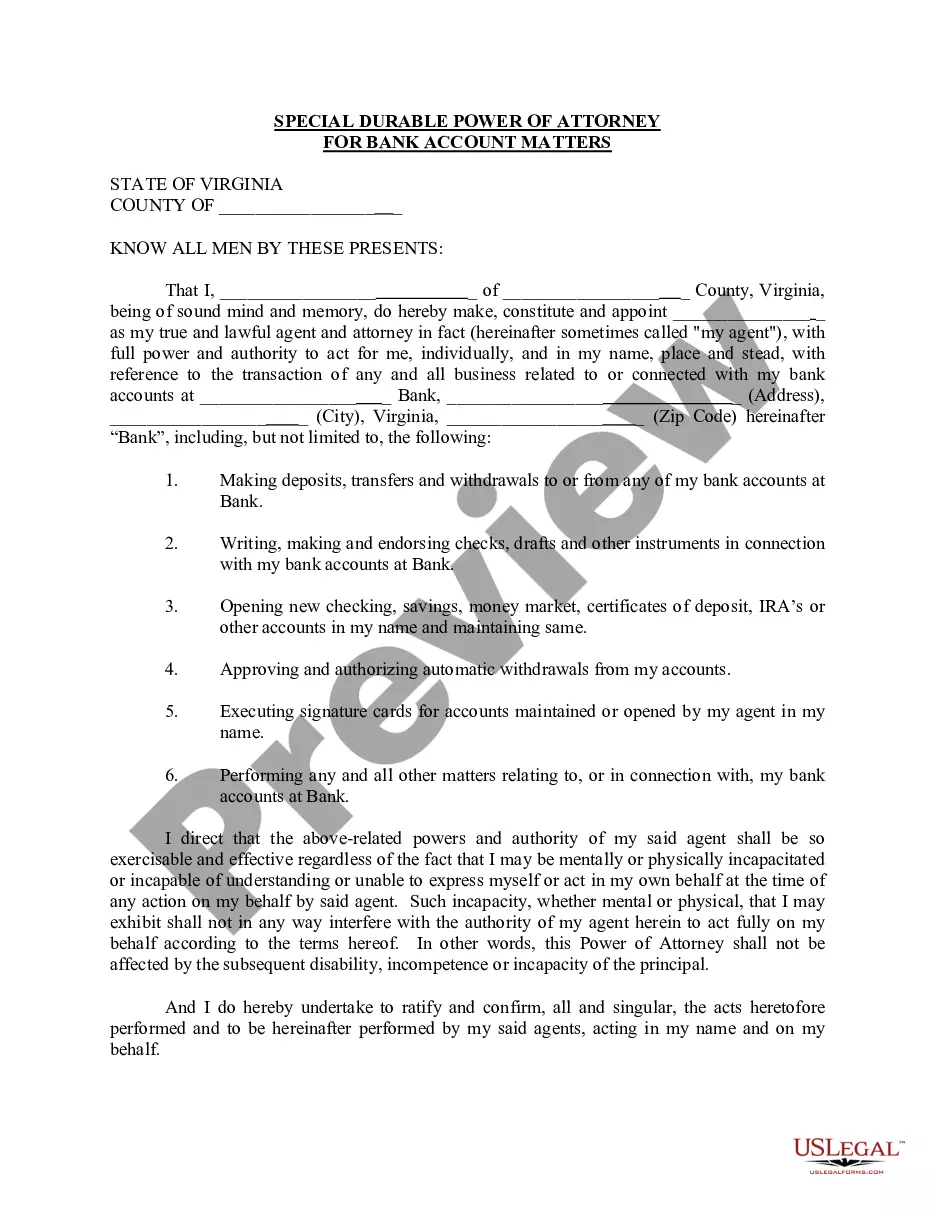
The Special Durable Power of Attorney for Bank Account Matters is a legal document that allows you to appoint an agent to manage your bank account transactions on your behalf. Unlike a general power of attorney, this special version grants your agent specific powers to handle tasks such as making deposits, writing checks, or opening new accounts, while remaining active even if you become incapacitated. This makes it a valuable tool for those who want to ensure their financial matters are managed effectively when they are unable to do so themselves.
Form components explained
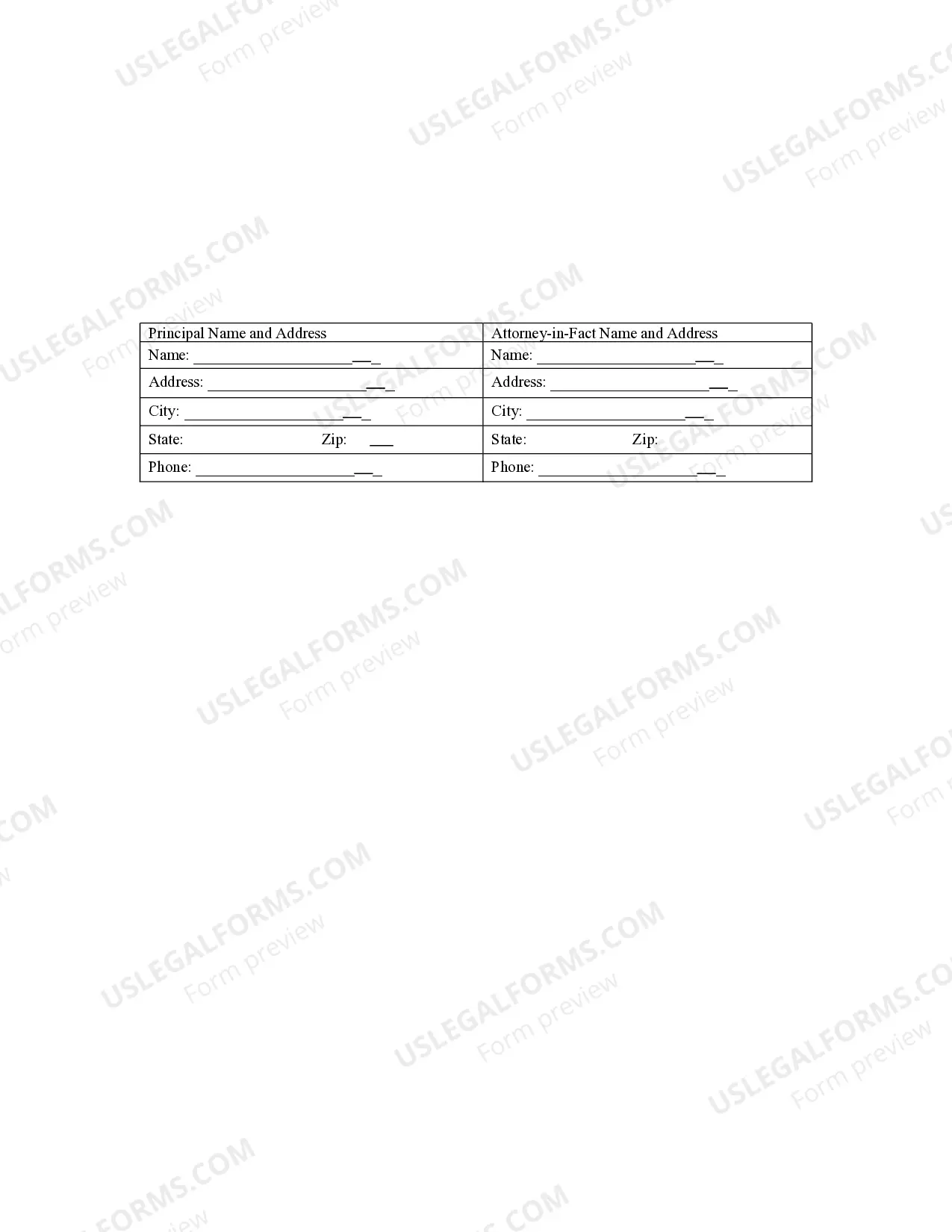
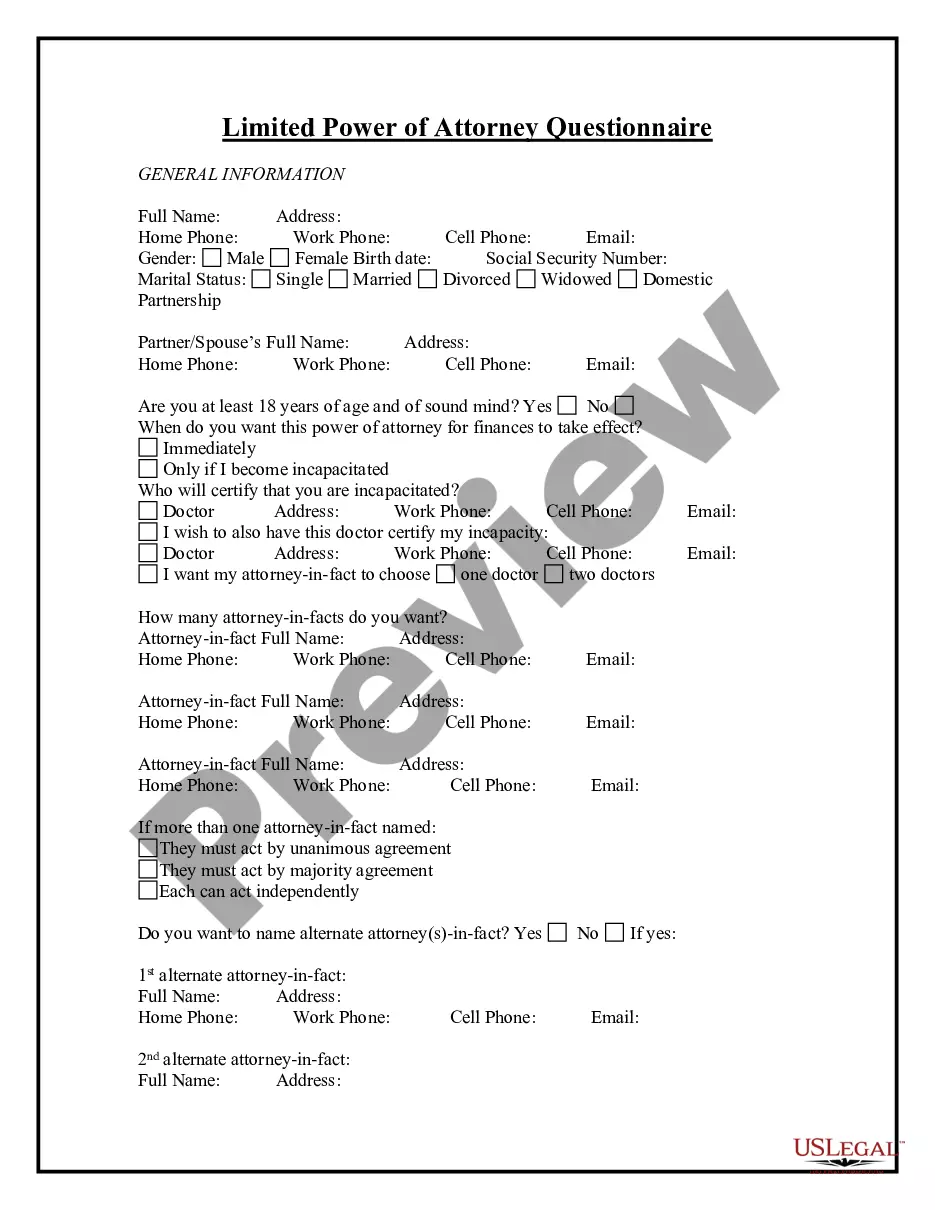
- Identification of the principal and agent with contact details.
- Specific powers granted to the agent, including handling deposits and withdrawals.
- Stipulation that the power of attorney remains valid despite the principal's incapacity.
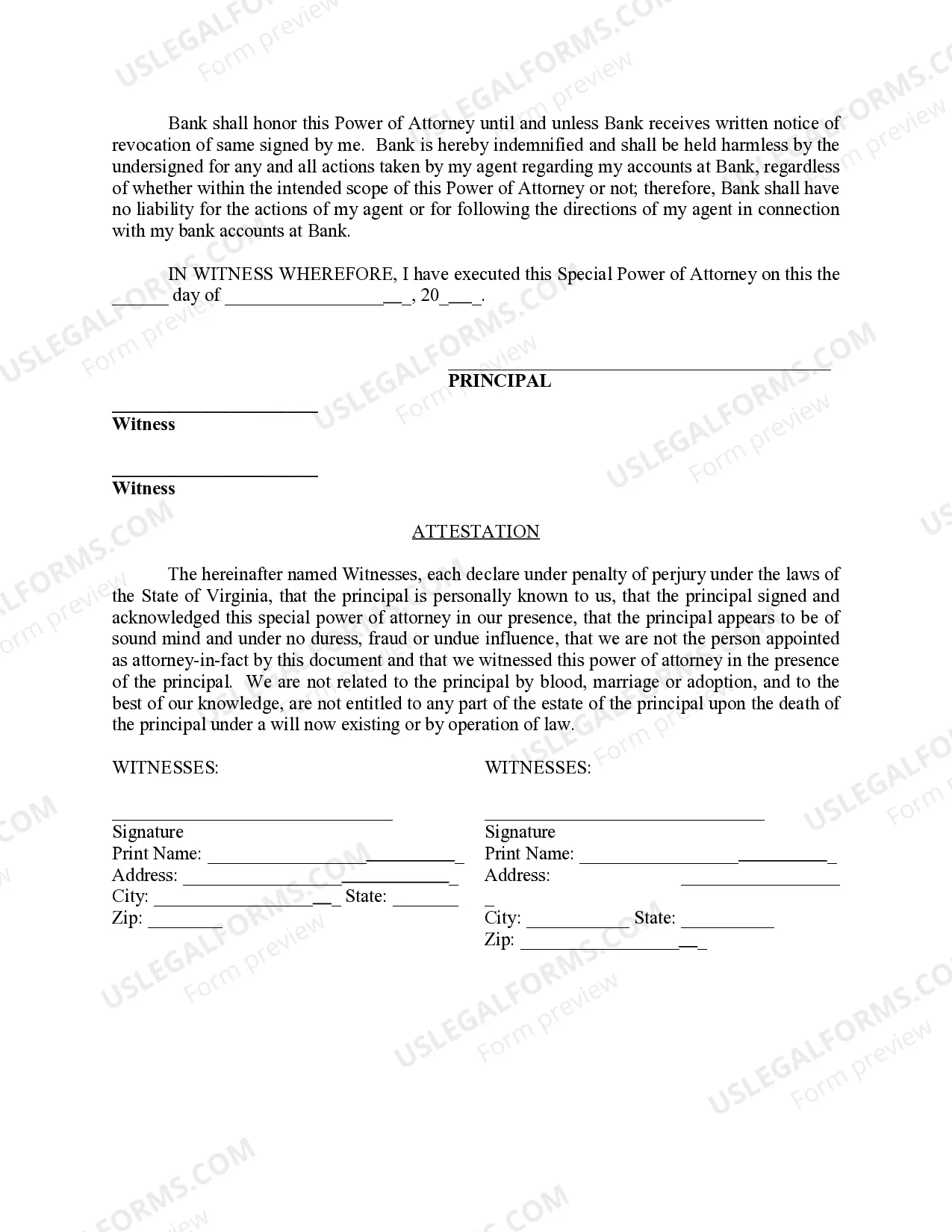
- Requirement for witness signatures to validate the document.
- Indemnification clause protecting the bank and agent from liability.
When to use this form
This form should be used when you need someone to manage your bank account transactions while you are unavailable or unable to perform these tasks yourself. Common scenarios include long-term travel, hospitalization, or when dealing with progressive health issues that may affect your ability to manage finances. If you want to ensure your financial affairs continue smoothly in such situations, this form is essential.
Who can use this document
- Individuals who want to designate someone to manage their bank accounts.
- People facing health issues that may affect their ability to transact financial matters.
- Those who are traveling for extended periods and need someone to handle their banking needs.
- Individuals who prefer to have a trusted agent available for financial decision-making.
Completing this form step by step
- Enter your name and address as the principal.
- Specify the name and contact details of your chosen agent.
- Clearly define the powers you are granting to the agent concerning your bank accounts.
- Sign and date the document in the presence of witnesses.
- Ensure all parties provide necessary signatures as required in the witness section.
Notarization requirements for this form
This form must be notarized to be legally valid. US Legal Forms provides secure online notarization powered by Notarize, allowing you to complete the process through a verified video call.
Get your form ready online
Our built-in tools help you complete, sign, share, and store your documents in one place.
Make edits, fill in missing information, and update formatting in US Legal Forms—just like you would in MS Word.
Download a copy, print it, send it by email, or mail it via USPS—whatever works best for your next step.
Sign and collect signatures with our SignNow integration. Send to multiple recipients, set reminders, and more. Go Premium to unlock E-Sign.
If this form requires notarization, complete it online through a secure video call—no need to meet a notary in person or wait for an appointment.
We protect your documents and personal data by following strict security and privacy standards.
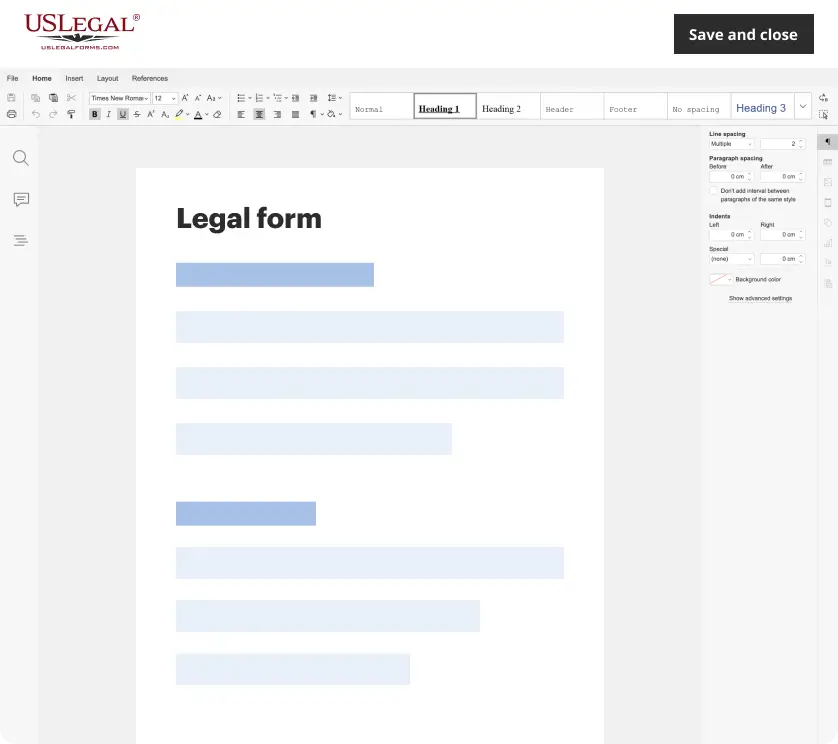
Make edits, fill in missing information, and update formatting in US Legal Forms—just like you would in MS Word.
Download a copy, print it, send it by email, or mail it via USPS—whatever works best for your next step.
Sign and collect signatures with our SignNow integration. Send to multiple recipients, set reminders, and more. Go Premium to unlock E-Sign.

If this form requires notarization, complete it online through a secure video call—no need to meet a notary in person or wait for an appointment.
We protect your documents and personal data by following strict security and privacy standards.
Common mistakes to avoid
- Failing to include the full name and address of the agent.
- Neglecting to have the document signed in the presence of witnesses.
- Not clearly specifying the powers being delegated, which may lead to misunderstandings.
- Forgetting to date the document properly.
Benefits of completing this form online
- Convenience of completing the form at your own pace, any time of day.
- Immediate access to a legally sound, attorney-drafted document.
- Easy to customize the document according to your specific needs and circumstances.
- Secure download, ensuring your personal information remains protected.
Legal use & context
- The document grants specific financial powers to your agent, making it enforceable as long as it is properly executed.
- It is recognized by banks and financial institutions as long as they have received it in the proper form.
- Understanding the limitations and scope of authority granted can help prevent potential conflicts.
Main things to remember
- This power of attorney is specifically for bank account matters in Virginia.
- It remains valid even if the principal becomes incapacitated.
- Proper execution with witnesses is crucial for legal validity.
- Consideration for notarization can further enhance the reliability of the document.
Looking for another form?
Form popularity
FAQ
The POA retains access to any of the decedent's assets that name them as a joint owner or payable-on-death (POD) or transfer-on-death (TOD) beneficiary. Assets that commonly carry POD/TOD designations or can be jointly titled include life insurance proceeds, bank accounts, retirement accounts and brokerage accounts.
But because of the risk of abuse, many banks will scrutinize a POA carefully before allowing the agent to act on the principal's behalf, and often a bank will refuse to honor a POA.The agent fought back in court and won a $64,000 judgment against the bank.
Through the use of a valid Power of Attorney, an Agent can sign checks for the Principal, withdraw and deposit funds from the Principal's financial accounts, change or create beneficiary designations for financial assets, and perform many other financial transactions.
While laws vary between states, a POA can't typically add or remove signers from your bank account unless you include this responsibility in the POA document.If you don't include a clause giving the POA this authority, then financial institutions won't allow your POA to make ownership changes to your accounts.
An agent cannot:Make decisions on behalf of the principal after their death.However, unless the principal named a co-agent or alternate agent in the same POA document or is still competent to appoint someone else to act on their behalf, an agent cannot choose who takes over their duties.
The Achilles heel of powers of attorney is that banks and other financial institutions sometimes refuse to honor them.When the power of attorney becomes necessary, it's often because the principal has become incapacitated.
Financial powers of attorney usually include the right to open bank accounts, withdraw funds from bank accounts, trade stock, pay bills, and cash checks. They could also include the right to give gifts. Medical powers of attorney allow the agent to make health care decisions.
A power of attorney allows an agent to access the principal's bank accounts, either as a general power or a specific power. If the document grants an agent power over that account, they must provide a copy of the document along with appropriate identification to access the bank account.