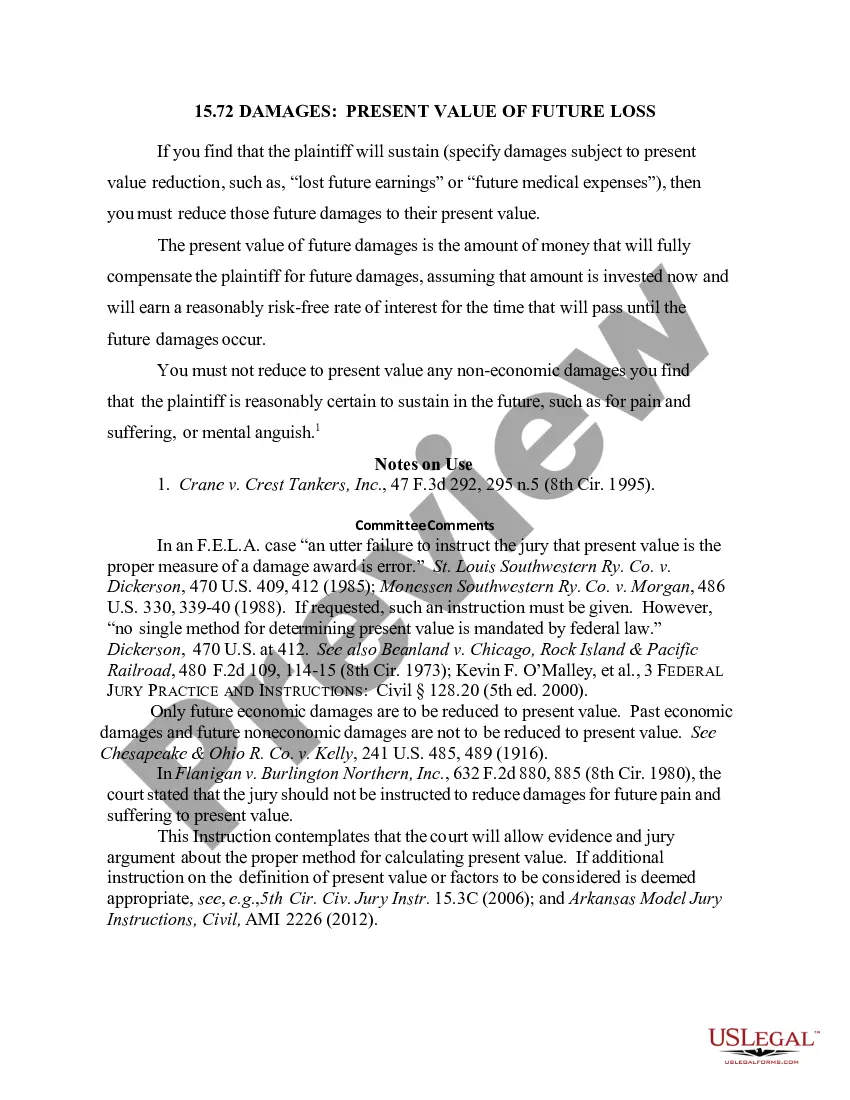
Virginia Basic Questions on the Revocable Living Trust
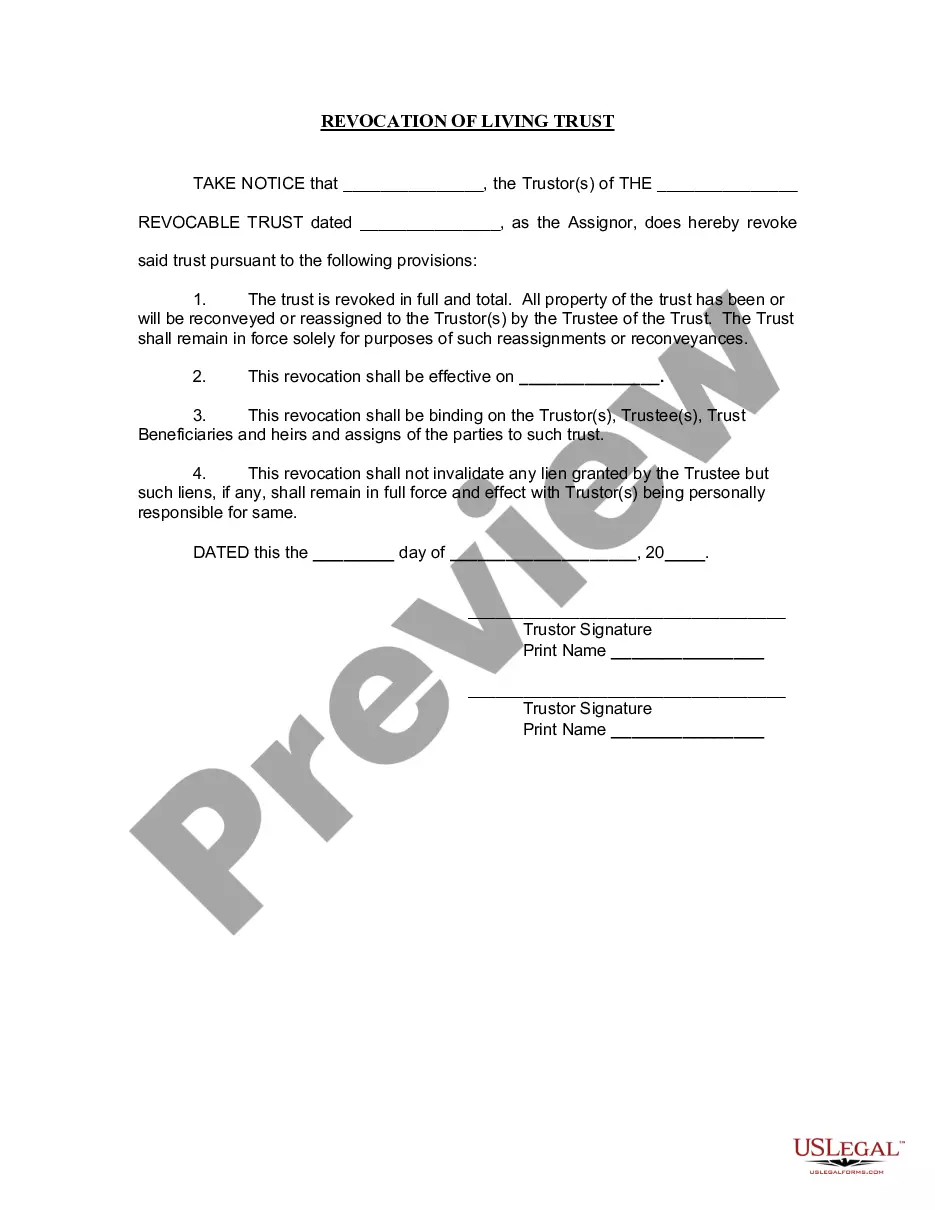
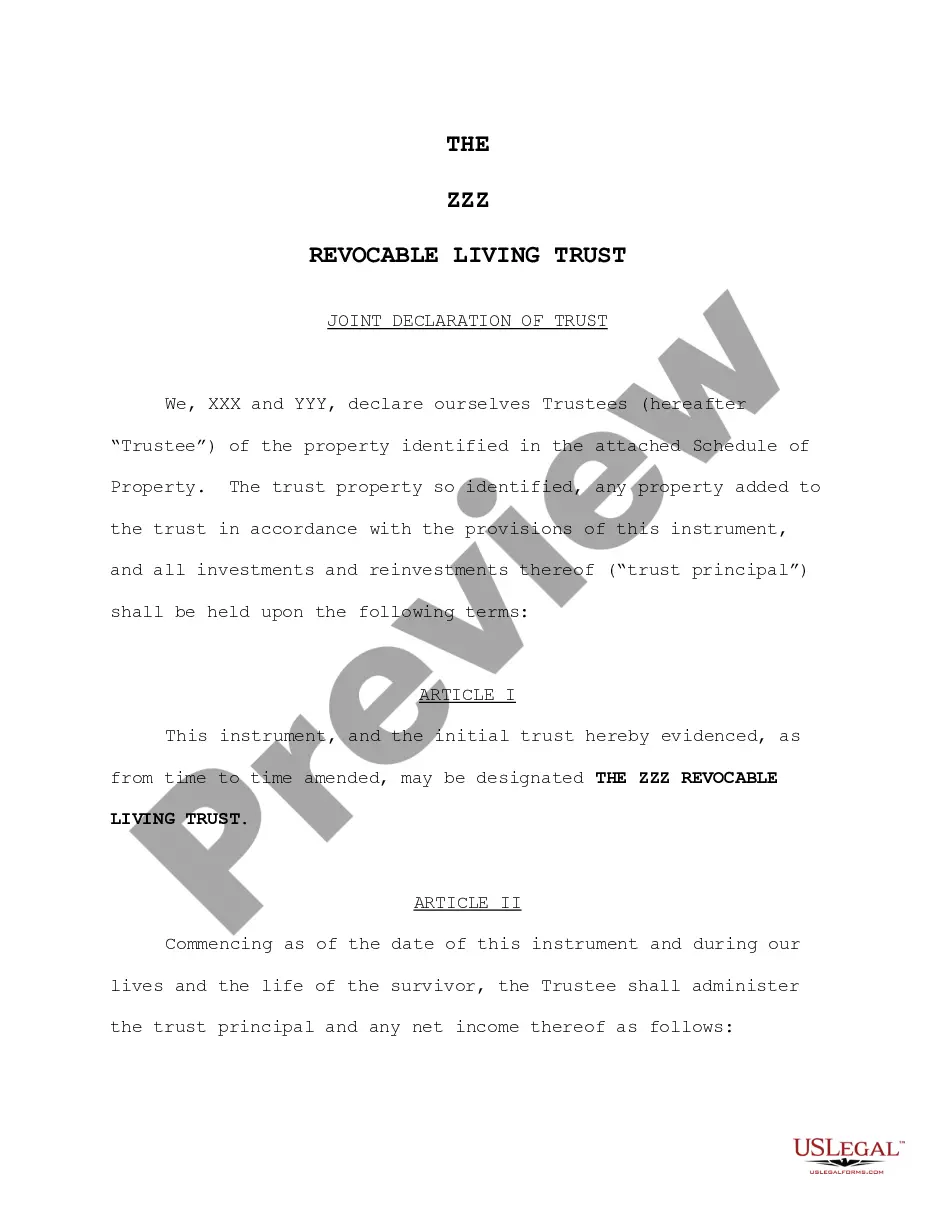
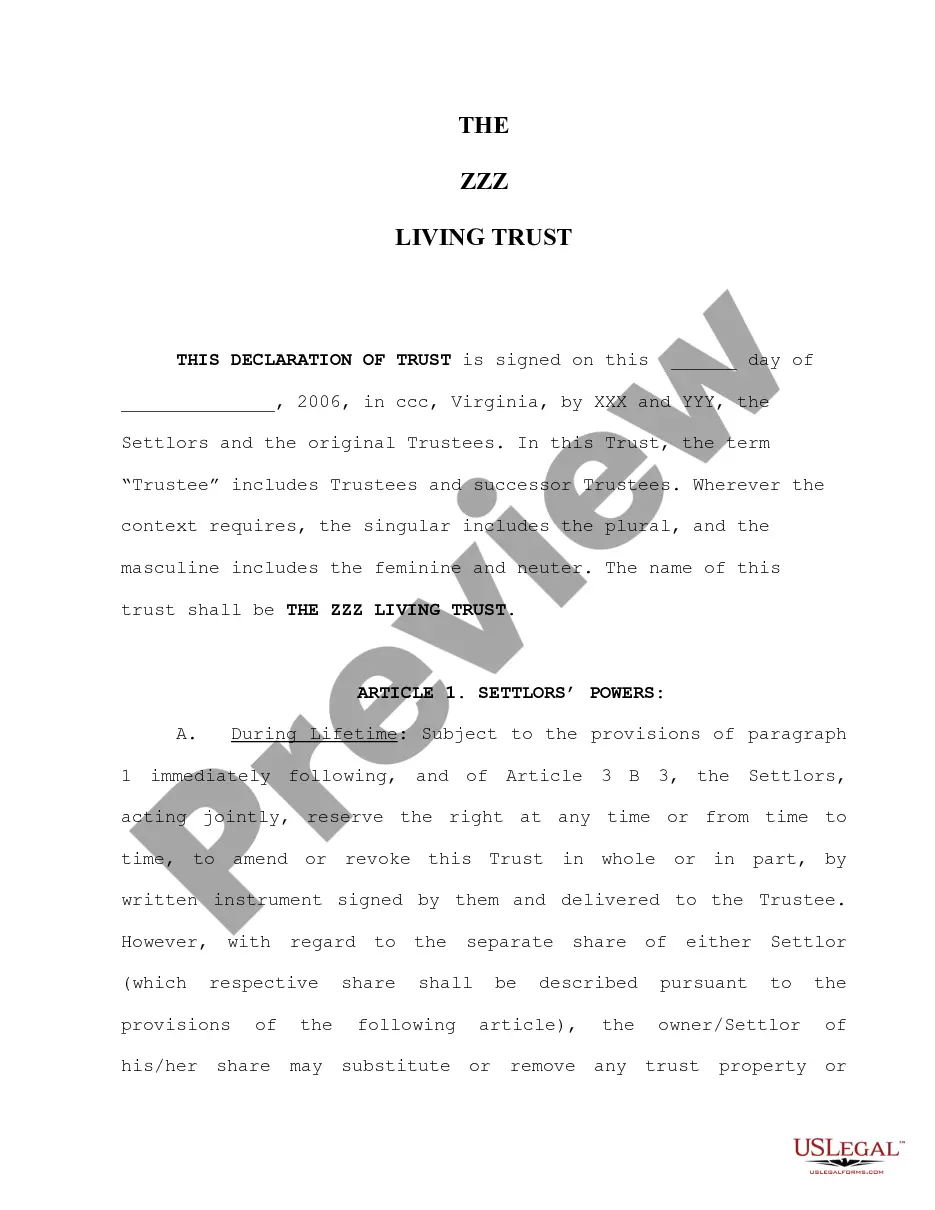
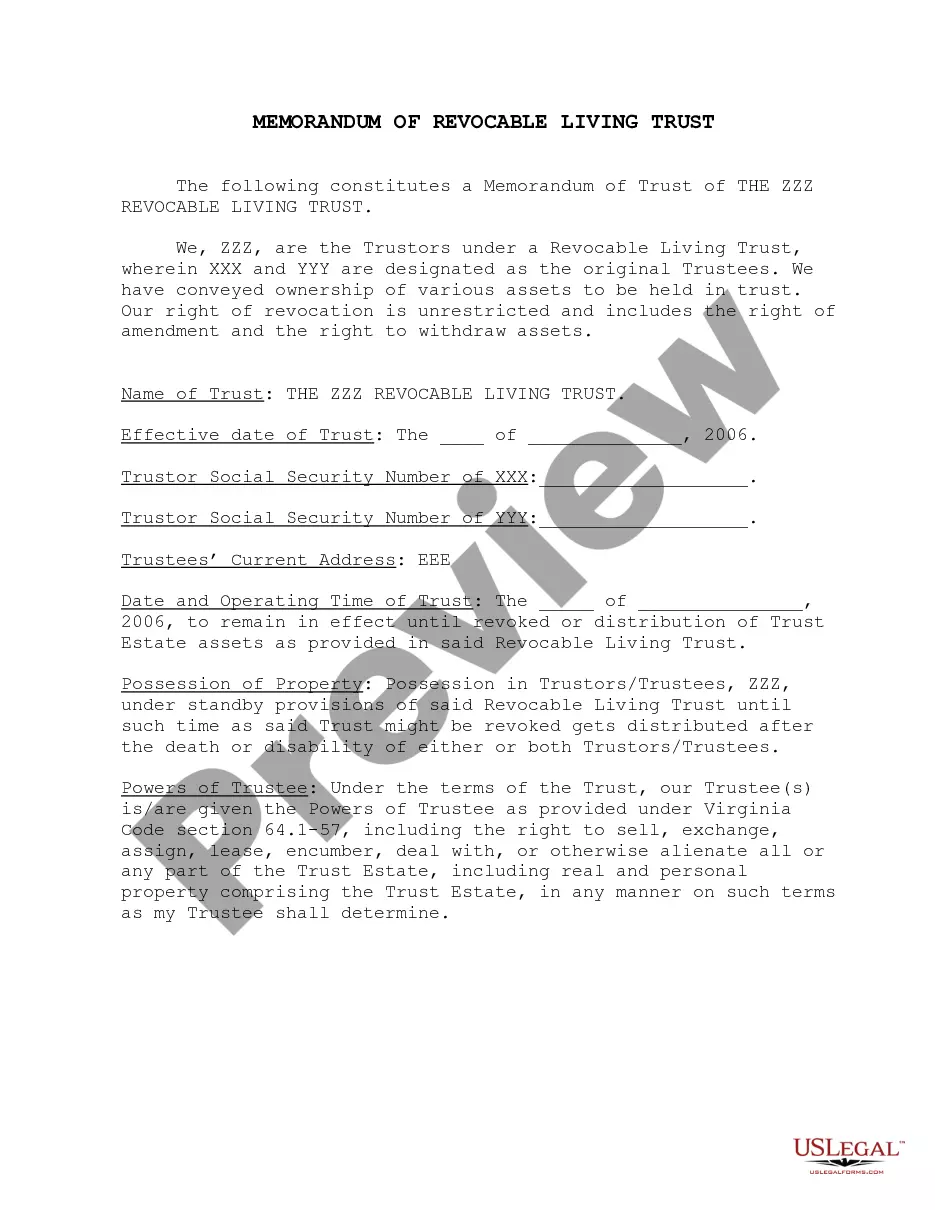
Overview of this form
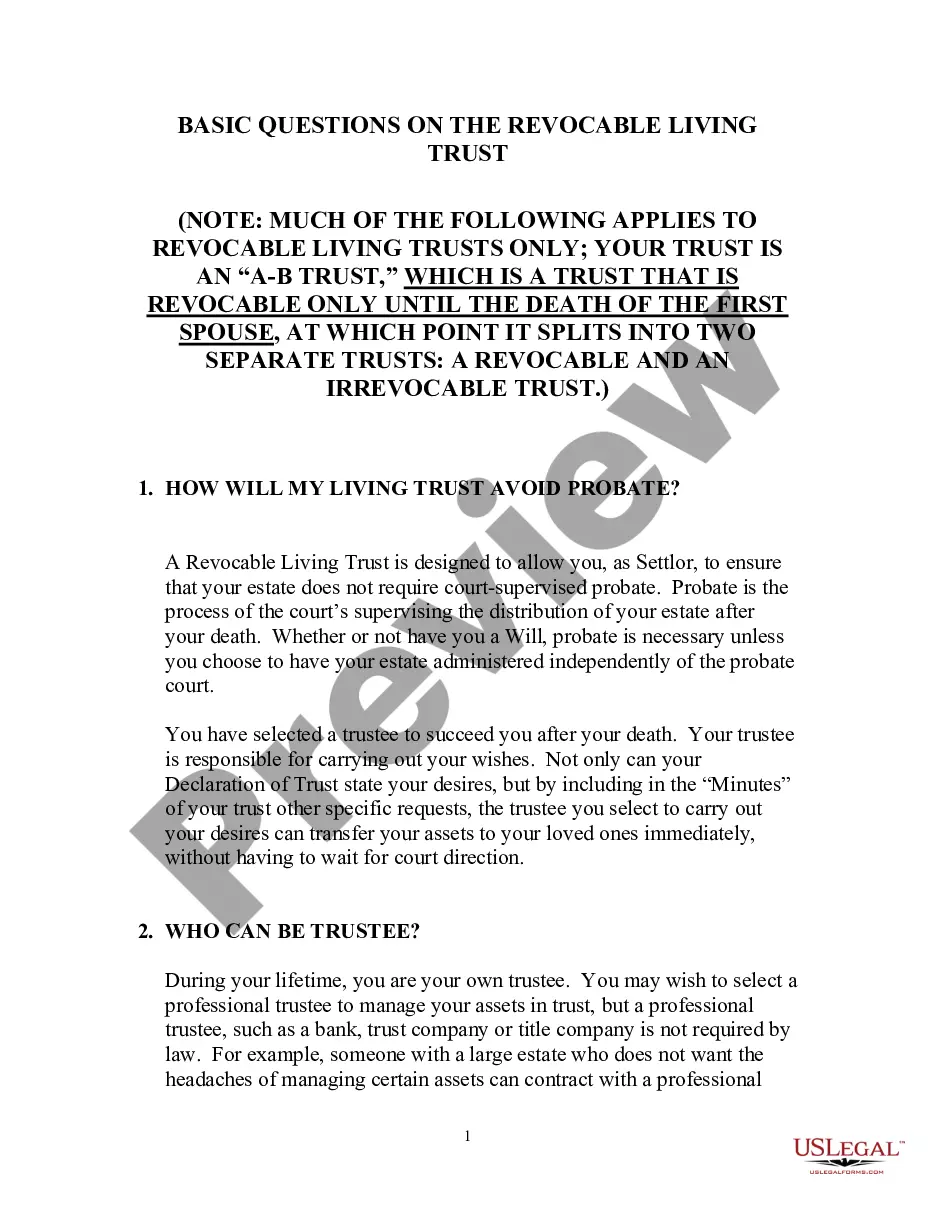
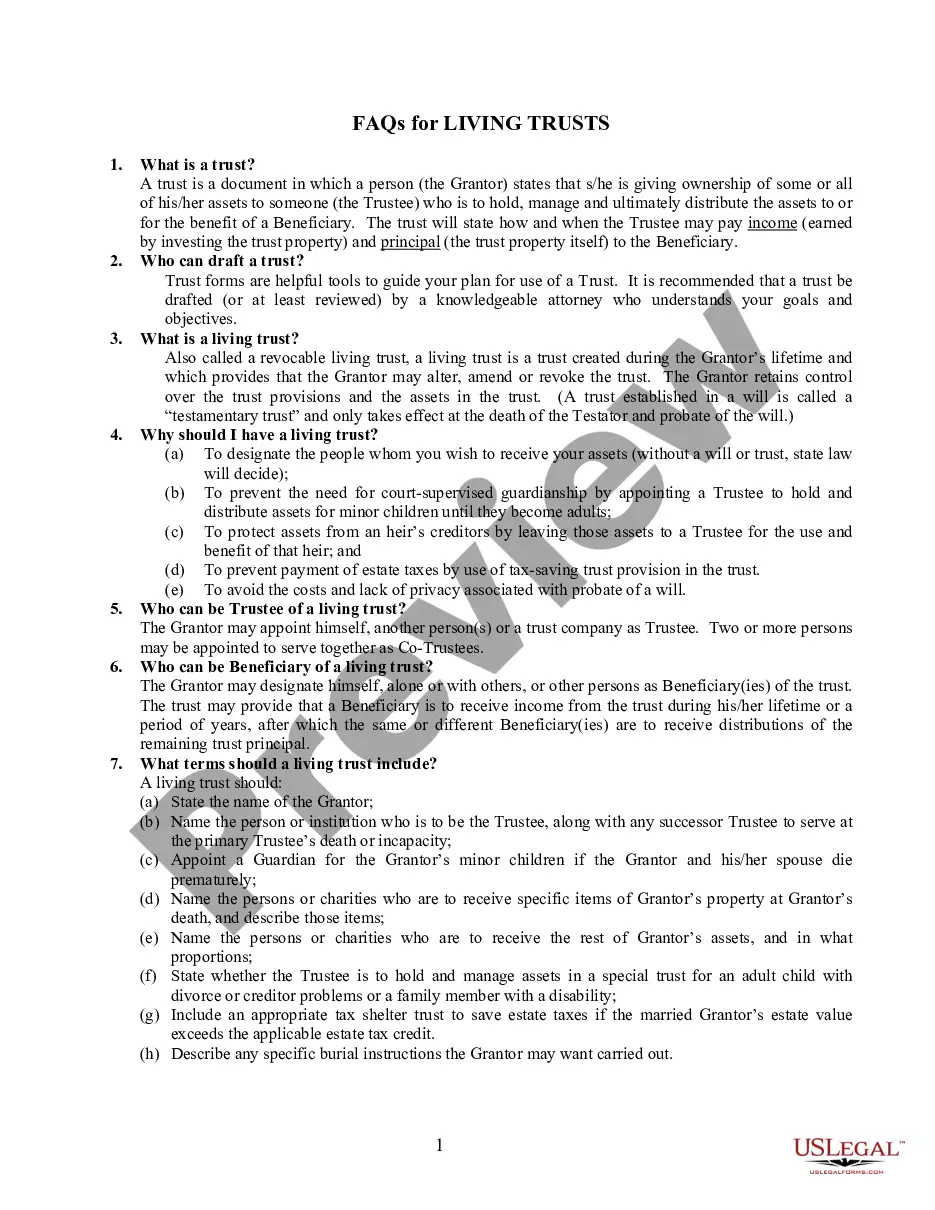
This form provides essential questions and answers about a Revocable Living Trust, specifically tailored for use in Virginia. It serves as a vital resource for understanding how a living trust can help you avoid probate, assign trustees, and outline the distribution of your assets after your demise, setting it apart from a traditional will.
Key components of this form
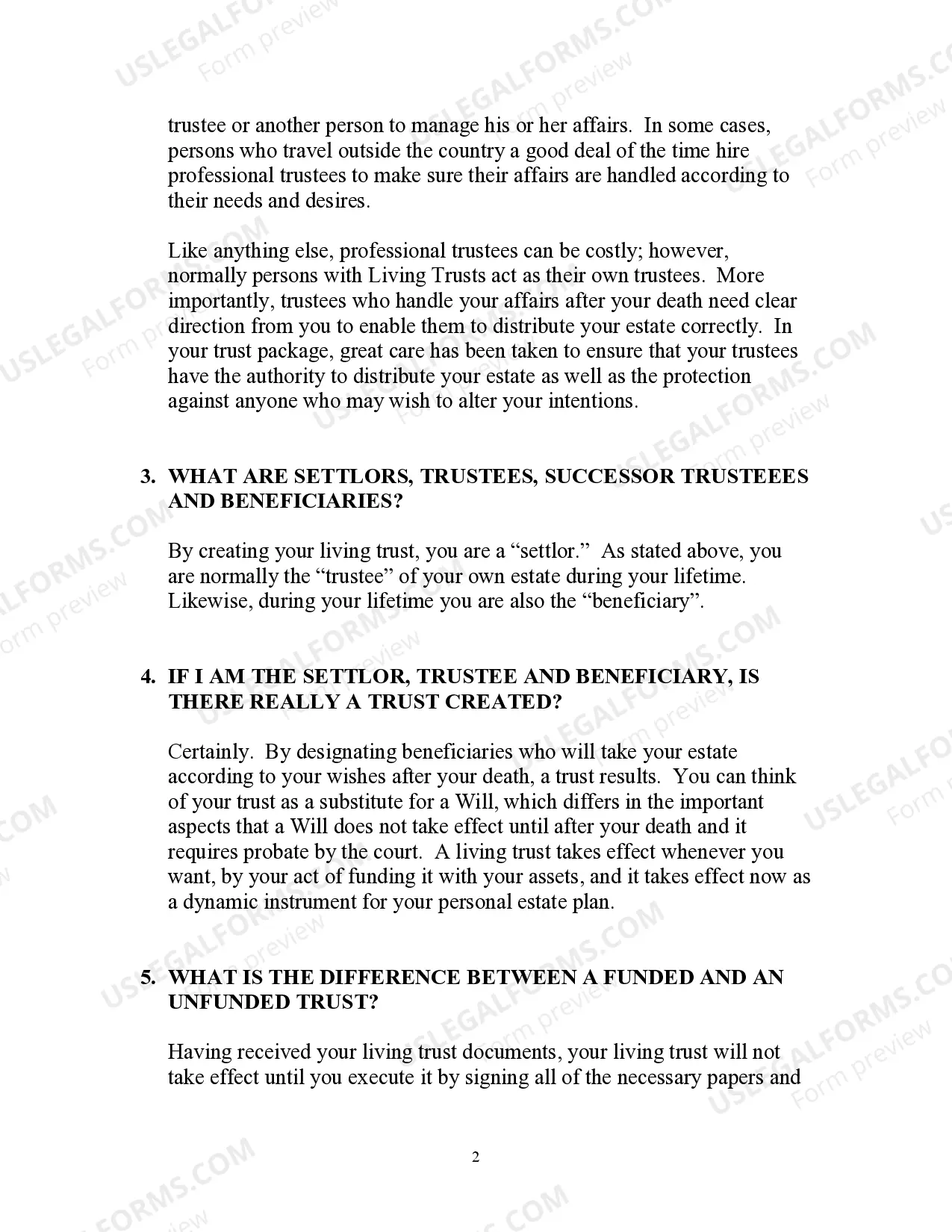
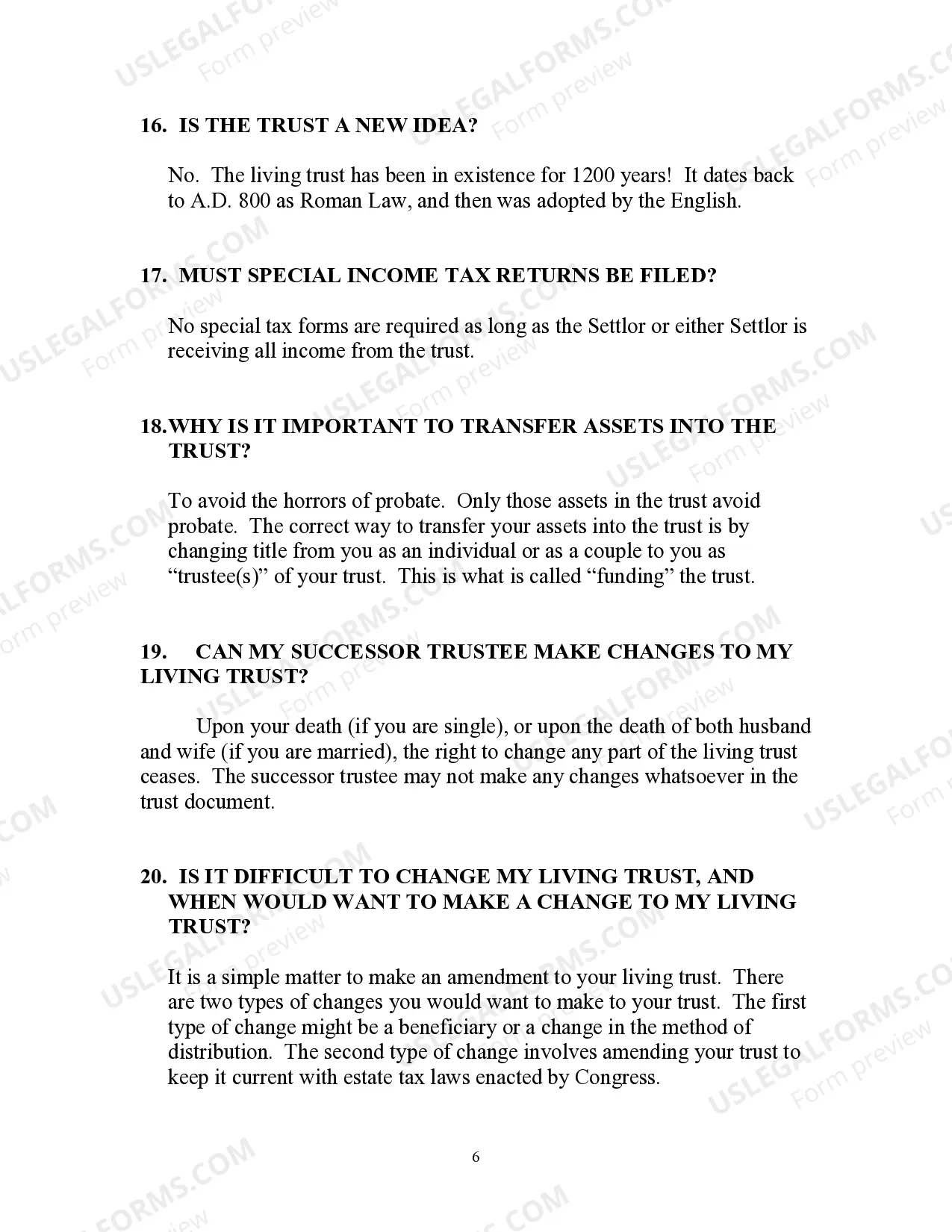
- Definitions of terms such as settlor, trustee, successor trustee, and beneficiaries.
- Details on the role of the trustee during and after the settlor's lifetime.
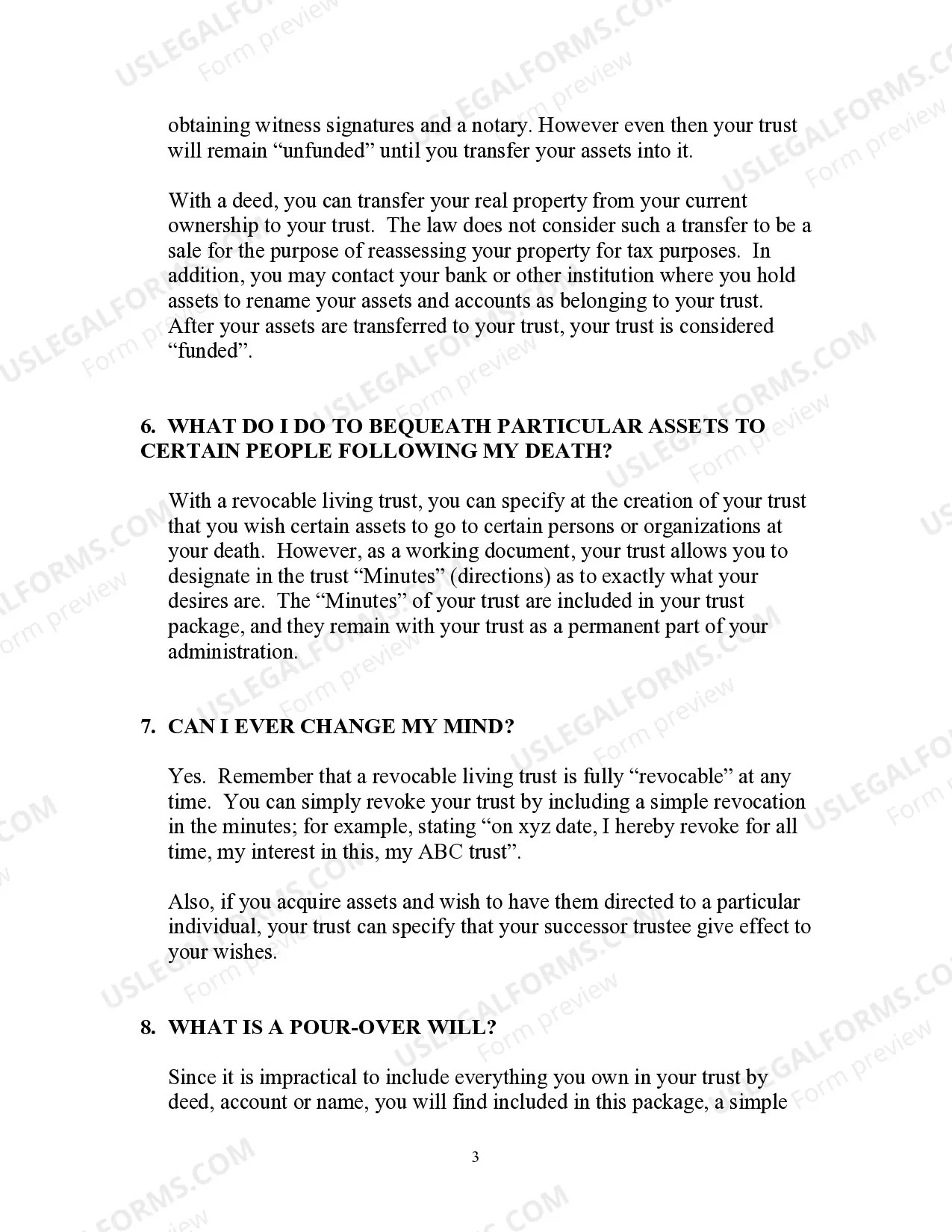
- Explanation of funded versus unfunded trusts and the importance of transferring assets into the trust.
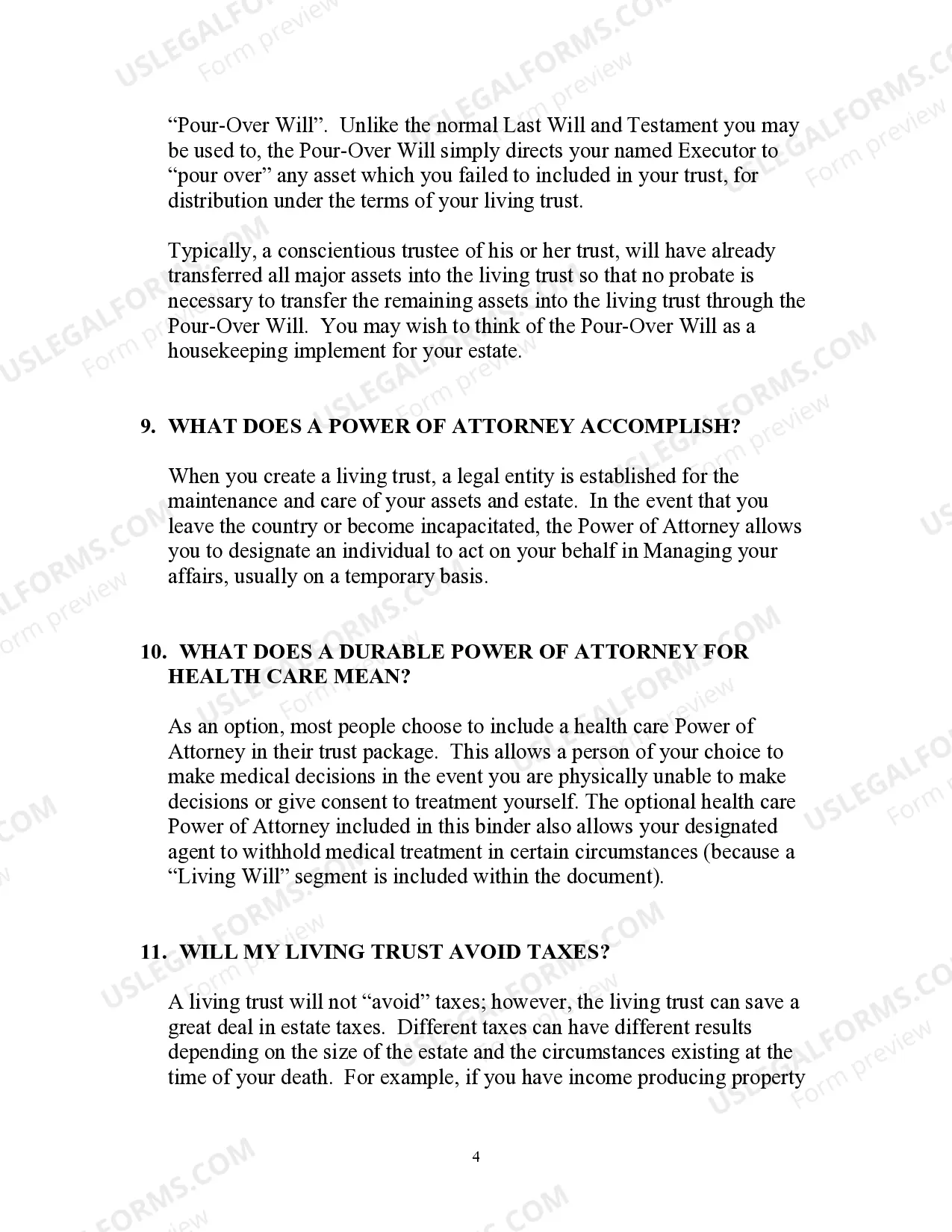
- Instructions regarding a Pour-Over Will and its function in the overall estate plan.
- Information on powers of attorney for financial matters and healthcare decisions.
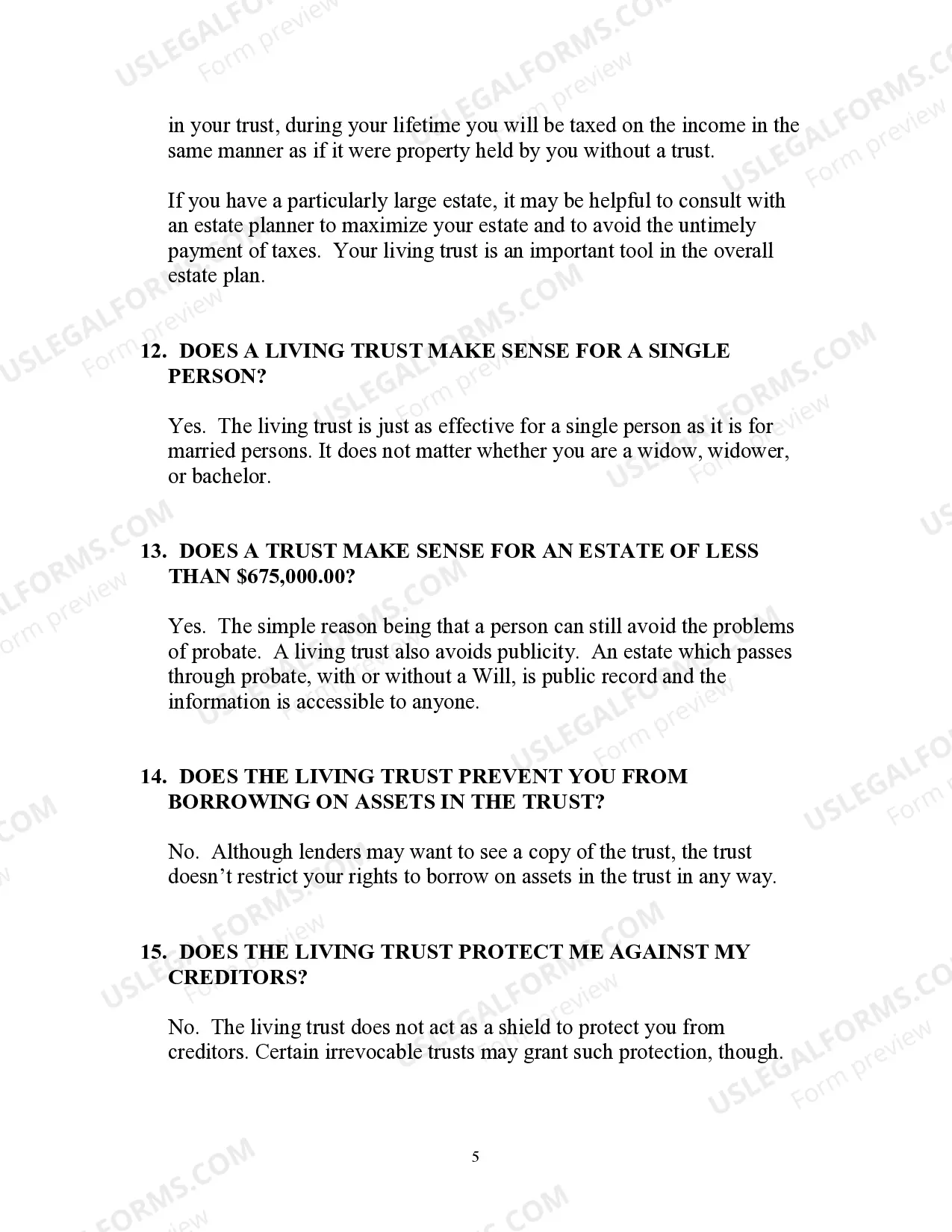
- Discussion on estate taxes and their implications for living trusts.
When to use this form
This form is useful when you are considering establishing a Revocable Living Trust to manage your assets effectively, ensure they are distributed according to your wishes, and avoid the probate process after your death. It provides clarity on how to set up your trust, the responsibilities of trustees and beneficiaries, and allows for organized, straightforward resource assessment.
Who can use this document
- Individuals planning their estate and considering a living trust as an option.
- Married couples looking to understand the implications of setting up an A-B trust.
- Single individuals or families who wish to streamline asset distribution and avoid probate.
- Persons seeking guidance on the roles of trustees and how to designate beneficiaries.
Steps to complete this form
- Begin by defining the roles within your trust, including the settlor, trustee, and beneficiaries.
- Gather and transfer your assets into the trust to fund it properly.
- Specify your wishes regarding asset distribution clearly within the trust documentation.
- Obtain the necessary signatures and notarization, if required.
- Review and amend the trust as necessary to keep it in line with your current circumstances and legal requirements.
Notarization guidance
This form does not typically require notarization unless specified by local law. However, it may be prudent to have documents notarized for added legal assurance and to avoid potential disputes in the future.
Get your form ready online
Our built-in tools help you complete, sign, share, and store your documents in one place.
Make edits, fill in missing information, and update formatting in US Legal Forms—just like you would in MS Word.
Download a copy, print it, send it by email, or mail it via USPS—whatever works best for your next step.
Sign and collect signatures with our SignNow integration. Send to multiple recipients, set reminders, and more. Go Premium to unlock E-Sign.
If this form requires notarization, complete it online through a secure video call—no need to meet a notary in person or wait for an appointment.
We protect your documents and personal data by following strict security and privacy standards.

Make edits, fill in missing information, and update formatting in US Legal Forms—just like you would in MS Word.

Download a copy, print it, send it by email, or mail it via USPS—whatever works best for your next step.

Sign and collect signatures with our SignNow integration. Send to multiple recipients, set reminders, and more. Go Premium to unlock E-Sign.

If this form requires notarization, complete it online through a secure video call—no need to meet a notary in person or wait for an appointment.

We protect your documents and personal data by following strict security and privacy standards.
Avoid these common issues
- Failing to transfer assets into the trust, resulting in an unfunded trust.
- Not clearly designating beneficiaries, leading to potential disputes.
- Overlooking the need for periodic updates to the trust as life circumstances change.
- Assuming that a living trust eliminates all tax liabilities for your estate.
Advantages of online completion
- Convenience of accessing and downloading legal forms from anywhere, anytime.
- Editability allows you to tailor the trust according to your specific needs.
- Reliability, with forms drafted by licensed attorneys ensuring compliance with state laws.
Legal use & context
- A revocable living trust is a recognized estate planning tool that can reduce the need for probate.
- It allows for personal management of assets during the lifetime of the settlor.
- Upon the settlorâs death, the trust becomes irrevocable, ensuring the wishes expressed in the document are enforceable.
Key takeaways
- A revocable living trust helps avoid probate court and ensures quick asset distribution.
- The settlor typically remains in control while alive, serving as the trustee.
- Specific instructions regarding assets and beneficiaries can be delineated within the trust.
- The trust can be changed or revoked at any time, as long as the settlor is alive.
Looking for another form?


Form popularity
FAQ
Virginia Basic Questions on the Revocable Living Trust is a Virginia-focused resource that explains how a Revocable Living Trust can help you avoid probate, designate a trustee, and distribute assets after your death. It covers funded vs. unfunded trusts, the role of a Pour-Over Will, powers of attorney for finances and health care, and basic estate tax considerations, for use in Virginia.
Putting your home in a Revocable Living Trust can help avoid probate for that asset if you transfer the deed into the trust (funding the trust). This Virginia form explains funded vs unfunded trusts and the importance of transferring assets. However, funding isn’t a guarantee against taxes or creditors, and local requirements apply—consult an attorney for specifics.
One downside is that a revocable living trust does not remove assets from your taxable estate or protect them from creditors, and it can be more complex and costly to maintain than a simple will. This Virginia form highlights the need to fund the trust and manage ongoing administration, including a Pour-Over Will and powers of attorney.
A primary danger is relying on the trust for asset protection or tax benefits that it cannot provide; if not properly funded or managed, assets may still pass through probate or be misaligned with your overall estate plan. Virginia-specific resources in this form emphasize proper funding, clear trustee roles, and coordination with a Pour-Over Will.
Generally, placing a house in a revocable trust does not prevent a nursing home or Medicaid program from considering it as available, because the grantor retains control and can change the trust. The form notes key concepts like funding and trustee powers, but it does not provide protection from long-term care costs; seek professional advice.
A revocable living trust is designed to be Flexible: the settlor can amend or revoke it during lifetime, keeps assets under the settlor’s control, and it helps avoid probate without changing ownership. An irrevocable living trust is fixed once created and usually transfers ownership away from the settlor, offering stronger asset protection but reduced control and flexibility.