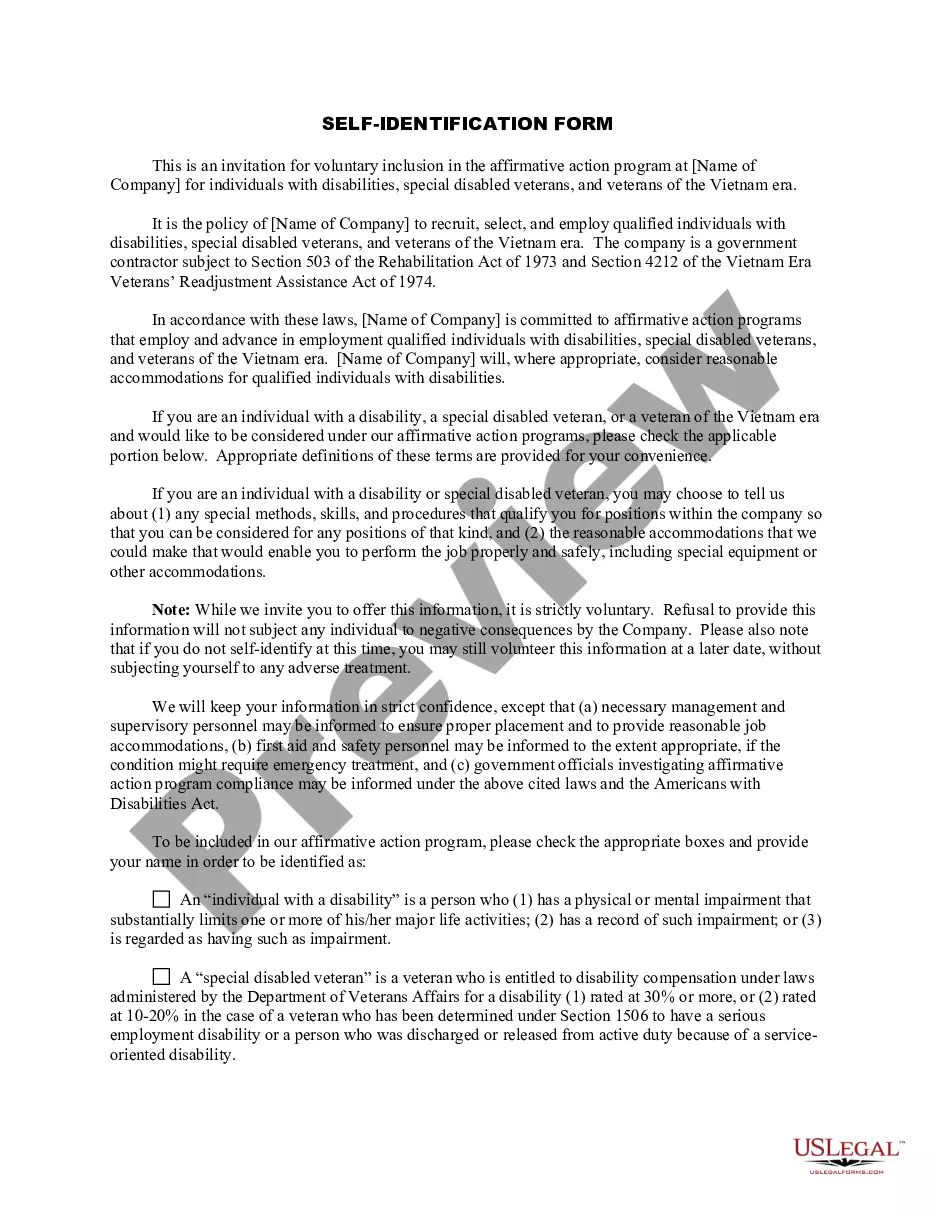
Virginia Revocable Living Trust for Husband and Wife
Overview of this form
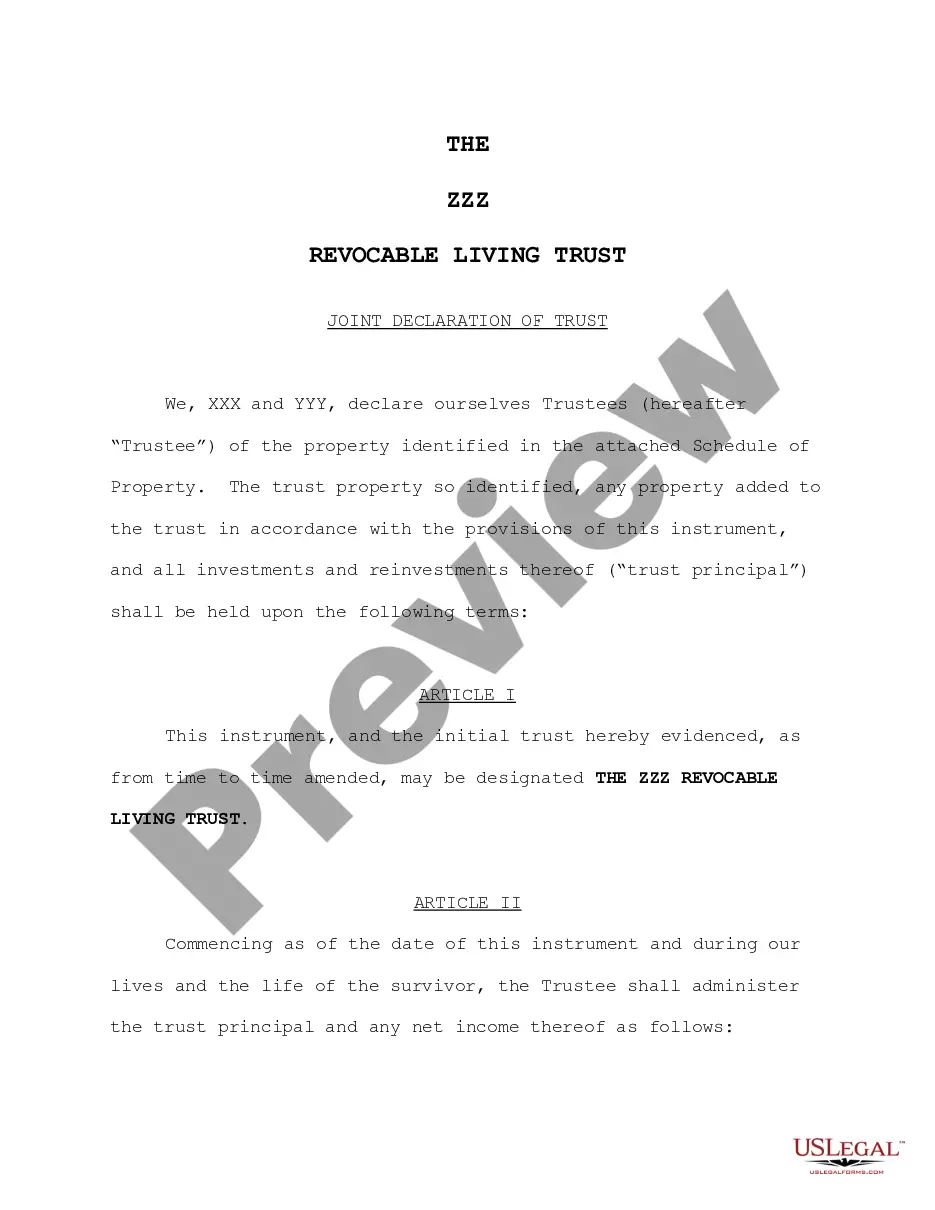
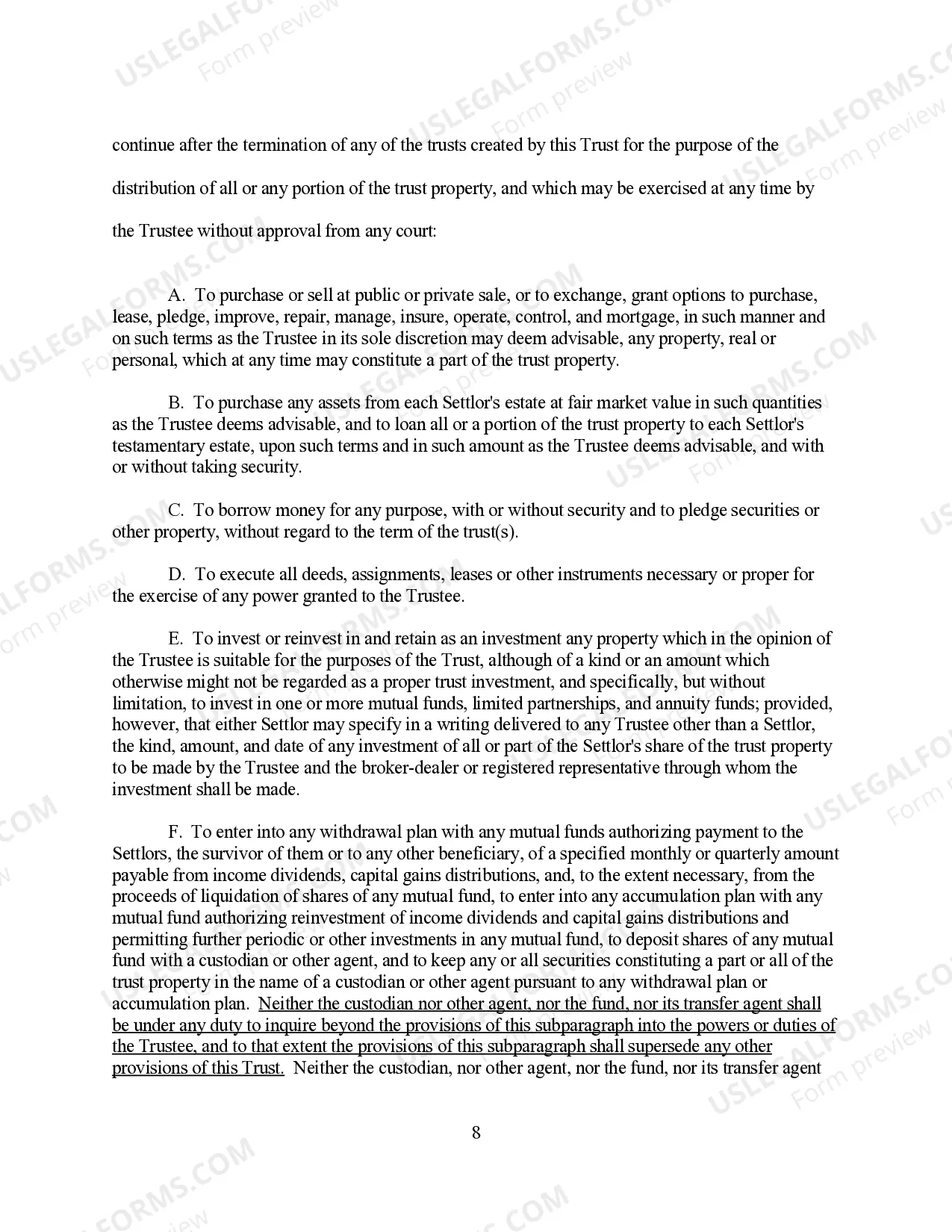
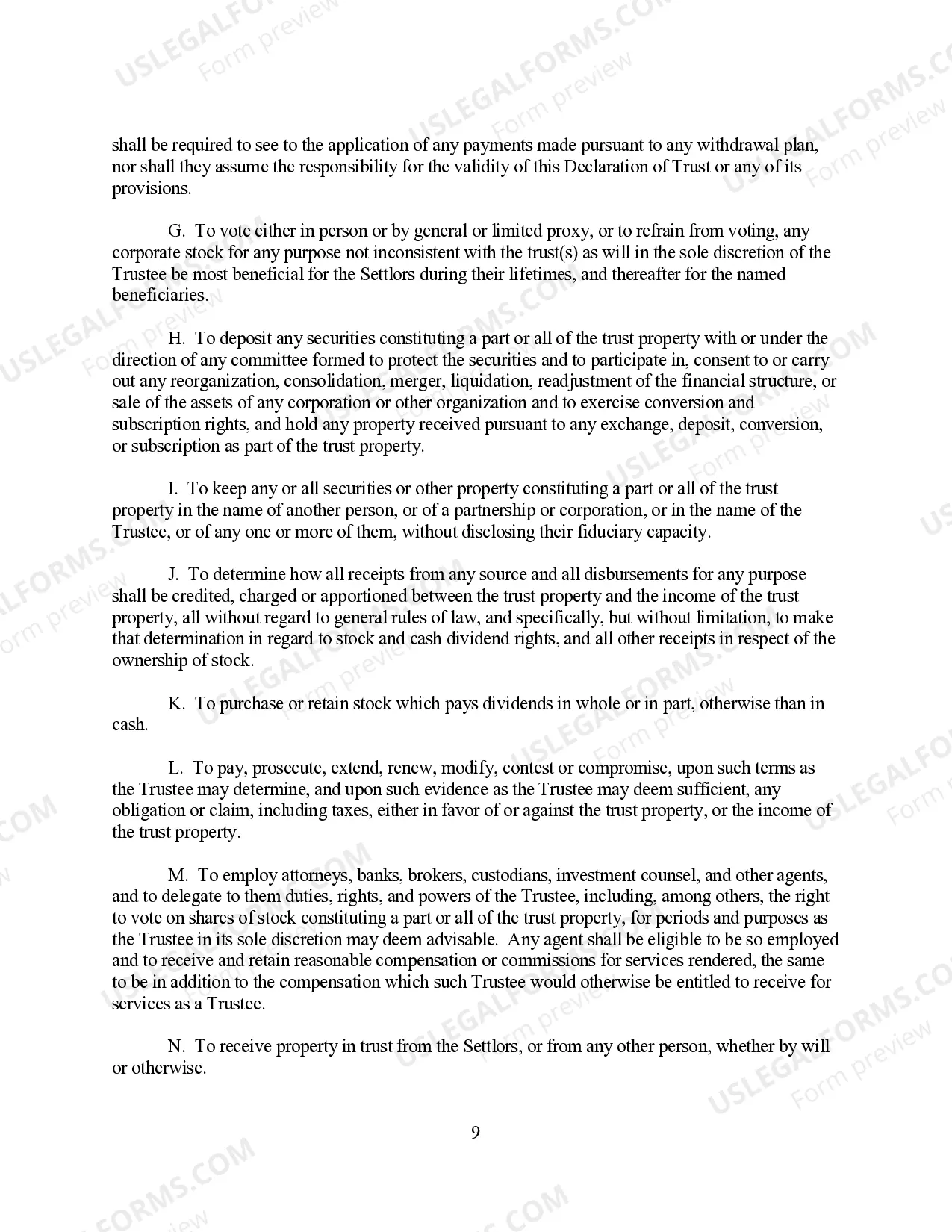
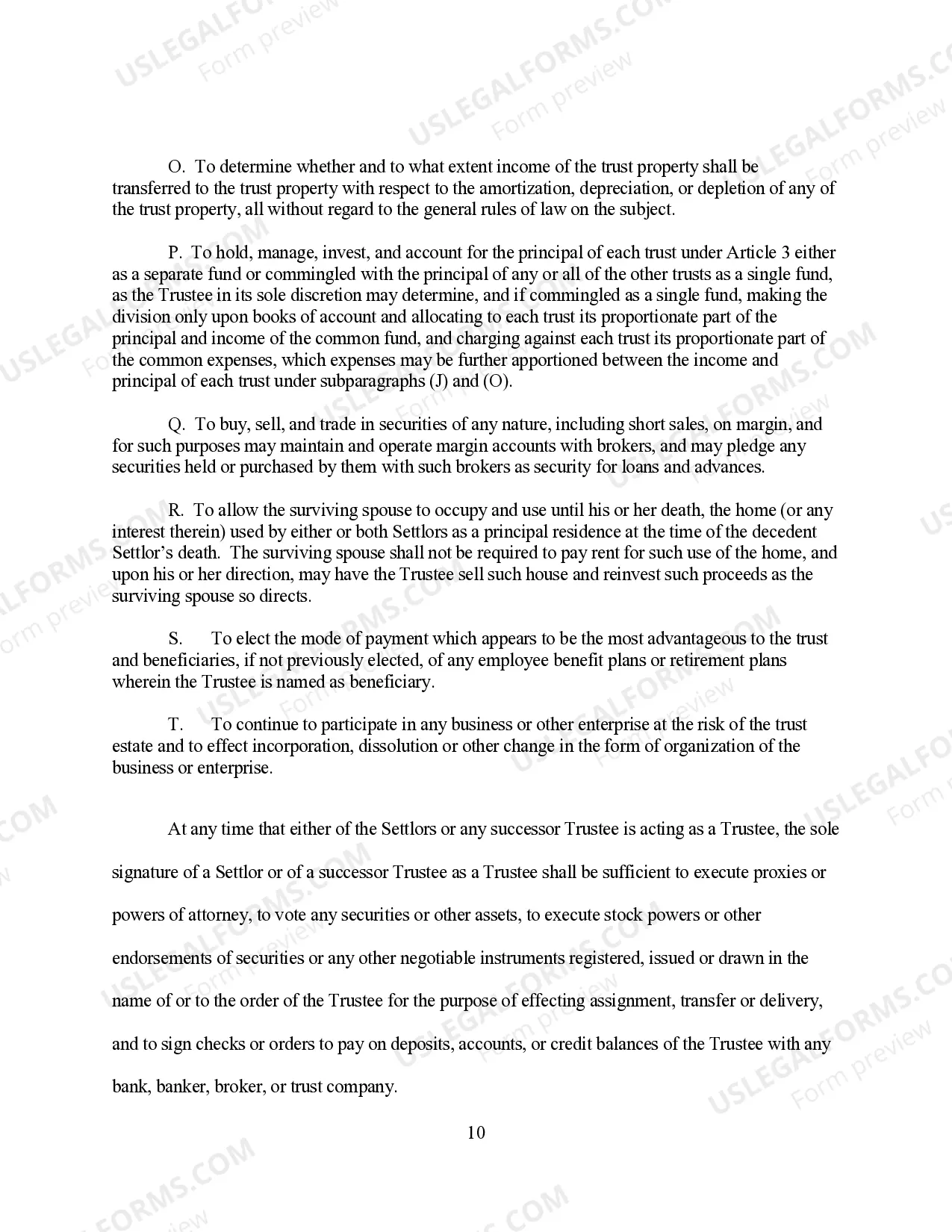
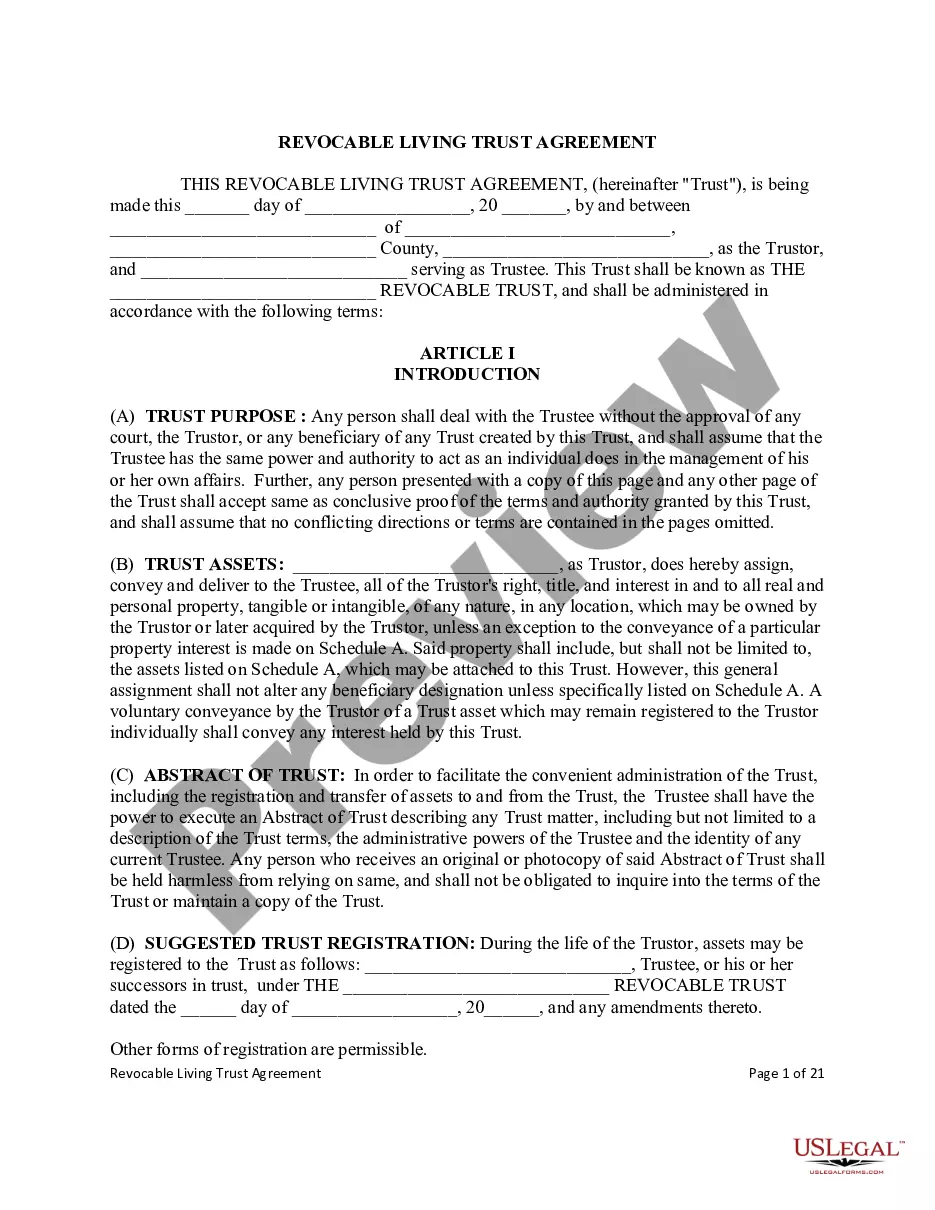
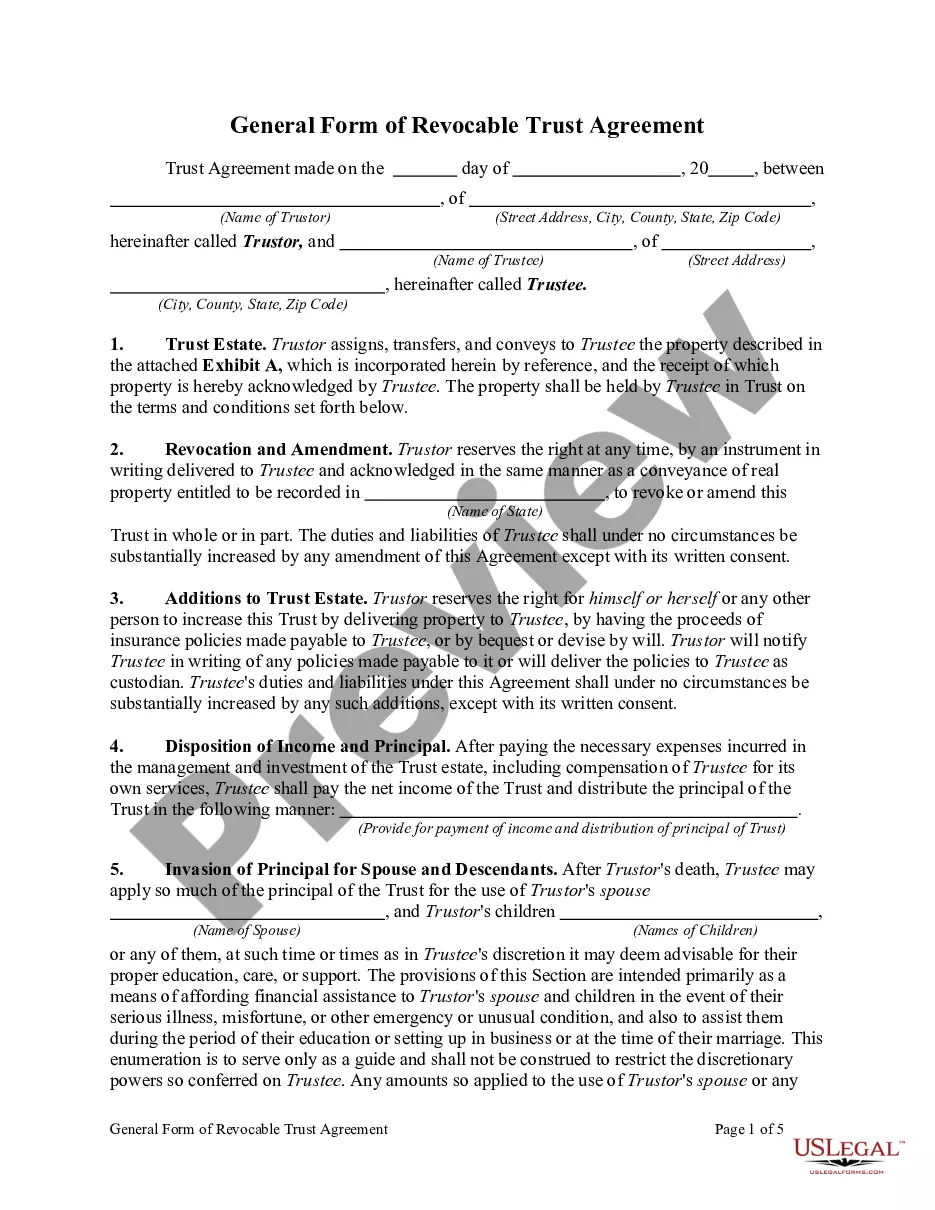
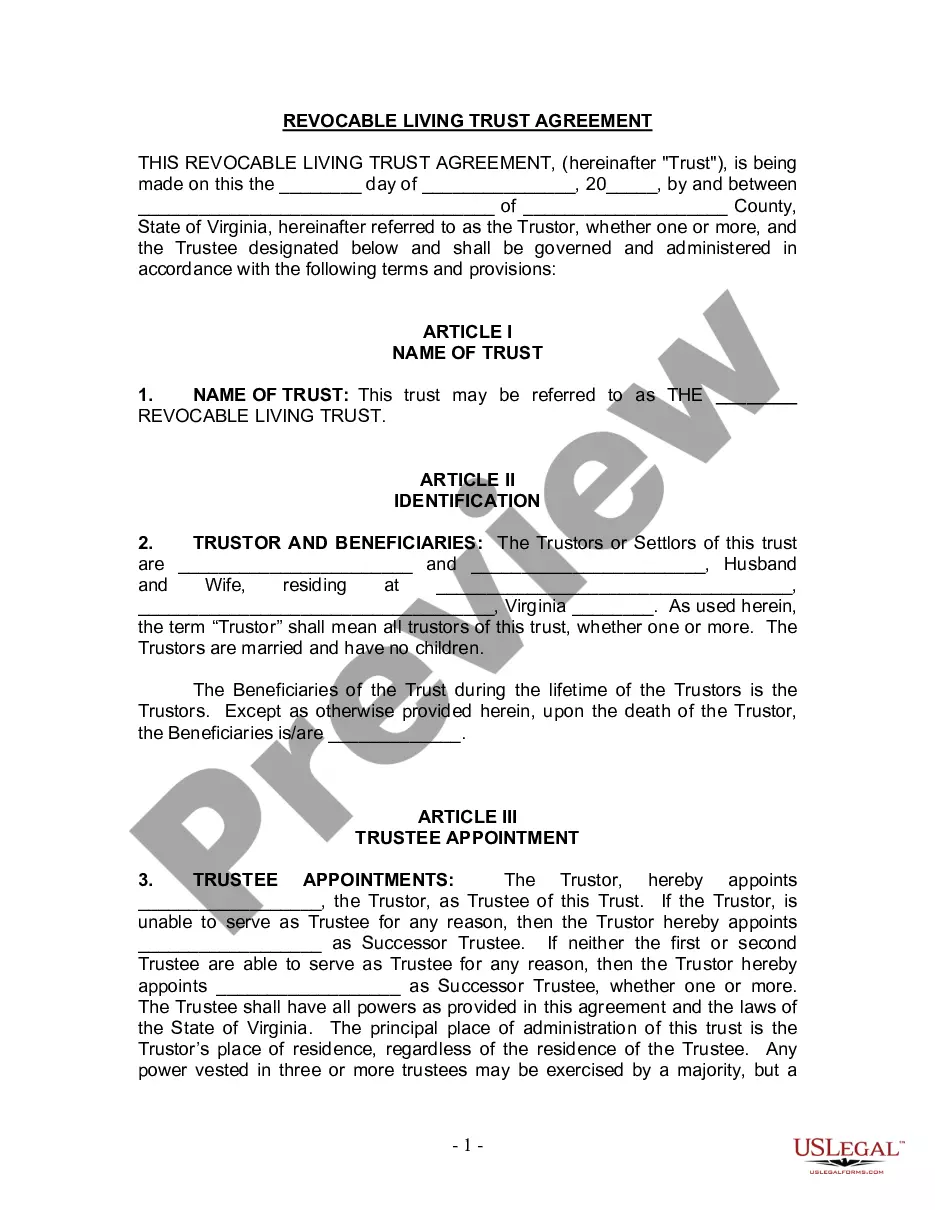
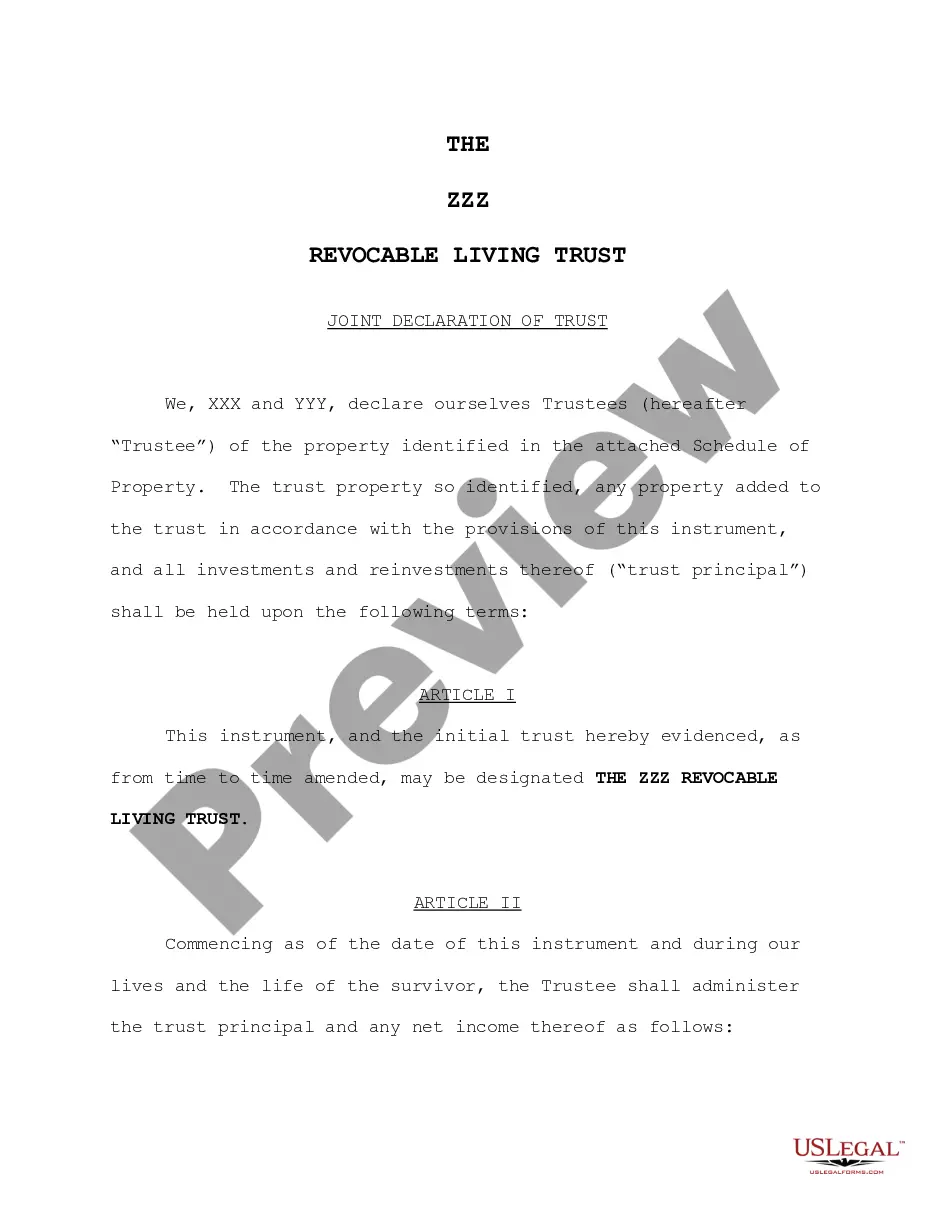
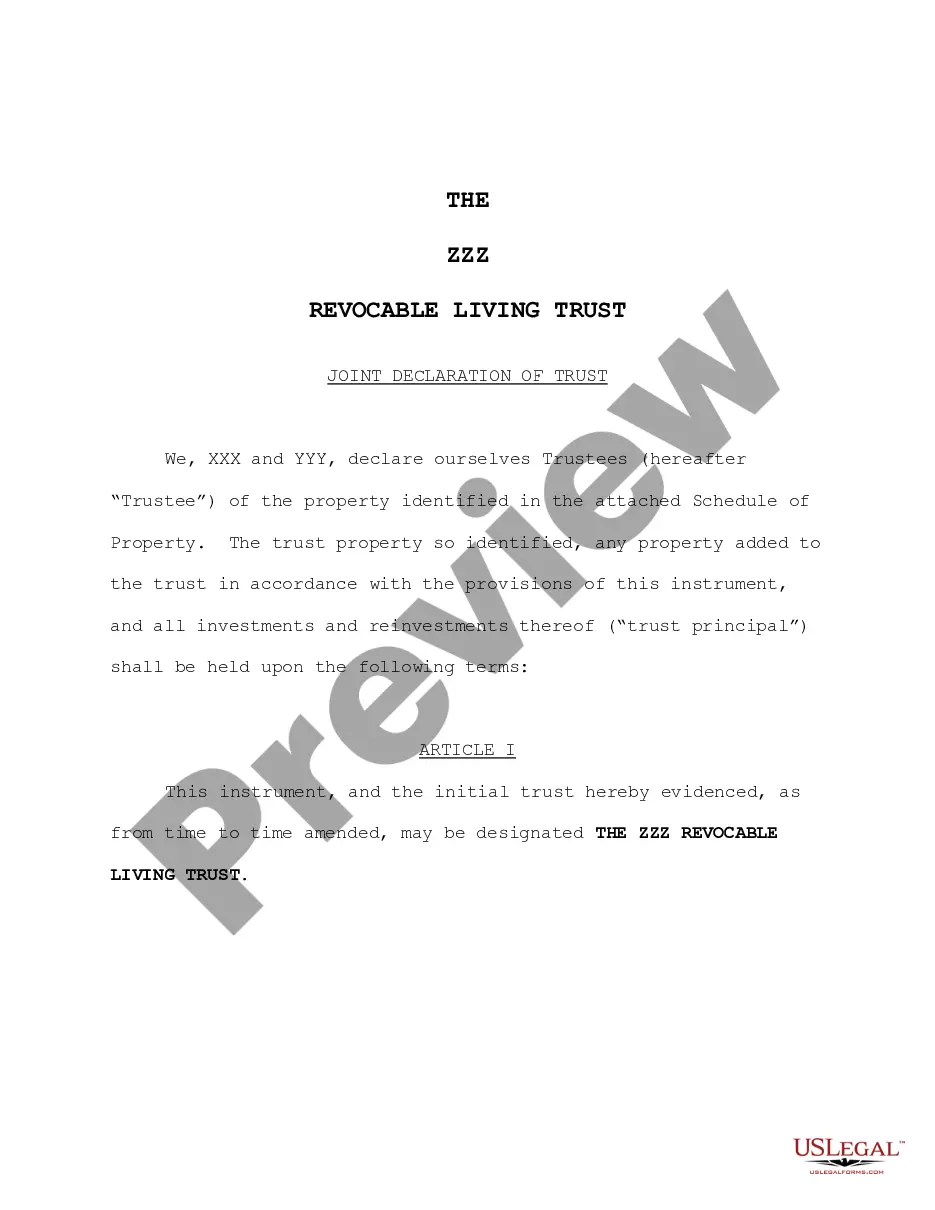
The Revocable Living Trust for Husband and Wife is a legal document that establishes a joint trust, allowing both spouses to manage their assets during their lifetime and determine their distribution after death without requiring court supervision. This form helps to avoid the probate process, ensuring a more efficient handling of their estate.
Main sections of this form
- Definitions of settlors (the couple establishing the trust) and trustees.
- Guidelines for asset management and distribution during the lives of the settlors.
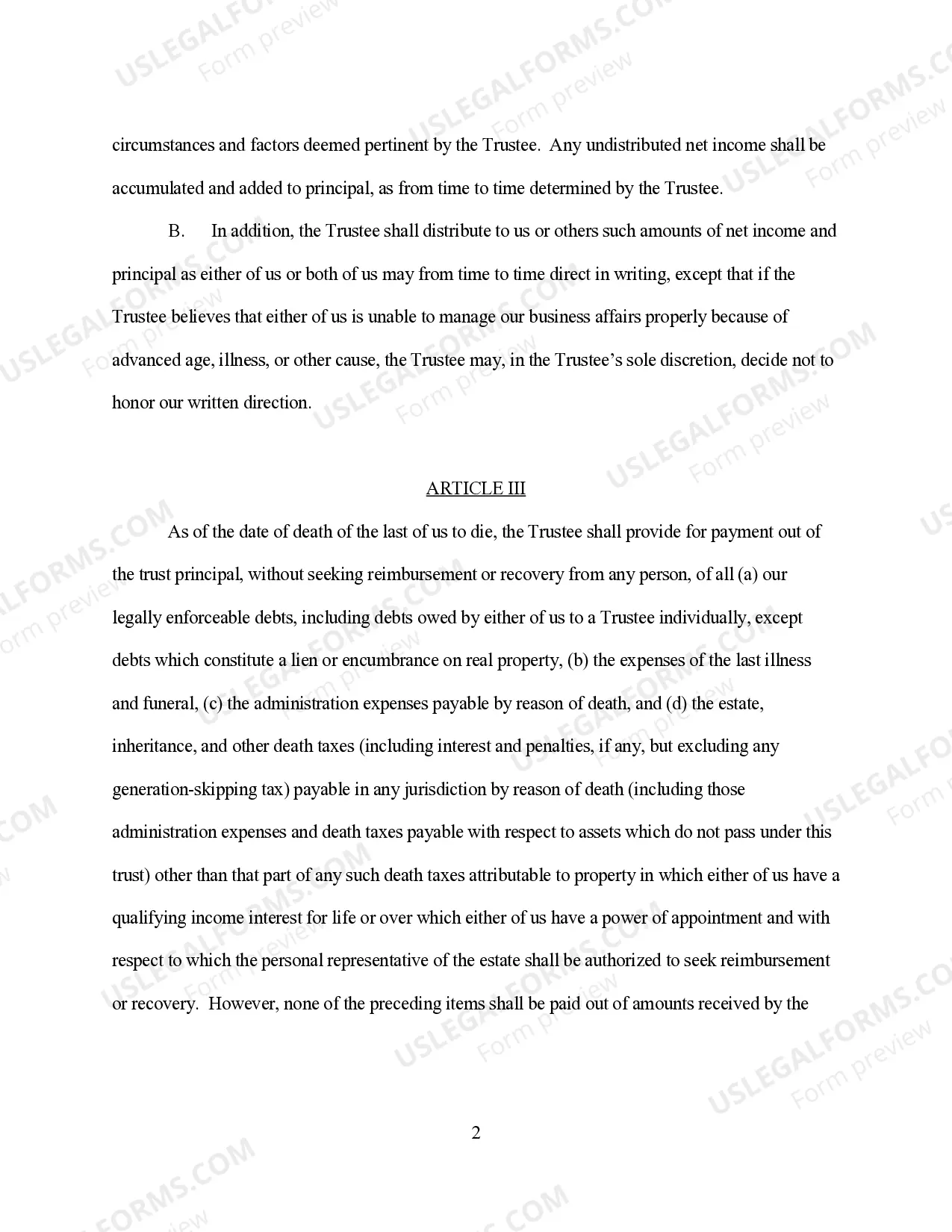
- Procedures for settling debts and expenses upon the death of the last surviving spouse.
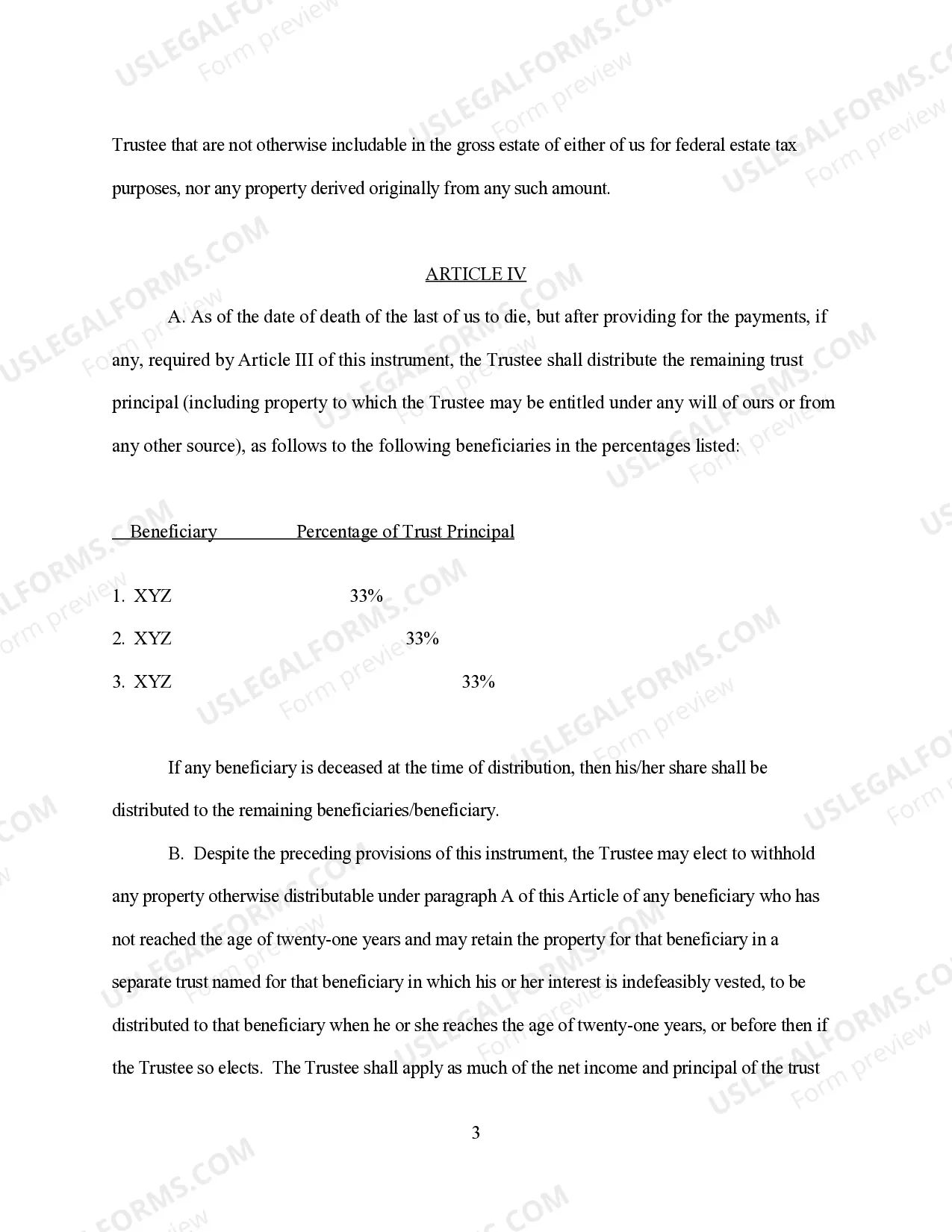
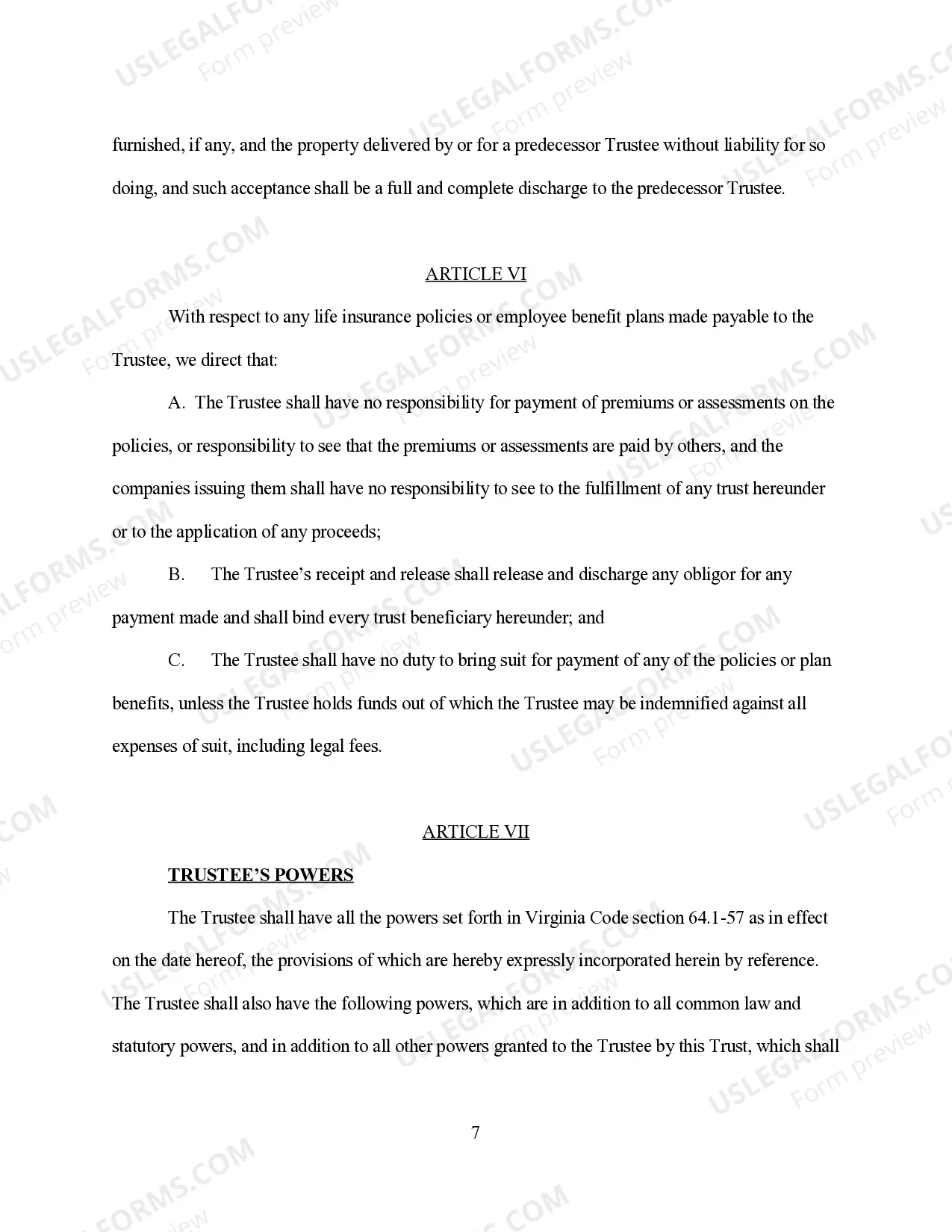
- Instructions for distributing remaining trust assets to designated beneficiaries after all debts and taxes are paid.
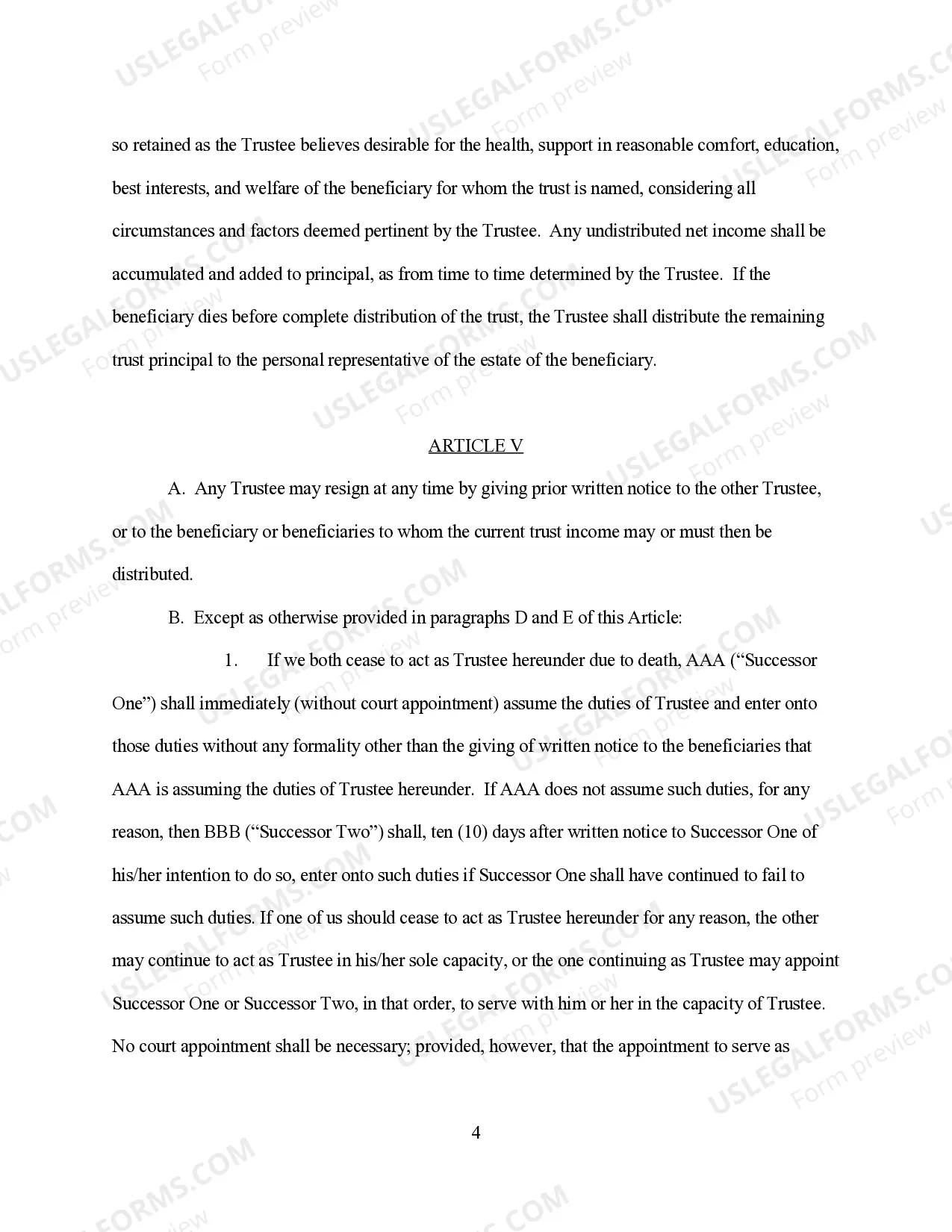
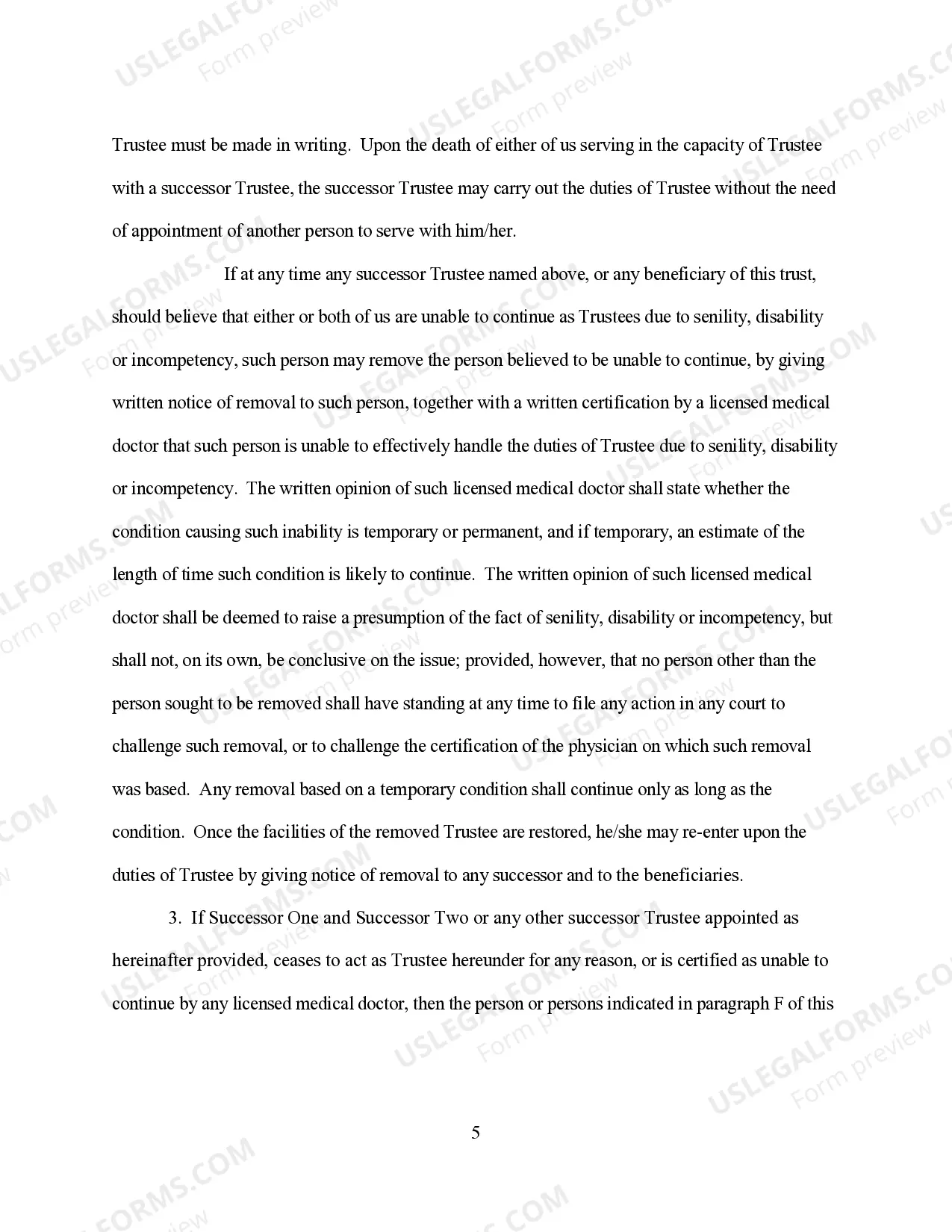
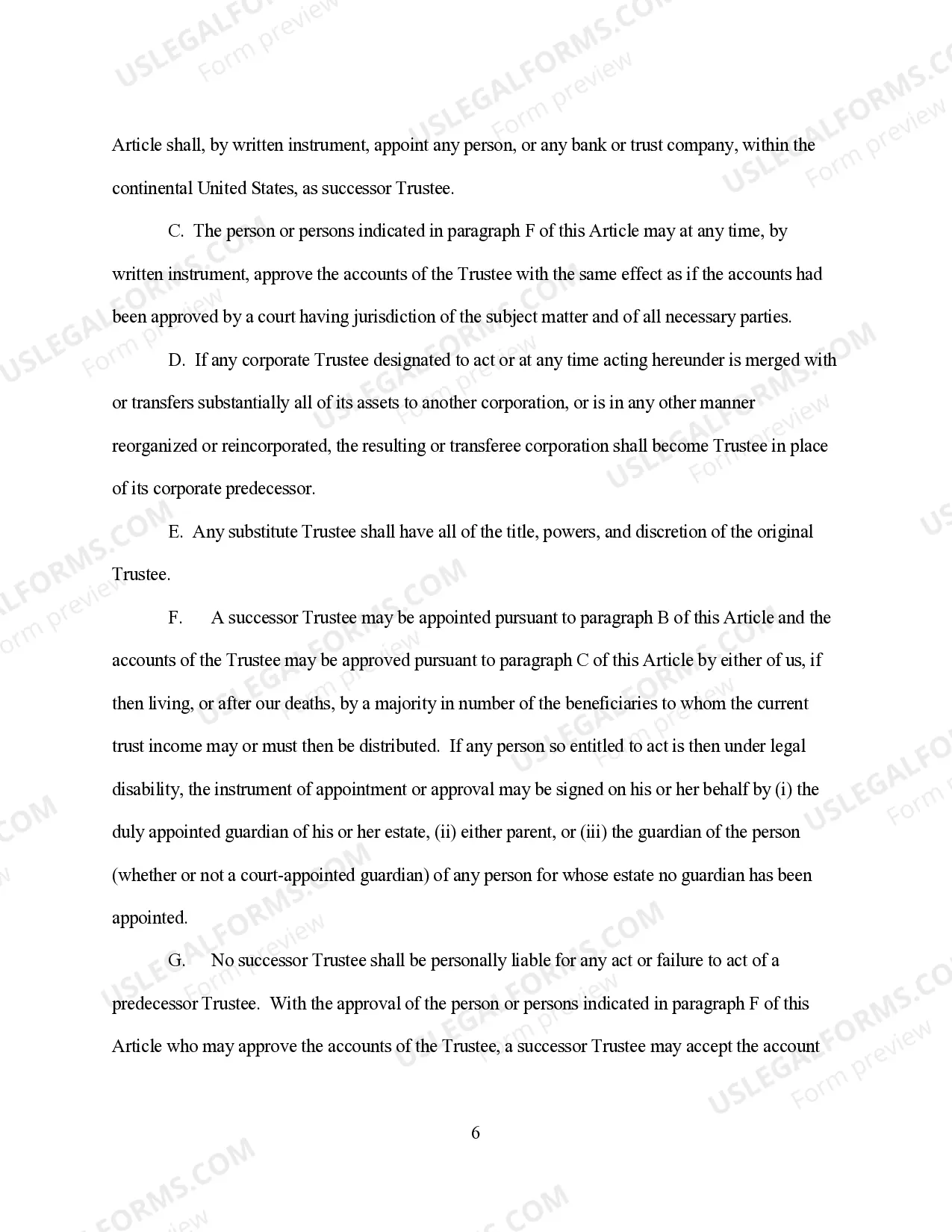
- Provisions for appointing successor trustees in case of resignation or incapacity.

When to use this document
This form should be used when a married couple wants to create a revocable trust to manage their shared assets comfortably during their lifetime. It is particularly useful for couples looking to simplify estate planning, avoid the probate process, and ensure their wishes regarding asset distribution are honored after their death.
Who needs this form
- Married couples who jointly own property and wish to create a living trust.
- Couples who want to ensure their assets are distributed according to their wishes without court intervention.
- Individuals looking for a flexible estate planning solution that allows for changes over time.
Steps to complete this form
- Identify both spouses as the settlors and trustees of the trust.
- Fill in the schedule of property with assets intended to be placed in the trust.
- Specify the terms for distributions to each spouse and to beneficiaries after the death of the last spouse.
- Include provisions for the appointment of successor trustees as needed.
- Sign and date the document in the presence of witnesses and a notary public.
Notarization guidance
This document requires notarization to meet legal standards. US Legal Forms provides secure online notarization powered by Notarize, allowing you to complete the process through a verified video call, available 24/7.
Get your form ready online
Our built-in tools help you complete, sign, share, and store your documents in one place.
Make edits, fill in missing information, and update formatting in US Legal Forms—just like you would in MS Word.
Download a copy, print it, send it by email, or mail it via USPS—whatever works best for your next step.
Sign and collect signatures with our SignNow integration. Send to multiple recipients, set reminders, and more. Go Premium to unlock E-Sign.
If this form requires notarization, complete it online through a secure video call—no need to meet a notary in person or wait for an appointment.
We protect your documents and personal data by following strict security and privacy standards.

Make edits, fill in missing information, and update formatting in US Legal Forms—just like you would in MS Word.

Download a copy, print it, send it by email, or mail it via USPS—whatever works best for your next step.

Sign and collect signatures with our SignNow integration. Send to multiple recipients, set reminders, and more. Go Premium to unlock E-Sign.

If this form requires notarization, complete it online through a secure video call—no need to meet a notary in person or wait for an appointment.

We protect your documents and personal data by following strict security and privacy standards.
Mistakes to watch out for
- Failing to properly list all assets in the schedule of property.
- Not including clear instructions for successor trustees and beneficiaries.
- Skipping the notarization of the trust document if required by state law.
Benefits of using this form online
- Convenience: Complete the form from the comfort of your home at your own pace.
- Editability: Easily modify the form to fit your specific circumstances.
- Reliability: Access legally vetted templates created by licensed attorneys, ensuring compliance with state laws.
What to keep in mind
- The Revocable Living Trust for Husband and Wife is an effective estate planning tool for married couples.
- This form helps in avoiding probate, ensuring a smoother transition and distribution of assets upon death.
- Proper completion and notarization of the trust document are essential for its validity.
Looking for another form?

Form popularity
FAQ
Select a type of trust. Inventory your assets and property. Choose a trustee. Put together your trust document. Visit a notary public and sign your living trust in front of them. Fund your trust.
When one spouse dies, the joint trust will continue to operate for the benefit of the surviving spouse as a Survivor's Trust. Any specific gifts of tangible property from the first spouse to beneficiaries (other than the surviving spouse) will be given to those people.
Typically, when a married couple utilizes a Revocable Living Trust based estate plan, each spouse creates and funds his or her own separate Revocable Living Trust. This results in two trusts. However, in the right circumstances, a married couple may be better served by creating a single Joint Trust.
Joint trusts are easier to fund and maintain.In a joint trust, after the death of the first spouse, the surviving spouse has complete control of the assets. When separate trusts are used, the deceased spouses' trust becomes irrevocable and the surviving spouse has limited control over assets.
A marital trust allows the couple's heirs to avoid probate and take less of a hit from estate taxes by taking full advantage of the unlimited marital deductiona provision that enables spouses to pass assets to each other without tax consequences.
Sure you can write your own revocable living trust. In fact, you can do it better than a lot of the attorneys. First you have to ascertain that you really want a trust.
Separate trusts provide more flexibility in the event of a death in the marriage. Since the trust property is already divided, separate trusts preserve the surviving spouse's ability to amend or revoke assets held within their own trust, while ensuring that the deceased spouse's trust cannot be amended after death.
List Your Assets and Decide Which You'll Include in the Trust. Gather the Paperwork. Decide Whether You Will Be the Sole Grantor. Choose Beneficiaries. Choose a Successor Trustee. Choose Someone to Manage Property for Minor Children. Prepare the Trust Document. Sign and Notarize.
At the time of your death, the assets in your family trust are protected by the exemption, and the assets in your marital trust are protected by the marital deduction. No estate taxes are due.