Virginia Revocable Living Trust for Husband and Wife with No Children
What this document covers
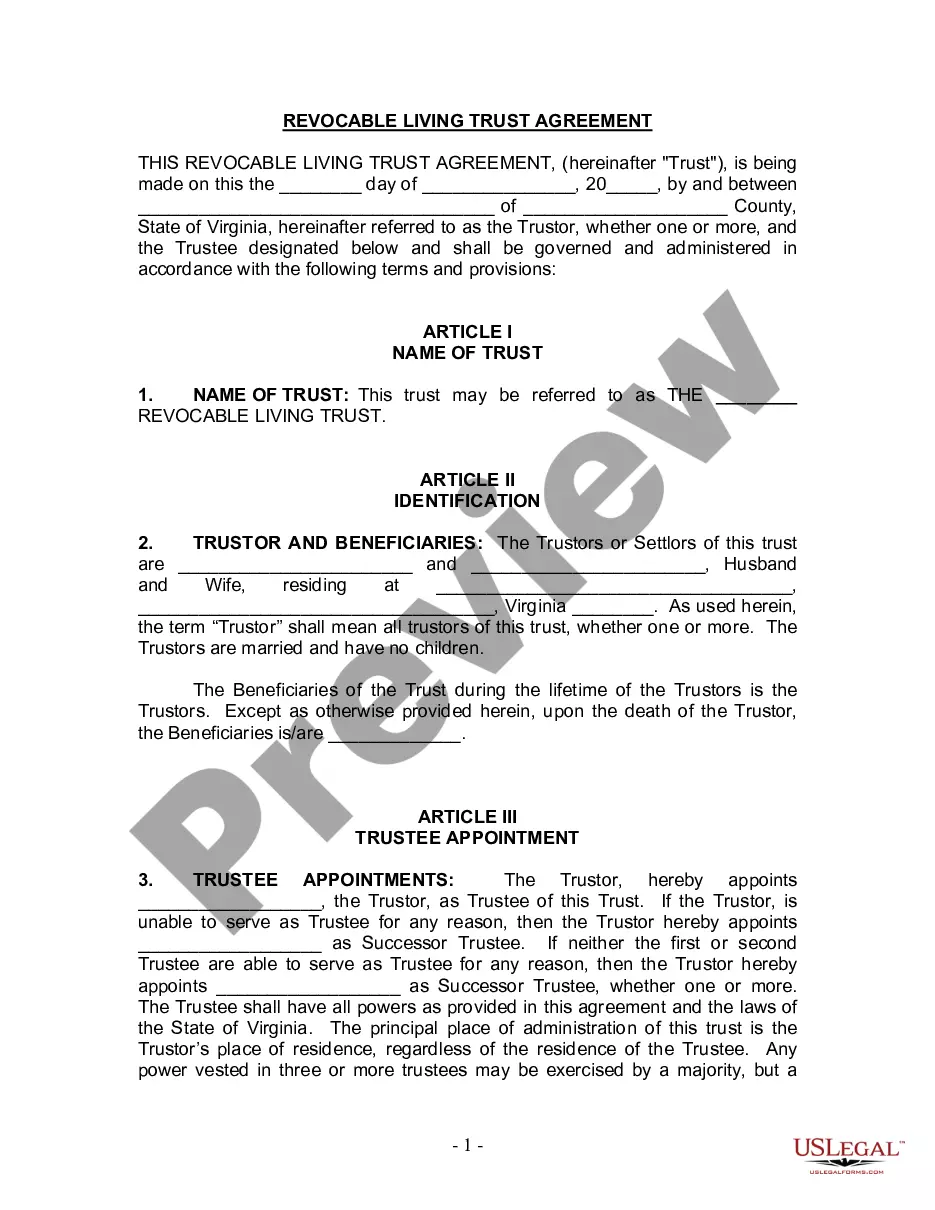
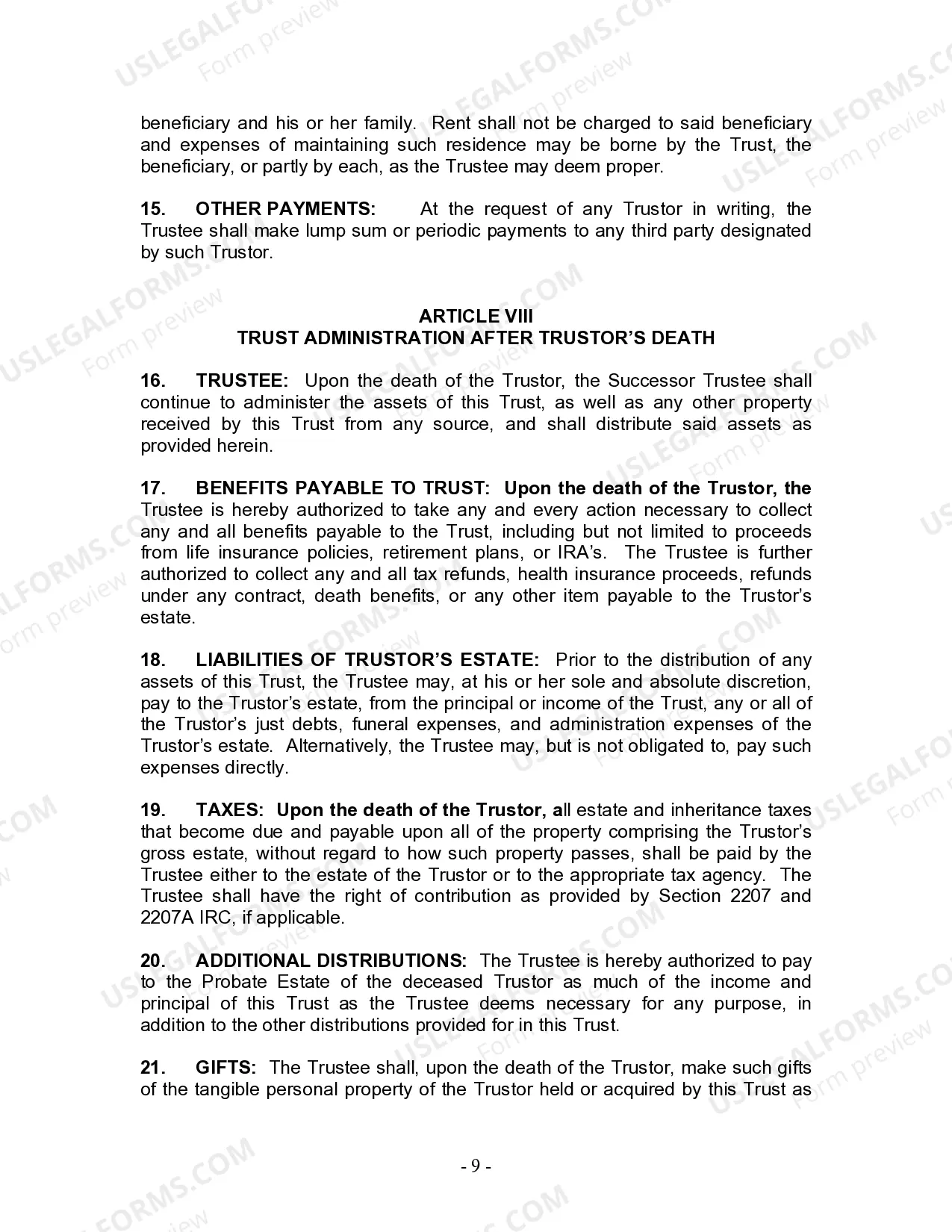
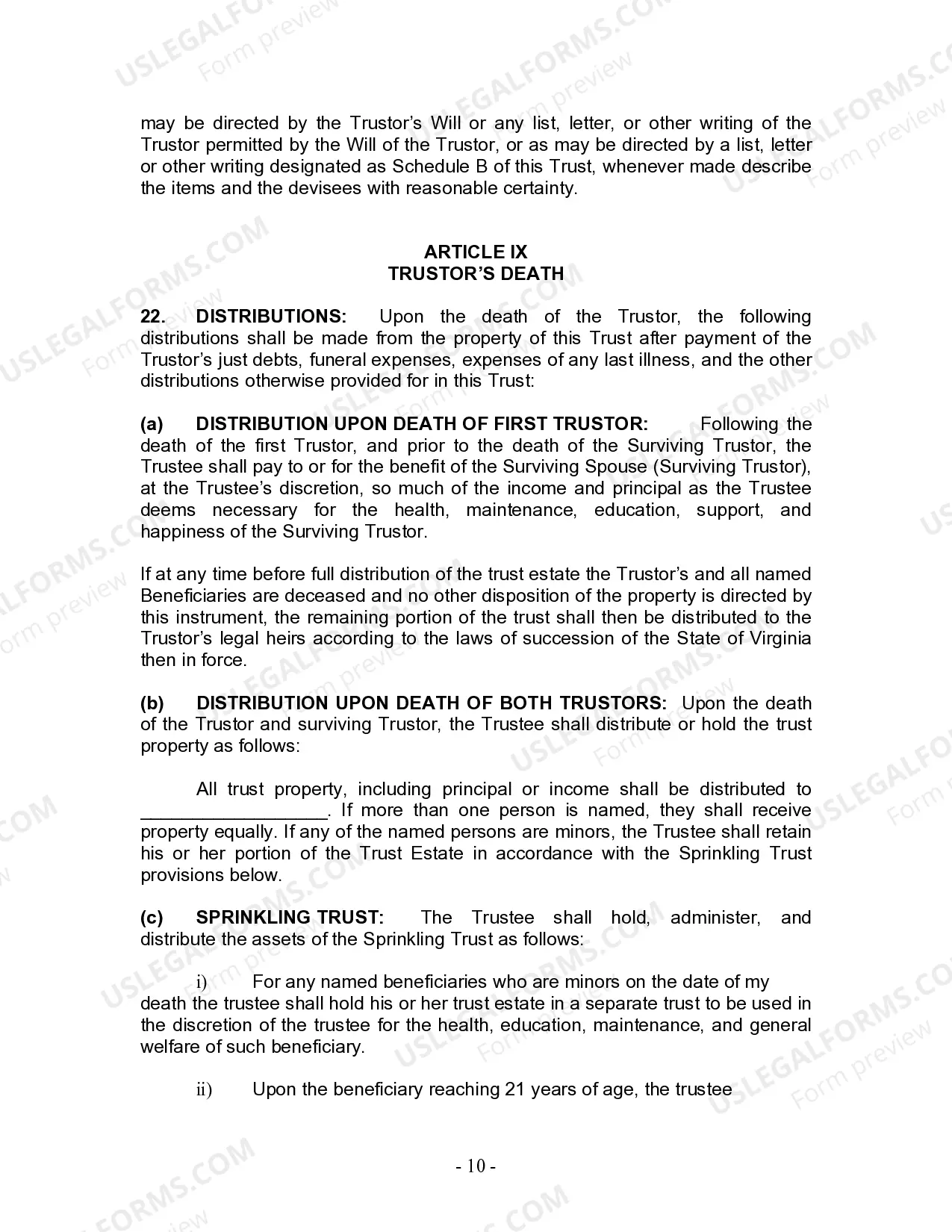
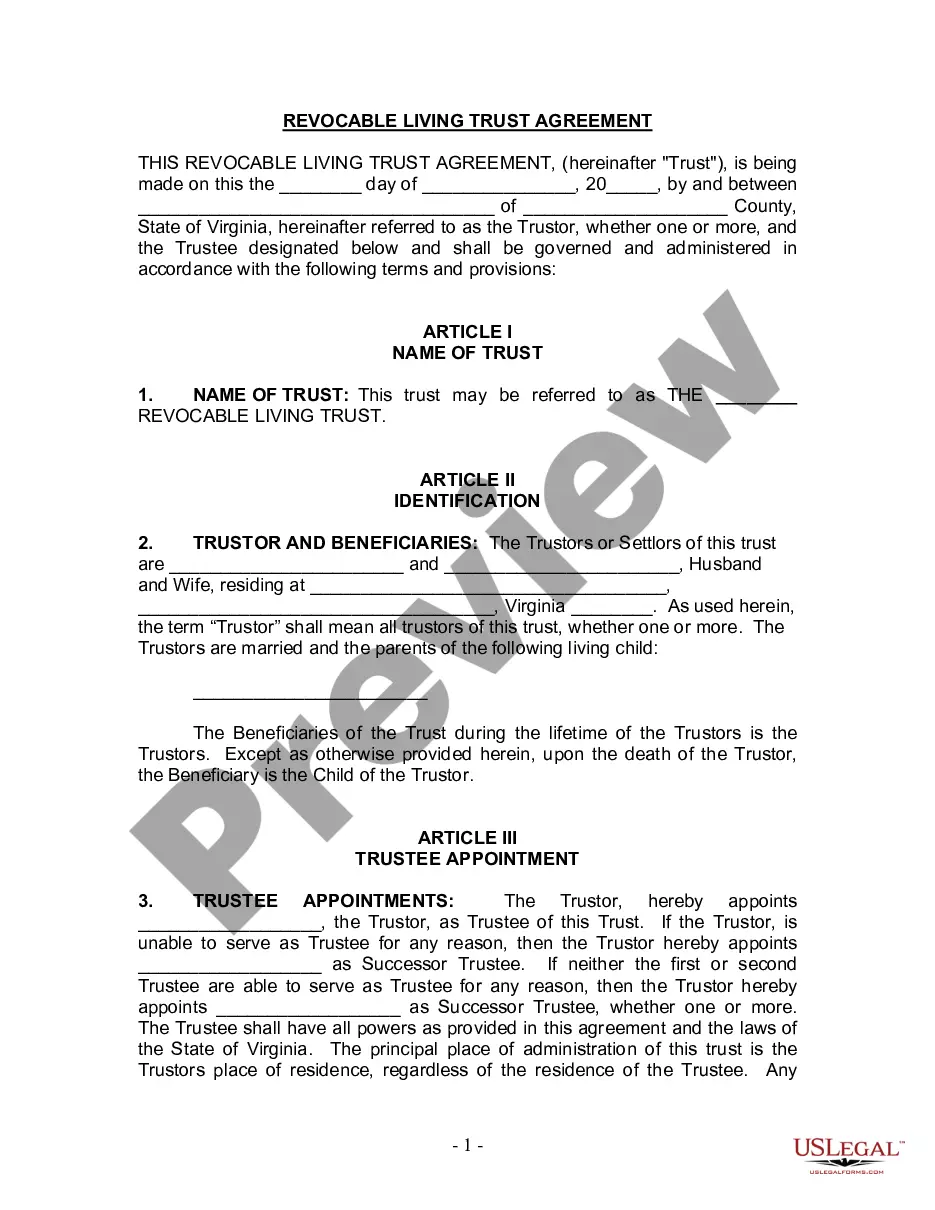
The Revocable Living Trust for Husband and Wife with No Children is a legal document that allows a married couple without children to manage their assets collectively during their lifetimes and designate asset distribution upon their death. This type of living trust differs from wills in that it allows for the direct transfer of assets to beneficiaries without the need for probate, potentially saving time and costs associated with the legal process. A living trust provides flexibility and control, allowing the creators (trustors) to change or revoke the trust at any time while they are alive.
Key parts of this document
- Name of Trust: Section outlines how the trust will be formally identified.
- Trustor and Beneficiaries: Identification of the trust creators and their status as beneficiaries.
- Trustee Appointment: Specification of the trustee and successor trustees who will manage the trust assets.
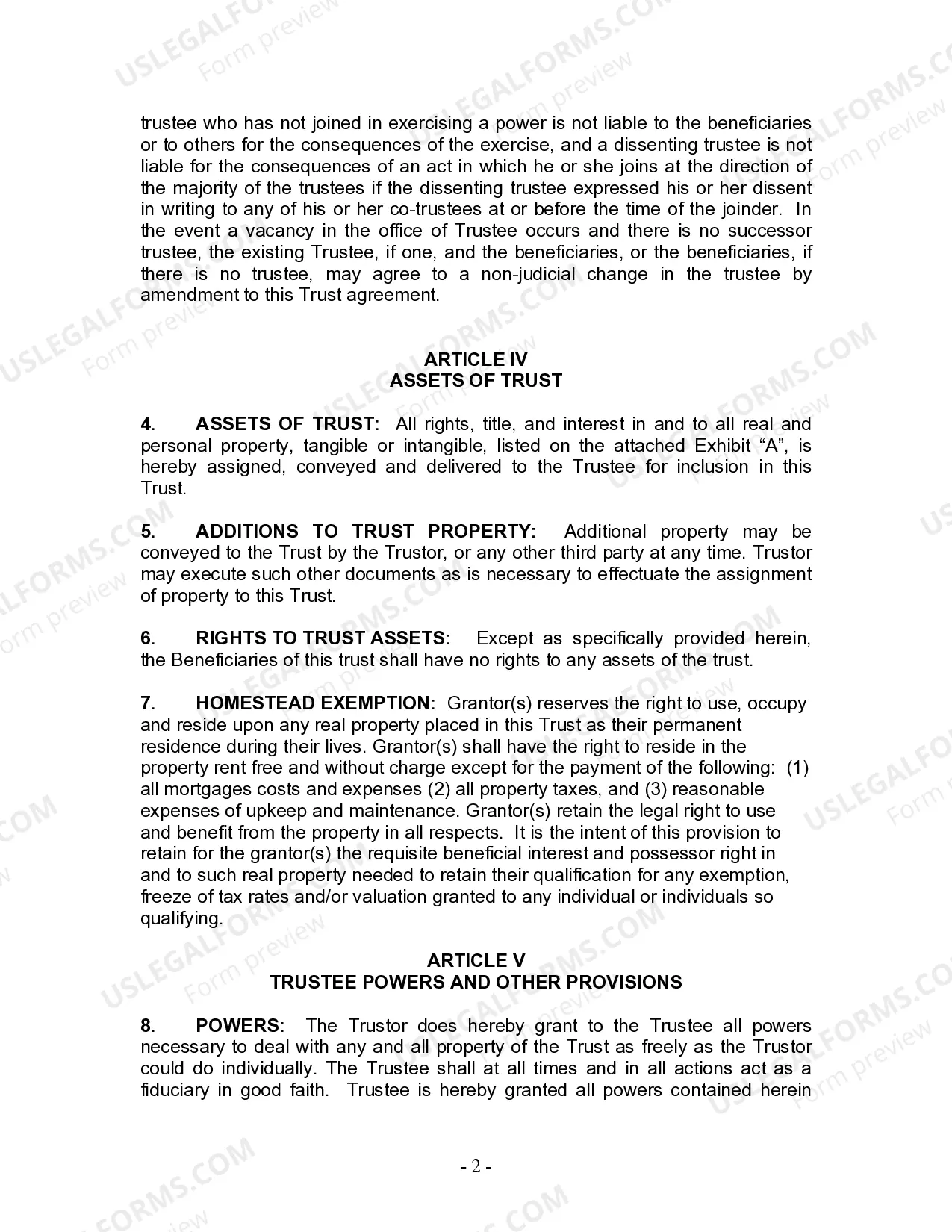
- Assets of Trust: Details on how property and assets are transferred into the trust.
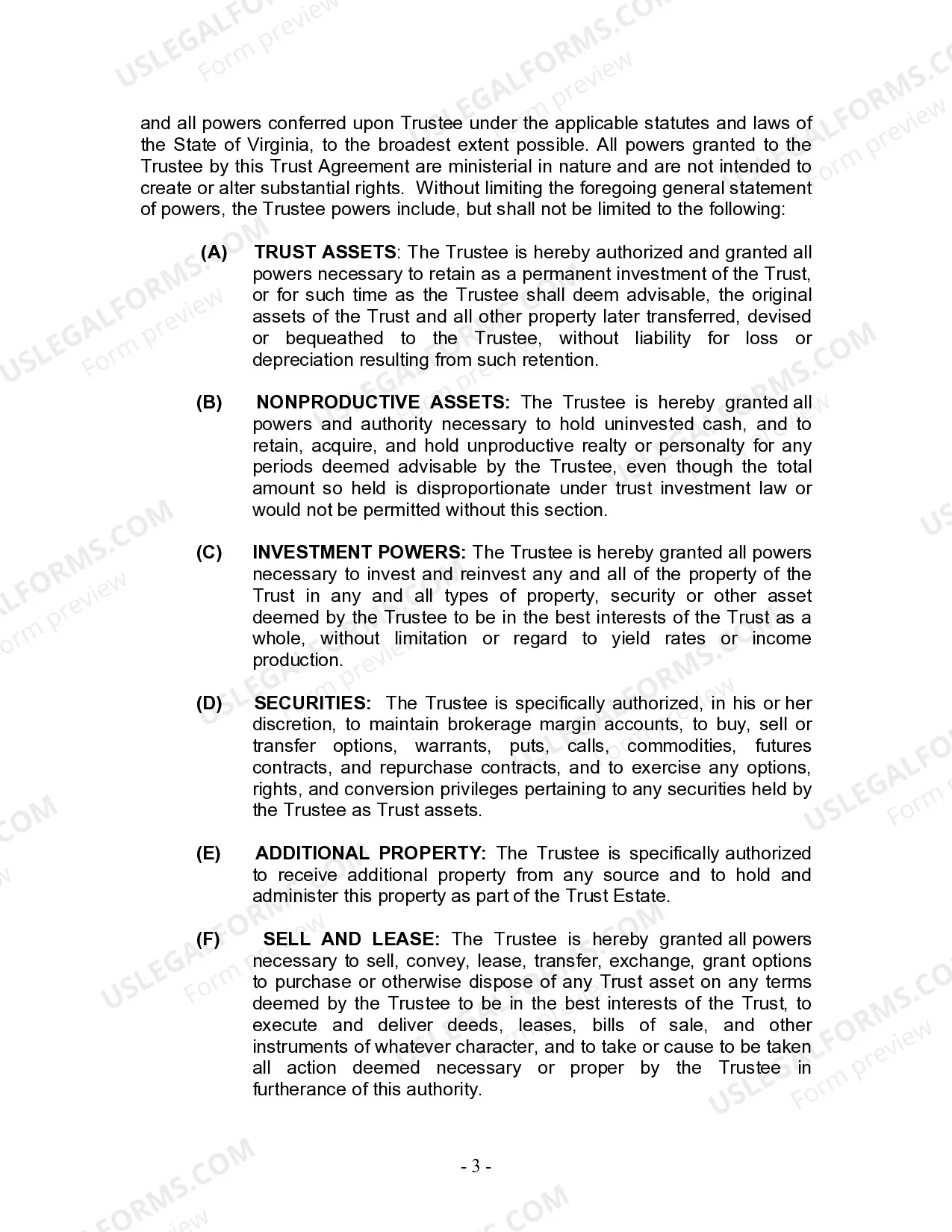
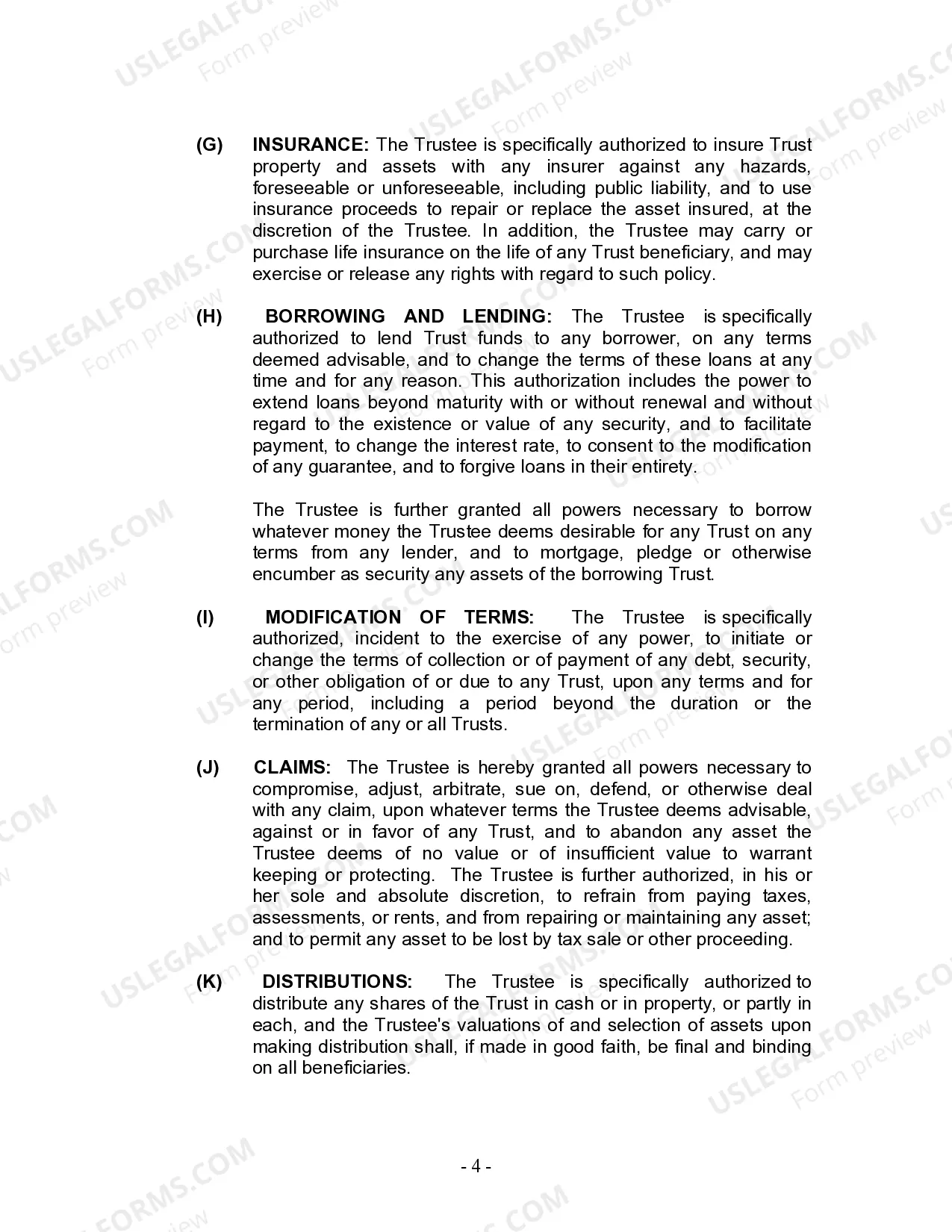
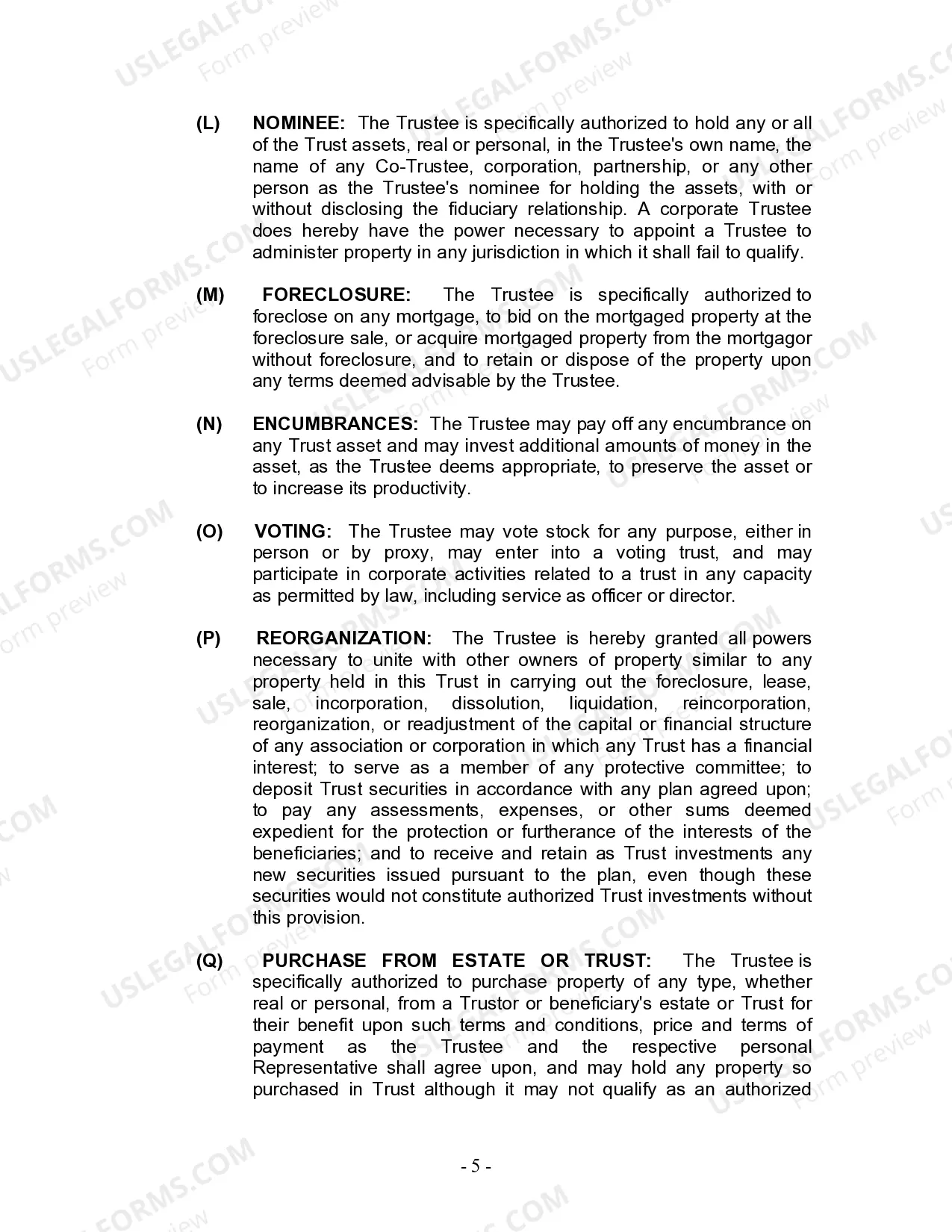
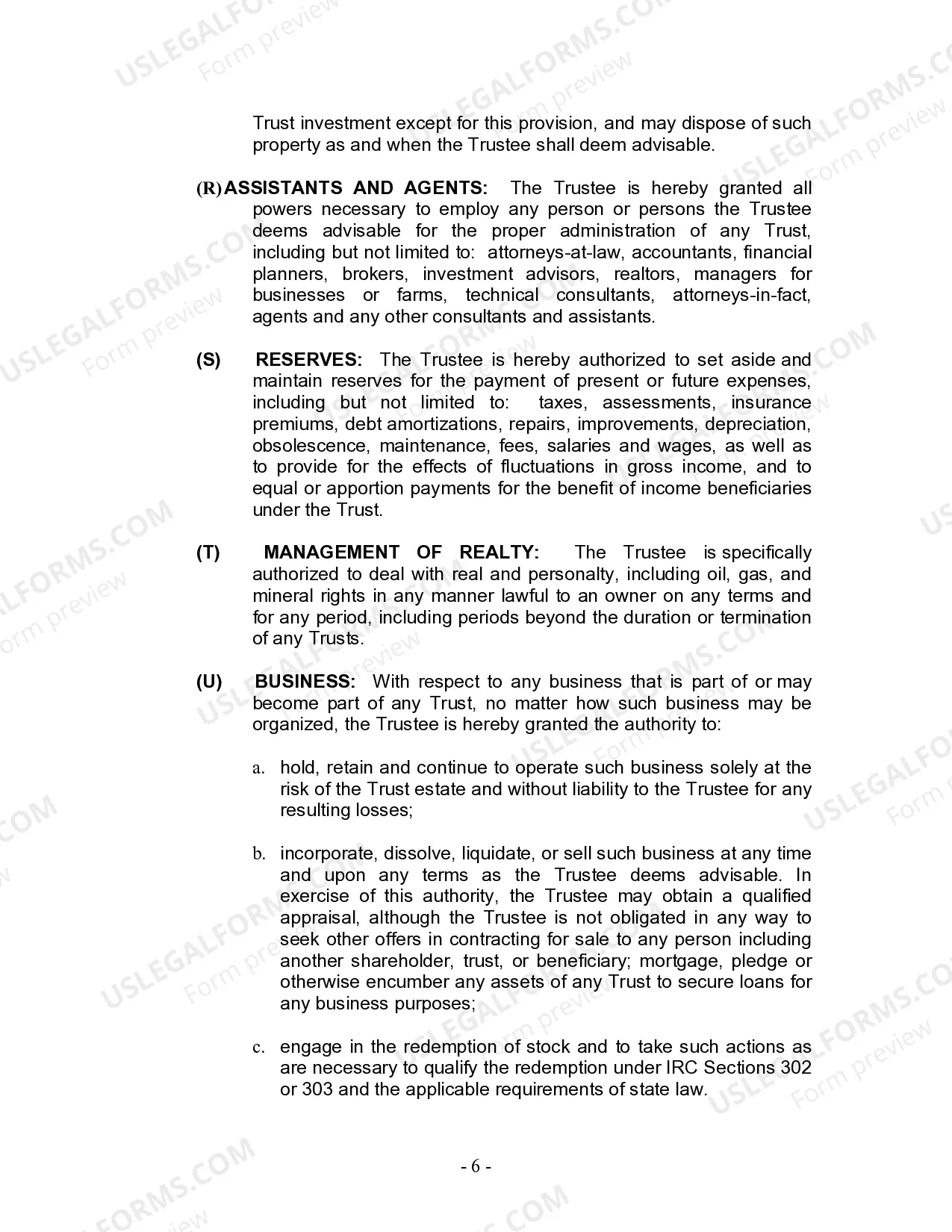
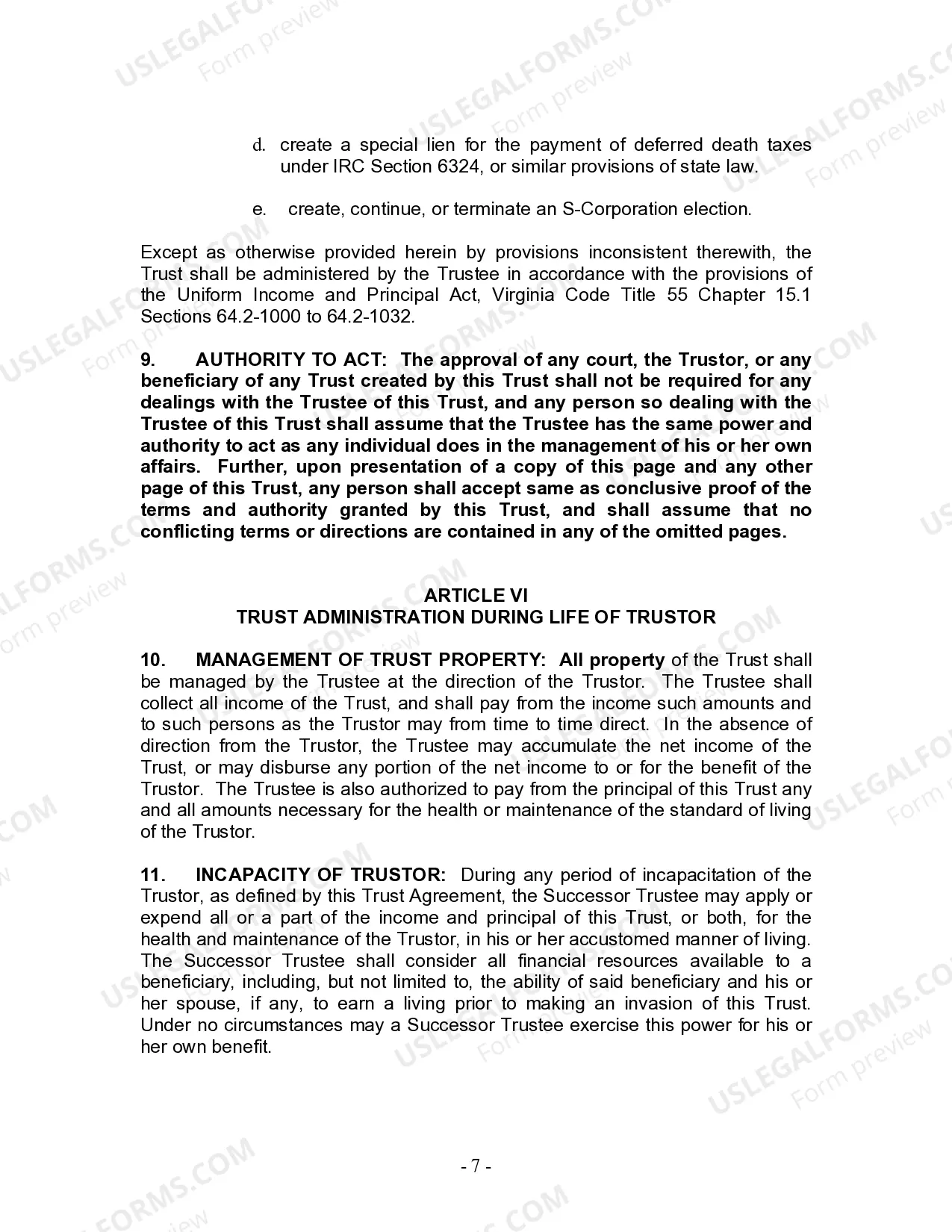
- Trustee Powers: Lists the powers granted to the trustee regarding the management and distribution of trust assets.
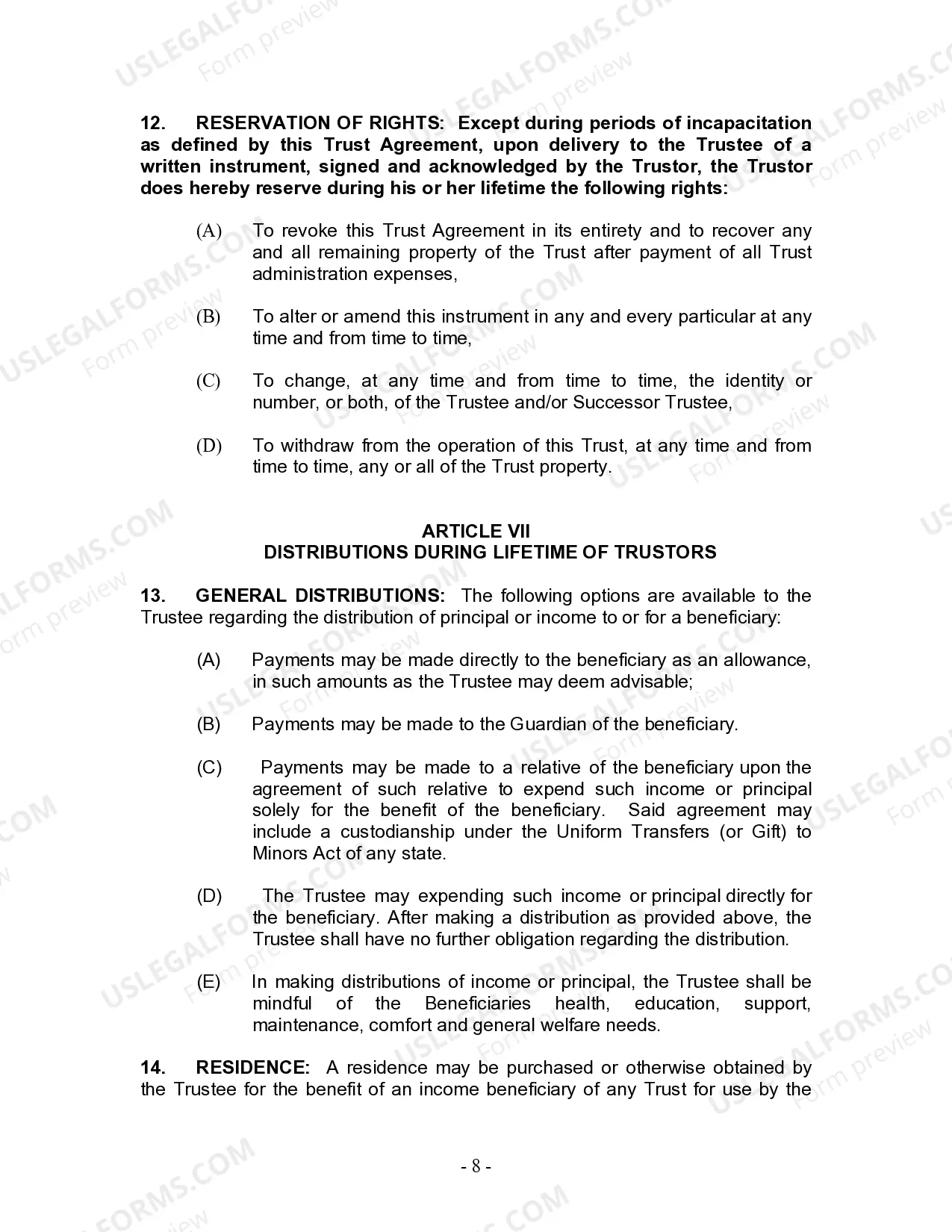
- Distribution Upon Death: Guidelines for distributing assets after the death of the trustors.



When this form is needed
This form is useful for couples without children who want a straightforward way to manage their assets and provide for each other in the event of incapacity or death. It is ideal for those looking to avoid the complexities of probate and ensure a smooth transition of property to the surviving spouse or designated beneficiaries.
Intended users of this form
- Married couples without children who wish to create a trust.
- Couples seeking to manage their assets and facilitate the transfer of property upon death.
- Individuals looking for a flexible estate planning tool to avoid probate.
Steps to complete this form
- Identify the parties involved, including the trustors (husband and wife) and the trustee.
- Designate the name of the trust as specified in the document.
- List the property and assets to be included in the trust.
- Specify the terms regarding the distribution of assets upon the death of the trustors.
- Sign and date the document in the presence of a notary public if required.
Notarization guidance
This form does not typically require notarization unless specified by local law. However, it is advisable to have the document notarized to ensure its validity and to secure a smooth transition of assets.
Get your form ready online
Our built-in tools help you complete, sign, share, and store your documents in one place.
Make edits, fill in missing information, and update formatting in US Legal Forms—just like you would in MS Word.
Download a copy, print it, send it by email, or mail it via USPS—whatever works best for your next step.
Sign and collect signatures with our SignNow integration. Send to multiple recipients, set reminders, and more. Go Premium to unlock E-Sign.
If this form requires notarization, complete it online through a secure video call—no need to meet a notary in person or wait for an appointment.
We protect your documents and personal data by following strict security and privacy standards.

Make edits, fill in missing information, and update formatting in US Legal Forms—just like you would in MS Word.

Download a copy, print it, send it by email, or mail it via USPS—whatever works best for your next step.

Sign and collect signatures with our SignNow integration. Send to multiple recipients, set reminders, and more. Go Premium to unlock E-Sign.

If this form requires notarization, complete it online through a secure video call—no need to meet a notary in person or wait for an appointment.

We protect your documents and personal data by following strict security and privacy standards.
Mistakes to watch out for
- Failing to properly fund the trust with assets, which can lead to the trust being ineffective.
- Not clearly specifying the successor trustee, which may complicate management after the trustor's death.
- Neglecting to update the trust after significant life changes, such as relocation or financial situation adjustments.
Benefits of using this form online
- Convenient access to the form at any time without the need for in-person meetings.
- Editability allows users to customize the document to their specific needs.
- Reliability, as the forms are prepared based on the latest legal standards and practices.
Summary of main points
- The Revocable Living Trust helps manage assets and provides clear instructions for asset distribution after death.
- This form is tailored for couples without children, offering them flexibility and control over their estate planning.
- Completing the form involves identifying parties, specifying assets, and determining distribution terms, with a focus on clarity and legal compliance.
Looking for another form?
Form popularity
FAQ
To inherit under Virginia's intestate succession statutes, a person must outlive you by 120 hours. So, if you and your brother are in a car accident and he dies a few hours after you do, his estate would not receive any of your property. (Virginia Code § 64.2-2201.) Half-relatives.
The term usually means your nearest blood relative. In the case of a married couple or a civil partnership it usually means their husband or wife. Next of kin is a title that can be given, by you, to anyone from your partner to blood relatives and even friends.
Heirs/Heirs at Law: the persons who would inherit the decedent's estate if the decedent died intestate, as determined by law at the time of the decedent's death.
Virginia is a common law property state. This means that in cases of intestacy, the estate is automatically inherited by the spouse.Therefore, if there is a surviving spouse, the spouse will receive the deceased's portion of all marital properties.
If a person does not have a will and they die, their assets pass according to Virginia's laws of intestate succession. If a person does not have any children, all of the assets pass to the spouse.If the person does not have a spouse or children, the assets pass to the decedent's parents.
Next of kin under Virginia law generally means the closest living relatives of the decedent. The Virginia Supreme Court has stated that the term next of kin is a nontechnical term whose commonly accepted meaning is 'nearest in blood. ' Elmore v. Virginia Nat'l Bank, 232 Va.
WHO INHERITS THE PROPERTY OF AN INTESTATE? someone other than the surviving spouse in which case, one-third goes to the surviving spouse and the remaining two-thirds is divided among all children. f0a7 if no surviving spouse, all passes to the children and their descendants.
How Is Next of Kin Determined? To determine next of kin in California, go down the list until someone exists in the category listed.For example, if decedent had no surviving spouse or registered domestic partner, but was survived by adult children, then the adult children would be next of kin.