Confidentiality Agreement for Employees
Understanding this form
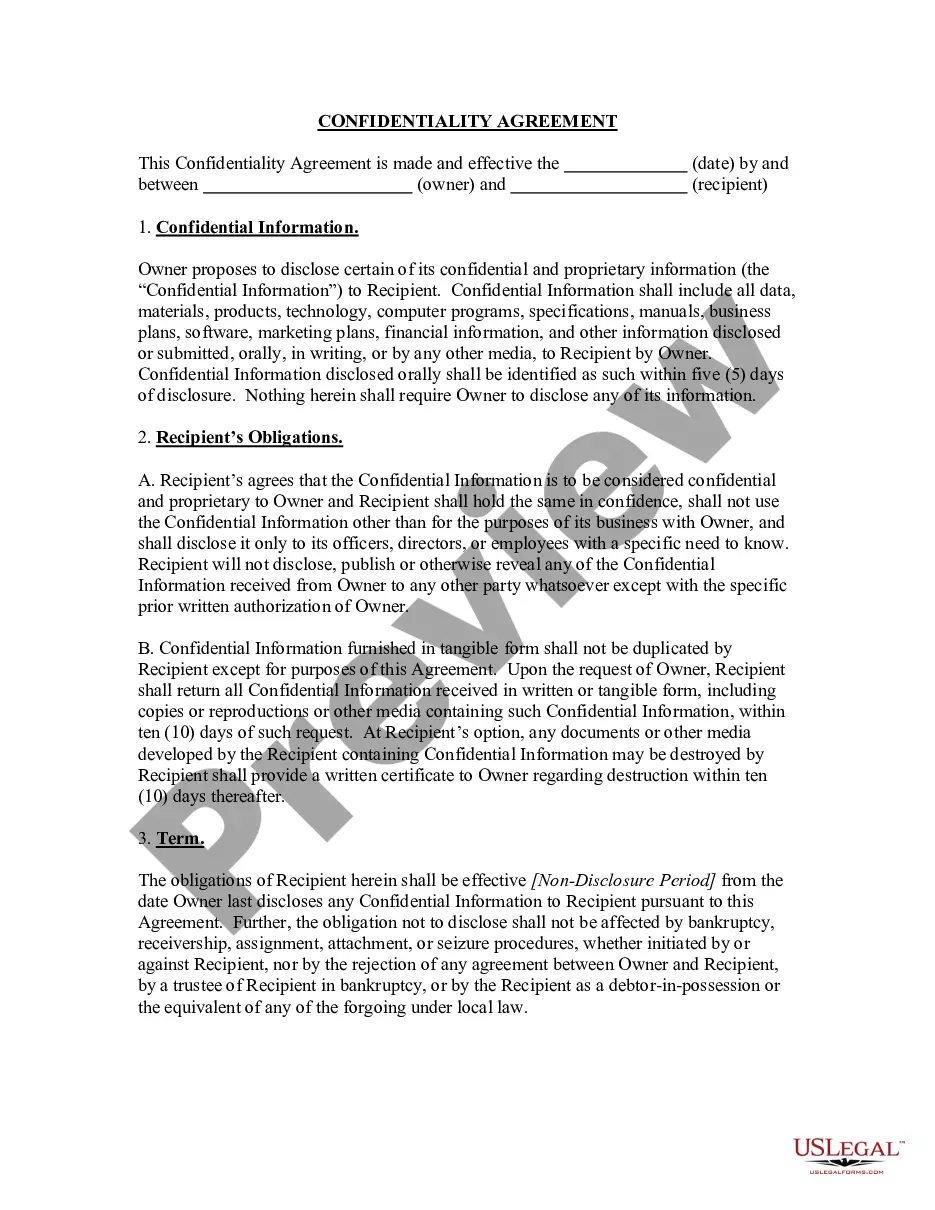
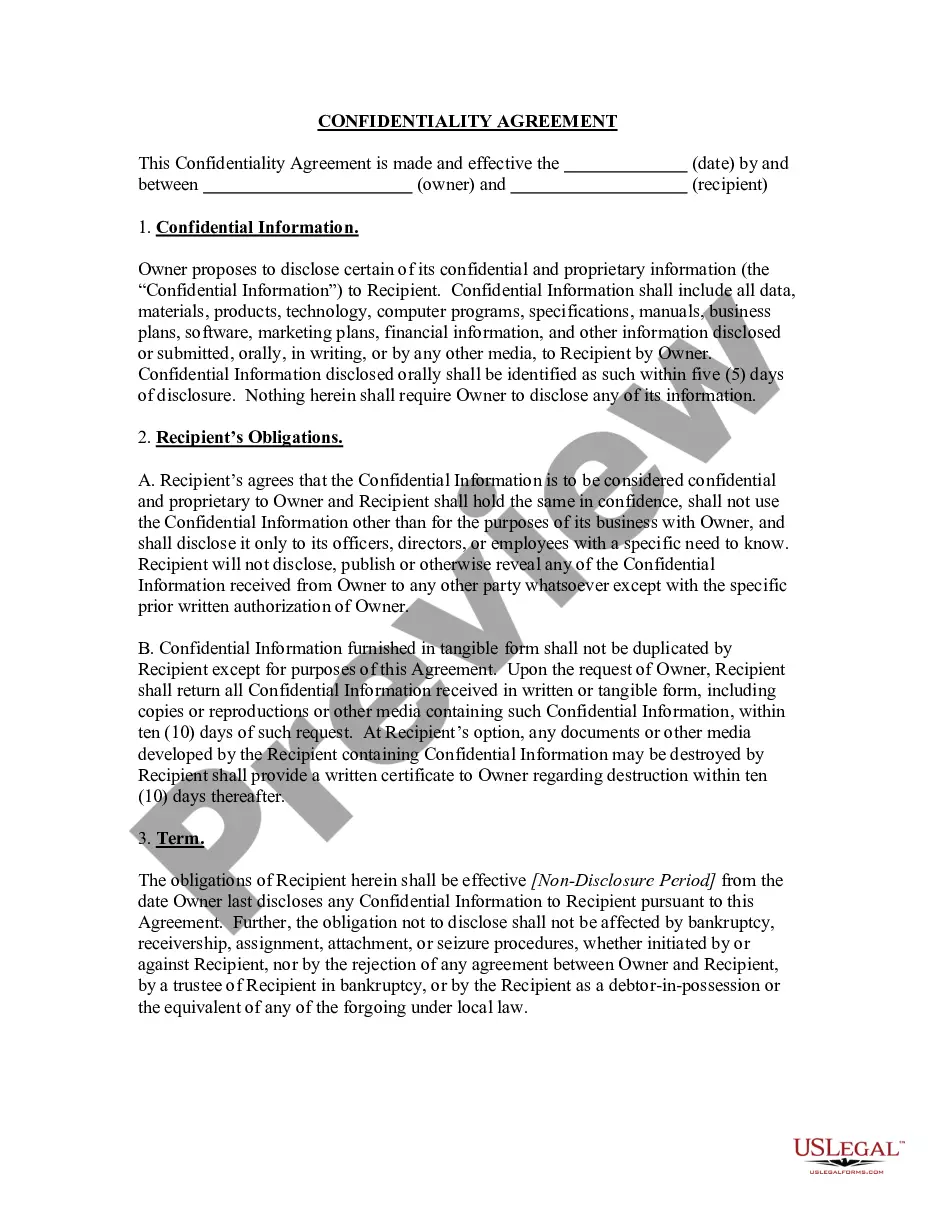
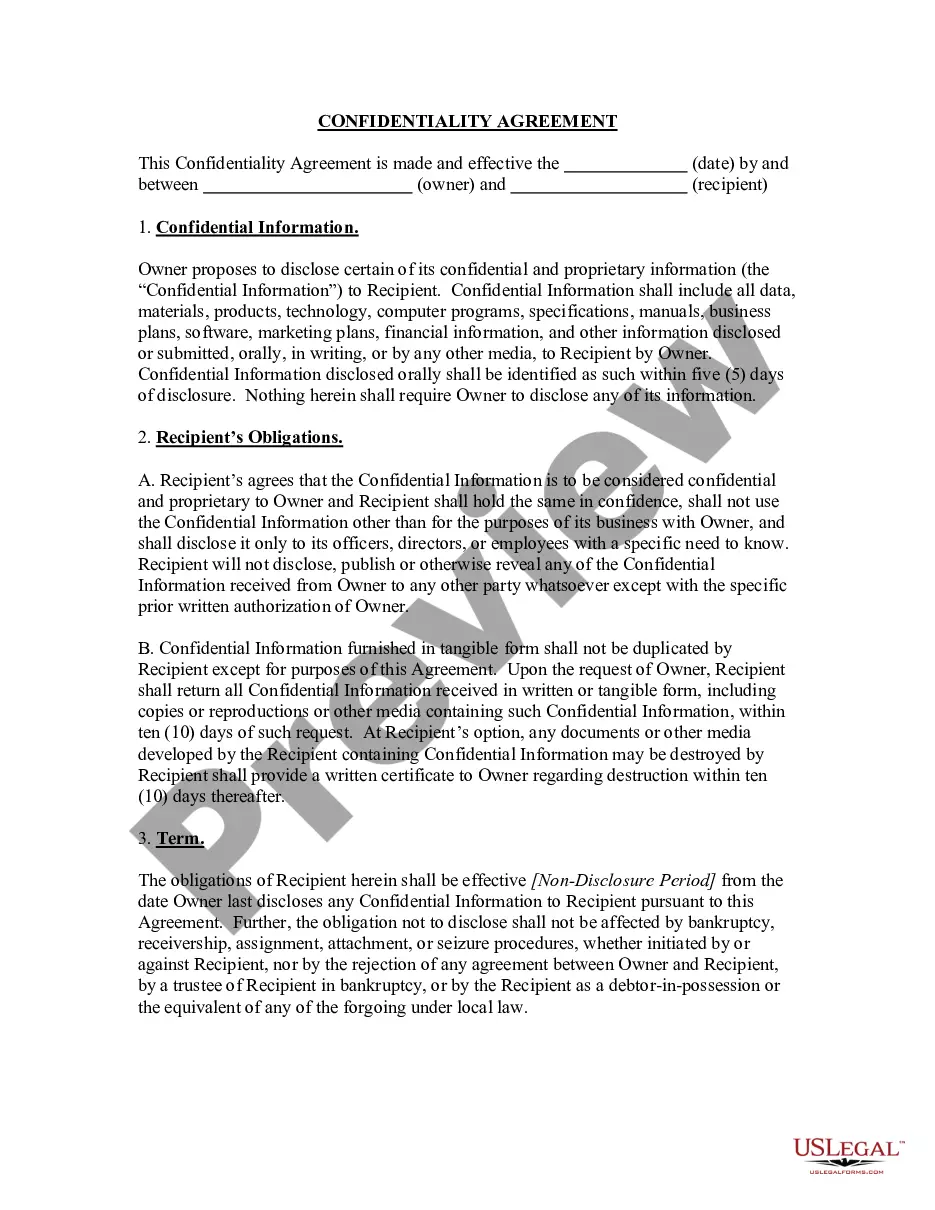
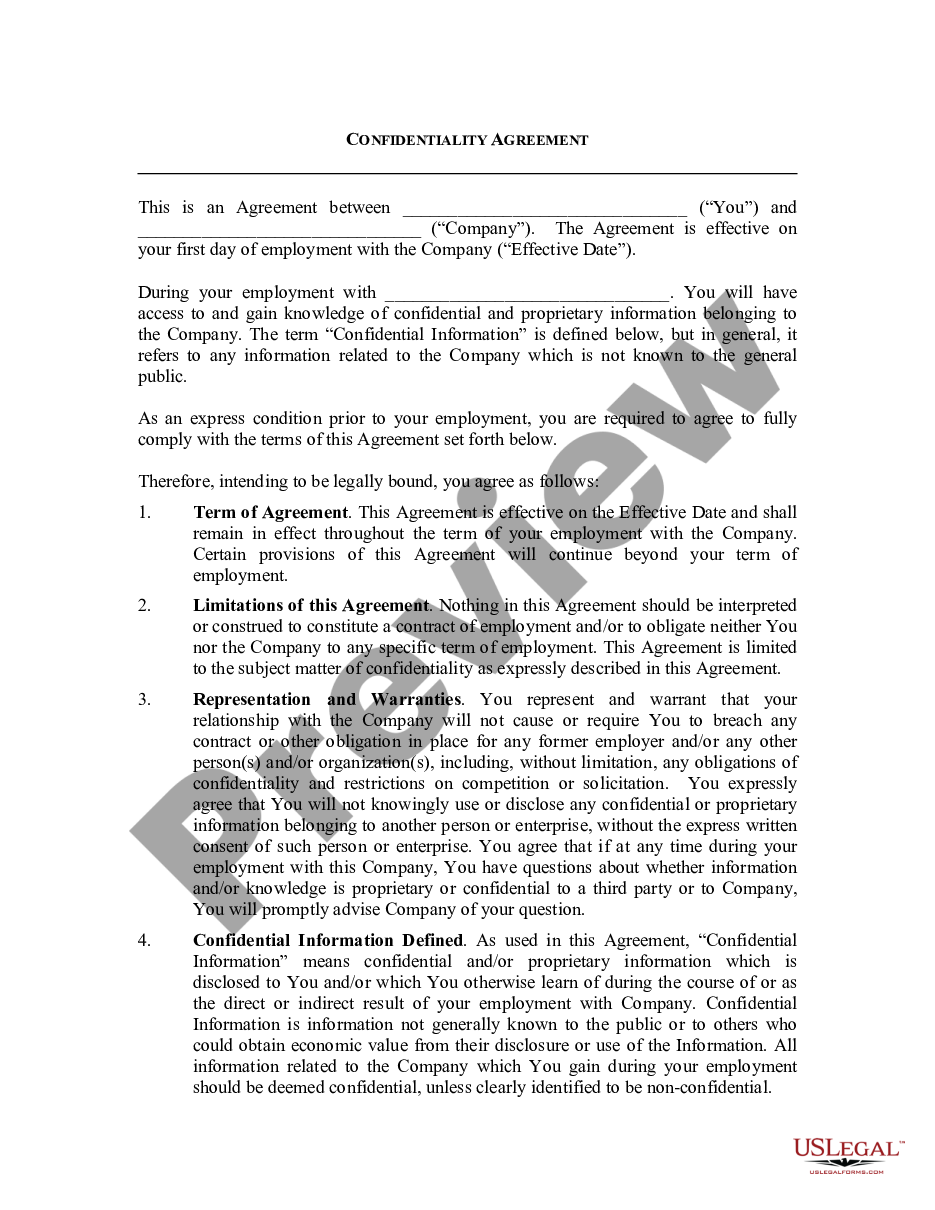
The Confidentiality Agreement for Employees is a legal document that establishes a binding relationship between an employer and an employee regarding the handling of sensitive information. This agreement ensures that proprietary information shared with employees remains confidential and is used solely for business purposes. Unlike general non-disclosure agreements, this specific form is tailored for employment contexts, providing clear guidelines on the obligations of employees to protect the employer's confidential information.
Main sections of this form
- Recipient's Obligations: Details the responsibilities of the employee regarding confidential information.
- Non-Disclosure Period: Specifies the duration of the confidentiality obligations.
- Return or Destroy Information: Outlines the process for handling confidential information after employment ends.
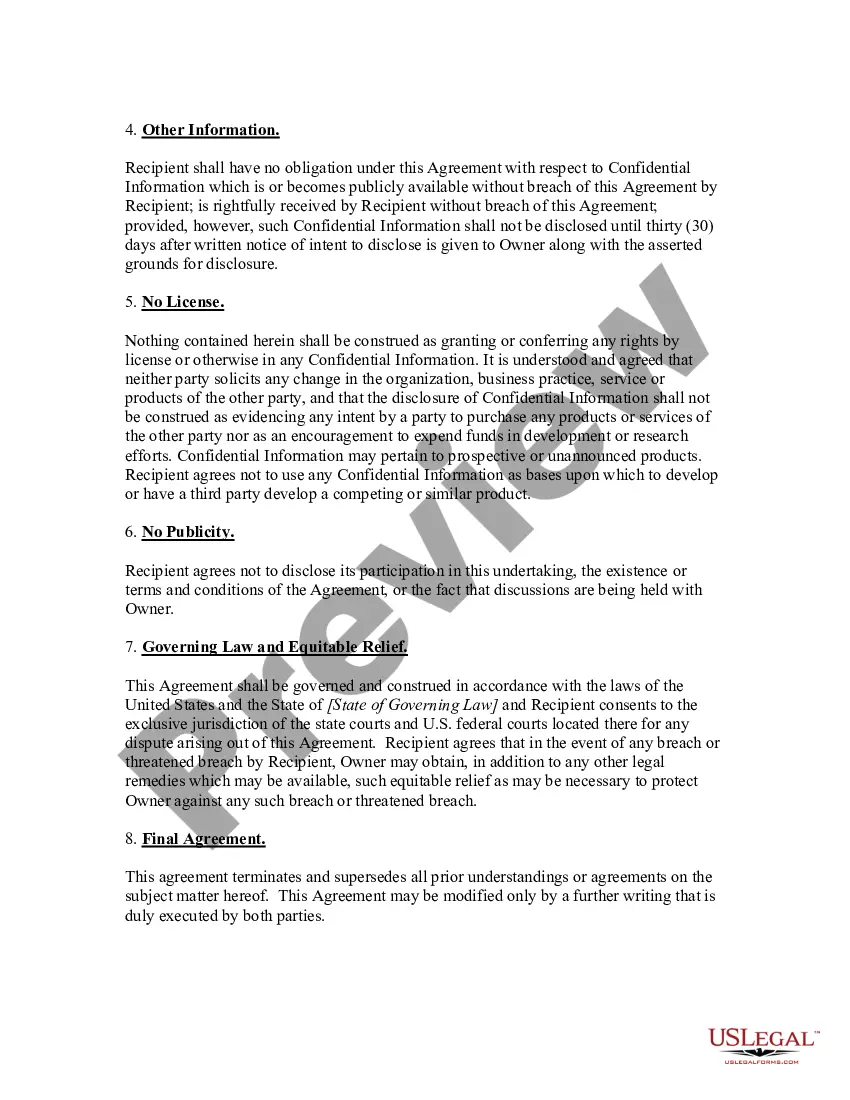
- No License Granted: Clarifies that sharing information does not grant ownership rights.
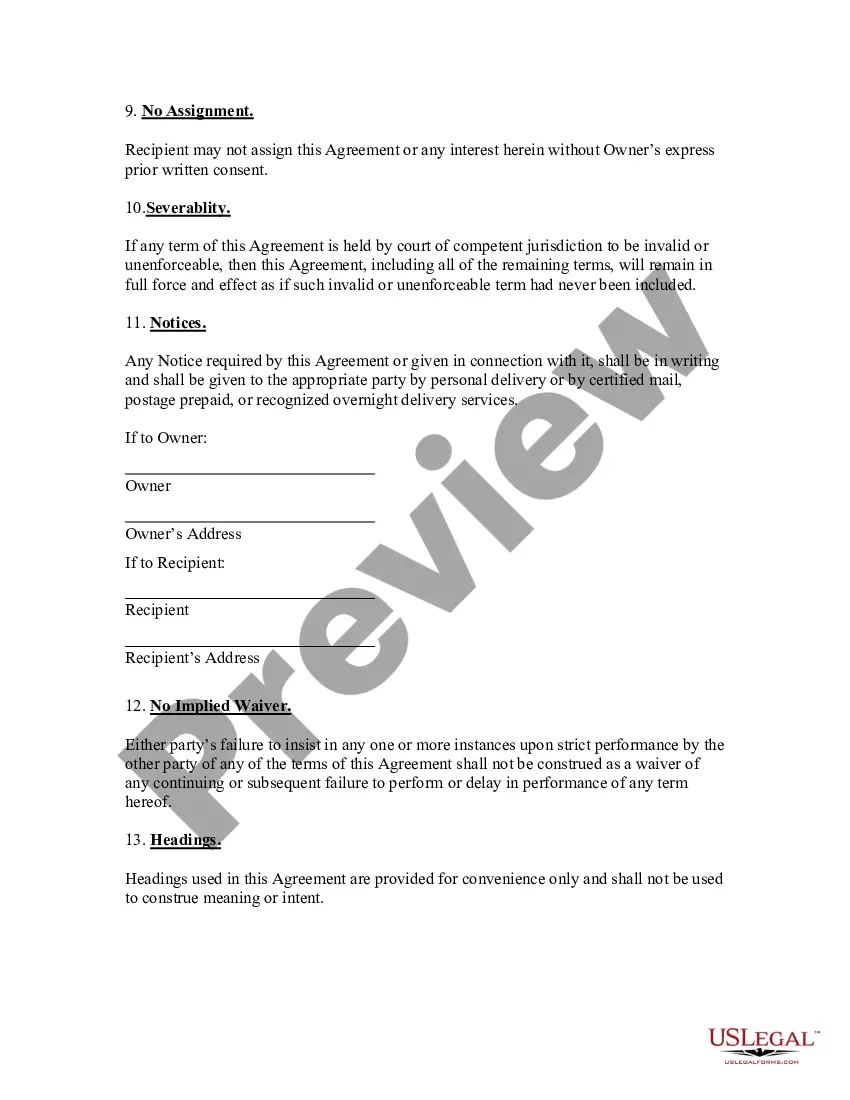
- Governing Law: Indicates the jurisdiction for legal disputes arising from the agreement.
When to use this document
This form should be used when hiring employees who will have access to sensitive or proprietary information. It is particularly important for positions that involve trade secrets, intellectual property, client lists, or any other confidential material. This agreement protects the businessâs interests and ensures employees understand their responsibilities regarding confidentiality before they start work.
Intended users of this form
- Employers: Any organization or individual hiring employees who will have access to confidential information.
- Human Resources Departments: HR teams responsible for onboarding and setting employment terms.
- Small Business Owners: Entrepreneurs looking to protect their business secrets without extensive legal knowledge.
How to prepare this document
- Identify the parties involved by filling in the names and contact information of both the employer (Owner) and the employee (Recipient).
- Specify the definition of "Confidential Information" as it relates to your business.
- Clearly state the duration of the non-disclosure period.
- Include any specific obligations regarding the return or destruction of confidential materials upon request.
- Enter the date of the agreement and provide space for both parties to sign and date the document.
Notarization requirements for this form
This form does not typically require notarization unless specified by local law. However, adding notarization may enhance the enforceability of the agreement in certain circumstances.
Get your form ready online
Our built-in tools help you complete, sign, share, and store your documents in one place.
Make edits, fill in missing information, and update formatting in US Legal Forms—just like you would in MS Word.
Download a copy, print it, send it by email, or mail it via USPS—whatever works best for your next step.
Sign and collect signatures with our SignNow integration. Send to multiple recipients, set reminders, and more. Go Premium to unlock E-Sign.
If this form requires notarization, complete it online through a secure video call—no need to meet a notary in person or wait for an appointment.
We protect your documents and personal data by following strict security and privacy standards.

Make edits, fill in missing information, and update formatting in US Legal Forms—just like you would in MS Word.

Download a copy, print it, send it by email, or mail it via USPS—whatever works best for your next step.

Sign and collect signatures with our SignNow integration. Send to multiple recipients, set reminders, and more. Go Premium to unlock E-Sign.

If this form requires notarization, complete it online through a secure video call—no need to meet a notary in person or wait for an appointment.

We protect your documents and personal data by following strict security and privacy standards.
Typical mistakes to avoid
- Failing to define what constitutes confidential information clearly.
- Not specifying the duration of the confidentiality obligations.
- Omitting the return or destruction clause for confidential materials.
- Forgetting to sign the agreement, which can render it unenforceable.
Benefits of using this form online
- Convenience: Easily download and modify the form as needed without visiting a lawyer.
- Editability: Customize the agreement to suit specific business needs and situations.
- Reliability: Access a professionally drafted document that is designed to hold up in legal contexts.
Legal use & context
- Ensures both parties understand their responsibilities regarding confidential information.
- Protects the employerâs proprietary interests in case of disputes.
- Provides a clear framework for legal recourse in case of breach.
Summary of main points
- The Confidentiality Agreement for Employees is crucial for protecting sensitive business information.
- Employers must clearly outline the obligations and duration of the agreement.
- It's essential for both parties to understand their rights and responsibilities under the agreement.
Looking for another form?
Form popularity
FAQ
Generally, confidentiality agreements are enforceable when they meet the general requirements of a contract.
Employers must be prepared to terminate any employee who refuses to sign the agreement. If an employer allows even one employee to refuse and remain employed, the agreements signed by the other employees will not be legally binding.
While an employer has the right to demand its employees sign a NDA when those employees have access to valuable company data (e.g. product formulas, private customer lists, financial reports, etc.), the employer should not ask an employee to sign a confidentiality agreement if the purpose is to protect information that
To prevent employees from revealing sensitive information that could jeopardize your business, you might have them sign an employee confidentiality agreement. Businesses use employee confidentiality agreements to protect their innovative ideas, effective processes, unique products, or customer information.
An employee can be required to sign an NDA or NDA-like agreement with an employer, protecting trade secrets. In fact, some employment agreements include a clause restricting employees' use and dissemination of company-owned confidential information.
If an NDA lists extreme punishments for breaking the confidentiality agreement, you shouldn't sign it. A common consequence for breach of contract under an NDA is termination of employment. Be aware of what is considered a breach of contract.
Set the date of the agreement. Describe the two parties, sometimes called the Disclosing Party and the Receiving Party.7feff Include names and identification, so there can be no misunderstanding about who signed the agreement.
While an employer has the right to demand its employees sign a NDA when those employees have access to valuable company data (e.g. product formulas, private customer lists, financial reports, etc.), the employer should not ask an employee to sign a confidentiality agreement if the purpose is to protect information that
A confidentiality agreement is a written legal contract between an employer and an employee. The confidentiality agreement lays out binding terms and conditions that prohibit the employee from disclosing company confidential and proprietary information.