Revocable Living Trust for Married Couple
About this form
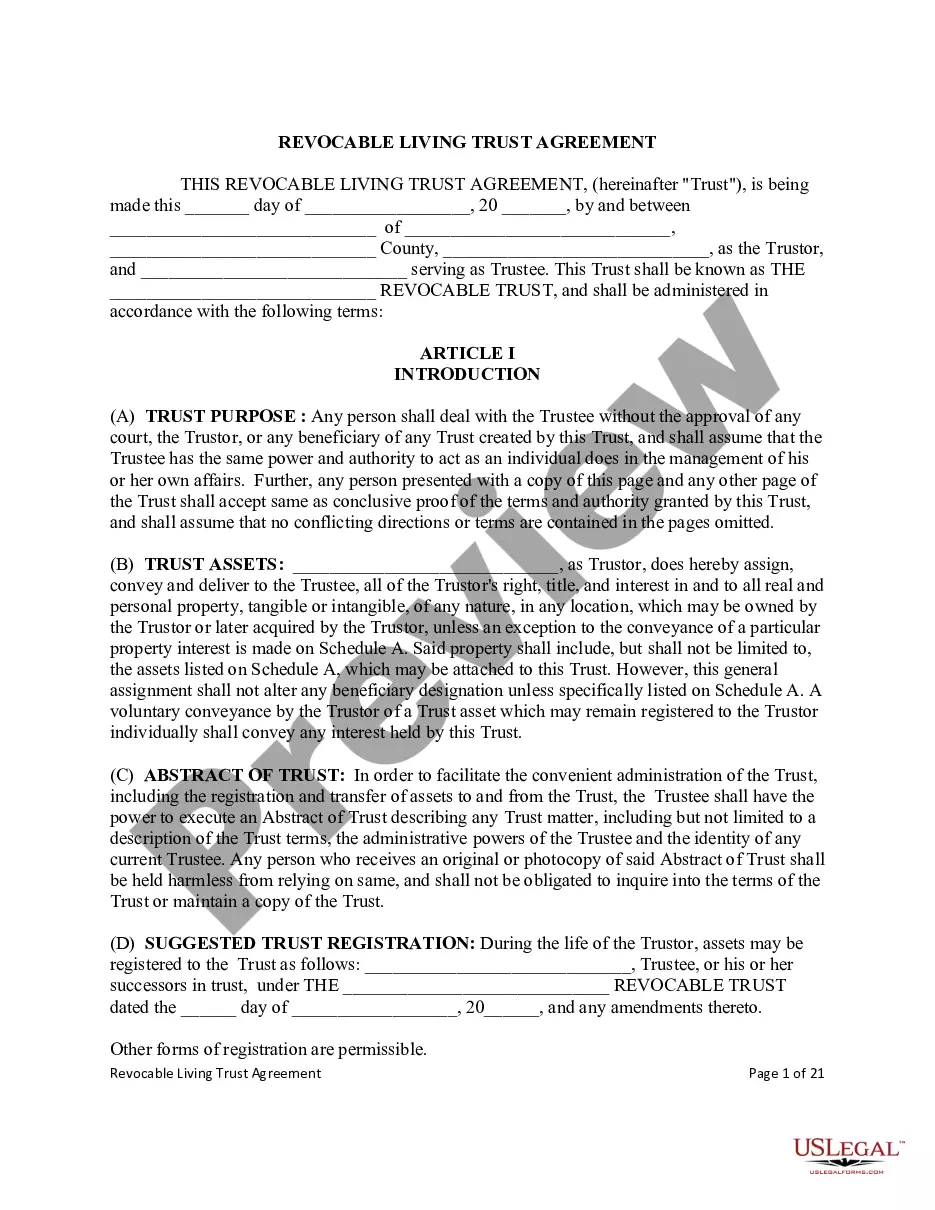
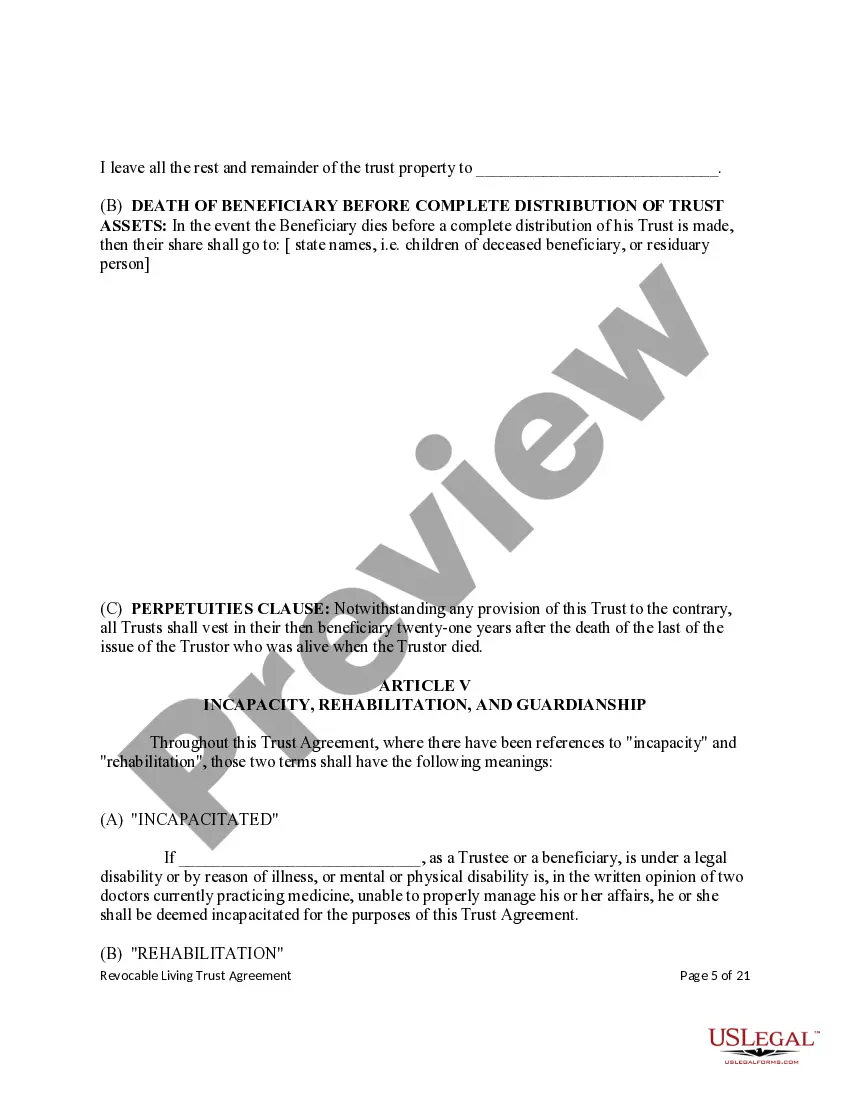
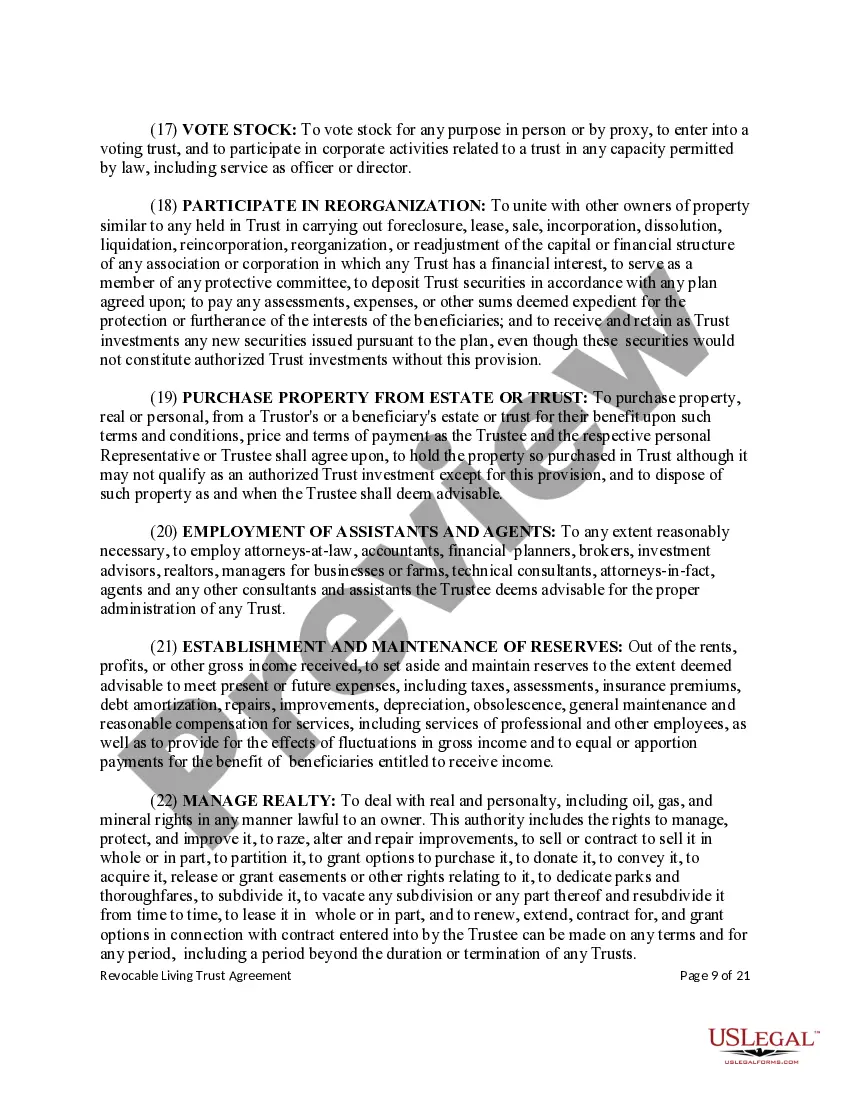
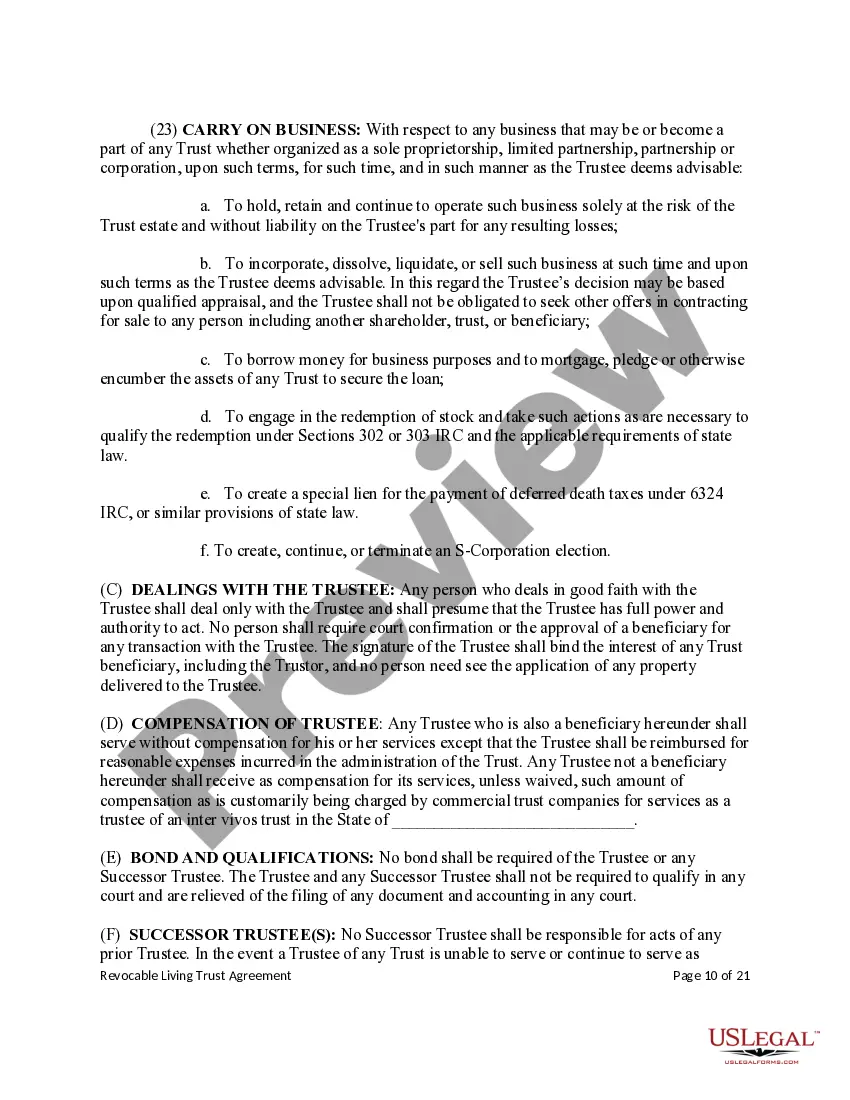
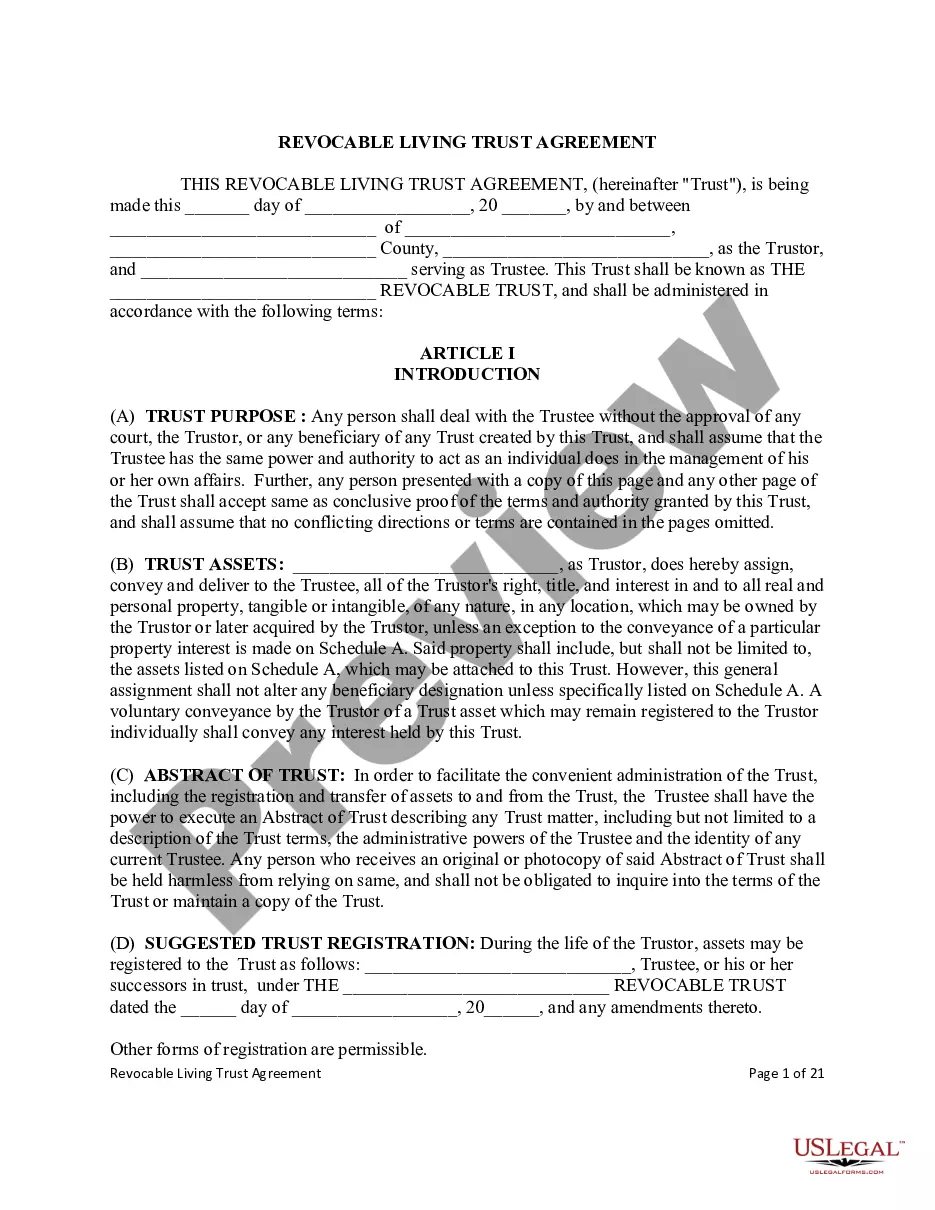
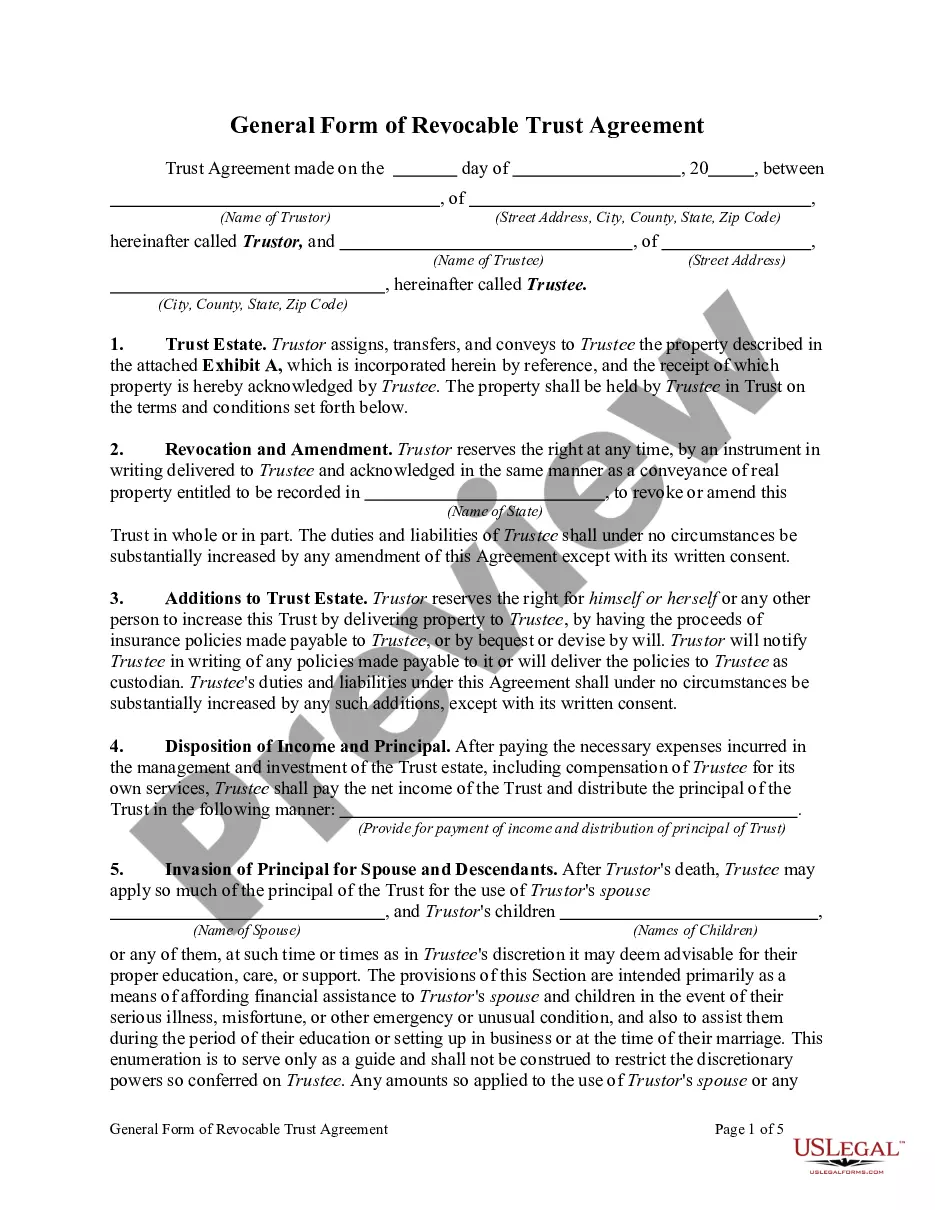
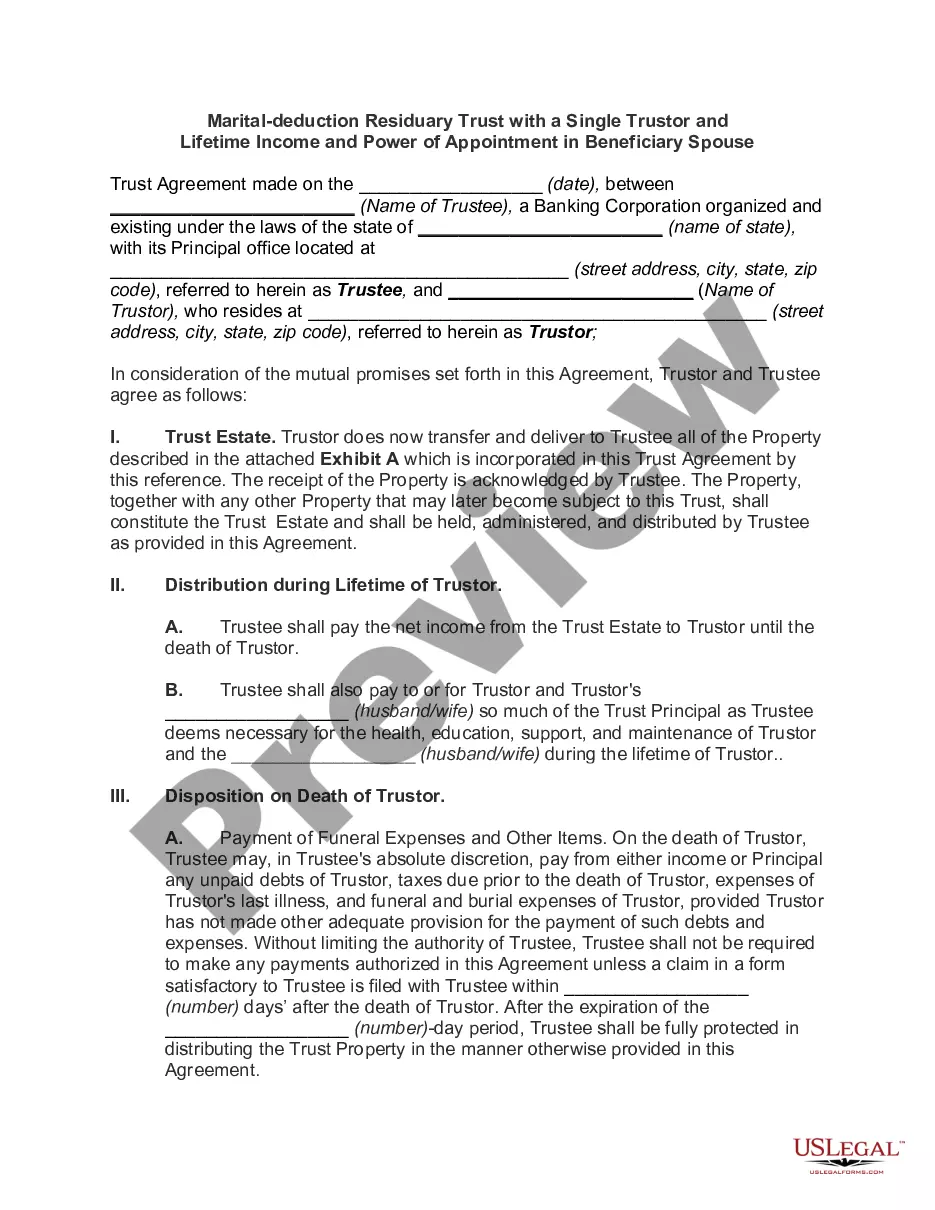
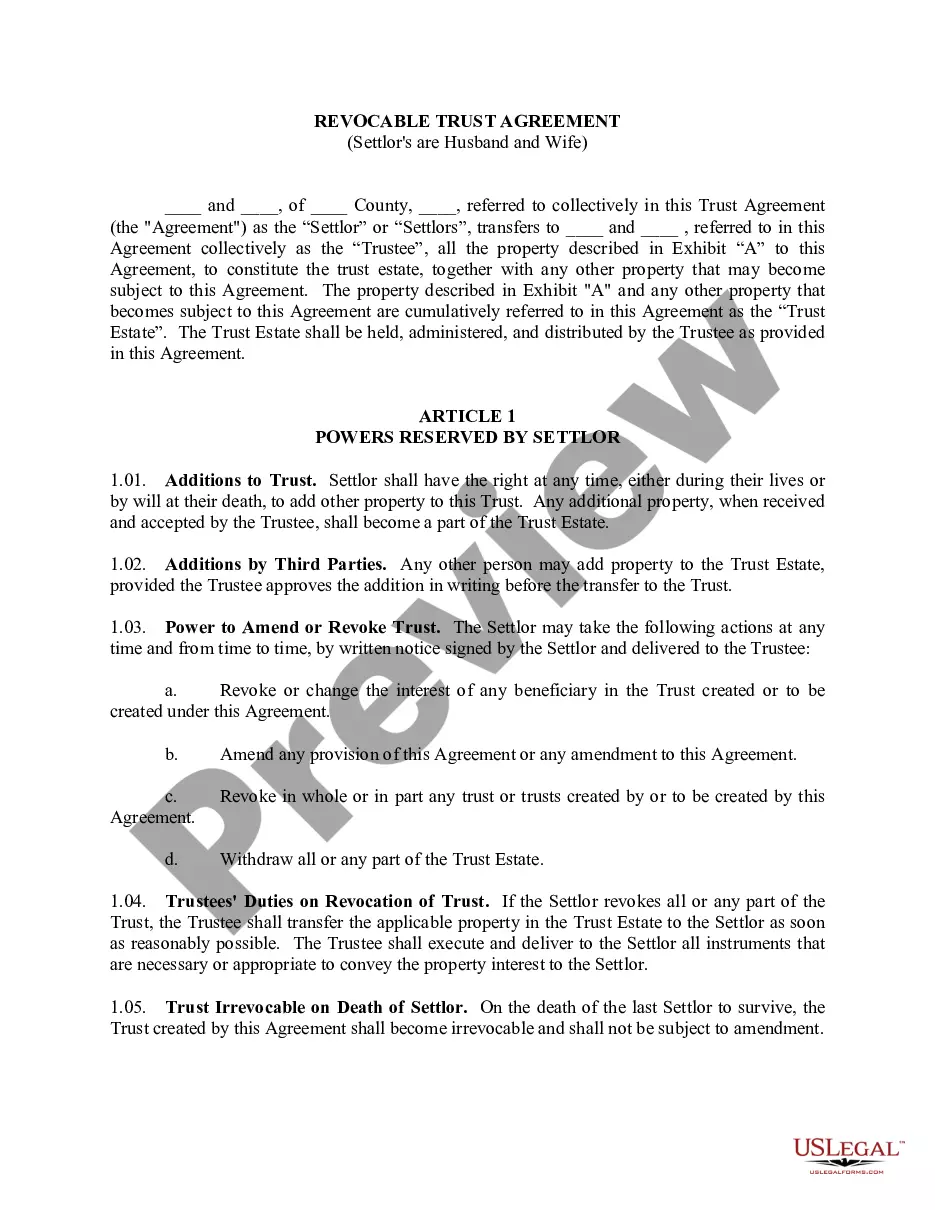
The Revocable Living Trust for Married Couple is a legal document that establishes a trust allowing a married couple to manage their assets conveniently. This trust remains revocable, meaning the couple can change or dissolve it at any time. This agreement aims to facilitate asset administration without court supervision during the trustor's incapacity or death, setting it apart from other estate planning documents like wills, which may require probate proceedings.
Key components of this form
- Identification of the Trustor and Trustee, outlining their roles and responsibilities.
- Assignment of assets to the trust, detailing the property included.
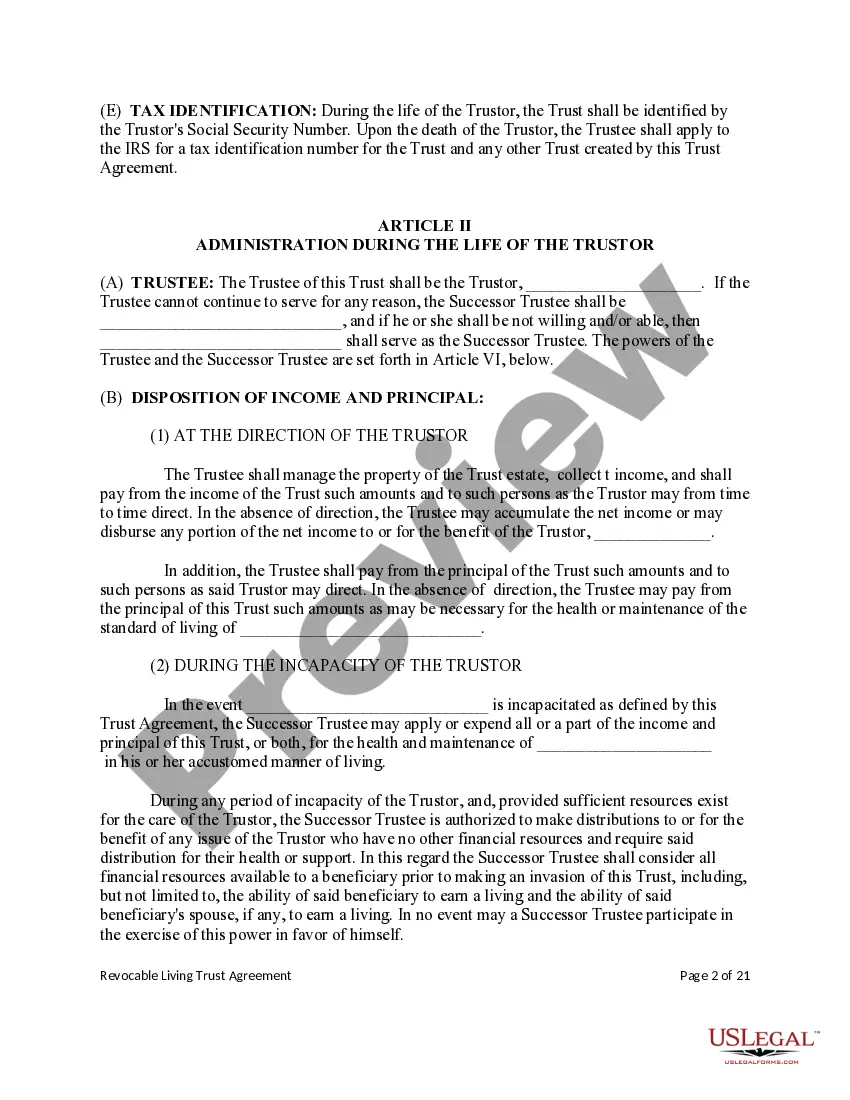
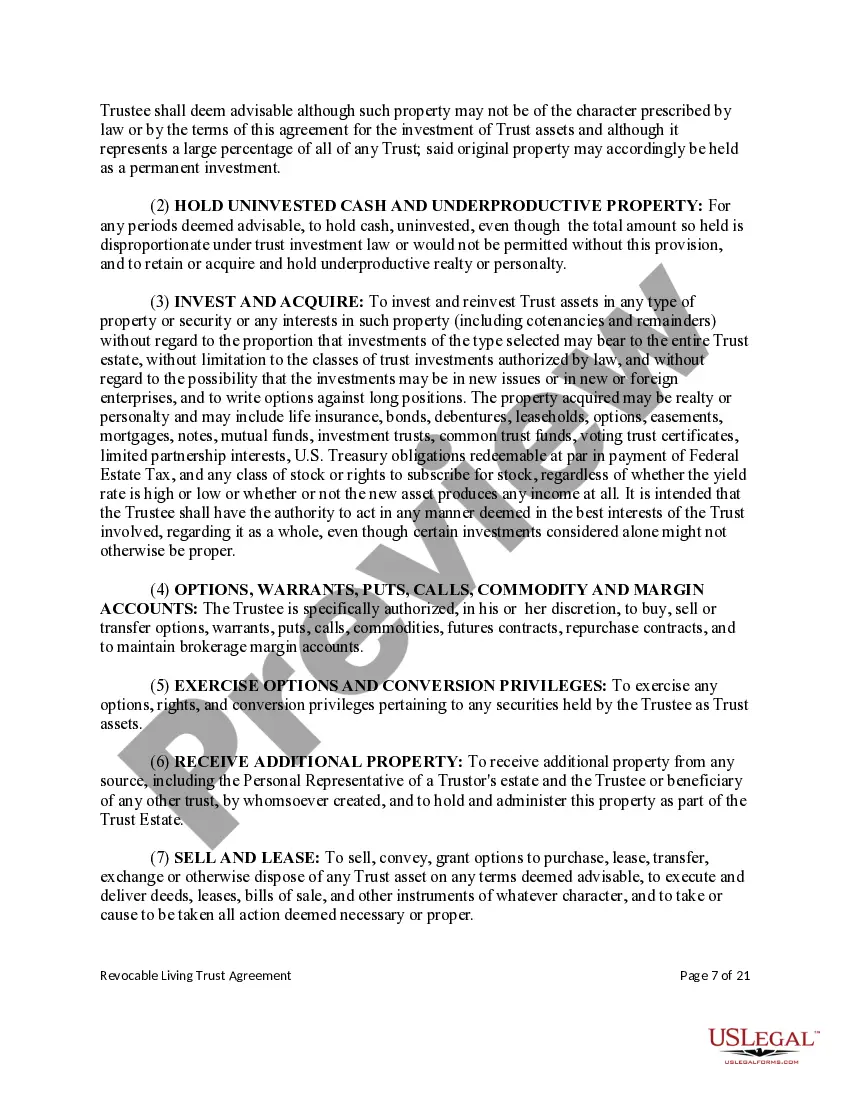
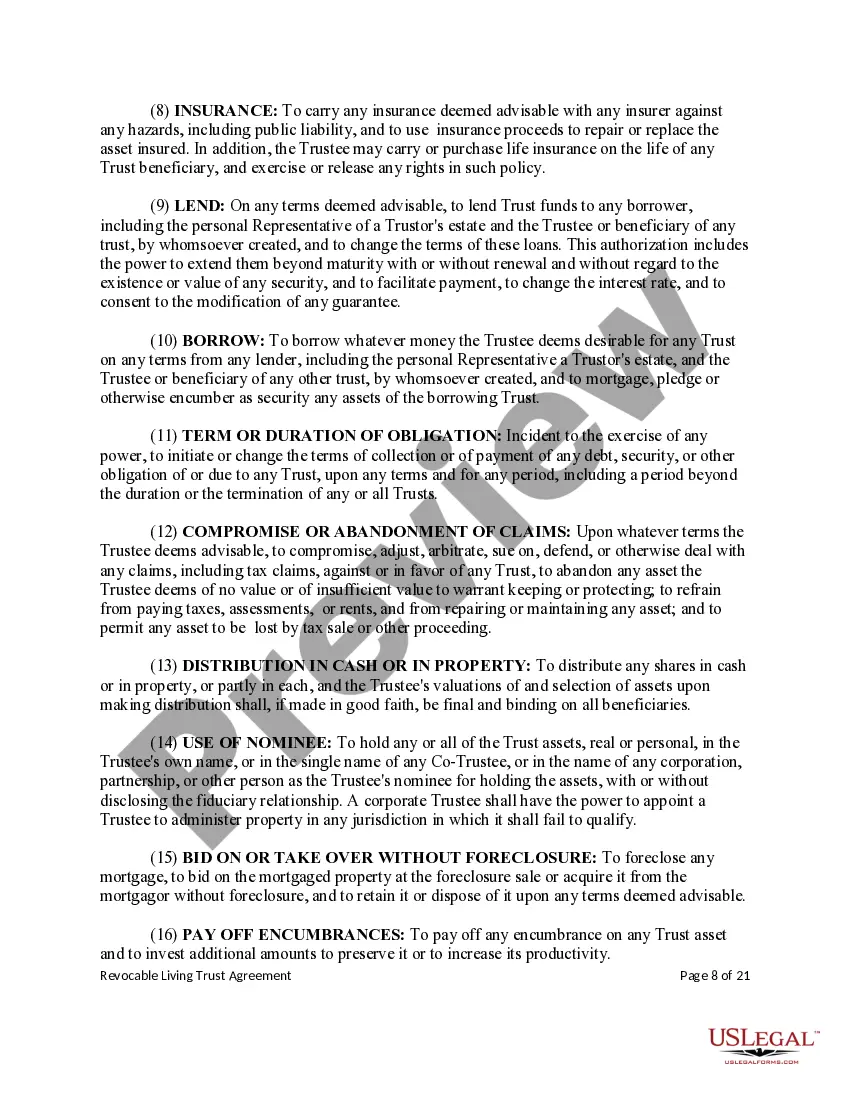
- Provisions for managing the trust during the Trustor's life, such as income and principal distribution.
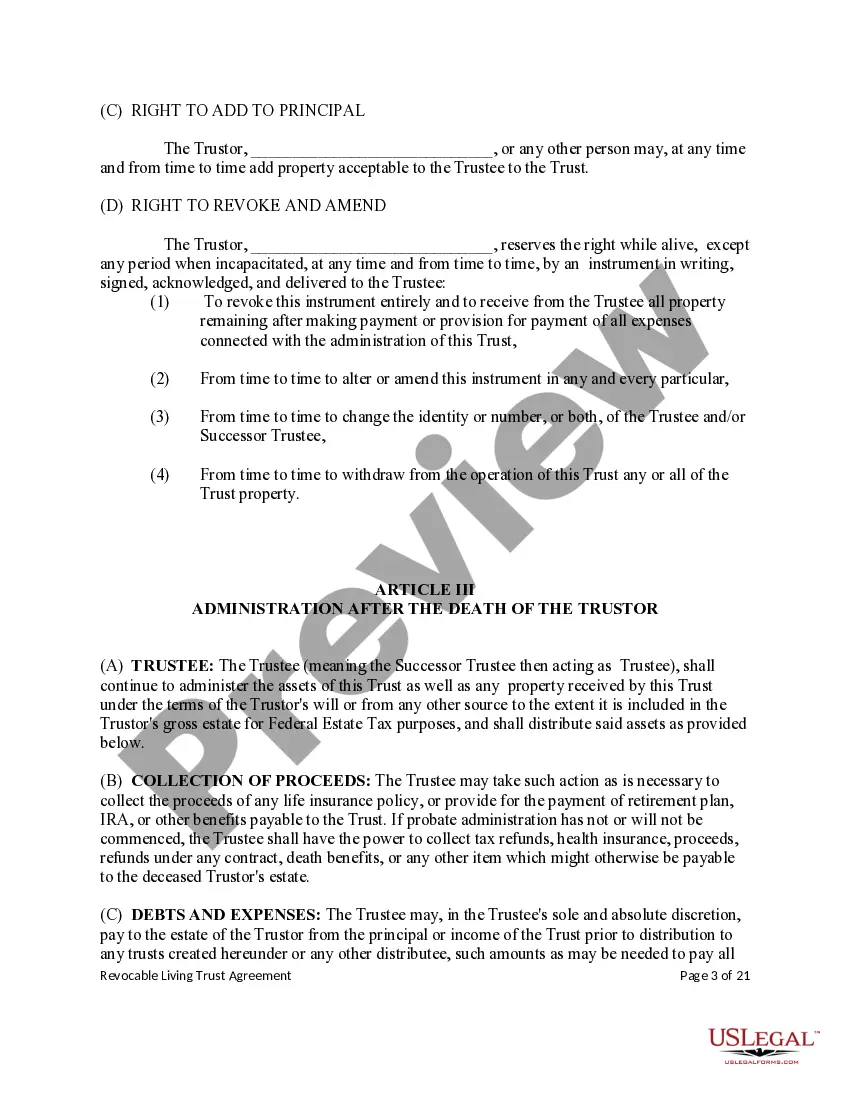
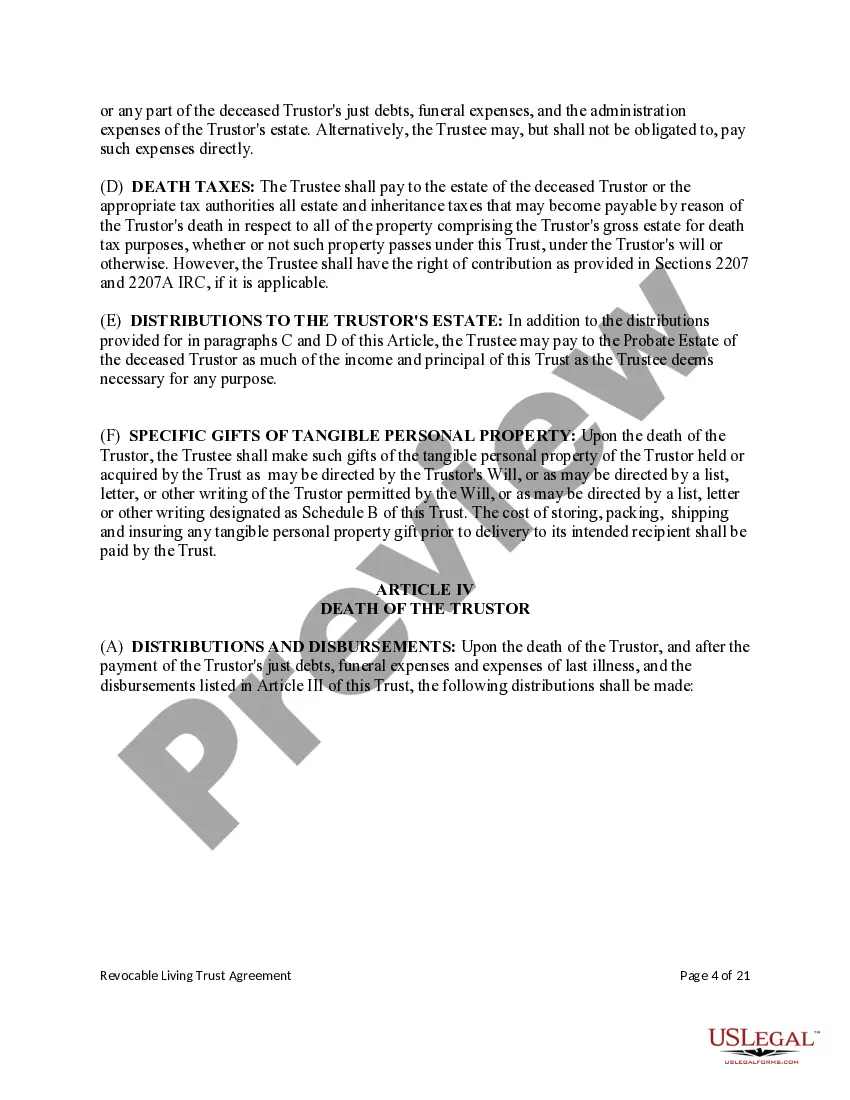
- Instructions for trust administration after the Trustor's death, including debt and tax management.
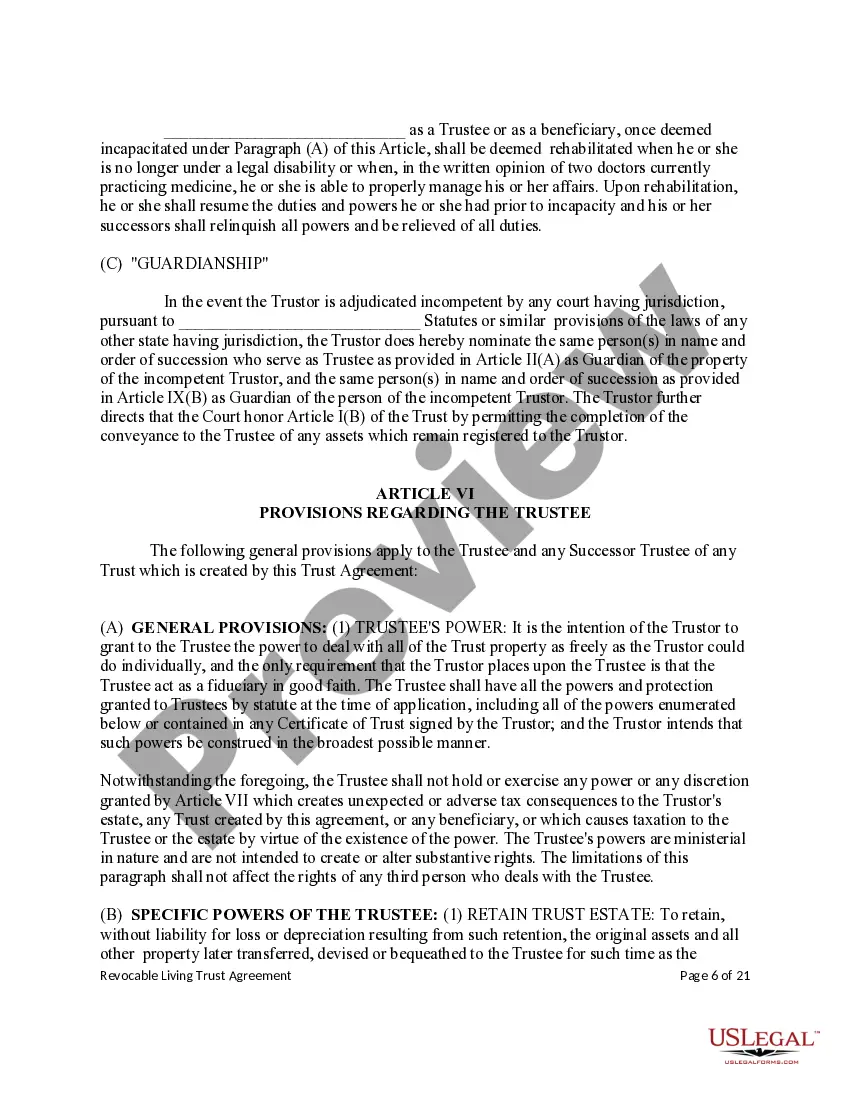
- Rights and responsibilities of the Successor Trustee in case of incapacity or death of the primary trustee.
- Optional separate statements for the distribution of tangible personal property.


Situations where this form applies
This form is suitable when a married couple wants to ensure their assets are managed efficiently without needing to go through probate. It is particularly useful for couples who want to provide for each other during their lifetimes and dictate how their assets will be distributed after death. Additionally, it can serve as a protective measure if one spouse becomes incapacitated.
Who should use this form
- Married couples looking to manage their joint assets efficiently.
- Couples who want to avoid the lengthy probate process.
- Individuals wanting to secure their partner's financial future after death or incapacity.
- Those interested in maintaining control over their asset distribution.
How to complete this form
- Identify the parties involved by entering the names of the Trustor(s) and the Trustee.
- Assign assets by listing all property and assets being transferred into the trust.
- Specify the distribution of income and principal per the Trustor's directives.
- Detail the powers and responsibilities of the Trustee and any Successor Trustee.
- Sign the document in the presence of a notary if required by your state law.
Does this form need to be notarized?
Yes, this form must be notarized to be legally valid. This ensures that the parties involved have signed voluntarily and are aware of the contents of the document. US Legal Forms offers an integrated online notarization service available 24/7 via secure video call, providing legal equivalence without the need for travel.
Get your form ready online
Our built-in tools help you complete, sign, share, and store your documents in one place.
Make edits, fill in missing information, and update formatting in US Legal Forms—just like you would in MS Word.
Download a copy, print it, send it by email, or mail it via USPS—whatever works best for your next step.
Sign and collect signatures with our SignNow integration. Send to multiple recipients, set reminders, and more. Go Premium to unlock E-Sign.
If this form requires notarization, complete it online through a secure video call—no need to meet a notary in person or wait for an appointment.
We protect your documents and personal data by following strict security and privacy standards.

Make edits, fill in missing information, and update formatting in US Legal Forms—just like you would in MS Word.

Download a copy, print it, send it by email, or mail it via USPS—whatever works best for your next step.

Sign and collect signatures with our SignNow integration. Send to multiple recipients, set reminders, and more. Go Premium to unlock E-Sign.

If this form requires notarization, complete it online through a secure video call—no need to meet a notary in person or wait for an appointment.

We protect your documents and personal data by following strict security and privacy standards.
Mistakes to watch out for
- Failing to properly identify all Trustor(s) and Trustee(s).
- Not listing all assets intended to be included in the trust.
- Neglecting to update the trust after significant life events, such as divorce or the birth of a child.
- Underestimating the need for periodic reviews and amendments.
Benefits of completing this form online
- Convenience of completing the form from home at any time.
- Editability, allowing you to update information as needed easily.
- Reliability of using a legally vetted form created by licensed attorneys.
Looking for another form?
Form popularity
FAQ
At the time of your death, the assets in your family trust are protected by the exemption, and the assets in your marital trust are protected by the marital deduction. No estate taxes are due.
Joint trusts are easier to fund and maintain.In a joint trust, after the death of the first spouse, the surviving spouse has complete control of the assets. When separate trusts are used, the deceased spouses' trust becomes irrevocable and the surviving spouse has limited control over assets.
A marital trust allows the couple's heirs to avoid probate and take less of a hit from estate taxes by taking full advantage of the unlimited marital deductiona provision that enables spouses to pass assets to each other without tax consequences.
Typically, when a married couple utilizes a Revocable Living Trust based estate plan, each spouse creates and funds his or her own separate Revocable Living Trust. This results in two trusts. However, in the right circumstances, a married couple may be better served by creating a single Joint Trust.
The joint revocable living trust should be revocable and subject to amendment by either spouse or both spouses acting together during the joint lifetimes of the spouses. If the trust is revoked, its assets will be distributed to the spouses as they direct.Dangers of joint revocable living trusts.
Both married and unmarried couples can create living trusts. Married couples should consider whether they live in a community property or a separate property state before deciding what type of trust to create. For many married couples, a basic joint living trust will meet their needs.
When one spouse dies, the joint trust will continue to operate for the benefit of the surviving spouse as a Survivor's Trust. Any specific gifts of tangible property from the first spouse to beneficiaries (other than the surviving spouse) will be given to those people.
Separate trusts provide more flexibility in the event of a death in the marriage. Since the trust property is already divided, separate trusts preserve the surviving spouse's ability to amend or revoke assets held within their own trust, while ensuring that the deceased spouse's trust cannot be amended after death.