Virginia Living Trust
What this document covers
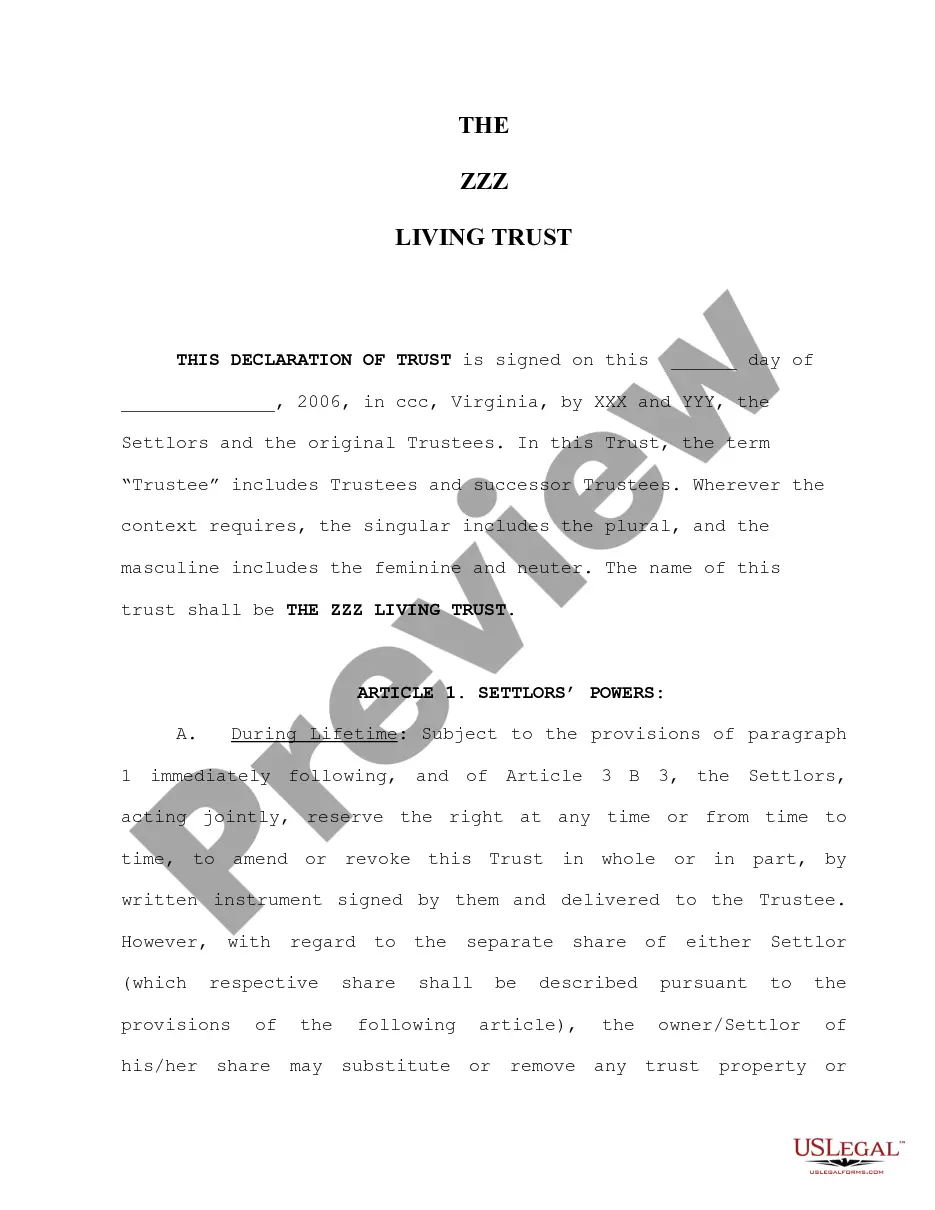
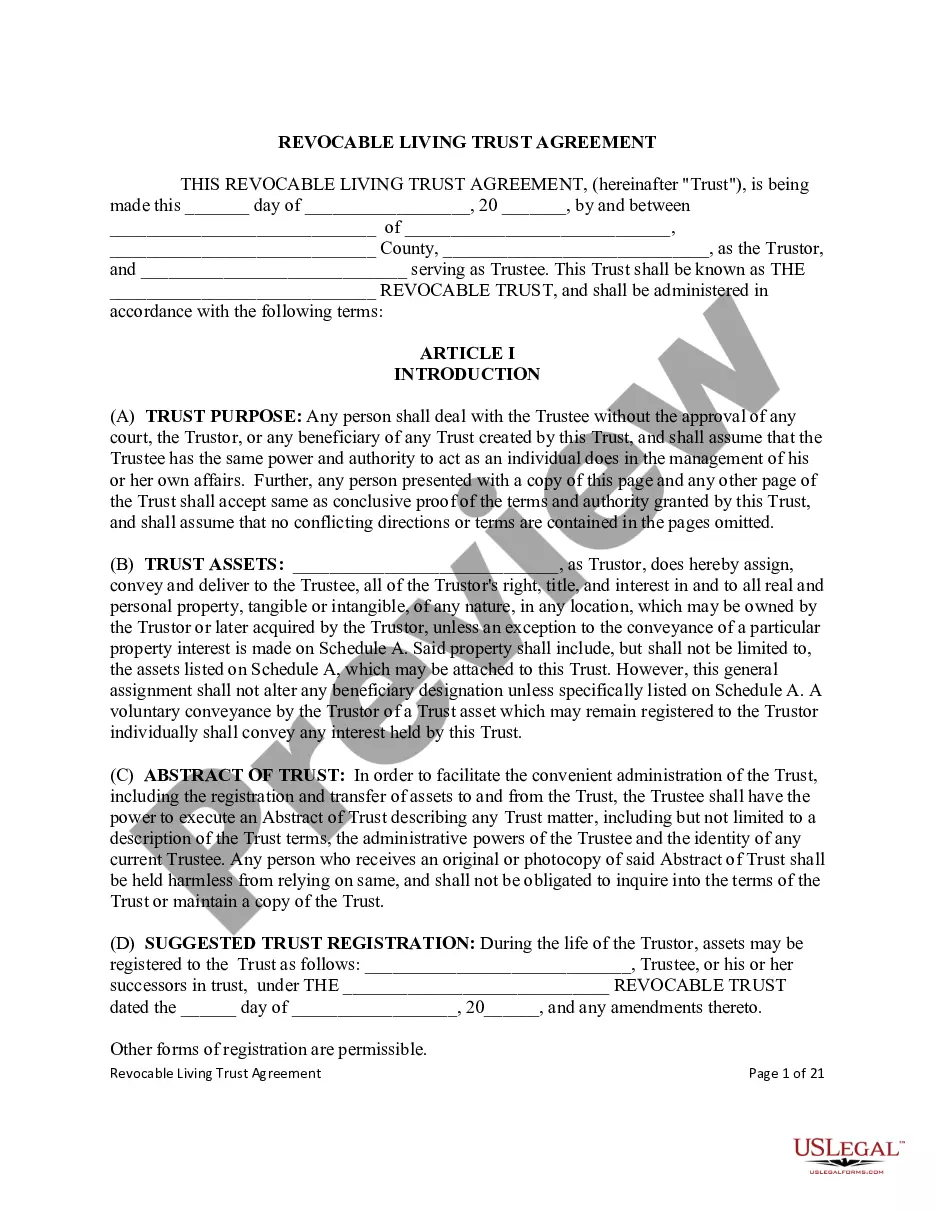
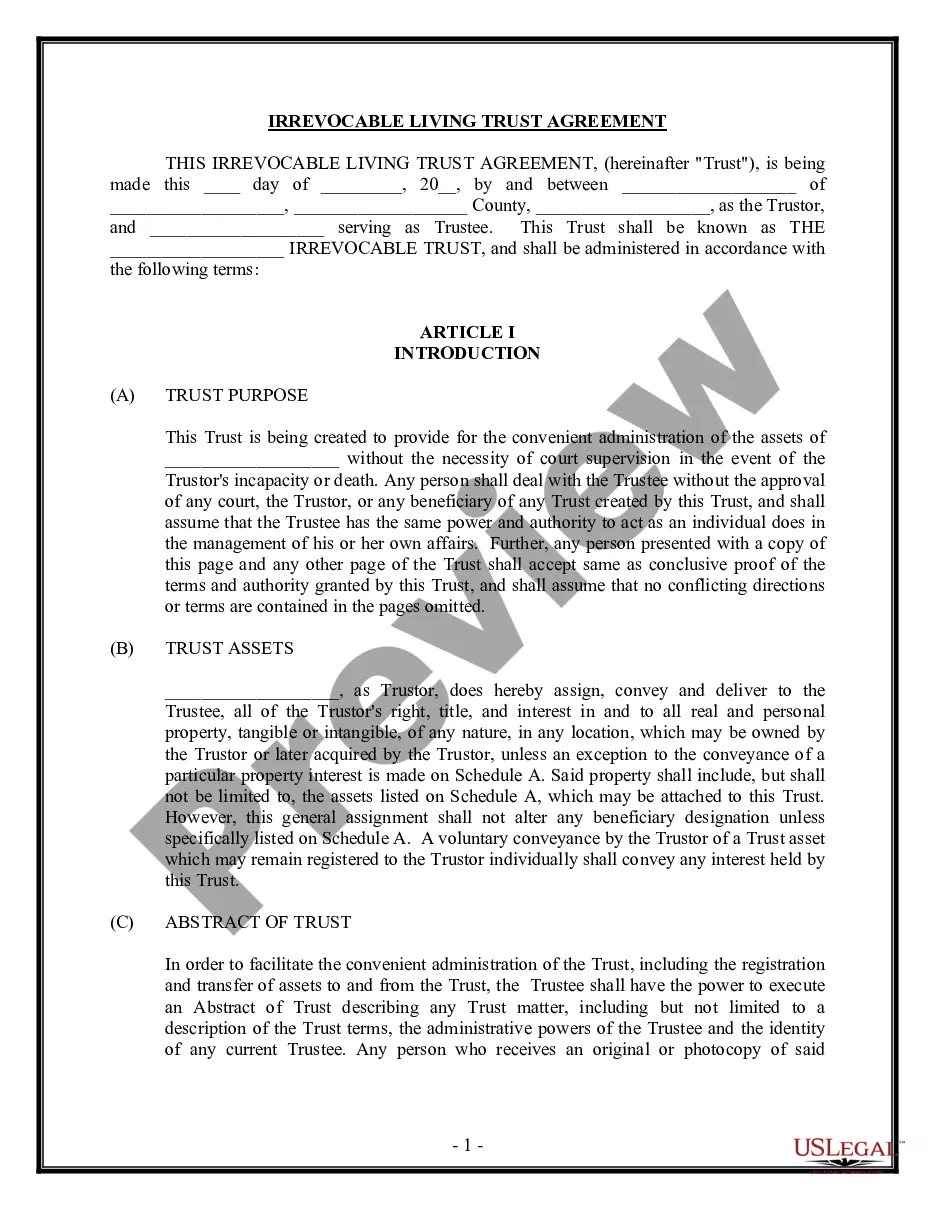
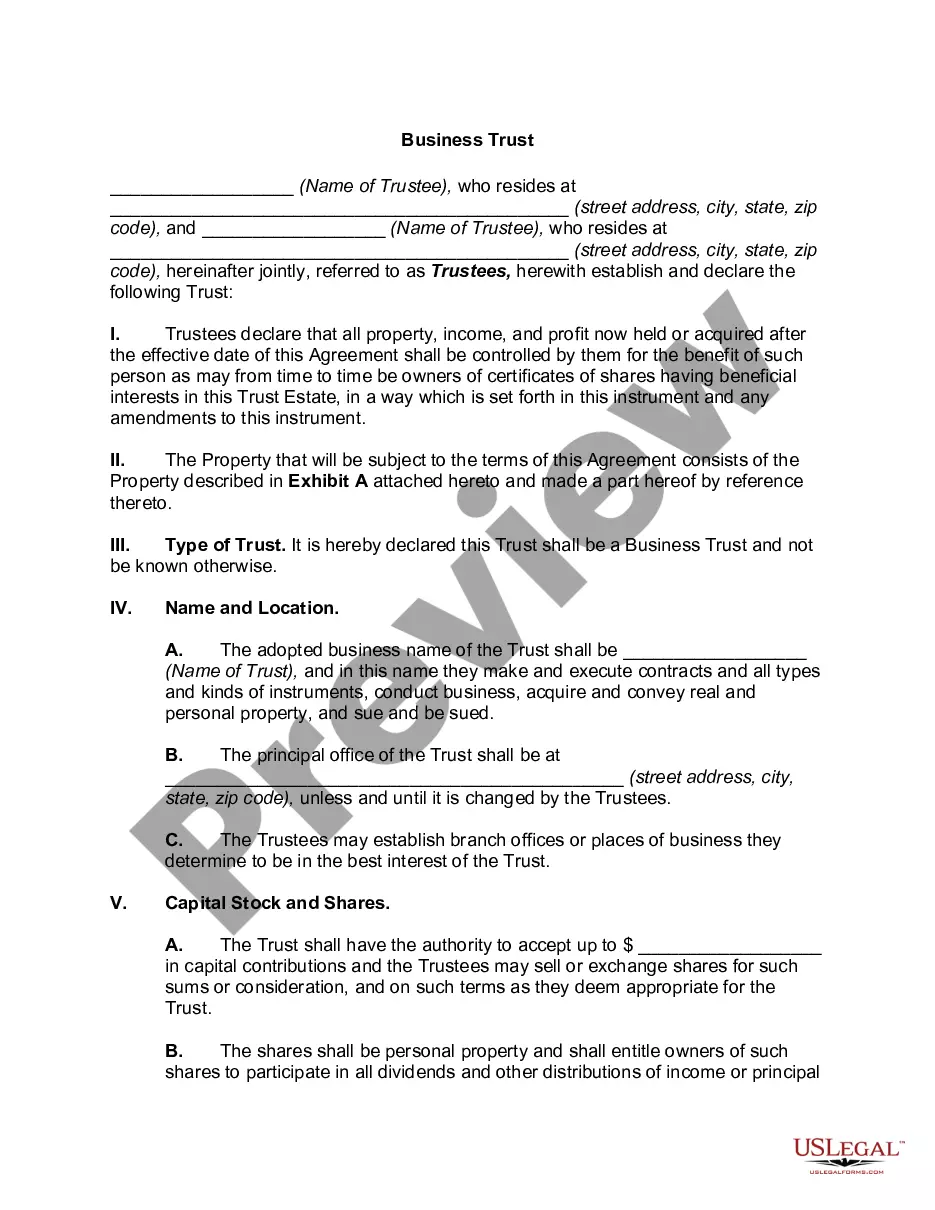
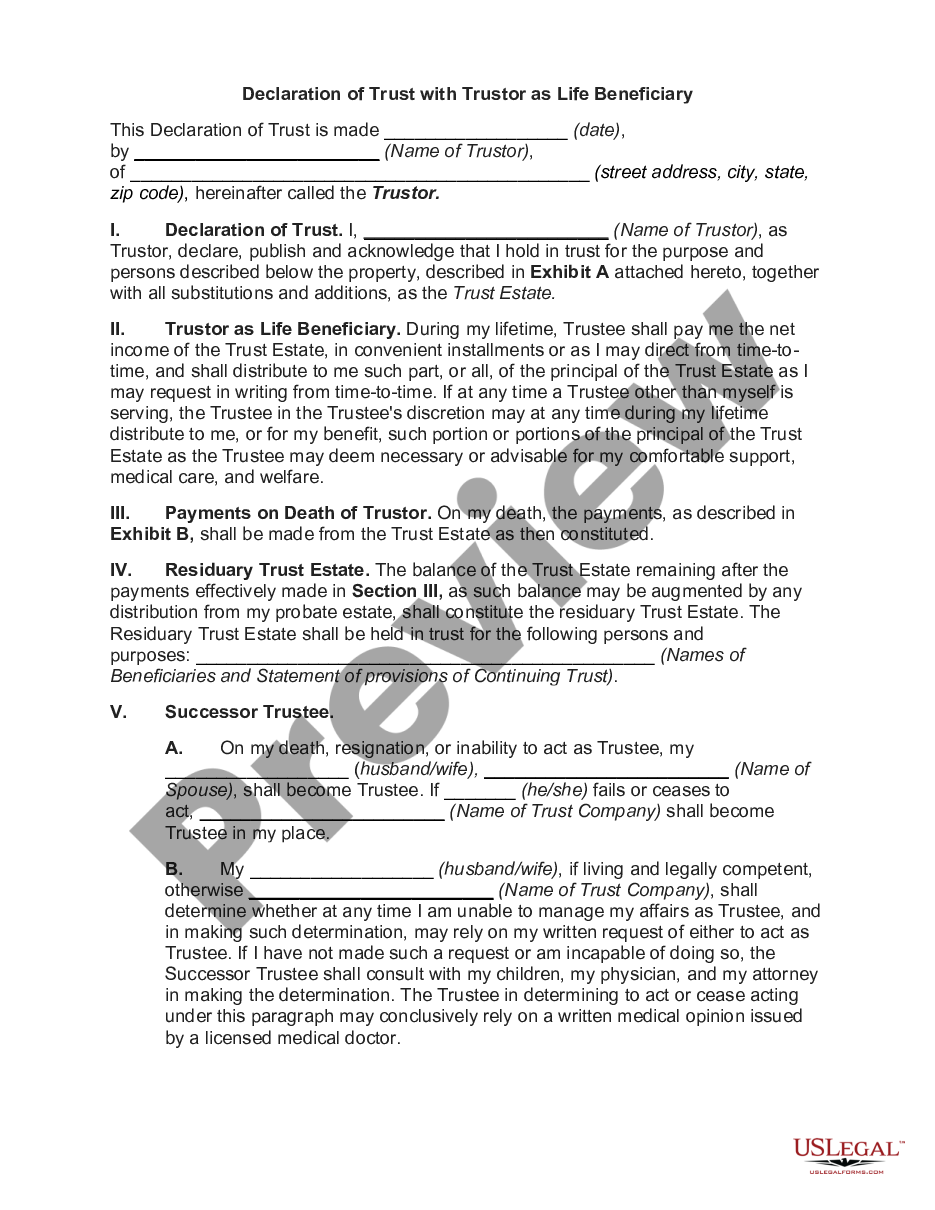
A living trust is a legal document that allows an individual or couple to manage their assets during their lifetime and specify their distribution after death. This particular form is designed for a living trust established by a husband and wife. It outlines how the settlors (the individuals creating the trust) and the trustee (the individual managing the trust) hold the property and how it will be distributed upon the death of one or both spouses. This type of trust allows for revocable and irrevocable features, particularly in the context of estate planning.
What’s included in this form
- Identification of the Settlors and Trustees.
- Declaration of the powers and responsibilities of the Settlors and Trustees.
- Detailed description of trust property and its management.
- Provisions for distribution of assets during and after the lifetime of the Settlors.
- Separate shares for each Settlor, including the By-Pass Trust provisions.


When this form is needed
Utilize this living trust form when you want to ensure that your assets are managed during your lifetime and distributed according to your wishes after your death. This form is helpful for married couples who wish to establish a trust to avoid the probate process and ensure seamless transitions of their estate. It is particularly relevant if you have specific wishes regarding the management of your property, or if you anticipate changes in your circumstances that may affect your estate planning.
Who needs this form
- Married couples looking to manage their joint assets.
- Individuals seeking to avoid probate for their estate.
- Anyone wanting to specify how assets should be distributed upon death.
- Individuals wanting to maintain control over their assets in case of incapacity.
How to complete this form
- Identify the Settlors by entering their names and signing at the designated areas.
- Designate the Trustee and any successor Trustees as needed.
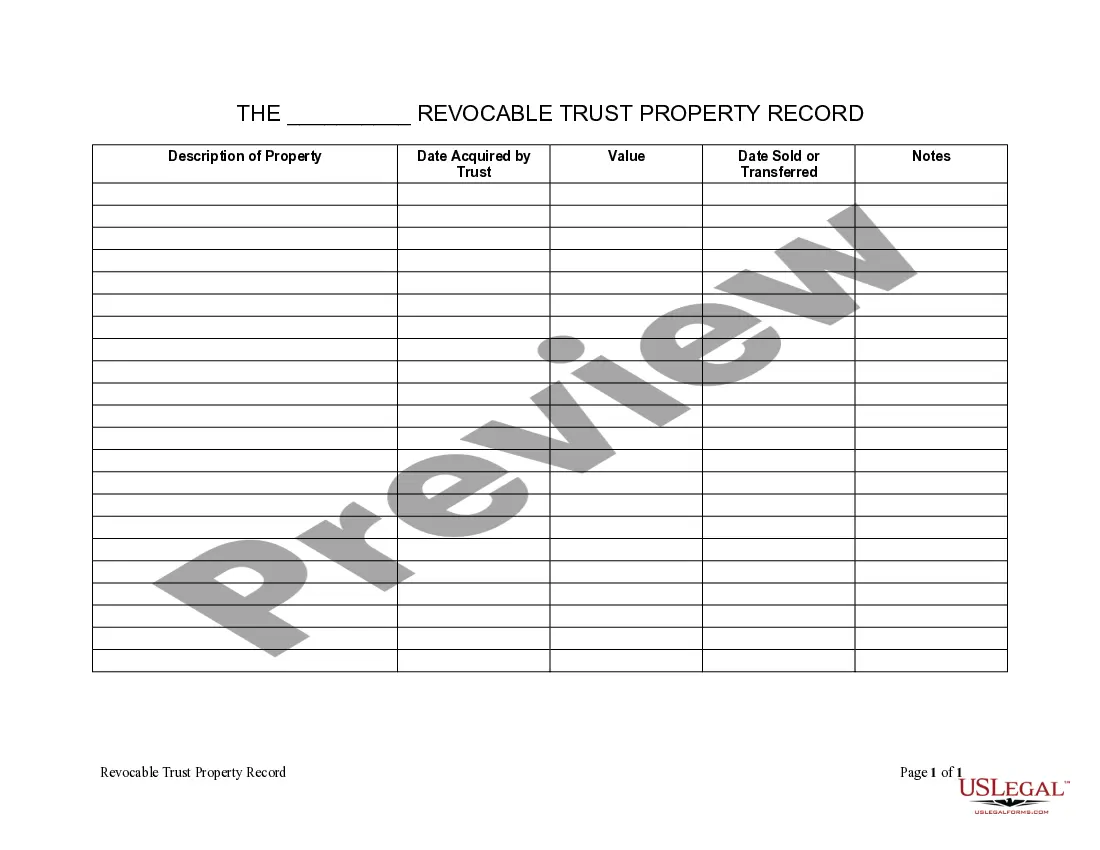
- List all trust property, including real estate, bank accounts, and personal items.
- Specify the distribution provisions to define how assets are to be handled upon death.
- Have the document notarized to ensure its validity where required.
Notarization guidance
This form needs to be notarized to ensure legal validity. US Legal Forms provides secure online notarization powered by Notarize, allowing you to complete the process through a verified video call, available anytime.
Get your form ready online
Our built-in tools help you complete, sign, share, and store your documents in one place.
Make edits, fill in missing information, and update formatting in US Legal Forms—just like you would in MS Word.
Download a copy, print it, send it by email, or mail it via USPS—whatever works best for your next step.
Sign and collect signatures with our SignNow integration. Send to multiple recipients, set reminders, and more. Go Premium to unlock E-Sign.
If this form requires notarization, complete it online through a secure video call—no need to meet a notary in person or wait for an appointment.
We protect your documents and personal data by following strict security and privacy standards.

Make edits, fill in missing information, and update formatting in US Legal Forms—just like you would in MS Word.

Download a copy, print it, send it by email, or mail it via USPS—whatever works best for your next step.

Sign and collect signatures with our SignNow integration. Send to multiple recipients, set reminders, and more. Go Premium to unlock E-Sign.

If this form requires notarization, complete it online through a secure video call—no need to meet a notary in person or wait for an appointment.

We protect your documents and personal data by following strict security and privacy standards.
Common mistakes
- Failing to list all assets intended to be included in the trust.
- Not updating the trust after significant life changes (e.g., divorce, birth of children).
- Ignoring the requirement for notarization, which may impact trust validity.
Benefits of using this form online
- Convenient access to a professionally drafted legal document.
- The ability to download and customize the document as needed.
- Ensures compliance with state-specific laws and regulations.
- Easy storage and retrieval for future reference.
Legal use & context
- This living trust can help avoid probate, allowing assets to pass directly to beneficiaries.
- It provides clear instructions on asset management and distribution, reducing potential conflicts.
- The trust is revocable, meaning it can be amended as circumstances change.
Key takeaways
- A living trust helps manage and distribute assets efficiently during and after life.
- It is especially beneficial for married couples to maintain control over their estates.
- Proper completion and notarization of this form are crucial for validity.
Looking for another form?
Form popularity
FAQ
The trust in no way protects your assets, so that reasoning is simply false. You should put your vehicles into your trust in order to avoid probate. Only those assets held by the trust will avoid probate.
Pick a type of living trust. If you're married, you'll first need to decide whether you want a single or joint trust. Take stock of your property. Choose a trustee. Draw up the trust document. Sign the trust. Transfer your property to the trust.
The process of funding your living trust by transferring your assets to the trustee is an important part of what helps your loved ones avoid probate court in the event of your death or incapacity. Qualified retirement accounts such as 401(k)s, 403(b)s, IRAs, and annuities, should not be put in a living trust.
When Should You Put a Bank Account into a Trust?More specifically, you can hold up to $166,250 of real or personal property outside a trust and avoid full probate in California. However, if you have more than $166,250 in a bank account, you should consider transferring it into your trust.
Houses and other real estate (even if they're mortgaged) stock, bond, and other security accounts held by brokerages (but think about naming a TOD beneficiary instead) small business interests (stock in a closely held corporation, partnership interests, or limited liability company shares)
Paperwork. Setting up a living trust isn't difficult or expensive, but it requires some paperwork. Record Keeping. After a revocable living trust is created, little day-to-day record keeping is required. Transfer Taxes. Difficulty Refinancing Trust Property. No Cutoff of Creditors' Claims.
The average cost for an attorney to create your trust ranges from $1,000 to $1,500 for an individual and $1,200 to $1,500 for a couple. Legal fees vary by location, so your costs could be much higher or slightly lower.
A Virginia living trust is established by you, the grantor, the person setting up the trust and placing assets into it. The assets in the trust are managed for your benefit during your life.A living trust Virginia allows you to keep your trust assets out of probate, a court process required for approving a will.
No, you don't need a lawyer to set up a trust, but it might be a good idea to seek legal advice to ensure the trust is set up correctly and that you have considered all long-term financial and estate planning aspects of the trust.Some living trusts are revocable, which means the trust can be changed at any time.