Resume for Animator
What this document covers
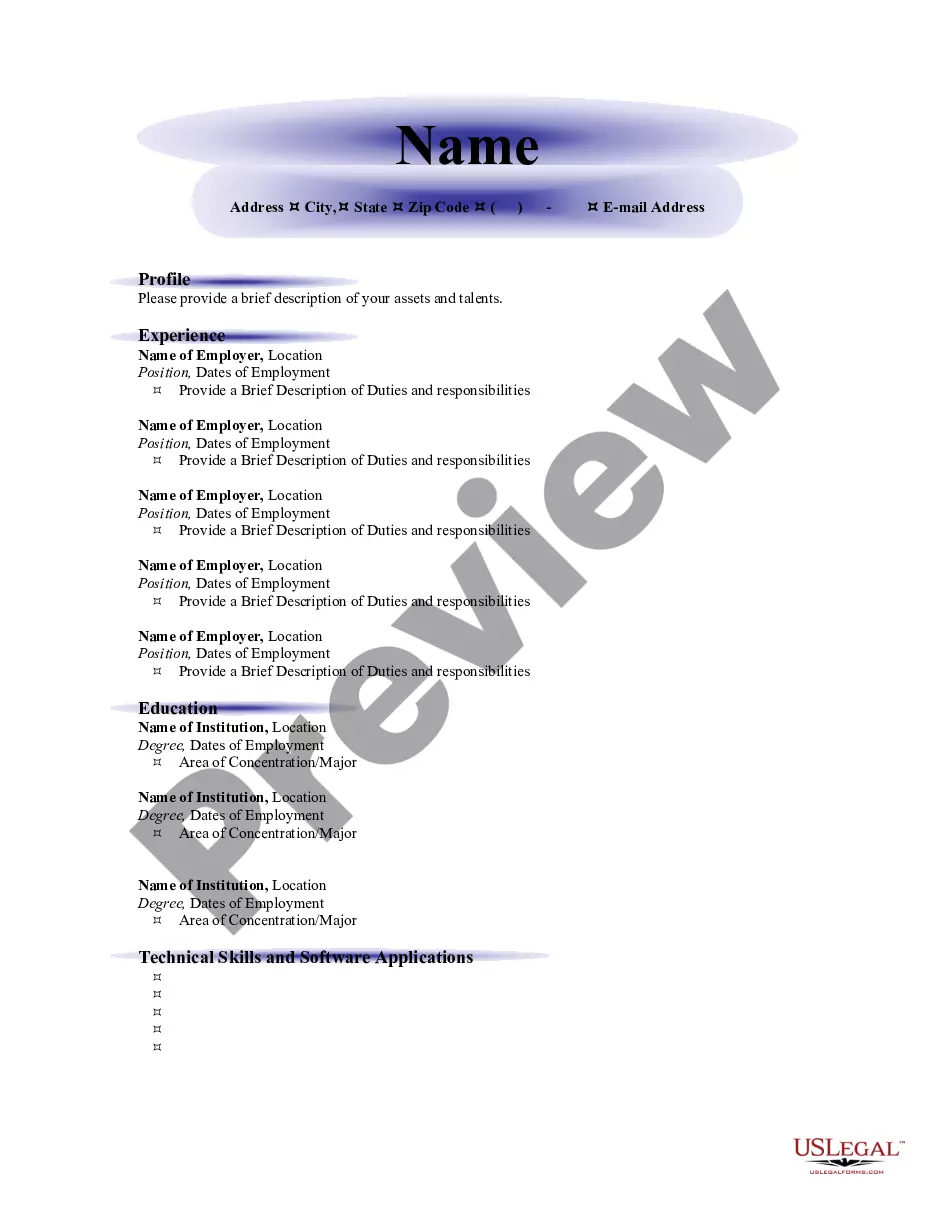
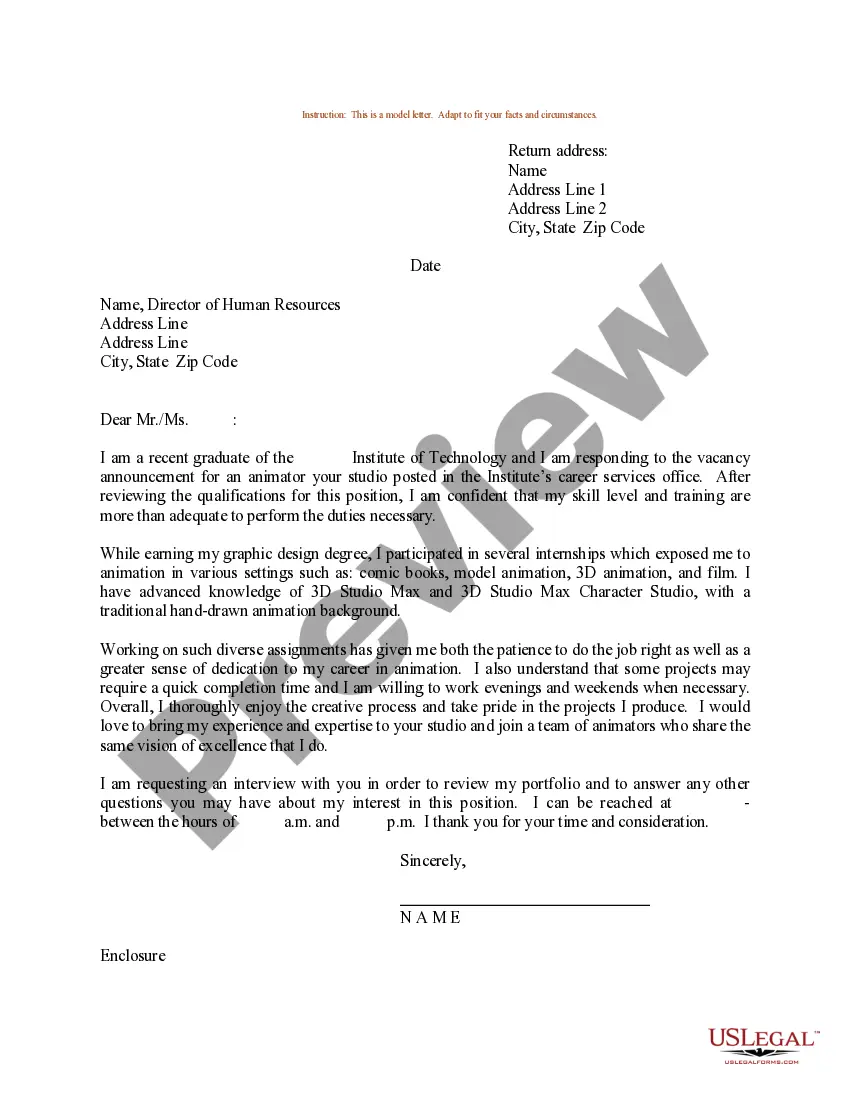
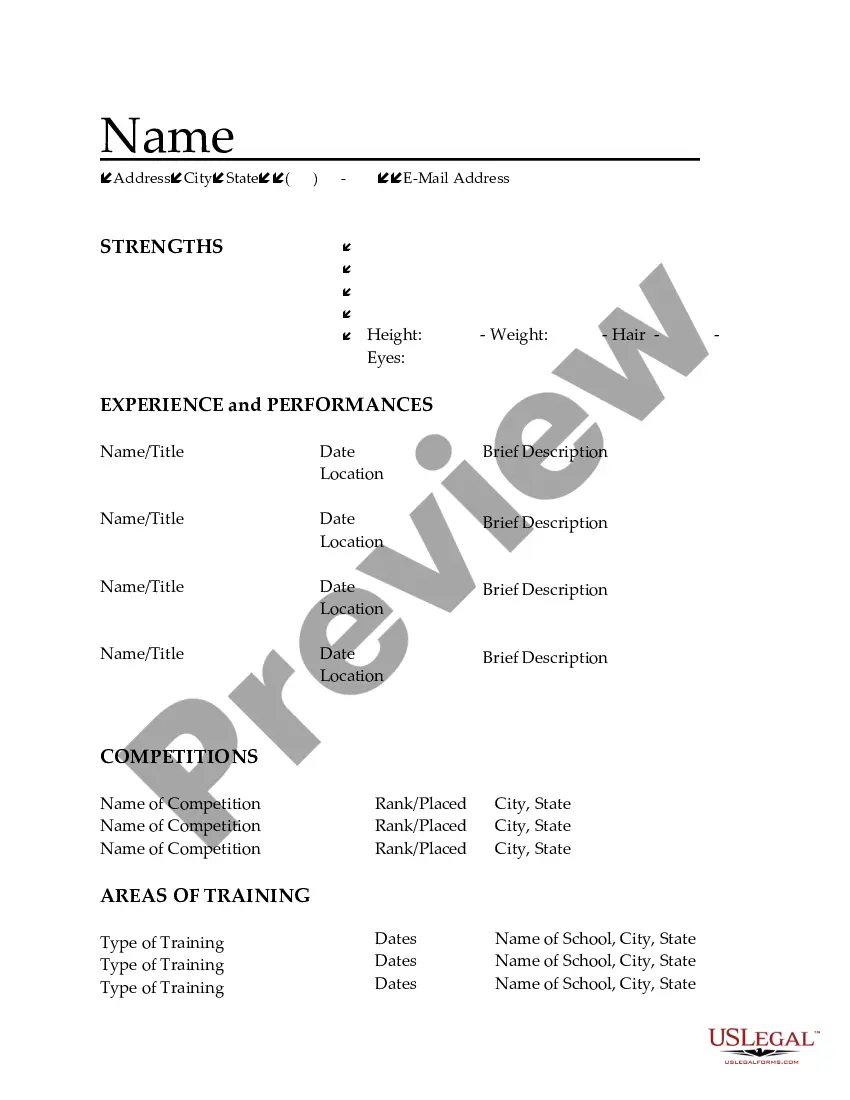
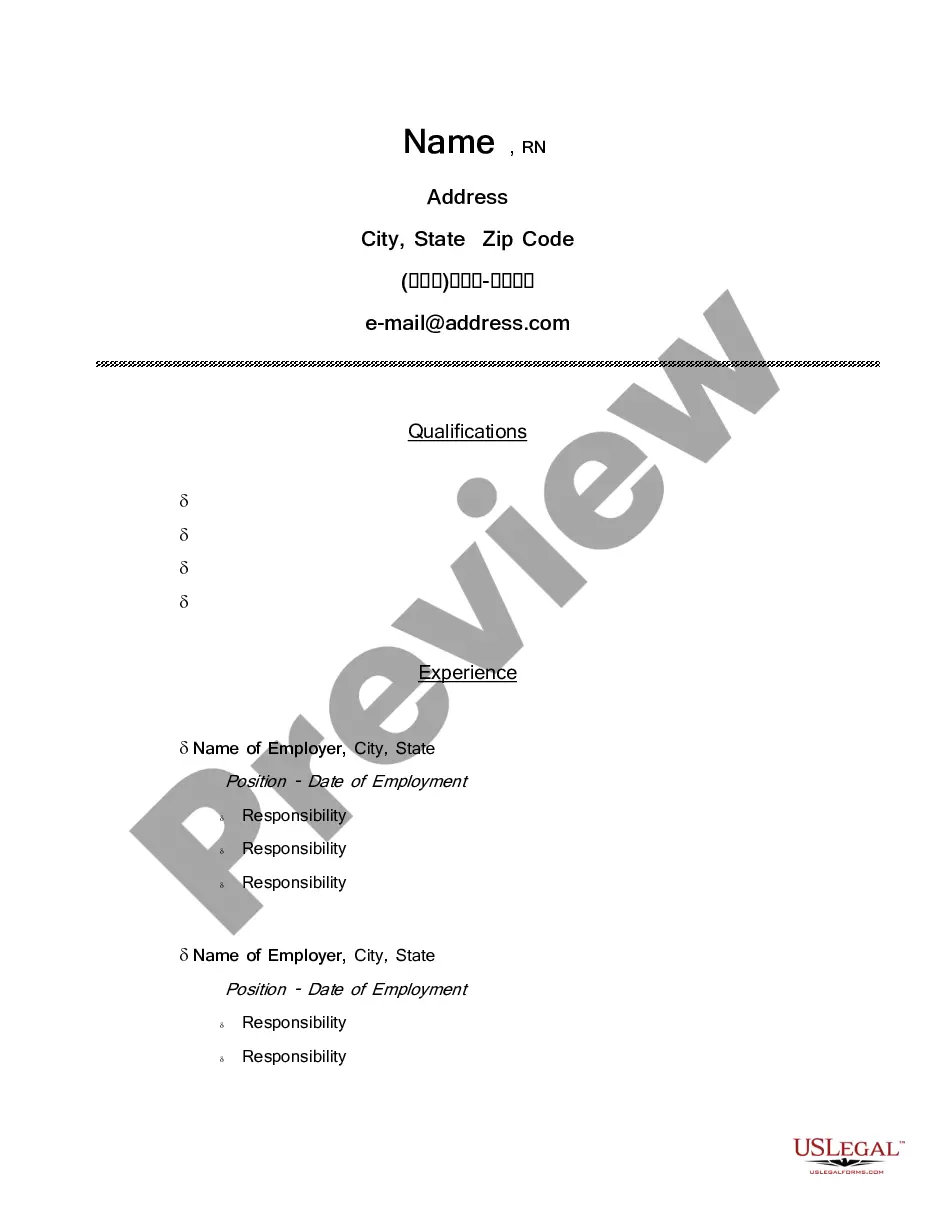
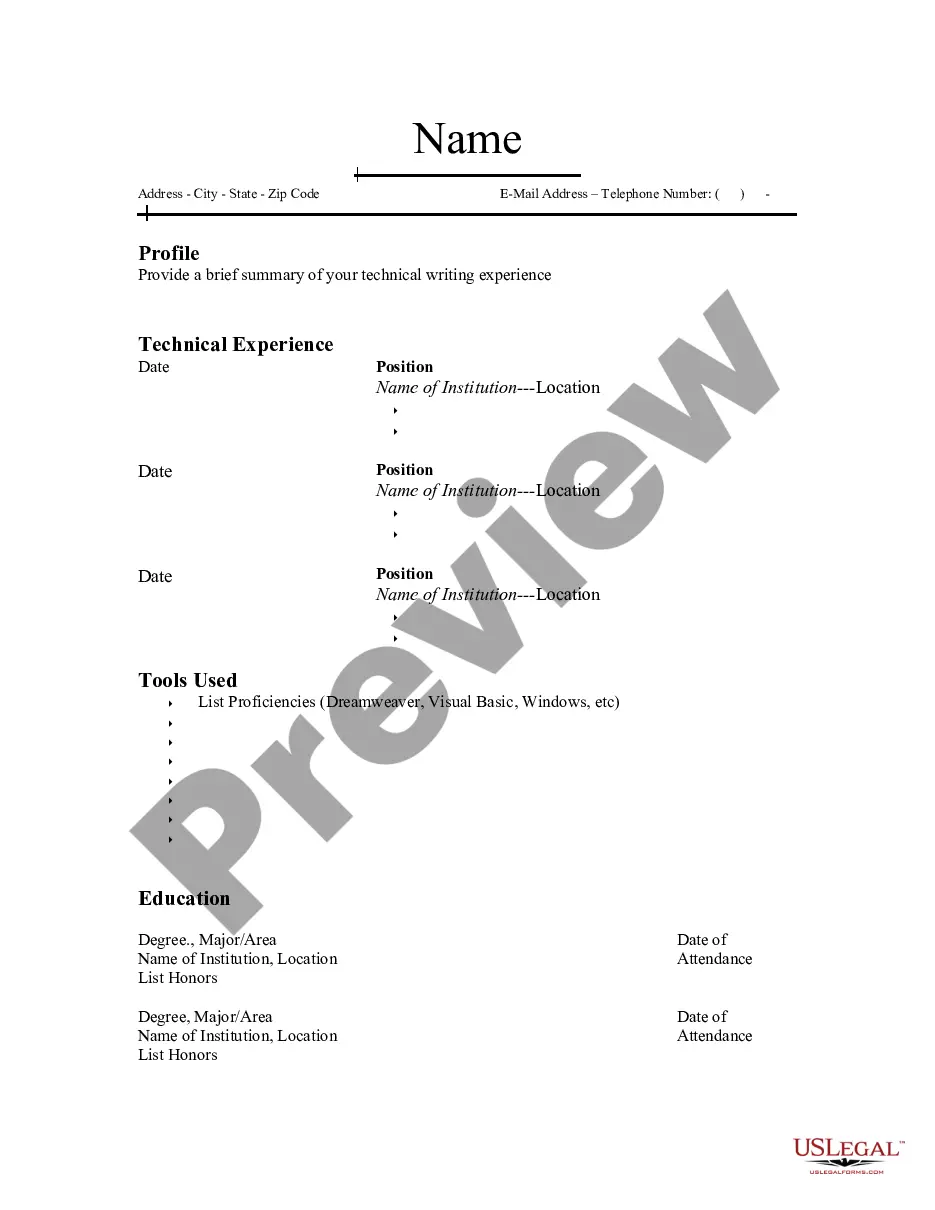
The Resume for Animator is a template designed for individuals seeking employment in the animation field. This form helps candidates present their professional experience, education, and technical skills in a structured format. It differs from other resume types by focusing on the unique qualifications and competencies necessary for animated roles, ensuring applicants effectively showcase their creativity and relevant expertise.
Key parts of this document
- Experience: A section for listing previous employment, including job titles, employers, locations, dates, and descriptions of duties.
- Education: A section for detailing educational background, including schools attended, degrees earned, and areas of concentration.
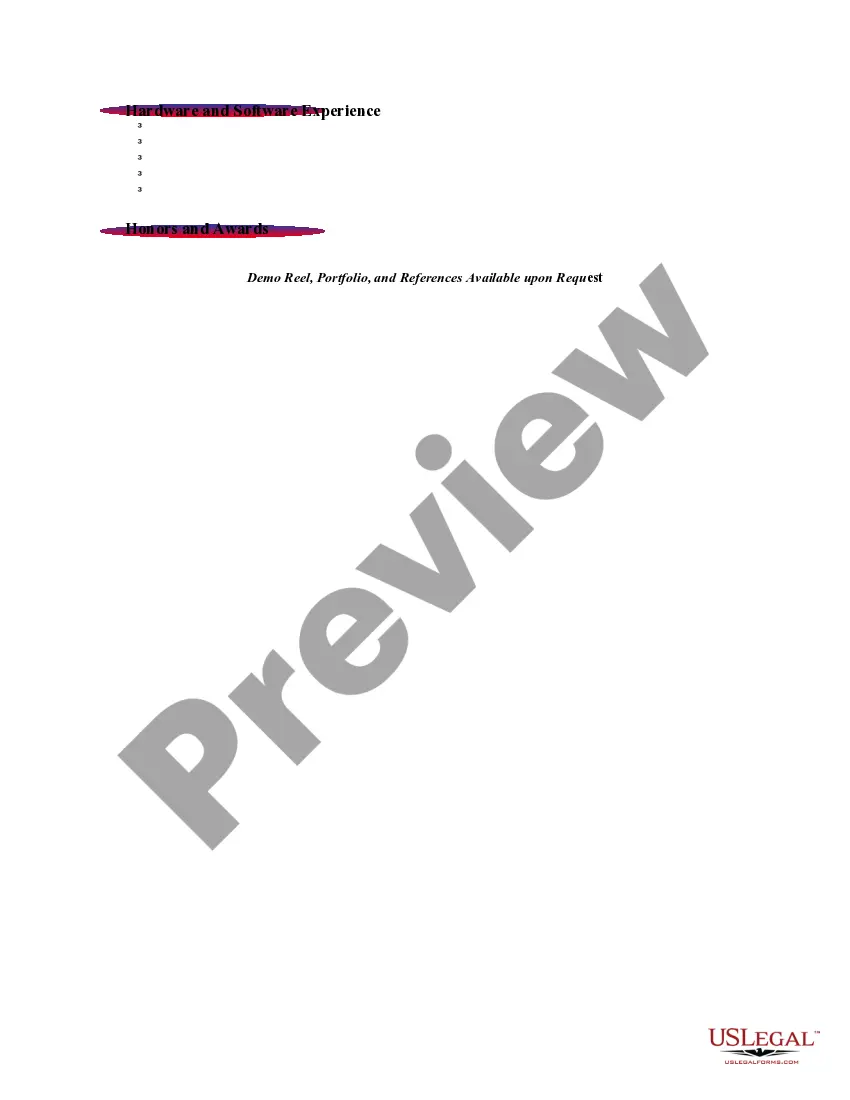
- Technical Skills: A comprehensive list of software applications and technical skills relevant to animation.
Situations where this form applies
Use the Resume for Animator when applying for animation positions within film, gaming, or advertising industries. This form is particularly useful for those transitioning into animation careers or for recent graduates from animation programs, allowing them to present their qualifications in a professional manner.
Who should use this form
- Job seekers in the animation industry.
- Recent graduates from animation programs.
- Individuals looking to update or refresh their existing animator resumes.
Completing this form step by step
- Identify your previous employment and fill in the employer names, locations, and job titles.
- Document the dates you were employed at each position.
- Provide brief descriptions highlighting your responsibilities and achievements in each role.
- List your educational background with institutions, degrees, and areas of concentration.
- Highlight any technical skills and software applications relevant to the animation field.
Notarization requirements for this form
In most cases, this form does not require notarization. However, some jurisdictions or signing circumstances might. US Legal Forms offers online notarization powered by Notarize, accessible 24/7 for a quick, remote process.
Get your form ready online
Our built-in tools help you complete, sign, share, and store your documents in one place.
Make edits, fill in missing information, and update formatting in US Legal Forms—just like you would in MS Word.
Download a copy, print it, send it by email, or mail it via USPS—whatever works best for your next step.
Sign and collect signatures with our SignNow integration. Send to multiple recipients, set reminders, and more. Go Premium to unlock E-Sign.
If this form requires notarization, complete it online through a secure video call—no need to meet a notary in person or wait for an appointment.
We protect your documents and personal data by following strict security and privacy standards.

Make edits, fill in missing information, and update formatting in US Legal Forms—just like you would in MS Word.

Download a copy, print it, send it by email, or mail it via USPS—whatever works best for your next step.

Sign and collect signatures with our SignNow integration. Send to multiple recipients, set reminders, and more. Go Premium to unlock E-Sign.

If this form requires notarization, complete it online through a secure video call—no need to meet a notary in person or wait for an appointment.

We protect your documents and personal data by following strict security and privacy standards.
Avoid these common issues
- Including irrelevant work experience that does not relate to animation.
- Failing to tailor the resume for specific job applications.
- Using overly technical jargon that may not be understood by all employers.
Why complete this form online
- Convenience of downloading and editing the form at your own pace.
- Access to a professionally structured template that enhances presentation.
- Ability to save and customize your resume as needed for different applications.
Legal use & context
- Ensures compliance with industry standards for presenting qualifications.
- Helps protect intellectual property rights by outlining the candidate's skills and experiences accurately.
Quick recap
- The Resume for Animator is crafted to highlight specific skills and experiences relevant to the animation industry.
- Completing the form with attention to detail can significantly enhance your job application.
- Utilizing this form can help ensure a professional presentation to prospective employers.
Looking for another form?


Form popularity
FAQ
Animators and other multimedia artists typically hold a bachelor's degree in animation. This degree may qualify graduates for work as video game designers, art directors, and film and video directors. Students can earn a bachelor's degree online on a part-time or full-time basis.
Choose the Best Format for Your Animator Resume. Write an Animator Resume Objective or Summary. Create the Perfect Animator Job Description for a Resume. Make Your Animator Resume Education Section Move. Highlight Your Animator Skills.
Keep It Simple. Unless you're applying for a design role, a clean, simple layout is best. Use a Summary Statement Instead of an Objective. Spotlight Key Skills. Put Your Latest Experience First. Break It Down. Consider Adding Volunteer or Other Experience. Quantify Your Bullets.
Brainstorm your accomplishments. Look at Manufacturing and Production resume templates for reference. Create an eye-catching header for the top of your Manufacturing and Production resume. Craft a strong summary statement.
Digital Fluency. Ability to Writing and Understand Code. Ability to Program Manufacturing Specific Machines and Devices. Experience in Machining, Fabricating, and Complex Assembly. Big Data Analytics. Robotics. Soft Skills. Industry-Specific Credentials.
Stationery. There's something charming about putting down a stylus and doing some good old fashioned hand-drawn animation. Light pad. A decent pair of noise-cancelling headphones. VR viewer. A 3D print of one of the models you're most proud of. Creative magazine subscriptions. Wooden artist's mannequin. Anatomy Maquette.
Attention to Detail. Critical Thinking. Strong Communication. Interest and Aptitude for Technology. Dependability. Ability to be Cross-Trained. Is a Job in Manufacturing Right for You?
There are many professional 3D animators that can create amazing animations without drawing.Now, if you're wanting to learn 2D animation, then yes, knowing how to draw is going to be vital, but even then you need to have a strong understanding of the foundations of animation.
Creativity. Artistic talent. A knack for storytelling. Attention to detail. Ability to work under pressure. Ability to meet tight deadlines.