Shareholders Agreement
Overview of this form
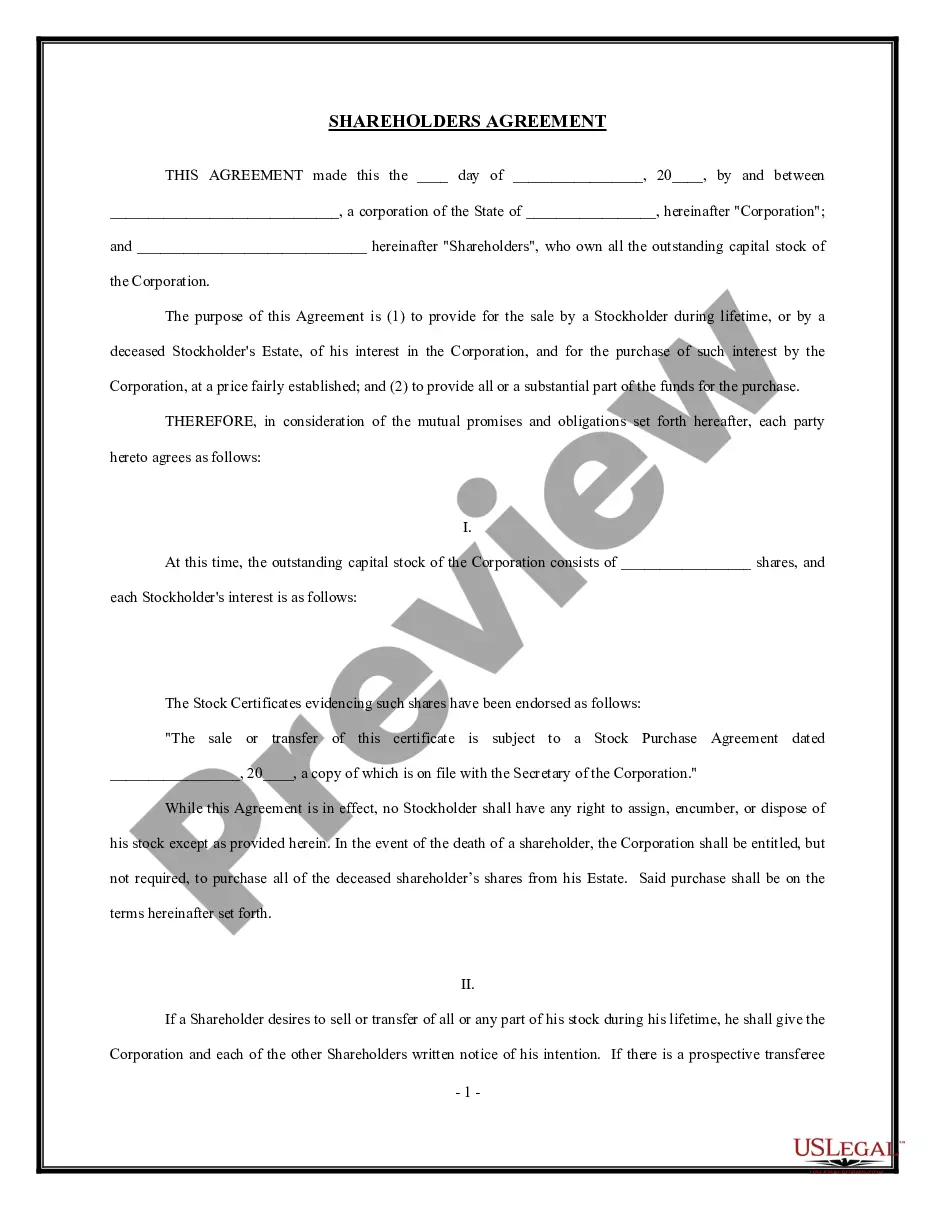
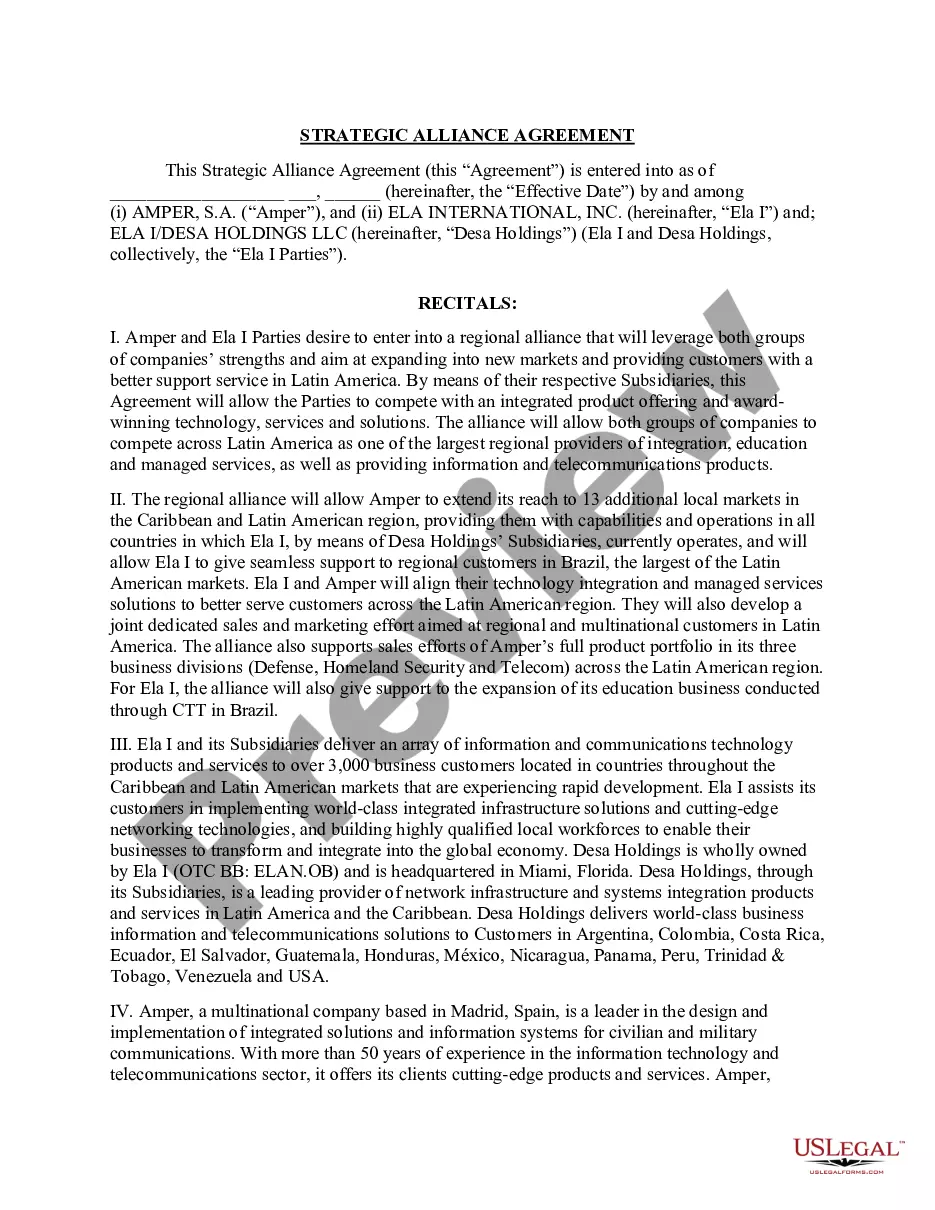
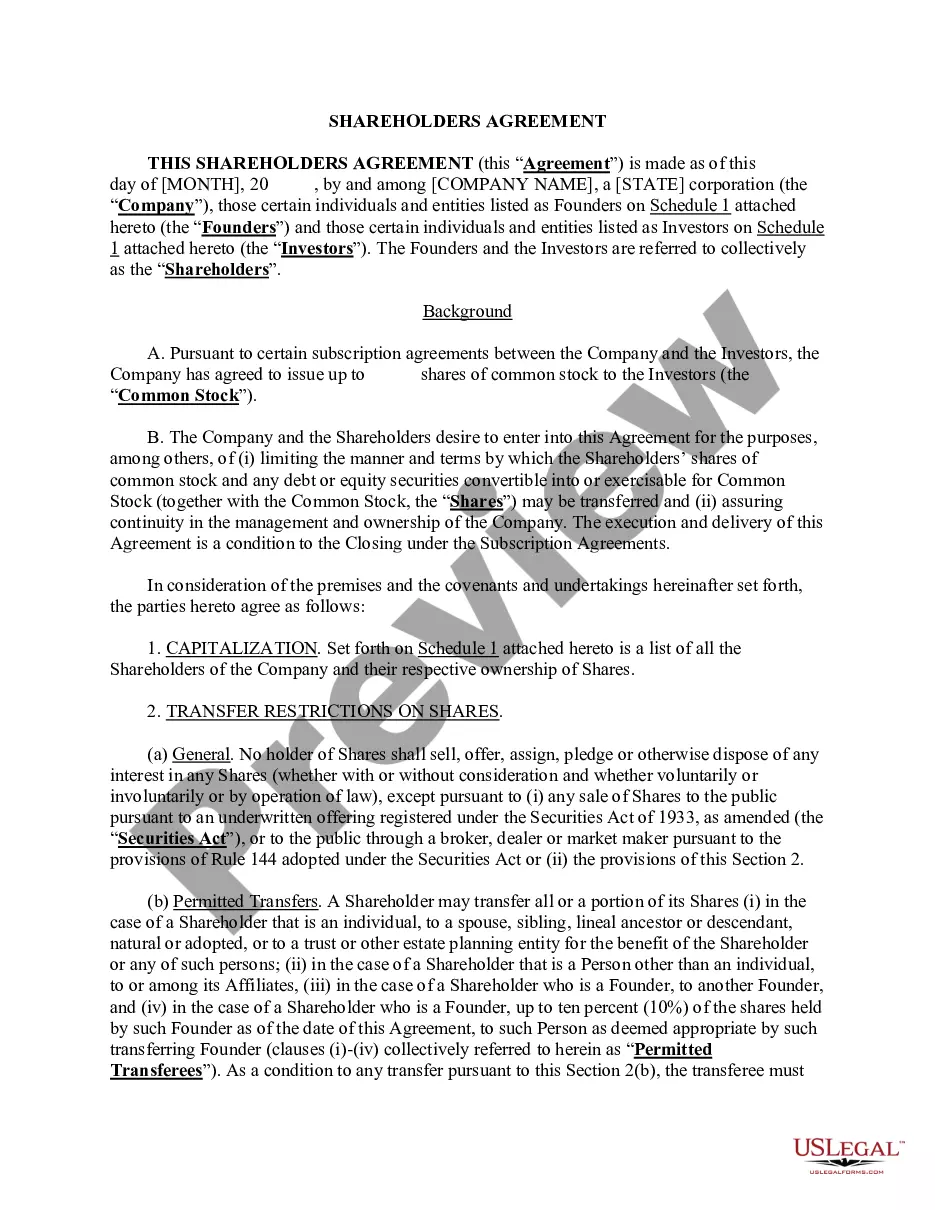
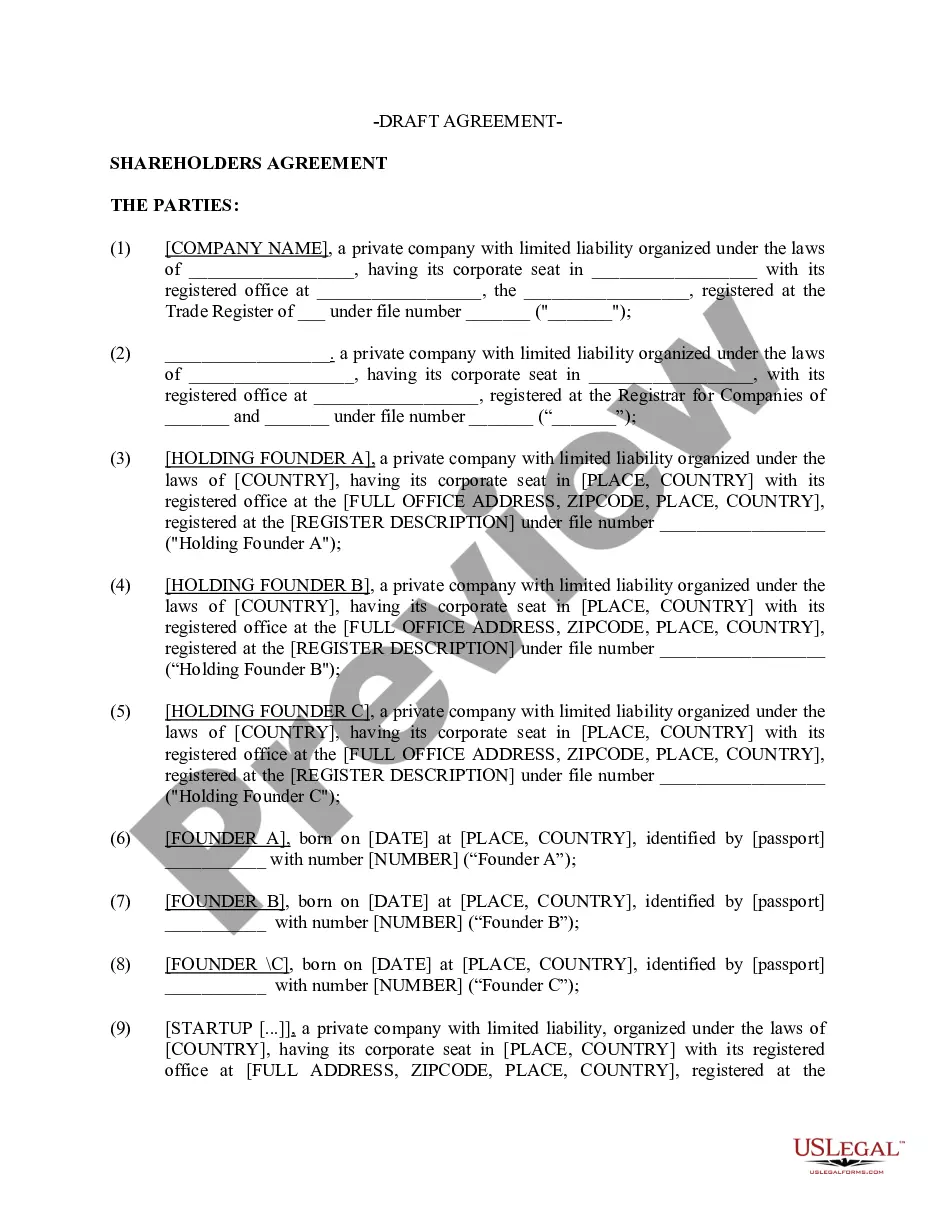
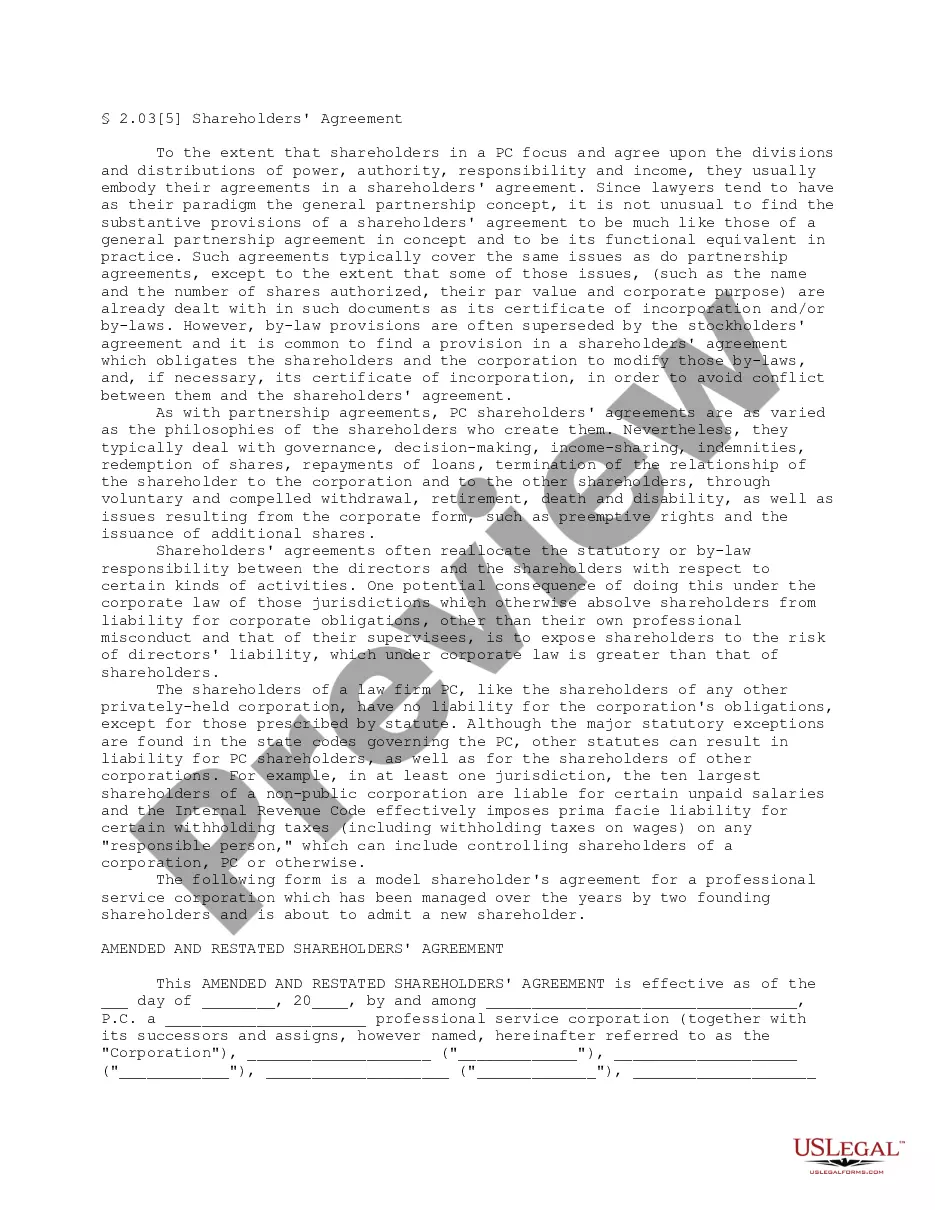
A Shareholders Agreement is a legal document that defines the relationship and responsibilities of the shareholders in a company. This form outlines the structure of ownership, management responsibilities, and various rights concerning share transfers, capital contributions, and other operational aspects. It differentiates itself from other forms by focusing specifically on the collective rights and obligations of shareholders towards one another and the company.
Key parts of this document
- Definitions of key terms related to shareholders and company structure.
- Capitalization details including share capital requirements and contributions.
- Management structure including the role of the board of directors and voting rights.
- Transfer and assignment provisions covering share transfers and rights of first refusal.
- Procedures for handling deadlocks and defaults among shareholders.
- Termination clauses detailing how the agreement can be dissolved.
Common use cases
This form should be used when multiple parties wish to establish a formal agreement concerning the ownership and management of a company. It is particularly important in scenarios involving significant investment from multiple shareholders, where clear guidelines help avoid conflicts and ensure smooth governance. Companies in the process of forming or restructuring their ownership agreements may also require this document.
Who needs this form
- Investors or parties looking to establish shared ownership in a company.
- Existing shareholders seeking to formalize their operational and management structure.
- Companies planning to raise additional capital through new shareholders.
- Lawyers and legal advisors drafting agreements for client partnerships.
- Entrepreneurs setting up new business ventures with multiple equity contributors.
Completing this form step by step
- Identify and list all parties involved as shareholders, including their details.
- Outline the companyâs structure, including shares and capital contributions.
- Define the management roles and responsibilities, including the board of directors.
- Detail the procedures for transferring shares, rights of first refusal, and any conditions for sales.
- Include clauses addressing default situations and methods for resolving disputes.
Does this form need to be notarized?
No, this form does not typically require notarization unless specified by local law. However, it is recommended to ensure all parties sign it in the presence of a witness to enhance its enforceability.
Get your form ready online
Our built-in tools help you complete, sign, share, and store your documents in one place.
Make edits, fill in missing information, and update formatting in US Legal Forms—just like you would in MS Word.
Download a copy, print it, send it by email, or mail it via USPS—whatever works best for your next step.
Sign and collect signatures with our SignNow integration. Send to multiple recipients, set reminders, and more. Go Premium to unlock E-Sign.
If this form requires notarization, complete it online through a secure video call—no need to meet a notary in person or wait for an appointment.
We protect your documents and personal data by following strict security and privacy standards.

Make edits, fill in missing information, and update formatting in US Legal Forms—just like you would in MS Word.

Download a copy, print it, send it by email, or mail it via USPS—whatever works best for your next step.

Sign and collect signatures with our SignNow integration. Send to multiple recipients, set reminders, and more. Go Premium to unlock E-Sign.

If this form requires notarization, complete it online through a secure video call—no need to meet a notary in person or wait for an appointment.

We protect your documents and personal data by following strict security and privacy standards.
Avoid these common issues
- Failing to update the agreement as ownership structure changes.
- Not including sufficient detail on the transfer of shares.
- Ignoring state-specific regulations that may affect the agreement.
- Overlooking the need for unanimous consent on critical business decisions.
- Assuming all parties understand their rights without clear definitions.
Why use this form online
- Convenience of downloading executive documents from any location.
- Easy edits allow for customization to fit specific shareholder arrangements.
- Access to forms created and vetted by licensed attorneys for legal conformity.
- Immediate availability, eliminating the need for in-person appointments or consultations.
Looking for another form?
Form popularity
FAQ
Introduction. Step 1: Decide on the issues the agreement should cover. Step 2: Identify the interests of shareholders. Step 3: Identify shareholder value. Step 4: Identify who will make decisions - shareholders or directors. Step 5: Decide how voting power of shareholders should add up. Further information and documents.
Introduction. Why have a Shareholders' Agreement? Identify the interests of the Shareholders. Identify Shareholder Value. Identify who will make decisions - Shareholders or Directors? Decide how the voting power of Shareholders should add up. Decide on the issues that the Shareholders' Agreement should cover.
Does a shareholders' agreement override articles? No, a shareholders' agreement will not override the Articles if there is a conflict, then the articles will prevail.
The essential topics to agree on in a start-up or small business shareholder relationship include: the business strategy, financing, controlling interest rights, minority interests' rights, directorships and shares.
Each shareholder must sign the Shareholders' Agreement.If there was ever a conflict in the future concerning the Agreement and you suspect that one or more shareholders may deny ever having seen or signed the Shareholder Agreement then maybe all signatures should be notarized.
Shareholders of a company are of two types common and preferred shareholder.
Shareholders pay tax on their income in two ways: They pay tax on dividends they receive based on their stock ownership. Dividends can be taxed as ordinary income or as capital gains, depending on the type of dividend. Ordinary dividends are paid out of earnings and profits and are taxed as ordinary income.
Shareholders play both direct and indirect roles in a company's operations. They elect directors who appoint and supervise senior officers, including the chief executive officer and the chief financial officer. They play an indirect role through the stock market.
The definition of a shareholder is a person who owns shares in a company. Someone who owns stock in Apple is an example of a shareholder. One who owns shares of stock. Shareholders are the real owners of a publicly traded business, but management runs it.