Release of Lien Claim
Understanding this form
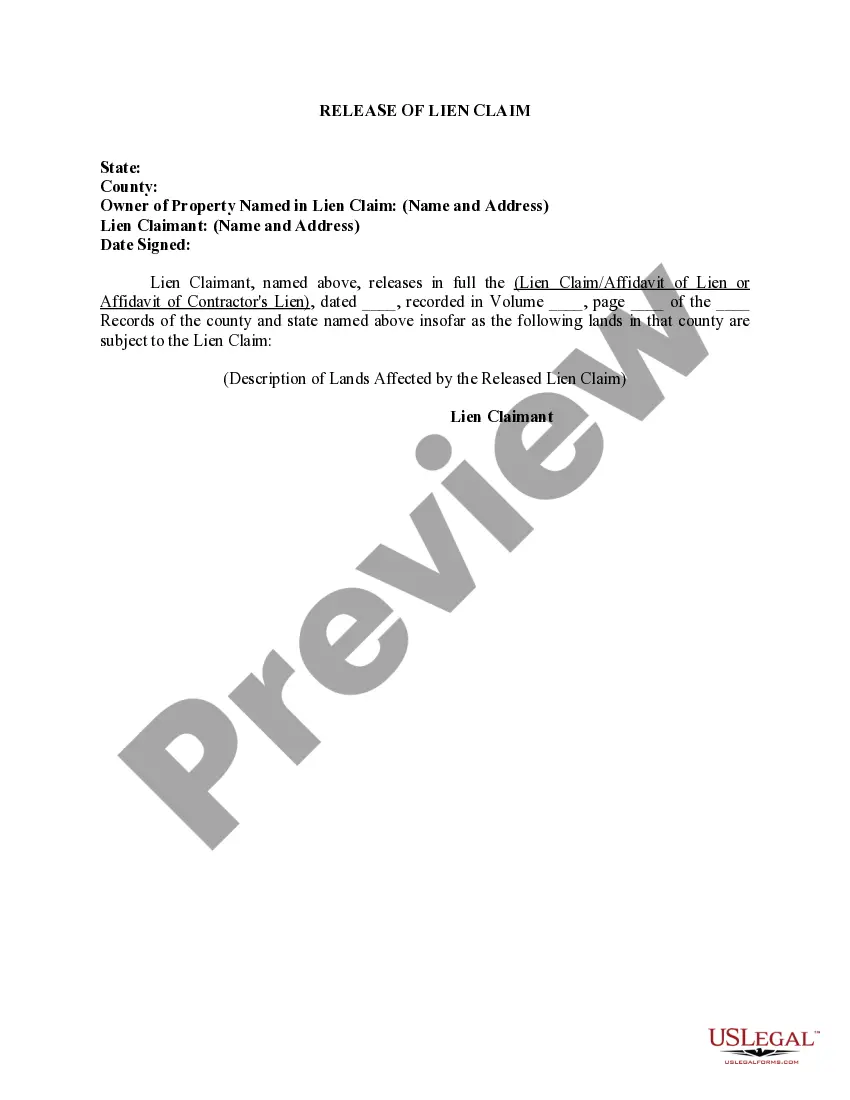
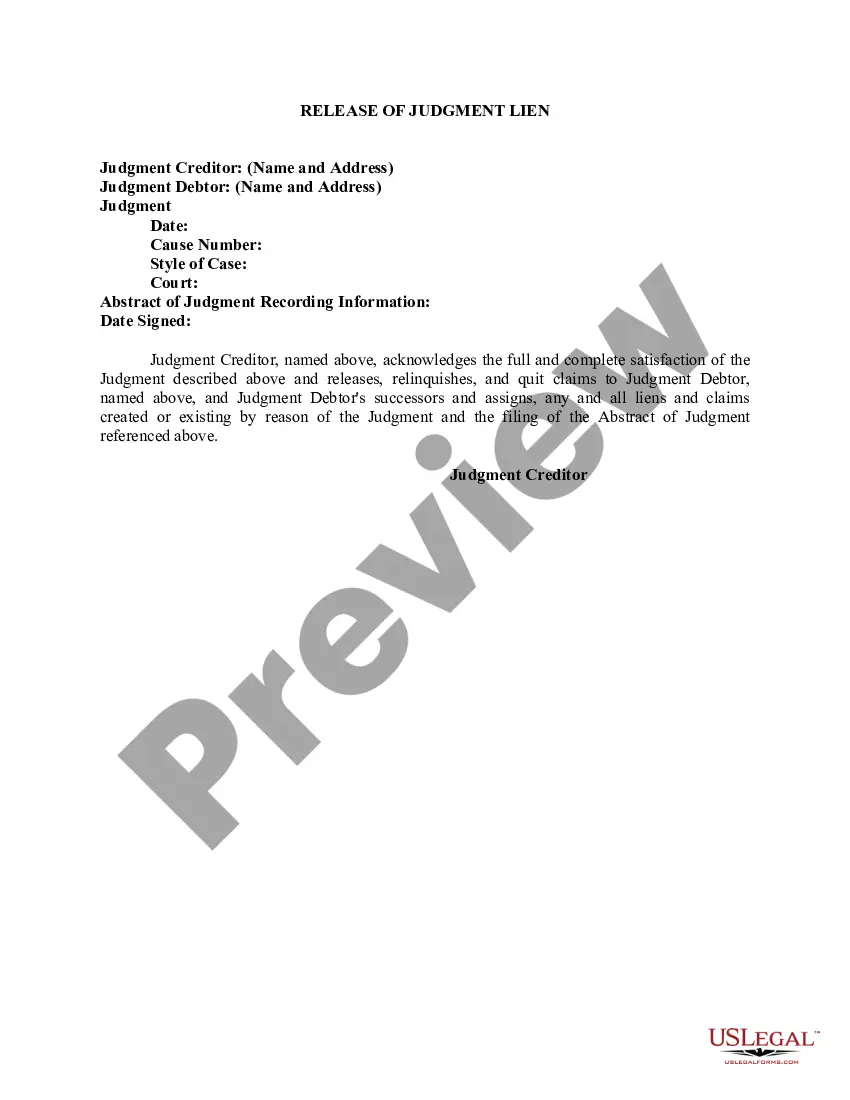
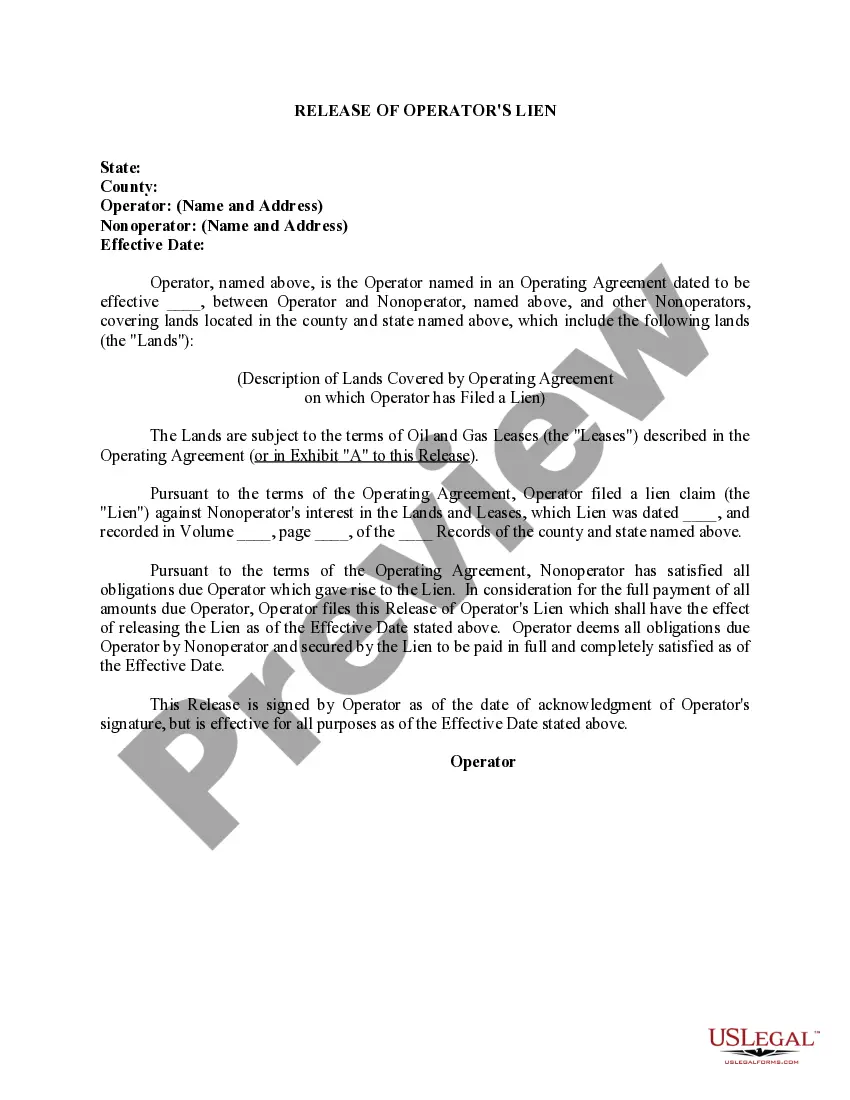
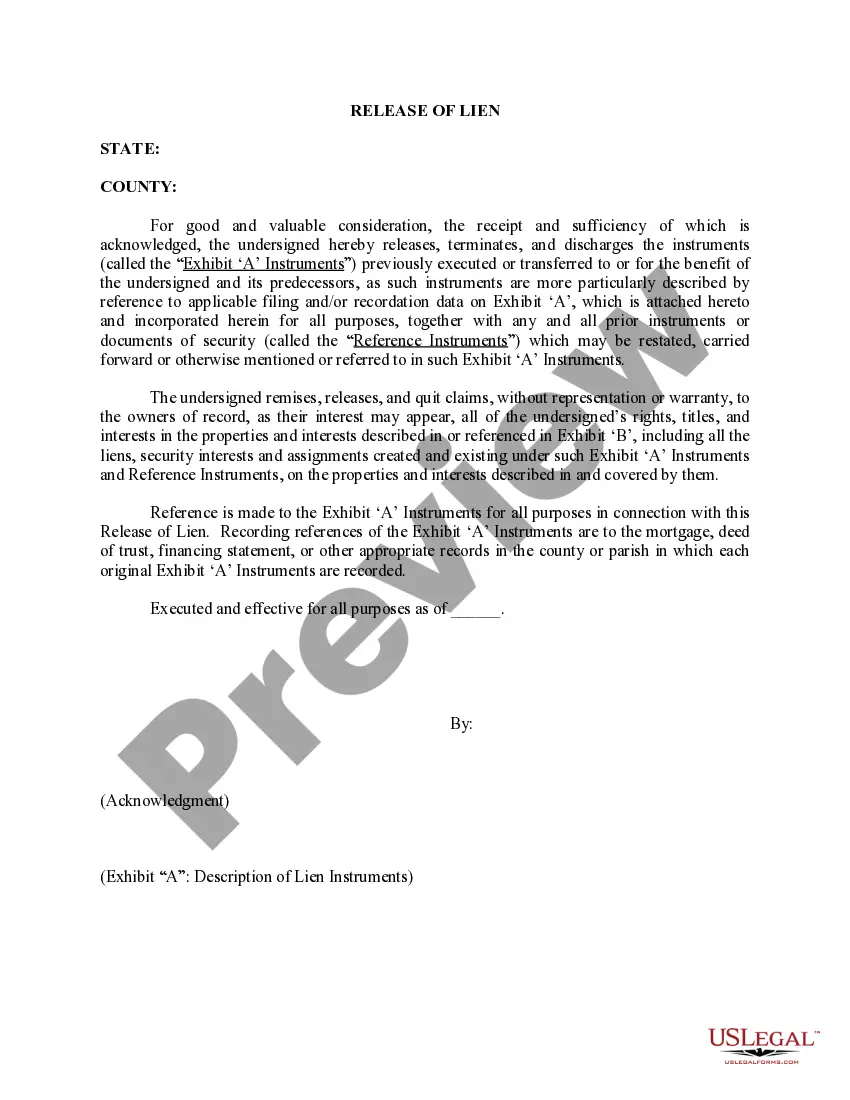
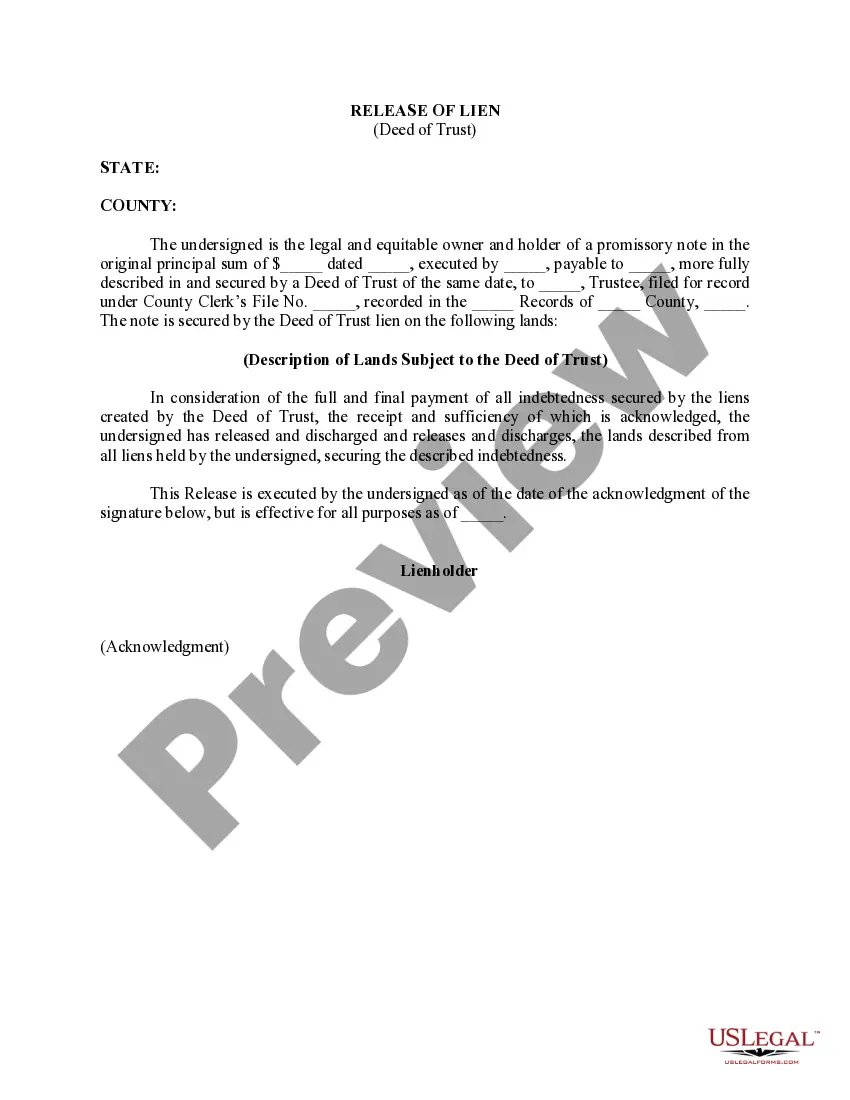
The Release of Lien Claim is a legal document used to officially cancel a lien that a contractor or material supplier has placed on a property owner's interest. This form is essential for property owners who wish to clear their title and is different from other lien-related documents because it serves as proof that the claimant has relinquished their claim against the property after payment or resolution of the outstanding debt.
What’s included in this form
- Owner of property named in lien claim: Includes the name and address of the property owner.
- Lien claimant: Lists the individual or company who filed the lien, along with their address.
- Date signed: The date on which the release of the lien is officially executed.
- Description of lien claim: References the original lien claim, including the date, volume, and page number where it was recorded.
- Description of lands affected: Details the specific property that is subject to the released lien claim.
Situations where this form applies
This form is used when a contractor, subcontractor, or material supplier has received payment for their services or materials and wishes to release their lien on the property. It is typically utilized when serious legal disputes regarding payment have been resolved, ensuring that the property can be transferred or refinanced without complications from the released lien.
Who should use this form
- Property owners who have satisfied their obligations to a contractor or supplier.
- Contractors or material suppliers who have received full payment and need to release their lien.
- Real estate professionals facilitating property transactions that involve liens.
How to complete this form
- Identify the parties involved: Fill in the name and address of both the property owner and the lien claimant.
- Enter the date signed: Provide the date when the lien release is executed.
- Specify the lien claim: Record the original lien claim details, including date, volume, and page number.
- Describe the affected property: Clearly describe the property subject to the lien to ensure clarity.
- Complete and sign: Have the lien claimant sign the document to finalize the release of the lien.
Is notarization required?
Notarization is required for this form to take effect. Our online notarization service, powered by Notarize, lets you verify and sign documents remotely through an encrypted video session, available 24/7.
Get your form ready online
Our built-in tools help you complete, sign, share, and store your documents in one place.
Make edits, fill in missing information, and update formatting in US Legal Forms—just like you would in MS Word.
Download a copy, print it, send it by email, or mail it via USPS—whatever works best for your next step.
Sign and collect signatures with our SignNow integration. Send to multiple recipients, set reminders, and more. Go Premium to unlock E-Sign.
If this form requires notarization, complete it online through a secure video call—no need to meet a notary in person or wait for an appointment.
We protect your documents and personal data by following strict security and privacy standards.

Make edits, fill in missing information, and update formatting in US Legal Forms—just like you would in MS Word.

Download a copy, print it, send it by email, or mail it via USPS—whatever works best for your next step.

Sign and collect signatures with our SignNow integration. Send to multiple recipients, set reminders, and more. Go Premium to unlock E-Sign.

If this form requires notarization, complete it online through a secure video call—no need to meet a notary in person or wait for an appointment.

We protect your documents and personal data by following strict security and privacy standards.
Common mistakes to avoid
- Failing to include complete and accurate identification of the parties involved.
- Not specifying the correct lien claim details, including the date and recording information.
- Leaving the description of the property vague or incomplete.
- Not signing the form where required, which may render it invalid.
Advantages of online completion
- Convenience: Download and complete the form from anywhere without needing a visit to an attorney.
- Editability: Easily modify the document as needed to fit specific circumstances.
- Reliability: Ensure the form is up-to-date with current legal standards.
Legal use & context
- The release of lien claim is legally binding once executed and appropriately documented.
- It helps clear the title of the property, making it more appealing for sale or refinancing.
- Failure to properly execute or file this form may lead to lingering claims against the property.
Summary of main points
- The Release of Lien Claim is crucial for property owners to clear their title after a debt is settled.
- Accurate completion and filing of the form are essential to prevent future claims.
- This form should be used when payment disputes have been resolved and formal release of a lien is required.
Looking for another form?


Form popularity
FAQ
A lien waiver is quite common in the construction business. Essentially, it is a document from a contractor, subcontractor, supplier, or another party who holds a mechanic's lien that states they have been paid in full and waive future lien rights to the disputed property.
Name of Claimant. This is the name the party to be paid, and the party who will be signing the lien waiver document. Name of Customer. Job Location. Owner. Exceptions. Claimant's Signature. Claimant's Title. Date of Signature.
Write your name and return address in the top three lines of the letter. Insert the complete date (month, day, year). Enter the recipient's name, title, company name and address on the next five lines. Greet the reader by writing "Dear (recipient's name):" Skip two lines. State the subject in a subject line.
When a bank loan is paid off, a Release of Lien or Certificate of Satisfaction is provided by the bank and is recorded in the Land Records office to provide notice that the prior lien has now been paid in full and released from the property.
Make sure the debt the lien represents is valid. Pay off the debt. Fill out a release-of-lien form. Have the lien holder sign the release-of-lien form in front of a notary. File the lien release form. Ask for a lien waiver, if appropriate. Keep a copy.
It basically states that you've paid the subcontractor what is owed, they accept the payment in full, and they waive the right to put a lien on your property. Simply present this form to the subcontractor with your payment and ask them to sign it. Make sure you get their signature!
It basically states that you've paid the subcontractor what is owed, they accept the payment in full, and they waive the right to put a lien on your property. Simply present this form to the subcontractor with your payment and ask them to sign it. Make sure you get their signature!
The release of lien is then recorded by the title company in the real property records at the county recorder's office. The fee is generally included in your settlement costs or as a separate lien release fee paid at closing. Your new mortgage company places a mortgage lien on the home and records it.
A lien is a claim on property to ensure payment of a debt. When you borrow money to purchase a car, the lender files a lien on the vehicle with the state to insure that if the loan defaults, the lender can take the car. When the debt is fully repaid, a release of the lien is provided by the lender.