Definition-Probable Cause
What is this form?
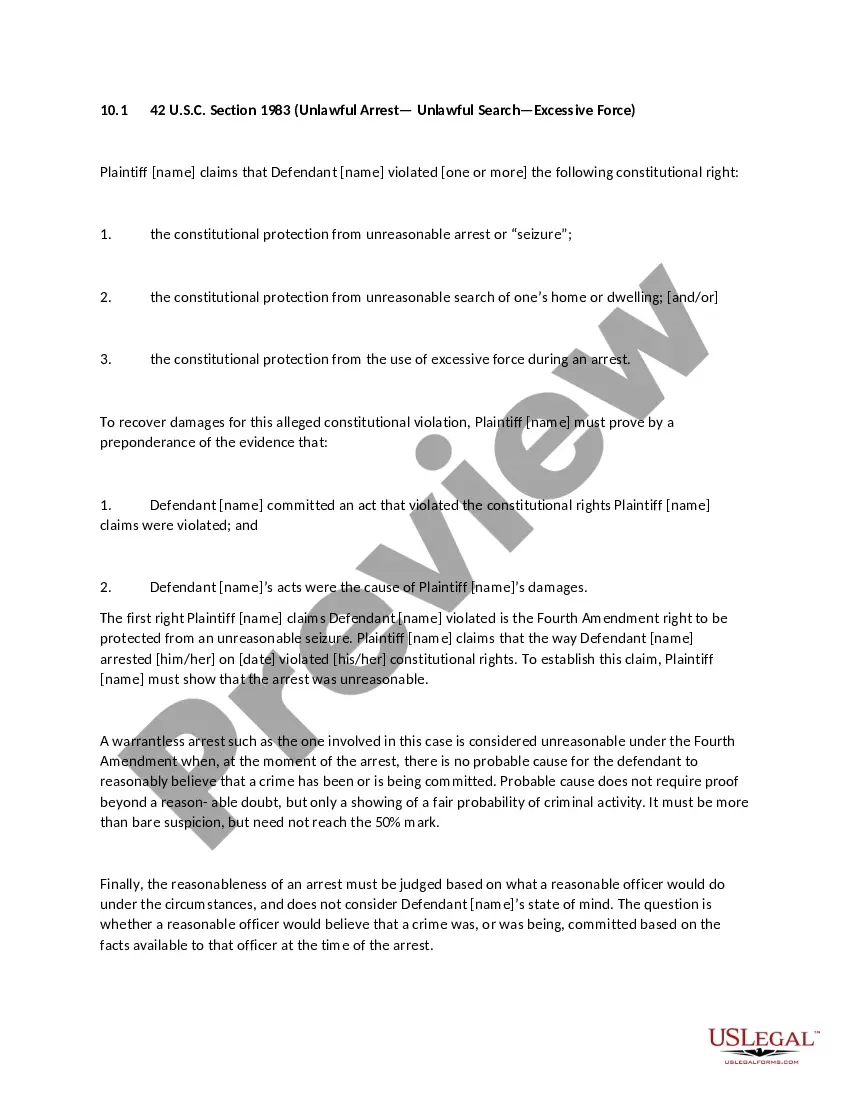
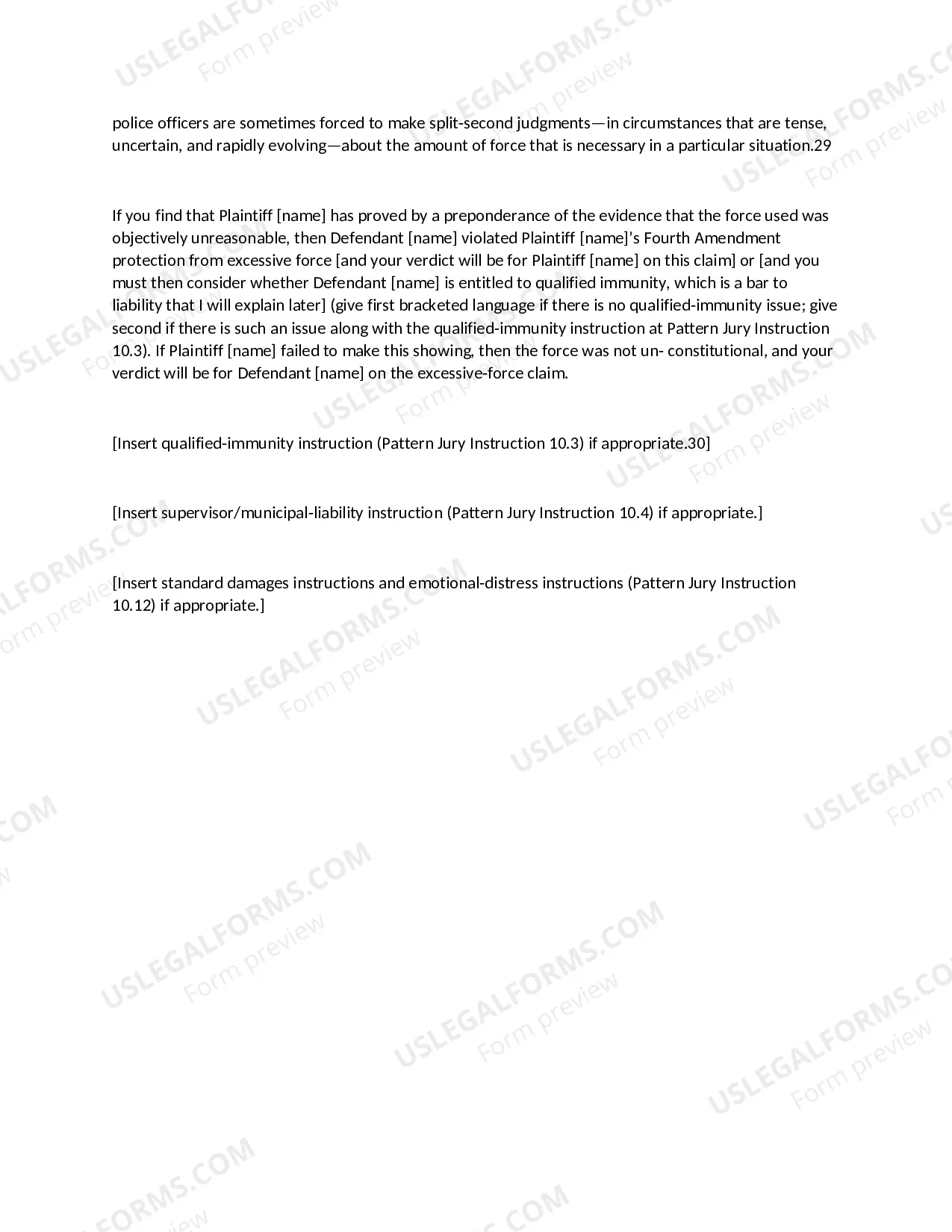
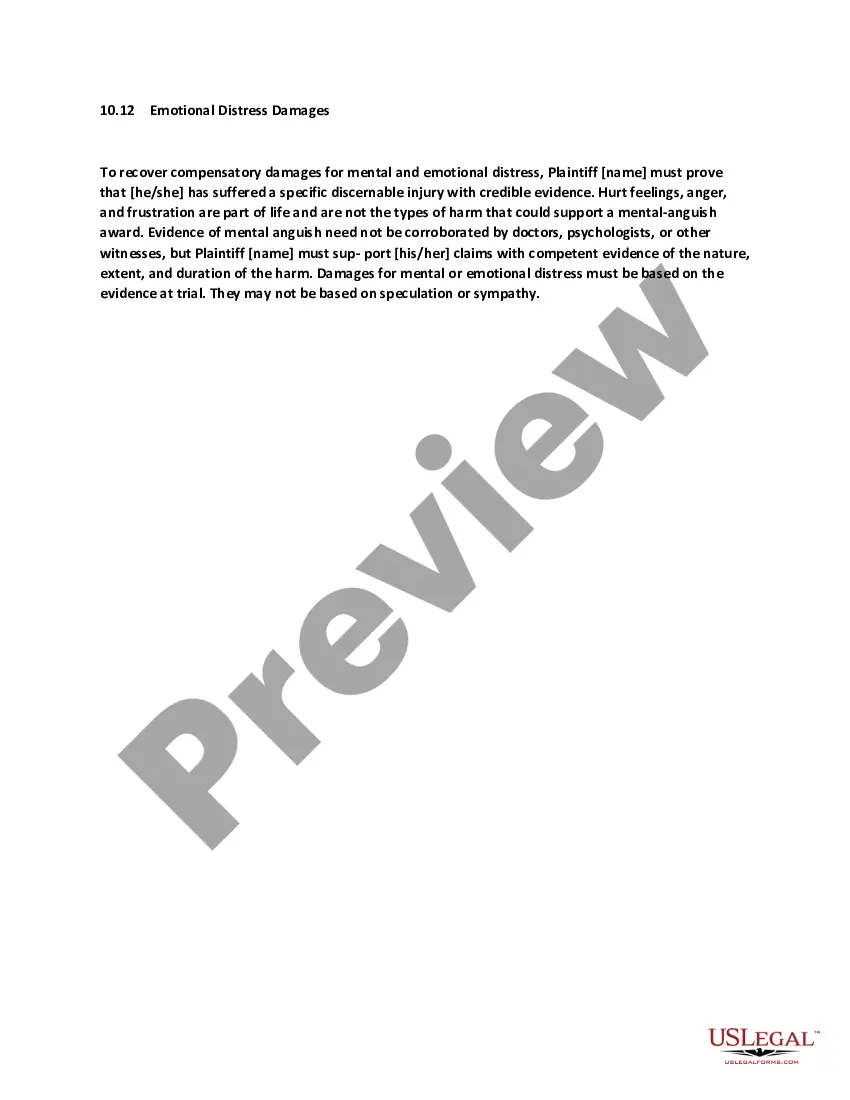
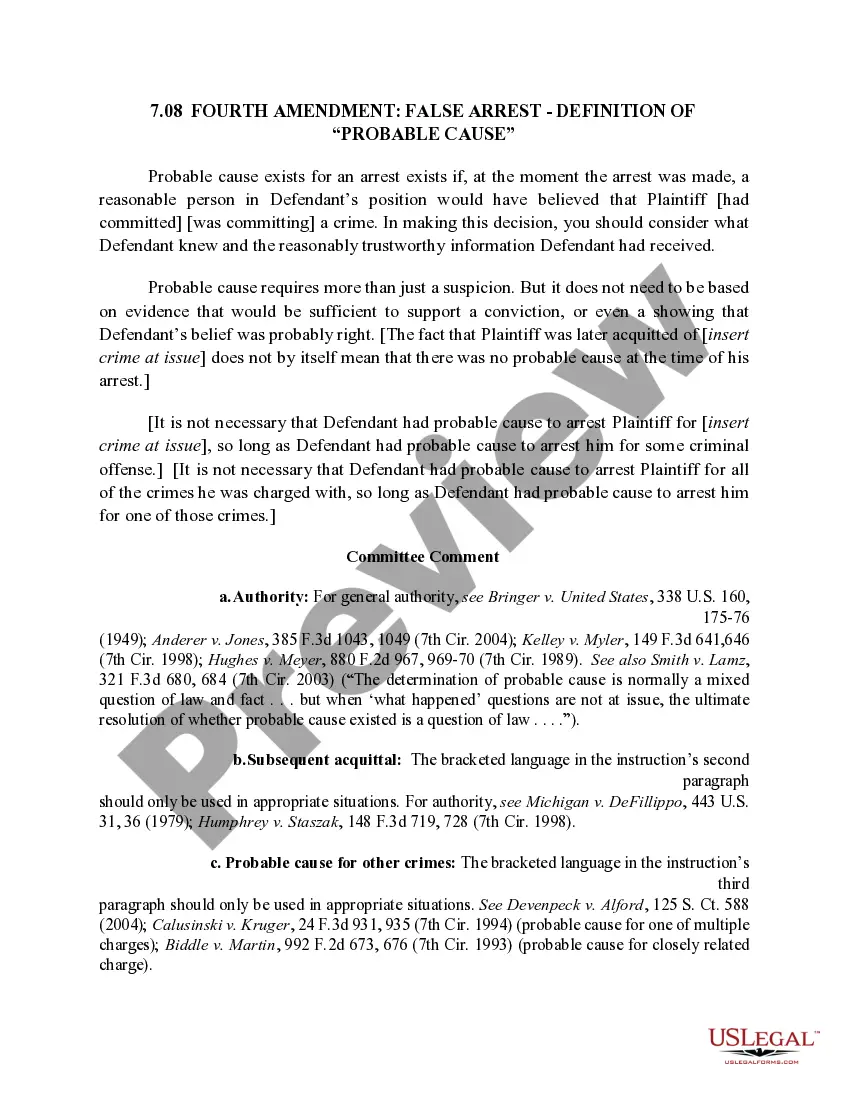
The Definition-Probable Cause form is a legal document used in cases involving alleged violations of constitutional rights, particularly under the Fourth Amendment. This form helps plaintiffs assert claims against defendants for unlawful arrests, searches, or excessive force, providing a structured way to outline the basis of each claim. Unlike other legal forms, this template specifically addresses issues related to probable cause, making it essential for individuals pursuing justice for constitutional infringements in law enforcement actions.
Key components of this form
- Identification of the plaintiff and defendant, detailing their names.
- Claims based on violations of constitutional protections against unreasonable arrest, search, and excessive force.
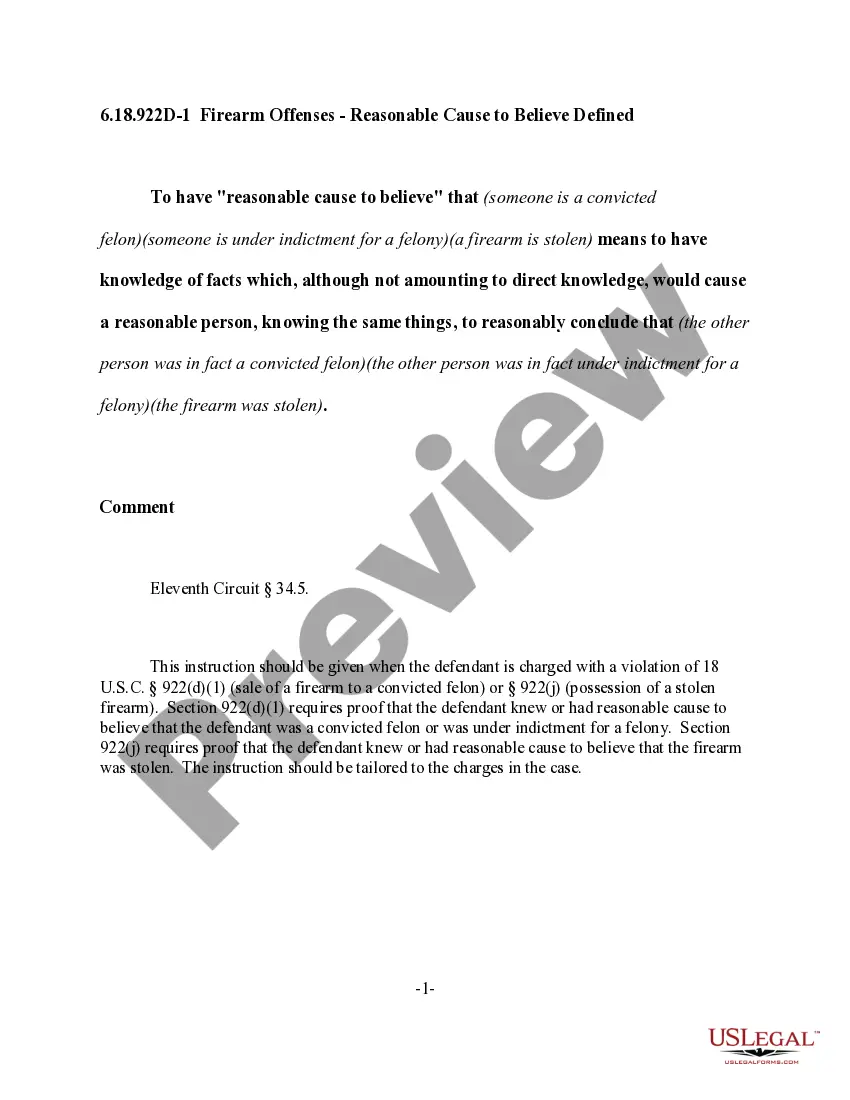
- Criteria to establish unreasonable arrests, including the definition and necessity of probable cause.
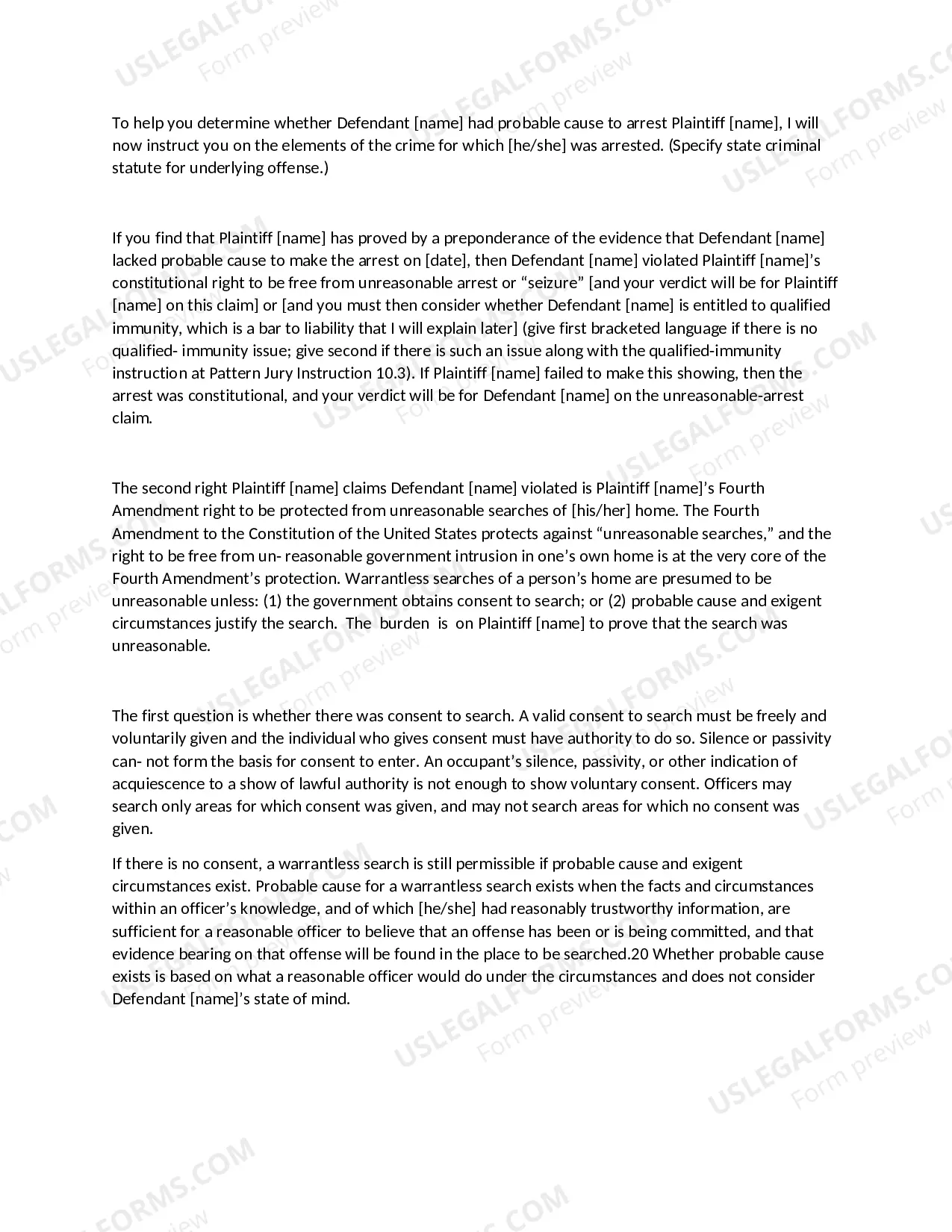
- Guidance on evaluating unreasonable searches and the requirements for consent and exigent circumstances.
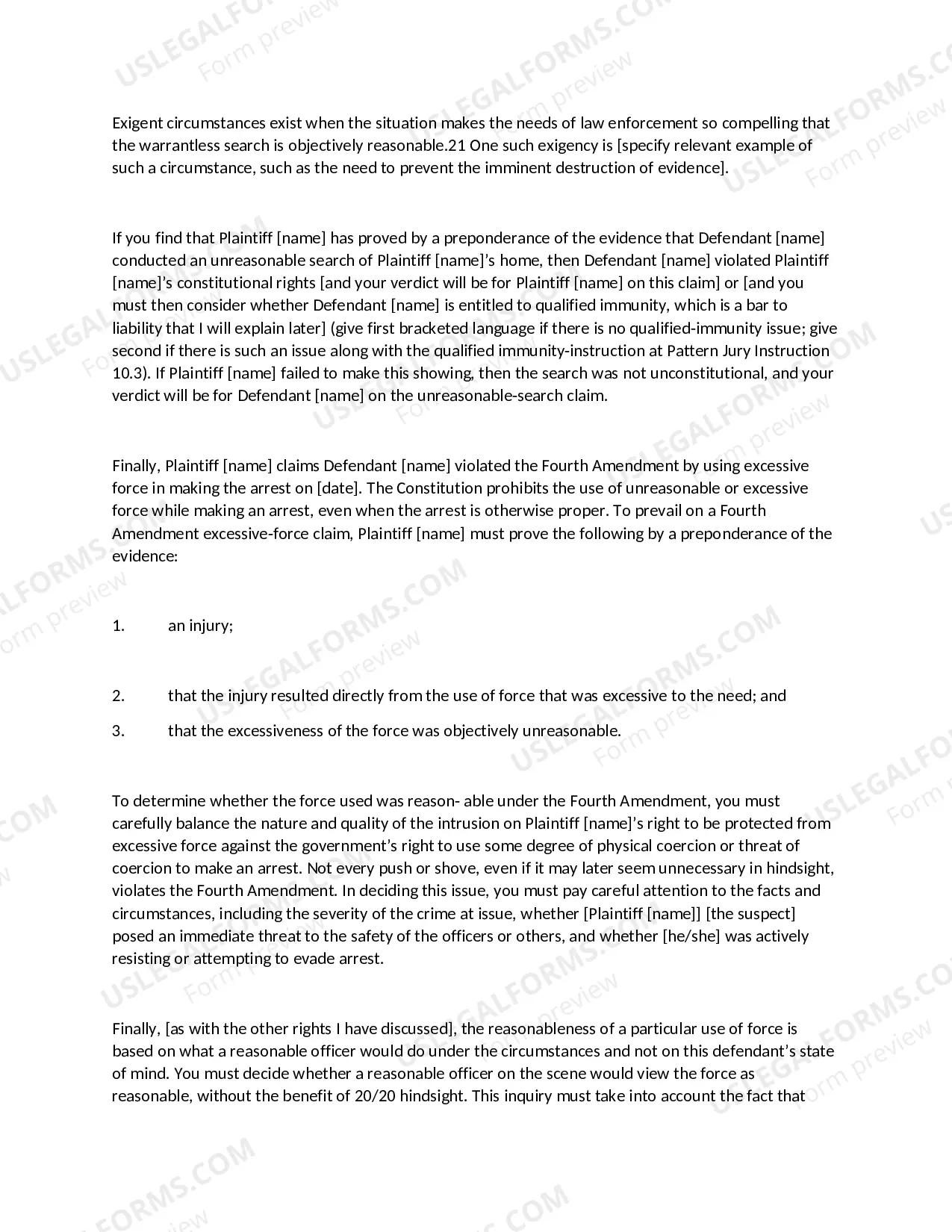
- Standards for assessing excessive force used during arrests.
Situations where this form applies
This form is relevant in various legal scenarios, primarily when an individual believes their constitutional rights have been violated during an interaction with law enforcement. It is particularly useful when challenging a warrantless arrest, an unlawful search of oneâs home, or instances where excessive force was used. Legal practitioners or individuals who have been subjected to such actions may rely on this form to build their case or seek redress in court.
Who needs this form
This form is designed for:
- Individuals who believe they have been unlawfully arrested or subjected to unreasonable searches.
- Victims of excessive force by law enforcement during arrests.
- Legal professionals representing clients in civil rights cases related to constitutional violations.
- Those seeking to understand the legal framework governing probable cause and constitutional protections.
How to prepare this document
- Identify and enter the names of the plaintiff and defendant at the beginning of the document.
- Clearly outline the constitutional rights claimed to have been violated, including details of the arrest or search.
- Provide evidence or circumstances indicating the lack of probable cause for the arrest.
- Describe any applicable facts supporting claims of unreasonable search or excessive force.
- Have the document signed and dated as required, ensuring all necessary details are complete.
Does this form need to be notarized?
This form does not typically require notarization unless specified by local law. Ensure to check relevant state regulations for any notarization requirements before submitting the form.
Get your form ready online
Our built-in tools help you complete, sign, share, and store your documents in one place.
Make edits, fill in missing information, and update formatting in US Legal Forms—just like you would in MS Word.
Download a copy, print it, send it by email, or mail it via USPS—whatever works best for your next step.
Sign and collect signatures with our SignNow integration. Send to multiple recipients, set reminders, and more. Go Premium to unlock E-Sign.
If this form requires notarization, complete it online through a secure video call—no need to meet a notary in person or wait for an appointment.
We protect your documents and personal data by following strict security and privacy standards.

Make edits, fill in missing information, and update formatting in US Legal Forms—just like you would in MS Word.

Download a copy, print it, send it by email, or mail it via USPS—whatever works best for your next step.

Sign and collect signatures with our SignNow integration. Send to multiple recipients, set reminders, and more. Go Premium to unlock E-Sign.

If this form requires notarization, complete it online through a secure video call—no need to meet a notary in person or wait for an appointment.

We protect your documents and personal data by following strict security and privacy standards.
Common mistakes
- Failing to clearly specify the constitutional rights violated.
- Omitting essential details about the circumstances surrounding the arrest or search.
- Not providing sufficient evidence to support allegations of unreasonable actions.
- Neglecting to enter dates and specific descriptions of incidents accurately.
Why complete this form online
- Easy access to a professionally drafted template that complies with legal standards.
- Immediate download options for convenience and efficiency.
- Editability that allows customization based on individual circumstances.
- Clarity and structure designed for clear presentation of legal claims.
- The form is governed by applicable federal and state laws that protect individuals from unlawful searches and arrests.
- It is essential for the plaintiff to present strong evidence to support their claims for the case to be successful.
- Understanding qualified immunity can impact the legal outcomes in cases involving law enforcement actions.
Quick recap
- The Definition of Probable Cause form is crucial for asserting violations of constitutional rights.
- Clear definitions of probable cause, consent, and excessive force are vital for the legal process.
- Accurate completion of the form can significantly impact the success of legal claims against law enforcement.
Looking for another form?
Form popularity
FAQ
Under the totality of the circumstances test, courts focus "on all the circumstances of a particular case, rather than any one factor". In the United States, totality tests are used as a method of analysis in several different areas of the law.
Good faith provides an exception to the Fourth Amendment exclusionary rule barring the use at trial of evidence obtained pursuant to an unlawful search and seizure.
In its 1983 decision in Illinois v. Gates, the Supreme Court held that the totality of the circumstances test should be used to assess whether an anonymous tip is sufficient to provide probable cause.
The Constitution, through the Fourth Amendment, protects people from unreasonable searches and seizures by the government. The Fourth Amendment, however, is not a guarantee against all searches and seizures, but only those that are deemed unreasonable under the law.
The totality-of-circumstances test requires magistrates to consider all the information in the affidavit, including the informer's reliability, credibility, and basis of knowledge.
Reasonableness Requirement All searches and seizures under the Fourth Amendment must be reasonable and no excessive force shall be used. Reasonableness is the ultimate measure of the constitutionality of a search or seizure. Searches and seizures with the warrant must also satisfy the reasonableness requirement.
The principle of totality comprises two elements: #All courts, when sentencing for more than a single offence, should pass a total sentence which reflects all the offending behaviour before it and is just and proportionate. This is so whether the sentences are structured as concurrent or consecutive.
Examples of Totality of the circumstances in a sentence Refusal by a Negotiating Entity to execute a written retransmission consent agreement that sets forth the full understanding of the television broadcast station and the multichannel video programming distributor.