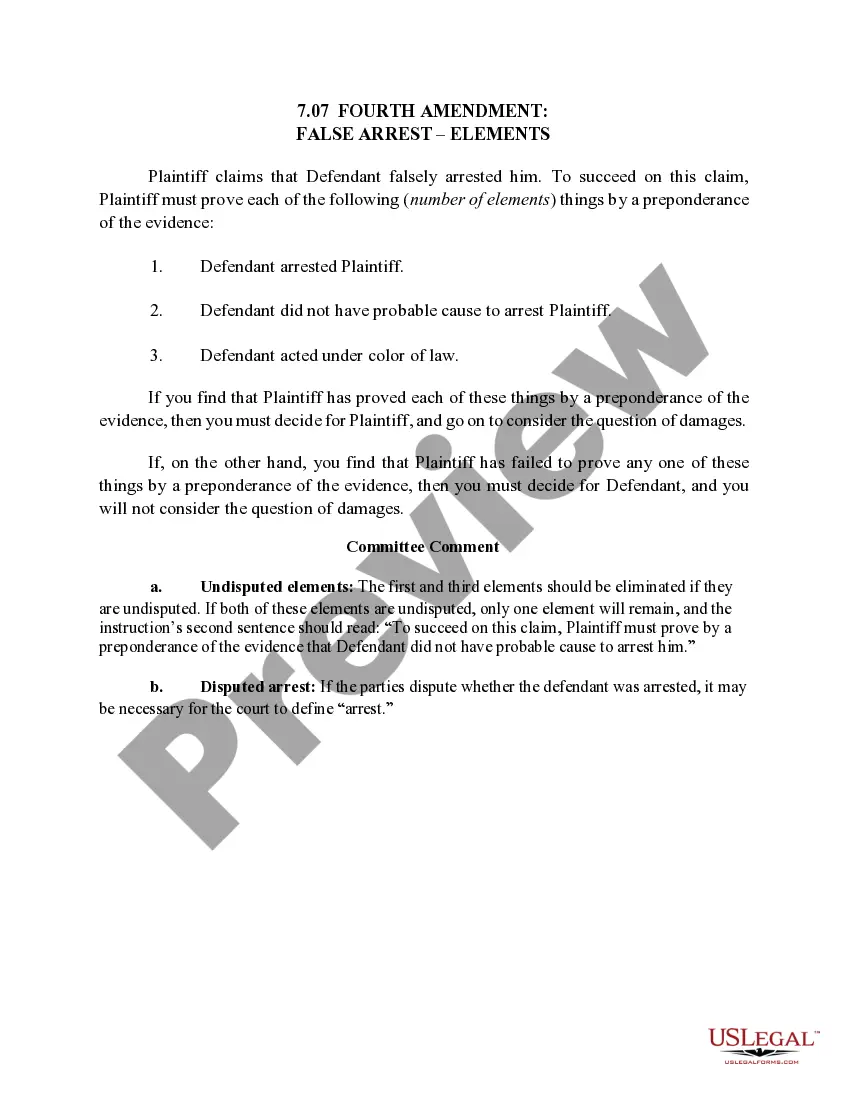
7.08 Fourth Amendment - False Arrest - Definition of "Probable Cause"
What this document covers
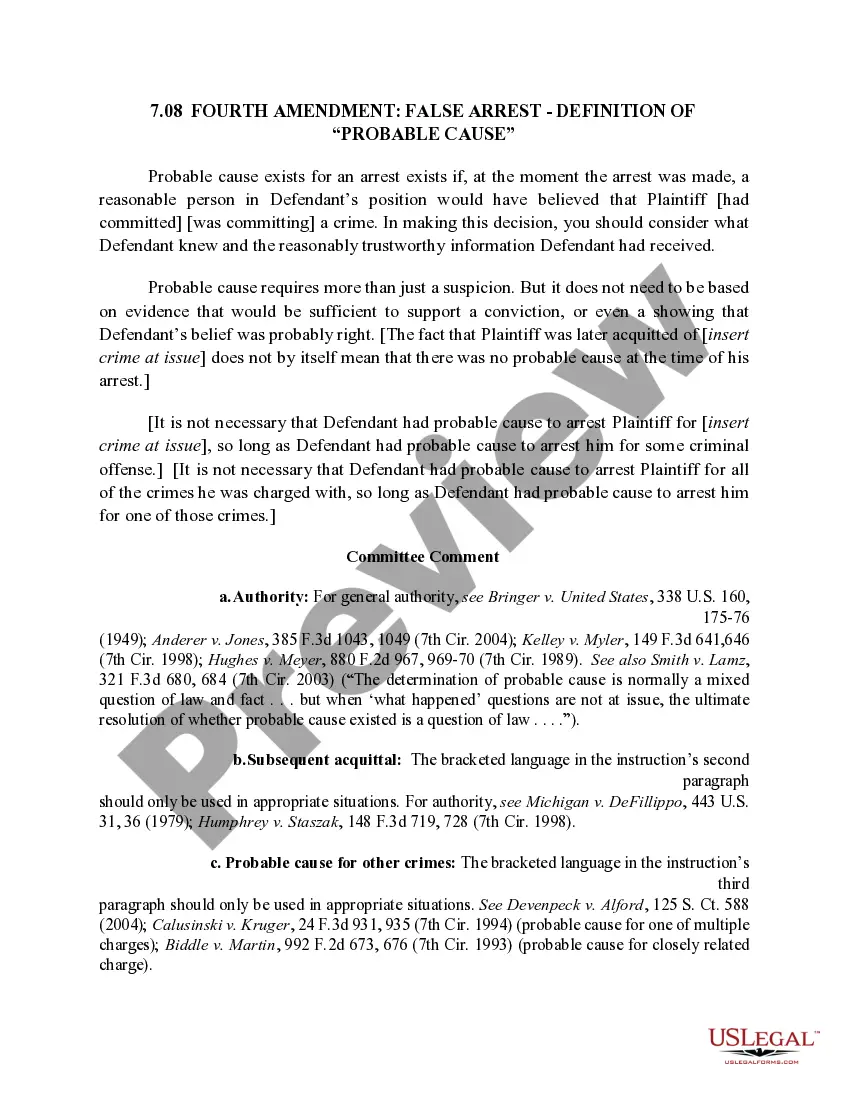
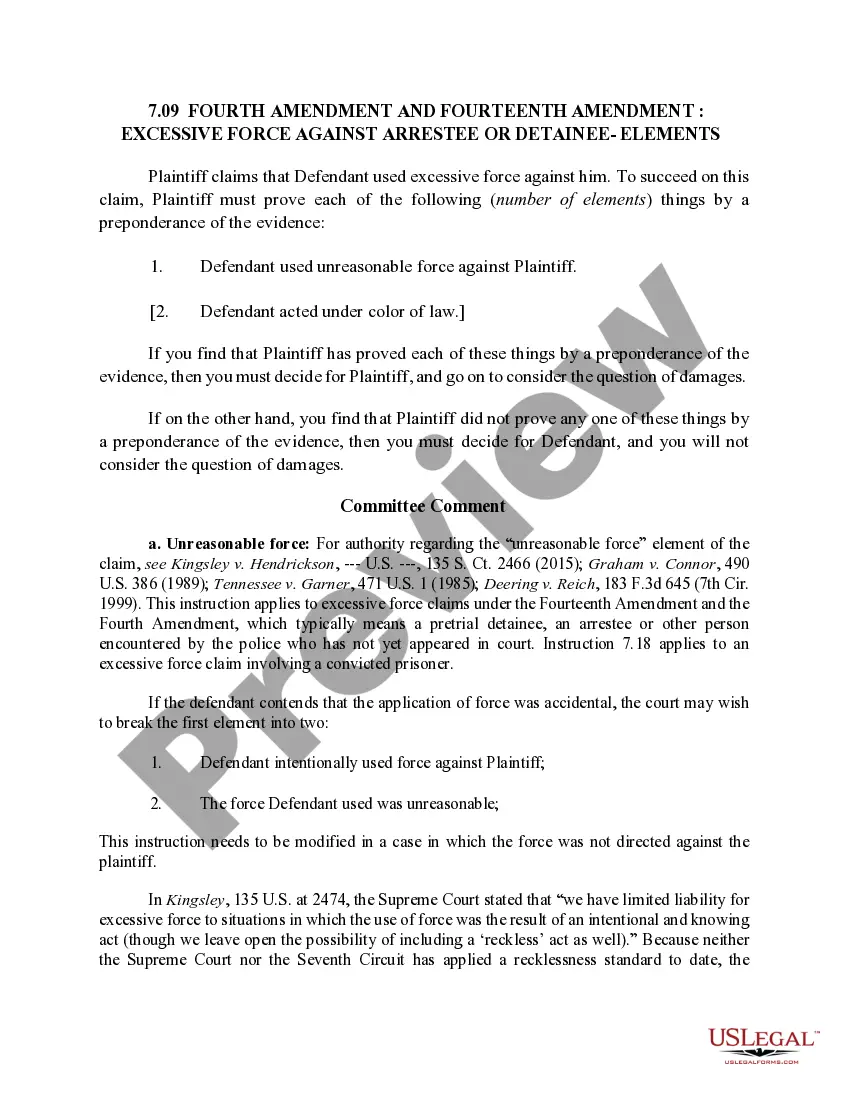
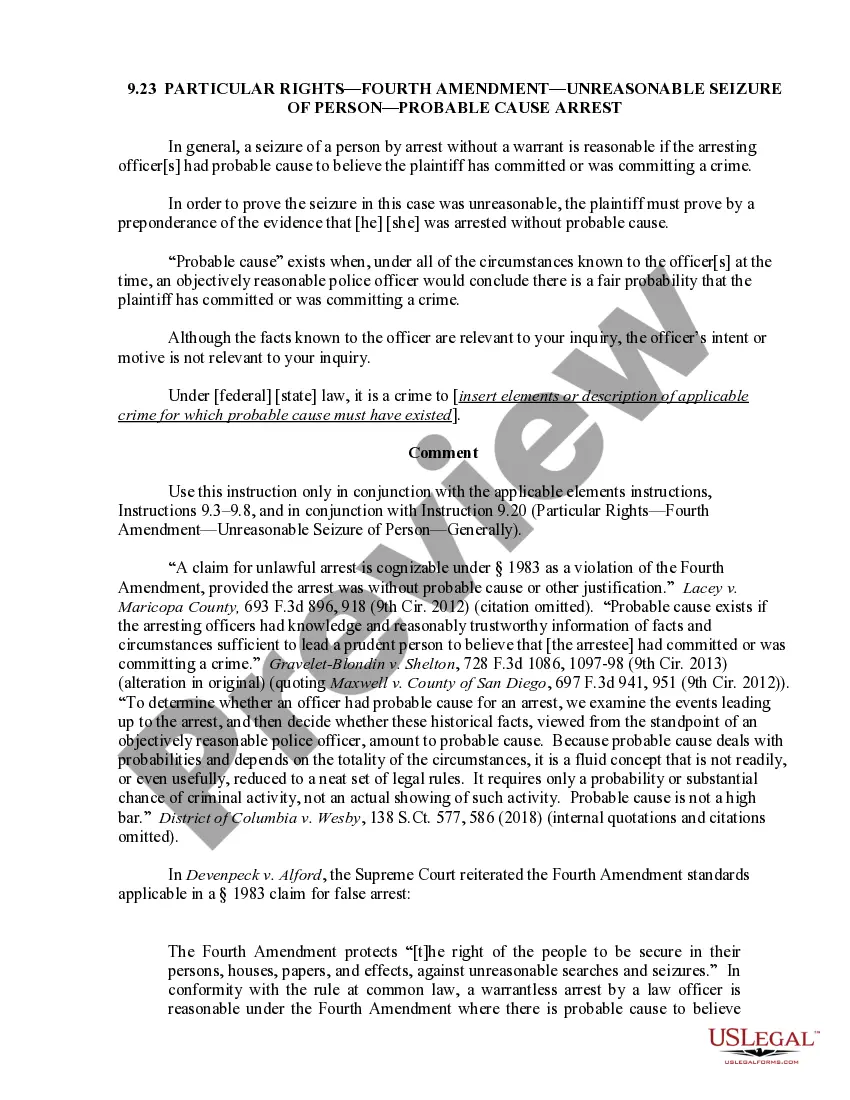
The 7.08 Fourth Amendment - False Arrest - Definition of "Probable Cause" form provides essential guidance on understanding the legal concept of probable cause in relation to false arrest claims. This legal template is specifically designed to assist in jury instructions within the context of the Federal 7th Circuit Court. It clarifies the criteria that establish whether an arrest was justified based on the information available to the defendant at the time, distinguishing it from other related forms.
Main sections of this form
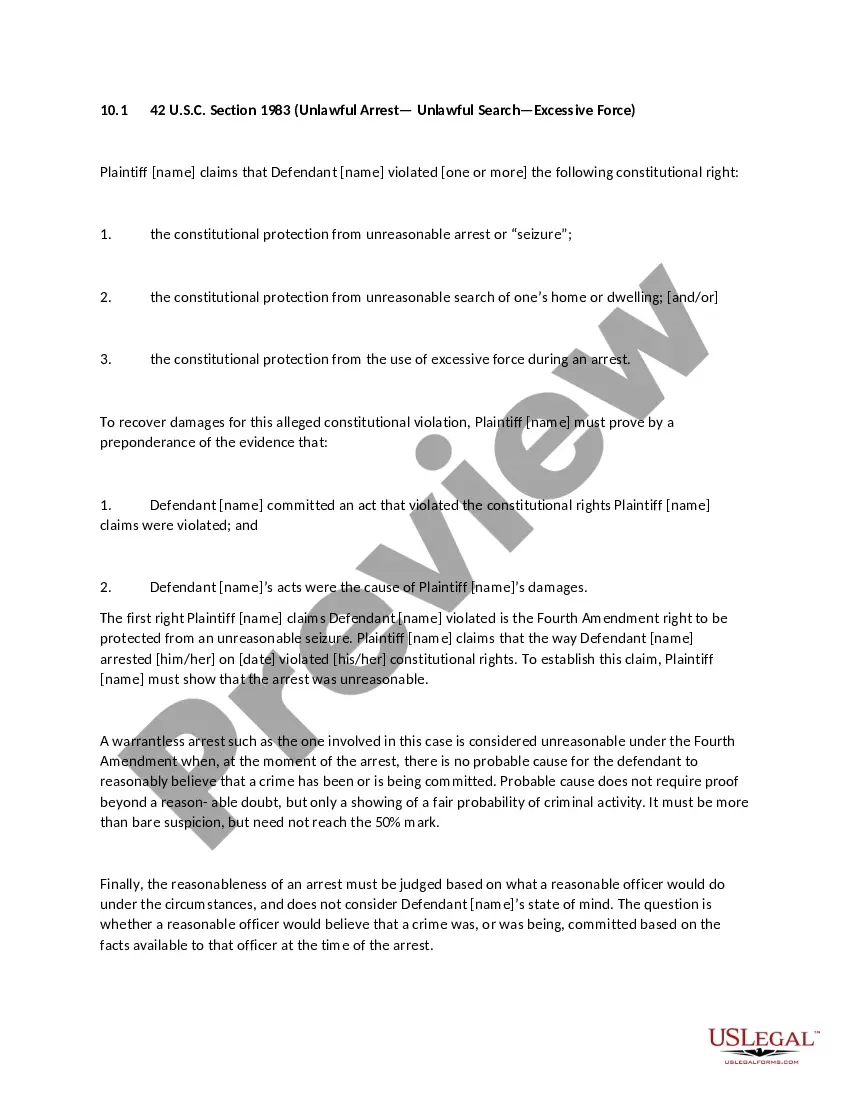
- Definition of probable cause relevant to an arrest.
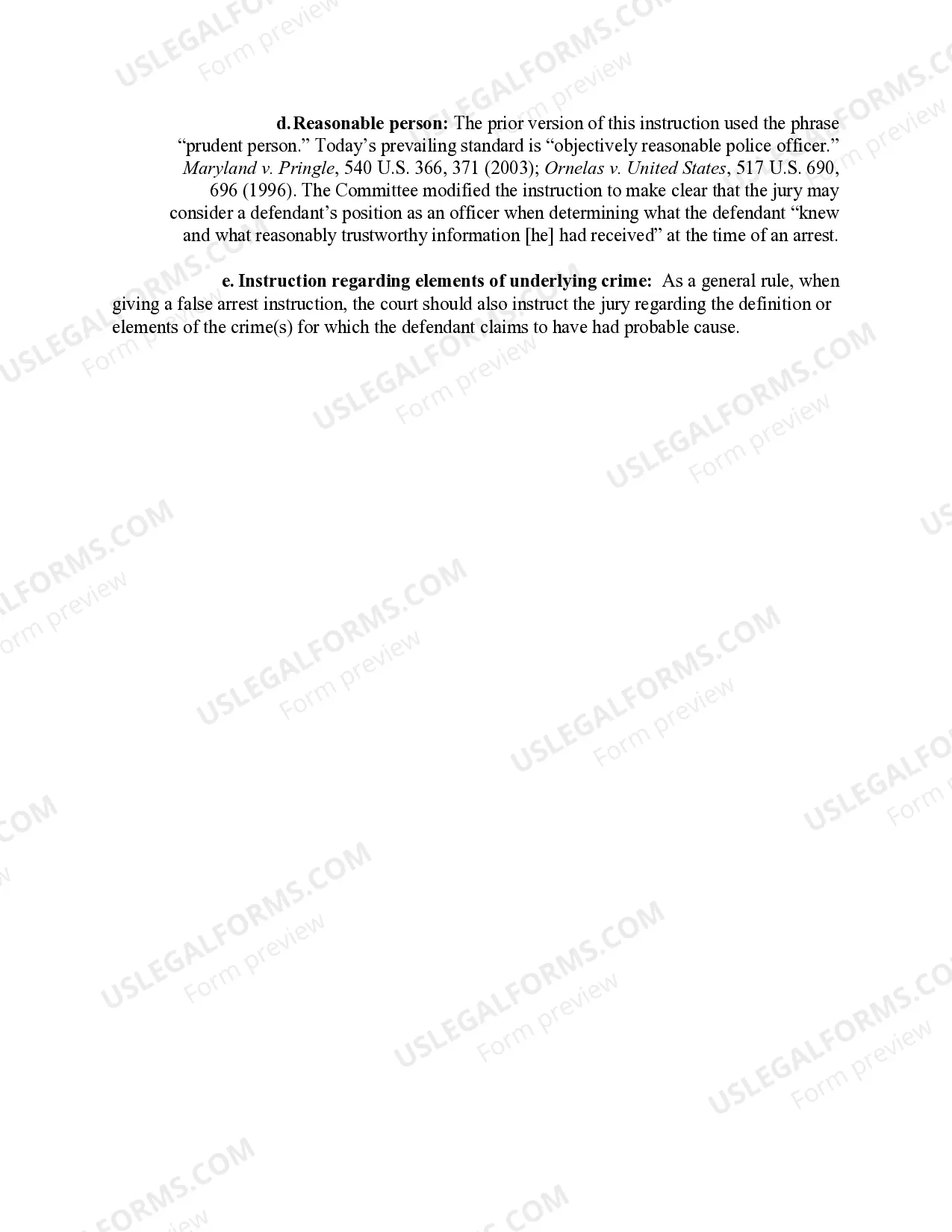
- Considerations of what a reasonable person in the defendant's position knew at the time of the arrest.
- Clarification that probable cause requires more than suspicion but not necessarily evidence sufficient for a conviction.
- Guidance on the implications of subsequent acquittals on the issue of probable cause.
- Explanation of probable cause regarding multiple charges.

Common use cases
This form is used in cases involving claims of false arrest, particularly when assessing whether law enforcement had probable cause at the time of the arrest. It is relevant in civil rights cases or litigation where an individual believes they were wrongfully detained without sufficient legal grounds. Use this form in judicial contexts that require jury instructions about the legal standards surrounding probable cause.
Who can use this document
- Attorneys representing clients involved in false arrest cases.
- Judges or court personnel preparing jury instructions around probable cause.
- Legal scholars studying the implications of the Fourth Amendment on law enforcement practices.
- Individuals seeking to understand their rights regarding arrests and detention.
Steps to complete this form
- Begin by reviewing the definition of probable cause as it relates to the arrest in question.
- Gather relevant facts and trustworthy information available to the defendant at the time of the arrest.
- Evaluate whether a reasonable person in the defendant's position would have believed a crime had been committed.
- Ensure clarity on whether probable cause existed for the specific charges or any related offenses.
- Communicate your findings in the jury instructions that accompany this form.
Does this form need to be notarized?
This form does not typically require notarization to be legally valid. However, some jurisdictions or document types may still require it. US Legal Forms provides secure online notarization powered by Notarize, available 24/7 for added convenience.
Get your form ready online
Our built-in tools help you complete, sign, share, and store your documents in one place.
Make edits, fill in missing information, and update formatting in US Legal Forms—just like you would in MS Word.
Download a copy, print it, send it by email, or mail it via USPS—whatever works best for your next step.
Sign and collect signatures with our SignNow integration. Send to multiple recipients, set reminders, and more. Go Premium to unlock E-Sign.
If this form requires notarization, complete it online through a secure video call—no need to meet a notary in person or wait for an appointment.
We protect your documents and personal data by following strict security and privacy standards.

Make edits, fill in missing information, and update formatting in US Legal Forms—just like you would in MS Word.

Download a copy, print it, send it by email, or mail it via USPS—whatever works best for your next step.

Sign and collect signatures with our SignNow integration. Send to multiple recipients, set reminders, and more. Go Premium to unlock E-Sign.

If this form requires notarization, complete it online through a secure video call—no need to meet a notary in person or wait for an appointment.

We protect your documents and personal data by following strict security and privacy standards.
Avoid these common issues
- Assuming probable cause is the same as guilt; they are distinct legal concepts.
- Neglecting to clarify the facts known to the defendant at the time of the arrest.
- Failing to consider the sufficiency of evidence available rather than hindsight.
- Omitting instructions about lesser included charges when discussing probable cause for multiple offenses.
Why complete this form online
- Convenience of immediate access to a professionally drafted legal template.
- Editability allows legal teams to customize the form for specific cases easily.
- Reliability of content based on standardized legal guidance from the Federal 7th Circuit Court.
Legal use & context
- The form assists in determining the legality of an arrest based on the standards of probable cause.
- It helps outline defenses in civil rights lawsuits regarding false arrest claims.
- Used in court for informing juries about their assessments of probable cause within the framework of Fourth Amendment protections.
Main things to remember
- Understanding probable cause is essential in false arrest litigation.
- Use this form to guide jury instructions in cases regarding lawful arrest practices.
- The template provides a clear definition and context for evaluating the actions of law enforcement.