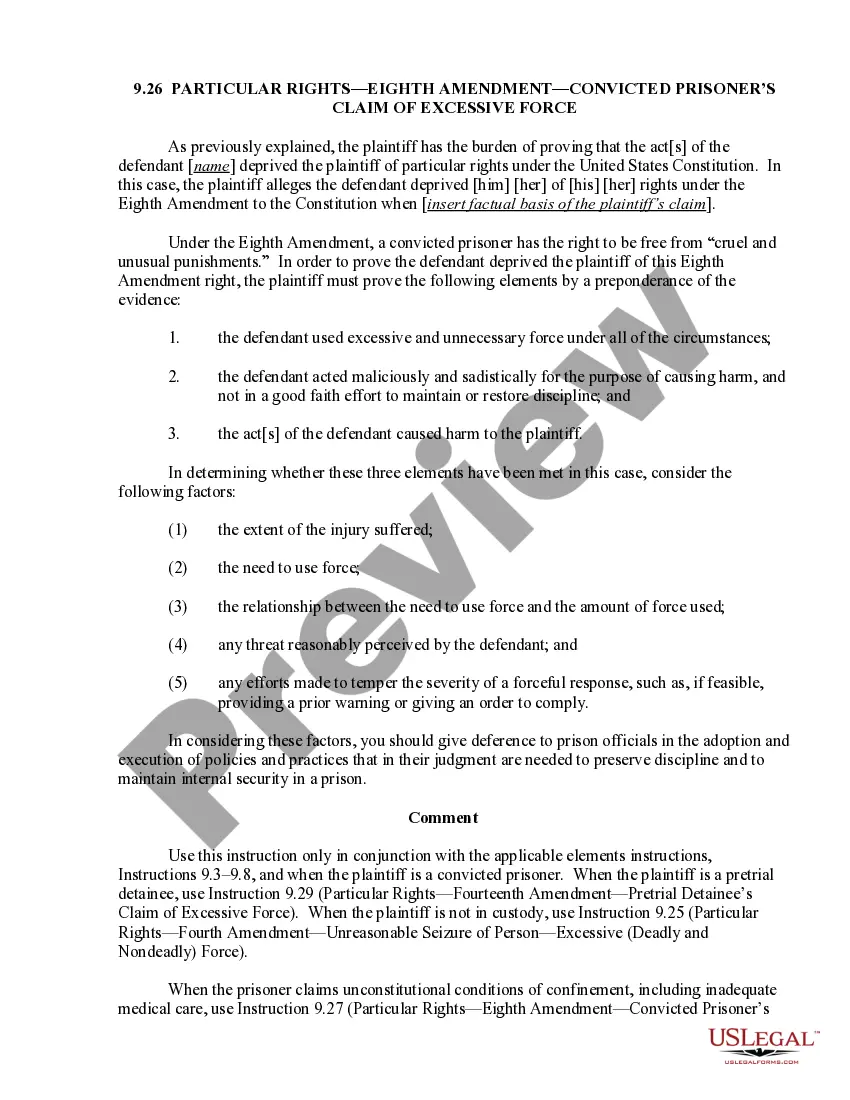
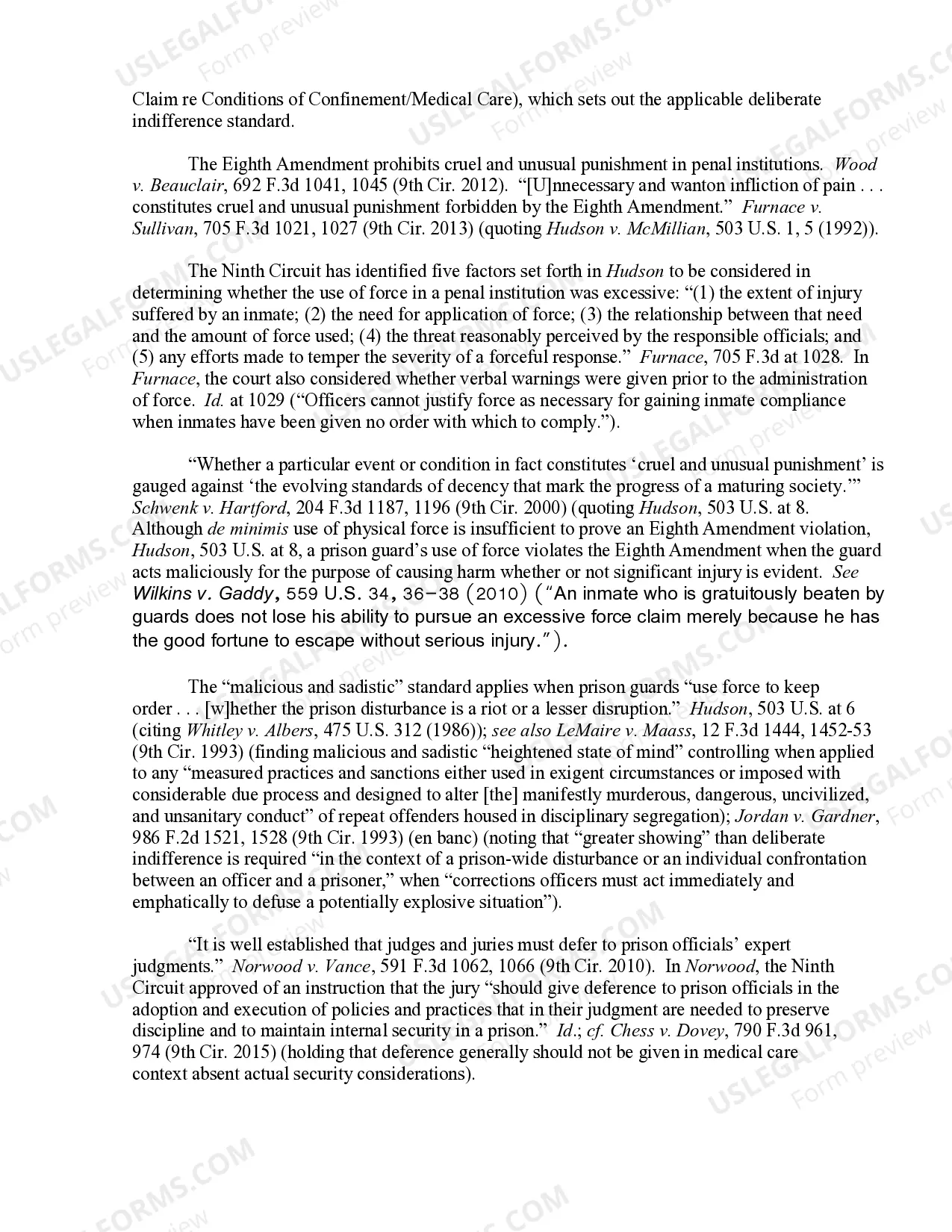
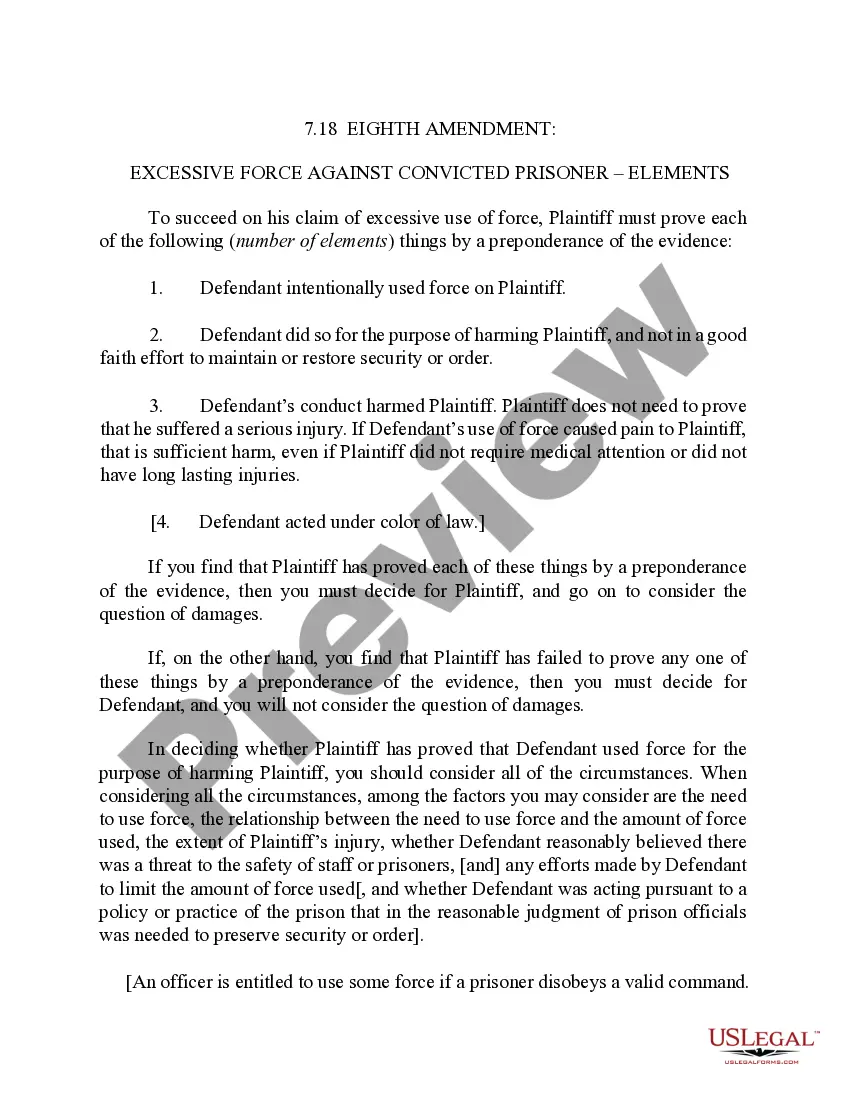
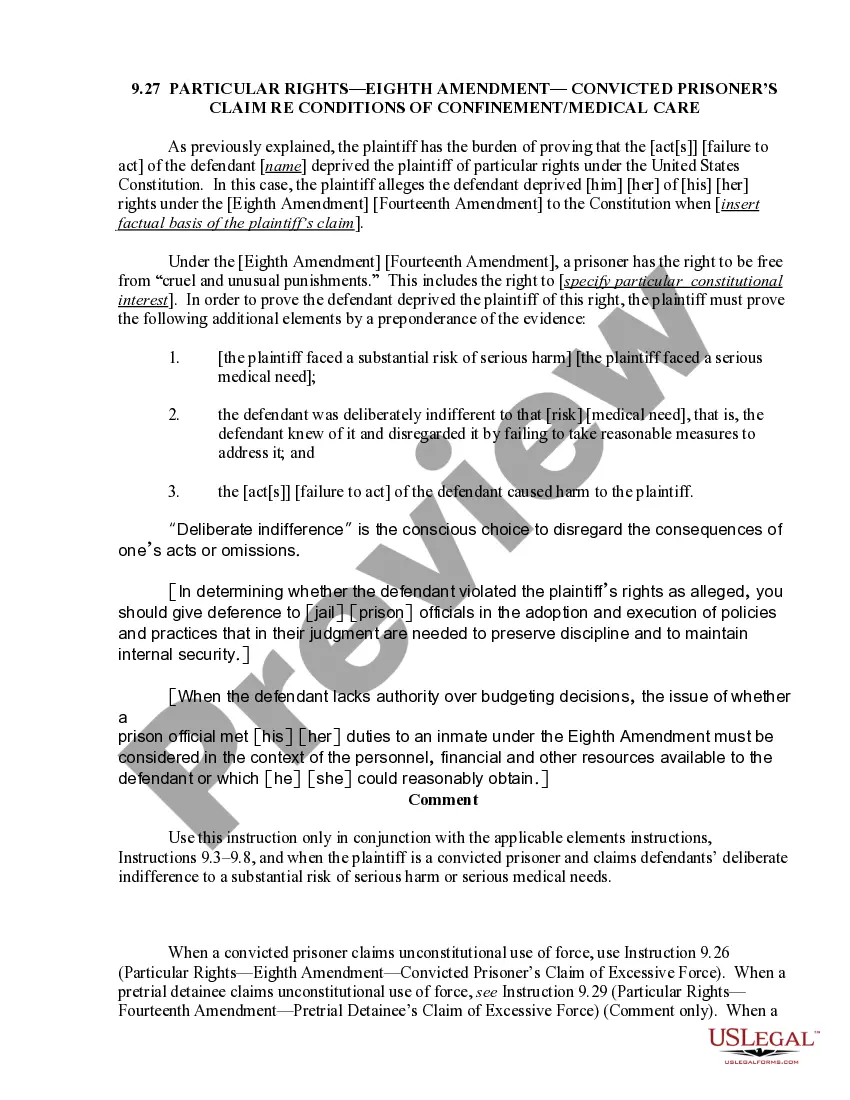
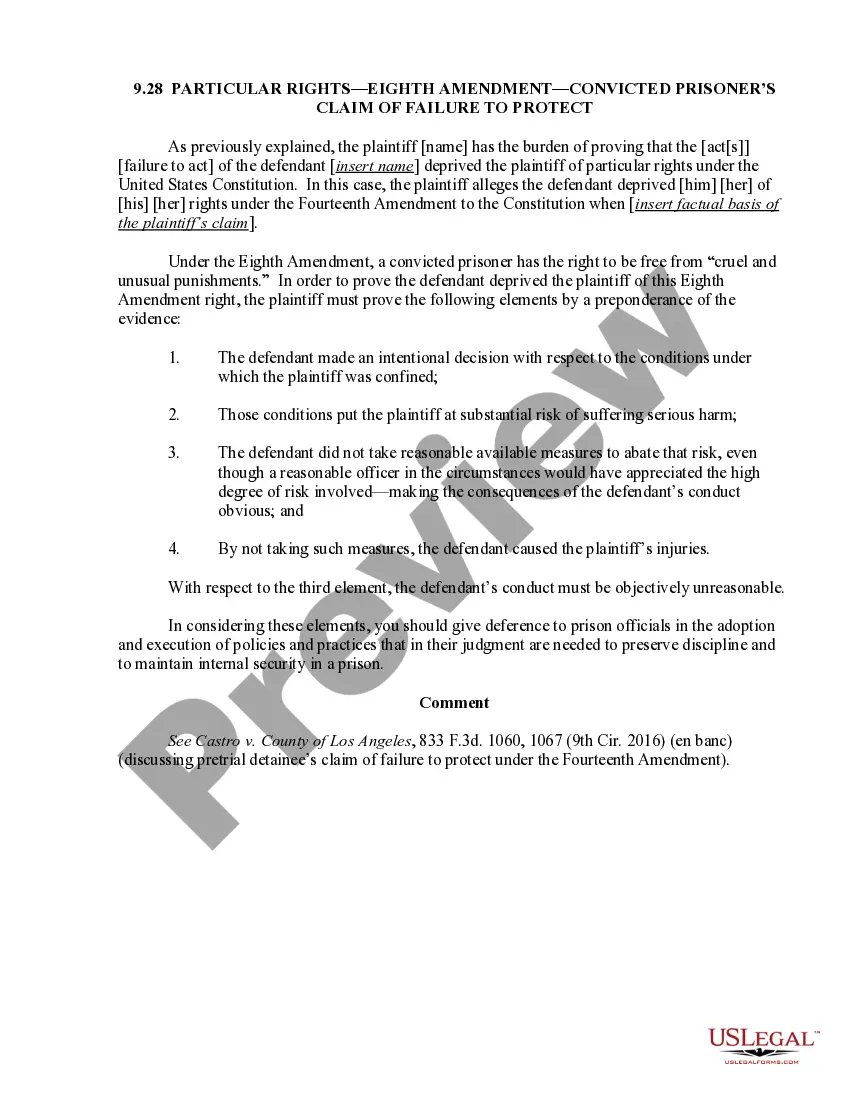
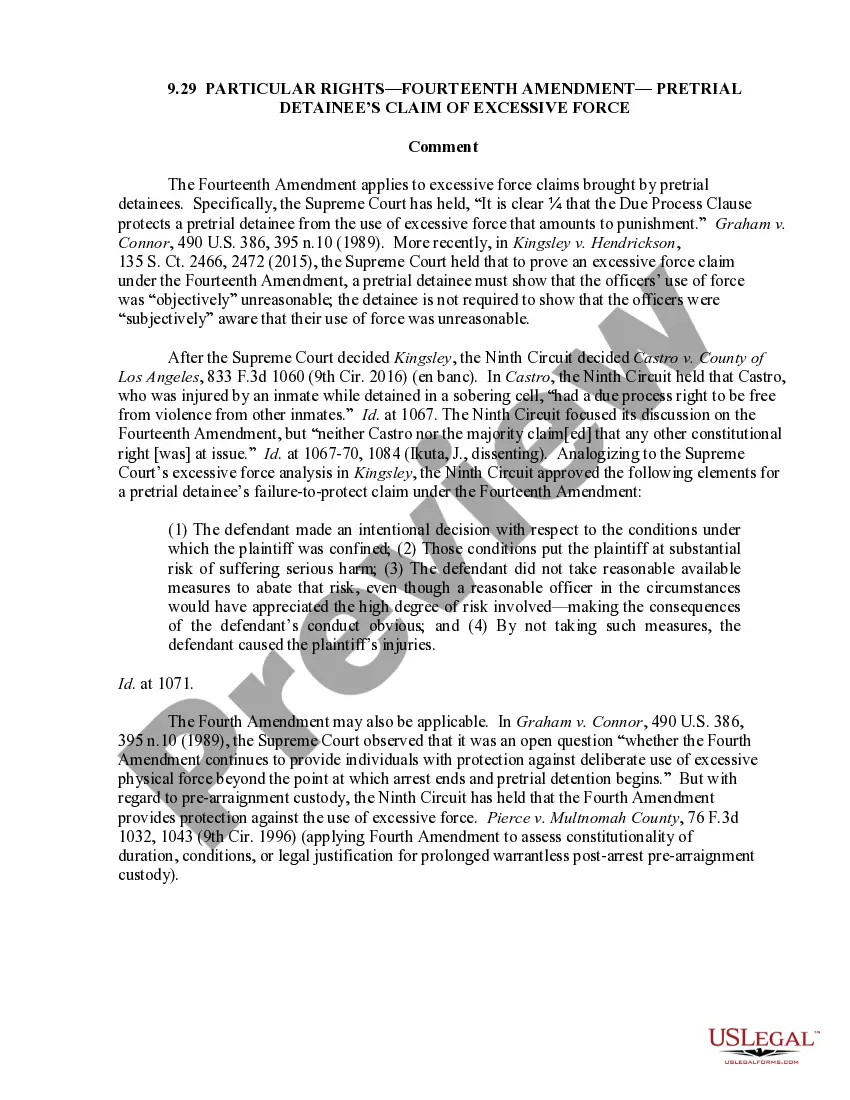
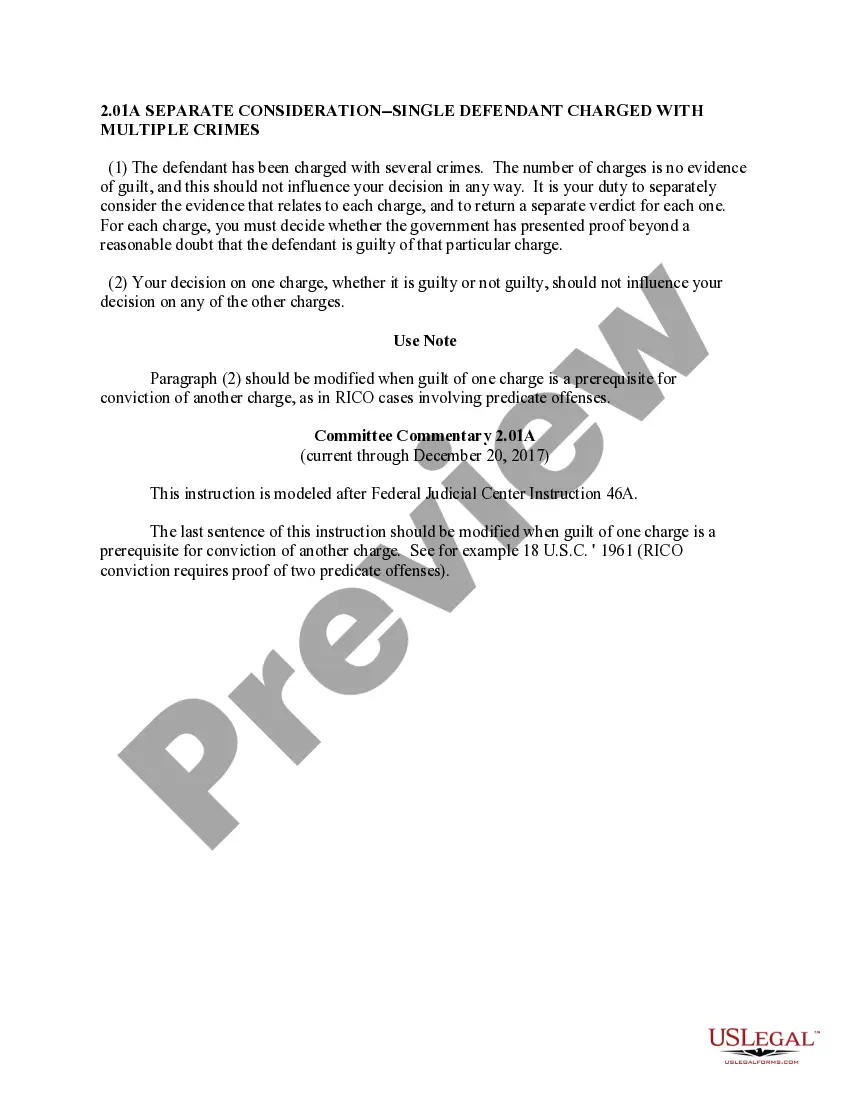
9.26 Particular Rights-Eighth Amendment-Convicted Prisoner's Claim of Excessive Force

Is notarization required?
Notarization is not commonly needed for this form. However, certain documents or local rules may make it necessary. Our notarization service, powered by Notarize, allows you to finalize it securely online anytime, day or night.
Get your form ready online
Our built-in tools help you complete, sign, share, and store your documents in one place.
Make edits, fill in missing information, and update formatting in US Legal Forms—just like you would in MS Word.
Download a copy, print it, send it by email, or mail it via USPS—whatever works best for your next step.
Sign and collect signatures with our SignNow integration. Send to multiple recipients, set reminders, and more. Go Premium to unlock E-Sign.
If this form requires notarization, complete it online through a secure video call—no need to meet a notary in person or wait for an appointment.
We protect your documents and personal data by following strict security and privacy standards.

Make edits, fill in missing information, and update formatting in US Legal Forms—just like you would in MS Word.

Download a copy, print it, send it by email, or mail it via USPS—whatever works best for your next step.

Sign and collect signatures with our SignNow integration. Send to multiple recipients, set reminders, and more. Go Premium to unlock E-Sign.

If this form requires notarization, complete it online through a secure video call—no need to meet a notary in person or wait for an appointment.

We protect your documents and personal data by following strict security and privacy standards.
Looking for another form?
Form popularity
FAQ
Excessive force is generally prohibited by the Fourth, Eighth, and Fourteenth Amendments.
The 8th Amendment prohibits the Federal Government from imposing excessive bail, excessive fines, and cruel and unusual punishment on individuals pursuant to criminal prosecution.
Atkins v. Virginia. A case in which the Court found that sentencing a mentally disabled person to death is a violation of the Eighth Amendment's Cruel and Unusual Punishment Clause.
Cruel and unusual punishment is a phrase in common law describing punishment that is considered unacceptable due to the suffering, pain, or humiliation it inflicts on the person subjected to the sanction.
The Eighth Amendment applies to inmate medical treatment because it not only prohibits excessive force but also requires that prisoners be afforded ?humane conditions of confinement,? so that prison officials ?ensure that inmates receive adequate food, clothing, shelter, and medical care.? Farmer v.
The eighth amendment provides prisoners with limited rights of protection against cruel and unusual punishment during the course of confinement. These rights extend to the existence of humane living conditions, adequate medical care, and protection from violence by other inmates.
It held that inmates alleging use of excessive force in violation of the Eighth Amendment must prove: (1) significant injury; (2) resulting "directly and only from the use of force that was clearly excessive to the need"; (3) the excessiveness of which was objectively unreasonable; and (4) that the action constituted