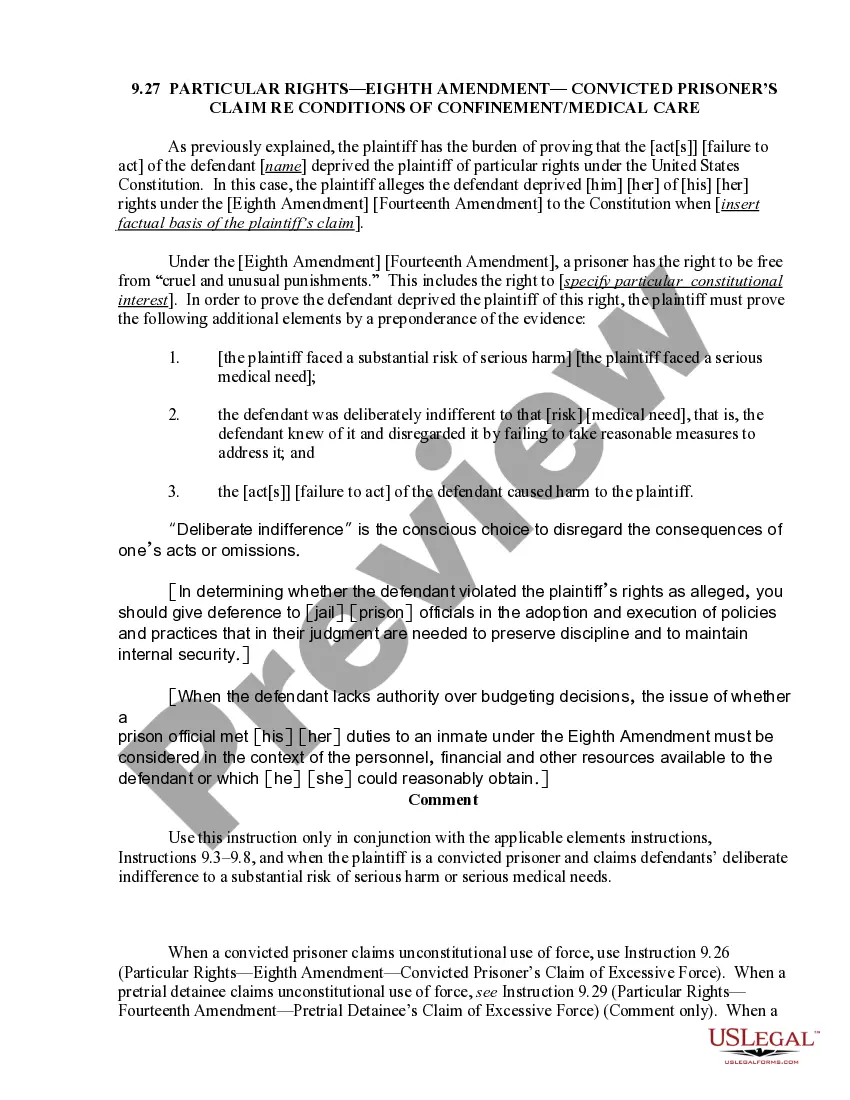
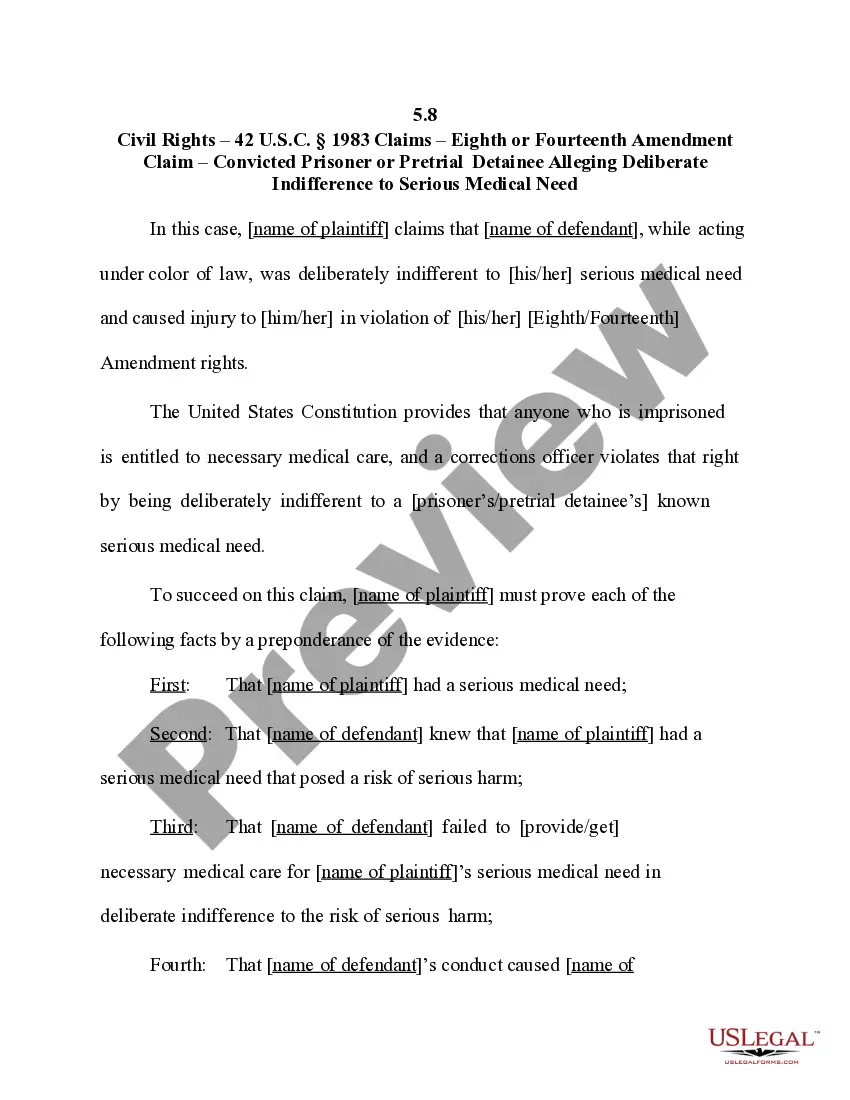
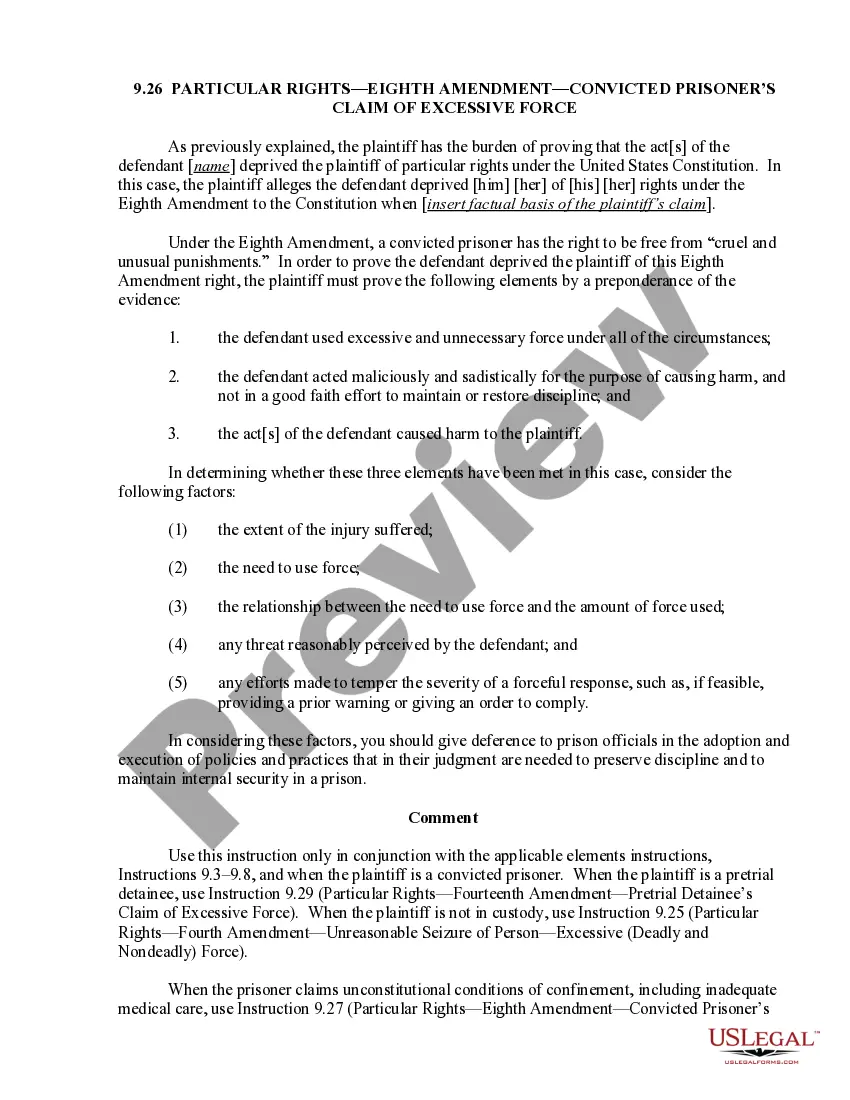
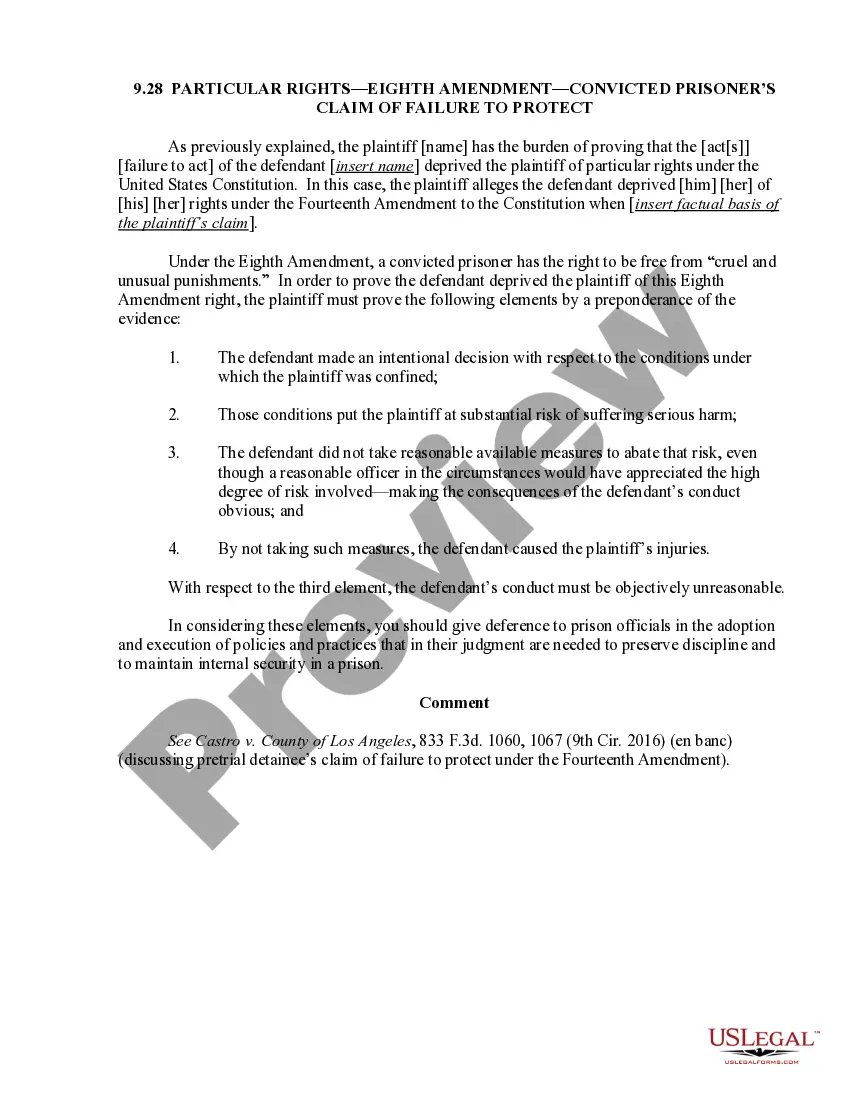
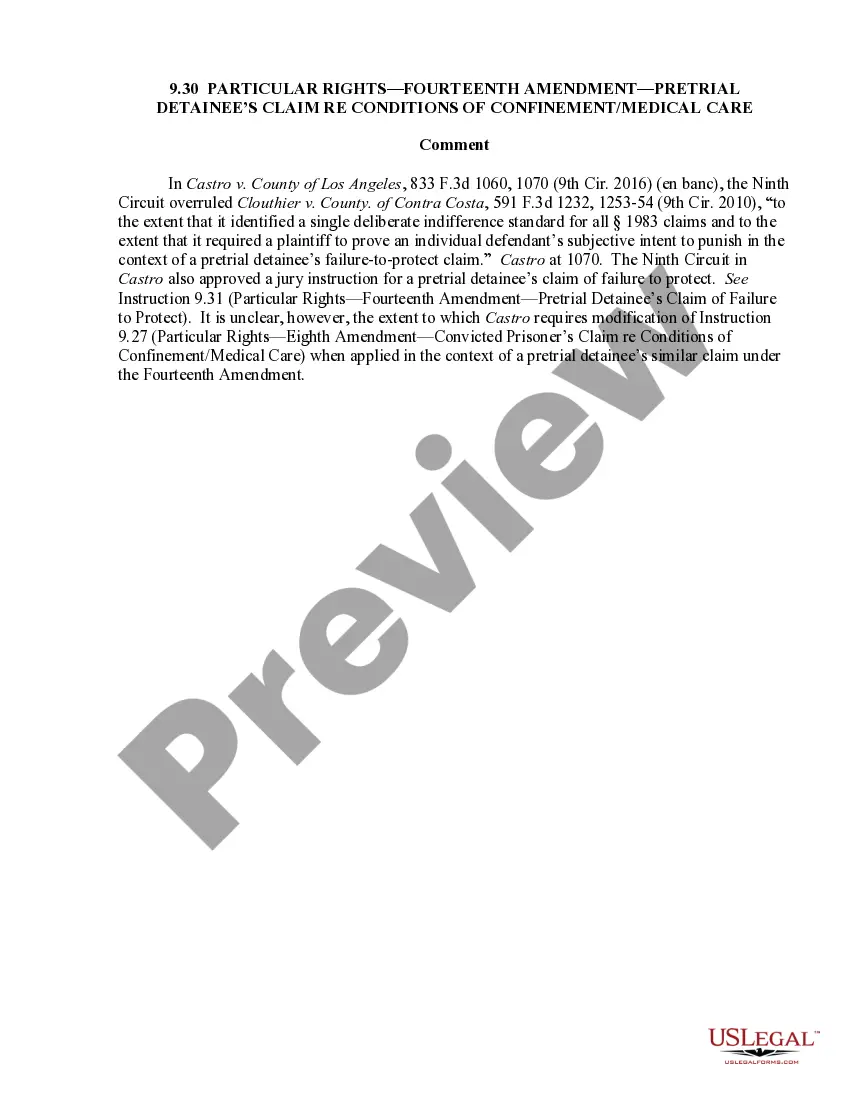
9.27 Particular Rights-Eighth Amendment- Convicted Prisoner's Claim re Conditions of Confinement/Medical Care
Notarization requirements for this form
This form does not typically require notarization to be legally valid. However, some jurisdictions or document types may still require it. US Legal Forms provides secure online notarization powered by Notarize, available 24/7 for added convenience.
Get your form ready online
Our built-in tools help you complete, sign, share, and store your documents in one place.
Make edits, fill in missing information, and update formatting in US Legal Forms—just like you would in MS Word.
Download a copy, print it, send it by email, or mail it via USPS—whatever works best for your next step.
Sign and collect signatures with our SignNow integration. Send to multiple recipients, set reminders, and more. Go Premium to unlock E-Sign.
If this form requires notarization, complete it online through a secure video call—no need to meet a notary in person or wait for an appointment.
We protect your documents and personal data by following strict security and privacy standards.

Make edits, fill in missing information, and update formatting in US Legal Forms—just like you would in MS Word.

Download a copy, print it, send it by email, or mail it via USPS—whatever works best for your next step.

Sign and collect signatures with our SignNow integration. Send to multiple recipients, set reminders, and more. Go Premium to unlock E-Sign.

If this form requires notarization, complete it online through a secure video call—no need to meet a notary in person or wait for an appointment.

We protect your documents and personal data by following strict security and privacy standards.
Looking for another form?



Form popularity
FAQ
The eighth amendment provides prisoners with limited rights of protection against cruel and unusual punishment during the course of confinement. These rights extend to the existence of humane living conditions, adequate medical care, and protection from violence by other inmates.
Eighth Amendment: Excessive bail shall not be required, nor excessive fines imposed, nor cruel and unusual punishments inflicted.
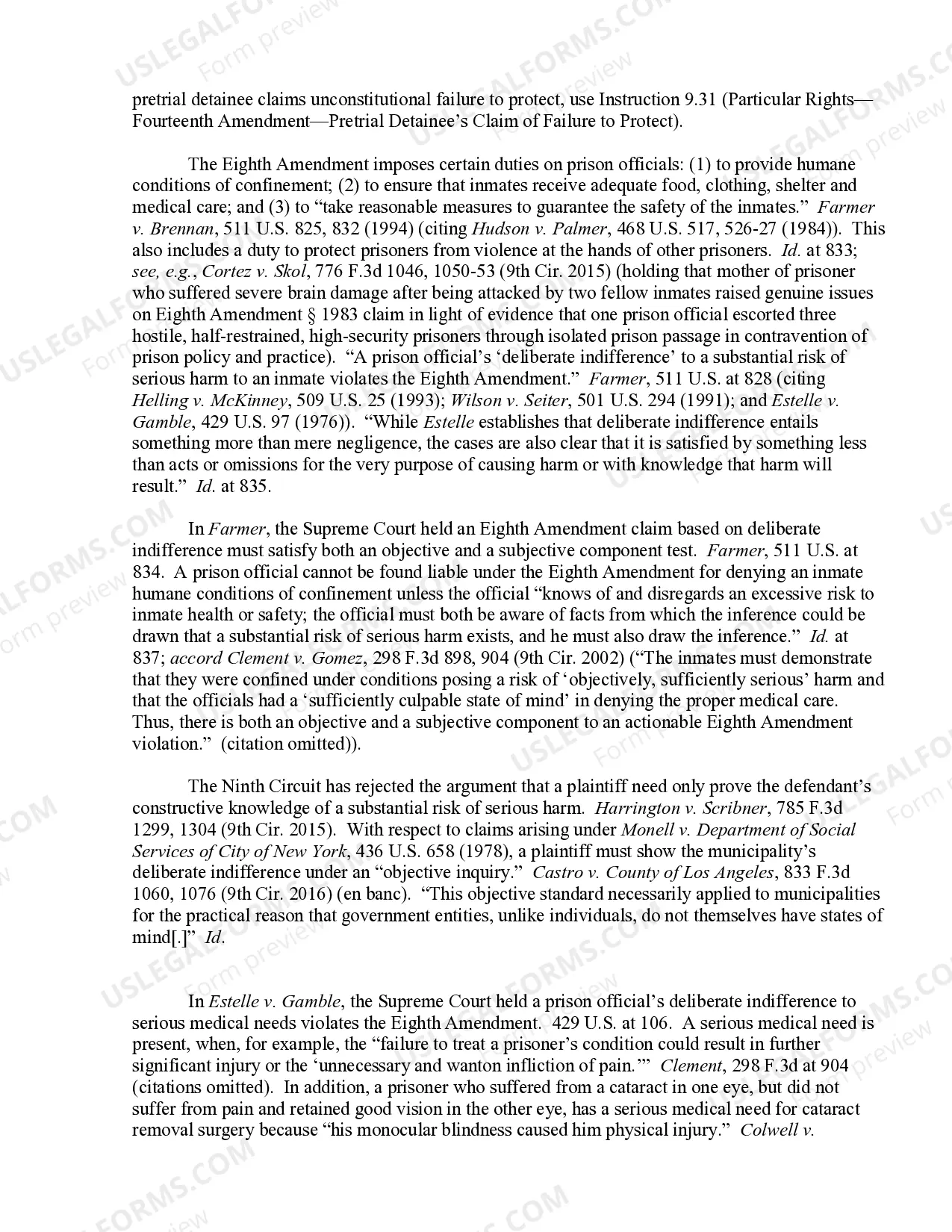
The Supreme Court has held that the Eighth Amendment's prohibition against cruel and unusual punishment requires the government to provide health care to prisoners,2 but has clarified that officials may be held liable for failing to provide adequate health care only if they are aware of, yet disregard, a ?substantial
The ACLU's National Prison Project fights to protect the Constitution's guarantee that individuals who are incarcerated retain basic rights, including the right to free speech, the freedom to practice their religion, and the right to access the courts and counsel. In Turner v.
(in order to find a violation of the Eighth Amendment, two requirements must be met: (1) viewed objectively, a deprivation must be ?sufficiently serious? to result in the denial of ?the minimal civilized measure of life's necessities?; and (2) prison officials must have a ?sufficiently culpable state of mind?, one of ?
For example, in Brown v. Plata, 563 U.S. 493 (2011), the Court stated: ?Prisoners retain the essence of human dignity inherent in all persons. Respect for that dignity animates the Eighth Amendment prohibition against cruel and unusual punishment.? And, in Atkins v.
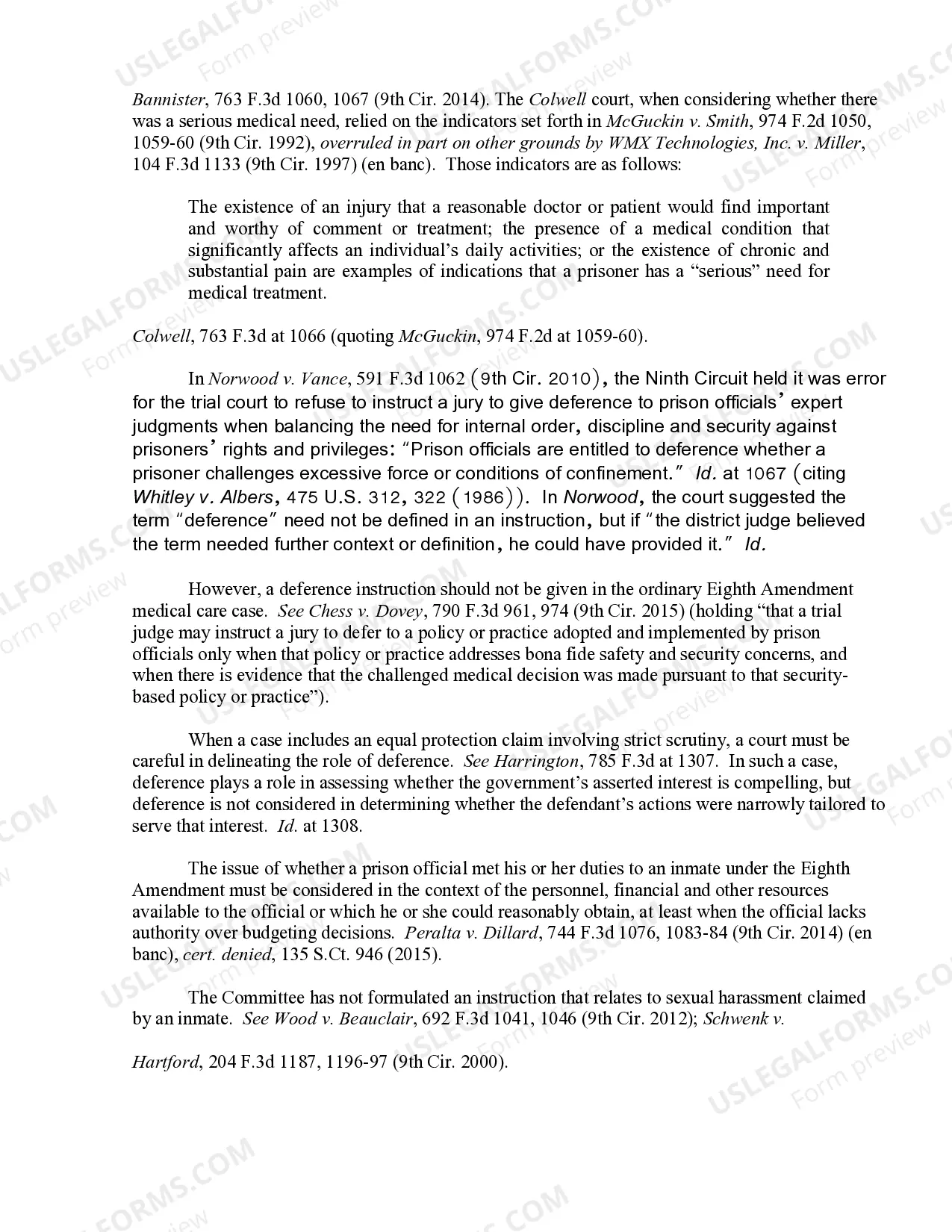
The Eighth Amendment of the Constitution protects prisoners from ?cruel and unusual punishment.?6 In 1976, the Supreme Court said in Estelle v. Gamble that a prison staff's ?deliberate indifference? to the ?serious medical needs? of prisoners is ?cruel and unusual punishment? forbidden by the Eighth Amendment.
SUPREME COURT DECISION LIMITS INMATES' RIGHT TO SUE OVER MEDICAL CARE. AN ANALYSIS OF THE 1976 U.S. SUPREME COURT DECISION IN ESTELLE V. GAMBLE, IN WHICH THE COURT HELD THAT AN INADVERTENT FAILURE TO PROVIDE MEDICAL CARE DOES NOT MEAN THAT EIGHTH AMENDMENT RIGHTS HAVE BEEN VIOLATED.