Sample Letter for Tax Exemption - Scheduled Meeting
What is this form?
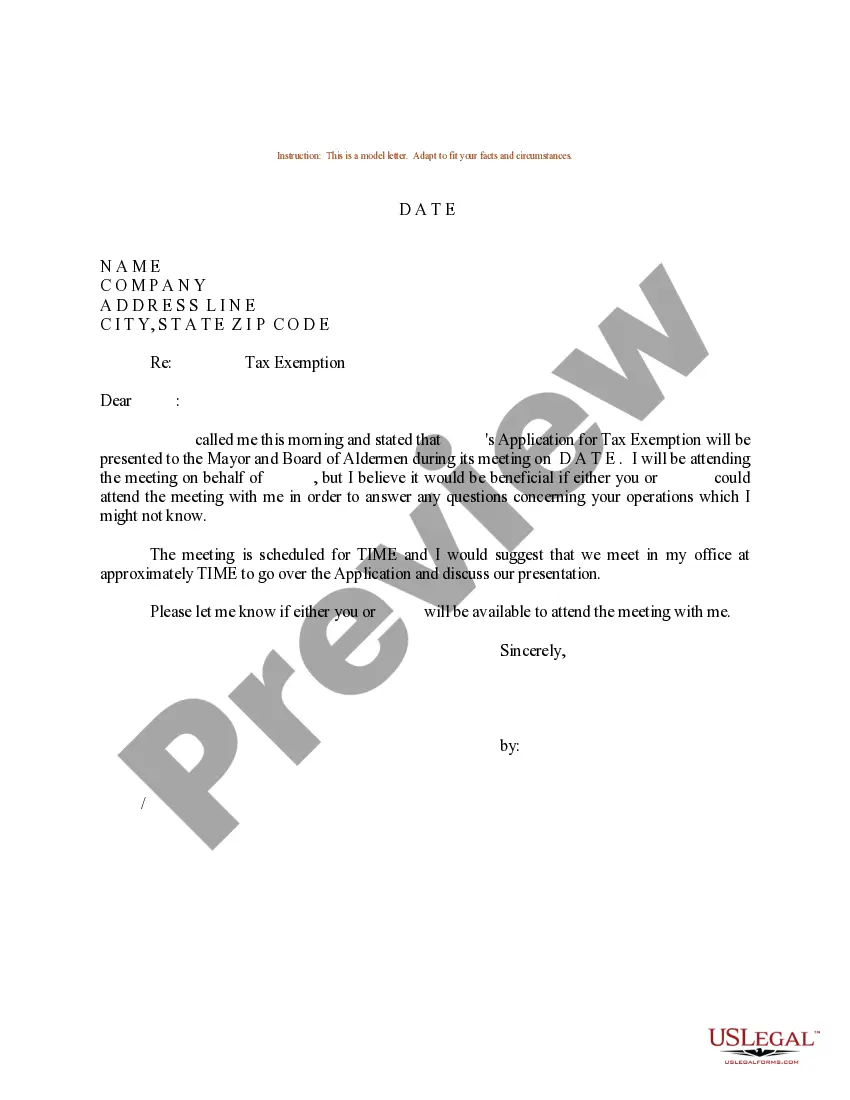
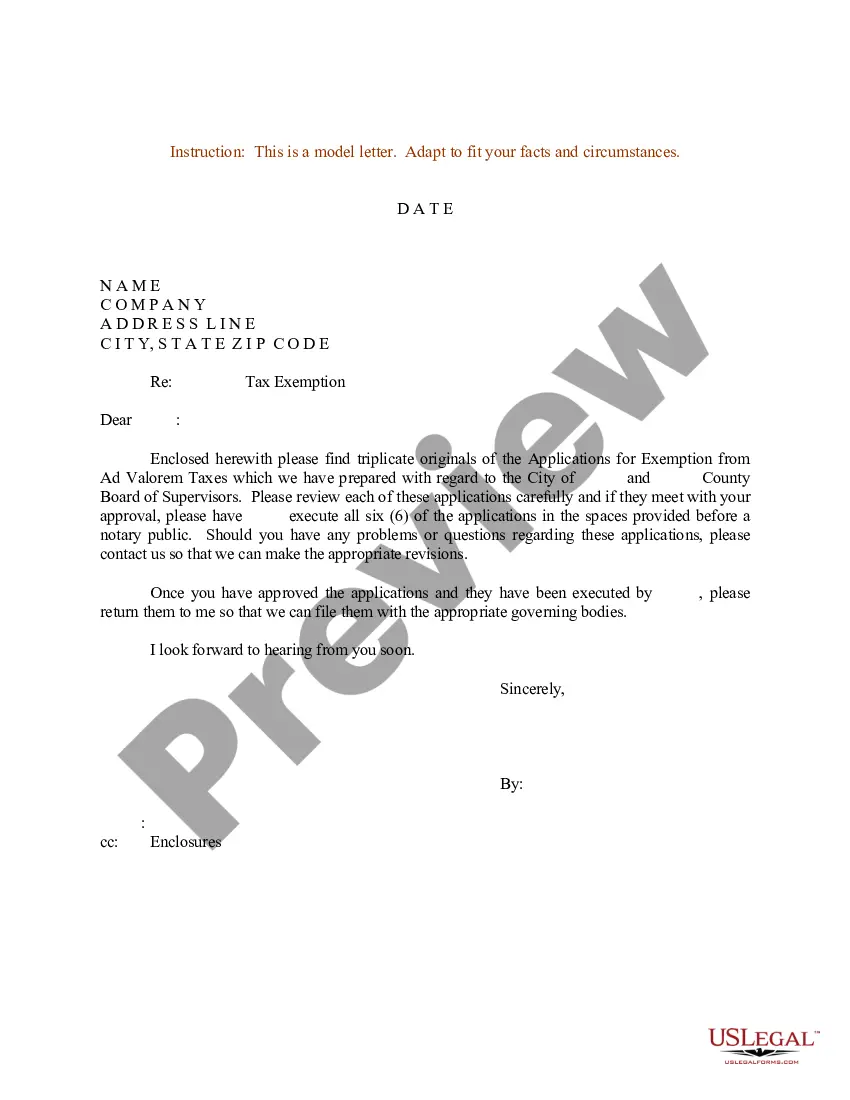
The Sample Letter for Tax Exemption - Scheduled Meeting is a formal document that notifies the recipient of a scheduled meeting regarding tax exemption matters. This letter serves as a specific communication tool distinct from general tax exemption applications or requests, focusing on arranging and confirming meeting details to discuss eligibility or application status.
Key components of this form
- Date of the letter
- Recipient's name and contact information
- Subject line indicating the purpose of the scheduled meeting
- Details regarding the meeting (date, time, location)
- Closing statement and sign-off
When to use this form
This form is useful when you need to formally inform an individual or organization about a scheduled meeting to discuss tax exemption issues. Common scenarios include meetings with tax advisors, government tax departments, or nonprofit representatives regarding eligibility requirements or specific case reviews.
Who can use this document
- Individuals seeking tax exemptions
- Representatives of nonprofit organizations
- Tax professionals and consultants
- Companies applying for tax-exempt status
Instructions for completing this form
- Enter the current date at the beginning of the letter.
- Fill in the recipient's name and contact information accurately.
- Specify the subject of the meeting in the subject line.
- Provide meeting details, including date, time, and location.
- Finish with a closing statement and your signature.
Notarization requirements for this form
This form does not typically require notarization to be legally valid. However, some jurisdictions or document types may still require it. US Legal Forms provides secure online notarization powered by Notarize, available 24/7 for added convenience.
Get your form ready online
Our built-in tools help you complete, sign, share, and store your documents in one place.
Make edits, fill in missing information, and update formatting in US Legal Forms—just like you would in MS Word.
Download a copy, print it, send it by email, or mail it via USPS—whatever works best for your next step.
Sign and collect signatures with our SignNow integration. Send to multiple recipients, set reminders, and more. Go Premium to unlock E-Sign.
If this form requires notarization, complete it online through a secure video call—no need to meet a notary in person or wait for an appointment.
We protect your documents and personal data by following strict security and privacy standards.

Make edits, fill in missing information, and update formatting in US Legal Forms—just like you would in MS Word.

Download a copy, print it, send it by email, or mail it via USPS—whatever works best for your next step.

Sign and collect signatures with our SignNow integration. Send to multiple recipients, set reminders, and more. Go Premium to unlock E-Sign.

If this form requires notarization, complete it online through a secure video call—no need to meet a notary in person or wait for an appointment.

We protect your documents and personal data by following strict security and privacy standards.
Mistakes to watch out for
- Failing to include the correct date and time of the meeting.
- Omitting important recipient information.
- Not specifying the purpose of the meeting clearly.
- Using an informal tone in a formal letter.
Advantages of online completion
- Convenient and easy to fill out from any device.
- Edit and customize the letter to fit your specific needs.
- Reliable access to legal templates created by licensed attorneys.
- Quick download for immediate use.
Summary of main points
- The Sample Letter for Tax Exemption is a vital tool for requesting tax exemptions for scheduled meetings.
- Providing clear and relevant information is crucial for approval of the request.
- This form can be utilized by various types of organizations seeking financial relief through tax exemptions.
Looking for another form?


Form popularity
FAQ
Exemption letter is an official document, which can be issued only by accredited certification body, for products, which do not fall under obligatory certification according to TR CU.Practically this document informs that obligatory certificate is not needed for exact type of product.
To be tax-exempt, an organization must be organized and operated exclusively for exempt purposes specified in section 501(c)(3) The organization must have a charitable purpose, be a religious group, considered a scientific organization, qualify as an educational organization or serve some literary purpose.
A tax exemption is the right to exclude certain amounts of income or activities from taxation. A few years ago, taxpayers were able to exclude $4,050 or more off their income by claiming personal exemptions. Personal exemptions no longer exist.
A tax exempt letter needs to include the name and contact information of the organization. Then establish the reason for the tax exempt status such as listing what the organization does that will profit the public.
A tax exempt organization may need a letter to confirm its tax-exempt status or to reflect a change in its name or address. If so, an organization may generally contact Customer Account Services by phone, letter, or fax to request an affirmation letter.
The IRS determination letter notifies a nonprofit organization that its application for federal tax exemption under Section 501(c)(3) has been approved.You are exempt from federal income tax. Your donors can claim their contributions to your organization on their annual tax returns.
Who qualifies for tax-exempt status?Some common examples of organizations that may qualify for tax-exempt status include child care, churches and religious, and social welfare organizations. Operating as one of the above organizations does not mean you are tax exempt. You must apply through the IRS for tax exemption.
The letter must mention if the application is approved or rejected. The letter must be short and precise. If there are any changes to be made, the letter must explain the changes in details. The letter must be addressed to the proper authority at the company.
To qualify to be exempt from sales tax, the items you buy must not be used in your normal course of business. For example, you can't buy copy paper and ask for a sales tax exemption, because you are using that copy paper in your office.