District of Columbia Guaranty Attachment to Lease for Guarantor or Cosigner
About this form
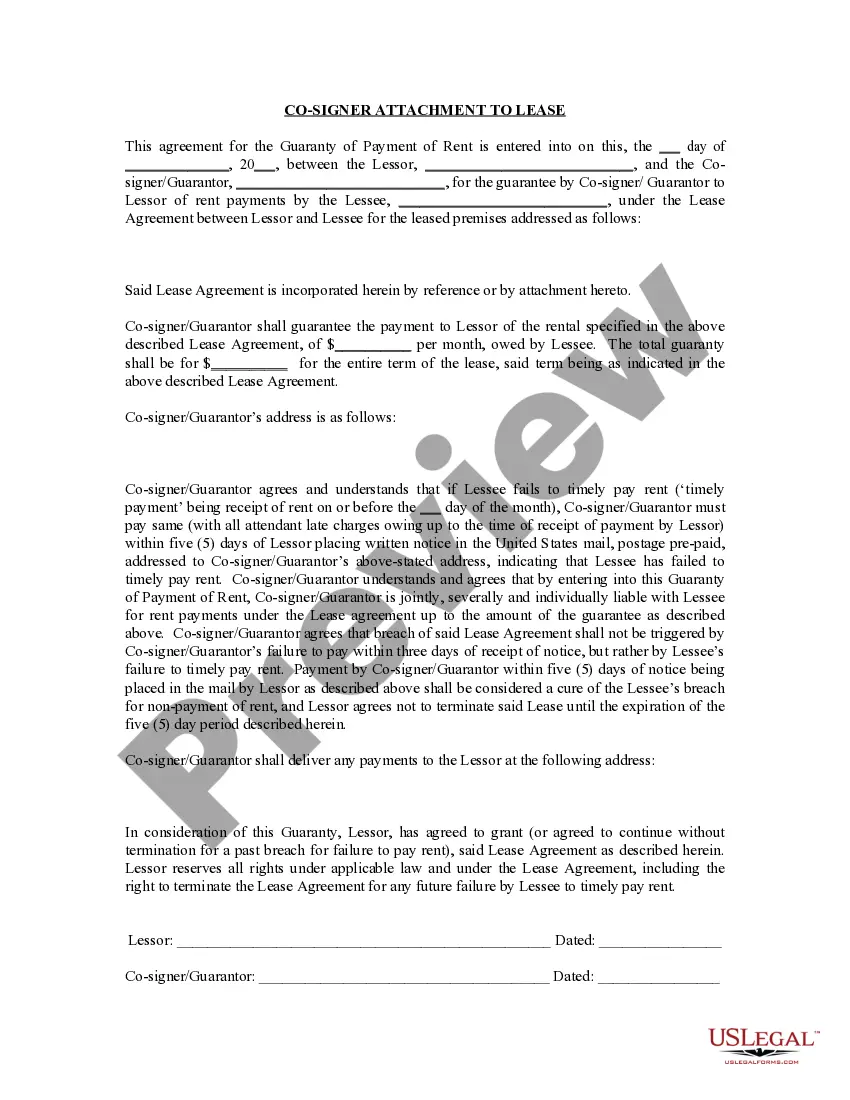
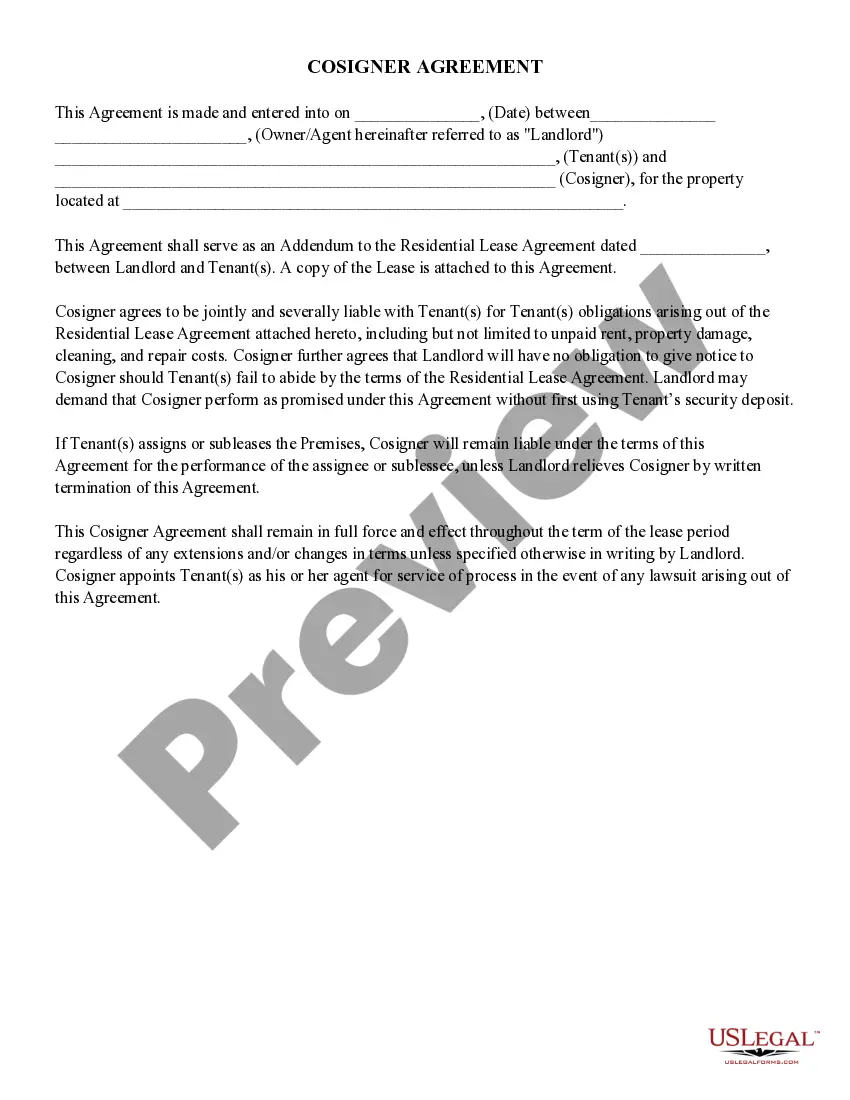
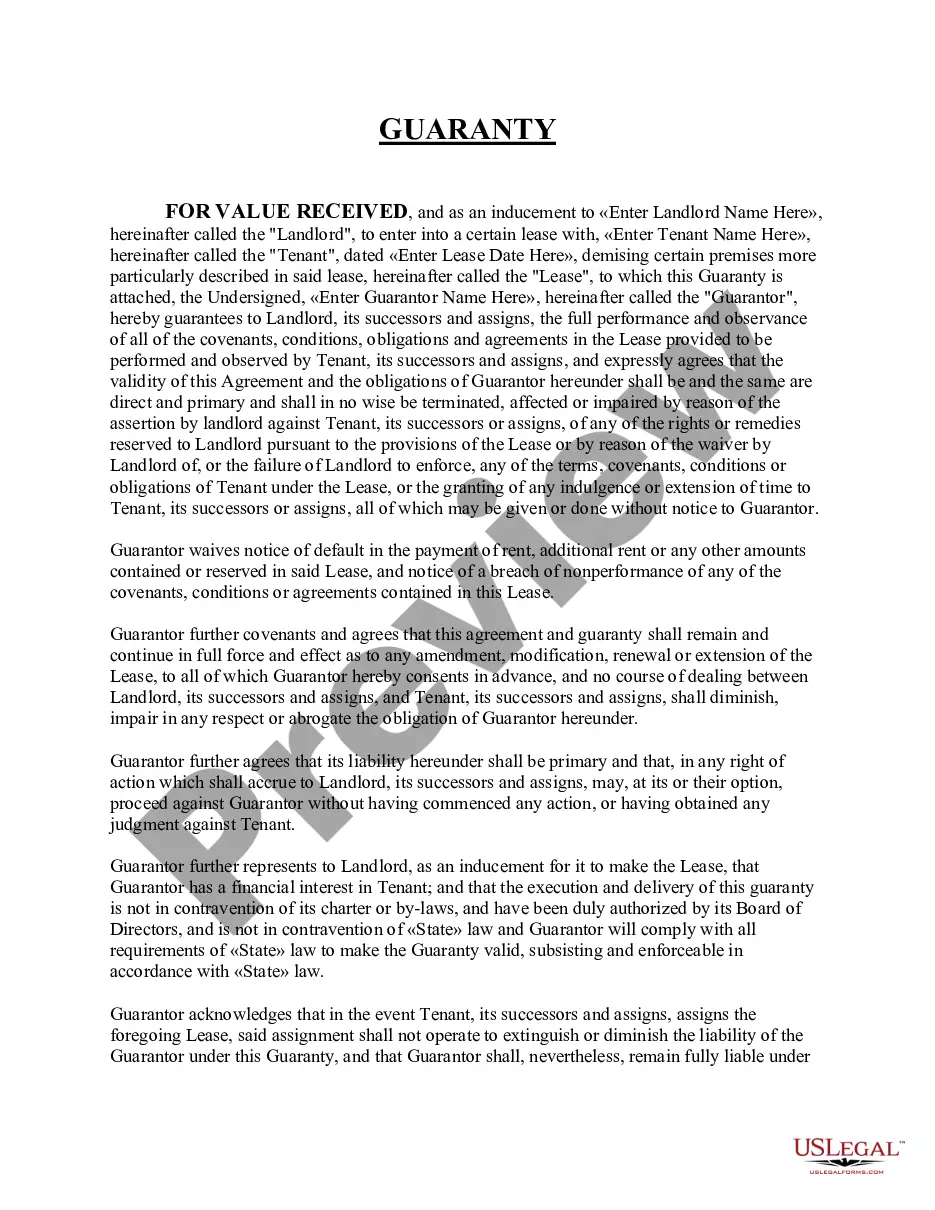
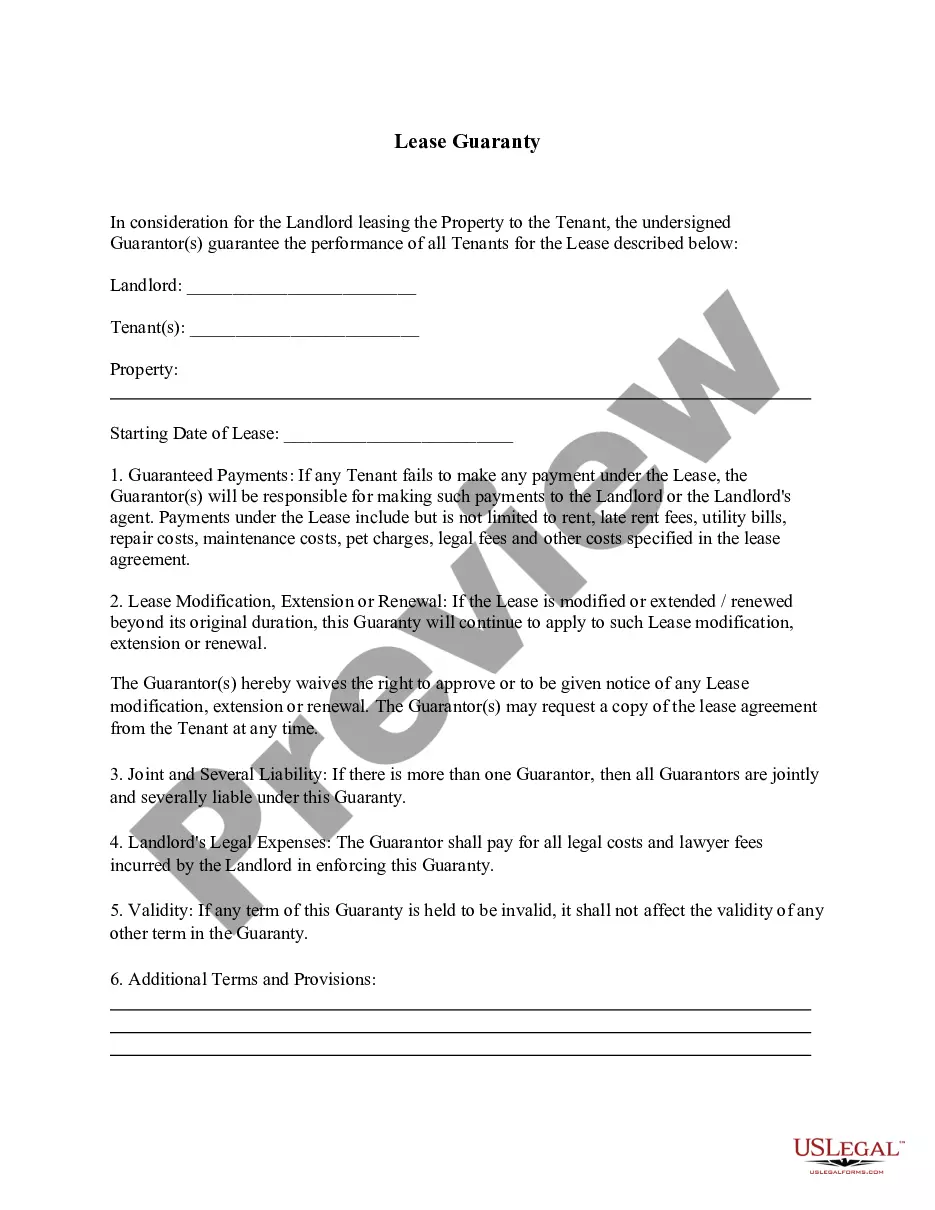
The Guaranty Attachment to Lease for Guarantor or Cosigner is a legal document that allows a third party to co-sign a lease agreement. This form obligates the guarantor to pay any unpaid rent if the tenant fails to meet their obligations under the lease. Unlike a regular lease, this attachment provides an additional layer of security for landlords, ensuring that rent will be covered even if the primary tenant cannot pay.
Key parts of this document
- Identification of the lessor and co-signer/guarantor.
- Date of signing the agreement.
- Legal obligations of the guarantor regarding unpaid rent.
When to use this document
This form is typically used in situations where a tenant may not meet the financial criteria to rent a property on their own. For example, it is beneficial when a tenant has a low credit score or insufficient income, and a parent or relative agrees to back the lease by guaranteeing payment. It can also be used in cases where a landlord requires additional security before signing a lease.
Intended users of this form
- Tenants requiring a co-signer for their lease.
- Parents or relatives willing to act as guarantors.
- Landlords seeking additional security for rental agreements.
Instructions for completing this form
- Identify and enter the names and addresses of the lessor and the co-signer/guarantor.
- Include the date of the agreement to document when it was signed.
- Ensure both parties review the obligations outlined in the form before signing.
Does this document require notarization?
This form usually doesn’t need to be notarized. However, local laws or specific transactions may require it. Our online notarization service, powered by Notarize, lets you complete it remotely through a secure video session, available 24/7.
Get your form ready online
Our built-in tools help you complete, sign, share, and store your documents in one place.
Make edits, fill in missing information, and update formatting in US Legal Forms—just like you would in MS Word.
Download a copy, print it, send it by email, or mail it via USPS—whatever works best for your next step.
Sign and collect signatures with our SignNow integration. Send to multiple recipients, set reminders, and more. Go Premium to unlock E-Sign.
If this form requires notarization, complete it online through a secure video call—no need to meet a notary in person or wait for an appointment.
We protect your documents and personal data by following strict security and privacy standards.

Make edits, fill in missing information, and update formatting in US Legal Forms—just like you would in MS Word.

Download a copy, print it, send it by email, or mail it via USPS—whatever works best for your next step.

Sign and collect signatures with our SignNow integration. Send to multiple recipients, set reminders, and more. Go Premium to unlock E-Sign.

If this form requires notarization, complete it online through a secure video call—no need to meet a notary in person or wait for an appointment.

We protect your documents and personal data by following strict security and privacy standards.
Common mistakes to avoid
- Failing to include the correct addresses for all parties involved.
- Not verifying that the guarantor understands their financial obligations.
- Not dating the document which can affect its enforceability.
Advantages of online completion
- Convenient access from anywhere, eliminating the need for in-person visits.
- Editable templates allow for easy customization to fit specific needs.
- Reliable legal language drafted by licensed attorneys ensures accurate representation of obligations.
What to keep in mind
- The Guaranty Attachment protects landlords by securing rent payment guarantees from a third party.
- Complete all sections to ensure the form is valid and enforceable.
- Review state-specific regulations when using this form across various jurisdictions.
Looking for another form?


Form popularity
FAQ
A guarantor usually needs to submit a completed guarantor form, proof of income, and identification documents. This paperwork helps landlords confirm the guarantor's financial capability to support the lease obligations. By utilizing the District of Columbia Guaranty Attachment to Lease for Guarantor or Cosigner, you ensure that all necessary legal documentation is in place for a smooth leasing process.
The requirements for a guarantor generally include being an individual with a stable income and good credit history. Many landlords also require the guarantor to reside in the same state or region where the property is located. To define these conditions accurately, using the District of Columbia Guaranty Attachment to Lease for Guarantor or Cosigner helps establish clear expectations between all parties.
Not every tenant on a lease requires a guarantor; it primarily depends on the individual’s financial situation and the landlord's requirements. However, landlords may prefer having a guarantor for tenants with limited credit history or lower income levels. The District of Columbia Guaranty Attachment to Lease for Guarantor or Cosigner serves as a valuable safeguard for landlords in such cases.
A guarantor typically needs to provide several documents including proof of income, a credit report, and identification. These documents verify the financial stability and identity of the guarantor, which is crucial for landlords. The District of Columbia Guaranty Attachment to Lease for Guarantor or Cosigner may require specific documentation to establish eligibility and credibility.
A guarantor form should include essential details such as the name and contact information of the guarantor, the tenant’s information, and the property address. Additionally, the document must outline the responsibilities and scope of the guarantor's financial commitment regarding the lease. By using the District of Columbia Guaranty Attachment to Lease for Guarantor or Cosigner, both parties can ensure clarity and legal standing.
The guarantor addendum to a lease is a crucial document that enables a guarantor or cosigner to take financial responsibility for the lease. This addendum outlines the obligations and responsibilities of the guarantor, ensuring that the landlord can collect rent or other fees if the tenant fails to fulfill their lease terms. Using the District of Columbia Guaranty Attachment to Lease for Guarantor or Cosigner provides clear specifications in this arrangement.
The guarantor form is typically filled out by the guarantor themselves, as it requires their financial information and consent to guarantee the lease. This document must be completed accurately to provide landlords in the District of Columbia with the necessary assurance as outlined in the District of Columbia Guaranty Attachment to Lease for Guarantor or Cosigner.
A guarantor form for an apartment is a document that formalizes the agreement between the landlord, tenant, and guarantor. It typically includes details such as the guarantor's financial information and acknowledges their responsibilities regarding the lease. This form is vital in the District of Columbia to ensure clear communication and understanding among all parties involved.
Landlords typically check several factors for a guarantor, including income, credit score, and employment history. They want to ensure that the guarantor can cover the financial commitment if the tenant defaults. These checks help streamline the rental process within the guidelines of the District of Columbia Guaranty Attachment to Lease for Guarantor or Cosigner.
The guarantor clause of a lease specifies the conditions under which a guarantor will be held accountable for the lease obligations. This clause usually describes actions such as payment of rent or handling property damage if the primary tenant fails to comply. Understanding this clause is essential, particularly in the District of Columbia, to ensure all parties are clear on their responsibilities.