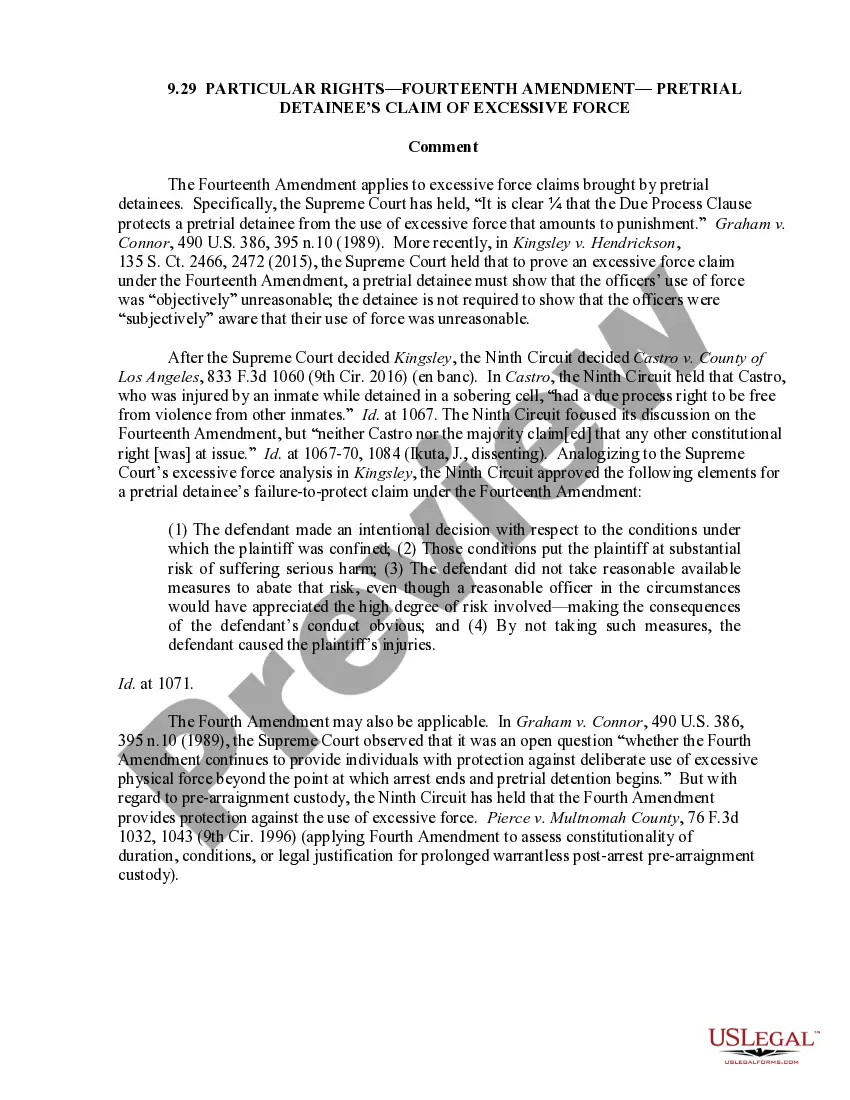
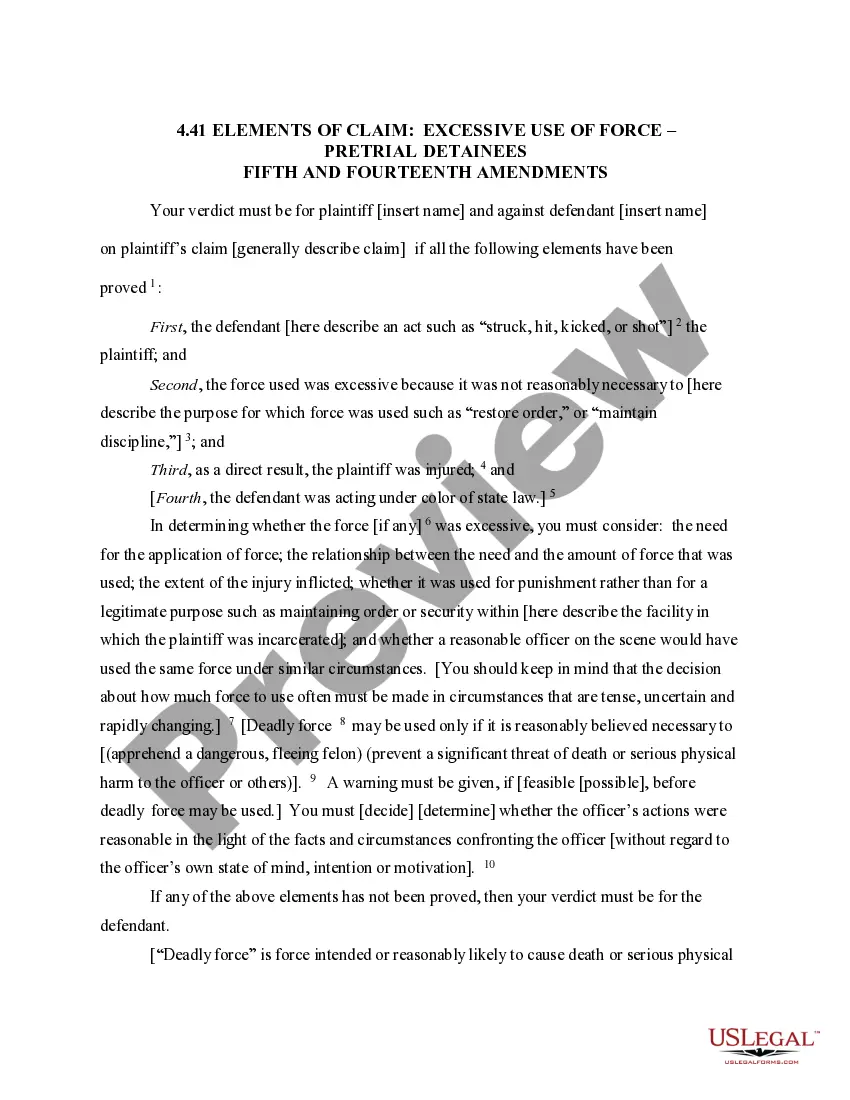
9.29 Particular Rights-Fourteenth Amendment-Pretrial Detainee's Claim of Excessive Force (Comment only)
Notarization requirements for this form
Notarization is generally not required for this form. However, certain states or situations might demand it. You can complete notarization online through US Legal Forms, powered by Notarize, using a verified video call available anytime.
Get your form ready online
Our built-in tools help you complete, sign, share, and store your documents in one place.
Make edits, fill in missing information, and update formatting in US Legal Forms—just like you would in MS Word.
Download a copy, print it, send it by email, or mail it via USPS—whatever works best for your next step.
Sign and collect signatures with our SignNow integration. Send to multiple recipients, set reminders, and more. Go Premium to unlock E-Sign.
If this form requires notarization, complete it online through a secure video call—no need to meet a notary in person or wait for an appointment.
We protect your documents and personal data by following strict security and privacy standards.

Make edits, fill in missing information, and update formatting in US Legal Forms—just like you would in MS Word.

Download a copy, print it, send it by email, or mail it via USPS—whatever works best for your next step.

Sign and collect signatures with our SignNow integration. Send to multiple recipients, set reminders, and more. Go Premium to unlock E-Sign.

If this form requires notarization, complete it online through a secure video call—no need to meet a notary in person or wait for an appointment.

We protect your documents and personal data by following strict security and privacy standards.
Looking for another form?
Form popularity
FAQ
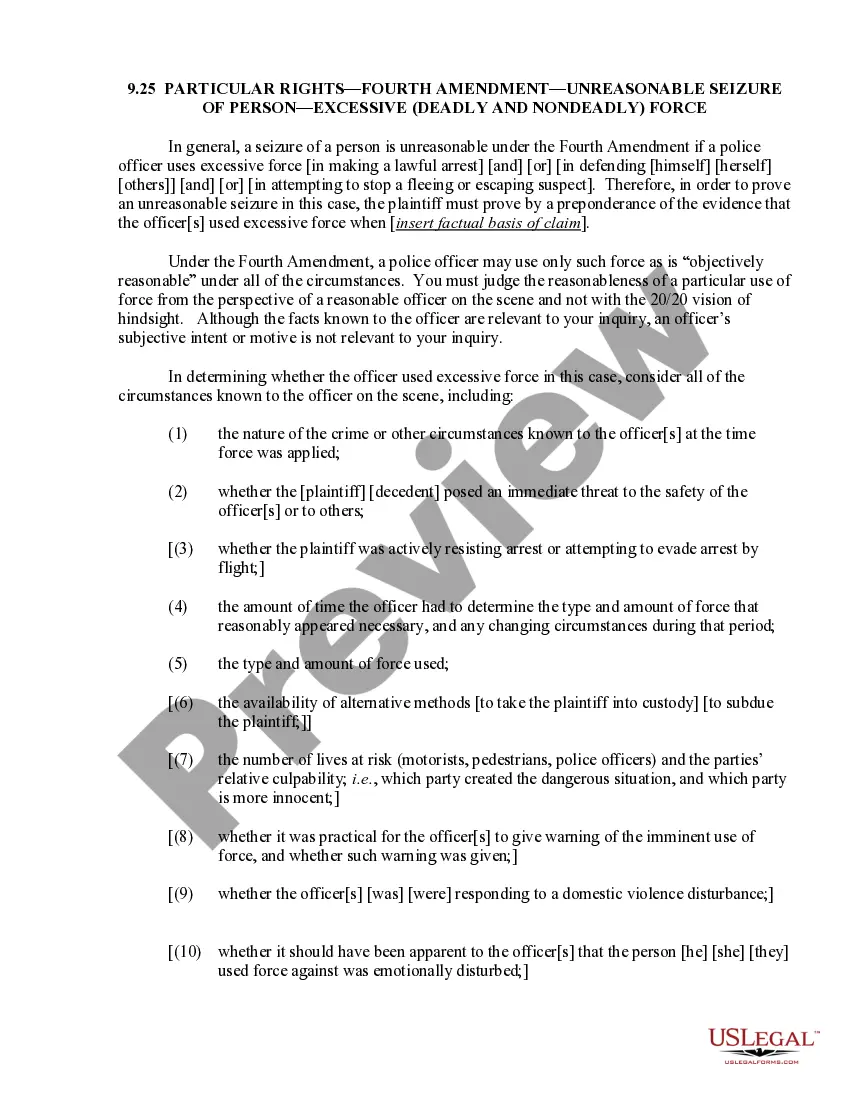
Overview of the Fourth Amendment Under the Fourth Amendment , anyone in the United States, citizen or not, has the constitutional right to be free from excessive force by police officers, sheriff's deputies, highway patrol officers, federal agents, and other law enforcement officials.
2466, 2472 (2015), the Supreme Court held that to prove an excessive force claim under the Fourteenth Amendment, a pretrial detainee must show that the officers' use of force was ?objectively? unreasonable; the detainee is not required to show that the officers were ?subjectively? aware that their use of force was
The 8th Amendment prohibits the government and court system from assessing excessive fines, The 5th Amendment protects all criminal defendants from being forced to incriminate themselves, and. The 14th Amendment addresses the right to certain due process protections in criminal court proceedings.
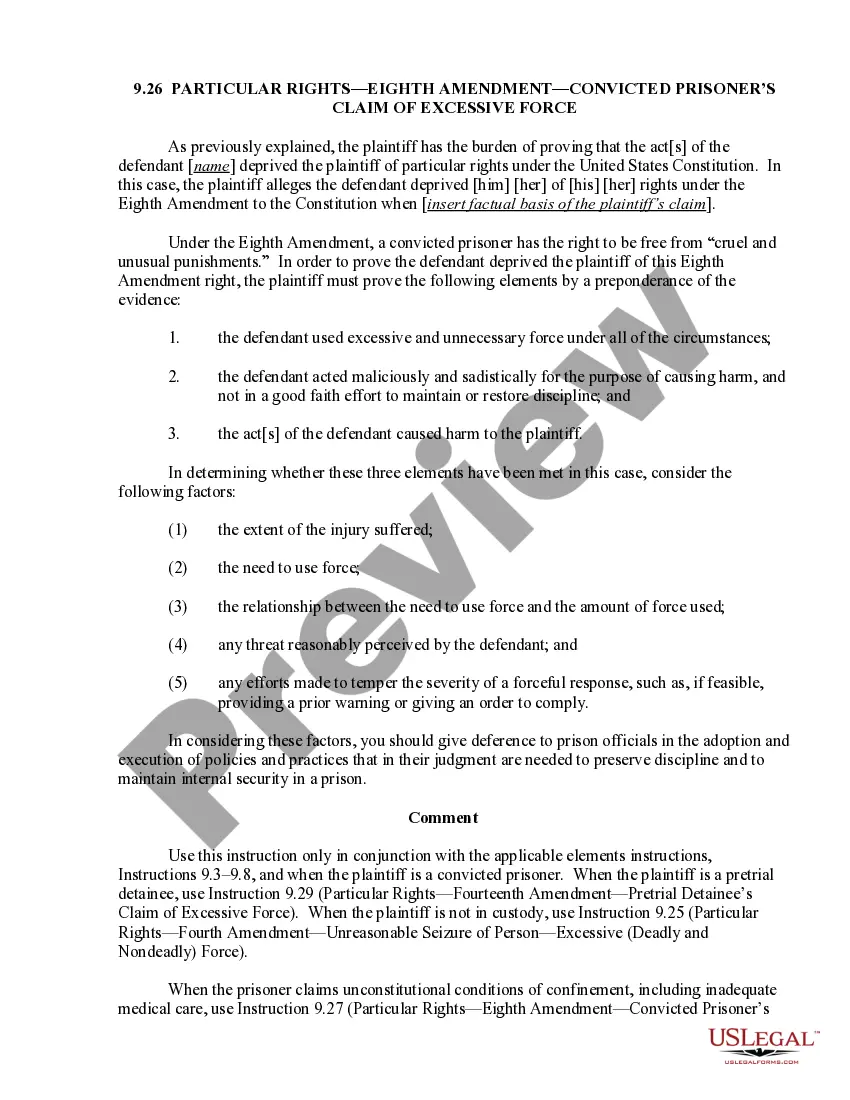
(citations omitted). Eighth Amendment does not protect pretrial detainees, however, because they have not been adjudged guilty of any crime.
Use of force on a pretrial detainee is judged under the Fourteenth Amendment's due process clause, which forbids the government to deprive persons of life, liberty, or property without due process of law. U.S. Const.
Under the Fourth Amendment , anyone in the United States, citizen or not, has the constitutional right to be free from excessive force by police officers, sheriff's deputies, highway patrol officers, federal agents, and other law enforcement officials.
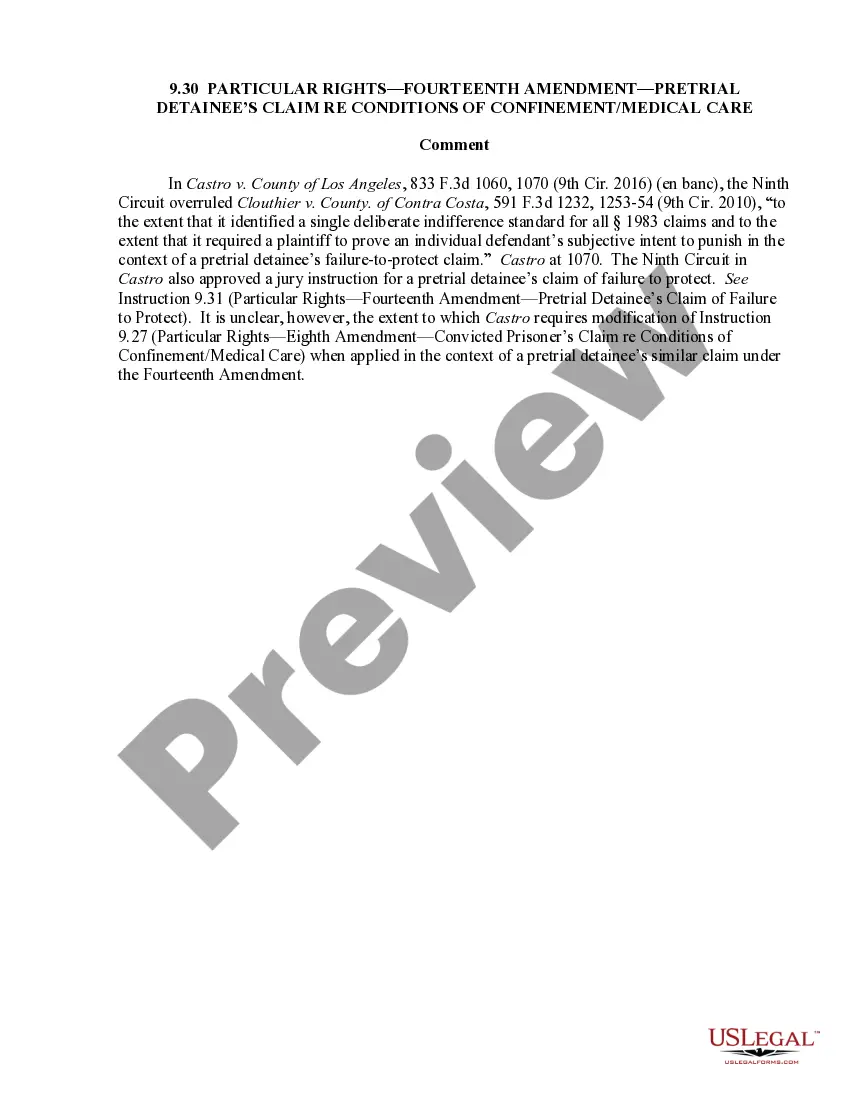
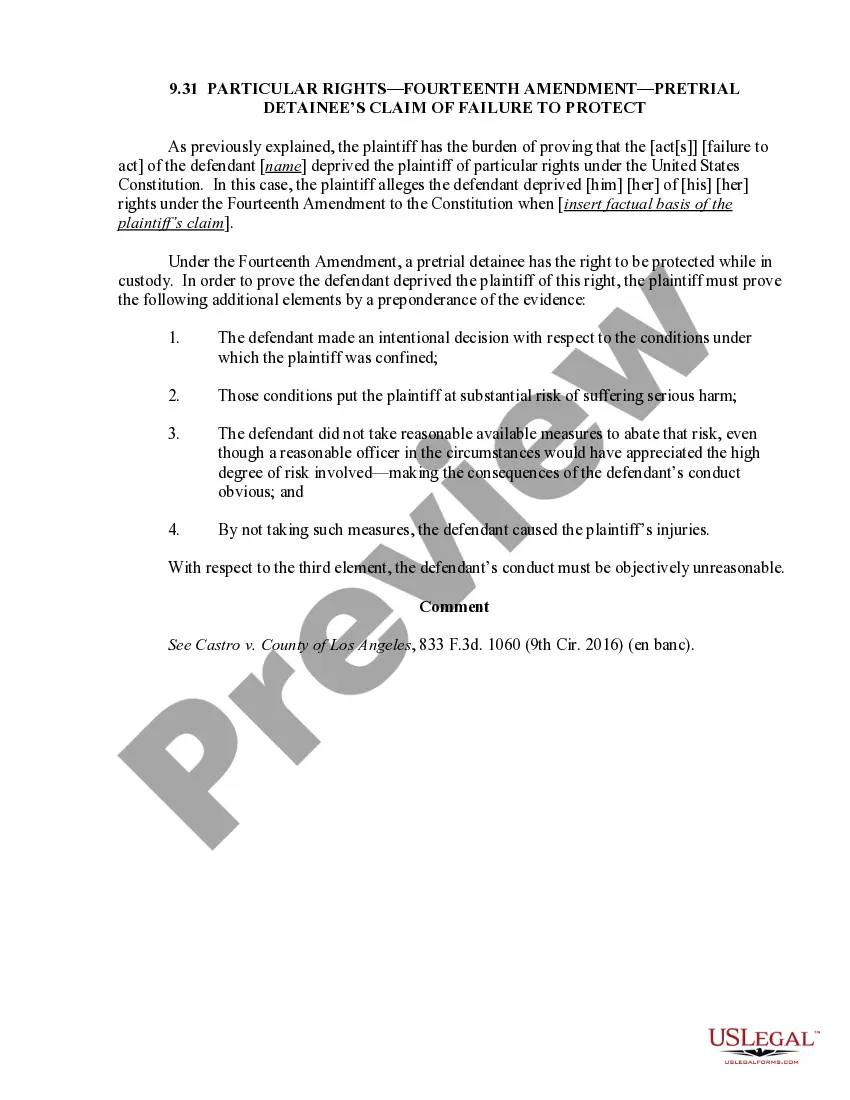
When a pre-trial detainee alleges excessive force against jail personnel, the standard for the use of force is governed under the Fourteenth Amendment.