Internship Programs under State and Federal Law
Understanding this form
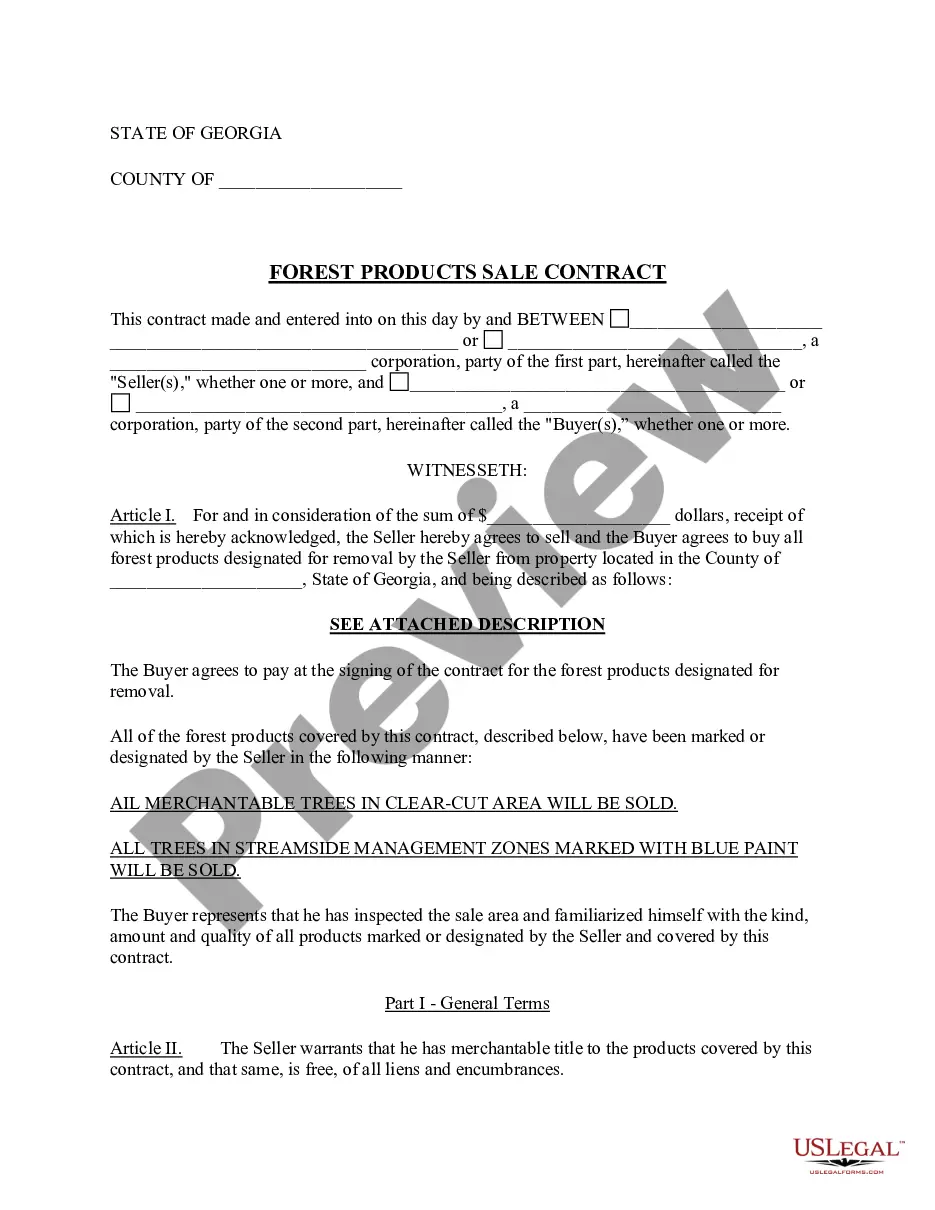
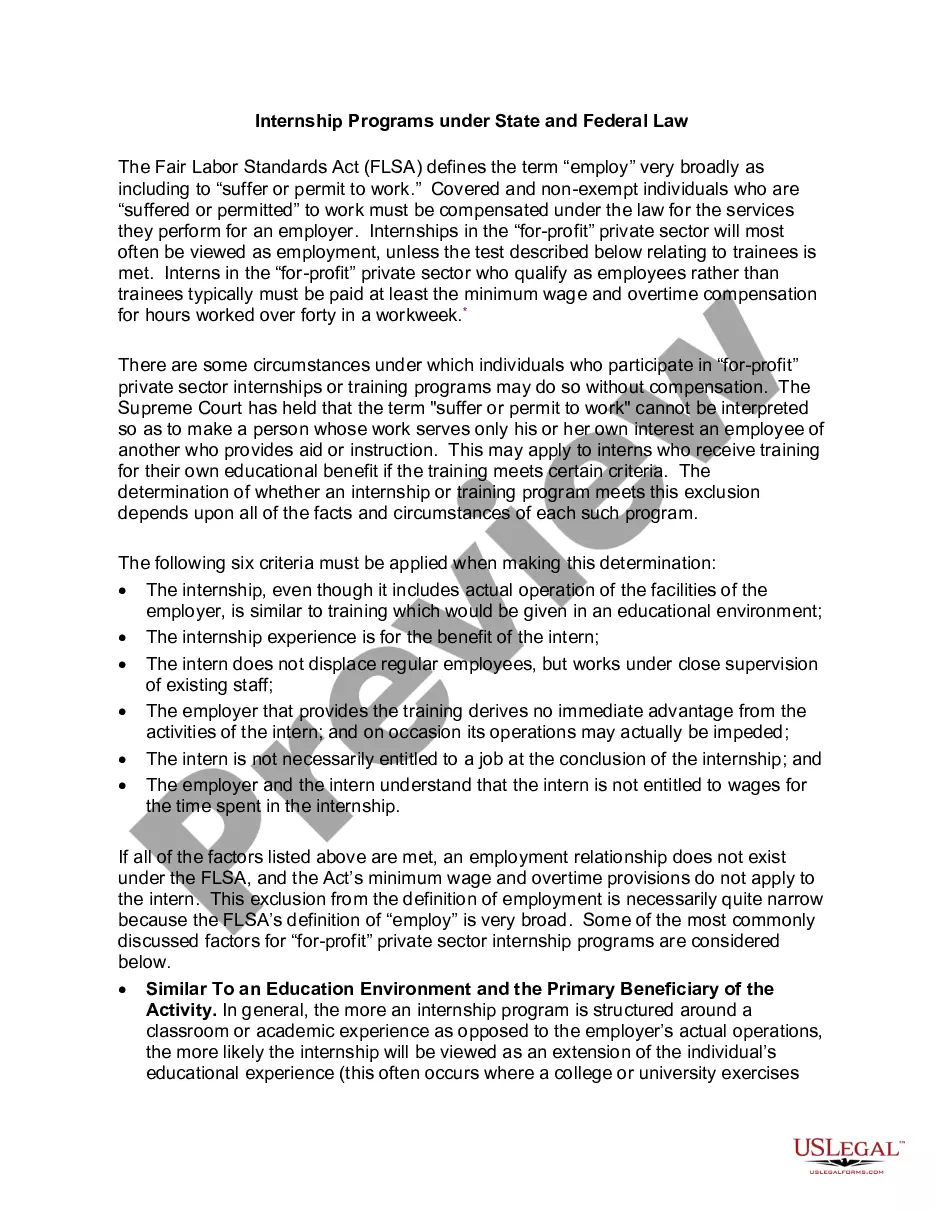
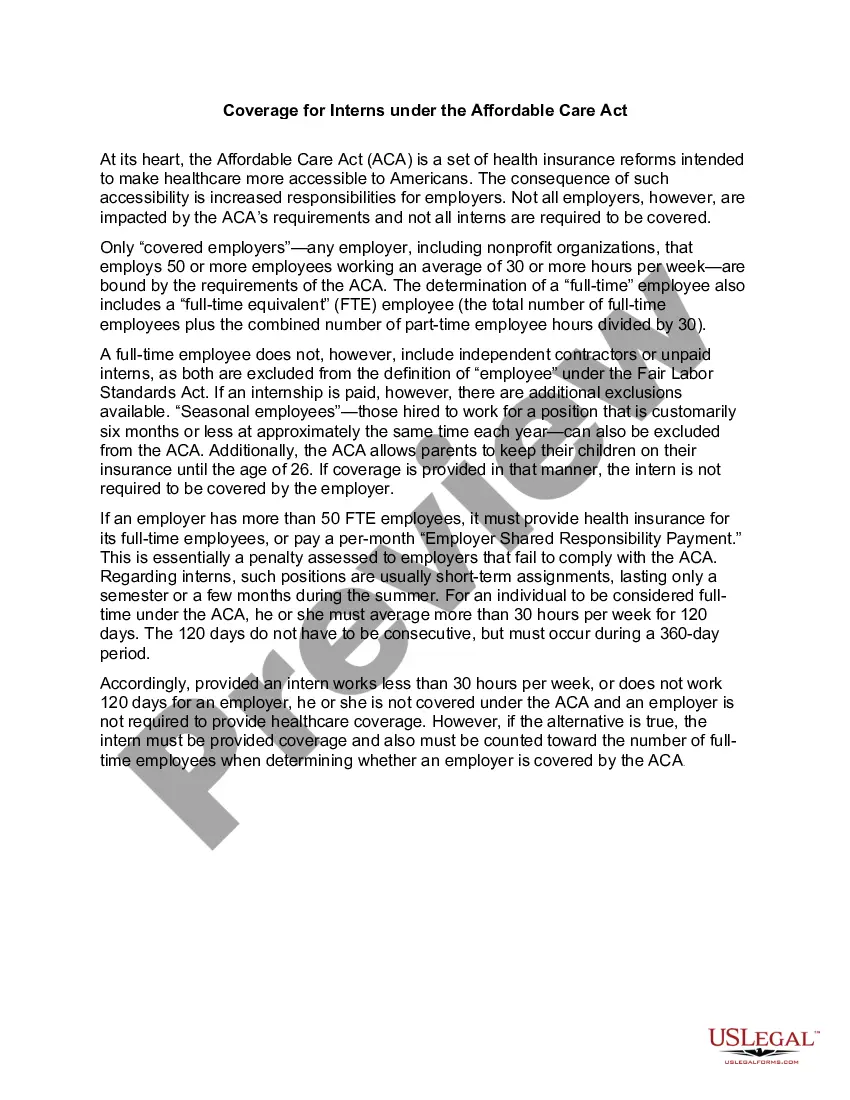
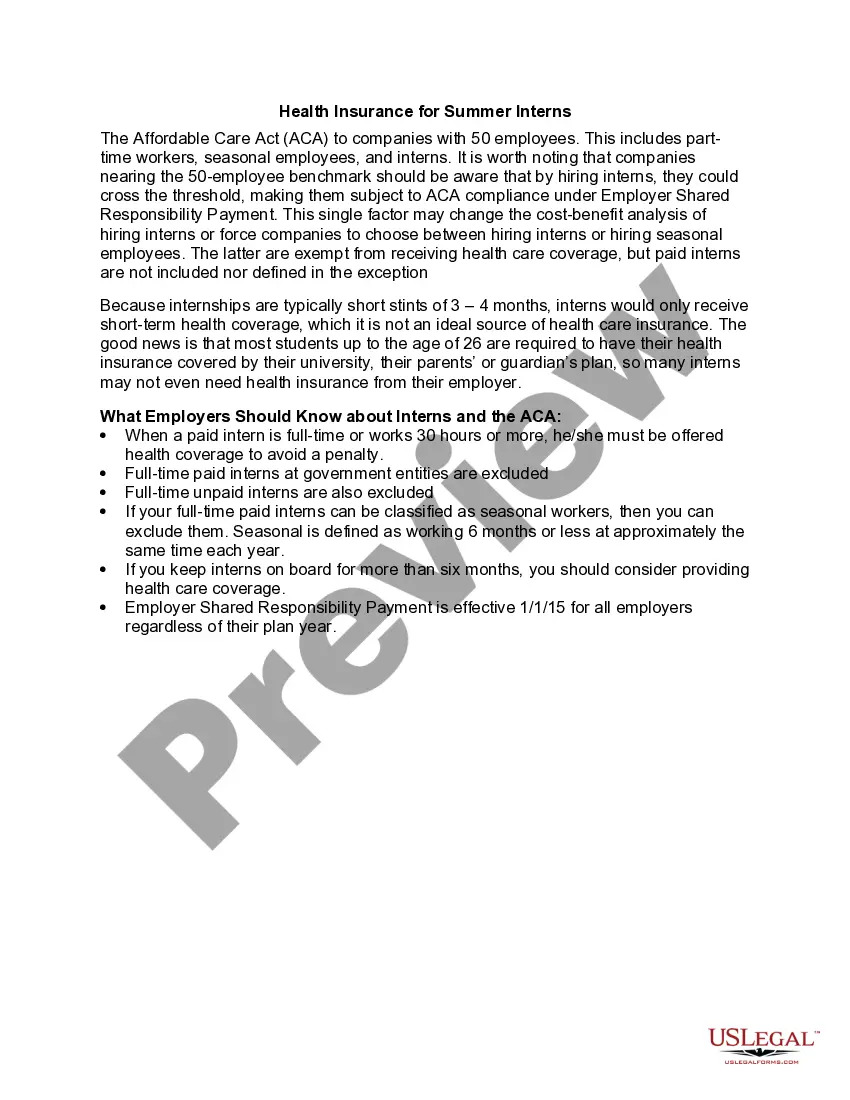
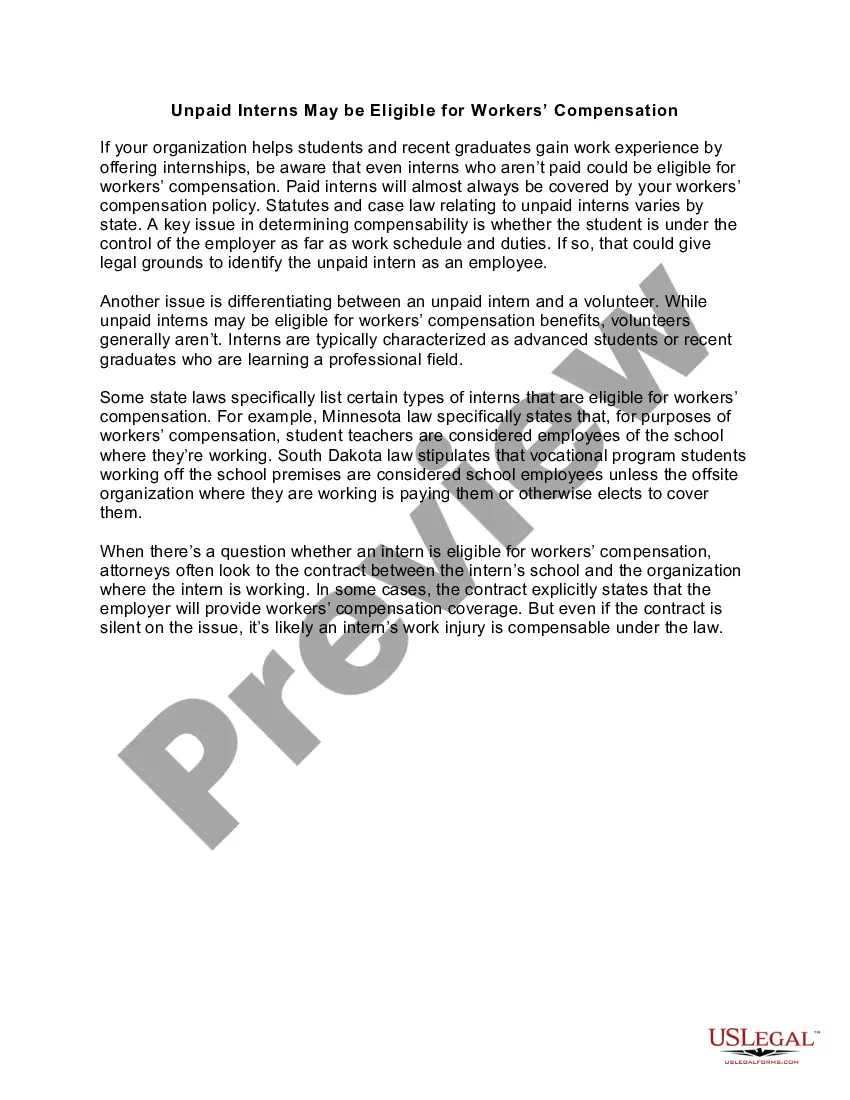
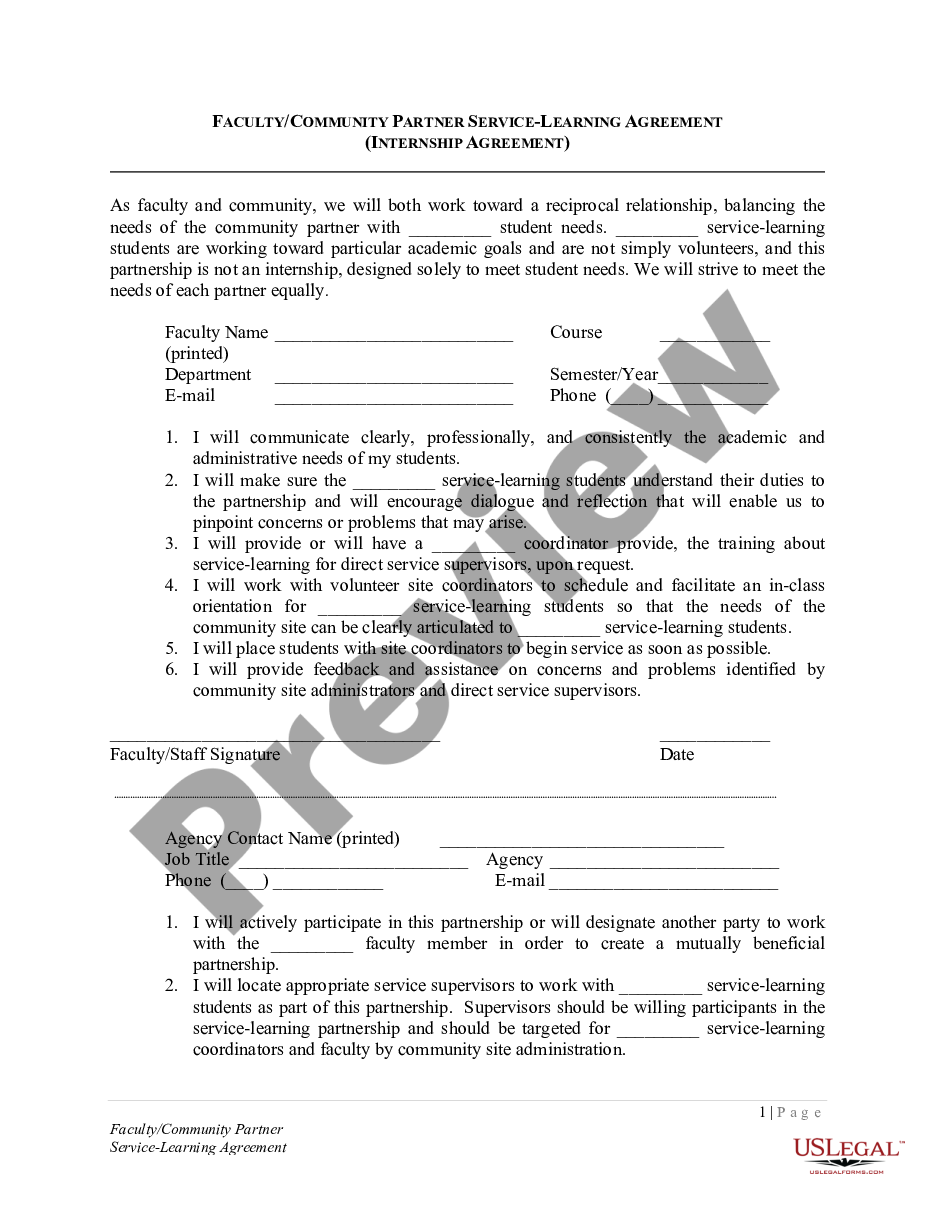
This form provides a summary of the legal framework surrounding internship programs under state and federal law. It describes the conditions under which interns may or may not be considered employees and the implications for compensation. This guidance is essential for both employers and interns to understand their rights and obligations in the internship context.
Key components of this form
- Summary of the Fair Labor Standards Act (FLSA) and its definitions.
- Criteria to determine if interns qualify as employees or trainees.
- Guidelines on compensation and minimum wage requirements.
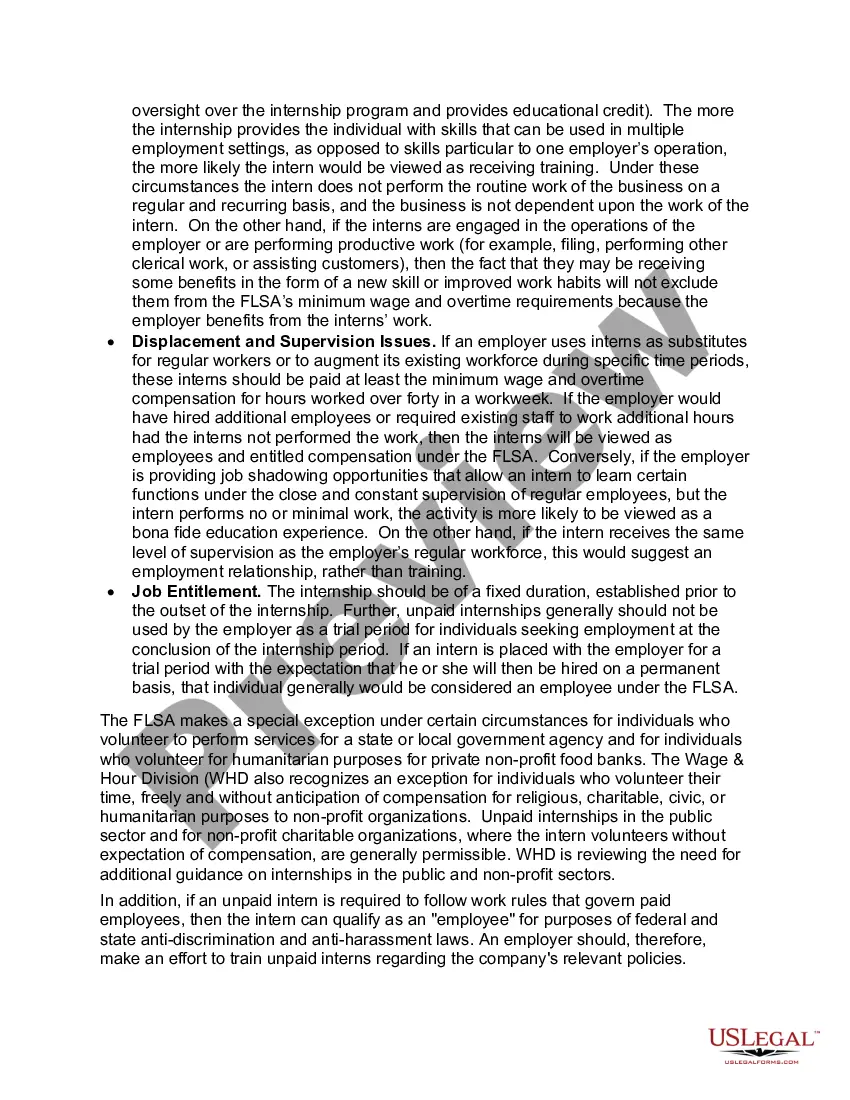
- Factors affecting the classification of internships in the for-profit sector.
- Legal exceptions for unpaid internships in governmental and non-profit sectors.
When this form is needed
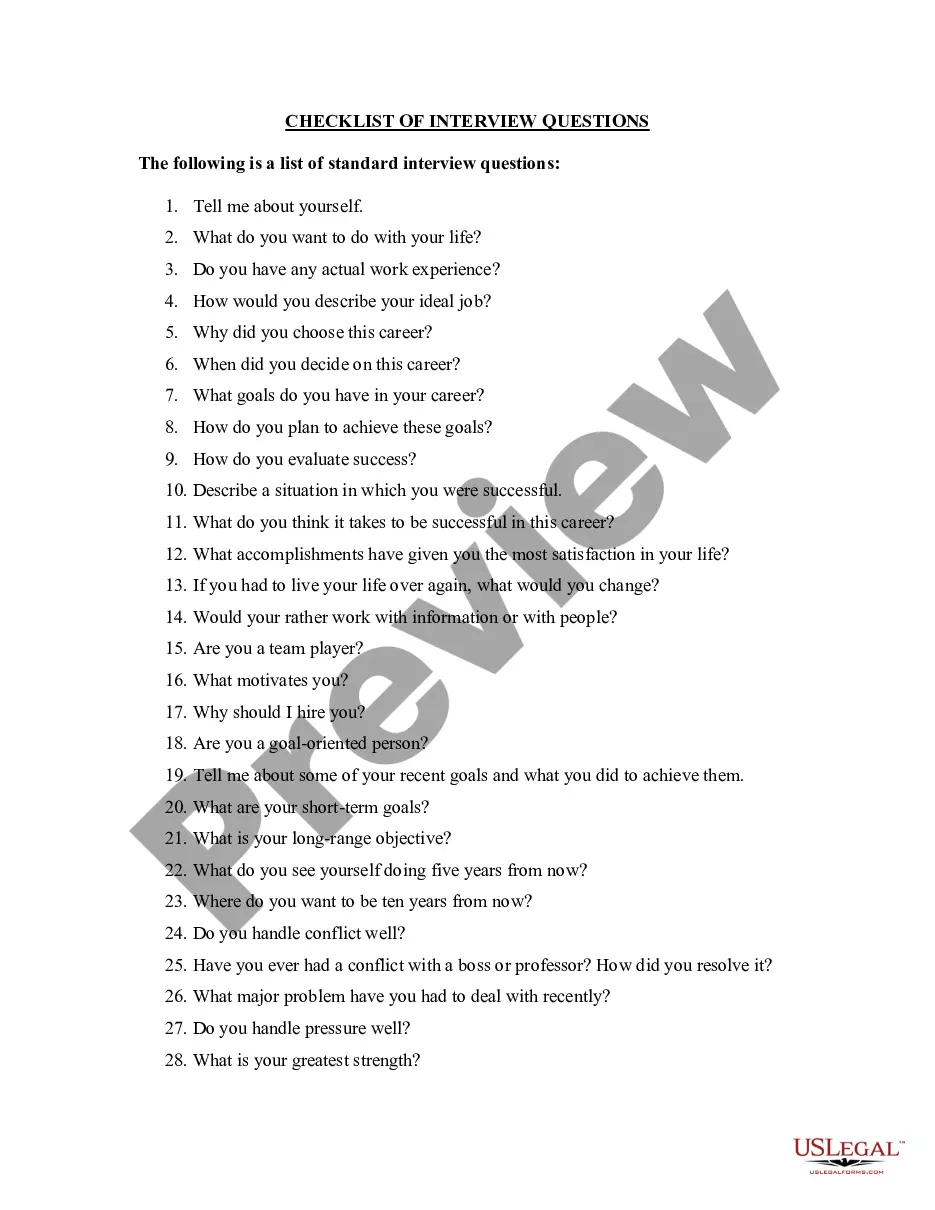
You should use this form when establishing or participating in an internship program, particularly in the for-profit sector. It is crucial for employers to understand the legal criteria that dictate whether an internship qualifies for compensation under the FLSA. Similarly, interns can use this form to assess their rights regarding compensation and workplace treatment during their internship.
Who needs this form
- Employers looking to set up compliant internship programs.
- Human resources professionals managing internship recruitment and training.
- Students and potential interns seeking to understand their legal standing.
- Legal professionals advising clients on internship policies.
Steps to complete this form
- Read the summary of state and federal internship laws provided in the form.
- Determine the criteria applicable to your internship program based on the guidelines.
- Assess whether the intern qualifies as an employee or a trainee under the FLSA.
- Document the understanding between employer and intern regarding compensation.
- Include any additional state-specific requirements if applicable.
Notarization requirements for this form
Notarization is not commonly needed for this form. However, certain documents or local rules may make it necessary. Our notarization service, powered by Notarize, allows you to finalize it securely online anytime, day or night.
Get your form ready online
Our built-in tools help you complete, sign, share, and store your documents in one place.
Make edits, fill in missing information, and update formatting in US Legal Forms—just like you would in MS Word.
Download a copy, print it, send it by email, or mail it via USPS—whatever works best for your next step.
Sign and collect signatures with our SignNow integration. Send to multiple recipients, set reminders, and more. Go Premium to unlock E-Sign.
If this form requires notarization, complete it online through a secure video call—no need to meet a notary in person or wait for an appointment.
We protect your documents and personal data by following strict security and privacy standards.

Make edits, fill in missing information, and update formatting in US Legal Forms—just like you would in MS Word.

Download a copy, print it, send it by email, or mail it via USPS—whatever works best for your next step.

Sign and collect signatures with our SignNow integration. Send to multiple recipients, set reminders, and more. Go Premium to unlock E-Sign.

If this form requires notarization, complete it online through a secure video call—no need to meet a notary in person or wait for an appointment.

We protect your documents and personal data by following strict security and privacy standards.
Common mistakes to avoid
- Failing to understand the distinction between employees and trainees.
- Not properly documenting the internship agreement.
- Using unpaid internships as trial periods for potential employment.
- Neglecting to evaluate state-specific legal requirements.
Why complete this form online
- Convenient access to the latest legal information regarding internships.
- Editability allows tailoring to meet specific needs or local laws.
- Reliable source drafted by licensed attorneys, ensuring compliance with current laws.
Legal use & context
- Interns must understand their rights under the FLSA to avoid exploitation.
- Employers need to ensure that internship programs comply with wage and hour laws.
- The guidelines help establish clear expectations between interns and employers.
What to keep in mind
- Unpaid internships in for-profit sectors often require careful legal analysis.
- Employers should focus on the training aspect to justify unpaid internships.
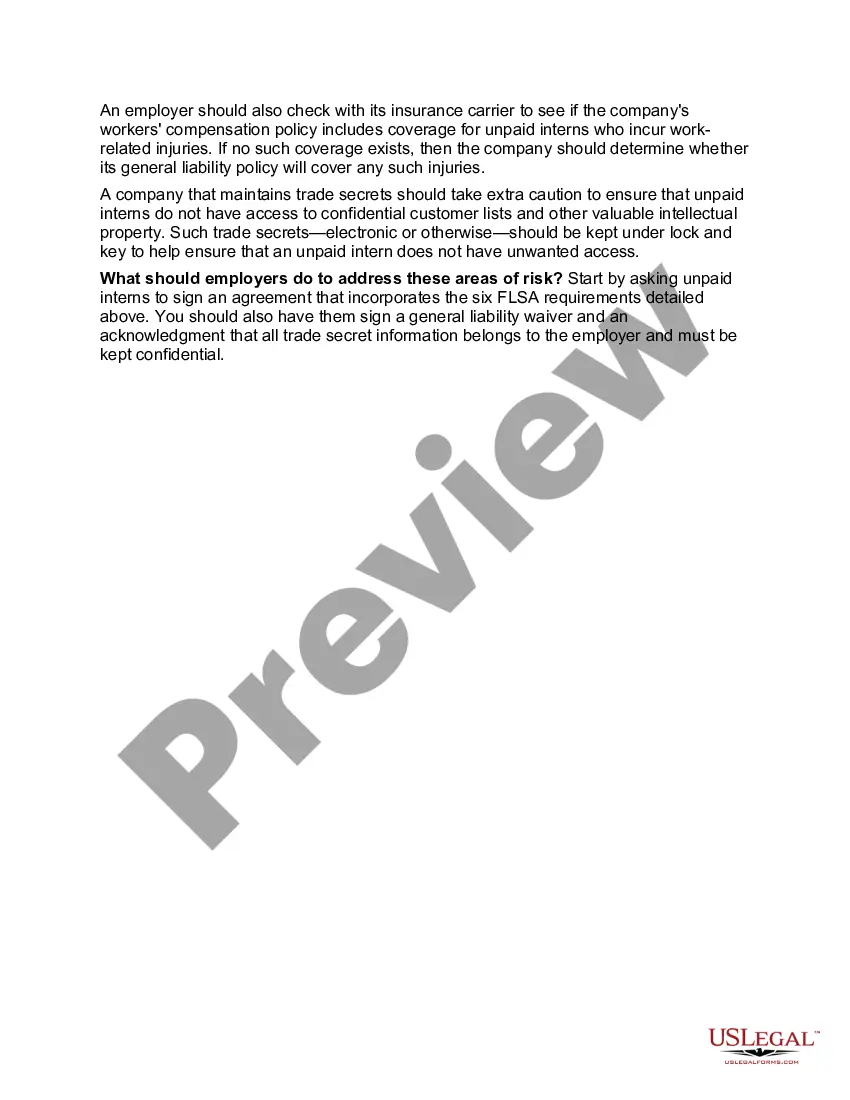
- Clear agreements ensure mutual understanding and compliance with legal standards.
Looking for another form?


Form popularity
FAQ
Some employees are exempt from this requirement of the FLSA. Generally, it is difficult to establish that an intern is exempt from overtime because interns do not exercise discretion and independent judgment in performing their job duties, which is the critical requirement to be exempt.
The Employment Act covers every employee who is engaged under a contract of service, including interns.The employer must pay the intern for the extra hours of work or for working on his rest days or public holidays.
All employees under a contract of service with an employer are covered, but there are exceptions. For example, Part IV of the Act which provides for rest days, hours of work and other conditions of service, does not cover managers or executives.
Congressional interns work in the offices of state representatives and members of the Senate.By observing Congress firsthand, they develop political awareness and job skills. Congressional interns provide administrative assistance to members of Congress and their staff, attend meetings and interface with constituents.
The Employment Act covers every employee who is engaged under a contract of service, including interns.The employer must pay the intern for the extra hours of work or for working on his rest days or public holidays. The rate for overtime work should be no less than one and a half times his hourly basic rate of pay.
Establish Clear Goals. Communicate Goals & Expectations. Plan Your Interns' Experience Before Their First Day. Get The Obligatory Paperwork Out of the Way. Make Day One Memorable. Get your Team Involved. Don't Forget to Wrap It Up.
Unless all of the following criteria are met, the intern is legally an employee, who must be paid the minimum wage, earn overtime, and receive all of the other protections guaranteed by state and federal employment laws: Interns cannot displace regular employees.
Your Job or Internship Offer Got RescindedIf you accepted a paid job or internship offer, but your offer was rescinded specifically because of COVID-19, then you can qualify for unemployment benefits. You'll most likely have to show proof of your offer and formal notice of rescission to qualify.
Unless all of the following criteria are met, the intern is legally an employee, who must be paid the minimum wage, earn overtime, and receive all of the other protections guaranteed by state and federal employment laws: Interns cannot displace regular employees.