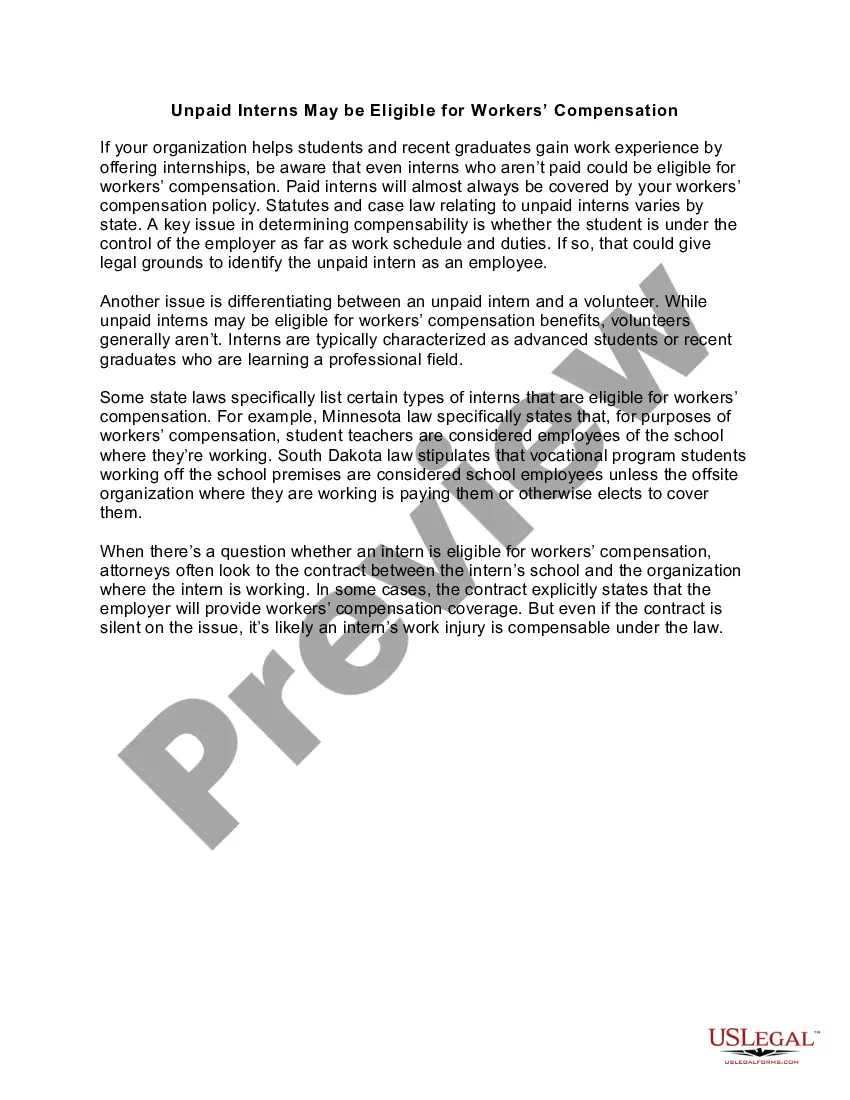
Unpaid Interns May be Eligible for Worker's Compensation
What this document covers
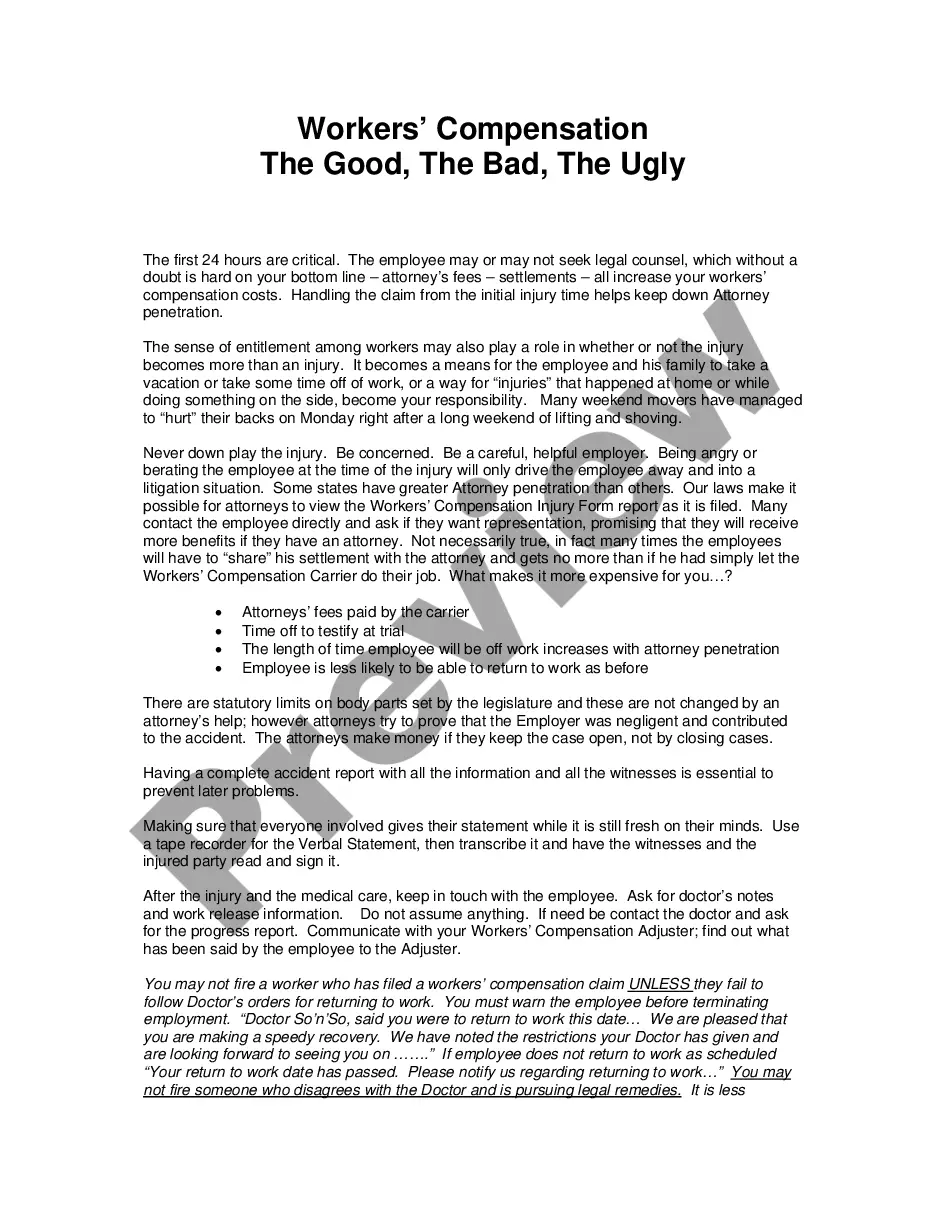
The "Unpaid Interns May be Eligible for Worker's Compensation" form provides employers with crucial information regarding the eligibility of unpaid interns for workers' compensation benefits. This form outlines the differences between unpaid interns and volunteers, and highlights how state laws may impact eligibility. By understanding these distinctions, organizations can better navigate their responsibilities towards interns, ensuring compliance with relevant statutes and protecting both parties.
Form components explained
- Eligibility criteria for unpaid interns regarding workers' compensation.
- Definitions of unpaid interns versus volunteers.
- State-specific laws that affect workers' compensation for interns.
- Guidelines on determining employer control over interns.
- Contracts and agreements affecting workers' compensation coverage.
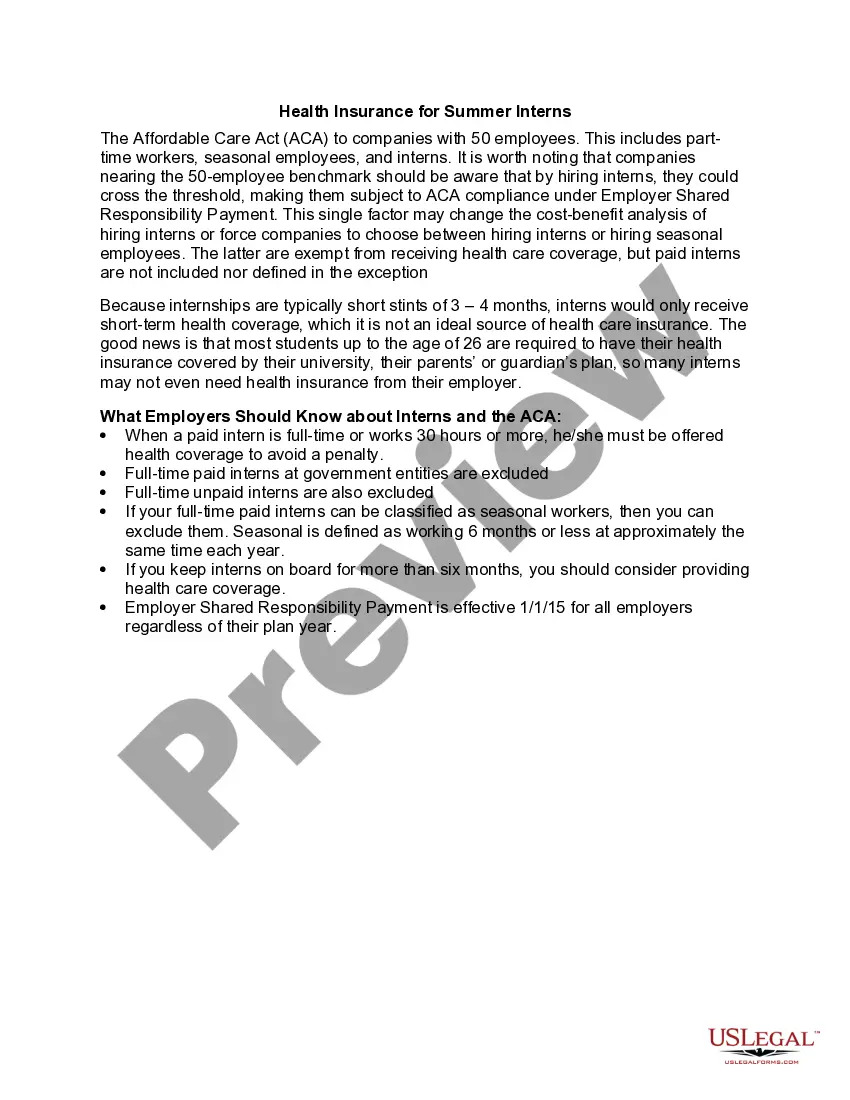
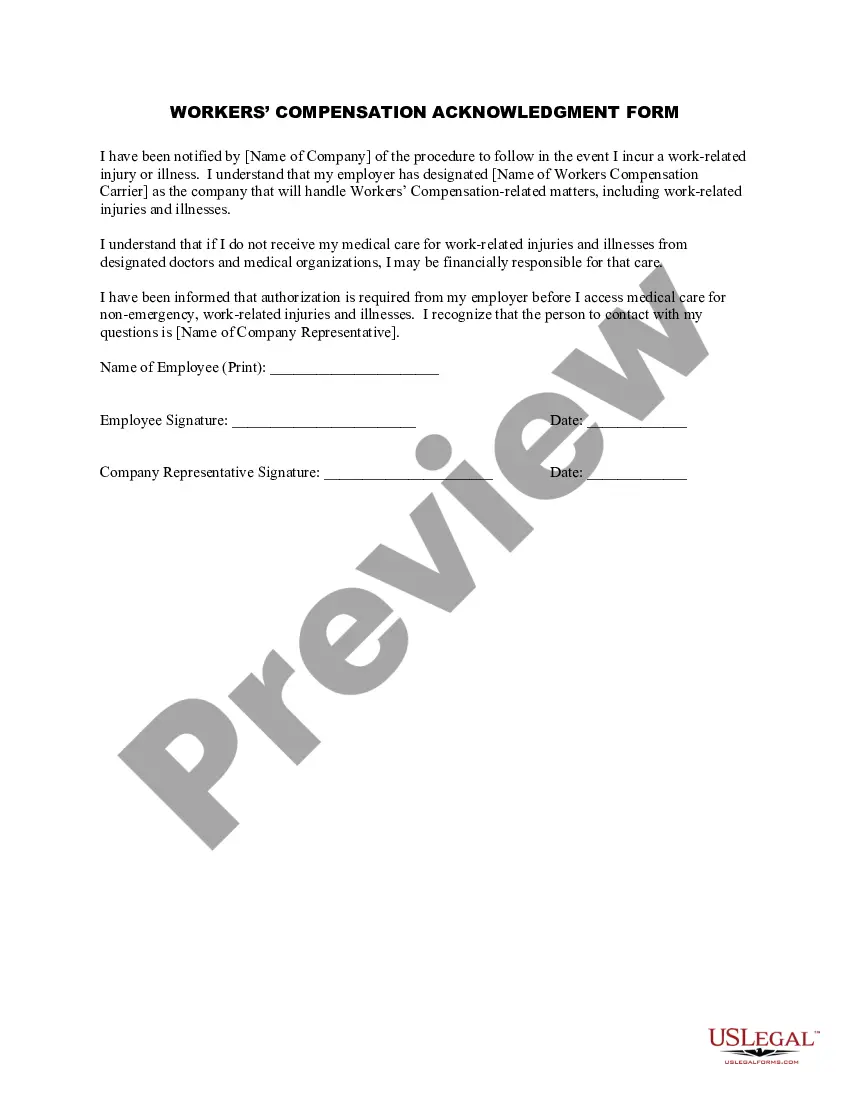
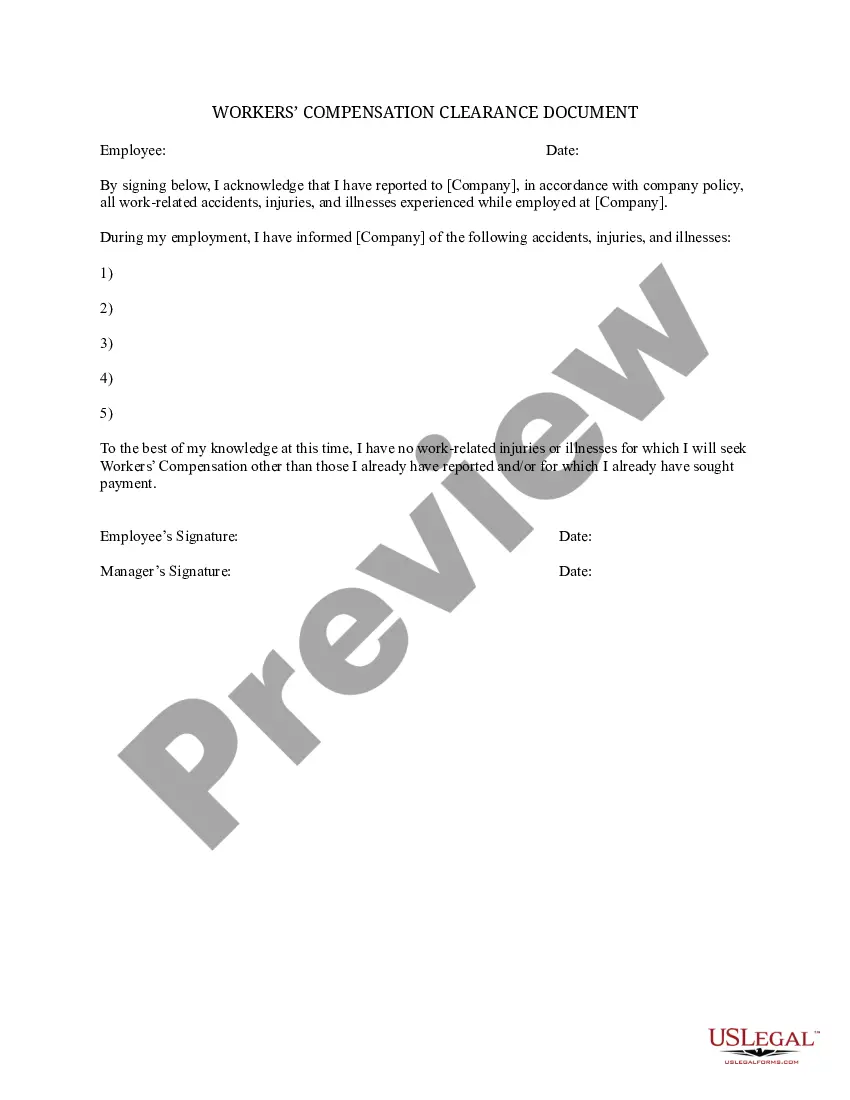
When this form is needed
This form is essential for organizations offering internships to students and recent graduates. Use it when you establish internship programs, so you are aware of the potential responsibilities related to workers' compensation claims for unpaid interns. It is particularly critical in situations where an intern may get injured while performing internship duties, raising questions about their eligibility for compensation.
Who can use this document
- Employers offering internships to students or recent graduates.
- Human resources professionals managing internship programs.
- Legal advisors reviewing internship agreements.
- Educational institutions partnering with organizations for internships.
Instructions for completing this form
- Identify the internship program and clarify intern roles.
- Determine the state-specific legal criteria for unpaid interns' eligibility.
- Review the contracts between interns and the organization, noting any stipulations on workers' compensation.
- Identify any supervisory control the organization has over the intern's work.
- Document any incidents or injuries occurring during the internship period.
Notarization guidance
This form usually doesn’t need to be notarized. However, local laws or specific transactions may require it. Our online notarization service, powered by Notarize, lets you complete it remotely through a secure video session, available 24/7.
Get your form ready online
Our built-in tools help you complete, sign, share, and store your documents in one place.
Make edits, fill in missing information, and update formatting in US Legal Forms—just like you would in MS Word.
Download a copy, print it, send it by email, or mail it via USPS—whatever works best for your next step.
Sign and collect signatures with our SignNow integration. Send to multiple recipients, set reminders, and more. Go Premium to unlock E-Sign.
If this form requires notarization, complete it online through a secure video call—no need to meet a notary in person or wait for an appointment.
We protect your documents and personal data by following strict security and privacy standards.

Make edits, fill in missing information, and update formatting in US Legal Forms—just like you would in MS Word.

Download a copy, print it, send it by email, or mail it via USPS—whatever works best for your next step.

Sign and collect signatures with our SignNow integration. Send to multiple recipients, set reminders, and more. Go Premium to unlock E-Sign.

If this form requires notarization, complete it online through a secure video call—no need to meet a notary in person or wait for an appointment.

We protect your documents and personal data by following strict security and privacy standards.
Avoid these common issues
- Failing to distinguish between unpaid interns and volunteers, which can lead to incorrect legal assumptions.
- Not reviewing state laws that dictate the eligibility of interns for workers' compensation.
- Neglecting to include necessary contractual obligations in internship agreements.
- Assuming all interns are automatically covered without understanding employer responsibilities.
Advantages of online completion
- Access to legally vetted legal form templates drafted by licensed attorneys.
- Convenience of downloading forms immediately for use in your organization.
- Editability allows customization to fit your specific internship program needs.
- Reliability ensures that you are following current legal standards and practices.
Legal use & context
- This form helps clarify the legal context of unpaid interns' rights to workers' compensation.
- Understanding the distinction between interns and volunteers is essential for compliance.
- Knowledge of contractual obligations can influence the outcome of any compensation claims.
Summary of main points
- Unpaid interns may be eligible for workers' compensation depending on state law.
- Proper classification of interns is essential to ensure compliance and reduce liability.
- This form provides guidance on determining eligibility and navigating legal requirements.
Looking for another form?
Form popularity
FAQ
Unpaid internships are legal if the intern is the "primary beneficiary" of the arrangement. This is determined by the seven-point Primary Beneficiary Test. If an employer is the primary beneficiary, the intern is considered an employee under the Fair Labor Standards Act and entitled to minimum wage.
Unless all of the following criteria are met, the intern is legally an employee, who must be paid the minimum wage, earn overtime, and receive all of the other protections guaranteed by state and federal employment laws: Interns cannot displace regular employees.
First Aid Treatment is Usually Not Enough. Injuries Outside the Office Are Covered. Injuries Outside the Scope of Employment. Cumulative Events and Injuries. Mental Health Conditions.
Internships are programs where students or other trainees work for a period of time at a business, generally to gain experience or skills. Unlike the other types of employment, internships aren't always paid. In some cases, an intern works without pay at a business to receive college credit or even just experience.
Interns will generally receive guidance and direction from the employer, including daily job duties, training and coaching. Services an intern performs will most likely be controlled by the employer, and once an employee-employer relationship exists, an intern cannot be classified as an independent contractor.
In Texas, if a company has worker's compensation, interns are generally eligible for the same coverage as full-time employees.
In California, the Division of Labor Standards Enforcement (DLSE) has additional unpaid internship labor laws specific to the state.The intern cannot receive employee benefits, including insurance or workers comp.
According to Chron.com, internships, even short ones and unpaid ones, are a form of employment. They provide essential experience and should be included on your resume.
A worker is disqualified where the injury: (1) is caused by the worker's own intoxication (alcohol or other controlled substance as defined by the Health and Safety Code; (2) is intentionally self-inflicted; (3) occurs out of an altercation (mutual combat) where the claimant was the initial physical aggressor; (4)