Affidavit Alleging Contempt for Violation of Injunction and Request for Order
What this document covers
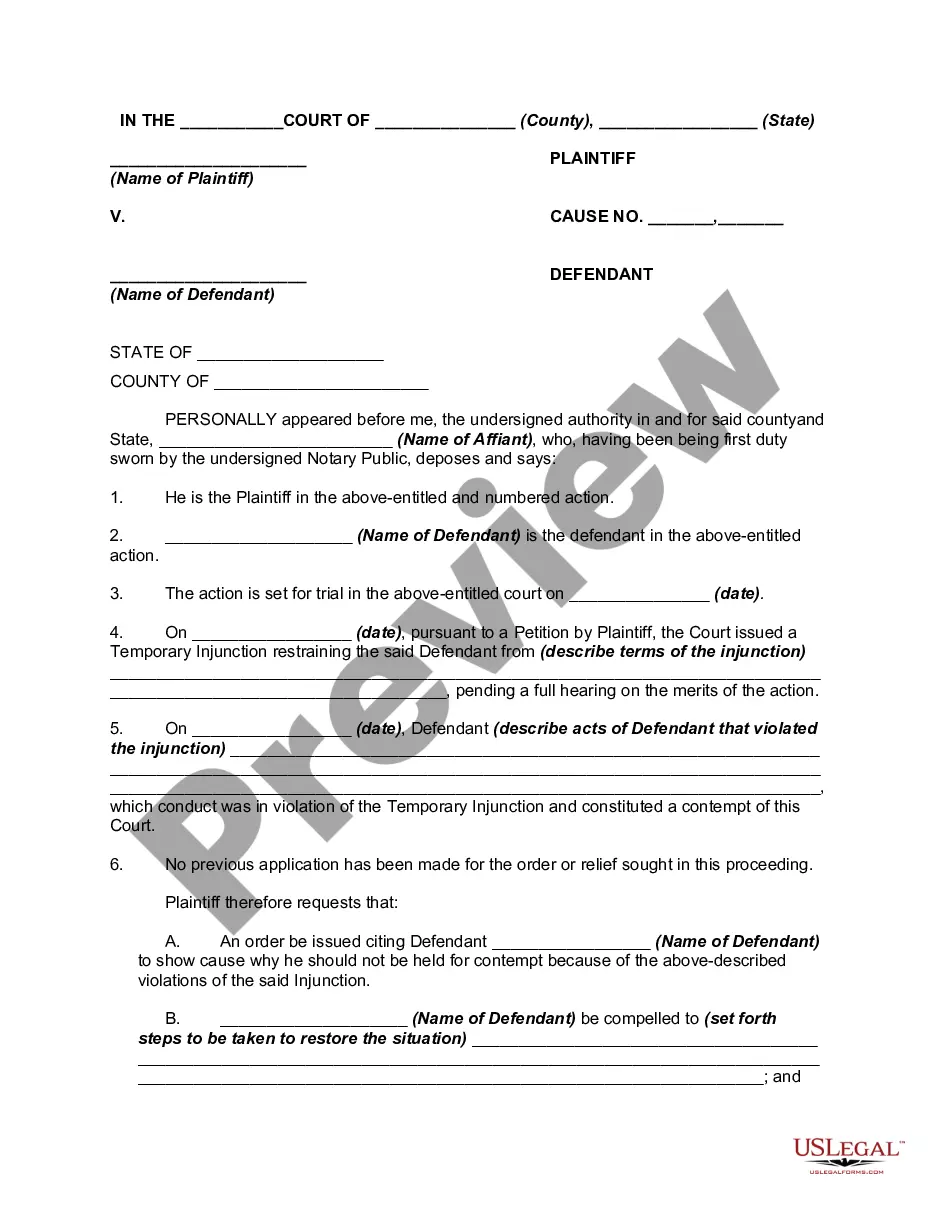
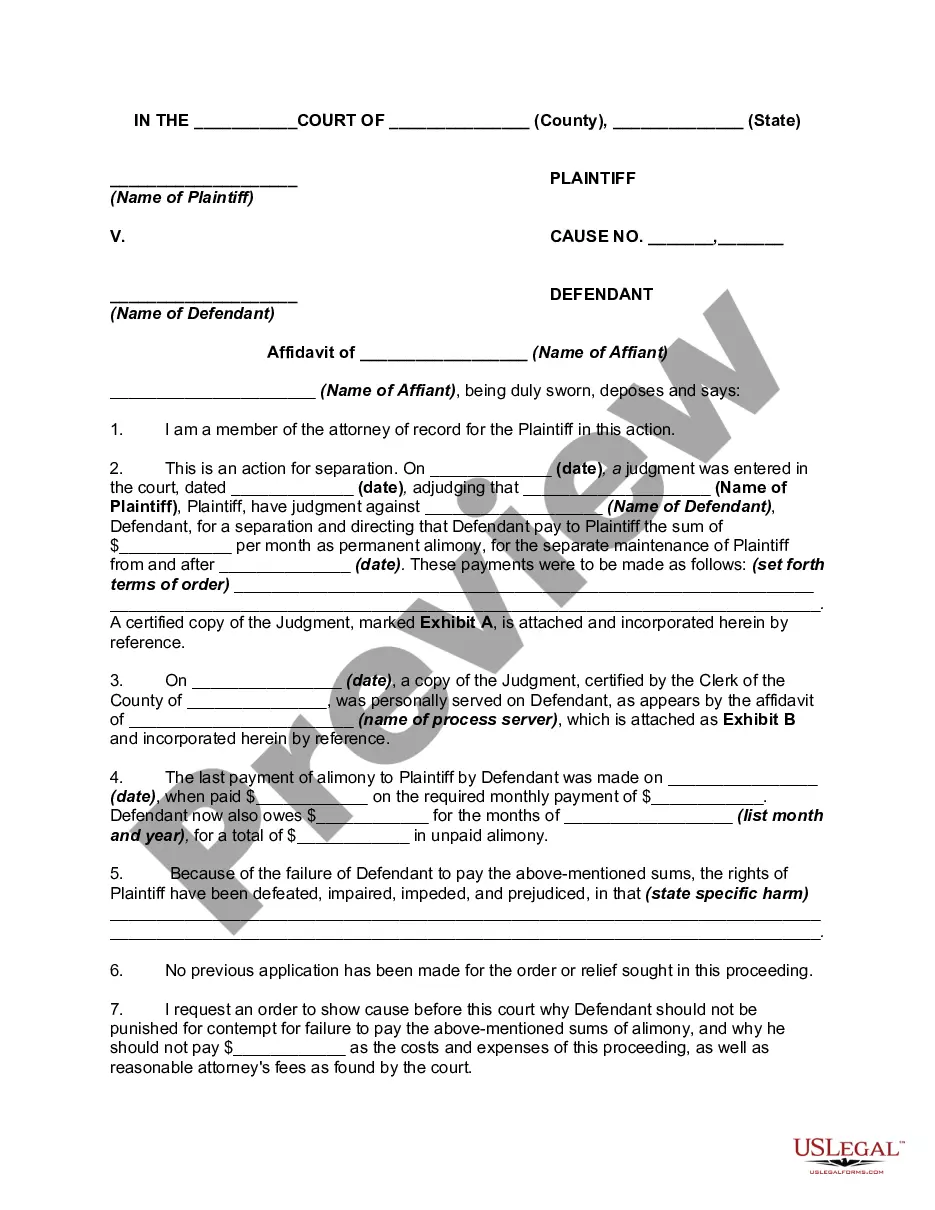
The Affidavit Alleging Contempt for Violation of Injunction and Request for Order is a legal document used to address instances where a party willfully fails to comply with a court-ordered injunction. This form is essential for plaintiffs seeking to enforce court orders and hold defendants accountable for their actions that violate legal injunctions, which differs from other forms that might simply seek to initiate or respond to litigation.
Key parts of this document
- Details of the court case, including parties involved.
- Description of the original injunction and its terms.
- Evidence of the defendant's violations of the injunction.
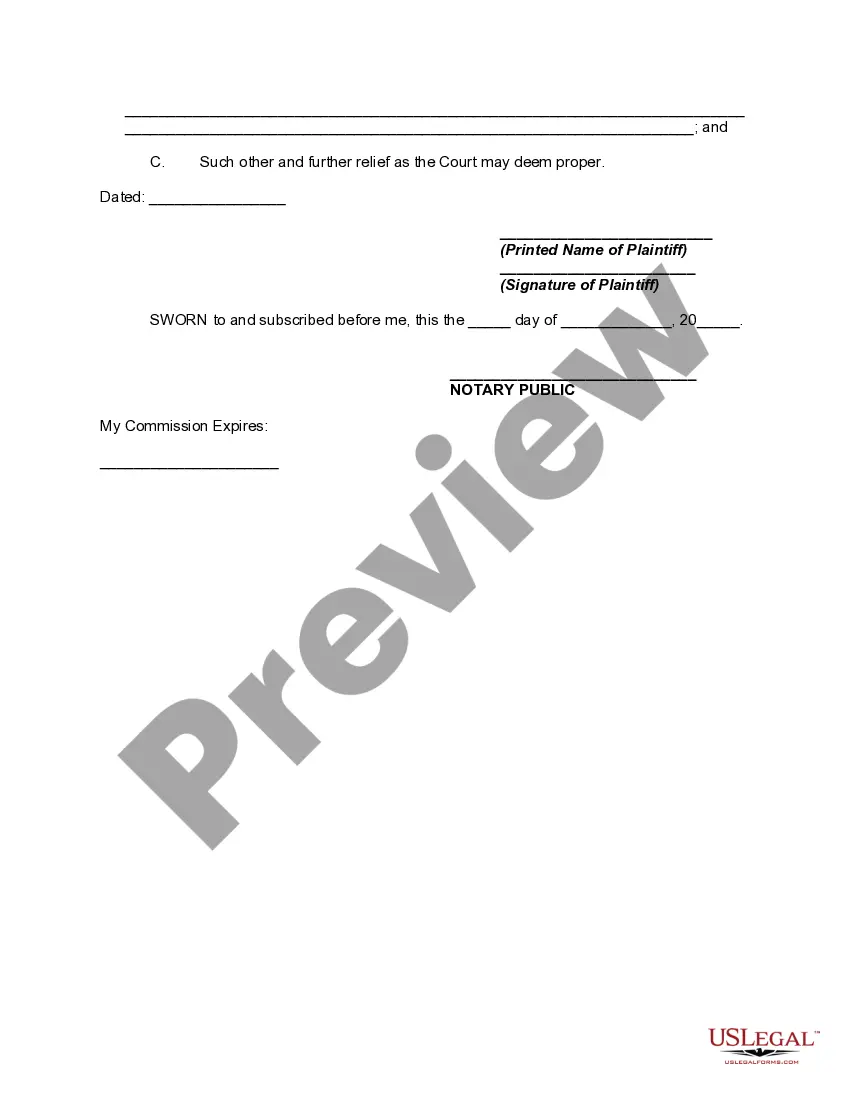
- Request for the court to compel compliance or hold the defendant in contempt.
- Space for signatures and notarization of the affidavit.
Situations where this form applies
This form is used when a defendant has not followed a court's injunction, which could involve actions like failing to cease certain behaviors that were prohibited by the injunction. It is appropriate in family law cases, business disputes, or any situation where a legal injunction has been issued and violated. The affidavit serves to protect the rights of the plaintiff and ensure compliance with court orders.
Intended users of this form
This form is intended for:
- Individuals who have obtained a court-issued injunction against another party.
- Plaintiffs seeking to enforce compliance with court orders.
- Legal representatives acting on behalf of a plaintiff in a contempt proceeding.
Completing this form step by step
- Identify the plaintiff and defendant by entering their names in the appropriate sections.
- Specify the case number and details of the court where the original injunction was issued.
- Clearly describe the terms of the injunction and the actions of the defendant that constitute the violation.
- Articulate the relief sought, including the request to hold the defendant in contempt and any steps needed for compliance.
- Sign and date the affidavit in front of a notary public.
Is notarization required?
This form needs to be notarized to ensure legal validity. US Legal Forms provides secure online notarization powered by Notarize, allowing you to complete the process through a verified video call, available anytime.
Get your form ready online
Our built-in tools help you complete, sign, share, and store your documents in one place.
Make edits, fill in missing information, and update formatting in US Legal Forms—just like you would in MS Word.
Download a copy, print it, send it by email, or mail it via USPS—whatever works best for your next step.
Sign and collect signatures with our SignNow integration. Send to multiple recipients, set reminders, and more. Go Premium to unlock E-Sign.
If this form requires notarization, complete it online through a secure video call—no need to meet a notary in person or wait for an appointment.
We protect your documents and personal data by following strict security and privacy standards.

Make edits, fill in missing information, and update formatting in US Legal Forms—just like you would in MS Word.

Download a copy, print it, send it by email, or mail it via USPS—whatever works best for your next step.

Sign and collect signatures with our SignNow integration. Send to multiple recipients, set reminders, and more. Go Premium to unlock E-Sign.

If this form requires notarization, complete it online through a secure video call—no need to meet a notary in person or wait for an appointment.

We protect your documents and personal data by following strict security and privacy standards.
Common mistakes to avoid
- Failing to provide complete details of the injunction and violation.
- Not properly notarizing the document before submission.
- Submitting the affidavit without proper evidence of the violation.
Benefits of completing this form online
- Convenience of downloading and completing the form at your own pace.
- Access to templates drafted by licensed attorneys to ensure legal validity.
- Editability to customize the form according to your specific situation.
- Secure storage of your forms for easy reference and retrieval.
Legal use & context
- This form is legally enforceable as it is filed in a court of law.
- It provides a mechanism for the plaintiff to seek accountability for violations of court orders.
- Using this form can help maintain the integrity of legal injunctions and uphold court authority.
Quick recap
- The affidavit is crucial for enforcing compliance with court-issued injunctions.
- It must detail both the injunction and the specific violations committed by the defendant.
- Notarization is required for this form to be considered valid in legal proceedings.
Looking for another form?
Form popularity
FAQ
An injunction is a court order stating that a company must do something or seize from doing a certain action. Injunctions are often granted when monetary damages are not sufficient to remedy a given situation.
Depending on the jurisdiction and the case, the same judge who decided to charge a person with contempt may end up presiding over the contempt proceedings. Criminal contempt can bring punishment including jail time and/or a fine.
In so far as the violation of the temporary injunction order passed by the Civil judge is concerned, it is well settled...that normally the remedy for violation of temporary injunction granted by Civil Court lies under order xxxix, rule 2-a, c.p.c. and the powers conferred by section 10 read with section 12 of the Act.
In this regard, the court noted because permanent injunctions are open-ended and everlasting, they must be subject to dissolution when the circumstances that justified such an injunction are no longer operative. To dissolve an injunction, the movant must show changed circumstances. To show that the circumstances
If you disobey the order, you can go to jail or be fined.
Understanding Contempt in California The person alleged of being contempt, the citee, is then served with a copy of the papers. The facts of the case are outlined in an affidavit of contempt. This type of document sets forth the type of order violated, how the order was violated and when the violation occurred.
If a person is found to be in violation of a restraining order, he or she can be charged criminally under California Penal Code Section 273.6 PC.Violating a restraining order is a misdemeanor level offense, and those convicted can be sentenced to serve up to a year in jail and up to a $1,000 fine.
An injunction is a legal and equitable remedy in the form of a special court order that compels a party to do or refrain from specific acts.They can also be charged with contempt of court. Counterinjunctions are injunctions that stop or reverse the enforcement of another injunction.
Injunctions for Protection/Restraining Orders carry no direct criminal consequences. However, you may face criminal prosecution if you violate the terms and conditions of the injunction. The State can prosecute a violation as a misdemeanor or as a felony.