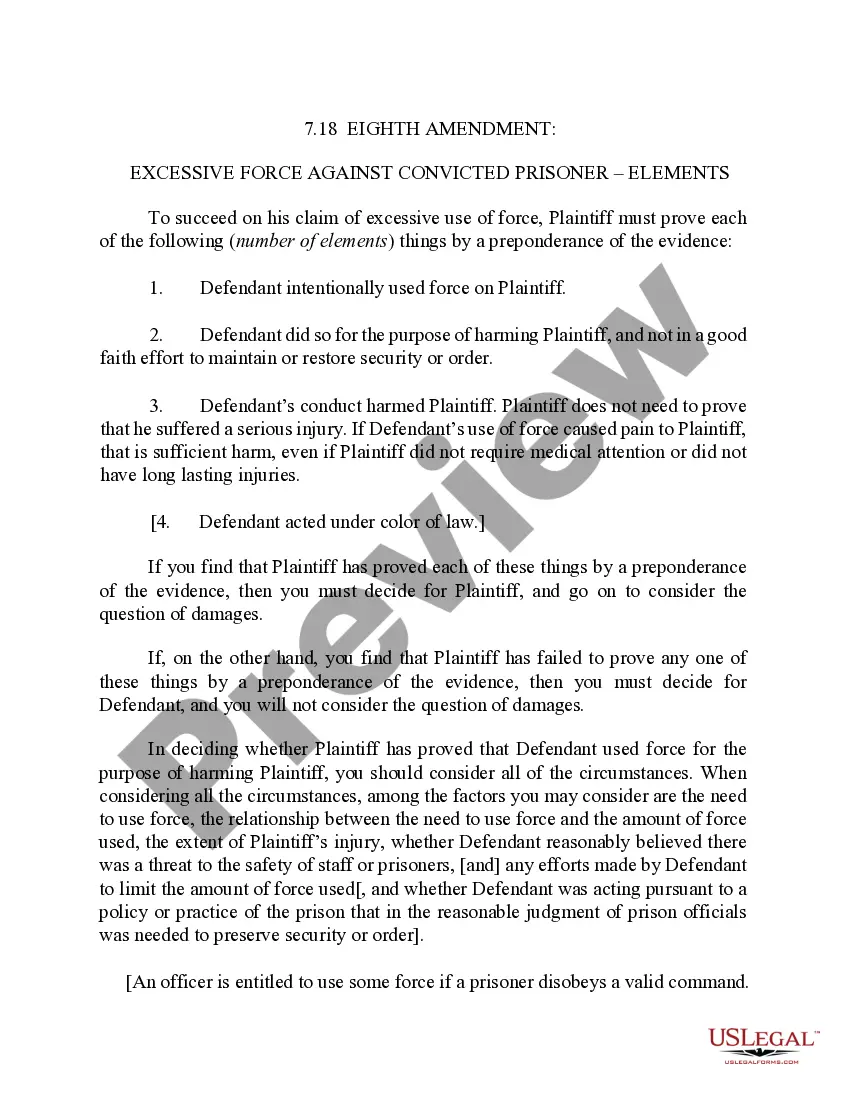
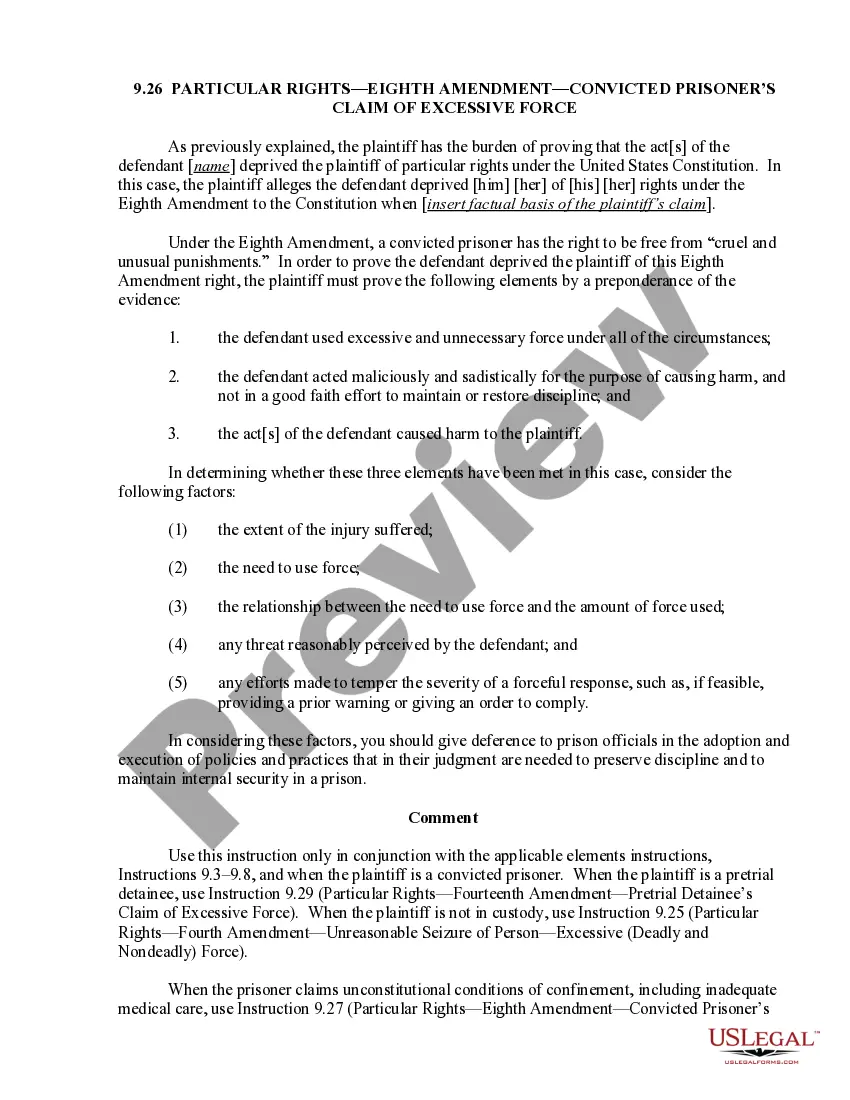
7.18 Eighth Amendment: Excessive Force Against Convicted Prisoner - Elements.
What is this form?
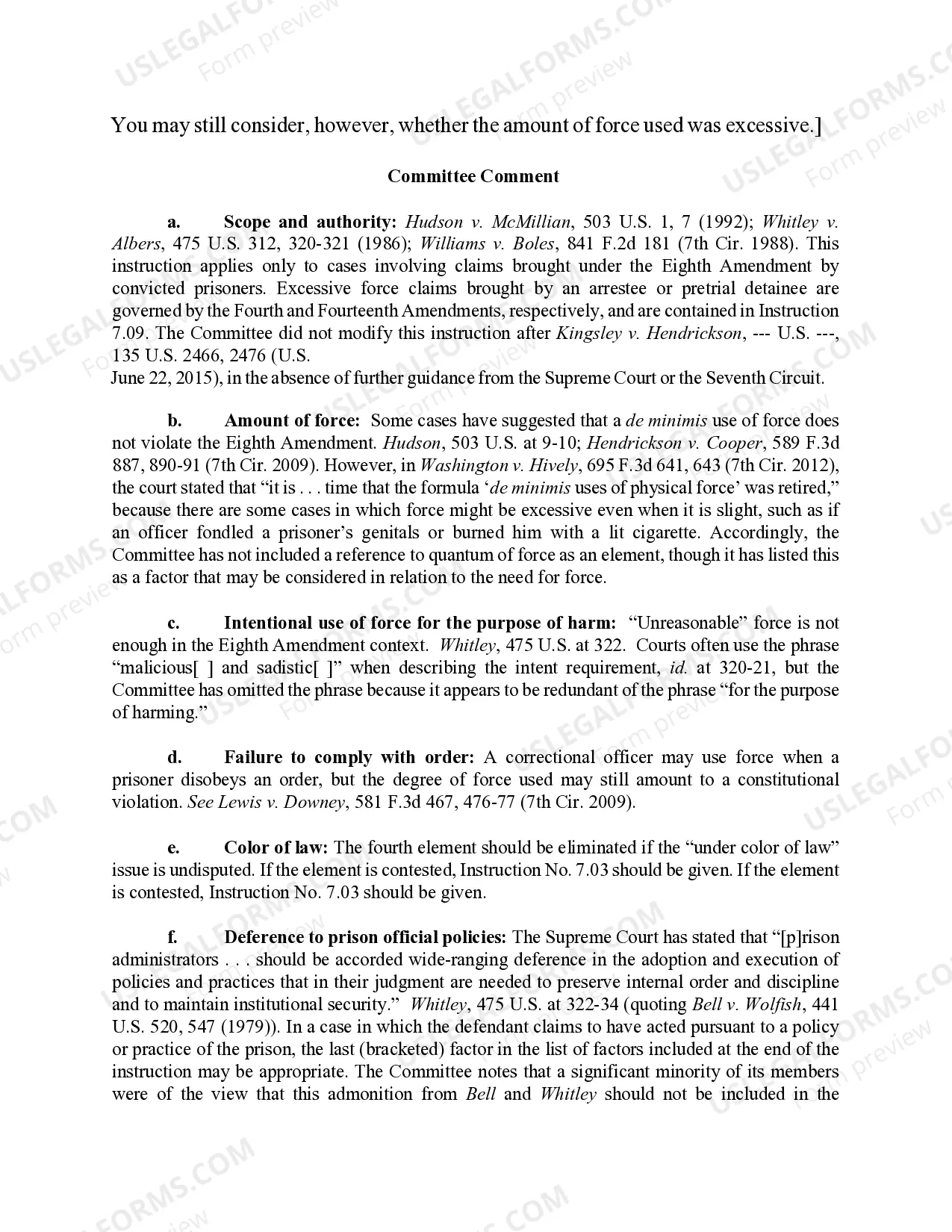
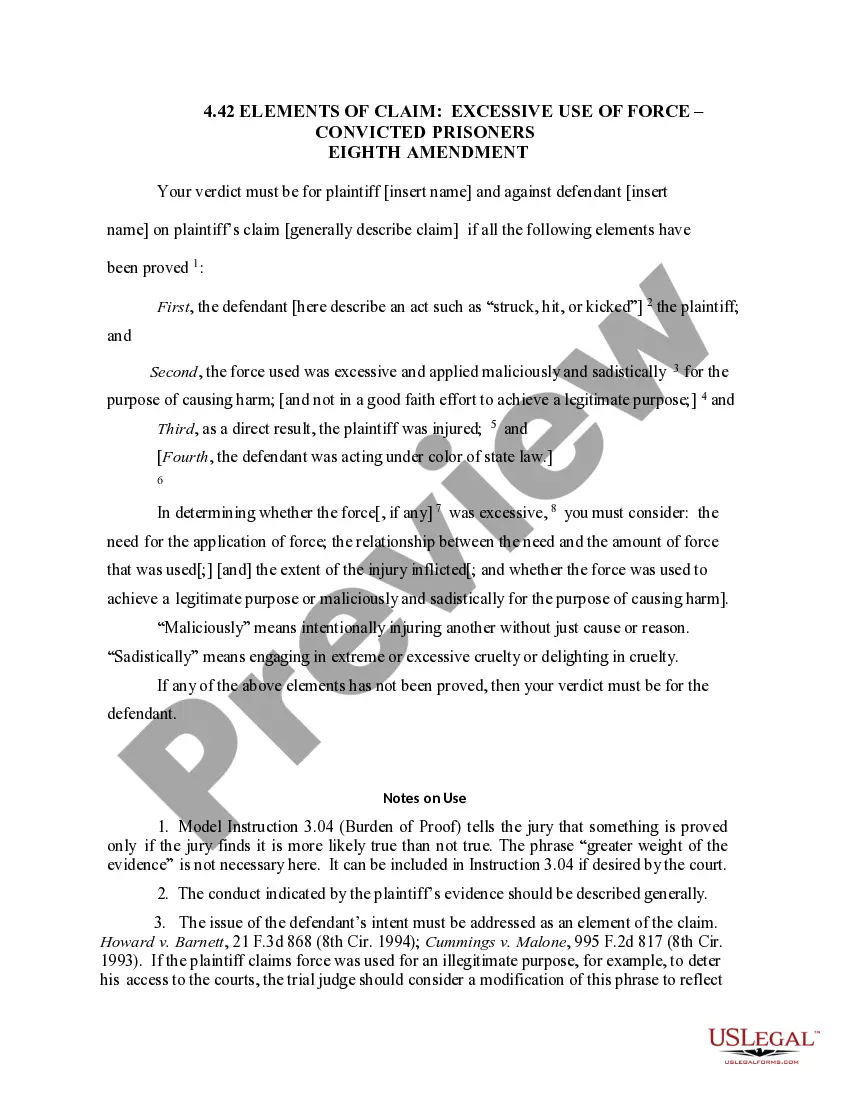
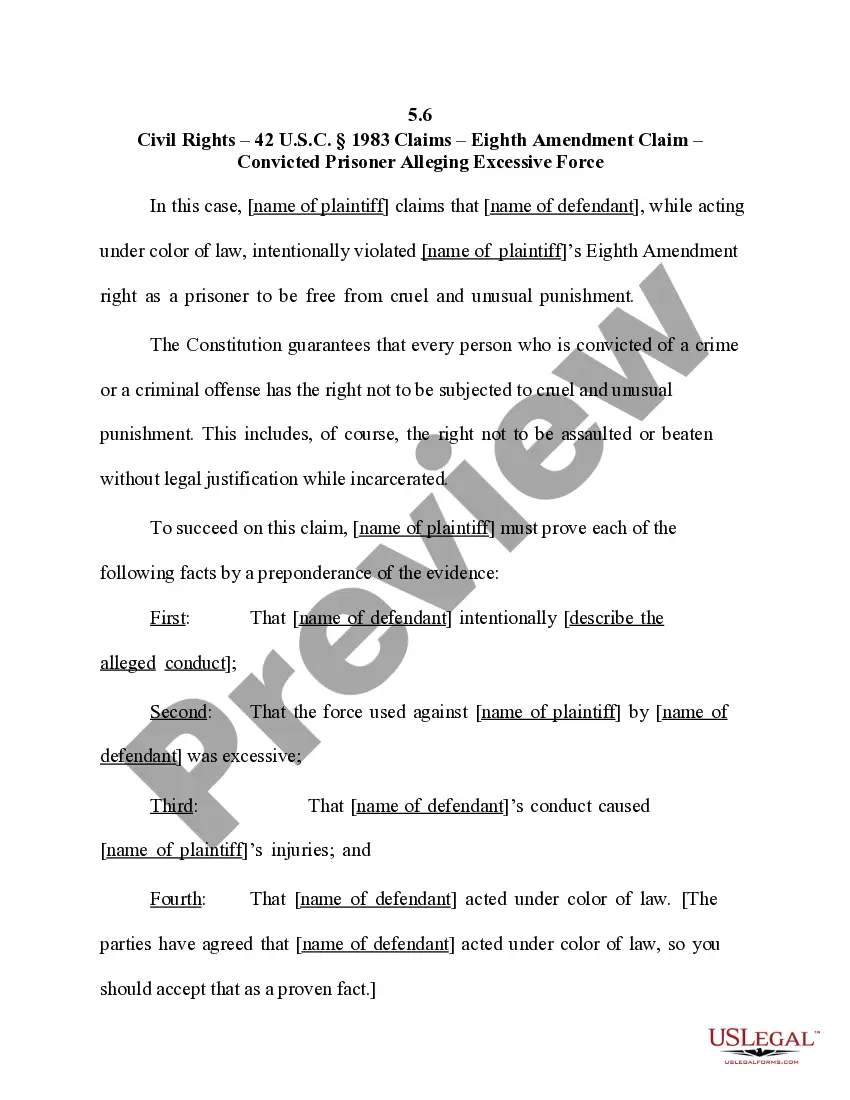
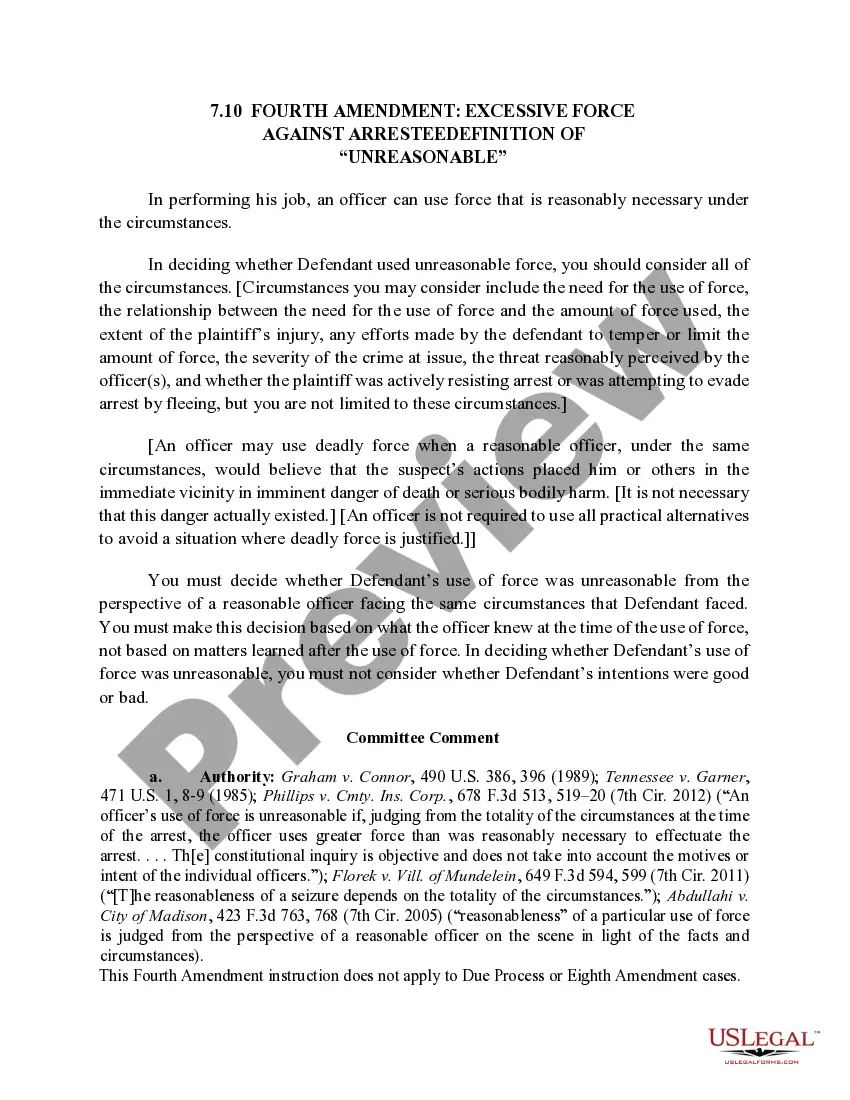
This form provides essential jury instructions regarding claims of excessive force against convicted prisoners under the Eighth Amendment. It outlines the elements required for a plaintiff to prove their case, focusing on whether the defendant intentionally used force against the plaintiff in a harmful manner. This guidance is specific to the context of convicted prisoners, distinguishing it from excessive force claims made by arrestees or pretrial detainees, which are governed by different legal standards.
Form components explained
- Intentional use of force by the defendant against the plaintiff.
- Force used for the purpose of harming the plaintiff, rather than maintaining security.
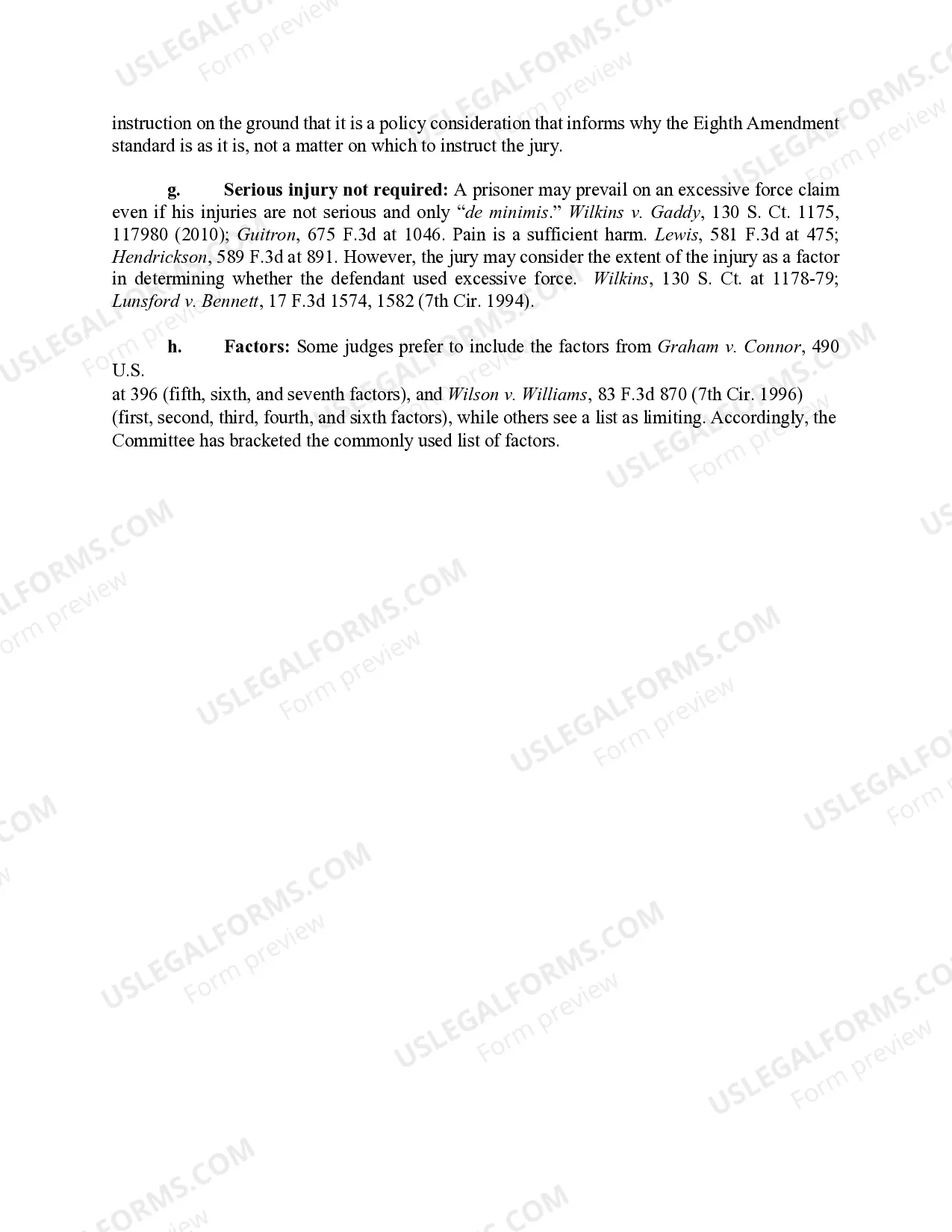
- Requirement of harm, where pain alone is sufficient evidence.
- Consideration of all circumstances surrounding the use of force.
- Plaintiff's burden to prove each element by a preponderance of the evidence.

Situations where this form applies
This form is relevant in legal cases involving convicted prisoners who allege that they were subjected to excessive force by correctional officers. It should be used when a plaintiff seeks to establish that their constitutional rights under the Eighth Amendment have been violated due to inappropriate or harmful force applied by prison staff.
Who can use this document
- Convicted prisoners who believe they have been subjected to excessive force.
- Attorneys representing clients in civil rights violations related to prison conduct.
- Legal professionals assisting plaintiffs in the preparation of their case under the Eighth Amendment.
Completing this form step by step
- Identify the parties involved in the claim: the plaintiff (convicted prisoner) and the defendant (correctional officer).
- Clearly state the intentional use of force by the defendant against the plaintiff.
- Demonstrate that the use of force was for the purpose of harming the plaintiff.
- Provide evidence of harm, indicating that any pain suffered is sufficient to meet the requirement.
- Compile any additional evidence relevant to the circumstances of the force used, including eyewitness accounts or video evidence.
Is notarization required?
In most cases, this form does not require notarization. However, some jurisdictions or signing circumstances might. US Legal Forms offers online notarization powered by Notarize, accessible 24/7 for a quick, remote process.
Get your form ready online
Our built-in tools help you complete, sign, share, and store your documents in one place.
Make edits, fill in missing information, and update formatting in US Legal Forms—just like you would in MS Word.
Download a copy, print it, send it by email, or mail it via USPS—whatever works best for your next step.
Sign and collect signatures with our SignNow integration. Send to multiple recipients, set reminders, and more. Go Premium to unlock E-Sign.
If this form requires notarization, complete it online through a secure video call—no need to meet a notary in person or wait for an appointment.
We protect your documents and personal data by following strict security and privacy standards.

Make edits, fill in missing information, and update formatting in US Legal Forms—just like you would in MS Word.

Download a copy, print it, send it by email, or mail it via USPS—whatever works best for your next step.

Sign and collect signatures with our SignNow integration. Send to multiple recipients, set reminders, and more. Go Premium to unlock E-Sign.

If this form requires notarization, complete it online through a secure video call—no need to meet a notary in person or wait for an appointment.

We protect your documents and personal data by following strict security and privacy standards.
Common mistakes
- Failing to clearly establish the intentionality behind the defendant's use of force.
- Overlooking the need to provide evidence of pain or harm, even if injuries are not serious.
- Not considering all circumstances that might affect the use of force, including prison policies.
Advantages of online completion
- Convenience of immediate access to the form from any location.
- Editable format allows for easy customization to suit specific cases.
- Reliability of having a legally sound template reviewed by licensed attorneys.
Main things to remember
- The form is crucial for cases involving claims of excessive force against convicted prisoners.
- It outlines specific elements that must be proven by the plaintiff to succeed in their claim.
- Understanding the difference in legal standards between convicted prisoners and other detainees is vital.
Looking for another form?
Form popularity
FAQ
The eighth amendment provides prisoners with limited rights of protection against cruel and unusual punishment during the course of confinement. These rights extend to the existence of humane living conditions, adequate medical care, and protection from violence by other inmates.
The 8th Amendment prohibits the Federal Government from imposing excessive bail, excessive fines, and cruel and unusual punishment on individuals pursuant to criminal prosecution.
Cruel and unusual punishment is a phrase in common law describing punishment that is considered unacceptable due to the suffering, pain, or humiliation it inflicts on the person subjected to the sanction.
It held that inmates alleging use of excessive force in violation of the Eighth Amendment must prove: (1) significant injury; (2) resulting "directly and only from the use of force that was clearly excessive to the need"; (3) the excessiveness of which was objectively unreasonable; and (4) that the action constituted
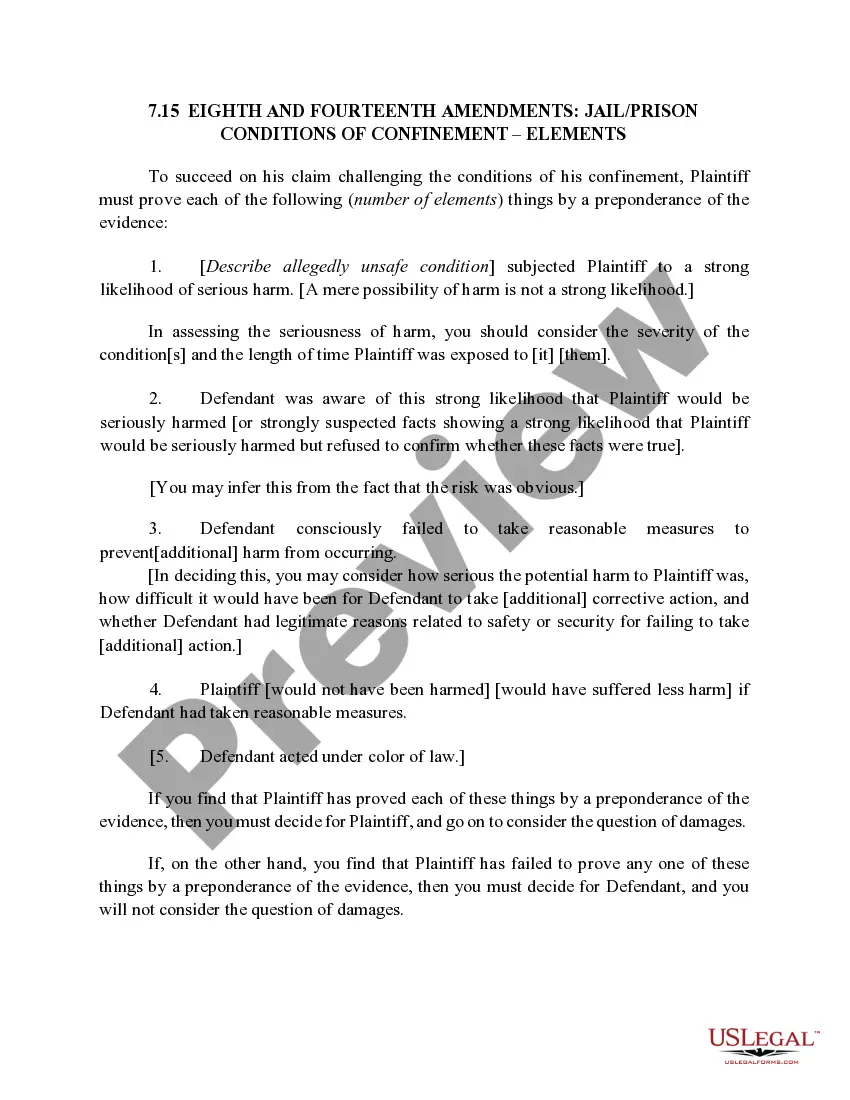
The Eighth Amendment applies to inmate medical treatment because it not only prohibits excessive force but also requires that prisoners be afforded ?humane conditions of confinement,? so that prison officials ?ensure that inmates receive adequate food, clothing, shelter, and medical care.? Farmer v.
The Eighth Amendment imposes certain duties on prison officials: (1) to provide humane conditions of confinement; (2) to ensure that inmates receive adequate food, clothing, shelter and medical care; and (3) to ?take reasonable measures to guarantee the safety of the inmates.? Farmer v.
Atkins v. Virginia. A case in which the Court found that sentencing a mentally disabled person to death is a violation of the Eighth Amendment's Cruel and Unusual Punishment Clause.
Excessive force is generally prohibited by the Fourth, Eighth, and Fourteenth Amendments.