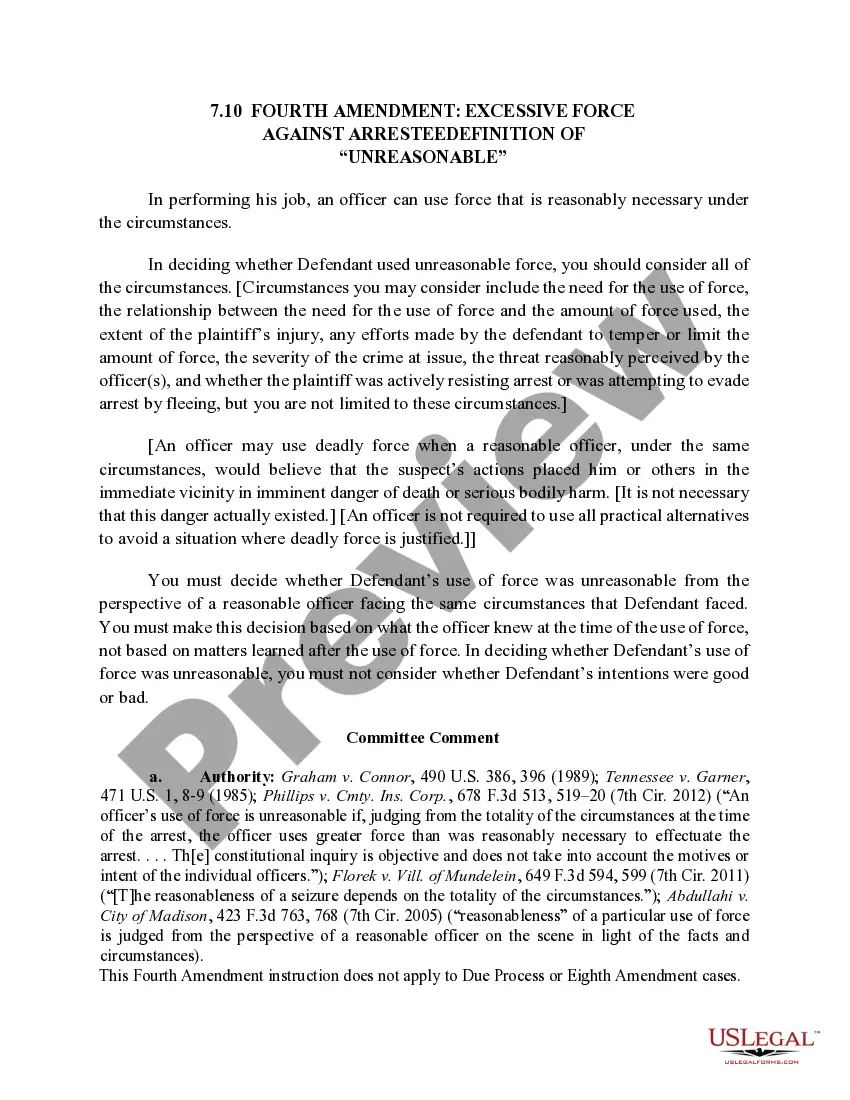
7.10 Fourth Amendment: Excessive Force Against Arrestee - Definition of "Unreasonable".
Understanding this form
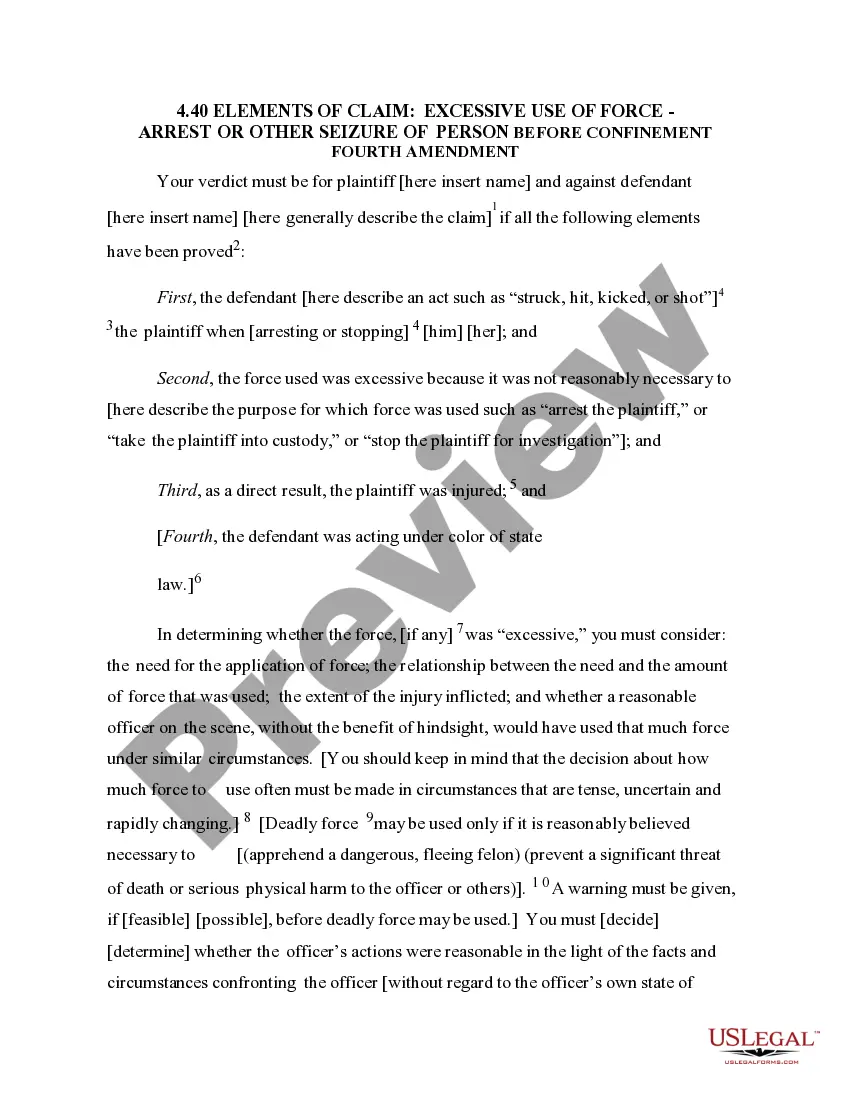
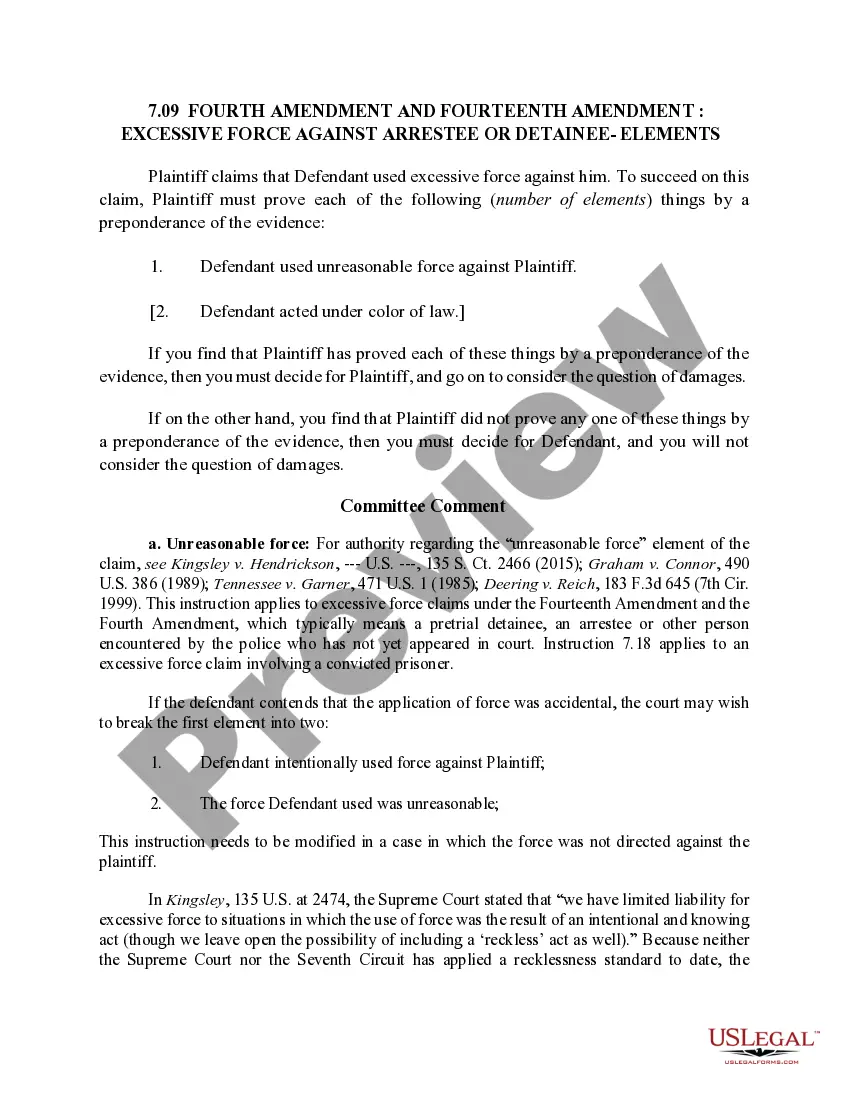
The 7.10 Fourth Amendment: Excessive Force Against Arrestee - Definition of "Unreasonable" form provides an official pattern jury instruction used in federal courts, specifically tailored for cases involving claims of unreasonable force by law enforcement during an arrest. This form is essential in determining if an officer's use of force was justified under the Fourth Amendment, helping to clarify legal standards for excessive force claims against arrestees. Unlike similar forms, this instruction elaborates on the circumstances under which force may be deemed unreasonable, focusing on the perspective of a reasonable officer at the scene.
Key components of this form
- Definition of unreasonable force used by law enforcement.
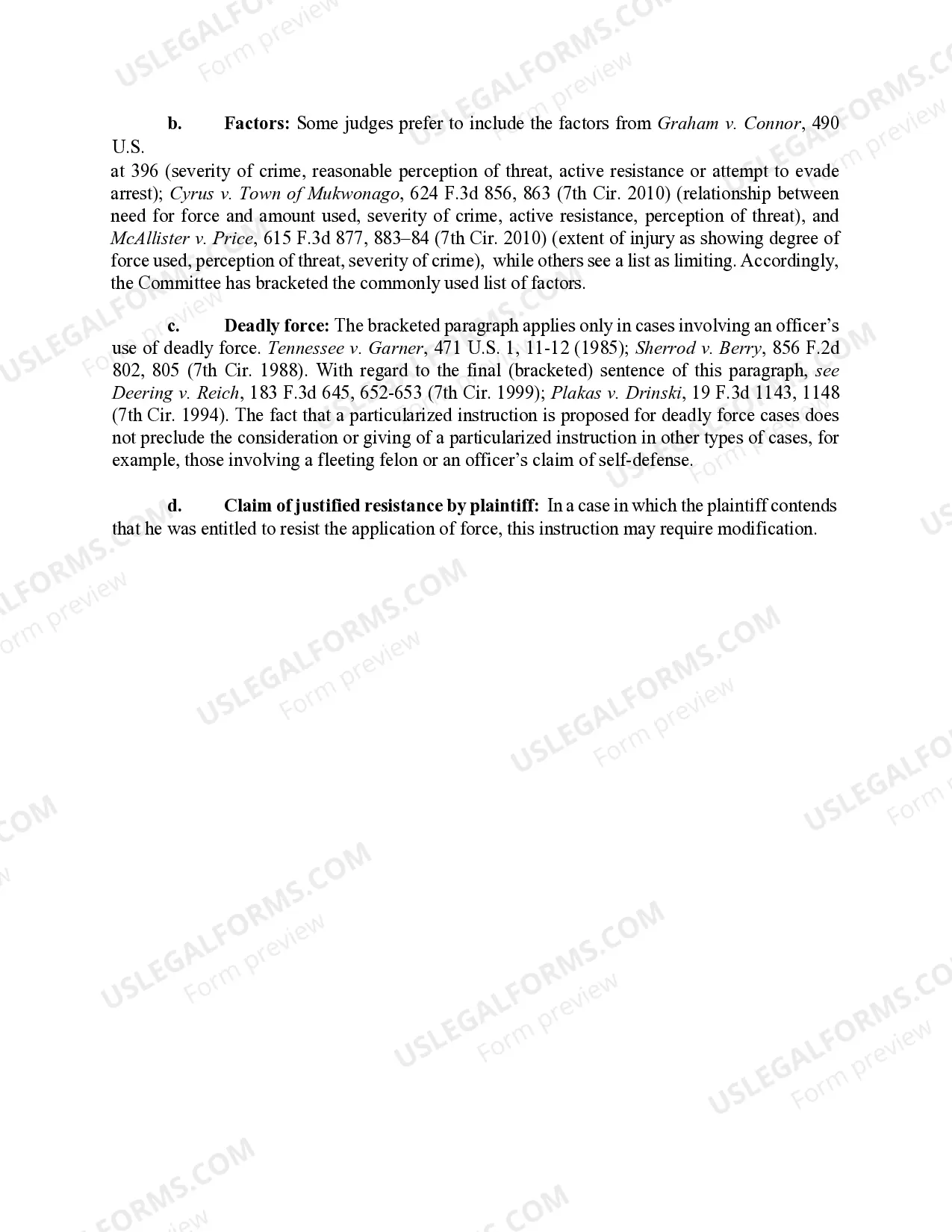
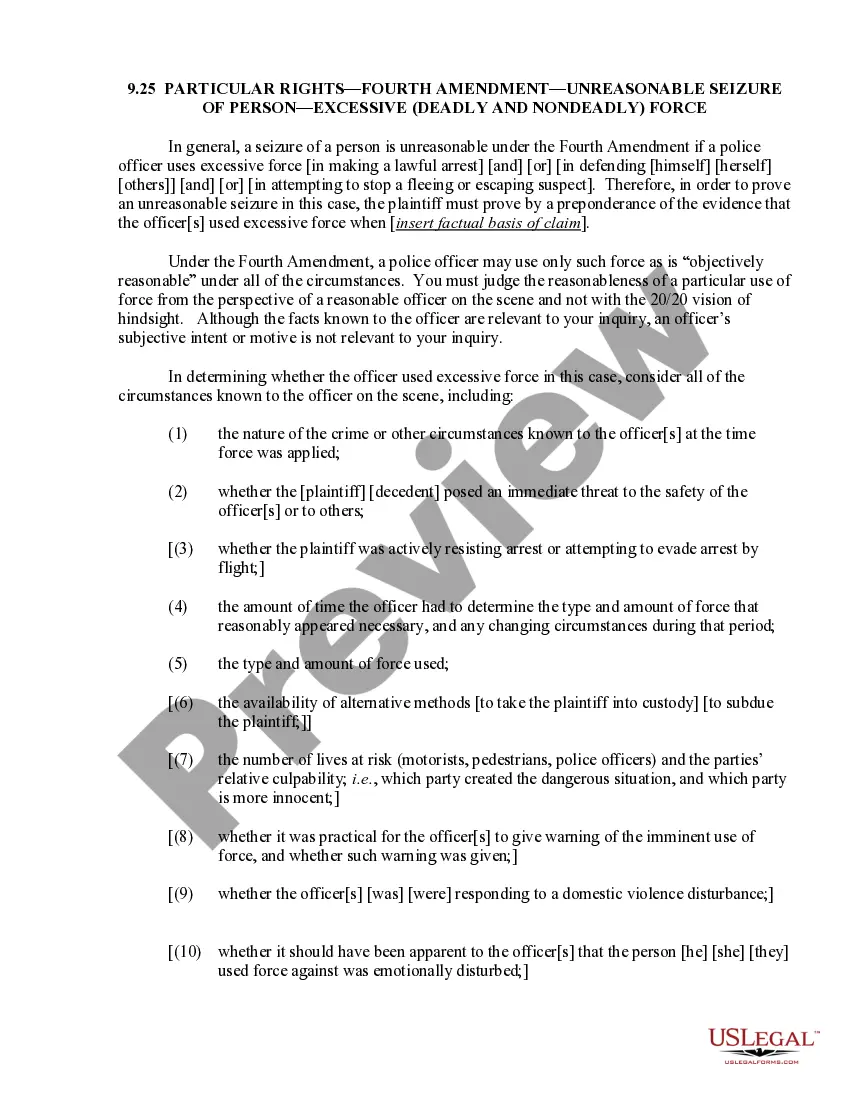
- Factors considered in evaluating the use of force, including severity of the crime and actions of the arrestee.
- Clarification on when deadly force is permissible.
- Guidance on evaluating the perspective of a reasonable officer during the incident.
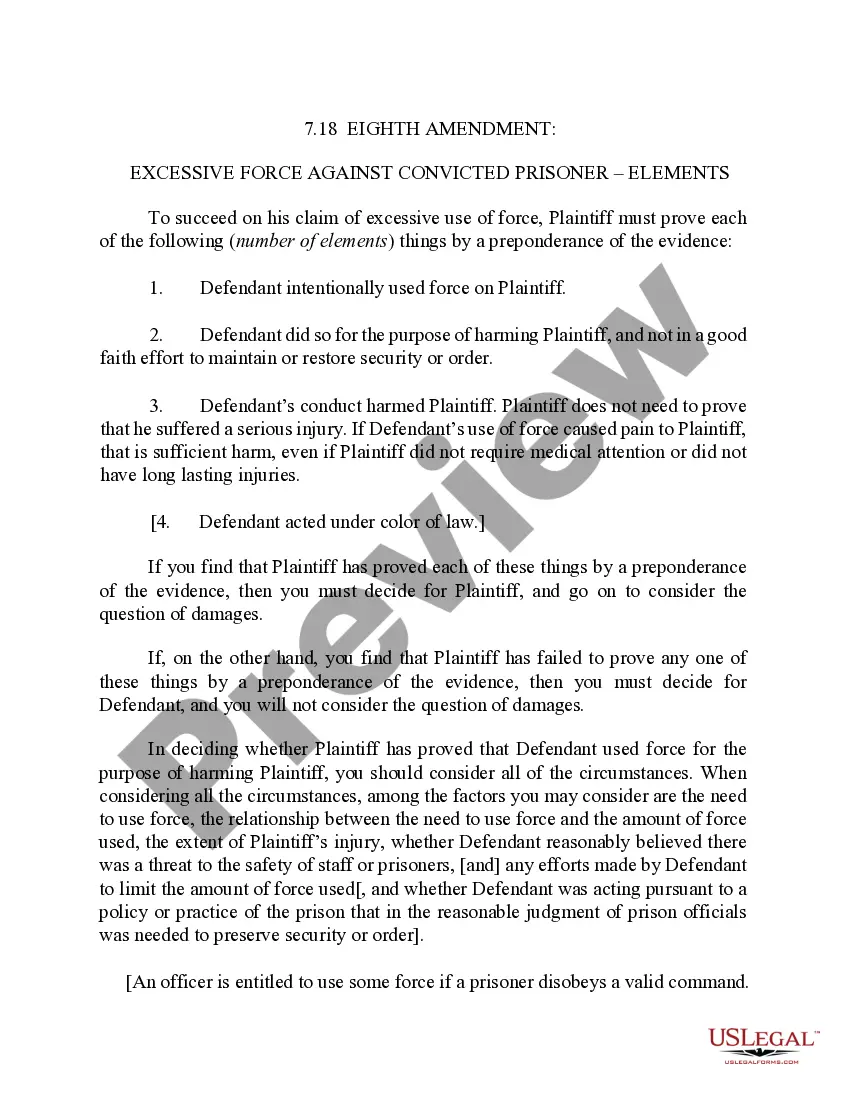
- Exclusions for use in Due Process or Eighth Amendment cases.

Common use cases
This form should be used in legal proceedings involving claims of excessive force by law enforcement during an arrest. It is particularly applicable in cases where the arrestee alleges that the force used was unreasonable given the circumstances, such as instances of perceived threat or the level of resistance. It will guide jurors in determining liability based on the standards set forth in Fourth Amendment jurisprudence.
Who needs this form
- Judges overseeing cases related to excessive force claims.
- Legal practitioners representing plaintiffs or defendants in such claims.
- Jury members needing guidance on evaluating force used by officers in arrest situations.
Instructions for completing this form
- Identify the specific incident involving the use of force by an officer.
- Gather details regarding the context of the arrest, including the crime and actions of the suspect.
- Evaluate the extent of any injuries sustained by the arrestee.
- Determine the actions taken by the officer to limit the use of force.
- Complete the jury instruction based on the facts of the case and legal standards.
Does this form need to be notarized?
Notarization is not commonly needed for this form. However, certain documents or local rules may make it necessary. Our notarization service, powered by Notarize, allows you to finalize it securely online anytime, day or night.
Get your form ready online
Our built-in tools help you complete, sign, share, and store your documents in one place.
Make edits, fill in missing information, and update formatting in US Legal Forms—just like you would in MS Word.
Download a copy, print it, send it by email, or mail it via USPS—whatever works best for your next step.
Sign and collect signatures with our SignNow integration. Send to multiple recipients, set reminders, and more. Go Premium to unlock E-Sign.
If this form requires notarization, complete it online through a secure video call—no need to meet a notary in person or wait for an appointment.
We protect your documents and personal data by following strict security and privacy standards.

Make edits, fill in missing information, and update formatting in US Legal Forms—just like you would in MS Word.

Download a copy, print it, send it by email, or mail it via USPS—whatever works best for your next step.

Sign and collect signatures with our SignNow integration. Send to multiple recipients, set reminders, and more. Go Premium to unlock E-Sign.

If this form requires notarization, complete it online through a secure video call—no need to meet a notary in person or wait for an appointment.

We protect your documents and personal data by following strict security and privacy standards.
Common mistakes to avoid
- Failing to consider all relevant factors when evaluating the reasonableness of force.
- Relying on post-incident information rather than the officer's perspective at the time of the incident.
- Ignoring the established legal precedent that defines excessive force.
Advantages of online completion
- Convenience of accessing the form from anywhere at any time.
- Editability allows users to customize the form to specific cases as needed.
- Reliable access to legally vetted templates created by licensed attorneys.
Legal use & context
- This form assists in determining the legality of an officer's use of force in arrest scenarios.
- It is based on established case law and the constitutional protections afforded to individuals under the Fourth Amendment.
- Jurors must use the parameters outlined in this form to judge if an officer's actions were justifiable or excessive.